
This site is supported by our readers. We may earn a commission, at no cost to you, if you purchase through links.
Most dogs don’t need a bath nearly as often as their owners think—but when bath day does roll around, the soap you reach for matters more than you’d expect. The wrong cleanser can leave your dog itchier than before you started, stripping the natural oils that keep their coat healthy and their skin protected.
After years of grooming dogs of every shape, size, and coat type, I’ve seen that simple mistake causes a surprising amount of skin trouble.
Your dog’s skin has a different pH than yours, which means the products sitting in your shower aren’t doing them any favors.
Knowing what to use—and what to skip—makes the whole process safer and easier.
Table Of Contents
- Key Takeaways
- Is It Safe to Wash a Dog With Soap?
- Understanding Your Dog’s Skin and Coat
- The Role of Soap in Dog Grooming
- Can I Wash My Dog With Dawn Dish Soap?
- Is It Safe to Use Human Soap on Dogs?
- What Can I Use in Place of Dog Shampoo?
- Choosing The Right Soap for Your Dog
- The Importance of Proper Bathing Techniques
- Frequently Asked Questions (FAQs)
- Is it okay to wash a dog with soap?
- Is it OK to wash a dog with soap?
- Can I wash my dog with Dawn dish soap?
- Can I wash my dog with human soap?
- What can I use in place of dog shampoo?
- How often should I bathe my long-haired dog?
- Can I use dry shampoo between baths?
- Are there soaps specifically for dogs with allergies?
- How do I clean my dogs face safely?
- Should I use conditioner after washing my dog?
- Conclusion
Key Takeaways
- Your dog’s skin has a different pH than yours, so human soaps and dish soap strip the natural oils that keep their coat healthy and protected.
- A pH-balanced or hypoallergenic dog shampoo is the safest choice — it’s made with your dog’s chemistry in mind, not yours.
- If you’re out of dog shampoo, diluted castile soap, an oatmeal bath, or cornstarch dry shampoo all work as gentle, effective stand-ins.
- Natural ingredients like aloe, colloidal oatmeal, and coconut oil genuinely soothe and protect your dog’s skin, while parabens, synthetic dyes, and tea tree oil can quietly cause harm.
Is It Safe to Wash a Dog With Soap?
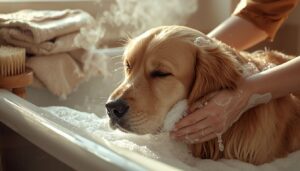
Soap and dogs — it sounds simple, but there’s more going on beneath the fur than you’d expect. Yes, you can wash your dog with soap, but the type you choose really matters.
The wrong soap can strip your dog’s natural oils or trigger a reaction, so it helps to know which products are safe for dogs with sensitive skin.
Your dog’s skin has a natural acid mantle, a protective barrier that keeps irritation and infections out. Most human soaps disrupt that balance because of poor pH compatibility, stripping away the oils that keep skin healthy.
That’s why pH balanced shampoo and hypoallergenic dog shampoo exist — they’re made with your dog’s chemistry in mind.
Choosing safe soap for dogs means avoiding harmful chemicals in pet grooming, ensuring thorough residue removal, and protecting your pup’s skin microbiota for the long haul.
Remember that the dog skin pH range is generally 5.5 to 7.5, which is higher than human skin.
Understanding Your Dog’s Skin and Coat

Your dog’s skin is doing a lot of quiet work underneath all that fur. The epidermal barrier keeps irritants out and moisture in — think of it as your dog’s first line of defense. When that barrier weakens, you’ll notice dryness, flaking, or itching.
Here’s what shapes your dog’s skin and coat:
- pH Balance shifts between 5.5–7.5 depending on breed and size
- Hair Follicle Structure varies — some breeds have compound follicles with multiple hairs sharing one root
- Coat Genetics determines texture, curl, and length across breeds
- Skin Microbiome keeps a healthy bacterial community that bathing can disrupt if you’re not careful
- Epidermal Barrier renews constantly but needs the right products to stay intact
Understanding dog skin and coat types helps you pick the right pH balanced shampoo or hypoallergenic dog shampoo before bath day arrives.
The Role of Soap in Dog Grooming
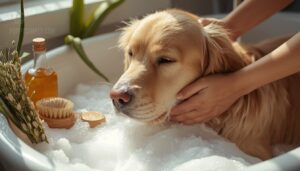
Think of a good bath as a full reset for your dog’s coat — and soap is what makes that reset work. When you apply a proper lather, the surfactants lift dirt, bacteria, and those lovely outdoor smells away from both the hair shaft and skin surface. That’s odor control doing its job.
For breed-specific guidance on timing and technique, beagle bathing frequency tips can help you keep that coat healthy without overdoing it.
But here’s where it gets important: pH balance matters more than most people realize. A cleanser with the wrong pH disrupts your dog’s natural skin barrier, which can trigger dryness or itching after every bath. That’s why choosing safe shampoo for dogs — ideally a hypoallergenic dog shampoo with natural dog grooming ingredients like oatmeal or aloe — makes a real difference.
Wrong pH in dog shampoo silently breaks down your dog’s skin barrier, causing dryness and itching after every bath
Lather distribution and rinse efficiency matter too. Good coverage plus a thorough rinse means no residue, no irritation, and a coat that actually stays clean longer.
Can I Wash My Dog With Dawn Dish Soap?
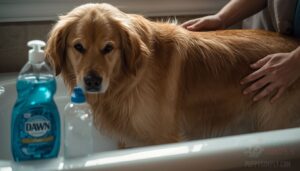
Now that it’s clear that pH balance is everything, let’s talk about something many people have tried in a pinch — Dawn dishwashing detergent.
Short answer? Use it sparingly, if at all. Here’s why:
- Oil Stripping: Dawn’s emergency degreasing power works too well on dog skin sensitivity — it strips the natural coat oils that keep skin healthy and comfortable.
- Skin Irritation and pH Mismatch: Dish soap isn’t calibrated for canine skin, so pH balance goes sideways fast, leaving your dog itchy and flaky.
- Flea Myth: Despite what you’ve read online, Dawn isn’t a flea solution — it’s a temporary fix at best.
When choosing safe shampoo for dogs, skip the kitchen sink. The risks of using dish soap on pets simply aren’t worth it.
Is It Safe to Use Human Soap on Dogs?
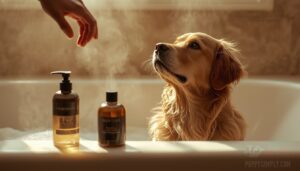
Here’s the honest truth: regular human soap just isn’t built for your dog.
Human skin and dog skin have completely different pH levels, which is why you’ll want to look for a gentle, sulfate-free dog shampoo that won’t strip your pup’s natural coat oils.
The differences between human and dog shampoo go deeper than the label.
Human skin is more acidic, so human shampoo is formulated around that — not around pH balance in canine skin.
When you use it on your dog, that pH compatibility gap disrupts their skin barrier quickly.
You’re looking at oil stripping effects, irritation, and a coat that feels like straw.
Add in fragrance sensitivity and ingredient toxicity from dyes and essential oils, and the risks of using human soap on dogs stack up quickly.
Stick with something made for them.
What Can I Use in Place of Dog Shampoo?
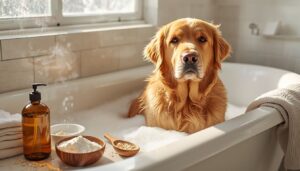
No dog shampoo on hand? Don’t panic — you’ve got options.
Diluted castile soap, like Dr. Bronner’s Pure-Castile Soap, works well when mixed with water for a gentle, plant-based clean.
Oatmeal baths soothe itchy skin beautifully.
Baking soda freshener sprinkled on dry fur manages odors between baths.
Cornstarch dry shampoo absorbs oils fast — just brush it out.
Baby wipe spot-clean saves the day for muddy paws.
These DIY dog shampoo alternatives use natural ingredients and work great in a pinch.
Choosing The Right Soap for Your Dog
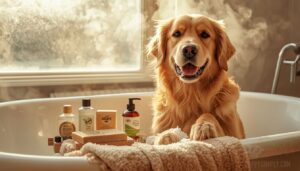
Not all soaps are created equal — especially when your dog’s skin is on the line. The right choice comes down to a few key factors that make a real difference for your pup’s coat and comfort.
Here’s what to keep in mind as you shop.
The Benefits of Natural Ingredients
Natural ingredients aren’t just a trend — they’re genuinely better for most dogs’ skin and coat. Here’s why they stand out:
- Moisture Retention: Oils like coconut and olive contain fatty acids that soften the coat and reduce post-bath tightness. Shea butter goes a step further, adding a rich, emollient layer that keeps dry coats from feeling like straw.
- Soothing Plant Extracts: Aloe vera cools irritated skin on contact. Colloidal oatmeal calms itching beautifully — it’s practically a spa treatment for sensitive pups. These botanical ingredients work gently, especially in hypoallergenic dog soaps.
- Antioxidant Protection: Vitamin E and plant-based polyphenols help protect your dog’s skin barrier and keep formula oils fresh longer.
Gentle surfactants and biodegradable ingredients round things out — cleansing effectively without stripping what your dog’s coat actually needs.
Avoiding Harmful Chemicals
Some ingredients in pet soap can quietly wreak havoc on your dog’s skin.
Stick to hypoallergenic dog soaps with natural ingredients — and actively avoid harmful chemicals like parabens, synthetic dyes, and formaldehyde releasers.
Fragrance-free formulas and dye-free shampoos reduce unnecessary irritation, while paraben-free products limit hormone-disrupting exposure.
Skip anything with quaternary ammonium compounds or mineral oil, too.
Chemical-free grooming isn’t just a buzzword — it genuinely protects your dog’s skin barrier long-term.
Choosing Essential Oils Safely
Essential oils aren’t automatically dog-friendly just because they smell nice. Before adding any to your dog’s bath routine, here’s what actually matters:
- Dilution Ratios: Essential oils are concentrated — always mix them into a carrier oil or water first. Even pet-safe options can irritate skin undiluted.
- Patch Testing: Apply a small amount to one spot and wait 24 hours. Watch for redness, itching, or pawing at the area.
- Pet-Safe Labels and Storage Guidelines: Only use products that clearly list ingredients and safe-use directions. Store oils in dark glass bottles away from heat to prevent oxidation.
The Toxicity Lists are real — essential oil toxicity is serious. Risks of tea tree oil for animals are well-documented, so skip it entirely. Safe use of essential oils on dogs means following essential oil safety guidelines for pets closely, every single time.
The Importance of Proper Bathing Techniques
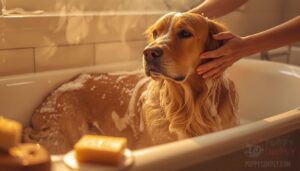
Good bathing technique is just as important as choosing safe soap for dogs. Start by brushing out any mats before the water touches the coat.
Then wet thoroughly — wetting coverage matters more than people think. Use lukewarm water; too hot dries the skin, too cold stresses your dog out.
Work up a lather and massage gently, avoiding eyes and ears. Thorough rinsing removes every trace of soap.
Finish with gentle drying using a towel, and mind your bathing frequency — once a month usually hits the sweet spot.
Frequently Asked Questions (FAQs)
Is it okay to wash a dog with soap?
It depends on the soap. The wrong one can disrupt your dog’s acid mantle, raising skin pH and triggering dermatitis risk.
Choosing safe soap for dogs means skipping anything alkaline or loaded with irritants.
Is it OK to wash a dog with soap?
Yes, you can wash your dog with soap — but pH-balanced, natural pet soap only.
Human soaps disrupt your dog’s acid mantle, risking coat dryness, allergic reactions, and irritation from residue or harmful chemicals.
Can I wash my dog with Dawn dish soap?
Dawn dish soap is a powerful degreaser — great for dishes, not so great for dogs.
It strips the natural oils your dog’s coat depends on, throwing off its skin’s pH balance and risking dryness and irritation.
Can I wash my dog with human soap?
Human soap isn’t built for dogs.
Different pH Compatibility needs, Ingredient Irritants like fragrances, and oil stripping can damage your dog’s Skin Barrier Impact — hurting Long-term Coat Health.
Skip regular human soap; it’s not worth the risk.
What can I use in place of dog shampoo?
Ran out of dog shampoo? Don’t panic.
Diluted Castile Soap like Dr. Bronner’s Pure-Castile Soap, an Oatmeal Bath Mix, or a simple Coconut Oil Cleanser, all work well as natural alternatives in a pinch.
How often should I bathe my long-haired dog?
For most long-haired dogs, bathing four to six weeks hits the sweet spot. Active or outdoor dogs may need it sooner.
Always brush that long coat thoroughly before bath time.
Can I use dry shampoo between baths?
Yes, dry shampoo works well between baths. It absorbs oil and freshens your dog’s coat without water.
Just brush it out fully afterward, watch for skin irritation, and don’t skip regular baths.
Are there soaps specifically for dogs with allergies?
Absolutely — hypoallergenic dog soaps exist for exactly this reason.
Look for fragrance-free cleansers with oatmeal-based shampoos or aloe to calm irritated skin. pH-balanced detergents protect sensitive coats without stripping natural oils.
How do I clean my dogs face safely?
Your dog’s face deserves extra care. Dampen a soft cloth with lukewarm water and gently wipe around the muzzle and jowls.
Use Petsafe wipes or hypoallergenic dog soaps near folds. Always pat dry — never rub.
Should I use conditioner after washing my dog?
Short answer: Yes, use conditioner after washing your dog.
It restores coat moisture, helps with tangle prevention, and keeps skin sensitivity in check — especially for long-haired breeds that need it most.
Conclusion
Think of bath time as a small act of stewardship—one that protects the coat, the skin, and the trust your dog places in you. Getting dog washing and bathing with soap right isn’t complicated once you understand what your dog’s skin actually needs.
Skip the human products, choose gentle ingredients, and use the right technique.
Do that, and every bath becomes less of a chore and more of a quiet moment that strengthens your bond.
- https://gtaanimalhospital.thornhillveterinary.ca/blog/can-i-wash-my-dog-with-soap.html
- https://nicksbeard.com/can-you-use-human-soap-on-dogs/
- https://cooperandquint.com/en/blogs/cooper-quint-blog/washing-dog-with-soap
- http://www.ndpetcare.com/how-to-bathe-your-dog-at-home.html
- https://pmc.ncbi.nlm.nih.gov/articles/PMC10800696/