
This site is supported by our readers. We may earn a commission, at no cost to you, if you purchase through links.

Wire-haired dogs have a reputation for being low shedders—and that reputation isn’t exactly wrong, but it isn’t the full story either. The coarse, dense coat traps loose hair before it hits your couch, which makes shedding harder to see, not harder to find.
Run a brush through a wire-haired dog after a few days, and you’ll quickly discover where all that hair was hiding.
Wire-haired dog shedding frequency follows the same biological rhythms as any other breed—continuous turnover, seasonal spikes, and health-driven surges.
Knowing what drives each phase helps you stay ahead of it.
Table Of Contents
Key Takeaways
- Wire-haired dogs don’t shed less — their coarse coat just traps loose hair, so the mess hides until you brush it out.
- Shedding peaks in spring and fall when daylight and temperature shifts trigger a full undercoat reset, so ramp up grooming before those windows hit.
- Health issues like poor nutrition, skin irritation, stress, and hormonal imbalances can quietly drive excess shedding year-round — if it looks off, get bloodwork done.
- A simple routine — brush twice a week, hand-strip every 6–8 weeks, and bathe every four to six weeks — keeps shedding manageable and your dog’s coat healthy.
Do Wire-Haired Dogs Shed Less?

Wire-haired dogs do shed, but it doesn’t always look that way. Their rough outer coat holds onto loose hair instead of letting it fall freely.
That trapped hair is actually one reason wire-haired breeds appear on many lists of dogs that rarely shed fur, even though they’re technically still shedding.
Here’s what’s actually happening beneath that scruffy surface.
Why Shedding Looks Lighter
Wire-haired dogs don’t actually shed less — they just look like they do. It comes down to visual contrast and hair diameter. Their coarse, wiry hairs blend into surfaces instead of floating around dramatically. That doublelayered coat holds shed hair close, so fallout stays hidden until grooming day.
- Wiry hairs catch light differently, reducing visibility
- Darker, thicker strands disappear against most fabrics
- Coat tightness keeps loose hair anchored longer
- Surface interaction means less scatter across floors
Why Loose Hair Gets Trapped
That trapped hair doesn’t disappear — it hides. The double-layered coat acts like a net, catching shed strands before they fall.
Fabric loops in your couch and clothing snag them further through static cling and friction zones.
Dryer tumbling presses hair deeper into weaves.
Hair breakage creates tiny fragments that wedge in tightly.
Without regular brushing and undercoat removal, matting follows quickly.
What Owners Usually Notice
Most owners first notice clothing lint after cuddle sessions, not clumps on the floor. You’ll spot wiry strands on collars, cuffs, and car interior fur on seat covers. Upholstery hair clings stubbornly even after vacuuming.
During dog coat change periods, odor lingering in soft furnishings picks up too. For allergy-prone households, even light seasonal shedding can trigger an allergy flare.
How Often They Shed
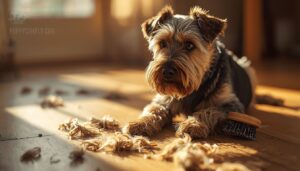
Wire-haired dogs don’t shed on one fixed schedule — it shifts depending on the season, the breed, and what’s going on with their health. Most owners notice a pattern once they know what to look for.
Here’s what that usually looks like across three key areas.
Year-round Shedding Frequency
Yes, wirehaired dogs shed year-round — it’s just quieter than you’d expect.
Baseline hair turnover happens constantly as individual follicles cycle through growth and rest phases. photoperiod driven shedding also plays a role in seasonal coat adjustments. Here’s what drives it:
- Hormonal cycle variation shifts shedding intensity week to week
- Ambient heat influence dries skin and loosens more hair indoors
- Airflow hair displacement releases trapped coat during movement
- Stress-driven shedding disrupts normal coat cycles anytime
When Shedding Feels Most Obvious
Shedding feels most obvious during spring and fall — those seasonal coat changes hit fast and hard.
You’ll notice it most at Owner Interaction Moments like petting or cuddling, at Pet Sleeping Spots on beds and couches, and during Peak Activity Hours after walks.
Temperature Shock Episodes and shifted Ventilation Patterns can suddenly release trapped hair, making seasonal coat blow feel like it appeared overnight.
How Long Shedding Cycles Last
Most shedding cycles last two to four weeks, but Exogen Phase Timing means it can stretch longer. Hormonal Cycle Length, Stress-Induced Extension, and Indoor Temperature Influence all affect how long it lingers.
Managing your home environment can help—especially if you want to understand how long cockapoos typically shed and what triggers extended cycles before adjusting your HEPA filter schedule.
- Genetic Shedding Variation means two dogs of the same breed can shed differently.
- Seasonal shedding in wirehaired breeds often peaks then tapers gradually.
- Seasonal coat changes in wirehaired dogs rarely stop abruptly.
Seasonal Shedding Peaks

Wire-haired dogs don’t shed evenly all year — there are two windows when things really pick up. Knowing when those peaks hit helps you stay ahead of the mess.
Here’s what’s actually driving the timing.
Spring Coat Blow
Spring is when wirehaired dogs really let go. Longer days and rising temperatures set off a hormonal trigger timing shift that loosens the undercoat fast.
You’ll notice undercoat thinning visuals — your dog’s coat looks sleeker, less puffy.
Cold snaps can pause the process briefly. Expect peak seasonal shedding over a few weeks, so ramp up grooming before it peaks.
Fall Coat Change
Fall works differently than spring. Instead of releasing old coat, your dog grows a new one — and the old undercoat pushes out as it does.
temperature drop trigger kicks in after the summer heat fades.
Undercoat molting patterns can look heavy, with loose clumps around the neck and chest.
Indoor heating effects may delay or stretch the adjustment phase grooming window by weeks.
Weather and Daylight Triggers
Your dog’s body runs on daylight cues, not the calendar. Dawn light shifts and dusk illumination changes signal the coat to cycle — even cloud cover effects can slow that trigger.
Temperature-driven shedding ramps up when outdoor temps swing hard. Wind-induced hair dispersal scatters loose coat fast after walks.
These seasonal transitions drive shedding cycles in canines more than most owners realize.
Double-Coat Shedding Mechanics
Understanding how your wire-haired dog’s coat actually works makes shedding a lot less mysterious. There are two layers involved, and they don’t behave the same way.
Here’s what’s happening beneath the surface.
Outer Coat Vs Undercoat

Think of your wire-haired dog’s coat as two completely different systems working together. The outer layer has longer, stronger hairs with a full cuticle structure — built for protection. Beneath it sits the undercoat, a dense thermal barrier of finer fibers in direct skin contact. Here’s what sets them apart:
A wire-haired dog’s coat is two systems in one: tough outer armor above, soft thermal insulation below
- Fiber density: Undercoat hairs pack tightly near the skin
- Length difference: Outer hairs grow noticeably longer and more slowly
- Cuticle structure: Outer hairs have more protective layers
- Thermal barrier: Undercoat traps warmth close to the body
- Skin contact: Undercoat sits flush against the skin, outer coat doesn’t
Understanding this helps explain the distinct shedding patterns of wirehaired breeds and why seasonal coat changes in wirehaired dogs look different than in short-haired dogs.
Why Undercoat Sheds More

undercoat sheds more because it’s doing the heavy lifting. Its job is Thermal Insulation Adjustment — keeping your dog warm in winter, cool in summer.
When daylight and temperature shift, Hormonal Follicle Activation signals the body to release that dense layer. Undercoat Fiber Density means there’s simply more hair to release.
That’s why seasonal coat changes in wirehaired dogs can feel overwhelming — it’s a full system reset.
How Coat Texture Affects Fallout

Coat texture changes everything about how hair actually leaves the coat.
Wiry outer layers create a Rough Surface Shedding effect — loose hair slides off rather than clumping. The Airflow Drying Effect keeps shed hair moving outward instead of sticking.
Think of it like Hooked Hair Release: brief grip, then gone.
Oil Adhesion Dynamics and Fabric Grip Variation explain why you’ll spot single wiry hairs on dark clothing more than bundles.
Breed Differences in Shedding

Not every wire-haired dog sheds the same way — breed really does matter here. Some are pretty low-key year-round, while others practically remodel your couch twice a year.
Here’s how a few common wire-haired breeds compare.
Wirehaired Dachshunds
Wirehaired Dachshunds carry a lot of personality in a small frame — their Temperament Traits run bold and curious, shaped by their Historical Origin as burrowing hunters.
Shedding patterns of wirehaired dogs like these follow seasonal coat changes, especially in spring and fall.
Their double-layered coats need:
- Weekly brushing to pull loose hair
- Hand-stripping every 6–8 weeks
- Monthly baths to protect skin oils
- Attention to belly and neck tangles
- Grooming requirements for wirehaired breeds matched to Exercise Requirements and Living Space Suitability
Wirehaired Terriers
Terriers tend to shed more noticeably than Dachshunds, thanks to a thicker undercoat. Genetic Shedding Variability means two dogs from the same litter can shed very differently. Seasonal coat changes in wirehaired dogs hit harder in spring and fall. Age Related Shedding and Exercise Impact also play a role — older or highly active dogs often shed more.
Remember, grooming requirements for wirehaired breeds matter here: Owner Grooming Mistakes like skipping hand-stripping let loose hair pile up fast. Wirehaired Terriers aren’t truly hypoallergenic, despite their hypoallergenic qualities of wirehaired dogs reputation, so Allergy Sensitivity is still worth considering.
Wirehaired Griffons
Griffons sit at the lighter end of the shedding spectrum. Their Breed History as field dogs shaped a coat built for endurance, not excess fallout.
Thanks to their double-layered coat structure, loose hair stays trapped rather than floating free.
Seasonal coat changes in spring and fall are the main events.
Regular grooming requirements keep shedding manageable, especially given their active Exercise Requirements and outdoor Living Conditions.
German Wirehaired Pointers
German Wirehaired Pointers shed modestly year-round, with noticeable bumps during seasonal coat changes in spring and fall. dense, weather-resistant double coat traps loose hair rather than letting it drift freely — which helps with seasonal allergies but means brushing matters more.
Exercise impact is real too; active outdoor dogs distribute hair faster.
Coat color variation doesn’t affect shedding, but consistent grooming requirements keep it manageable.
Grooming Routines That Help
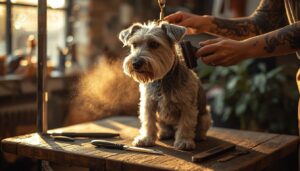
Good grooming is the best tool you have against shedding. A consistent routine keeps loose hair from piling up on your couch — and your dog’s coat in much better shape.
Here’s what actually matters.
Brushing Frequency
Twice a week is your baseline — but bump that up to daily during spring and fall shedding peaks.
Daily brush timing matters because loose hair builds fast inside a wiry coat. A slicker brush or undercoat rake makes a real difference in session length optimization.
Short, consistent sessions beat occasional long ones. Weave brushing into your regular grooming routine, and it stops feeling like a chore.
Hand-stripping Schedule
Hand-stripping isn’t calendar-driven — it’s coat-driven. For wirehaired breeds, your grooming schedule depends on Growth Stage Tracking, not the date.
Regrowth Timing by feel: if hair pulls out easily, it’s ready. Area Prioritization — ears and body often mature faster than legs.
Session Frequency every 6–8 weeks, adjusting as shedding patterns shift. Post-Strip Care keeps that double coat texture intact.
Bathing Intervals
Bathing wirehaired dogs too often actually backfires — it strips the oils that keep that wiry coat healthy. Stick to four to six weeks unless Bath Frequency Triggers kick in, like Odor Based Scheduling after a muddy walk or visible grease buildup.
- Use lukewarm water and a gentle dog shampoo
- Rinse thoroughly — wiry coats trap residue easily
- Dry completely to prevent skin irritation
- Adjust Skin Sensitivity Timing if redness appears
- Choose fragrance-free options for Allergy Friendly Baths
Best Grooming Tools
The right tools make grooming a wirehaired coat actually manageable. A deshedding tool reaches deep into the undercoat, while a slicker brush lifts mats and loose fur. For deshedding tool selection, stainless steel blades stay sharp longer and resist rust.
| Tool | Best For |
|---|---|
| Slicker Brush | Mat removal, loose undercoat |
| Curry Brush | Daily coat polish, oil distribution |
| Deshedding Tool | Seasonal undercoat clearing |
| Nail Grinder | Safe, gradual nail shaping |
All-in-One Kits bundle these essentials affordably. Look for Clipper Noise Reduction features — quieter tools stress dogs less. Nail Grinder Safety guards prevent cutting too deep. A good pin brush rounds out your kit for finishing touches.
Health Issues That Increase Shedding

Sometimes shedding has nothing to do with the season. Health problems can quietly push your dog’s coat into overdrive, and it’s easy to miss the signs until things get worse.
Here’s what to watch for.
Poor Nutrition
What your dog eats shows up in their coat — fast. Protein deficiency means less keratin, and that leads to more shedding.
Micronutrient imbalance, low gut health absorption, or calorie restriction all quietly stress the follicles.
Omega fatty acids — especially omega-3 fatty acids — keep skin supple and reduce excess fallout.
A balanced diet and smart nutritional supplementation for coat health can make a real difference.
Skin Irritation and Dermatitis
Nutrition sets the foundation, but skin irritation can undo it fast. Dermatitis — whether from allergic contact with a shampoo or repeated irritant exposure — damages the skin barrier and triggers a scratch-shed cycle.
You’ll notice more fallout, redness, and restless itching.
For wirehaired dogs, those grooming recommendations matter: wrong products = real dermatitis triggers. Itch relief starts with identifying what’s touching their skin.
Stress and Hormonal Changes
Skin issues aren’t the only thing messing with your dog’s coat. Stress hits hard too.
A cortisol impact from chronic anxiety triggers hair cycle disruption — follicles shift out of the growth phase too soon.
Add an adrenaline surge from ongoing stress, and you get gonadal suppression plus immune modulation that worsens shedding patterns in wirehaired dogs.
Hormonal conditions like hypothyroidism and Cushing’s disease do the same.
When to See a Vet
Hormonal imbalances and stress don’t fix themselves. If your wire-haired dog’s shedding seems off, a vet checkup is the right call. Watch for:
- Sudden appetite loss, persistent vomiting, or breathing difficulty
- Eye redness or severe skin lumps that keep changing
- Excessive shedding paired with skin infections or unusual lethargy
Hypothyroidism won’t show up in a brush — it shows up in bloodwork.
Managing Hair Around The House

Living with a wire-haired dog means hair shows up in places you didn’t expect. The good news is a few simple habits can keep it from taking over your home.
Here’s what actually helps.
Cleaning Floors and Furniture
Wire hair traps a lot, but it still lands on your floors and couch. A HEPA vacuum filter is your best friend here — it pulls up fine dander without sending it airborne again.
Try the Rubber Squeegee Tips trick on carpets before vacuuming. Lint Roller Usage on furniture takes seconds.
Pet Hair Gloves work great on upholstery, and a Microfiber Mop Technique cleans hard floors fast.
Reducing Dander Buildup
Dander doesn’t just disappear after brushing — it settles everywhere. Run a HEPA Filtration unit in rooms where you spend the most time. Pair that with Damp Dusting surfaces weekly, since dry cloths just scatter particles around.
Wash your dog’s Washable Bedding regularly on a hot cycle. Good Airflow Management and Ventilation Maintenance keep dander from building up between cleans.
Preventing Mats and Tangles
Mats sneak up on you — especially in high-friction spots like behind the ears and under the collar.
Use a Slip Spray before brushing to loosen fur tangles without pulling.
Targeted Spot Brushing those problem areas twice weekly is non-negotiable for wirehaired coats.
Regular Coat Drying after wet walks prevents clumps from tightening.
Protective Harnesses reduce friction, and the right brush and grooming tools for wirehaired coats make regular grooming genuinely manageable.
Keeping Shedding Under Control
Keeping shedding under control comes down to a few simple habits working together. Stick to a consistent grooming schedule for wirehaired dogs, support double coat shedding from the inside with omega-rich food and proper hydration levels, and consider dietary supplements if your vet recommends them.
Regular vet checks catch hormonal issues early.
Add air purification and stress reduction, and your home stays manageable.
Frequently Asked Questions (FAQs)
Do wirehaired dogs shed less?
Yes and no. Wirehaired dogs shed, but their coarse outer coat traps loose hair instead of dropping it on your floor.
That’s Hair Retention Mechanics at work — less mess visible, same shedding happening.
Why do wirehaired Dachshunds shed a lot in the spring?
Spring is peak shedding season for wirehaired Dachshunds.
Their double-layered coats respond to environmental cue sensitivity — longer days and rising temperatures trigger inner coat renewal, hormonal regulation shifts, and a full thermoregulation shift that drives heavy undercoat loss.
Why do Wirehaired terriers shed a lot?
Wirehaired Terriers carry a lot going on beneath that rough exterior.
Their double-layered coats, dense Fiber Density, and Dead Hair Retention make Seasonal coat changes in wirehaired dogs feel heavy — especially with Hormonal Triggers and Genetic Variation at play.
Do Wirehaired Griffons shed?
They do shed, but not much. The Wirehaired Griffon is one of the lighter shedders. That wiry coat traps loose hair, so you won’t notice much fallout around the house.
How does age impact shedding in wire-haired breeds?
Aging shifts the hair cycle in wirehaired breeds. Senior coat turnover slows, but greying hair patterns and hormonal changes can make shedding look uneven.
Good senior nutrition impact keeps the coat healthier longer.
Does climate or geographic region influence shedding frequency?
Yes, climate matters.
Temperature Fluctuations and humidity levels drive Seasonal coat changes in wirehaired dogs. Latitude Variation and indoor climate shift shedding timing.
Dogs in stable environments shed more evenly year‑round.
Conclusion
Once you know what’s driving the shedding, you’re already ahead of the game. Wire haired dog shedding frequency follows real patterns—seasonal shifts, coat cycles, health signals. None of it’s random.
Brush consistently, watch for health changes, and stay on top of grooming. Your dog’s coat will tell you when something’s off.
Trust what you see. A little routine now saves a lot of cleanup later—and keeps your dog comfortable year-round.