This site is supported by our readers. We may earn a commission, at no cost to you, if you purchase through links.

Watch a dog work for kibble, then swap in a piece of freeze-dried liver. The difference isn’t subtle—ears forward, eyes locked on you, whole body coiled like a spring.
That reaction isn’t just enthusiasm. It’s brain chemistry.
High-value treats trigger a stronger dopamine response than everyday food, which means your dog isn’t simply more excited—they’re more motivated to repeat whatever earned that reward.
Knowing why high-value treats work better for training changes how you approach every session. The right reward at the right moment can be the difference between a dog who sort of gets it and one who nails it every time.
Table Of Contents
- Key Takeaways
- What Are High-Value Training Treats?
- They Create Stronger Motivation
- Why Dogs Learn Faster
- Scent Beats Everyday Distractions
- Taste Makes Rewards More Memorable
- High-Value Versus Regular Treats
- When to Use Better Treats
- Choosing Treats That Work
- Preventing Treats From Losing Value
- Training Safely Without Overfeeding
- Frequently Asked Questions (FAQs)
- Conclusion
Key Takeaways
- High-value treats trigger a stronger dopamine response in your dog’s brain, making them more motivated to repeat whatever behavior earned the reward.
- Save your best treats for the hardest moments — new behaviors, recall under distraction, or fear-based situations — so they never lose their power.
- Your dog learns new commands up to twice as fast when you reward within two seconds of the right behavior, so timing matters just as much as the treat itself.
- Keep treats pea-sized, rotate them every few months, and count their calories against your dog’s daily intake to train effectively without overfeeding.
What Are High-Value Training Treats?
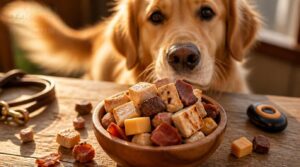
Not all treats are created equal, and your dog knows the difference. A high-value training treat is simply one that gets your dog excited enough to work for it, even when the world around them is full of distractions. Here’s what actually makes a treat "high-value" in the first place.
Think of it as a hierarchy of motivation—and understanding how to use treats effectively when training dogs helps you match the right reward to the right moment.
Dog Preference Matters Most
Not every treat earns the same reaction from your dog. Dog preference drives reward value — not price or packaging. A treat your neighbor’s dog goes wild for might barely interest yours. That’s why identifying what genuinely excites your dog is the real starting point for effective training.
The five signs a treat truly motivates your dog:
- Full-body excitement the moment you reach for it
- Immediate eye contact and focus on you
- Rapid consumption with no hesitation
- Choosing it over environmental distractions
- Returning to you eagerly after each reward
Better Than Everyday Kibble
Knowing what makes your dog tick is only half the battle. The other half is understanding why high-value treats outperform everyday kibble in training.
Kibble triggers a small reward response. High-value treats trigger a much bigger one. That difference matters when you need your dog’s full attention.
| Feature | High-Value Treat vs. Kibble |
|---|---|
| Aroma strength | Up to 30% more attention-grabbing |
| Dopamine response | Noticeably stronger motivation signal |
| Satiation risk | Lower — small bites keep drive intact |
Reserved for Hard Tasks
Think of your best treat as a secret weapon — one you pull out only when it counts. Save high-value treats for hard tasks, like recall in a busy park, or learning a new command. Use plain kibble for simple sits.
This reward hierarchy keeps your dog motivated and prevents the good stuff from losing its power. The power of high‑value snacks often comes from strong aroma treats, which instantly capture a dog’s attention.
Different for Every Dog
No two dogs are wired the same. Your dog’s individual temperament, genetics, and early life experiences all shape what makes a reward feel worth working for. One dog goes wild for freeze-dried liver; another barely glances at it but lights up for soft fish morsels. Dental health matters too — a dog with sensitive teeth needs softer options.
- Temperament drives treat preference
- Genetics influence scent and flavor motivation
- Early experiences shape texture comfort
- Dental health narrows texture choices
- Environment shifts reward perception daily
They Create Stronger Motivation
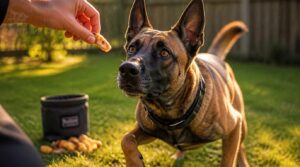
High-value treats don’t just taste better — they change how your dog shows up for training. When the reward feels worth working for, everything shifts: attention, effort, and speed. Here’s exactly how that stronger motivation plays out.
Bigger Reward Expectation
Your dog’s brain is wired to work harder when a bigger reward is on the line.
High-value treats trigger a larger dopamine release, making the neural connection between behavior and reward much stronger.
That anticipation alone drives more effort before the treat even arrives — deepening the learning signal magnitude with every successful repetition.
Faster Attention Shift
When a high-value treat enters the picture, your dog’s attention snaps toward you like a magnet. Olfactory competition does the heavy lifting — that potent smell cuts through barking dogs, rustling leaves, and passing strangers.
Three moments when this matters most:
- Outdoor recall near traffic or other dogs
- First exposure to a new, distracting environment
- Redirecting focus away from fixated staring
A single aromatic morsel keeps your dog locked in — no broken focus, just rapid reinforcement, rep after rep.
More Eager Responses
When you pull out a high-value treat, your dog’s whole body tells the story before you even give a cue. Tail wag velocity accelerates, ears lift forward, and there’s a slight rise in the front paws — these postural alertness cues signal real motivation is already building.
| Signal | What You See | What It Means |
|---|---|---|
| Visual focus signals | Locked gaze on your face | Dog is primed and ready |
| Anticipation vocalizations | Soft whines or light barks | Reward value scaling working |
| Postural alertness cues | Forward lean, body tension | Food-based motivation activated |
Reading body language like this confirms positive reinforcement is doing its job — your dog isn’t just responding, they’re ready to respond.
When you spot that eager, relaxed readiness in your pup, dog training collars for busy working professionals can help you reinforce those moments consistently, even on a packed schedule.
Better Training Focus
Focus isn’t luck — it’s chemistry. High-value training treats trigger a dopamine reward cycle that keeps your dog mentally locked in, not drifting toward squirrels or passing joggers.
That olfactory engagement pulls attention fast, and small, immediate rewards keep momentum going.
The result? Better canine motivation, tighter reinforcement timing, and a dog that stays with you mentally, even when the world is competing for their attention.
Why Dogs Learn Faster
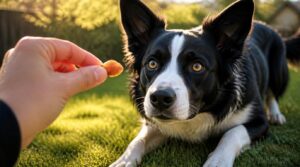
There’s a real reason high-value treats speed up learning — and it goes deeper than just making your dog happy. The way your dog’s brain processes a powerful reward actually changes how quickly a new behavior sticks. Here’s what’s happening behind the scenes.
High-value treats don’t just reward your dog — they rewire the brain, making new behaviors stick faster and deeper
Reward Strengthens Behavior
Every reward your dog earns quietly rewires the brain. Positive reinforcement training activates the mesolimbic dopamine pathway, strengthening synaptic connections each time a behavior is followed by food.
High-value treats trigger a larger dopamine spike than kibble, making that neural link stronger and faster.
Repeated rewards also reduce cortisol, so your dog stays calm, focused, and ready to learn more.
Immediate Reinforcement Matters
Timing is everything. Dogs can only connect a behavior to its reward within a two-second window — miss it, and you’ve rewarded the wrong thing.
That’s why immediate reinforcement is non‑negotiable. Use a clicker or a sharp "Yes!" as a marker, the instant your dog gets it right, then follow with a high-value reward within one second.
Clear Cause and Effect
When your dog sits and immediately gets a high-value treat, something clicks — literally. That behavior-reward link becomes unmistakable.
Dogs learn commands in as few as 3–4 repetitions with immediate reward timing, versus 8–10 when rewards come late. The message becomes crystal clear: that action caused this reward.
No guessing, no confusion.
Faster Repetition Cycles
Rapid reinforcement timing builds on that clear cause-and-effect link. When your dog swallows a treat in under five seconds, you’re ready for the next repetition almost immediately.
That speed adds up fast:
- Soft high-value treats let you complete 60–80 reps per session
- Minimizing chewing pauses keeps your dog locked in
- More reps mean faster, stronger behavior reinforcement
Scent Beats Everyday Distractions
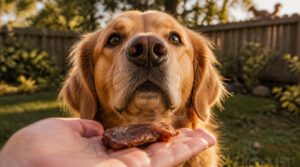
Your dog’s nose is working overtime even when their eyes are fixed on a squirrel across the yard. A treat with a powerful, natural smell can cut right through that chaos and pull their focus back to you. Here’s what makes scent such a powerful training tool — and which aromas actually get the job done.
Strong Natural Aroma
A dog’s nose is working overtime before the treat even leaves your pocket. That’s because volatile aroma compounds release instantly into the air, reaching your dog long before your hand moves. Aroma intensity peaks when treats are fresh and unoxidized.
| Aroma Factor | Training Impact |
|---|---|
| Fresh compounds | Sharper, faster scent detection |
| Heat and humidity | Increases compound volatility |
| Oxidized compounds | Weakens and muddles the scent |
Liver, Fish, Beef
Not all protein sources smell the same to your dog. Liver, fish, and beef each release distinct, powerful aromas that cut through surrounding scents.
Beef delivers heme iron and amino acids. Fish brings omega-3s. Liver is nutrient-dense and intensely pungent.
These single-ingredient rewards give you food-based motivation that’s hard to ignore — and even harder for your dog to resist.
Outdoor Training Distractions
Outdoor environments are fundamentally a sensory obstacle course. Weather, movement, and noise all compete for your dog’s attention at once.
Wet ground amplifies scent trails. Traffic and wildlife create constant visual pulls.
Nearly half of all dogs show heightened reactivity during storms. High-value treats — especially liver or fish — produce an aroma strong enough to cut through that chaos and bring focus back to you.
Recall Around Excitement
When excitement is running high, recall can sharpen — not slip. Arousal naturally biases your dog’s attention toward the most salient cue available.
If that cue is you, holding something intensely aromatic, you win. A high-value treat becomes a contextual retrieval anchor, pulling their focus back fast.
Just watch for overexcitement; it can flip precision into impulse.
Taste Makes Rewards More Memorable
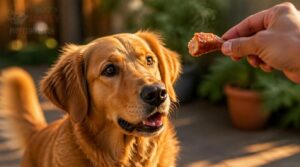
Scent grabs your dog’s attention, but taste is what makes the reward stick in their memory. The right flavors don’t just satisfy — they make your dog want to repeat the behavior that earned them. Here’s what gives high-value treats that lasting edge.
Protein-rich Flavors
Not all flavors pull equal weight in training.
Beef-based treats score among the highest for savory intensity — think rich, meaty, and impossible to ignore. Fish and seafood options bring marine notes that dogs find genuinely compelling. Poultry blends like chicken and turkey stay adaptable without overwhelming. Even dairy-based formats boost palatability through creaminess, making protein-rich treats a reliable foundation for food-based motivation.
Fat and Umami Appeal
Two things make a treat genuinely irresistible: fat and umami.
Fat carries savory flavor deep into every bite while releasing a lingering aroma your dog can’t tune out. Umami — the meaty richness from glutamates — triggers stronger reward signaling in the brain.
Together, they make each treat feel like a jackpot, not just a snack.
Soft, Quick Chewing
Texture matters more than most owners realize. Soft training treats compress the moment your dog bites down — no grinding, no delay.
They’re gone in under a second, keeping training session efficiency high and interruptions near zero. That rapid swallowing keeps the rhythm tight between reward and the next cue, making every repetition count.
One-bite Reward Delivery
Think of it as a closed loop: one small bite, swallowed in under a second, immediately links the reward to the exact behavior you wanted. That’s rapid reinforcement at its best.
Keep your training treats pea-sized or smaller — they maintain momentum, minimize distraction windows, and let you repeat the cycle dozens of times without breaking your dog’s focus.
High-Value Versus Regular Treats
Not all treats are created equal, and knowing the difference changes how you train. The gap between a high-value reward and a regular snack goes deeper than flavor — it shapes your dog’s motivation, attention, and willingness to work. Here’s what sets them apart and when each one belongs in your training routine.
Motivation Level Differences
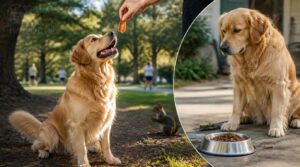
Not all treats hit the same. Regular kibble might earn a sit in your living room, but it won’t compete with a squirrel in the park.
High-value treats trigger a dopamine reward surge that ordinary snacks simply can’t match — pushing your dog’s motivation stack higher and making even distraction-heavy environments feel workable.
Best Training Situations
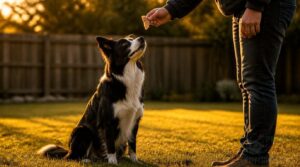
High-value treats belong in specific moments — not every session. Use them for distraction training and recall, especially after a calm walk when your dog’s focus is sharp but energy is settled.
Train in a quiet environment before meals, when hunger naturally boosts motivation. Match the reward to the challenge: harder tasks earn better treats.
Everyday Cue Rewards

Not every command needs a little treat.
For basic cues your dog already knows — sit, stay, down — regular low-value rewards do the job.
Consistent cue pairing with a predictable, smaller reward still builds neural pathways over time, reducing hesitation and keeping your dog obedient without burning through your best training treats.
Reward Hierarchy Basics
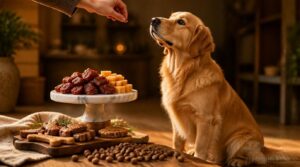
Think of it as a tiered reward system. Your dog’s best treats sit at the top — saved for hard tasks, new behaviors, or stressful situations.
Regular snacks fill the lower tiers for simple, familiar cues. Matching reward level to task difficulty keeps your dog engaged without dulling their response to your highest-value rewards over time.
When to Use Better Treats

Not every training moment calls for the big guns — but some absolutely do. Knowing when to pull out your best treats makes all the difference between a dog that’s distracted and one that’s locked in. Here are the situations where high-value rewards earn their place.
New Behavior Training
When you’re teaching something brand new, your dog has no idea what you want. That’s where high-value training treats earn their place.
They accelerate the learning curve by making the right choice feel worth it. Use task analysis to break the new behavior into small steps, rewarding each one. Shaping builds the full picture, one correct moment at a time.
Difficult Commands
Some commands push your dog to the edge of what they know. Complex tasks — like multi-step sequences, extended duration holds, or precise body position demands — require more motivation than kibble can deliver.
Use high-value treats for:
- Off-leash reliability drills
- Distraction tolerance at 20+ feet
- Chained multi-step behaviors
- Long-duration stay commands
Recall Practice
Recall is the one command where a high-value treat isn’t optional — it’s essential. Start 3 to 5 meters away in a quiet backyard.
Once your dog returns reliably, push out to 20 meters. Use a long line for safety. Freeze-dried liver or cheese beats any distraction.
Run away before calling — that chase instinct does half the work.
Fearful Situations
Fear doesn’t disappear on its own — but you can replace it. Counterconditioning works by pairing a scary trigger with a high-value treat the moment your dog notices it. That positive association slowly rewires their emotional response. Use threshold management to find the distance where your dog notices the trigger but stays calm enough to eat.
- Start far enough away that your dog notices without reacting
- Offer a high-value treat immediately after the trigger appears
- Move closer only when your dog accepts treats calmly
- If your dog refuses food, increase the distance — they’re over threshold
- Repeat across sessions until your dog anticipates treats instead of fearing the trigger
Vet Visit Conditioning
The vet’s office doesn’t have to be a battle. Happy visits — trips with zero medical agenda — build positive associations before stress ever enters the picture.
Bring your dog’s highest-value treats, practice basic commands in the waiting room, and let staff offer rewards.
Pair home handling drills with treats daily so examinations feel familiar when it counts.
Choosing Treats That Work
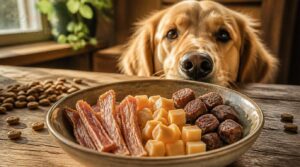
Not every treat will cut it when real training is on the line. The right pick comes down to a handful of qualities that make a treat worth your dog’s full attention. Here’s what to look for.
Strong Smell
Your dog’s nose is 1,000 times more powerful than yours — so aroma is everything in training. Treats with strong volatile compounds like liver or fish trigger olfactory receptors instantly, pulling your dog’s attention away from distractions.
- Pick treats detectable from at least a foot away
- Favor freeze-dried or moist options for lasting aroma stability
- Open fresh batches to prevent scent fatigue during sessions
Small Size
Scent gets your dog’s attention — but size keeps training moving. Small, bite-sized pieces disappear in one gulp, which means rapid reinforcement cycles stay tight and your timing stays precise. No waiting around while your dog chews.
Pea-sized pieces also keep caloric intake manageable. For a medium dog, each piece runs roughly 1–2 calories, so you can reward 60+ repetitions without derailing their diet.
Soft Texture
Texture matters more than most owners realize. Soft treats collapse instantly under the slightest bite, releasing flavor fast and rewarding your dog without a pause. That rapid flavor release keeps your reinforcement timing sharp and your dog locked in.
Soft meat morsels also reduce jaw strain during long sessions and eliminate the choking hazard that hard, brittle pieces create — especially for puppies.
Simple Ingredients
What’s inside the treat matters just as much as how it feels. Single ingredient profiles — plain chicken, salmon, or beef — cut out the noise and give your dog a clean, recognizable reward.
- Plain chicken breast for clear protein focus
- Salmon for natural omega-rich palatability
- Peanut butter for natural nut aromas
- Cheese for dairy palatability
- Brown rice for gentle whole grain options
Minimal processing preserves nutritional density, keeping each bite honest and effective.
Safe Protein Source
Not every protein source earns a spot in your training pouch. Antibiotic-free, single-protein sources like freeze-dried beef liver or salmon keep things clean and trustworthy.
Novel proteins — venison, duck, rabbit — work well for dogs with sensitivities.
Organ meats digest fast, delivering nutrients quickly so your dog stays focused, not sluggish, between repetitions.
Preventing Treats From Losing Value

Even the best treats lose their magic if your dog gets them every day without much effort. The good news is few simple habits can keep that excitement alive and make every reward feel like a big deal.
Here’s what to do to protect the value of your high-value treats.
Avoid Daily Overuse
High-value treats lose their power when you use them every single day. Think of them like a bonus at work — if it happens constantly, it stops feeling special.
Schedule rest days between high-value sessions so your dog stays hungry for that reward. On easier days, stick to lower-value options and protect the hierarchy.
Rotate Reward Options
Switch up your treats every 2 to 3 months. Rotating your reward package keeps the food reward hierarchy fresh and prevents your dog from tuning out familiar options.
Track which treats got the quickest, most enthusiastic responses each cycle. That data shapes your next rotation and keeps training motivation theory working in your favor, not against it.
Match Difficulty Level
Not every treat deserves equal billing. Think of it as a reward pay scale — easy commands earn standard snacks, while hard ones access the good stuff. This training difficulty scaling keeps your dog working for better rewards without burning through your highest-value options on simple sits.
- Basic cues → low-value treats
- New behaviors → mid-value treats
- Recall under distraction → high-value treats
- Fear-based conditioning → your dog’s absolute favorite
- Vet visits or stressful settings → premium, novel protein
Matching reward potency to task complexity directly increases learning speed. It also prevents reward dependency — your dog learns that harder work earns better pay, which strengthens your entire reinforcement schedule over time.
Use Surprise Rewards
Predictability is the enemy of motivation. When your dog knows exactly what’s coming, the reward loses its pull.
That’s why surprise rewards work — unpredictable reward timing keeps curiosity alive. Occasionally swap in your dog’s absolute favorite treat unexpectedly.
That novelty factor spikes engagement and reinforces the variable reinforcement schedule that makes behaviors stick long-term.
Training Safely Without Overfeeding
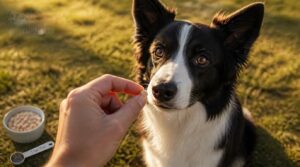
High-value treats are calorie-dense, so a little goes a long way — and it’s easy to overdo it without realizing. The good news is that a few simple habits keep your dog’s diet balanced while still making training effective. Here’s what to keep in mind:
Use Pea-sized Pieces
Think of treat size as your secret weapon. Keep each piece pea-sized or smaller — roughly 0.1 to 0.2 grams. This promotes rapid reinforcement cycles by eliminating chewing pauses and keeps your dog’s focus locked on you.
- Small bites enable 60–80 repetitions per session
- Each piece delivers under 0.5 kcal
- Precision reward timing stays sharp with one-bite delivery
Count Treat Calories
Every treat adds up faster than you think. Follow the 10% daily calorie rule — treats shouldn’t exceed 10% of your dog’s total daily intake.
For a dog on 500 calories, that’s just 50 treat calories. Training treats run 1–5 calories each, so count them.
Use a digital tracker to stay accurate across every session.
Reduce Meal Portions
Once you’ve counted treat calories, the next step is adjusting your dog’s meals to match. Reduce meal portions by the same calorie amount the treats provide that day. If treats cover 50 calories, pull that from dinner.
This keeps daily intake balanced without cutting nutrition. Tracking this consistently moves your dog steadily toward their ideal body condition score.
Watch Puppy Choking Risks
Puppies need bite-sized pieces — no larger than a small fingernail. Even with high-value dog treats, size matters more than flavor. A soft treat that indents with your fingernail is safer than anything firm or crumbly.
Always supervise training sessions. Stay within arm’s reach, and stop immediately if your puppy coughs, gags, or struggles to swallow.
Check Food Sensitivities
Not every dog tolerates high-value treats without issue. Some dogs have ingredient sensitivity or food allergies that can turn a training win into a veterinary visit. Watch for itching, loose stools, or vomiting after introducing a new treat.
- Log symptoms with exact timing
- Note shared ingredients across treats
- Try limited ingredient options only
- Run a short elimination trial
- Confirm triggers with your vet
Frequently Asked Questions (FAQs)
Are high value treats good for training?
Yes, high-value treats are excellent for training. They sharpen focus, speed up learning, and keep your dog engaged when it matters most — especially during distractions or when teaching tough new behaviors.
How do freeze-dried treats compare to fresh meat?
Both options work well. Freeze-dried treats win on convenience and shelf life. Fresh meat offers natural moisture and chew. For training, freeze-dried delivers faster, cleaner rewards in rapid repetition cycles.
Do high-value treats work the same for cats?
Surprisingly, yes — though cats aren’t exactly enthusiastic students. High-value treats still drive feline motivation.
Cats favor protein-forward, strong-smelling options like freeze-dried fish. Keep portions tiny; caloric limits matter here too.
Should puppies receive high-value treats during training?
Puppies absolutely benefit from high-value treats during training. Their short attention spans demand stronger motivation, and soft, pea-sized pieces deliver fast rewards without digestive upset — keeping young dogs focused and enthusiastic to learn.
Conclusion
Picture your dog mid-session—ears up, eyes sharp, locked on your hand like nothing else exists. That’s what the right reward does. It doesn’t just motivate; it rewires focus, sharpens memory, and makes every repetition count.
Understanding why high value treats work better for training lets you stop guessing and start building real skills, fast. Watch your dog become the learner they were always capable of being.
- https://crumps.ca/blogs/news/dog-training-101-unleash-your-dog-s-full-potential-through-dopamine
- https://pmc.ncbi.nlm.nih.gov/articles/PMC3032992
- https://k9connoisseur.com/blogs/news/high-value-dog-training-treats
- https://ducktownlodge.com/best-dog-treats-for-training-cumming-ga
- https://nulo.com/blogs/nutrition/your-complete-guide-to-healthy-training-treats-for-dogs