
This site is supported by our readers. We may earn a commission, at no cost to you, if you purchase through links.

Your dog just swiped a piece of chocolate off the counter. Maybe it was a brownie, maybe a square of dark chocolate someone left within reach. Your gut drops — because you know chocolate and dogs don’t mix, even if you’re not entirely sure why.
Here’s what makes that moment genuinely dangerous: theobromine, a compound in cacao, acts like a stimulant your dog’s body simply can’t switch off. Unlike humans, who metabolize it within a few hours, dogs need up to 18 hours to clear half the dose — and their system keeps reabsorbing it the entire time.
Understanding why chocolate kills dogs at a biochemical level changes how seriously you take that dropped candy bar.
Table Of Contents
- Key Takeaways
- Chocolate Kills Dogs Because Theobromine Overstimulates Their Body
- Why Dogs Cannot Safely Process Chocolate
- Which Types of Chocolate Are Most Dangerous?
- Signs Chocolate is Poisoning Your Dog
- What to Do if Your Dog Eats Chocolate
- Frequently Asked Questions (FAQs)
- Can dogs eat chocolate?
- Did chocolate kill a dog?
- Is Baker’s Chocolate toxic to dogs?
- Does chocolate toxicity affect a dog’s health?
- Is chocolate a painful death for dogs?
- Why are dogs killed by chocolate?
- What breed of dog is most sensitive to chocolate?
- Can dogs safely eat carob instead of chocolate?
- Are some dog breeds more vulnerable than others?
- Does chocolate affect cats or other pets?
- Conclusion
Key Takeaways
- Theobromine, the toxic compound in chocolate, has a half-life of 17–18 hours in dogs and continuously recirculates through the liver, keeping dangerous levels active long after ingestion.
- Toxicity risk scales directly with both chocolate type and body weight — baker’s chocolate carries 450 mg of methylxanthines per ounce, making even a small amount life-threatening for smaller breeds.
- Symptoms ranging from vomiting and restlessness to seizures and cardiac arrhythmia can appear within 1–4 hours and persist up to 72 hours, so immediate veterinary contact is essential — not optional.
- White chocolate poses virtually no theobromine risk, but its high fat content can still trigger pancreatitis, proving that no form of chocolate is truly safe for dogs.
Chocolate Kills Dogs Because Theobromine Overstimulates Their Body
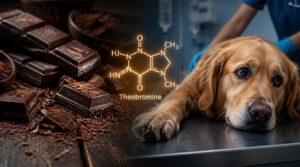
Chocolate doesn’t turn toxic by accident — it’s the chemistry that makes it dangerous. Two compounds, theobromine and caffeine, are the culprits, and your dog’s body simply isn’t built to handle them the way yours is. Here’s what’s actually happening inside their system.
Both compounds act as stimulants that dogs metabolize far more slowly than humans, which is why even small amounts can cause serious harm — everyday foods that are toxic to dogs include chocolate among several surprising culprits worth knowing.
Theobromine and Caffeine
Chocolate contains two methylxanthine alkaloids — theobromine and caffeine — that quietly rewire your dog’s entire body chemistry. Both compounds affect multiple systems:
- Block adenosine receptor binding, disabling your dog’s drowsiness signals
- Inhibit phosphodiesterase enzymes, elevating intracellular cAMP signaling
- Stimulate the central nervous system through methylxanthine signaling pathways
Caffeine crosses the blood-brain barrier rapidly but breaks down much faster. Theobromine persists longer. While safe for humans, theobromine is toxic to certain mammals, including domestic pets.
Methylxanthine Toxicity
Both compounds trigger a cascade that goes far beyond simple stimulation. Adenosine receptor blockade removes your dog’s natural calming signals, while phosphodiesterase inhibition floods cells with cyclic AMP, amplifying adrenergic signaling dramatically.
That shift unleashes catecholamine toxicity patterns — racing heart, spiking blood pressure, nervous system overdrive. Your dog’s body basically loses its internal brakes, all from a single toxic exposure.
Slow Canine Metabolism
That internal overdrive persists far longer than you might expect, because canine metabolic clearance of theobromine moves at a fraction of human speed.
Dogs eliminate methylxanthines so slowly that theobromine’s half-life stretches roughly 17–18 hours — meaning toxic concentrations stay biologically active long after the chocolate is gone.
- Genetic differences affect individual clearance rates
- Older dogs process methylxanthines more slowly
- Higher body fat alters toxic dose distribution
- Smaller dogs face proportionally heavier exposure
- Even partial absorption sustains dangerous theobromine levels
Nervous System Stimulation
That slow clearance means theobromine keeps firing through your dog’s nervous system long after ingestion. Methylxanthines depolarize neural pathways, triggering relentless stimulation across sensory and motor circuits simultaneously.
Think of it as a car alarm that won’t shut off — motor responses misfire, autonomic control destabilizes, and neurological symptoms like muscle tremors and seizures emerge as the central nervous system loses its footing.
Like a car alarm that won’t shut off, theobromine misfires a dog’s motor responses until seizures consume the nervous system
Heart and Breathing Effects
When theobromine floods your dog’s system, the cardiovascular effects in pets hit fast and hard. Cardiac arrhythmia risks climb as methylxanthines push the heart beyond its normal rhythm, driving tachycardia and erratic beats.
Each labored breath changes intrathoracic pressure, disrupting pulmonary circulation stress and making the right ventricle work harder. That cardiorespiratory coupling means an elevated heart rate and respiratory strain mechanics can spiral together — dangerously quickly.
Why Dogs Cannot Safely Process Chocolate

The real problem isn’t just what’s in chocolate — it’s what happens inside your dog’s body after they eat it. A dog’s system processes theobromine very differently than ours does, and that difference is what makes even a small amount genuinely dangerous. Here’s why your dog simply can’t process chocolate safely.
On top of theobromine toxicity, chocolate’s high fat and dairy content can trigger pancreatitis and digestive distress in dogs — compounding the danger fast.
Long Theobromine Half-Life
Your dog’s body isn’t slow at processing theobromine — it’s working hard, just not fast enough. With a half-life of 17.5 hours, theobromine lingers far longer than in humans, whose clearance runs around 6–10 hours.
That gap means your dog stays exposed while symptoms keep building, making even a single toxic dose a prolonged biological event requiring close monitoring well past the first day.
Enterohepatic Recycling
What makes this worse is that theobromine loops rather than disappearing. The liver secretes it into bile, the ileum reabsorbs nearly 95% back into hepatic portal circulation, and the cycle restarts:
- Bile delivers methylxanthines into the small intestine.
- Intestinal reabsorption returns them to the bloodstream.
- The liver re-releases them, sustaining toxic exposure.
Enterohepatic recycling keeps bloodstream concentration dangerously elevated long after ingestion.
Small Dogs, Higher Risk
Body size matters enormously here. Weight-based dosing means a 5-pound Chihuahua absorbs a far higher effective concentration than a 70-pound Labrador eating the same piece of dark chocolate.
Smaller body mass offers less dilution in blood and tissues, which accelerates the toxic threshold crossing. Their limited fluid reserves also mean dehydration from vomiting sets in faster, compounding the danger quickly.
Dose Builds Over Time
Chocolate toxicity doesn’t peak the moment your dog swallows the last bite. Absorption continues as digestion progresses, meaning cumulative toxic load rises steadily over hours.
- Absorption extends across the full digestion window
- Delayed gastric emptying prolongs theobromine entry into circulation
- Metabolic clearance lag allows active compound to accumulate
- Tissue redistribution keeps methylxanthine effects active after blood levels shift
- Toxic threshold can be crossed hours after eating stops
Prolonged Toxic Effects
Once symptoms appear, they don’t simply fade. Clinical signs of toxicity — including seizures, vomiting, and cardiac irregularities — can persist for 24 to 72 hours because theobromine circulates slowly through a dog’s system.
Enterohepatic recycling compounds this by reintroducing methylxanthines back into the bloodstream after initial metabolism, sustaining exposure well beyond the first absorption wave. That’s why veterinary monitoring rarely ends after a single check.
Which Types of Chocolate Are Most Dangerous?

Not all chocolate is created equal — at least not from your dog’s perspective. The danger really comes down to how much theobromine each type contains, and the range is wider than most people realize. Here’s how the most common forms stack up, from the most dangerous to the least.
Cocoa Powder
Dry cocoa powder tops the danger list — at roughly 800 mg of methylxanthines per ounce, it’s the most concentrated chocolate-derived product your dog could encounter.
That figure matters because cocoa powder comes from the pure cocoa solids of the cacao bean, stripped of fat but packed with theobromine. Even a teaspoon spilled on the floor carries real risk, especially for smaller dogs.
Baker’s Chocolate
Baker’s chocolate ranges from German’s Sweet (48% cacao) to fully unsweetened bars — and cacao percentage defines the danger:
- Unsweetened bars: 100% cacao
- Bittersweet bars: 66% cacao
- Semi-sweet bars: 56% cacao
- German’s Sweet: 48% cacao
- White chocolate: 0% cacao solids
Unsweetened Baker’s carries roughly 450 mg of methylxanthines per ounce — enough to hospitalize your dog after just one square.
Dark Chocolate
Dark chocolate sits just below baker’s chocolate on the danger scale, but don’t let that fool you. At 150–160 mg of methylxanthines per ounce, a standard 70–85% cocoa bar still delivers a serious dose.
Caffeine and theobromine hit your dog’s system together, amplifying the toxic load. For a small dog, even a few squares can trigger restlessness, vomiting, or worse.
Milk Chocolate
Milk chocolate’s lower theobromine concentration — around 64 mg per ounce — makes it less immediately deadly than dark varieties, but don’t dismiss it.
The milk solids, cocoa butter, and sugar increase palatability, meaning dogs often consume large amounts quickly. That high fat content also raises pancreatitis risk, compounding the toxic threat beyond theobromine alone.
White Chocolate
White chocolate sits at the very bottom of the methylxanthine risk scale, containing roughly 0.1 mg/g of theobromine — a negligible fraction compared to dark or baker’s varieties.
Here’s why that matters:
- It contains no cocoa solids
- Its base is cocoa butter, milk solids, and sugar
- Its primary risks are fat-related, not theobromine poisoning
Pancreatitis remains a real concern.
Signs Chocolate is Poisoning Your Dog

Chocolate poisoning doesn’t always look dramatic at first — your dog might just seem a little "off," and that subtle shift is exactly what you need to catch early.
Symptoms can appear anywhere from one to four hours after ingestion and tend to progress quickly depending on how much was eaten and what type it was. Here’s what to watch for.
Vomiting and Diarrhea
Vomiting usually strikes within 2 to 12 hours of ingestion — your dog’s body trying to expel what it can’t handle. You may notice dark brown material or blood in the vomit, both serious red flags.
Diarrhea follows, loose and frequent, compounding fluid and electrolyte loss rapidly. Together, they create dangerous dehydration — the kind that disrupts normal body functions fast. Don’t wait to see if it passes.
Restlessness and Panting
Watch your dog’s body language — anxious, toxic panting looks nothing like post-walk cool-down breathing.
Methylxanthine stimulation drives these five warning signs:
- Anxiety-induced panting unrelated to heat or exercise
- Pain-related pacing with inability to settle
- Repeated position changes suggesting deep discomfort
- Respiratory strain — labored, abnormal breathing patterns
- Neurological agitation mimicking cognitive dysfunction episodes
If your dog can’t rest, act immediately.
Increased Thirst
Sudden, unquenchable thirst is your dog’s body signaling a fluid crisis. Methylxanthines disrupt normal fluid balance regulation, triggering osmoreceptors in the brain to release vasopressin — a hormone that normally conserves water. When this system is overwhelmed, polydipsia sets in.
Watch for constant water-seeking, repeated trips to the bowl, or restless licking. That desperate thirst isn’t random — it’s a physiological alarm.
Tremors and Ataxia
Rhythmic muscle oscillations and coordination loss signal that methylxanthine toxicity has reached your dog’s nervous system. The cerebellum — your dog’s internal movement coordinator — gets overwhelmed, producing:
- Postural tremors — shaking while standing still
- Kinetic tremors — wobbling during active movement
- Ataxia — staggering, wide-based gait, inaccurate limb placement
These aren’t random shivers. They mark cerebellar dysfunction, meaning your dog’s brain can no longer accurately guide its own body.
Seizures and Collapse
Beyond tremors, tonic-clonic seizures can strike without warning — muscles stiffening, then jerking rhythmically for one to two minutes. During this, your dog can’t protect its own airway, raising real aspiration risk.
Afterward, expect post-seizure confusion: disorientation, weakness, glazed eyes. If seizures repeat without consciousness returning, that’s status epilepticus — a true emergency requiring immediate veterinary intervention.
What to Do if Your Dog Eats Chocolate
Finding out your dog got into the chocolate stash is a gut-punch moment, but how fast you act matters more than how worried you feel. The good news is there’s a clear, step-by-step path through this — and following it carefully can make all the difference. Here’s exactly what to do.
Estimate Amount Eaten

How much did your dog actually eat? Start by checking what’s left — weigh any remaining chocolate and subtract from the original amount. If packaging is gone, count units consumed and multiply by average piece weight.
Consider how long your dog had access, since longer exposure means more consumed. Use a chocolate toxicity calculator with that weight estimate for an accurate dosage calculation.
Identify Chocolate Type

The type matters as much as the amount. Cocoa percentage drives toxicity — baker’s chocolate packs 450 mg per ounce; milk chocolate only 64 mg. White chocolate is ivory, free of cocoa solids, and nearly harmless. Always check packaging for percentage.
| Chocolate Type | Methylxanthines/oz | Danger Level |
|---|---|---|
| Baker’s chocolate | 450 mg | Extreme |
| Dark chocolate | 150–160 mg | High |
| Milk chocolate | 64 mg | Moderate |
Check Dog’s Weight

Once you know the chocolate type, your dog’s weight becomes the missing piece. Toxicity thresholds are weight-dependent — the danger threshold sits around 45.3 mg of theobromine per pound.
No scale? Weigh yourself, then weigh yourself holding your dog. Subtract the difference. Check for a visible waist and easily felt ribs to confirm the estimate is realistic before you call for help.
Call Your Veterinarian

With your dog’s weight and chocolate type in hand, call your veterinarian immediately. Give the clinic your dog’s name, age, breed, the chocolate type, how much was eaten, and when it happened — that timeline shapes everything.
- Bring the wrapper for exact product strength
- Report any symptoms already appearing
- Stay near your phone for callback instructions
Prevent Future Access

Once your dog is safe, locking things down becomes the real work. Store all chocolate — including cocoa powder and baking bars — in closed cabinets or high shelves, never on counters.
Teach a firm "leave it" cue to interrupt counter surfing, and during holidays, crate your dog when chocolate desserts are out. Consistent habits prevent the next scare.
Frequently Asked Questions (FAQs)
Can dogs eat chocolate?
Short answer: no. Chocolate is a wolf in sheep’s clothing for dogs — theobromine and caffeine trigger serious canine toxicity, threatening their health even in small amounts and often demanding immediate veterinary care.
Did chocolate kill a dog?
Yes — chocolate has killed dogs. Fatal chocolate toxicity cases are well-documented, particularly those involving theobromine-dense dark chocolate and large amounts consumed at once. Prompt veterinary care remains the only reliable defense when chocolate poisoning strikes.
Is Baker’s Chocolate toxic to dogs?
Baker’s chocolate is one of the most toxic forms available. At roughly 450 mg of theobromine per ounce, even a few grams can easily drive a small dog well past the clinical danger threshold.
Does chocolate toxicity affect a dog’s health?
Chocolate feels like joy in your hands, yet inside a dog’s body, chocolate toxicity triggers a dangerous cascade — cardiovascular rhythm disruptions, neurological seizure risks, gastrointestinal distress, and potentially lasting organ damage.
Is chocolate a painful death for dogs?
Sadly, yes. As theobromine builds up, your dog experiences real suffering — gastrointestinal cramping, tremors, seizures, and cardiac strain. Prompt emergency veterinary care is the only thing that can interrupt that progression.
Why are dogs killed by chocolate?
Dogs are killed by chocolate because their bodies can’t clear theobromine fast enough. This methylxanthine builds up, overwhelming the heart and nervous system until the toxic load becomes fatal.
What breed of dog is most sensitive to chocolate?
Size is the real villain here — no breed gets a pass. Toy breeds like Chihuahuas face the highest risk because their low body mass means theobromine reaches toxic levels faster, from smaller amounts.
Can dogs safely eat carob instead of chocolate?
Yes — carob is genuinely safe for dogs. Unlike cocoa, it contains no theobromine or caffeine. Just always check product labels carefully for xylitol or hidden cocoa, and serve modest portions to prevent fiber-related digestive upset.
Are some dog breeds more vulnerable than others?
Ironically, the breeds people tend to spoil most — small, food-motivated companions — face the steepest toxicity risk. Lower body weight means a higher dose per kilogram, and puppies with immature livers process theobromine even more slowly.
Does chocolate affect cats or other pets?
Chocolate isn’t a dog-exclusive danger. Cats, ferrets, rabbits, and birds are all vulnerable to theobromine toxicity — and in some species, the toxic threshold is even lower than in dogs.
Conclusion
Like a slow-burning fuse, theobromine lingers in your dog’s system long after the chocolate is gone—quietly building toward a crisis. Understanding why chocolate kills dogs isn’t just biochemistry; it’s the difference between a close call and an emergency room visit at midnight.
Act fast, call your vet, and never underestimate the dose. Even small amounts deserve serious attention. Your dog depends on your judgment. Make it count.
- https://www.aspca.org/news/announcing-top-10-pet-toxins
- https://vcahospitals.com/know-your-pet/chocolate-poisoning-in-dogs
- https://www.vin.com/apputil/content/defaultadv1.aspx?id=3866120&pid=11262
- https://www.merckvetmanual.com/toxicology/food-hazards/chocolate-toxicosis-in-animals
- https://www.sciencedirect.com/topics/neuroscience/methylxanthine