This site is supported by our readers. We may earn a commission, at no cost to you, if you purchase through links.
Quinoa quietly made its way from trendy human diets into commercial dog food formulas, and most pet owners never noticed—until they started reading ingredient labels. A handful of premium kibbles already list it as a protein source, which means your dog may have eaten it long before you thought to ask whether it was safe.
The short answer is yes, dogs can eat quinoa, but preparation and portion size matter more than most people realize. Get those two things right, and you’ve got a nutritious, gluten‑free supplement worth rotating into your dog’s bowl.
Table Of Contents
- Key Takeaways
- Can Dogs Eat Quinoa?
- Quinoa Nutrition Benefits for Dogs
- How to Prepare Quinoa Safely
- How Much Quinoa Can Dogs Eat?
- Quinoa Risks and Side Effects
- When Dogs Should Avoid Quinoa
- Frequently Asked Questions (FAQs)
- How much quinoa can I give my dog?
- What grains should dogs avoid?
- Is quinoa bad for dogs?
- Can dogs eat chickpeas, lentils, peas or quinoa?
- Is quinoa safe for dogs with cancer?
- Do dogs like to eat dog food?
- Is oatmeal or quinoa better for dogs?
- How much quinoa should I feed my dog?
- Are there different types of quinoa that are better for dogs?
- Is it okay to feed quinoa to puppies?
- Conclusion
Key Takeaways
- Quinoa is safe for dogs when properly rinsed to remove saponins and cooked plain in water—skip those two steps, and you’re asking for an upset stomach.
- It brings real nutritional value, including all nine essential amino acids, gut‑friendly fiber, and a low glycemic index that keeps energy steady between meals.
- Portion size is everything: start with a teaspoon, scale up based on your dog’s size, and never let quinoa exceed 10% of their daily calorie intake.
- Dogs with pancreatitis, GI issues, grain allergies, or any chronic condition should skip quinoa until a vet gives the green light.
Can Dogs Eat Quinoa?

Yes, dogs can eat quinoa — and it’s actually one of the better human foods you can share with them. It shows up in premium dog foods for good reason, though it’s not the right fit for every dog.
If you’re curious which other human foods are worth sharing (or skipping), this guide to safe and risky foods for dogs breaks it down in plain terms.
Here’s what you need to know before adding it to your dog’s bowl.
Is Quinoa Safe for Dogs?
Yes, quinoa is generally safe for dogs — but a few conditions apply. Plain, fully cooked quinoa passes the digestive tolerance testing that most healthy dogs handle well.
The main concern is saponin sensitivity; if quinoa isn’t rinsed properly, those natural compounds can upset your dog’s stomach.
Always start small, keep calorie balance monitoring in mind, and seek veterinary nutritional guidance before making it a habit.
Quinoa also provides high protein content, beneficial for canine nutrition.
Why Quinoa is Sometimes Added to Dog Food
Pet food makers don’t add quinoa by accident. It checks several boxes at once:
- A complete protein source for dogs that covers all nine essential amino acids
- A gluten-free grain alternative with an Antioxidant Boost and Energy Stability
- An Allergy-friendly Option with broad Palatability Appeal for sensitive dogs
That’s why you’ll spot it on premium labels.
Who Should Ask a Vet First
Most dogs handle quinoa well, but some need a vet’s sign-off first.
If your dog has chronic illness, pancreatitis, or breed sensitivities to new ingredients, get a veterinarian consultation before adding anything unfamiliar. The same goes for post-surgery recovery, weight gain concerns, or current medications — since diet changes can affect how a dog responds.
When in doubt, vet advice on dog diet is always the safer call.
Quinoa as an Occasional Supplement, Not a Meal
Think of quinoa as a side dish, not the main event. Even with its solid nutrition profile, it can’t replace a complete, balanced dog food.
Use it for Food Rotation to add variety:
- Mix a small amount into kibble once or twice a week
- Keep Portion Timing consistent and predictable
- Practice Meal Balance by pairing it with meat-based food
Moderation, always.
Quinoa Nutrition Benefits for Dogs

Quinoa isn’t just trendy — it actually brings some real nutritional value to your dog’s bowl. It’s one of the few plant-based foods that checks several boxes at once, from protein to gut health.
Here’s a closer look at what makes it worth considering.
High-quality Plant Protein
Quinoa stands out as one of the few plant-based proteins that delivers complete protein — meaning it covers all nine essential amino acids your dog’s body can’t produce on its own. That amino acid completeness is rare in single plant sources.
Quinoa is one of the few plant sources that delivers all nine essential amino acids dogs need
Combined with good digestibility and meaningful micronutrient synergy, quinoa is a genuinely solid protein source for canines supporting muscle health.
Fiber for Digestion
Each cup of cooked quinoa brings about 5 grams of dietary fiber, and that fiber works in two directions.
Soluble fiber benefits your dog’s gut microbiome support by fueling SCFA production through fermentation, while the insoluble fiber role keeps stool moving reliably.
Together, these prebiotic fiber effects make quinoa a quiet but dependable ally for digestive health in dogs.
Vitamins and Minerals in Quinoa
Beyond protein and fiber, quinoa quietly delivers an impressive micronutrient profile.
Manganese — enzyme cofactor supporting metabolism — comes in at around 51% of the daily value.
Magnesium aids muscle function, copper helps blood cell formation, and folate drives DNA synthesis.
B vitamins, vitamin E antioxidant compounds, zinc, and calcium round out a lineup that makes this seed genuinely functional for your dog’s overall health.
Gluten-free and Grain-alternative Benefits
If your dog struggles with wheat or grain-based ingredients, quinoa is a natural swap worth knowing about. It contains no gluten proteins found in wheat, barley, or rye, making it one of the better gluten-free options for canine diets.
Here’s why it stands out as a grain alternative for dogs:
- Reduced Gluten Sensitivity — Swapping wheat-based grains for quinoa removes common irritants that trigger digestive discomfort in sensitive dogs.
- Gut Microbiome Support — Its fiber content encourages healthier bowel habits and feeds beneficial gut bacteria.
- Enhanced Nutrient Diversity — Quinoa brings a broader nutrient profile than most conventional grains, supporting overall canine diet and grain alternative needs.
- Allergy Friendly Protein — Its hypoallergenic nature makes it a safer choice in gluten-free dog food formulas for dogs with food sensitivities.
Low Glycemic Index for Steady Energy
Think of blood sugar like a tide — you want it to rise and fall gently, not crash in like a wave.
Quinoa’s low glycemic index facilitates gradual glucose release, which means reduced insulin spikes and steadier energy regulation in dogs throughout the day.
| Glycemic Benefit | What It Means for Your Dog |
|---|---|
| Gradual glucose release | Avoids sharp post-meal blood sugar swings |
| Reduced insulin spikes | Facilitates a calmer metabolic response |
| Fiber carbohydrate synergy | Slows digestion for sustained activity |
| Meal timing benefits | Keeps energy steadier between feedings |
How to Prepare Quinoa Safely
Getting quinoa ready for your dog takes just a few simple steps, but skipping any one of them can cause real problems. The good news is that preparation doesn’t require special skills — just attention to a few key details.
Here’s what to do before that first bowl ever reaches your dog.
Rinse Quinoa to Remove Saponins
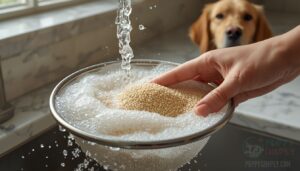
Rinsing is the step you can’t skip. Quinoa’s outer coating contains saponins — natural compounds that can cause vomiting and stomach upset if they make it into your dog’s bowl.
- Place quinoa in a fine mesh strainer under cold running water
- Use the agitation technique: rub grains gently with your fingers
- Watch for the foam indicator — keep rinsing until foam disappears
- Try the optional soaking step (15–30 minutes) if bitterness persists, then rinse thoroughly again
This simple habit neutralizes the potential risks of saponins in dog food and makes preparing quinoa safely for pets straightforward. When you wash the quinoa well, you remove what could otherwise irritate your dog’s digestive system.
Cook It Fully in Plain Water

Once you’ve rinsed away the saponins, cooking plain cooked quinoa correctly matters just as much. Use a 2:1 water ratio — two cups of water per cup of quinoa — and bring it to a gentle simmer. Even hydration ensures every grain softens fully through starch gelatinization, which makes it digestible for dogs.
| Step | Detail |
|---|---|
| Simmering Time | 15 minutes |
| Texture Check | Grains fluffy, spiral released |
Preparing quinoa safely for pets means plain water only.
Avoid Salt, Butter, Onion, and Garlic

Plain water got the saponin off — now keep the seasoning just as simple. Never add salt, butter, onion, or garlic.
These aren’t just unhealthy for dogs; onion and garlic are genuinely toxic. Stick to these rules:
- Skip salt — even low-sodium alternatives
- Use butter-free cooking methods only
- Avoid onion, and onion-free seasonings aren’t enough — skip all alliums
- No garlic or garlic-free recipes still need a label check
- Herb-based flavoring? Only vet-approved options
Cool Before Serving

Once it’s cooked, let it cool completely before serving. Serving temperature safety matters here — hot quinoa can burn your dog’s mouth and cause gulping, which leads to vomiting.
Cooling also improves texture consistency, making it easier to portion and mix into kibble without turning pasty.
For refrigeration timing, cool it fully before storing, then use within a few days.
Check Packaged Blends for Toxic Add-ins

If you’re buying a packaged quinoa blend rather than plain grain, flip the bag and do a real ingredient label review. Hidden sweeteners list ingredients like xylitol; detection warnings apply here — xylitol is toxic to dogs, even in small amounts.
Watch for preservative warnings, colorant safety check issues, and seasonings such as garlic, onion, or salt.
Human food blends aren’t formulated with food safety for pets in mind.
How Much Quinoa Can Dogs Eat?
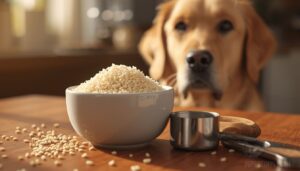
Even a healthy food can cause problems if you give too much of it—and quinoa is no different. Portion size really does matter here, especially since every dog has different needs based on their size and diet.
Here’s a simple breakdown to help you get it right.
Start With a Small Taste First
Before introducing quinoa to a dog’s diet, start with a small amount — just a teaspoon or two. Think of it as a Single Food Trial with a built-in Observation Window.
Keep a Consistent Feeding Time so you can focus on Symptom Tracking afterward. Watch for:
- Vomiting or loose stools
- Itching or face rubbing
- Changes in energy or appetite
If nothing happens, Gradual Portion Increase can follow.
Portion Guide by Dog Size
Once your dog tolerates that first taste without any fuss, portion size becomes your next decision.
Quinoa portion guidelines for different sized dogs are straightforward: small dog serving stays at 1–2 tablespoons daily, medium dog ratio tops out near ¼ cup, large dog limits reach ⅓ cup, and extra large portion caps at ½ cup.
Always factor in an activity adjusted amount if your dog is especially active or sedentary.
The 10% Treat Rule
Think of quinoa as a treat, not a staple. Whatever you feed outside your dog’s balanced main meal counts toward the 10% daily calorie rule — and quinoa is no exception.
Calorie tracking keeps nutrient balance intact and helps weight management over time.
- Extra-small dogs: ≤1 tablespoon daily
- Small dogs: 2–3 tablespoons daily
- Medium dogs: ≤¼ cup daily
- Large to extra-large dogs: ≤⅓–½ cup daily
Stay within these feeding guidelines, and you’re good.
How Often to Feed Quinoa
A few times per week is the sweet spot for most healthy adult dogs. Age-based frequency matters — puppies and seniors need less, while active dogs may handle it a bit more often.
Run a short trial period, monitoring digestive response after each serving. If stools stay firm and energy stays steady, you’re on a good schedule.
Moderation is the goal, not routine.
Mixing Quinoa With Regular Dog Food
Stir cooked quinoa directly into your dog’s kibble rather than piling it on top — that’s your stirring technique for portion consistency in every bite.
Keep the texture balance subtle so it doesn’t overpower the meal.
Cool quinoa mixes more evenly, enhances flavor compatibility, and fits naturally into meal timing without disrupting your dog’s balanced canine diet.
Quinoa Risks and Side Effects

Quinoa is generally safe for dogs, but that doesn’t mean it’s risk-free. Like any new food, it can cause problems if it’s not prepared correctly or if your dog simply doesn’t tolerate it well.
Here are the side effects worth knowing before you add it to your dog’s bowl.
Vomiting and Diarrhea From Saponins
Saponins are quinoa’s built-in defense system — and if you skip rinsing, your dog pays the price. These compounds irritate the intestinal lining through a straightforward saponin irritation mechanism: they disrupt gut membranes, triggering vomiting and diarrhea.
Watch for:
- Sudden vomiting after eating
- Loose stools or diarrhea within hours
- Dose symptoms that worsen with larger servings
- Signs of individual sensitivity, even with small amounts
Proper preparation reducing saponins — just rinse thoroughly — keeps saponin toxicity off the table.
Gas, Bloating, and Stomach Upset
Even after rinsing removes saponin toxicity concerns, quinoa’s fermentable carbohydrates can still trigger gas, bloating, or diarrhea — especially when introduced too quickly.
Dogs that eat fast swallow extra air, worsening intestinal irritation and stomach upset.
| Gas Trigger | What Happens |
|---|---|
| Swallowed air | Adds gas to the gut |
| Fermentable carbohydrates | Bacteria ferment undigested carbs |
| Large portions | Overwhelms digestion quickly |
| Probiotic support deficit | Unbalanced gut flora increases bloating |
| Missing digestive enzymes | Incomplete breakdown causes discomfort |
Encourage slow eating and start with tiny amounts.
Weight Gain From Overfeeding
Quinoa is calorie-dense, and a caloric surplus adds up faster than you’d expect. When portions exceed your dog’s actual needs, fat mass accumulation follows — research shows fat can account for over half of any weight gained during overfeeding.
For dog weight management, keep these risks in mind:
- Extra calories trigger metabolic rate changes and adaptive thermogenesis.
- Activity compensation rarely offsets consistent overfeeding.
- Portion control and moderation in dog diets prevent long-term weight gain.
Signs of Quinoa Intolerance
Beyond weight concerns, food intolerance in dogs can show up in several ways. Watch for lethargy after eating, oral irritation like lip licking or drooling, and abdominal discomfort such as hunching or restlessness.
Diarrhea episodes often appear within hours. Skin itching or paw licking can also signal gastrointestinal sensitivity. If these signs fade when you stop quinoa, that pattern points clearly to dog digestive upset.
Allergic Reactions to Watch For
True allergic reactions go a step further than general intolerance. Skin hives, facial swelling, or sudden gastrointestinal upset after eating quinoa are warning signs worth taking seriously.
Watch for:
- Raised, itchy welts or rash on the skin
- Swelling around the face, lips, or eyes
- Vomiting or diarrhea shortly after eating
- Coughing, wheezing, or respiratory distress
- Collapse or extreme weakness — anaphylaxis signs requiring immediate veterinary care
When Dogs Should Avoid Quinoa

Quinoa works well for many dogs, but it’s not the right fit for every pup.
Some dogs have health conditions or sensitivities that make even a small serving a bad idea.
Here’s when you should keep quinoa off the menu entirely.
Puppies Too Young for New Foods
Pups younger than 12 weeks aren’t ready for new foods like quinoa. Their digestive system maturity is still catching up — the weaning timeline normally wraps around six to eight weeks, and their guts need time to settle into puppy food completeness first.
Introducing extras this early risks GI upset.
Prioritize stool monitoring, stick to your vet-approved puppy nutrition plan, and consult a veterinarian before adding anything new.
Dogs With Pancreatitis or GI Issues
If your dog has pancreatitis or chronic GI issues, skip quinoa for now. Pancreatitis lowers fat tolerance limits and makes any diet change risky — even a "healthy" one.
Quinoa’s fiber load can worsen dog gastrointestinal upset, especially when loose stools are already present. Low-fiber diets and gradual diet transitions are safer starting points.
Always get vet guidance before experimenting.
Dogs With Grain or Seed Allergies
Quinoa is technically a seed, so if your dog has grain or seed allergies, tread carefully. Even as a hypoallergenic grain alternative, it can still trigger food allergies in dogs through cross-contact from shared processing equipment. Watch for:
- Itchy skin or recurring rashes
- Vomiting or diarrhea after eating
- Hives or facial swelling
- Stool changes during skin monitoring
Allergy testing and an elimination diet help confirm triggers before introducing alternative proteins.
When to Stop Feeding Quinoa
Sometimes the right call is knowing when to stop. If your dog hits its GI Symptom Threshold — vomiting, diarrhea, or worsening gas — pull quinoa from the menu immediately.
| Stop Signal | What to Do |
|---|---|
| Loose Stool Warning | Cut quinoa out entirely |
| Unusual Smell Detection | Discard and don’t serve |
| Food Storage Issues | Toss it; don’t risk it |
| Weight Gain Monitoring | Reduce or eliminate portions |
When to Contact a Veterinarian
Call your vet immediately if you notice respiratory distress, sudden collapse, or severe pain after feeding quinoa. Persistent vomiting, bloody diarrhea, or signs of an allergic reaction — like facial swelling or hives — need emergency veterinary treatment right away.
For ongoing veterinarian consultation on new foods or food toxicity concerns, don’t wait.
Identifying signs of quinoa intolerance in dogs early makes all the difference.
Frequently Asked Questions (FAQs)
How much quinoa can I give my dog?
Less is more here.
A small spoonful goes a long way — start with just a teaspoon, then follow the quinoa portion guidelines for different sized dogs based on your dog’s weight.
What grains should dogs avoid?
Some grains are harder on dogs than others.
Wheat gluten, corn allergens, soy protein, barley, and rye are common culprits behind food intolerance in dogs — triggering itching, bloating, or loose stools.
Is quinoa bad for dogs?
Quinoa isn’t inherently bad for dogs — but preparation and portion size matter.
Saponin irritation, oxalate kidney risk, calorie density concerns, and additive toxicity are real if you’re careless.
Individual sensitivity varies, so always start small.
Can dogs eat chickpeas, lentils, peas or quinoa?
Yes, dogs can eat cooked chickpeas, lentils, peas, and quinoa in moderation. Each offers fiber and plant protein, but introduce them slowly and always serve plain, unseasoned, and fully cooked.
Is quinoa safe for dogs with cancer?
Like adding a new teammate mid-game, introducing quinoa to a cancer dog’s diet needs careful coordination.
It may support cachexia appetite and immune function, but always clear it with your oncology team first.
Do dogs like to eat dog food?
Most dogs eat their food happily when it smells right, feels familiar, and arrives on schedule.
Aroma preference, texture preference, and temperature influence appetite more than you’d think—routine matters too.
Is oatmeal or quinoa better for dogs?
Both are fine in moderation, but oatmeal is the gentler choice. It’s easier on digestion and widely available.
Quinoa offers more protein and is gluten-free, but can upset sensitive stomachs.
When in doubt, ask your vet.
How much quinoa should I feed my dog?
Start small — a teaspoon or two for smaller dogs, up to ½ cup for larger breeds. Keep quinoa under 10% of daily intake, and always monitor tolerance before any gradual increase.
Are there different types of quinoa that are better for dogs?
White quinoa is your safest starting point — it’s mild, soft, and easy to digest.
Red and black quinoa offer slightly higher protein and fiber, but their firmer texture can be harder on sensitive stomachs.
Is it okay to feed quinoa to puppies?
Yes, puppies can have small amounts of plain, cooked quinoa — but their digestive systems are still maturing, so gradual introduction matters.
Always get veterinary approval first and keep portions tiny to support nutrient balance without disrupting puppy nutrition.
Conclusion
Nearly 30% of premium dog foods now include ancient grains or seeds like quinoa in their formulas—and for good reason. When you ask "can dogs eat quinoa", the answer comes down to how it’s prepared.
Rinsed, plain, and portioned correctly, it offers real nutritional value without unnecessary risk. Think of it less as a treat and more as a quiet upgrade—something small that, done right, genuinely benefits your dog’s health over time.
- http://www.quickanddirtytips.com/health-fitness/healthy-eating/ask-the-diva/are-saponins-in-quinoa-toxic?page=1
- https://www.hsph.harvard.edu/nutritionsource/food-features/quinoa/
- https://www.hillspet.com/dog-care/nutrition-feeding/can-dogs-eat-quinoa
- https://www.vetwest.com.au/pet-library/when-to-visit-the-vet/
- https://www.askyouranimals.com/should-i-seek-veterinary-care/