This site is supported by our readers. We may earn a commission, at no cost to you, if you purchase through links.

Your dog spots a pear on the counter and gives you those eyes—the ones that make saying no feel unreasonable.
Before you hand over a slice, there’s one thing worth knowing: the skin is where most of the nutrition lives, but it’s also where a few real risks hide.
Pear skin packs fiber, antioxidants, and vitamin C, yet it also holds pesticide residue and can trigger stomach trouble in sensitive dogs.
Knowing which side of that line your dog falls on makes all the difference between a healthy snack and an uncomfortable afternoon.
Table Of Contents
- Key Takeaways
- Can Dogs Eat Pear Skin?
- Is Pear Skin Safe for Dogs?
- Health Benefits of Pear Skin
- Pear Skin Risks for Dogs
- Remove Seeds, Core, and Stem
- How to Prepare Pears Safely
- Safe Serving Sizes by Weight
- Which Dogs Should Avoid Pear Skin?
- Signs Pear Skin Upsets Your Dog
- Best Alternatives to Pear Skin
- Frequently Asked Questions (FAQs)
- Can dogs eat pear skin?
- Can dogs eat Asian pears?
- Can dogs eat pear seeds?
- Are pears good for dogs?
- How much of a pear can a dog eat?
- Is it okay for dogs to eat apples and pears?
- What if my dog eats pear seeds?
- Is it safe to feed pear skin to puppies?
- Does pear skin contain any toxins?
- Are there any other benefits to feeding pear skin to dogs?
- Conclusion
Key Takeaways
- Pear skin is safe for most dogs when washed thoroughly, cut into small pieces, and served without seeds, stems, or core—those parts are the real danger.
- The skin holds up to six times more antioxidants than the flesh, plus fiber that supports digestion, making it worth keeping on if your dog tolerates it well.
- Dogs with sensitive stomachs, high-fiber diets, or a history of choking are better off with peeled pear slices instead.
- Keep pear treats under 10% of your dog’s daily calories, scale the portion to their size, and always introduce it slowly the first time.
Can Dogs Eat Pear Skin?

Yes, dogs can eat pear skin — but a few things determine whether it’s a good idea for your dog specifically. The skin is where most of the fiber and antioxidants live, so it’s not without value.
Just check out this guide on whether dogs can eat pear safely — it covers prep tips that matter more than most people realize.
Here’s what you need to know before offering it.
Short Answer: Yes, in Moderation
Yes, dogs can eat pear skin — but moderation is the key word here. Most healthy dogs tolerate it well when you follow three simple steps:
- Wash thoroughly to remove pesticide residue
- Start with gradual introduction and practice owner monitoring for any digestive changes
- Keep portion adjustment in line with your dog’s size and daily calorie needs
When in doubt, veterinary consultation keeps your dog safe.
When Pear Skin is Safe
Pear skin is safe when a few conditions are met. The skin provides a high dietary fiber content(https://flavorycooking.com/which-part-of-pear-is-edible/) that aids digestion.
Choose ripe fruit — softer skin is easier to chew and digest. Organic produce preference makes sense here, since it lowers pesticide exposure.
Always get veterinary approval before introducing new foods, especially if your dog has existing health concerns. Gradual introduction matters too — start small, watch for reactions, and serve pieces at room temperature for easier chewing.
When to Skip The Skin
skip the skin if your dog is elderly, recovering from surgery, or dealing with dental issues — chewing tough peel can be uncomfortable or unsafe.
Dogs on medications with digestive side effects, or already on a high-fiber diet, don’t need the extra fiber load.
If pesticide residue removal isn’t possible with thorough washing, peeled pear is the smarter, lower-risk choice.
Is Pear Skin Safe for Dogs?

Pear skin isn’t just safe for most dogs — it actually brings a few nutritional perks to the table. But anything you share with your pup, there’s a little more to the story.
Here’s what you should know before letting your dog chew through that peel.
Nutrients Found in The Peel
The skin isn’t just packaging — it’s where much of the nutrition hides. Pear peel delivers a surprisingly rich profile for such a thin layer:
- Vitamin C Content helps your dog’s immune health.
- Potassium Levels aid muscle and nerve function.
- Mineral Profile includes calcium and trace elements.
- Polyphenol Concentration provides antioxidant protection.
- Phytochemical Diversity adds vitamin K and phytonutrients.
Don’t overlook it.
Extra Fiber From Pear Skin
The peel does more digestive work than you might expect. Its fiber helps with stool bulk increase, keeping bowel movements regular and consistent.
Pectin in the skin offers prebiotic effects, supporting a gut microbiota boost through fermentation benefits in the large intestine.
Small portions also aid satiety promotion, slowing digestion naturally.
For digestive health for dogs, moderation is key.
Pesticide Residue Concerns
Fruit skins naturally hold more pesticide residue than the flesh beneath them, so potential pesticide exposure from fruit skins is worth taking seriously. Regulatory monitoring and risk assessment help set maximum limits on what’s considered safe, but washing matters at home too.
Always wash the pear thoroughly under running water — washed pear skin reduces residue greatly. Organic practices lower exposure further if that’s an option for you.
For extra peace of mind, brush up on pear pit safety risks for dogs before sharing this fruit with your pup.
Health Benefits of Pear Skin

Pear skin isn’t just safe for most dogs — it actually brings a few real nutritional perks to the table. Before you toss that peel, it’s worth knowing what your dog stands to gain from it.
Here’s a look at the key benefits.
Fiber for Digestive Health
Pear skin delivers two types of fiber your dog’s gut actually needs. Soluble fiber benefits include drawing water into the intestines to soften stool, while the insoluble fiber role is to keep waste moving efficiently.
Together, they support healthy digestion and reduce dog gastrointestinal upset. Prebiotic fermentation in the colon drives SCFA production—yrate, acetate, propionate—fueling gut microbiome support and meaningful digestive health improvements from dietary fiber.
Antioxidants in Pear Skin
Don’t underestimate what’s hiding just beneath the surface. The nutritional benefits of pear skin for dogs go beyond fiber — it’s genuinely rich in antioxidant properties.
Polyphenol content, flavonoid benefits, and vitamin C levels work together through phytonutrient synergy to reduce oxidative stress.
Studies suggest pear skin contains up to six times higher antioxidants than the flesh, making antioxidant bioavailability a real reason to keep it on.
Pear skin packs up to six times more antioxidants than the flesh — reason enough to leave it on
Low-calorie Treat Benefits
Pear skin is a surprisingly smart swap when you’re watching your dog’s waistline. A 100g serving clocks in at just 57 calories, making portion control genuinely easy. Here’s why it earns a spot in your dog’s treat rotation:
- Weight Management — fewer calories mean less guilt, more consistency
- Nutrient Density — vitamins and antioxidants without the calorie load
- Satiety Boost — fiber slows digestion, keeping hunger at bay longer
- Blood Sugar Stability — natural sugars absorb more gradually than processed treats
Moderation is key, but a small dog treat portion size of pear skin delivers real fiber benefits for dogs without stacking up empty calories.
Pear Skin Risks for Dogs

Pear skin isn’t off-limits, but it does come with a few things worth knowing before you offer it to your dog. Some dogs handle it just fine, while others don’t tolerate it as well.
Here are the main risks to keep in mind.
Choking Hazards From Large Pieces
Large pieces of pear skin can become a real choking hazard if you’re not careful. Shape risk factors matter here — smooth, rounded chunks can slide into your dog’s airway before they’ve finished chewing.
Chunk size management is simple: cut the pear properly into small slices or bite-sized pieces, and always practice supervised feeding to support airway block prevention through adequate chewing duration.
Stomach Upset, Gas, and Diarrhea
Beyond choking risks, too much pear skin can trigger gastrointestinal upset — think bloating, gas, and diarrhea. The extra fiber hits some dogs hard, especially in larger amounts.
Bloating management starts with moderate consumption and slow feeding.
If your dog has a sensitive gut, consider hydration support, probiotic supplementation, or food rotation to keep their digestive health on track.
Allergy or Sensitivity Reactions
Some dogs develop food allergies or food sensitivities to pear skin. IgE mediated reactions can appear within minutes — urticaria signs such as hives, redness, or angioedema around the face are red flags.
Delayed hypersensitivity may show up hours later. Mast cell activation drives allergic reactions in pets that seem mild at first.
Watch for itching or swelling, and stop feeding pear skin immediately.
Remove Seeds, Core, and Stem
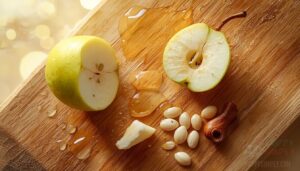
Before your dog gets anywhere near a pear, there are a few parts you need to remove every single time. Some of them are choking hazards, and others carry compounds that can genuinely harm your dog.
Here’s exactly what to take out before you offer even a small piece.
Why Pear Seeds Are Dangerous
Pear seeds contain cyanogenic glycosides — specifically amygdalin — that release hydrogen cyanide when your dog chews them. Chewing releases the toxin directly into their system, and dose unpredictability makes this genuinely risky: there’s no safe threshold you can measure at home.
Small dog risk is especially high, since even a few crushed toxic seeds in pears can reach dangerous levels fast.
Core and Stem Choking Risks
Seeds aren’t the only danger here. The core and stem bring their own choking hazard — both are tough, fibrous, and slow to break down.
Core fragment size matters because harder chunks resist chewing and can cause airway obstruction if swallowed quickly. Stem hardness creates irregular pieces that don’t soften easily. Swallowing speed increases the risk, so core removal before serving is non‑negotiable.
Parts of The Pear to Discard
Before handing your dog a slice, take a moment to remove the seeds and core, the stem, and the calyx — that small, dried flower remnant at the bottom.
Trim away any bruised spots or discolored patches, since spoiled tissue can upset the stomach.
Hard core fibers and stray leaf pieces should go too.
When in doubt, cut it out.
How to Prepare Pears Safely
Getting pears ready for your dog takes just a few simple steps, but skipping any one of them can cause real problems. It’s less about being overly careful and more about knowing what to do before handing over that slice.
Here’s exactly how to prep pears the right way.
Wash Pears Thoroughly First

Before you cut anything, wash the pear thoroughly under cold water — rinsing before cutting keeps surface contaminants out of the flesh. Pesticide residue clings to fruit skins, so don’t skip this step.
A gentle brush is optional for stubborn spots, but a clean cloth works fine too.
Pat dry afterward, and you’re ready to prep safely.
Peel for Sensitive Stomachs

If your dog has a sensitive stomach, skip the skin — it’s a simple swap worth making. The skin’s texture and higher fiber content can trigger digestive issues in dogs with low fiber tolerance.
Even the prebiotic effects that benefit healthy dogs may feel like too much for a sensitive gut. Peeled pear keeps the fiber and antioxidants balanced without the potential risks.
Cut Into Bite-size Pieces
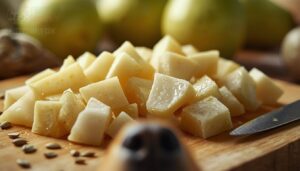
Size matters more than you’d think. Cutting pear into bite-sized pieces gives you real Chewing Control and makes Choking Prevention practical rather than theoretical.
Uniform Piece Size also simplifies Portion Tracking across a serving small dog, medium dog, or large dog situation. Use these Portion guidelines for pears based on dog size and weight:
- Small dogs: 1–2 pieces per serving
- Medium dogs: 2–3 pieces per serving
- Large dogs: 3–4 pieces per serving
Texture Management matters too — firmer pears hold their shape better at any cut size.
Safe Serving Sizes by Weight

Even a healthy treat can cause problems if you give too much of it. With pears, the right amount really does depend on your dog’s size.
Here’s a simple breakdown to help you get the portions just right.
Treats Should Stay Under 10%
Think of treats as a small bonus, not a meal replacement. Veterinary approval guidelines suggest treats should account for no more than 10% of your dog’s daily calories — that’s the ceiling for safe treat portion guidelines and nutrient balance.
Calorie tracking matters here: staying under that limit helps weight management and keeps your dog’s regular diet doing its job.
Portion Guide for Small Dogs
Small dogs need much smaller portions than you might expect. A pea-sized piece of pear skin is a reasonable starting point — that’s your size scaling baseline.
With gradual titration, begin once or twice a week, watching for any stomach changes before adjusting. Portion timing matters too; don’t stack fruit treats with other snacks same day.
Keep it within your dog’s calorie budget.
Portion Guide for Large Dogs
Large dogs have more room in their calorie budget, but that doesn’t mean going overboard.
Based on daily food ratio guidelines, a 50–75 lb dog eating around 3 to 3.75 cups of kibble daily should keep portion size to just one or two small pieces.
Factor in activity level adjustments and meal splitting across two servings, and portion control for dogs stays manageable.
Which Dogs Should Avoid Pear Skin?

Pear skin isn’t the right fit for every dog, even when it’s washed and cut properly. Some dogs have bodies that just don’t handle the extra fiber or texture well.
Here’s a look at which dogs are better off without it.
Dogs With Sensitive Digestion
If your dog already struggles with loose stools, gas, or vomiting, pear skin may not be the right choice. The extra fiber can tip a sensitive gut over the edge.
Focus instead on gentle protein sources, prebiotic foods, and hydration support. Meal frequency adjustment also helps. Avoid high-fat foods alongside new treats, and always introduce pear skin slowly.
Dogs on Special Diets
If your dog follows a prescription plan — whether for Diabetic Blood Sugar control, Kidney Phosphorus Control, or Omega-3 Enrichment — check with your veterinarian before offering pear skin. Fiber-Adjusted Diets have precise nutrient targets, and even natural treats shift that balance.
Therapeutic Treat Limits exist for a reason. Pear skin’s fiber and sugar content may quietly undermine what the diet is working to maintain.
Dogs With Choking History
If your dog has choked before, pear skin deserves extra caution — especially with Brachycephalic Risk breeds whose narrow airways make any choking hazard more dangerous. Veterinary Clearance required before offering it.
Focus on:
- Monitoring Eating Pace closely
- Gradual Texture Introduction with tiny, peeled pieces first
- Safe Toy Selection to avoid compounding risks
Dog choking prevention starts with knowing your dog’s limits.
Signs Pear Skin Upsets Your Dog

Even a small amount of pear skin can sit wrong with some dogs. Knowing what to watch for makes all the difference between a quick fix and a vet visit.
Here are the signs that pear skin didn’t agree with your dog.
Vomiting, Diarrhea, or Gas
If your dog’s digestive system reacts badly to pear skin, you’ll usually know pretty quickly. Excess fiber can trigger gastrointestinal upset — think loose stools, diarrhea, or fermentation gas within hours.
Repeated vomiting also raises hydration loss risk, since fluids leave the stomach fast. These digestive issues don’t signal cyanide symptoms, but they do mean the skin isn’t agreeing with your dog.
Itching, Hives, or Swelling
Skin reactions tell a different story than stomach upset. When pear triggers an allergic reaction in dogs, histamine triggers a response that shows up on the surface.
Watch for these allergy and sensitivity management clues:
- Red, itchy welts (wheals) with defined edges
- Welts that shift location within hours — wheal duration rarely exceeds 48 hours
- Facial swelling, an angioedema warning sign
- Hives spreading or merging across the skin
- Paw-licking or skin irritation signs without digestive symptoms
Adverse reactions like these need prompt attention.
When to Call a Vet
Some reactions go beyond "wait and see."
Call your vet immediately if your dog shows difficulty breathing, sudden collapse, seizure activity, or severe bleeding after eating pear skin. Persistent vomiting or diarrhea that won’t stop also warrants a same-day call.
serious adverse reaction — including a suspected allergic reaction in dogs — needs veterinary expert advice fast, not a home remedy.
Best Alternatives to Pear Skin

If pear skin doesn’t agree with your dog, that’s completely fine — there are still plenty of ways to give them something tasty and safe. Skipping the skin doesn’t mean skipping the treat.
Here are a few options worth keeping on your radar.
Peeled Pear Pieces
If pear skin feels too risky, peeled pear pieces are your safest bet. Remove the seeds and core first, then slice the soft flesh into small chunks.
You’ll still get Flavor Sweetness, Texture Softness, and a natural Hydration Boost — pears are about 80% water, making them a great Cooling Snack.
Refrigerate leftovers following basic Storage Guidelines:
- Slice into ¼-inch pieces
- Store in an airtight container
- Refrigerate up to two days
- Discard any softened or browning portions
Other Safe Fruit Treats
Plenty of other fruits are worth rotating into your dog’s treat routine.
Blueberries offer a real Blueberry Antioxidant Boost in tiny, bite-size form. Seedless watermelon is a great Watermelon Hydration Treat, and strawberries, mango, and blueberries add variety with Mango Fiber Content.
Banana works as a natural Banana Potassium Source, while apple slices bring Apple Slice Benefits when seeds are removed.
Store-bought Pear-based Dog Treats
Sometimes the easiest option is already on the shelf. Store-bought pear-based treats offer real Texture Variety — from soft training morsels to crunchy biscuits — without the prep work.
Look for options with strong Ingredient Transparency and Flavor Pairings like salmon and pear jerky bites. Always check labels for Shelf Life, avoid canned or dried pears with added sugars, and prioritize dog treat moderation.
- Jerky-style bites with pear and salmon
- Crunchy biscuits with oat-based binders
- Soft training morsels for small dogs
- Frozen or refrigerated pear puree treats
- Brands listing Manufacturer Certifications on packaging
Frequently Asked Questions (FAQs)
Can dogs eat pear skin?
Yes, dogs can eat pear skin safely — but moderation is your best friend here. Wash it well, cut it small, and watch how your dog responds on the first try.
Can dogs eat Asian pears?
Dogs can eat Asian pear varieties safely in small amounts. This seasonal availability makes them a crisp, low-calorie option your dog may enjoy, depending on taste preference.
Can dogs eat pear seeds?
No — pear seeds are off-limits. They contain amygdalin, which releases cyanide and risks cyanide toxicity. Always remove the seeds and core before sharing pear with your dog.
Are pears good for dogs?
Pears make a genuinely good occasional treat for dogs.
They offer vitamin C for immune support, fiber for digestion, and potassium — all with low calories that won’t disrupt weight management goals.
How much of a pear can a dog eat?
pear portions like a side dish, not the main course.
treats under 10% of daily calories, scale by weight, and start small — gradual introduction helps you spot any issues early.
Is it okay for dogs to eat apples and pears?
Yes, both are safe in moderation. Remove seeds, cores, and stems from apples and pears before serving. Offer small, washed slices as an occasional treat, not a daily staple.
What if my dog eats pear seeds?
Don’t wait to act. Pear seeds contain cyanogenic glycosides, which release cyanide in the body.
Remove any remaining pear immediately, watch for vomiting or distress, and call your vet right away.
Is it safe to feed pear skin to puppies?
Puppies can eat pear skin in moderation, but always wash it thoroughly first.
Cut it into tiny pieces, introduce it slowly, and ask for Veterinary Nutritionist Guidance before making it a regular treat.
Does pear skin contain any toxins?
Pear skin isn’t toxic — it’s just plant tissue. It contains natural bitter compounds and phytochemical composition like flavonoids, plus possible surface wax residues and pesticide residue.
The real danger is seed toxicity, not the peel.
Are there any other benefits to feeding pear skin to dogs?
Beyond digestion, pear skin offers immune boost support through vitamin C, antioxidants that may promote eye health and skin health, and dietary fiber benefits that outpace the flesh alone — real nutritional benefits of pear skin for dogs.
Conclusion
Funny how a fruit we barely think twice about turns into a whole investigation the moment our dog wants a bite. Yes, dogs can eat pear skin—washed, portioned, and served without seeds or stems.
The skin brings fiber and antioxidants, but sensitive stomachs may prefer it peeled. Your dog doesn’t need the full debate; they just need the right preparation.
Handle it carefully, and that shared snack becomes something genuinely good for both of you.
- https://fourleafrover.com/blogs/natural-health/can-dogs-eat-pears
- https://www.petscare.com/news/faq/can-dogs-eat-pears-with-skin-13
- https://dogchild.co/en-us/blogs/learn/what-fruit-peels-stems-are-safe-and-not-safe-for-your-dog
- https://pmc.ncbi.nlm.nih.gov/articles/PMC5508397/
- https://www.calabasasgastro.net/blog/1283964-the-importance-of-fiber-in-maintaining-digestive-health/