
This site is supported by our readers. We may earn a commission, at no cost to you, if you purchase through links.

Golden Retrievers eat like it’s their job… and that eagerness comes with real risk.
This breed carries a known genetic link to hip dysplasia, and their thick double coat hides weight gain until it’s already a problem. Add a barrel chest and deep ribcage, and you’ve got a dog built for bloat risk too. Diet isn’t a nice-to-have here. It’s damage control.
Finding the best dog food for golden retrievers means matching real nutrition science to your dog’s age, joints, and gut… not just picking a bag with a golden on the label. Below, you’ll find ten formulas worth your trust, and why each one earned its spot.
Table Of Contents
- Key Takeaways
- Top 10 Dog Foods for Golden Retrievers
- 1. Honest Kitchen Chicken Oat Dehydrated Dog Food
- 2. Nutro Ultra Dry Dog Food Chicken Lamb Salmon
- 3. JustFoodForDogs Beef & Potato Dog Food
- 4. Open Farm Turkey and Chicken Dog Food
- 5. Blue Buffalo Chicken Brown Rice Dog Food
- 6. Open Farm Senior Dog Food Joint Support
- 7. ACANA Lamb & Pumpkin Dry Dog Food
- 8. Blue Buffalo Digestive Care Dry Dog Food
- 9. Portland Pet Food Fresh Dog Food Pouches
- 10. Natural Balance Fat Dogs Dog Food
- Compare Nutrition, Formats, and Best Uses
- Golden Retriever Nutrition by Life Stage
- Choosing Food for Health Needs
- Feeding and Switching Foods Safely
- Frequently Asked Questions (FAQs)
- What is the silent killer in Golden Retrievers?
- What foods should Golden Retrievers not eat?
- What is the best diet for a Golden Retriever?
- What foods are safe for Golden Retrievers?
- What is the best dog food for Golden Retrievers?
- What do Golden Retrievers eat?
- Which Golden Retriever food is best for weight loss?
- Can Golden Retrievers eat grains?
- Can Golden Retrievers eat a vegetarian diet?
- Do golden retrievers need special food?
- Conclusion
Key Takeaways
- Your Golden’s genetics put them at risk for hip dysplasia and bloat, so the right diet is damage control, not just a nice-to-have.
- Look for foods with 25-30% protein, 12-18% fat, and joint-support ingredients like glucosamine, chondroitin, and omega-3s to protect their hips and coat.
- Your dog’s nutritional needs change dramatically across life stages, from controlled growth in puppyhood to calorie management in adulthood to inflammation support in their senior years.
- Weigh your dog weekly, transition foods gradually over 10-14 days, and loop in your vet before adding supplements to keep their weight and gut in check.
Top 10 Dog Foods for Golden Retrievers
Your Golden’s bowl deserves more than a guess. I’ve narrowed the shelf-clutter down to ten formulas that actually earn their price tag… from dehydrated to fresh to prescription-style care. Here’s where to start.
1. Honest Kitchen Chicken Oat Dehydrated Dog Food
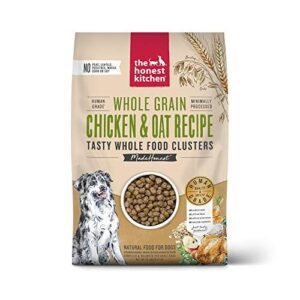
Picture flakes that puff into a warm, stew-like meal right before your eyes. That’s Honest Kitchen’s dehydrated chicken and oat formula… one part dry to four parts water, ready in about three minutes.
With cage-free chicken, liver, oats, and eggs on the label, it’s worth knowing what to look for in dry dog food before comparing it to kibble.
Cage-free chicken leads the ingredient list. No fillers, no meat meals, no synthetic preservatives.
It works as a complete meal or a topper. Either way, your Golden gets human-grade nutrition without the fresh-food price tag or freezer space.
| Best For | Owners who want convenient, human-grade nutrition for their dog at any life stage, from puppies to nursing mothers. |
|---|---|
| Life Stage | All Life Stages |
| Grain Status | Contains Grains |
| Primary Protein | Chicken |
| Net Weight | 20 lb |
| Preservatives | None |
| Price Point | Higher |
| Additional Features |
|
- Made with real, human-grade ingredients like cage-free chicken and oats, with no fillers, meat meals, or artificial preservatives
- Ready in about three minutes with just warm water, and works as either a complete meal or a kibble topper
- Supports coat, joint, and digestive health thanks to omega-3s, fiber, and probiotic ingredients
- Costs more per pound than standard dry kibble
- Requires rehydration time and proper cool, dry storage to keep it fresh
- Not a fit for dogs needing low-protein or grain-restricted diets
2. Nutro Ultra Dry Dog Food Chicken Lamb Salmon
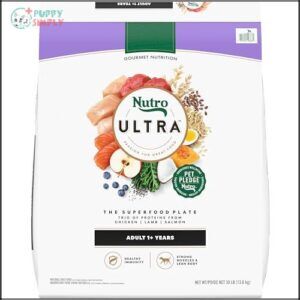
No rehydrating here… just straight kibble with three animal proteins doing the work. Chicken, lamb, and salmon meals give your Golden a broader amino acid spread than single-protein foods.
Flaxseed and salmon meal supply omega-3s for coat shine. Chicken cartilage adds natural glucosamine and chondroitin… a nice bonus for joint support.
Protein runs around 26%, lower than some competitors. Corn, wheat, and soy stay off the label, though grains like sorghum and barley remain.
| Best For | Dog owners who want a grain-inclusive kibble with multiple animal protein sources and added joint and coat support for adult dogs. |
|---|---|
| Life Stage | Adult |
| Grain Status | Contains Grains |
| Primary Protein | Chicken/Lamb/Salmon |
| Net Weight | 30 lb |
| Preservatives | None |
| Price Point | Higher |
| Additional Features |
|
- Three animal proteins (chicken, lamb, salmon) provide a broader amino acid profile than single-protein foods
- Natural glucosamine and chondroitin from chicken cartilage support joint health, plus omega-3s from flaxseed and salmon meal for coat shine
- Free from corn, wheat, and soy, making it easier on dogs with common grain sensitivities
- Protein content (around 26%) is lower than some competing dry dog foods
- Still contains grains like sorghum and barley, which won’t work for dogs needing a fully grain-free diet
- High fiber content from the superfood blend may require a transition period for some dogs
3. JustFoodForDogs Beef & Potato Dog Food
 View On Amazon
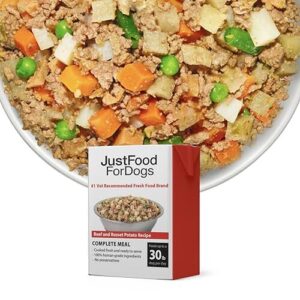
Kibble’s fine, but some Goldens do better on real food. JustFoodForDogs skips the extruder entirely… frozen fresh meals built around ground beef and russet potatoes.
Liver adds palatability. Sweet potatoes, green beans, and carrots round out fiber and micronutrients. Fish oil supplies omega-3s for skin and coat.
It’s complete and balanced for adults, not a topper. Thaw before serving, and plan freezer space… this isn’t a food you grab and forget.
| Best For | JustFoodForDogs Beef & Potato is best for Golden Retrievers and other dogs who need a complete, real-food diet made from whole ingredients like ground beef, russet potatoes, and fresh vegetables. |
|---|---|
| Life Stage | All Life Stages |
| Grain Status | Grain Info N/A |
| Primary Protein | Varies by Recipe |
| Net Weight | 12.5 oz x12 |
| Preservatives | None |
| Price Point | Higher |
| Additional Features |
|
- Made with real, whole-food ingredients instead of extruded kibble
- Complete and balanced nutrition for adult dogs, not just a topper
- Includes fish oil and fresh produce to support skin, coat, and digestion
- Requires thawing before serving, adding an extra step to mealtime
- Needs dedicated freezer space, which may not suit every household
- Frozen storage makes it less convenient for travel or on-the-go feeding
4. Open Farm Turkey and Chicken Dog Food
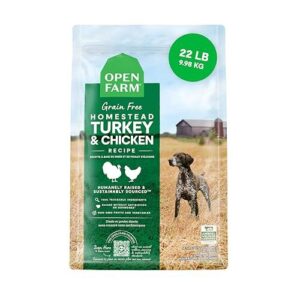
Not every Golden needs frozen meals in the freezer. If shelf-stable kibble with real meat still matters to you, Open Farm’s Turkey and Chicken recipe delivers.
Turkey, chicken, and ocean whitefish meal lead the ingredient list… humanely raised, traceable back to the farm. Grain-free, with pumpkin and coconut oil rounding things out.
No corn, wheat, or soy. Salmon oil takes care of the omega-3 work for skin and coat. Fish allergies are the one thing to watch here.
| Best For | Owners who want shelf-stable kibble made with real, traceable meat and don’t need frozen or fresh food to feel good about what’s in the bowl. |
|---|---|
| Life Stage | All Life Stages |
| Grain Status | Grain-Free |
| Primary Protein | Turkey/Chicken |
| Net Weight | 22 lb |
| Preservatives | None |
| Price Point | Higher |
| Additional Features |
|
- Real turkey, chicken, and ocean whitefish meal as the main proteins, ethically sourced and fully traceable
- Grain-free recipe free from corn, wheat, and soy, with non-GMO extras like pumpkin and coconut oil
- Works for every life stage, so one bag can cover a dog from puppy to senior
- Fish meal and salmon oil mean it’s not a fit for dogs with seafood allergies
- Grain-free isn’t necessary or ideal for every dog, especially those with specific grain needs
- Costs more than standard dry kibble, which adds up over 22-pound bags
5. Blue Buffalo Chicken Brown Rice Dog Food
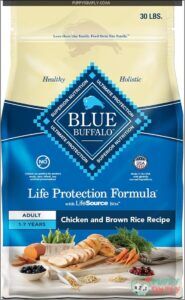
Reliable and budget-friendly… that’s the Blue Buffalo reputation, and this recipe earns it.
It’s also formulated with glucosamine and green-lipped mussel, making it a smart pick if you’re exploring the best dog food for aging Border Collies with joint mobility in mind.
Deboned chicken leads, backed by brown rice, barley, and oatmeal for steady energy. LifeSource Bits add antioxidants for immune support. Glucosamine’s in there too, for joint mobility.
No corn, wheat, soy, or by-product meals. One caution: dogs sensitive to chicken protein may not do well here. Otherwise, it’s a solid, no-nonsense choice for daily feeding.
| Best For | Adult dogs without grain sensitivities who need everyday support for lean muscle, joints, and immune health on a budget-friendly diet. |
|---|---|
| Life Stage | Adult |
| Grain Status | Contains Grains |
| Primary Protein | Chicken |
| Net Weight | 30 lb |
| Preservatives | Natural Only |
| Price Point | Standard |
| Additional Features |
|
- Real chicken as the first ingredient supports lean muscle
- LifeSource Bits and glucosamine promote immune health and joint mobility
- Free from corn, wheat, soy, and artificial preservatives
- Contains grains, so it’s not suitable for dogs on a grain-free diet
- Large kibble size may be difficult for small or toy breeds
- Not formulated for puppies or pregnant/nursing dogs
6. Open Farm Senior Dog Food Joint Support
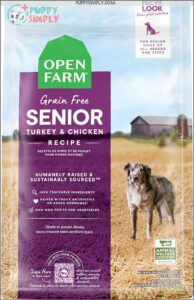
As your Golden’s joints start creaking, this recipe steps in with real support.
Green lipped mussel delivers natural glucosamine and chondroitin, backed by coconut oil’s anti-inflammatory fats. Turkey and chicken keep protein high without piling on calories seniors don’t need.
Grain-free, with pumpkin and sweet potato for steady digestion. One catch: the kibble runs hard… soaking helps dogs with dental sensitivity. Pricier than average, but the joint-focused formula justifies it for aging hips.
| Best For | Senior dogs with joint stiffness or hip mobility issues who need grain-free, high-protein nutrition from trusted, sustainably sourced ingredients. |
|---|---|
| Life Stage | Senior |
| Grain Status | Grain-Free |
| Primary Protein | Chicken/Turkey |
| Net Weight | 22 lb |
| Preservatives | None |
| Price Point | Higher |
| Additional Features |
|
- Green lipped mussel provides natural glucosamine and chondroitin for joint support
- Grain-free formula with humanely raised chicken and turkey, and no artificial additives
- Made with traceable, sustainably sourced ingredients for full transparency
- Kibble texture may be too hard for some dogs, requiring soaking before serving
- Higher price point than conventional senior dog foods
- Digestibility can vary, so some dogs may need a gradual transition period
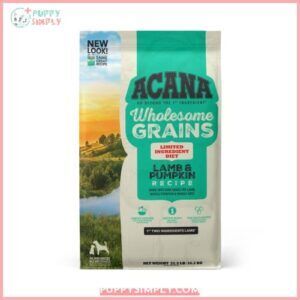
7. ACANA Lamb & Pumpkin Dry Dog Food
 View On Amazon
Simplicity sells here. Lamb sits as the first ingredient, paired with pumpkin for steady digestion, plus oats and sorghum for clean energy.
Crude protein lands at 27% minimum, fat at 17%… solid numbers for adult Goldens. Chicory root adds prebiotic support, while fish oil and flaxseed handle skin and coat needs.
That freeze-dried lamb liver coating? Picky eaters won’t say no. Corn-free, soy-free, wheat-free… a clean pick for dogs with mild sensitivities.
| Best For | Adult dogs, especially larger breeds like Goldens, with mild food sensitivities who do well on a single-protein, grain-inclusive diet. |
|---|---|
| Life Stage | Adult (All Stages) |
| Grain Status | Contains Grains |
| Primary Protein | Lamb |
| Net Weight | 22.5 lb |
| Preservatives | None |
| Price Point | Higher |
| Additional Features |
|
- 60% high-quality animal ingredients led by deboned lamb, with fiber-rich oats, sorghum, and millet for steady energy
- Pre- and probiotics plus Omega-3 and Omega-6 fatty acids support digestion, skin, and coat health
- Freeze-dried lamb liver coating boosts flavor, making it a hit with picky eaters
- Kibble size may be too large for small-breed or senior dogs with dental issues
- Priced higher than standard dry dog foods
- Some dogs may experience digestive upset during the transition, so a gradual switch is recommended
8. Blue Buffalo Digestive Care Dry Dog Food
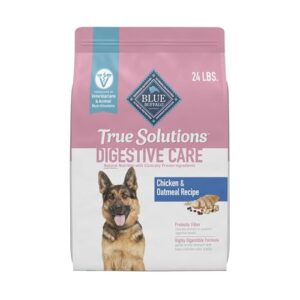
A gassy Golden after dinner? That’s a sign the gut needs help, not just a change of scenery.
Deboned chicken leads the ingredient list, backed by prebiotic fiber for gut balance. No corn, wheat, soy, or poultry by-products… just brown rice, oatmeal, and barley for gentle, steady digestion.
LifeSource Bits add immune support, though some dogs pick around them. At 24 lbs, it’s built for long-term digestive maintenance, not quick fixes.
| Best For | Adult dogs with sensitive stomachs or occasional gas who need a gentle, everyday formula to support steady digestion. |
|---|---|
| Life Stage | Adult |
| Grain Status | Contains Grains |
| Primary Protein | Chicken |
| Net Weight | 24 lb |
| Preservatives | None |
| Price Point | Higher |
| Additional Features |
|
- Real deboned chicken as the first ingredient, with no corn, wheat, soy, or poultry by-products
- Clinically proven prebiotic fiber supports healthy digestion and better stool quality
- Formulated by veterinarians and animal nutritionists for balanced, long-term nutrition
- Some dogs pick around the harder LifeSource Bits instead of eating them
- Not appropriate for puppies or dogs needing a grain-free diet
- Costs more per pound than many standard dry dog foods
9. Portland Pet Food Fresh Dog Food Pouches
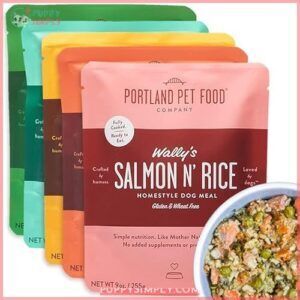
Picky eater at home? These pouches solve that without a single dry kibble swap.
Five flavors… salmon, beef, chicken, turkey, pork… each with 11 or fewer ingredients. Human-grade, made in the USA, no hidden fillers.
Shelf-stable until opened, then refrigerate and use within 5 days. Microwave-safe too, for dogs who like their food warmed.
Use it as a topper, mixer, or standalone meal. Just remember: it’s not built as a complete long-term diet on its own.
| Best For | Dog owners with picky eaters or dogs with sensitive stomachs who want an easy way to add fresh, human-grade nutrition to their pet’s regular meals. |
|---|---|
| Life Stage | All Life Stages |
| Grain Status | Grain Info N/A |
| Primary Protein | Varies by Recipe |
| Net Weight | 5 Pouches |
| Preservatives | None |
| Price Point | Higher |
| Additional Features |
|
- Limited-ingredient recipes (11 or fewer whole food ingredients) made with human-grade ingredients in the USA
- Versatile serving options — use as a standalone meal, mixer, or topper, and it’s microwave-safe for warming
- Shelf-stable until opened, making storage and stocking up simple
- Must be refrigerated and used within 5 days once opened, which requires extra planning
- Higher cost per serving than conventional dry dog food
- Not suitable as a sole long-term diet without veterinary guidance, since it’s focused more on palatability than complete nutritional balance
10. Natural Balance Fat Dogs Dog Food
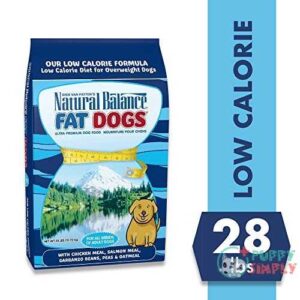
Extra weight sneaks up fast in this breed. Fat Dogs targets it head-on with chicken and salmon meal for protein, plus a fiber mix that keeps satiety high between meals.
L-carnitine helps burn fat, so lean muscle stays put while pounds come off. Barley provides steady energy, not a sugar spike.
One catch: it’s grain-inclusive and legume-light, better tolerated than pea-heavy formulas. Always switch gradually, and loop in your vet… weight loss should stay slow and monitored, not rushed.
| Best For | Adult dogs of any size who need to lose weight or maintain a healthy weight under veterinary guidance. |
|---|---|
| Life Stage | Adult |
| Grain Status | Contains Grains |
| Primary Protein | Chicken Meal |
| Net Weight | 28 lb |
| Preservatives | None |
| Price Point | Standard |
| Additional Features |
|
- Chicken meal as the first ingredient delivers high-quality protein with 25% fewer calories than the original formula
- L-carnitine and a fiber-protein blend support satiety and help preserve lean muscle during weight loss
- Wholesome grains and fiber-rich ingredients like peas, oats, and beet pulp support healthy digestion and immune function
- The legume and fiber content (garbanzo beans, peas) may cause gas or flatulence in some dogs
- Not ideal for dogs with copper sensitivities due to added zinc and copper proteinates
- Availability can be inconsistent, and weight loss results vary and may need veterinary monitoring
Compare Nutrition, Formats, and Best Uses
Ten good options still leave you with one question… which one actually fits your dog? Protein levels, fat content, and format all shift the answer. Let’s break down what matters so you can match the food to your Golden’s real needs.
Protein, Fat, and Calories
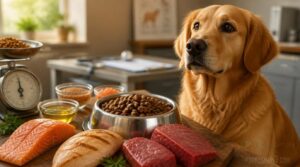
Numbers matter here. Look for protein at 25-30% minimum, fat around 12-18%, and check the fat-protein ratio… it shouldn’t run too high.
- Protein sources: chicken, salmon, beef
- Fat: energy-dense, 9 calories/gram
- Watch calorie balance against activity
- Track body condition score (BCS) monthly
Energy density adds up fast for a breed prone to weight gain. Calorie-controlled diets protect joints long-term.
Carbohydrates provide 4 calories per gram, the same as proteins, while fats provide 9 calories per gram, making them the most energy-dense macronutrient. Carbohydrate Energy Content
Fresh, Dry, and Dehydrated
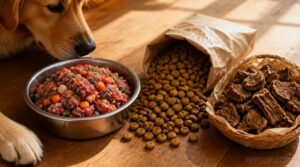
Format matters as much as ingredients. Fresh dog food stays moist, needs refrigeration, spoils fastest. Dry dog food keeps months to years, easiest to store. Dehydrated dog food sits between: nutrient retention rates stay high, shelf life lasts… but rehydration takes effort.
| Format | Moisture/Storage |
|---|---|
| Fresh | High moisture, short shelf life |
| Dry | Low moisture, long shelf life |
| Dehydrated | Concentrated, moderate shelf life |
Joint and Coat Support

Golden Retrievers carry two weak spots for life: joints and coat. Look for glucosamine and chondroitin (joint repair), plus omega-3s (EPA/DHA) for skin and inflammation control.
- Glucosamine/chondroitin for cartilage
- Omega-3s for shine, less itch
- Vitamin E for skin protection
- Zinc/biotin for follicle health
- Antioxidants for inflammation support
Senior dogs need this most… joints wear down fast after age 7.
Digestive Health Features

A shiny coat means nothing if your dog’s gut is a mess. Look for prebiotic fiber (chicory root), probiotics, and digestive enzymes… they team up to stabilize digestion.
| Feature | Helps With | Found In |
|---|---|---|
| Prebiotics | Feeds good bacteria | Digestive Care line |
| Omega-3s | Gut lining support | Fish oil formulas |
| Limited ingredients | Sensitive stomachs | Novel-protein diets |
Value and Feeding Convenience
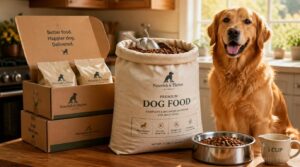
Feeding a large breed adds up fast… so cost matters as much as quality.
Bulk purchasing options and larger bags cut your price per pound. Auto-ship discounts and subscription meal bundles simplify restocking. Portion control tools keep waste down. Coupon loyalty programs reward repeat buyers. Choose vet-recommended dog food with feeding trials behind it… a subscription service for dry food often saves both money and trips to the store.
Golden Retriever Nutrition by Life Stage

Your Golden’s nutritional needs shift as she moves through life… puppyhood, adulthood, senior years, and beyond. What works at eight weeks can actually hurt her at eight years. Here’s what to watch for at every stage.
Large-Breed Puppy Nutrition
Slow and steady wins here. Large-breed puppies need controlled growth, not fast growth… rapid weight gain strains developing joints.
Calcium matters too. Keep that calcium-phosphorus ratio near 1.1-1.4:1 to avoid skeletal problems down the road.
Protein quality counts more than quantity. High-quality animal protein, plus omega-3s from fish oil, helps muscles, brain development, and healthy joints as your pup grows.
Adult Weight Maintenance
The middle years bring their own trap: comfort. An adult Golden Retriever needs roughly 900-1,200 calories daily and at least 30% protein, adjusted for weight and activity.
- Measure portions consistently
- Weigh your dog monthly
- Pair meals with 40-60 minutes of exercise
Choose a vet-recommended formula with moderate fat. Small 5-10% adjustments keep weight stable long before it becomes a problem.
Senior Joint Support
Stiff mornings aren’t just "old age." They’re often joint inflammation, and diet can ease it.
Stiff mornings in senior dogs often signal joint inflammation, not just old age, and the right diet can ease it
Look for glucosamine and chondroitin, plus omega-3s for their anti-inflammatory punch. Senior formulas often add both, alongside digestible fiber.
Green lipped mussel and MSM offer extra mobility support. Ask your vet before layering supplements onto senior dog food.
Active Dog Calorie Needs
Hiking every weekend? Your golden’s plate needs to match the trail miles.
Start with resting energy… 70 x weight in kg to the 0.75 power. Multiply by 1.8 to 3.0 for athletic dogs, more for intense agility work.
Track weight biweekly. Adjust calories 10% at a time. Count treats toward the total… they add up fast.
Pregnancy and Nursing Needs
Pregnant? Your girl’s body is building puppies now.
Late pregnancy demands a calorie increase of 300-500 per day. Protein needs climb toward high-protein puppy food, meeting AAFCO growth standards.
Don’t skip nutrient essentials… calcium for bone growth, DHA for brain development. Hydration tips matter too: fresh water always available. Nursing moms need continued high-calorie, high-protein large breed formulas for milk production.
Choosing Food for Health Needs

Every Golden has different needs… some face joint pain, others deal with itchy skin or a sensitive gut. The right food can ease these problems instead of making them worse. Here’s what to look for based on your dog’s specific health concern.
Hip and Joint Problems
Golden Retrievers carry a genetic risk for hip dysplasia… nearly 100 gene variants play a role. You can’t change genetics, but food helps.
Look for glucosamine and chondroitin, plus omega-3s (EPA/DHA) to ease joint inflammation. Keep your dog lean… extra pounds strain hip joints fast. Pair the right diet with low-impact exercise, like swimming, and you’re giving those joints real support.
Skin Allergies and Hot Spots
Joints aren’t the only trouble spot. That thick double coat trapping summer moisture? It’s a hot spot breeding ground.
Triggers include fleas, food, and pollen… itching turns to licking, licking turns to raw skin.
- Limited ingredient diets for food allergy management
- Hypoallergenic formulas with novel proteins
- Omega-3s for skin and coat health
Catch the itch early. Damp coats after swimming need drying, fast.
Sensitive Stomachs
Skin isn’t the only sensitive system. Grain and dairy top the list of grain sensitivity triggers, with fatty treats causing sudden GI upset.
Rotate proteins gradually to spot culprits. Bland chicken and rice calms flare-ups fast.
Look for sensitive stomach dog food with added probiotics and prebiotic fiber. Digestive enzymes and omega-3s round out real support for a fussy gut.
Weight Management
A gut that’s settled makes it easier to spot the next problem: extra pounds.
Aim for a 300 to 500 calorie deficit daily. Use a kitchen scale, not a scoop.
- 20-30% protein (dry matter)
- 5-10% crude fiber
- 8-12% fat
- 20-40 min daily activity
Lean protein preserves muscle. Fiber keeps her satisfied. Weigh in weekly… adjust portions 5-10% as needed.
Veterinary and Prescription Diets
Sometimes over-the-counter food isn’t enough. That’s when your vet steps in with a prescription diet.
Therapeutic joint diets, prescription kidney formulas, diabetic diet management, allergy prescription foods, and weight control diets all require veterinary oversight. These veterinarian recommended, vet-formulated options… often veterinary nutritionist formulated… target specific conditions no store-bought bag can match. Look for AAFCO complete-and-balanced labeling, always.
Feeding and Switching Foods Safely

Picking the right food is only half the job. How you feed it matters just as much… portions, timing, transitions, all of it. Here’s what you need to get right, one step at a time.
Calculate Daily Portions
Guesswork isn’t a portion plan. Start with 20 to 25 calories per pound for adult dogs, then adjust for weight, activity, and body condition score (BCS).
- Divide daily calories by meals per day
- Adjust ±10-20% per BCS
- Match portions to food type… cups, grams, or rehydrated weight
- Recalculate when weight shifts 2-3%
Health issues? Modify further. Weigh weekly. Stay consistent.
Follow a Feeding Schedule
Golden Retrievers thrive on routine. Feed two to three times daily, first meal within an hour of waking, evenly spaced through noon and evening.
Keep the same bowl, same spot… away from water bowls. Skip late-night meals; they cause restlessness. Changing schedules? Make the shift gradually over 7-10 days. This large breed’s digestion rewards consistency, not surprises.
Transition Foods Gradually
New bag, same bowl… doesn’t mean instant switch. Mix 25% new food with 75% current for 3 days, then 50/50 for 3-4 days, then 75% new for 3-4 days. Finish at 100% after 2-3 solid days.
Loose stools or gas? Slow down, extend by 2 days. Diarrhea past 48 hours needs a vet call.
Monitor Weight and Digestion
The scale doesn’t lie… but only if you check it right. Weigh weekly, same time, same scale.
Pair that with body condition scoring: ribs easy to feel, waist tucked in. Watch appetite, stool quality, and comfort after meals too. Bloating or lip-licking? Note it.
A 1-2% weekly gain means it’s time to adjust portions.
Discuss Supplements With Veterinarians
Think supplements are harmless extras? Not always. Dosage safety guidelines matter… human supplements risk toxicity from xylitol or vitamin D.
Choose quality supplement brands with:
- NASC seal verification
- Clear dosing instructions
- Dog-specific formulas (never human ones)
For joint support—glucosamine chondroitin especially—or digestive health in dogs, check supplement-medication interactions with your vet first. Critical for senior dog care and vet-recommended dog food plans.
Frequently Asked Questions (FAQs)
What is the silent killer in Golden Retrievers?
Hemangiosarcoma is the silent killer… a blood vessel cancer with no early symptoms. It’s tied to genetic predisposition in the breed, hits at any age, and often isn’t caught until treatment options are nearly gone.
What foods should Golden Retrievers not eat?
Your kitchen holds hidden landmines. Chocolate, grapes, and onions can turn a treat into a trip to the ER. Add xylitol and alcohol to that danger list… small bites, big risk. When in doubt, keep it out.
What is the best diet for a Golden Retriever?
Look for high quality animal protein first, balanced fats, and controlled calcium… like Royal Canin Golden Retriever Adult Dry Dog Food. Pick an AAFCO complete and balanced large breed formula with joint support for lifelong mobility.
What foods are safe for Golden Retrievers?
One wrong bite can turn a happy Golden into an ER visit fast. Safe picks: plain chicken, sweet potato, blueberries, green beans.
Avoid grapes, onions, chocolate, xylitol. Pair treats with a vet-recommended formula like Royal Canin Golden Retriever Adult for balanced daily nutrition.
What is the best dog food for Golden Retrievers?
There’s no single winner here. The right pick depends on your dog’s life stage, activity level, and health needs… though vet-recommended options like Nutro Ultra or JustFoodForDogs consistently deliver quality protein and joint support for large breeds.
What do Golden Retrievers eat?
Goldens gobble up quality protein sources—chicken, fish, or beef—paired with healthy fats, digestible carbs like sweet potato, and joint support nutrients.
Whether dry kibble or fresh food, large breed adult formulas should fuel muscle, coat, and canine nutrition needs daily.
Which Golden Retriever food is best for weight loss?
For calorie density control, pick a formula with 10–25% fewer calories per cup, 25–35% protein, and added L-carnitine for fat metabolism… plus joint-friendly weight loss support to protect those hips while pounds come off.
Can Golden Retrievers eat grains?
Variety is the spice of life"… and grains fit right in. Yes, most Goldens digest rice, oats, and barley well. Grain-inclusive, vet-recommended formulas support stable taurine levels and gut health when AAFCO complete and balanced.
Can Golden Retrievers eat a vegetarian diet?
Yes, but it takes work. Plant proteins lack enough methionine and lysine on their own… veterinary guidance and synthetic taurine, B12, and nutrient balance are non-negotiable to protect your Golden’s heart and canine dietary needs.
Do golden retrievers need special food?
This large breed does need individualized nutrition. Their genetics predispose them to hip and joint issues, plus skin sensitivities. Look for breed-specific formulas with joint support, controlled calcium, and omega-3s… matched to their life stage for lasting health.
Conclusion
An ounce of prevention is worth a pound of cure… and that’s the whole story here. The food for golden retrievers won’t rewrite bad genetics. But it can slow the damage, protect fragile joints, and keep that barrel chest from turning into a midnight emergency. Pick smart. Watch the scale. Feed with purpose, not habit. Your dog trusts you with the bowl… don’t let that trust go to waste.
- https://openfarmpet.com/blogs/news/what-is-the-best-dog-food-for-golden-retrievers
- https://www.foxcreekveterinaryhospital.com/best-food-golden-retriever-puppies
- https://www.trueanimalvet.com/blog/the-role-of-nutrition-and-joint-health-for-aging-pets.html
- https://supertails.com/pages/golden-retriever
- https://goldenretriever.hair/guides/best-dog-food-golden-retrievers-2026