
This site is supported by our readers. We may earn a commission, at no cost to you, if you purchase through links.
Most puppies meet their carrier for the first time on travel day, right as stress runs highest for everyone. That’s backwards. A crate stuffed into a car ten minutes before departure feels like a trap, not a safe space, and your puppy will tell you so with whining and scratching.
Getting your puppy used to a travel carrier takes time, but the payoff is a dog who walks in calm and settles down fast. Trainers see it constantly: pups introduced weeks ahead adjust to flights, vet visits, and road trips with far less panic.
Below, you’ll find the exact steps to build that comfort, from measuring the right fit to practicing your first short drives.
Table Of Contents
- Key Takeaways
- Get Your Puppy Used to The Carrier
- Create Positive Carrier Associations
- Practice Calm Closed-Door Sessions
- Simulate Movement Before Real Trips
- Prepare for Safe, Comfortable Travel
- Frequently Asked Questions (FAQs)
- How to train a dog to go in a travel carrier?
- What is the hardest month for a puppy?
- Can I take my 8 week old puppy out in a sling?
- What is the 3 3 3 rule for puppies?
- What age should carrier training start for puppies?
- How long does full carrier acclimation usually take?
- Can adult dogs learn to like carriers too?
- What if my puppy refuses to enter completely?
- Should I cover the carrier with a blanket while traveling?
- Conclusion
Key Takeaways
- Start carrier training weeks before any trip, since puppies introduced early adjust far better than those who first see the carrier on travel day.
- Build comfort in stages—open-door exploration, treat luring, meals near and inside the carrier, then short closed-door sessions—before ever adding movement.
- Practice motion gradually, from lifting and carrying the crate indoors to sitting in a parked car and finally taking short, smooth drives under five minutes.
- Before real travel, handle the practical basics too: tire your puppy out first, time meals and water carefully, secure the carrier properly in the car, and check airline rules if you’re flying.
Get Your Puppy Used to The Carrier
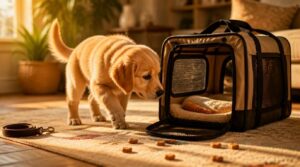
Getting your puppy comfortable with a carrier starts long before any trip. A few simple setup steps make the difference between a puppy who avoids the carrier and one who walks right in. Here’s exactly where to start.
If allergies run in your household, choosing the right breed from the start—like these allergy-friendly family dog breeds—can make carrier training that much smoother down the road.
Measure for Proper Carrier Fit
A carrier that’s too snug will make your puppy dread every trip. Measure from the ground to the top of the shoulders, then tailbone to nose tip, adding two inches for chest room. Check width for turnaround space and height for full lying comfort. Always check size and weight requirements before buying.
For accurate sizing, measure your pet from snout to base of tail and floor to top of head to make sure the carrier fits properly carrier fit guidelines.
Choose a Stable Placement
Once the fit is right, location matters just as much. Pick a stable, level surface with clearance on all sides, away from foot traffic but still central to daily life. A quiet corner of your living room works well.
| Factor | Why It Matters | Target |
|---|---|---|
| Surface | Prevents tipping | Level, sturdy |
| Clearance | Airflow, no bumps | 12 inches |
| Location | Builds routine | Central, quiet |
Add a familiar-scented blanket for comfort.
Secure The Door Open
A swinging door can startle a puppy fast, so latch it open before anything else. Open the carrier door and drop a few treats inside.
Use an excited voice, hold a treat, and say "go in your carrier."
- shaky first steps
- building trust
- quiet confidence
Start this weeks before travel, in a central, secure spot.
Add Nonslip, Familiar Bedding
Once the door stays open and welcoming, focus on what’s underneath your puppy’s paws. Line the bottom with a non-slip mat, then add a favorite blanket that smells like home.
A worn t-shirt with your scent works too. This familiar scent association calms puppies fast, and machine washing on low heat keeps grip fibers intact for months.
Encourage Independent Exploration
Now let curiosity do the work. Open or remove the door and drop a few treats inside, then step back.
Let your puppy explore the carrier at their own pace. This builds a positive association without pressure, turning a safe independent zone into their choice, not yours.
Let your puppy explore the carrier freely—the choice must be theirs, not yours
Create Positive Carrier Associations

Now that your puppy feels comfortable near the carrier, it’s time to make the inside feel just as good. Food and treats are your best tools here, since they turn a strange box into a place worth visiting. Here’s how to build that connection, one small step at a time.
Start by tossing a few treats near the entrance, then gradually place them further inside, and if grooming time still causes stress, these tips for brushing a dog that hates grooming can help build the same kind of calm, trust-based routine.
Start With Treat Luring
A treat held near your puppy’s nose can turn a scary box into a magnet. Hold a small treat, move it slowly toward the carrier entrance, and let your puppy’s nose follow.
Keep your soft mouth technique in mind. Reward the instant paws land inside. That precise timing builds a genuine positive association fast.
Feed Meals Near Entrance
A shallow dish just outside the entrance turns mealtime into a positive association builder. This Entrance Feeding Routine works best at set times daily.
Try this Gradual Introduction Method:
- Place the dish right outside the opening
- Keep portions moderate
- Feed in a quiet spot
- Stay consistent with timing
- Watch for calm, steady eating
Start them young for faster results.
Move Meals Gradually Inside
Now it’s time to inch the bowl past the doorway. This step is where Move Meals Gradually Inside really builds confidence.
Raise the food distance by one inch per day, no more. Keep portions consistent, feed at the same times daily, and track calm interest before pushing further. Slow and steady wins here.
Introduce a Consistent Entry Cue
Pick one phrase, like "go in your carrier," and use it every single time. Say it in the same excited voice, point toward the door, and hold a treat at the entrance. Repeat this pairing daily.
Puppies learn fast when cues stay identical, so consistency now means your dog enters on command later, treats or not.
Reserve Special Carrier Chews
Not just any chew works here — save one special favorite exclusively for carrier time. Choose a firm, meat-based chew your puppy already loves, and offer it only when they’re inside.
This chew-only carrier access builds a strong positive association fast. Start them young, and that connection sticks for life.
Practice Calm Closed-Door Sessions

Once your puppy eats happily inside the carrier, it’s time to close the door. This step feels like a big jump, but small moves keep your puppy calm and confident. Here’s how to build up closed-door time without triggering stress.
Begin With Brief Closures
Once your puppy eats calmly with the door open, you’re ready to close it. Hold a treat, say "go in your carrier," then shut the door for 3 to 5 seconds before opening with an excited voice.
- Watch for stress signals: pacing, whining, drooling
- Keep your cue consistent every session
- Increase time gradually, never rushing
Reward calm behavior immediately.
Stay Visible and Reassuring
Your presence matters more than the closed door itself. Stay close, use a calm tone, and offer gentle petting through the mesh when your puppy checks in.
| Signal | What It Means | Your Response |
|---|---|---|
| Soft eyes | Comfortable | Praise softly |
| Pacing | Mild stress | Stay near, wait |
| Whining | Needs reassurance | Speak, don’t open yet |
| Steady breathing | Calm | Reward |
| Tail relaxed | Confident | Continue session |
Extend Confinement Time Gradually
Once your puppy settles with short closures, start stretching the clock. Add two minutes per session until you reach ten, then build toward 15-minute intervals as confidence grows.
Monitor stress signs like whining or pacing, and adjust session length if they spike. Keep cues consistent, pair sessions with calm activities, and track progress daily.
Reward Quiet, Relaxed Behavior
Timing matters as much as the treat itself. The moment your puppy holds quiet stillness for three to five seconds, relaxed jaw, soft eyes, still tail, mark it and reward within two seconds.
That’s gentle reinforcement, not excitement. Use a calm, even "yes," then a low-value treat. Repeating this consistently builds a genuine positive association with settling down.
Adjust Training to Reactions
Not every puppy learns at the same speed, so watch closely and shift gears when needed.
Stop if you see stiffening, freezing, or a five-second glare at the door.
To adjust training to reactions:
- Shorten sessions if whining spikes
- Revert to open-door practice
- Resume after a calm pause
Small tweaks now build lasting positive reinforcement training and steady confidence later.
Simulate Movement Before Real Trips
Your puppy can handle a still carrier now, but movement is a different challenge. Motion feels strange and unpredictable to a dog who’s never felt it before. Here’s how to build that comfort step by step, starting small.
Lift The Carrier Briefly
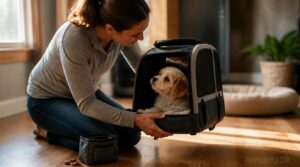
Ready to add motion? Try a brief carrier lift: hold the sides, lift one to two inches for one to two seconds, then set it down. Reward with a treat immediately. Keep your stance stable and voice calm.
| Step | Action | Duration |
|---|---|---|
| 1 | Lift carrier | 1-2 sec |
| 2 | Hold steady | 2-3 sec |
| 3 | Reward | Immediate |
Walk Short Indoor Distances
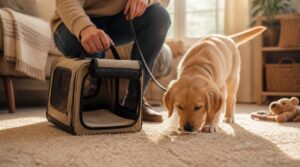
Pick up the carrier and go for a short stroll around the room. Keep a steady, moderate pace on carpet or another non-slip surface, and hold the leash loose if your puppy’s walking alongside.
Pause every few steps for a sniff break. Watch for hesitation, and stop under five minutes. Use your entry cue and reward calm behavior along the way.
Practice Inside a Parked Car
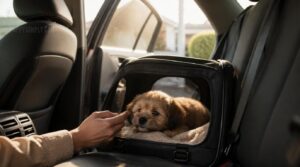
Your car is the next big test. Set the parking brake, load the secured carrier in the back seat, and let your puppy settle for five to ten minutes. Stay calm and quiet.
Run the engine without driving anywhere. Crack a window for airflow, and reward relaxed behavior. Build up in 15-minute intervals before your first real drive.
Take Short, Smooth Drives
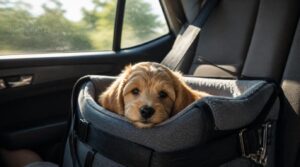
Time to move. Start with a drive under 15 mph, keeping speeds steady and turns gentle.
- Smooth acceleration and gentle steering keep your puppy from sliding
- A calm drive endpoint builds trust for next time
- Steady speeds prevent that queasy, tipping feeling
- Fresh air and ventilation monitoring keep them relaxed
Keep the first drive under five minutes, then reward calm behavior once you’re parked.
Increase Trip Length Gradually
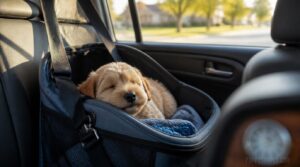
Once your puppy controls five minutes calmly, stretch each outing by five more. Stick to smooth road selection and quiet routes at first.
Watch for stress monitoring checkpoints: drooling, whining, or pacing mean you’ve moved too fast. Time trips when energy is settled, not right after meals, and build toward 15-minute intervals as confidence grows.
Prepare for Safe, Comfortable Travel

Once your puppy controls movement well, it’s time to think about the trip itself. Real travel brings new factors like energy levels, food timing, and safety checks. Here’s what you need to cover before heading out the door.
Exercise Before Carrier Time
Burn off that pent-up energy first. A tired puppy settles into the carrier far easier than a wound-up one.
- Warm-up walk, 5-7 minutes
- Fetch or tug-of-war beside the carrier
- Short agility drills, like weaving or a low jump
- A quick puzzle feeder session
- Gentle stretching massage
Make sure your dog gets plenty of exercise before the trip. This gradual introduction method builds a lasting positive association.
Manage Food and Hydration
Food and water need timing, not guesswork. Feed a small meal 2-3 hours before departure, then remove water about 2 hours before the trip.
Pack a lightweight travel bowl and measured kibble in a zip-lock bag. Add a spill-proof bottle for the ride. Once your dog eats and settles, the carrier stays exactly where it belongs: secured, central, and ready.
Secure The Carrier Properly
With hydration handled, focus on secure carrier placement for the ride. Set the carrier on the vehicle floor, facing backward to reduce collision risk. Use a seat belt or two-point anchor for stability. Add a mat underneath for shock absorption.
This isn’t optional — proper anchoring keeps your puppy safe every single trip.
Check Airline Carrier Requirements
Before you buckle in for that first real trip, call your airline. Every carrier operates under strict safety and economic authorization, so pet policies vary by carrier.
Check:
- Size and weight limits for dog carriers
- Airline-approved carrier materials
- Under-seat measurement guides
- International route eligibility for pet travel
Confirm rules early — it saves headaches at the gate.
Consult Veterinarians About Anxiety
Some puppies need more than treats and patience. If your dog still panics at the sight of the carrier, talk to your veterinarian about sedatives like gabapentin or trazodone.
| Option | Example | Purpose |
|---|---|---|
| Medication | Gabapentin, trazodone | Anxiety reduction |
| Pheromones | Collar, spray | Calming aid |
| Assessment | Heart rate, questionnaire | Track progress |
Vets also guide desensitization to carriers through follow-up monitoring.
Frequently Asked Questions (FAQs)
How to train a dog to go in a travel carrier?
Think of it like a slow handshake, not a shove through the door. Set the carrier out weeks early, lure with treats, practice door closures, add movement, then try a short car ride before real travel begins.
What is the hardest month for a puppy?
That first month home is toughest, since the fear period onset hits around week eight, routine changes pile up, and immune vulnerability keeps risks high, all while your puppy’s socialization window is already closing fast.
Can I take my 8 week old puppy out in a sling?
Yes, but keep it brief. Short outdoor sessions work for social exposure, not long carries. Check breathing and comfort often, follow proper sling fit guidelines, and treat it as one part of broader early exposure training.
What is the 3 3 3 rule for puppies?
That guideline breaks new-dog adjustment into three phases: three days to decompress, three weeks to learn routines, and three months to build trust. It’s a helpful map for pacing carrier acclimation and other adoption timeline milestones.
What age should carrier training start for puppies?
Six weeks feels early, but that’s exactly the point. Puppies enter their socialization window then, making it perfect for a gradual introduction method. Start them young, before 12 weeks, and you’ll build lasting positive association through consistent pet carrier training.
How long does full carrier acclimation usually take?
Plan on 2 to 4 weeks of steady exposure. Most pups feel settled during daytime sessions after 10 to 14 days, with overnight comfort following by week three—consistency speeds the whole travel acclimation process.
Can adult dogs learn to like carriers too?
Take Bailey, a three-year-old rescue who once bolted at the sight of a crate. With gradual exposure techniques and consistent treats, she began napping inside within weeks. Adult dogs absolutely can learn to love carriers, though patience matters more with older habits.
What if my puppy refuses to enter completely?
Don’t force it. Back up a step: lure with treats at the threshold, use an excited voice, and pair entries with fun outings like the dog park to rebuild confidence and threshold comfort.
Should I cover the carrier with a blanket while traveling?
A blanket can turn the carrier into a portable den, but darkness isn’t always kindness. Use a breathable fabric with a familiar scent, watch for panting, and keep ventilation monitoring constant to prevent overheating.
Conclusion
Here’s what surprises most new owners: the carrier itself was never the real problem here. Panic always comes from rushing things, not from the box itself.
Follow each step in order, and your puppy will see the carrier as a den, not a cage. That’s the real goal behind learning how to get puppy used to travel carrier.
Build trust slowly, practice often, and travel day becomes just another calm outing your dog barely notices.
- https://www.petcommute.com/post/can-pets-have-a-blanket-in-their-carrier
- https://nodumbquestions.net/animals/covering-cat-carrier-with-blanket/
- https://learningandyearning.com/should-i-cover-my-cat-carrier-with-a-blanket/
- https://www.purrfectjourney.com/covering-cats-travel-carrier/
- https://travelwithyourcat.com/cat-behavior/should-i-cover-my-cats-carrier-when-traveling/