
This site is supported by our readers. We may earn a commission, at no cost to you, if you purchase through links.

Imagine this: you’re at airport security, and your dog’s carrier won’t slide under the seat. Now you’re holding up the line, red-faced, while your pup whines from inside a bag that seemed roomy enough at home. This happens more than you’d think, because most owners grab whatever carrier looks cute instead of checking dimensions first.
Knowing how to choose a dog travel carrier means matching size, safety features, and travel style before you ever book a flight or load the car. A carrier that fits your Chihuahua won’t work for your Labrador, and airline rules add another layer entirely.
Get the fit and features right from the start, and every trip runs smoother than the last.
Table Of Contents
- Key Takeaways
- How to Choose a Dog Travel Carrier
- Measure Your Dog for Proper Fit
- Compare Dog Travel Carrier Types
- Prioritize Safety and Comfort Features
- Check Airline Carrier Requirements
- Match Carriers to Travel Activities
- Top 5 Dog Travel Carriers
- Test Fit and Build Carrier Comfort
- Frequently Asked Questions (FAQs)
- What size travel carrier for my dog?
- What is the best airline-approved dog carrier?
- Are airlines strict about pet carrier size?
- Which airline is the best to fly with a dog?
- How often should I clean the carrier?
- Can I use one carrier for multiple pets?
- What age is appropriate for carrier training?
- How long can a dog safely stay inside?
- Should I feed my dog before traveling?
- Conclusion
Key Takeaways
- Measure your dog’s length, height, and width before buying, since a good fit beats a cute design every time.
- Flying means following strict airline rules, so check under-seat dimensions, weight limits, and fees before you book.
- Match the carrier type (soft-sided, hard-sided, backpack, sling, or expandable) to your actual travel style, whether that’s a flight, road trip, or hike.
- Look for safety features like escape-resistant zippers, mesh ventilation, and seatbelt loops, then let your dog get comfortable with the carrier through gradual, positive practice sessions.
How to Choose a Dog Travel Carrier
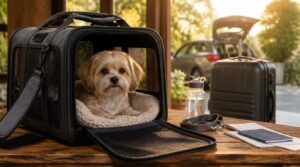
Picking the right carrier isn’t just about grabbing whatever looks cute at the pet store. You’ve got real factors to weigh, from how you’re traveling to what your dog actually needs. Here’s what to think through before you buy.
If you’re flying with a rescue pup, check out this husky rescue adoption guide for tips on prepping a newly adopted dog for travel.
Consider Your Travel Plans
Where you’re headed shapes everything. A quick car trip to the vet needs different gear than a week-long flight across the country.
Trip length, climate, and travel mode all factor in. Flying means you need an airline approved carrier meeting strict pet carrier dimensions. Road trips give you more flexibility, while destination activities like hiking call for specialized packs suited to airport rules and beyond. Travelers should consider budgeting and financial planning when preparing for pet travel to manage costs effectively.
Assess Your Dog’s Needs
Your dog’s own body and habits matter as much as your itinerary. Think through these factors:
- Dog size and weight limit for the carrier
- Breed-specific traits (flat-faced breeds need extra ventilation)
- Age—puppies and seniors need more room
- Activity level during travel days
- How often you’ll actually travel
A ventilated, airline approved carrier meeting standard pet carrier dimensions keeps most dogs comfortable.
Set Your Budget
Once you know your dog’s size and weight limit, it’s time for budget planning. Set a firm price ceiling before browsing, covering the carrier plus padding or bowls. Factor in hidden expenses like replacement zippers, and keep a small contingency reserve.
Choosing a durable, airline approved carrier now saves money later—long-term value beats a cheap, flimsy option every time.
Prioritize Convenience
A budget-friendly carrier still needs to work with your daily routine, not against it.
Look for fold-flat grips, side pockets for bowls and treats, and padded straps for handsfree carrying. Quick-release zippers matter too—one-handed access beats wrestling a squirmy dog.
Bonus points for removable washable bedding and a seat belt buckle included, so cleanup and car safety come standard, not as afterthoughts.
Check Storage Requirements
Before you buy, picture where that carrier lives when you’re not traveling—trunk, closet, or under a seat.
- Check vehicle trunk fit and under-seat clearance
- Confirm it’s an airline approved carrier
- Test carrier compression for tight closets
- Store absorbent pads separately, sealed
- Verify removable liners and pockets fit your gear
Match internal dimensions and a seat belt buckle included to your real routine, not just the store shelf.
Measure Your Dog for Proper Fit
Grabbing the right size carrier starts with a tape measure, not a guess. A few quick measurements can save you from a cramped, miserable trip for your dog. Here’s exactly what to measure and why each number matters.
Measure Body Length

Grab a soft tape measure before anything else. You’ll run it from Neck to Tail Base along the spine while your dog stands squarely on all fours.
Add 2-4 inches for lounging room, then compare that number to any airline-approved carrier’s internal dimensions. This single measurement often makes or breaks proper fit.
Measure Standing Height
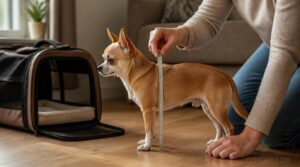
Height matters just as much as length. Have your dog stand square, then measure floor to shoulder blade—the highest point of their back, not their head.
Add 2-3 inches for headroom. This mimics stadiometer accuracy: steady posture, no slouching, no guessing.
If your pup won’t hold still, try knee height as a backup estimate.
Check Carrier Width
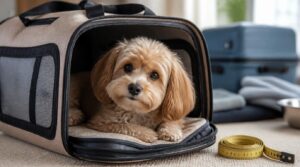
Width gets overlooked, but it’s what keeps your dog from feeling squeezed. Aim for 1.5 to 2 inches of clearance on each side beyond shoulder width. Small dogs usually need 8-10 inches; medium to large breeds want 12-18.
Proper width helps easier breathing, natural posture, and better airflow around your dog’s body—plus it makes cleaning removable liners far simpler.
Confirm Weight Limits

A carrier that’s too weak for your dog is a hazard, not a convenience. Weigh your dog alone first, then add the carrier’s tare weight for the true combined load. Compare that against the pet carrier weight limit.
- Verify airline-approved carrier ratings for cabin travel
- Check tether weight limits separately
- Confirm combined load safety margins
- Recheck seasonally as weight changes
Test Standing and Turning
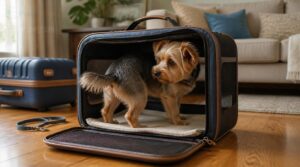
Can your dog actually turn around inside that carrier? Set it on the floor, unzipped, and let her step in. Watch for balance assessment and smooth rotation control without wobbling.
Good foot alignment and posture stability signal comfortable size and weight, adjustability, and dog carrier durability worth trusting on any airline-approved carrier trip.
Compare Dog Travel Carrier Types
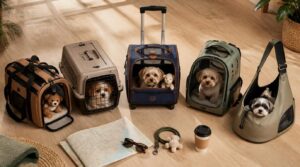
Not all carriers work the same way, and picking the wrong style can make travel harder than it needs to be. Each type has its own strengths, from tight budgets to bumpy hikes to quick vet runs. Here’s a rundown of the five main styles you’ll come across.
Soft-Sided Carriers
Fabric-sided bags are the go-to for most dog owners, and it’s easy to see why. Lightweight portability means less strain on your arm. Bonus perks:
- Mesh ventilation on multiple sides
- Padding on the base
- Adjustable pet fit
An airline approved carrier with breathable fabric comfort gives you a flexible fit advantage—squeezing under seats hard-sided bags can’t touch.
Hard-Sided Carriers
Some dogs just want solid walls between them and the world. That’s where hard-sided carriers earn their keep, offering durable plastic construction built to protect against bumps and crushing on longer trips.
| Feature | Hard-Sided | Soft-Sided |
|---|---|---|
| Protection | High-impact shell | Flexible fabric |
| Closures | Locking latches | Zippers, Velcro |
| Best For | Cargo travel | Under-seat cabin |
Look for an airline approved carrier with escape-proof latches and washable padding for real peace of mind.
Backpack Carriers
Solid walls work great for cargo, but what about hitting the trail with your pup along for the ride?
Backpack carriers give you a handsfree pet backpack option, with frame support and weight distribution across your hips instead of your shoulders. Look for safety clips, storage pockets, and adjustable fit straps for real comfort.
Sling Carriers
Some pups just want to snuggle close, not ride in a pack. That’s where sling carriers shine, hugging your dog against your chest with slack fabric for balance. Keep the pouch high and check airway clearance often.
The Tomkas Small Dog Sling Carrier offers snug, adjustable comfort with breathable fabric—perfect for quick errands where ease of use matters most.
Expandable Carriers
Growing puppies need room to grow, too. Expandable carriers use a telescoping frame that stretches the interior up to 5 inches, with three sided mesh ventilation, washable bedding, and leash tethers built in. Many are airline approved carriers with a higher and wider design, plus collapsible in three steps for easy trunk storage.
Prioritize Safety and Comfort Features
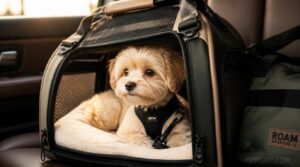
A cute carrier means nothing if it can’t keep your dog secure and comfortable. Once you’ve settled on a type and size, the details inside matter just as much as the shell. Here are five features worth checking before you buy.
Three-Sided Mesh Ventilation
Ever notice how a stuffy carrier makes your dog pant before you’ve even left the driveway? Three-sided mesh ventilation fixes that, with 40-60% mesh coverage keeping air moving while paw-safe 1.5-4mm openings block tiny paws.
Look for reinforced seams and quick-drying panels for easy mesh maintenance. This setup gives you real airflow optimization in any airline approved carrier, without sacrificing structure.
Escape-Resistant Closures
If your dog’s ever wiggled free from a "secure" bag, you know why closures matter most. Look for locking zippers with double stitching and a fabric flap guard, plus interlock straps or dual flaps for backup.
Hidden guards block seam gaps, while magnetic snaps add quiet, jostle-proof holding power. That’s a truly escapeproof pet carrier.
Harness Safety Tethers
A tether inside your carrier is what stops sudden braking from turning your dog into a projectile. Always clip gear clips, not the collar, to a chest or dorsal D-ring for real fall arrest protection.
Clip the harness, not the collar, so a sudden stop stays a stop, not a launch
Check the hook gate, inspect webbing often, and retire anything frayed. Combined with locking zippers and a seatbelt loop, that’s true secure pet fastening in an escapeproof pet carrier.
Washable Interior Padding
Muddy paws and shedding fur happen — your carrier’s floor shouldn’t hold onto either. Look for a removable Sherpa fleece floor that unzips for a quick wash, with fast-drying fabric and built-in odor resistance.
- Machine washable, colorfast after repeated cycles
- Low-profile foam holds its shape
- Hidden zippers prevent snags during washing
That’s easy cleaning without sacrificing comfort.
Seatbelt Attachment Loops
A carrier that slides across the seat during braking isn’t doing its job. Look for exterior loops that thread a seatbelt through for real car security, not just decoration.
This works like a seatbelt guide loop, keeping placement steady while supporting crash force distribution. Pair it with interior safety clips—never collar attachments—for backup restraint, plus door locks engaged before you drive.
Check Airline Carrier Requirements
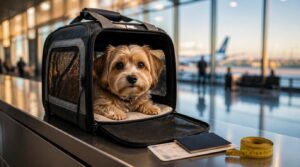
Flying with your dog means playing by the airline’s rules, not just your own. Rules can shift from one carrier to the next, so guessing isn’t a great strategy. Here’s what you need to check before you book that flight.
Confirm Under-Seat Dimensions
Under-seat space runs roughly 17 x 13 x 9 inches, but it varies by aircraft. Do a seat clearance test at home before flying: measure your carrier’s length, width, and height against those numbers to confirm your airline compliant pet carrier actually fits.
- Confirm dimensions after booking, since planes differ
- Check depth so it won’t block legroom
- Verify height clears the seat frame
Review Airline-Specific Rules
Every airline writes its own playbook, so don’t assume Delta’s rules match United’s. Check Fee Policies, Cabin Restrictions, Weight Limits, and Documentation Requirements before booking, since an airline approved carrier on one flight can still get bumped on another.
FAA regulations set baseline safety standards, but individual airline regulations decide the details. Reading the fine print protects your trip and your dog’s comfort.
Reserve Cabin Pet Space
Booking the flight isn’t the same as booking your dog’s spot. Airlines cap in-cabin pets per flight, so reserve cabin pet space early to lock in an airline-approved carrier slot.
Confirm these before departure:
- Written pet reservation confirmation
- Carrier dimensions matching cabin space requirements
- Pet safety features meeting airline compliance
- Documentation covering layovers for true in-cabin pet travel
Add Absorbent Padding
With your cabin spot locked in, the carrier itself needs one more thing: absorbent padding. It captures moisture fast, protecting your dog’s skin from irritation while stopping odors before they start.
A washable pet carrier liner makes cleanup simple after a long flight, and swappable pads keep things fresh trip after trip without replacing the whole carrier.
Prepare for TSA Screening
At the checkpoint, TSA requires pet removal from your carrier during screening. Practice this at home so it’s not your dog’s first time being lifted out in a crowded lane.
Separate electronics into bins, keep liquids in a quart bag, and have shoes removal ready. An airline-approved carrier with sturdy security features keeps everything moving smoothly.
Match Carriers to Travel Activities
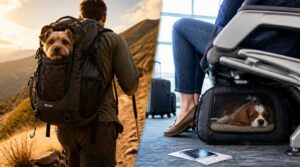
Not every trip calls for the same carrier. A hiking day and a flight home put very different demands on your gear. Here’s how to match the right carrier to what you’re actually doing.
Air Travel
Flying with your dog means playing by strict rules, and there’s no wiggle room.
- Confirm under-seat clearance (about 18"L x 11"W x 11"H)
- Choose an airline approved carrier with solid ventilation
- Budget for airline pet fees ($95–$200)
- Practice TSA screening prep at home
- Pick soft-sided styles—they flex better under seats than rigid ones
Long Road Trips
When the miles stack up, your carrier becomes a second home on wheels.
Plan rest stops every 2-3 hours for hydration breaks and bathroom time. Run vehicle safety checks before leaving, and rotate drivers to manage fatigue.
Pack emergency pet supplies, plus a road trip pet crate with padded bolsters for comfort—raised sides mean less motion sickness and easier storage between stops.
Hiking and Walking
Trails throw rocks, roots, and sudden grade changes at your dog’s paws, so a lightweight pet carrier with solid base support matters most.
- Pack water for hydration breaks
- Choose boots with good traction
- Check weather before climbing
- Tell someone your route
Multi-entry design lets tired pups hop in fast when legs give out on longer treks.
Veterinary Visits
Vet visits mean waiting areas full of nervous energy, so a carrier with mesh visibility helps your dog watch you, not strangers. Keep it zipped through weigh-ins and essential signs checks. If your dog’s anxiety carries over into mealtimes too, pairing calmer vet visits with slow feeder bowls designed for anxious dogs can help ease their stress well beyond the waiting room.
Washable liners handle exam room accidents easily. For preventive care visits, easy-open designs let vets access your dog fast without a struggle.
Everyday Errands
Grocery runs and bill pay don’t need a bulky rig, just a lightweight, soft-sided carrier with easy cleaning.
Build your errand list first, hit stores off-peak, and grab your reusable bags and digital coupons while your dog waits comfortably nearby, safe and unbothered by crowds.
Top 5 Dog Travel Carriers
You’ve measured your dog and figured out your travel style, so now comes the fun part. These five carriers stood out after real testing, each one shining in its own way. Here’s a closer look at what makes each pick worth your money.
1. Henkelion Soft Sided Pet Carrier
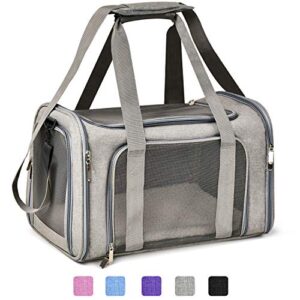
If your dog tops out around 15 pounds, the Henkelion is the carrier most flyers reach for first. It’s built with four-side mesh panels, so your pup gets airflow and a clear view no matter which way it’s facing.
Dual loop grips work with a seatbelt or luggage strap, and the whole thing folds flat for closet storage. At 17 x 11 x 11 inches, it slides under most airline seats without a fight.
| Best For | pet owners flying with small dogs or cats under 15 lbs who want an airline-approved carrier with good ventilation and hands-free carrying options. |
|---|---|
| Ventilation | Mesh panels (3 sides) |
| Weight Capacity | 15 lbs |
| Carry Handle | Shoulder strap + handles |
| Foldable Design | Collapsible frame |
| Washable Liner | Removable Sherpa fleece |
| Multiple Entry Points | Top/front/side zips |
| Additional Features |
|
- Four-side mesh panels give pets airflow and visibility from every angle
- Collapsible frame makes it easy to store flat when not traveling
- Removable, machine-washable Sherpa liner keeps cleanup simple
- Not suitable for pets over 15 lbs or those prone to anxiety or chewing
- Minimal interior cushioning may need extra padding for longer trips
- Luggage strap attachment can loosen if your pet moves around suddenly
2. Vceoa Soft Sided Pet Carrier
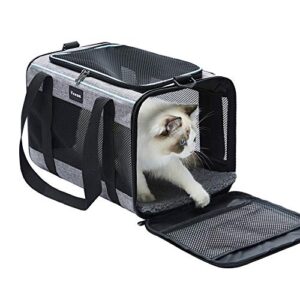
Budget matters just as much as fit, and the Vceoa proves you don’t need to overspend for solid features. It holds pets up to 16 pounds in a 17.5 x 11 x 11 inch shell, with top and side entry for easy loading either way.
Locking zippers keep escape artists contained, and the removable base insert adds a sturdier standing surface. You also get a washable fleece bed tucked inside, plus a shoulder strap that doubles as a luggage attachment for hands-free travel.
| Best For | Budget-conscious owners of cats or small dogs (up to 16 lbs) who want a reliable, no-frills carrier for vet visits and short trips. |
|---|---|
| Ventilation | Mesh windows (top/side) |
| Weight Capacity | 16 lbs |
| Carry Handle | Shoulder strap + handles |
| Foldable Design | Folds flat |
| Washable Liner | Removable fleece bed |
| Multiple Entry Points | Top and side entry |
| Additional Features |
|
- Dual top and side entry with locking zippers makes loading pets simple and keeps escape artists secure
- Removable base insert and washable fleece bed offer a comfortable, sturdy, and hygienic ride
- Shoulder strap doubles as a luggage attachment for flexible, hands-free carrying
- The base insert’s small pocket opening can make removal for folding a bit of a hassle
- Not ideal for large, highly active, or chew-prone pets that could damage the fabric
- Some tall or long-bodied pets may feel cramped despite meeting the weight limit
3. Amazon Basics Portable Pet Travel Carrier
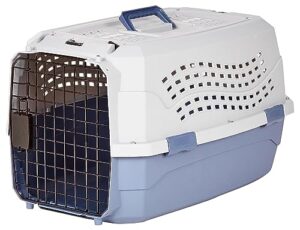
If you want soft-sided but sturdier, the Amazon Basics carrier splits the difference nicely. A spring wire frame keeps its shape while still flexing to fit under airline seats.
Front and top loading make getting a squirmy dog inside way easier. Inside, a removable fleece mat adds comfort and washes clean after messy trips.
Sturdy zippers and a removable base insert round out the package, giving you durability without the bulk of hard plastic.
| Best For | This carrier is best for pet owners with dogs or cats between 12–20 pounds who want a secure, easy-clean option for vet visits, travel, or everyday home use. |
|---|---|
| Ventilation | Side/top/back panels |
| Weight Capacity | 12-20 lbs |
| Carry Handle | Top handle |
| Foldable Design | Breaks down for storage |
| Washable Liner | Supports bedding/blankets |
| Multiple Entry Points | Front and top doors |
| Additional Features |
|
- Dual front and top entry makes loading anxious or squirmy pets much easier
- Sturdy polypropylene and wire construction holds up well and breaks down for storage or cleaning
- Ventilation panels on multiple sides keep pets cool and reduce travel stress
- Top door’s spring-loaded latch requires two hands to open, which can be inconvenient
- Larger pets near the 20-pound limit may cause the frame to flex or strain
- Screws can loosen over time, and some users find the top door tricky to realign during reassembly
4. Texsens Innovative Traveler Bubble Backpack
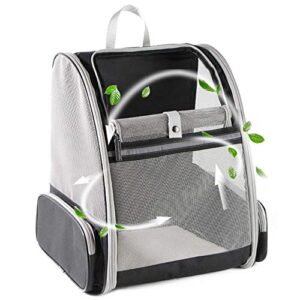
For dogs who’d rather watch the world than nap through it, the Texsens Bubble Backpack earns its spot. That clear bubble window gives a 360-degree view, and it pops out for quick checks or cleaning.
Three PVC mesh panels keep air moving, while chest buckles stop shoulder straps from slipping mid-hike. A washable cozy mat and internal safety tether round things out.
Weight cap sits at 15 pounds, so it suits small dogs best.
| Best For | small dogs under 15 pounds who enjoy watching their surroundings during walks, vet visits, or everyday outings. |
|---|---|
| Ventilation | Mesh panels (3 sides) |
| Weight Capacity | 15 lbs dogs/18 lbs cats |
| Carry Handle | Shoulder strap |
| Foldable Design | Folds flat |
| Washable Liner | Removable cozy mat |
| Multiple Entry Points | Three entrances |
| Additional Features |
|
- Clear bubble window offers a full 360-degree view and pops out easily for cleaning
- Chest buckles help stop shoulder straps from slipping during hikes or long walks
- Washable cozy mat and internal safety tether add comfort and extra security
- Weight limit of 15 pounds means it’s not suitable for larger dogs
- Mesh panels offer limited privacy, which could stress out shyer pets
- Minimal padding may need a blanket added for comfort on harder surfaces
5. GAPZER Soft Sided Cat Carrier 20lb
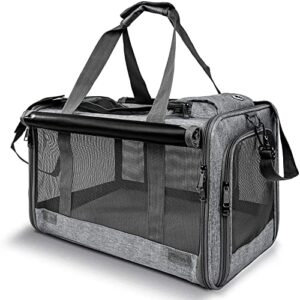
Roomiest pick on this list, the GAPZER carrier holds pets up to 20 pounds with a spacious 18.1" x 11.8" x 11.8" interior.
Five-sided mesh panels bring serious airflow, and roll-down privacy blinds let anxious pups tune out chaos. Auto-locking zippers and an internal safety tether keep escape artists in check.
The washable faux lambskin liner adds comfort, plus it folds flat for storage. Zippers may need a little alignment at first, so test them before your trip.
| Best For | Cat and small dog owners who want a roomy, breathable carrier for vet visits, travel, or hikes with pets up to 20 lbs. |
|---|---|
| Ventilation | Mesh all sides |
| Weight Capacity | 20 lbs |
| Carry Handle | Shoulder strap + handles |
| Foldable Design | Folds flat |
| Washable Liner | Removable faux lambskin |
| Multiple Entry Points | Top and side access |
| Additional Features |
|
- Spacious 18.1" x 11.8" x 11.8" interior comfortably fits medium to large cats and small dogs
- Mesh panels on all sides plus roll-down privacy blinds offer great airflow and help reduce pet anxiety
- Folds flat for storage and includes a washable faux lambskin liner for easy cleaning
- Zippers may need some initial alignment before they glide smoothly
- Base padding might feel a bit thin for pets who need extra cushioning
- Mesh panels are vulnerable to damage from pets who chew or scratch
Test Fit and Build Carrier Comfort
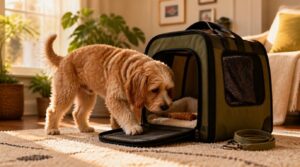
Buying the right carrier is only half the job done. Your dog still needs time to trust it before any trip happens. Here’s how to turn that carrier into a space your dog actually wants to be in.
Inspect The Carrier
Before your dog ever climbs in, put the carrier itself through a quick inspection.
Check stitching quality at stress points, test the closure system for smooth sealing, and confirm padding is washable.
- Seams reinforced
- Zippers glide, latch fully
- Leash tether attaches securely
Multiple access points and solid security features mean real durable pet transport, not just decent carrier material quality.
Introduce It Gradually
Rushing this step is where most owners go wrong. Start with gradual exposure: let your dog sniff the empty carrier for a few minutes, no pressure attached.
Toss in a treat, add a familiar blanket, then try short sessions with the door open. Build from three minutes to ten over several days, always ending on a calm exit before stress creeps in.
Use Positive Reinforcement
Treats turn "scary box" into "good things happen here." Reward timing matters most: click or praise the instant paws step in, then treat within seconds.
Keep praise consistency steady each session. Use high-value bites for treat selection, shaping calm behavior gradually. This canine anxiety reduction trick makes travel crate training stick, easing anxious pet transport before real trips begin.
Practice Short Trips
A parked car is your training ground before the real road trip begins. Buckle the carrier into the back seat, start the engine briefly, then drive around the block.
Build up from 15 minutes to 90 over several sessions, adding a treat and calm praise each time your dog settles.
Short trip practice builds real confidence.
Monitor Stress and Overheating
Panting hard? Drooling more than usual? These are early heat stress alerts you can’t ignore.
Check ventilation often, and confirm mesh panels stay unblocked for steady airflow. Offer water during stops to support hydration during travel.
A quick hand on the carrier fabric tells you if temps are climbing. Calm voice, brief pauses, and shade work wonders for dog comfort during transport.
Frequently Asked Questions (FAQs)
What size travel carrier for my dog?
Size matters, but so does snugness. Measure your dog nose-to-tail, add a few inches, and match it to the carrier’s weight limit and under-seat clearance for an airline-approved fit that keeps small breeds comfy.
What is the best airline-approved dog carrier?
The Sleepypod Air tops most lists as the true airline approved carrier: soft-sided, under 7 lbs, fits airline underseat rules, mesh ventilation, and seatbelt compatible for stability—perfect for dogs under 15-20 lbs.
Are airlines strict about pet carrier size?
Yes, very strict. Under-seat fit rules and cabin pet limits vary by airline, but carrier size enforcement is real. Oversized carriers get rejected at check-in, so measuring your dog against airline-approved carrier specs matters before you fly.
Which airline is the best to fly with a dog?
No single airline wins outright, but check airline pet policies for cabin size limits, breed restrictions, and fees. Compare in-cabin space availability, health documentation rules, and airline-approved carrier requirements before booking your dog’s flight.
How often should I clean the carrier?
Wipe it down after every trip, then do a deep clean monthly. Wash removable bedding weekly, spot-treat stains fast, and use enzymatic cleaner for odor control. A leak-proof base and quality material make this routine quick and painless.
Can I use one carrier for multiple pets?
Most airlines require separate carriers per pet, though some allow two small kittens or puppies together if size and weight limits check out. For multi-pet households, safety and airline pet policies usually outweigh the convenience of sharing one carrier.
What age is appropriate for carrier training?
8 to 12 weeks is your sweet spot for puppy carrier training, using gradual introduction and positive reinforcement. Watch for calm, voluntary entry and relaxed breathing—key readiness signs before building toward longer sessions and short car rides.
How long can a dog safely stay inside?
Short flights, long road trips: duration limits shift. Flights allow up to 4 hours, road trips need breaks every 2 hours. Watch for panting or whining. Fresh water and rest breaks keep your dog calm and safe.
Should I feed my dog before traveling?
Skip the full meal. Feed a light meal 3-4 hours before departure, keep water available, and check with your vet if motion sickness is a recurring issue for your pup.
Conclusion
Funny how the carrier that looked so adorable in the store photo turns out to be the one leaving your dog panting and cramped at gate 14. That’s the real lesson behind how to choose a dog travel carrier: cute never beats measured.
Prioritize mesh airflow, honest weight limits, and a **snugged as tickets to adventure, tail wagging the whole way.