
This site is supported by our readers. We may earn a commission, at no cost to you, if you purchase through links.

Most dogs don’t hate crates — they hate being thrown into one without warning. That’s the mistake nearly every first-time owner makes: buying a crate, putting the dog inside, and wondering why it sounds like the apocalypse.
The crate itself isn’t the problem. The setup is.
Dog crates for first-time owners come with a learning curve, but it’s a short one once you know what actually matters — the right size, the right spot, the right first five minutes.
Get those pieces in place, and a crate stops being a cage and starts being your dog’s favorite corner of the house.
Table Of Contents
Key Takeaways
- The crate type and size you pick matter more than most people think — wire works for curious dogs, plastic calms anxious ones, and heavy‑duty is worth the price for escape artists.
- A crate that’s too big backfires fast, because dogs will sleep in one corner and use the other as a bathroom, wrecking your potty training from day one.
- Start with just 30 seconds and a treat — crate training works by building trust in tiny steps, not by hoping your dog figures it out on their own.
- Using the crate as punishment or skipping potty breaks doesn’t just slow training — it causes real anxiety and health problems that stick around long after puppyhood.
Choose The Right Dog Crate
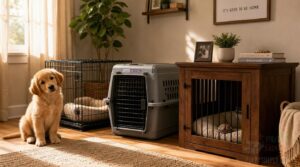
Not all dog crates are created equal — and the one you pick will depend on your dog’s size, breed, and how you plan to use it. A bad fit early on can make training way harder than it needs to be. Here are the main types to know before you buy.
Getting the type right matters more than most people realize — check out this guide on which dog crate types are actually the safest before you commit to one.
Wire Crates
Wire crates are the go-to choice for most new puppy parents — and for good reason. The open metal grid gives your dog a clear view of the room, which actually helps with the crate acclimation process. It doesn’t feel like isolation. It feels like a front-row seat.
Here’s what makes wire crates worth considering:
- Wire crate ventilation keeps air flowing, so your dog stays cool even on warm days.
- The collapsible design means easy storage — fold it flat and slide it behind a door when guests arrive.
- Secure door latches prevent escape artists from nosing their way out unsupervised.
Most models include a removable plastic tray for quick cleanups and a divider panel to adjust crate size guidelines as your puppy grows. Look for a rust prevention coating — galvanized finishes hold up much better over time, especially if the crate lives near a door or gets wiped down frequently.
For crate training, wire crates strike the right balance: sturdy, practical, and easy to live with long-term.
Plastic Crates
If wire crates feel too open for your dog, plastic crates offer the opposite vibe — a snug, enclosed space that naturally calms anxious dogs. Think of it like a cozy cabin versus an open porch.
Most plastic airline kennels are built from HDPE material, which withstands impacts, moisture, and outdoor conditions without cracking. Many include UV protection, so sun exposure won’t degrade them over time. Their standardized 6040 dimensions align with European pallets, simplifying storage and shipping.
| Feature | Why It Matters |
|---|---|
| Lightweight design | Easy transport for travel or vet visits |
| Solid wall construction | Reduces visual stimulation, lowers stress |
For new puppy parents prioritizing pet travel safety, plastic crates are a smart pick — especially for smaller breeds.
Soft-sided Crates
Plastic crates feel solid and enclosed — soft-sided cloth crates take a different approach entirely. They’re lightweight and collapsible, making them a go-to for dog owners who travel often or need quick, easy storage.
- Mesh ventilation benefits keep air flowing
- Quick setup in under a minute
- Removable, washable covers for easy cleaning
- Built-in carry straps for hands-free transport
Just skip these for unsupervised chewers — fabric won’t hold up.
Heavy-duty Crates
If soft-sided crates are the lightweight option, heavy-duty crates sit at the opposite end — built for dogs that treat regular crates like a puzzle to escape from.
These use a steel frame with reinforced corners, a multi-point locking system, and solid weather sealing to keep your dog secure no matter what.
| Feature | Standard Crate | Heavy-Duty Crate |
|---|---|---|
| Frame Material | Wire or plastic | Steel or aluminum |
| Load Capacity | Low | 2,000–6,000 lbs |
| Locking System | Single latch | Multi-point, padlock-ready |
| Weather Sealing | Minimal | Gasketed, dust/moisture resistant |
| Forklift Pockets | No | Yes, for easy transport |
They’re heavier and pricier — but for powerful medium/large breeds prone to escaping, they’re worth every penny.
Puppy Divider Panels
Think of a divider panel as a built-in growth kit for your dog crate. Instead of buying a new crate every few months, you just slide the panel back as your puppy develops.
Adjustable panel sizing means the space stays snug — just big enough to stand, turn, and lie down — which is exactly what makes crate training click.
That snug fit taps into your dog’s natural denning instinct — something you’ll see in action with breeds like Weimaraners who thrive with cluster crate training techniques.
Get The Perfect Crate Size
Getting the size wrong is one of the most common mistakes first-time owners make — and it affects everything from potty training to how comfortable your dog actually feels. Too big and your pup treats the back corner like a bathroom; too small and it’s just miserable. Here’s how to measure and size it correctly.
Measure Length Correctly

Grab a soft measuring tape and start at the tip of your dog’s nose, running it all the way to the base of the tail — not the tip. Stand your dog naturally on all four paws.
If they’re arching or fidgeting, wait it out. A tense back adds an inch or two and throws off your crate size selection entirely.
Measure Height Correctly
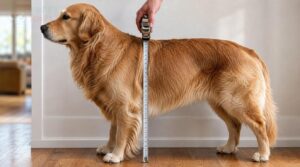
For height, you’re measuring to the withers — the highest point between your dog’s shoulder blades, not the top of the head. That’s the standard reference for crate size selection across all breeds.
Here’s how to do it right:
- Stand your dog against a wall for posture alignment
- Use a metal tape measure — cloth tapes sag and lie
- Measure floor to withers, then add 2–4 inches
Allow Turning Space
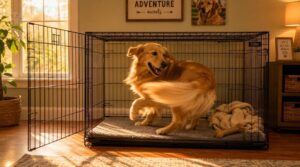
Your dog needs room to spin around — not just stand and stare at the wall. Full 360-degree turning is the minimum standard. A circular turning radius requires at least 60 inches in diameter. T-shaped layouts need a 60-inch square with 36-inch-wide arms. For medium-large breeds, that’s non-negotiable for comfortable crate training.
| Turn Type | Minimum Size | Best For |
|---|---|---|
| Circular | 60" diameter | All breeds |
| T-shaped | 60" sq, 36" arms | Larger dogs |
| Clearance Overlap | Shared with fixtures | Space-saving setups |
| Door Intrusion | Allowed, no reduction | Standard crate placement |
| Mobility Access Space | Full 60" maintained | Crate alternatives, ex-pens |
Avoid Extra Room

More space isn’t better — it’s actually a problem. A snug crate fit is the goal. When there’s too much room, your dog may use one corner to sleep and another as a bathroom, which completely undermines crate training.
A crate too big defeats itself — dogs sleep in one corner and use another as a bathroom
Here’s why efficient crate layout matters:
- Limits accidental elimination spots
- Reduces wasted bedding areas
- Keeps the compact den zone cozy
- Simplifies cleaning
Plan for Growth
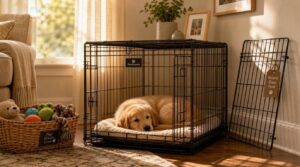
Puppies don’t stay small — and your crate choice should account for that from day one. Instead of buying a new crate every few months, look for modular divider panels that shrink the interior now and expand as your dog grows. It’s a smarter investment, and honestly, your wallet will thank you later.
Set Up a Comfortable Crate

Getting the size right is only half the job. Now it’s time to make that crate feel like somewhere your dog actually wants to be. Here’s what to set up before your pup ever steps inside.
Best Crate Location
Where you place the crate matters more than most people realize. A central living area — like your main family room — keeps your dog involved in daily life without feeling isolated. Think of it as the difference between a guest room and the heart of the home. Dogs are den animals, but they still want to feel connected.
At night, especially early in crate acclimation, tuck the crate into your bedroom or just outside it. That proximity helps your dog settle faster — fewer midnight panic sessions for both of you. Once they’re comfortable, you can gradually move it to a low-traffic corner if needed.
Just avoid spots with drafts, direct sunlight, or constant foot traffic. And if you travel often, keeping a second crate near your entry door makes loading up almost easy.
Safe Bedding Choices
Once you’ve nailed the location, bedding is next. Skip anything fluffy and loose — young dogs chew, and swallowed stuffing is a vet visit waiting to happen. Organic cotton bedding is a solid starting point: chemical-free, washable, and gentle on sensitive skin. For dogs prone to allergies, hypoallergenic fabric options like bamboo lyocell or linen breathe well and resist dust mites.
Look for removable, machine-washable covers — you’ll thank yourself during accidents. Certifications like GOTS or OEKO-TEX confirm the materials are actually safe, not just marketed that way.
Water and Toys
Bedding sorted — now think about water and toys. Clip-on water bottles beat loose bowls every time. They don’t tip, they stay clean, and BPA-free options with leak-proof caps keep things safe. Refill every few hours and wash daily.
For toys, stick to rubber or sturdy plastic — nothing with small parts a puppy can swallow.
Calm Den-like Setup
Think of it like setting up a little cave. Soft lighting and neutral colors keep the mood calm — harsh brightness spikes arousal fast.
Tuck the crate in a quiet corner near family activity, not smack in the middle of foot traffic.
A memory foam mat underneath ties it all together, making the space genuinely restful.
Easy Cleaning Features
Cleaning a crate shouldn’t feel like a chore. Look for these features that make dog hygiene genuinely easy to maintain:
- Removable liners that are machine washable at 60°C
- Smooth surfaces and sealed joints that wipe down fast
- Stainless steel options that resist stains long-term
- Trays and panels that are dishwasher safe
Skip soft-sided cloth crates — they trap mess and can’t handle a real scrub-down.
Start Crate Training Slowly

Crate training isn’t something you rush — your dog needs time to figure out that the crate is a safe place, not a trap. The good news is that with the right approach, most dogs come around faster than you’d expect. Here’s what actually works, step by step.
Short First Sessions
Start small — like, really small. Your first session should last no more than a few minutes. Toss a treat in, let your dog sniff around, then close the door for 30 seconds. That’s it. You’re not training endurance yet; you’re building trust. Short wins early make everything easier later.
Positive Crate Rewards
Rewards are the secret engine behind good crate training. Every time your dog steps in voluntarily, mark it immediately — a cheerful "yes!" plus a small, tasty treat. That combo builds a positive association fast.
- High-value treats work best early on — think tiny chicken bits, not boring kibble
- Consistent praise after every calm entry reinforces that the crate equals good things
- Taper reward frequency gradually once your dog settles in reliably
Feeding Inside Crate
Meals are one of the easiest ways to make the crate feel like a good place. Place your dog’s bowl in a consistent feeding zone inside the crate — same spot, every time. Use a spill-proof bowl to keep things tidy, and remove uneaten food after 15–20 minutes. No grazing, no mess.
Keep the door open at first. Once your dog eats calmly without hesitation, start closing it briefly. That’s positive reinforcement without even trying.
Gradual Time Increases
Think of it like turning up the volume — one notch at a time. Start with 5 to 10 minute sessions, then add a few minutes each day. A solid Incremental Duration Plan keeps your dog from hitting a wall:
- Days 1–3: 5–10 minutes
- Days 4–7: 15–20 minutes
- Week 2: 25–30 minutes
- Week 3+: build toward the age-appropriate maximum time limit
That’s crate training done right.
Handling Whining Correctly
Whining happens — don’t panic. The key is reading why your dog is whining.
Non-distress whining — testing behavior, boredom, attention‑seeking — deserves one response: ignore the whining completely. Caving rewards it instantly.
But distress whining is different. Let them out, reset, and rebuild the positive association from scratch.
Consistent routines help most — your dog learns fast when the rules don’t change.
Use Crates for Daily Routines
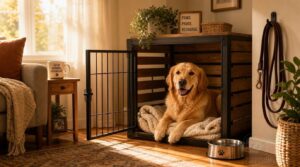
Once your dog is comfortable in the crate, it’s time to put it to real work. A crate isn’t just for bedtime — it fits naturally into almost every part of your day. Here are the routines where it makes the biggest difference.
House Training Support
One of the best reasons to use dog crates during house training is simple: dogs won’t soil where they sleep. That instinct is your secret weapon for dog housebreaking.
- Take puppies out every 1–2 hours during the day
- Always go outside after meals, naps, and bedtime
- Clean accidents immediately with enzymatic cleaner to kill odor
Stick to a consistent potty routine, and your dog learns fast.
Preventing Destructive Behavior
A consistent potty routine keeps accidents down — but what about the chewed-up sofa cushions?
Crate training gives dog owners a practical tool for behavior problem prevention when you can’t watch your pup. Think of it as a pause button on chaos.
| Crate Type | Best For | Destructive Behavior Benefit |
|---|---|---|
| Wire | Active, curious dogs | Visibility reduces anxiety-driven chewing |
| Plastic | Anxious dogs | Den-like calm discourages restless pacing |
| Heavy-duty | Persistent chewers | Reinforced panels resist gnawing and clawing |
During supervised confinement periods, pair the crate with chew deterrent toys to redirect energy positively. This builds a positive crate association — your dog stops seeing it as a trap and starts treating it like their own space.
Safe Travel Practice
Crate training doesn’t stop at home — it travels with you.
Before any road trip, nail your travel crate setup first:
- Attach a spill-resistant water bowl to the crate door
- Add moisture-wicking bedding to keep your dog cool
- Place ID tags inside and outside the crate
- Pack absorbent pads for quick mess cleanup
Wire crates collapse fast for car trips. Soft-sided cloth crates work for short drives and hotel stays.
Vet and Grooming Visits
Your dog crate doubles as a stress-free carrier for vet and grooming visits.
Clinics that offer combined vet and grooming services keep records shared between staff — so a groomer spotting a new skin lump can flag it to the vet immediately. That kind of coordinated care scheduling means nothing slips through the cracks between appointments.
Puppy Socialization Outings
A portable crate turns puppy socialization outings into stress‑free adventures. Toss it in the car and take your pup to park exploration, café visits, or busy sidewalks — short, positive bursts that build confidence without overwhelm.
It’s your dog’s safe home base while the world gets louder and bigger around them.
Avoid Common Crating Mistakes
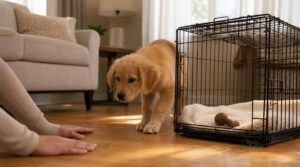
Even with the best intentions, a few easy-to-miss mistakes can quietly work against everything you’re trying to build. Most first-time owners don’t realize they’re making them until the crate becomes a battle. Here’s what to watch out for.
Over-crating Risks
Too much of a good thing applies here. If your dog spends most of the day overcrated, the crate stops being a safe haven and starts causing real harm — physically and mentally.
Muscle atrophy risk is real. Without movement, muscles weaken, hind limbs lose strength, and joints develop painful pressure sores. UTI probability climbs fast when bathroom breaks get skipped too long. And emotionally? Expect separation anxiety and socialization deficits that follow your dog well beyond puppyhood. Stick to confinement duration guidelines — bladder infections and crate anxiety aren’t worth the shortcut.
Crates as Punishment
Here’s the hard truth: never use the crate as punishment. Sending your dog there after bad behavior doesn’t teach a lesson — it kills the safe-den feeling you’ve been building.
Dogs don’t connect the punishment to the behavior. They just learn the crate means something bad happened.
Crate anxiety and avoidance behaviors follow fast, and your training progress stalls.
Ignoring Potty Needs
Skipping potty breaks isn’t just inconvenient — it’s a real health risk. Bladder holding limits exist for a reason: urine sitting too long breeds bacteria, leading to Urinary Tract Infections that are painful and expensive to treat. Potty withholding risks also include constipation, abdominal discomfort issues, and even pelvic floor weakness over time.
Before crating, always give your dog a potty area visit first.
Separation Anxiety Concerns
Some dogs don’t just dislike the crate — they panic. Separation anxiety is real, and the crate can accidentally make it worse if you rush the process.
Watch for these distress triggers and warning signs:
- Frantic scratching or escape attempts the moment you leave
- Whining that escalates instead of settling down
- Pacing or agitation before you’ve even walked out the door
- Refusing to enter the crate after a few bad experiences
That last one matters. Anticipatory anxiety means your dog reads your routine — grabbing keys, putting on shoes — and starts spiraling before separation even happens. The crate becomes a symbol of you leaving, not a safe den.
Fix it with gradual desensitization: short sessions, no pressure, lots of positive reinforcement training. Build the association slowly. If distress keeps escalating every single time, that’s a sign to pause and reassess — or consult a professional.
Safe Crate Alternatives
Sometimes a crate just isn’t the right fit — and that’s okay.
Portable fencing and ex-pens carve out a safe zone without full enclosure.
Room gates block off puppy‑proof spaces.
Furniture enclosures blend into your home while acting as a den.
Soft playpens and modular systems let you customize containment as your dog grows.
Same safety, less stress.
Frequently Asked Questions (FAQs)
How long can I crate my puppy overnight?
Overnight crating isn’t one-size-fits-all. Use your puppy’s age in months plus one to determine the number of hours — so a 3-month-old gets about four hours max before needing a potty break.
What age should puppies start crate training?
Most puppies are ready to start crate training at 8 weeks old. Keep first sessions short — just 5 to 10 minutes. That’s plenty for a brand-new pup.
Can two dogs share the same crate safely?
Technically, yes — but it’s rarely a good idea. Most dogs do better with their own space. Sharing a crate raises the risk of stress, resource guarding, and accidents. When in doubt, give each dog their own.
Should I cover the crate with a blanket?
Think of wild den animals — wolves, foxes — curling into dark, enclosed spaces. Partial blanket coverage mimics that. It can ease separation anxiety and help your dog settle, as long as ventilation stays clear.
When can my dog sleep outside the crate?
Most dogs are ready around 6–12 months, once they’ve slept through the night crate-free for 14 consecutive nights, show solid potty control, and respond calmly to bedtime cues without anxiety or accidents.
Conclusion
A thousand dogs have been crated wrong for every one done right — but now you’re not that person. Dog crates for first-time owners only feel complicated before you understand the basics.
Right size, right setup, right introduction. Skip those steps and you get a panicked dog. Follow them and you get a dog that walks into its crate like it owns the place.
Which, honestly? It kind of does.
- https://www.carecredit.com/well-u/pet-care/how-to-choose-dog-crate
- https://www.thepetcarpenter.co.uk/which-dog-crate-is-best-the-ultimate-guide-for-modern-pet-owners
- https://www.businessinsider.com/guides/pets/best-dog-crate
- https://www.petco.com/content/content-hub/home/articlePages/pet-guides/dog-crates-guide.html
- https://3lostdogsacademy.com/puppy-survival-school/