This site is supported by our readers. We may earn a commission, at no cost to you, if you purchase through links.

Puppies don’t come housebroken—but most people find that out the hard way, usually barefoot at 2 a.m. The good news: a properly sized crate is the single most effective housebreaking tool you have.
Dogs instinctively avoid soiling their sleeping space, which means the crate does half the work for you. The catch is that not every crate is built for potty training.
Some are too big, some lack a washable tray, and some fall apart the moment your Lab puppy decides to redecorate. The right dog crate for potty training makes the process faster, cleaner, and far less stressful—for both of you.
Table Of Contents
Key Takeaways
- A properly sized crate — just two to four inches longer than your dog’s nose-to-tail measurement — is the single most effective potty training tool you have, because dogs instinctively won’t soil their sleeping space.
- Using a divider panel lets one crate grow with your puppy, keeping the space snug enough to prevent accidents without forcing you to buy a new crate every few months.
- A removable, leak‑proof tray and an enzyme cleaner on standby make accident cleanup fast and thorough — critical because lingering urine odors signal your puppy to go in the same spot again.
- The crate should always feel like your puppy’s safe den, never a punishment — pairing it with treats, calm praise, and a consistent potty schedule is what actually builds lasting housebreaking habits.
Top 5 Potty Training Crate Picks
Not every crate works well for potty training — the right one makes the whole process faster and less messy. These five picks cover different needs, budgets, and dog sizes, so there’s something here for most puppy owners. Here’s what made the cut.
If you’ve got a husky pup specifically, pairing the right crate with husky puppy care and potty training tips can seriously cut down on accidents in those early weeks.
1. MidWest iCrate 24 Inch Dog Crate
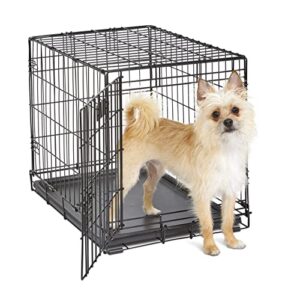
The MidWest iCrate 24-inch is a go-to pick for potty training small dogs in the 12–20 lb range.
It comes with a removable leak-proof tray for quick cleanup and a divider panel so you can shrink the space as your puppy grows — no extra room means no sneaking off to use the corner as a bathroom.
It folds flat, weighs under 14 lb, and the patented Paw Block latch keeps curious paws from popping the door open.
| Best For | Small dog owners (12–20 lb breeds) who want an easy-to-clean, travel-friendly crate that works from puppyhood into adulthood. |
|---|---|
| Material | Coated metal wire |
| Weight | 13.8 lb |
| Easy Cleaning | Removable slide-out tray |
| Portability | Fold-flat with carry handle |
| Size Options | 24.5×17.5×19.5 in |
| Potty Training Use | Divider panel for puppies |
| Additional Features |
|
- The divider panel lets the crate grow with your pup, so you’re not buying two crates as they get bigger.
- The leak-proof tray slides right out for cleaning — no wrestling with the whole crate when accidents happen.
- Folds flat in seconds and has a built-in handle, so moving it around the house or tossing it in the car is no big deal.
- Only one door, which makes it trickier to find a good spot in smaller rooms.
- Dogs over 20 lb will outgrow it fast — it’s a small-breed-only situation.
- Folding it up can pinch your fingers, especially on that last panel click.
2. Love’s Cabin Large Portable Pop Up Kennel
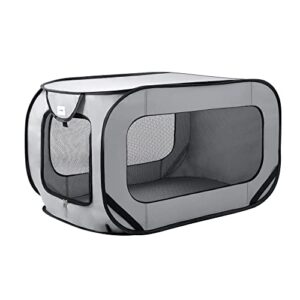
If the MidWest iCrate is your stay-at-home solution, Love’s Cabin is its travel-ready cousin. This pop-up fabric kennel sets up in seconds, weighs just over 2 lb, and folds flat when you’re done — no tools, no hassle.
It fits dogs up to 40 lb and comes with integrated seatbelt strap loops to keep it stable in the car. Mesh panels on the front and sides keep airflow steady so your pup stays cool on the go.
| Best For | Pet owners who travel frequently and need a lightweight, easy-to-store kennel for dogs or cats up to 40 lb. |
|---|---|
| Material | 600D polyester Oxford |
| Weight | 2.03 lb |
| Easy Cleaning | Hand-washable waterproof fabric |
| Portability | Pop-up folds flat instantly |
| Size Options | 36.6×21.2×21.2 in |
| Potty Training Use | Temporary confinement space |
| Additional Features |
|
- Sets up and folds flat in seconds — no tools needed, and at just over 2 lb, it’s easy to carry anywhere.
- Mesh panels on the front and sides keep air moving, so your pet stays comfortable on longer trips.
- Built-in seatbelt strap loops hold it steady in the car, which is a genuinely useful safety touch.
- The zipper feels a bit flimsy and can wear down with heavy daily use — not ideal for persistent escape artists.
- Re-folding the pop-up frame takes some practice, and forcing it wrong can bend the internal wires.
- It’s not built for unsupervised use with strong chewers or highly anxious pets who might work through the fabric.
3. Qeils Reusable Waterproof Puppy Pad
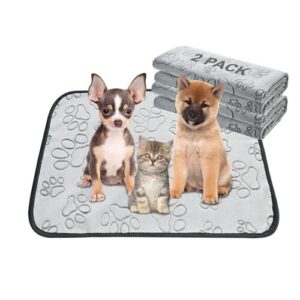
Not everything in potty training fits inside the crate — that’s where the Qeils Reusable Puppy Pad earns its spot. At 18 × 24 inches and just $7.99 for two, it lines your crate floor and catches accidents fast.
The four-layer waterproof design locks in moisture so your pup isn’t sitting in a wet mess. Toss it in the washing machine when needed.
No more buying disposables every week — these pads hold up through hundreds of washes.
| Best For | Pet owners training puppies, senior dogs, or small animals who want a washable, low-cost alternative to disposable pads. |
|---|---|
| Material | Absorbent fiber composite |
| Weight | Not specified |
| Easy Cleaning | Machine-washable pad |
| Portability | Lightweight 2-pack pads |
| Size Options | 18×24 in |
| Potty Training Use | Pad absorbs accidents |
| Additional Features |
|
- Affordable at $7.99 for two pads — saves money compared to buying disposables week after week.
- Machine-washable and built for repeated use, so cleanup is quick and easy.
- Non-slip backing helps keep the pad in place, which is great for pets with shaky footing.
- Thinner than expected — may not hold up for heavy wetters or larger dogs.
- The waterproof layer can let liquid through on bigger accidents.
- No bleach or fabric softener allowed, which limits how thoroughly you can sanitize them.
4. BestPet Foldable Metal Dog Crate
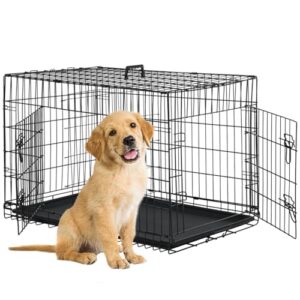
If the Qeils pad manages the mess inside, the BestPet Foldable Metal Crate manages everything around it. At 24 × 16 × 19 inches and just 8 pounds, it’s built for small-to-medium breeds and folds flat without tools.
The double-door setup gives you front and side access — handy for tight spaces. A removable, leak-proof tray makes cleanup fast. One heads-up: the slide-bolt latches can be stiff, so factor that in if you’ve got a quick-escape artist on your hands.
| Best For | Small-to-medium dog owners who want a lightweight, easy-to-clean crate they can fold up and take anywhere without needing a toolbox. |
|---|---|
| Material | Metal frame with ABS plastic |
| Weight | 8 lb |
| Easy Cleaning | Removable washable ABS tray |
| Portability | Tool-free fold with handles |
| Size Options | 24x16x19 in |
| Potty Training Use | Fits potty pad inside |
| Additional Features |
|
- Folds flat in seconds — no tools, no hassle, great for travel or storage
- Double doors (front and side) make it easy to place in tighter spots
- Removable tray is simple to pull out, rinse, and pop back in
- Slide-bolt latches can be stiff, especially the second door
- Rattles and shifts around when your dog moves — not the quietest option
- Not a good fit for anxious, destructive, or larger dogs who might test its limits
5. Luckyiren Puppy Potty Training Doorbell
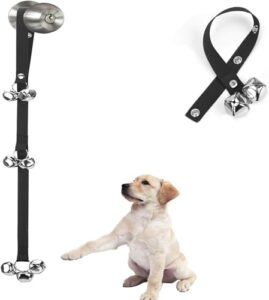
The Luckyiren Puppy Potty Training Doorbell is the sneaky MVP of this list. It’s not a crate — but it works with your crate routine perfectly.
Pair it with a non-slip mat and a clear path to the door, and you’ve got a setup that actually works — check out these dog crates designed for apartment living to complete the routine.
Your pup learns to ring a button near the door whenever nature calls. The wireless setup takes under 15 minutes, the button fits small paws easily, and the receiver chimes across rooms.
At $5.99, it’s the cheapest tool here with a big payoff: fewer accidents, less guesswork.
| Best For | Dog owners in the early stages of potty training who want a simple, low-cost way to help their pup communicate when it’s time to go outside. |
|---|---|
| Material | Stainless steel with nylon |
| Weight | Not specified |
| Easy Cleaning | Wipe-clean surface |
| Portability | Lightweight strap attachment |
| Size Options | 3 snap length positions |
| Potty Training Use | Signals outdoor bathroom need |
| Additional Features |
|
- Super affordable at $5.99 — low risk, solid reward if it clicks with your dog
- Stainless steel bells with a clear, room-crossing jingle that’s easy to hear without being obnoxious
- Heavy-duty nylon strap with three length adjustments, so it works on most doors right out of the box
- Training is required — if you don’t put in the work, the bells just hang there doing nothing
- Only three preset length options, which might not fit very short or oddly shaped door handles
- Can feel a bit bulky, and even the shortest setting may be too long for some setups
Choosing The Right Crate Size
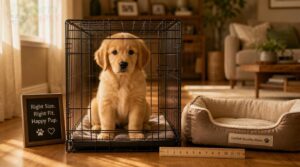
Getting the crate size right is honestly one of the most important steps in potty training — too big, and your puppy will just pick a corner to use as a bathroom. The good news is that sizing doesn’t have to be complicated once you know what to look for. Here are the key guidelines to help you nail the fit.
Measure Nose to Tail
Getting the crate size measurement right starts with one simple step: measure your dog from the tip of the nose to the base of the tail. Use a Tape Measure Technique — have a helper keep your dog standing calmly while you run the tape straight along the spine. Repeat twice and average the results for an accurate length calculation. A reliable approach is the body length measurement method, which measures from the base of the tail to the base of the neck along the spine.
- Use a flexible tape measure with clear inch markings
- Measure while your dog stands squarely on even ground
- Record results in a Growth Tracking Log for reference
- Follow a Measurement Frequency Schedule — recheck every four to six weeks during growth
- Apply consistent proportion guidelines across all breed sizes for reliable crate sizing
Add Two to Four Inches
Once you have your nose-to-tail measurement, add two to four inches as your sizing margin. This measurement buffer gives your dog just enough room to stand and turn comfortably — without creating extra space that invites accidents.
Think of it as the fit tolerance built into every good size recommendation. It’s a small length adjustment, but it makes a real difference.
Avoid Oversized Crate Space
Bigger isn’t always better — especially concerning potty training. An oversized crate gives your puppy room to sleep on one side and eliminate on the other, which completely undermines the whole process.
Dogs instinctively avoid soiling their sleeping area, but only when space is limited. Too much room removes that instinct entirely, making crate size selection one of the most important decisions you’ll make.
Use Dividers for Puppies
A crate divider is one of the smartest tools in your puppy house training schedule. It lets you shrink the interior so your puppy only has enough room to sleep — nothing extra.
Here’s how to make it work:
- Adjust divider placement so your puppy can stand, turn, and lie down — nothing more.
- Check ventilation with dividers by choosing panels with open mesh or wire spacing.
- Inspect divider safety features regularly — smooth edges, no loose parts, rust-resistant fasteners.
Proper space management tips keep accidents in check without buying a new crate every few months.
Fit Growing Large Breeds
Large breeds can double in size before you know it — so plan ahead. Buy the adult-size crate now and use a divider panel to shrink the space as your puppy grows, keeping potty training tight and effective.
| Stage | Divider Position | Crate Space |
|---|---|---|
| 8–12 weeks | Far forward | Snug sleeping area |
| 3–6 months | Mid-crate | Room to stretch |
| 6–12 months | Removed | Full adult space |
A leakproof pan and solid durability matter most here — large breeds are hard on equipment. Watch weight closely to support bone development without rushing growth.
Must-Have Crate Training Features
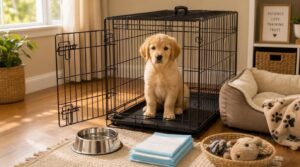
Not every crate is built the same, and those differences really matter when you’re potty training. The right features can make cleanup easier, accidents less likely, and the whole process less stressful for both of you. Here’s what to look for before you buy.
Removable Leak-proof Tray
When accidents happen — and they will — a removable leakproof pan makes cleanup almost painless. You just slide it out, rinse it under the tap, and you’re done. Many trays are dishwasher safe, use BPA-free plastic, and fit standard 24–30 inch crates. Look for:
- High-impact plastic that resists cracking
- Raised edge lips that contain spills
- Non-slip bottoms for stable removal
- Reinforced corners that resist warping
- A snug seal that locks in odors
Strong Ventilation and Airflow
Clean air inside a crate matters more than most owners realize. Crossflow ventilation design moves air from one side to the other, preventing stuffy pockets from forming around your pup.
Wire crates nail this naturally.
Perforated panel airflow keeps things breezy without blasting your dog with a draft — a small but important comfort during potty training.
Single Versus Double Doors
Door count shapes how you use the crate every single day. A single-door crate keeps setup simple and works well in snug spaces.
A double-door design opens from both ends — handy when your pup hesitates to walk straight in. During potty training, that second door gives you flexible placement against a wall without blocking access.
Rubber Feet Protect Floors
One overlooked detail that actually matters: rubber feet under the crate. They grip the floor so the crate doesn’t slide when your pup shifts around inside.
On hardwood or tile, that movement can cause scratches fast.
Softer rubber compounds protect delicate surfaces, while silicone options handle aggressive cleaners well — handy during potty training cleanups.
Foldable Design for Storage
A foldable design is one of those features you won’t fully appreciate — until you actually need it. Most folding metal wire crates collapse flat in under 60 seconds using quick release latches, dropping the storage footprint by up to 60 percent.
An aluminum frame cuts weight by about 40 percent compared to steel, making travel-friendly dog crates genuinely easy to carry anywhere.
Crate Types for Housebreaking
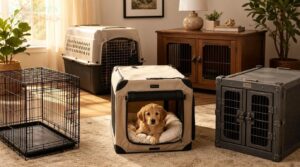
Not all crates are built the same, and that actually matters a lot when you’re housebreaking a puppy. The right type can make cleanup easier, keep your pup comfortable, and fit your daily routine without a hassle. Here are the main options worth knowing about.
Metal Wire Crates
Metal wire crates are the industry standard for potty training, and for good reason. Their open heavy duty wire grid design keeps airflow strong, so your pup stays cool.
A powder coated frame fights rust, while smooth deburred edges keep curious noses safe.
Most folding metal wire crates fold flat for easy storage — some are even stackable.
Plastic Travel Crates
Plastic travel crates are built tough — made from impact-resistant materials like high-density polyethylene that can take real bumps on the road.
They’re lightweight and portable, with airline-compliant dimensions, so flying with your dog is stress‑free.
Integrated locking latches keep escape artists contained, and multiple airflow slots prevent overheating.
For easy-to-clean potty training, wipe the interior down in seconds.
Soft-sided Fabric Crates
Soft-sided fabric crates are the go-to for dog owners always on the move. Lightweight portability is their biggest selling point — most weigh just 4 to 8 pounds. Breathable mesh panels on multiple sides keep airflow steady.
That said, skip these during active potty training. They’re harder to sanitize, and a determined puppy can chew right through them.
Pop-up Portable Kennels
Pop-up kennels are the sprinters of the crate world — deploy in under 30 seconds, no tools needed. Mesh ventilation panels wrap the sides for solid airflow, and most models fold down to just a few inches thick for easy travel storage.
Just note: they rarely include dividers, so they’re better suited for already crate-trained dogs than active potty training.
Indoor Versus Travel Use
Not every crate fits every situation — and knowing the difference can save you a lot of cleanup.
- Floor placement stability matters most indoors; rubber feet prevent sliding
- Ventilation needs favor wire crates for daily home use
- Cleaning solutions are easier with removable trays indoors
- Portability features like fold-flat designs suit travel
Choose based on where potty training actually happens.
How to Crate Train Puppies
Crate training a puppy doesn’t have to feel like a battle of wills. The secret is making the crate somewhere your puppy actually wants to be, not somewhere it’s forced to go. Here’s how to build that trust, one small step at a time.
Build Positive Crate Associations
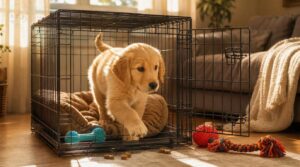
Think of the crate as your puppy’s personal safe room — not a cage, but a cozy den they actually want to hang out in.
Start with the door open and let your dog sniff around freely. Sprinkle treats or toys around the outside, then gradually place them inside.
Praise and reward your dog every time they step in voluntarily. Consistent, routine practice builds real comfort fast.
Use Treats and Toys
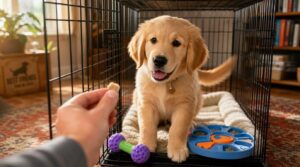
Once your pup is comfortable stepping inside, treats and toys become your best training tools.
- High-value treats like chicken or cheese work best for new behaviors
- Use soft, small treats for quick consumption during short sessions
- Treat-filled puzzle toys extend calm, settled time inside the crate
- Rotate rewards regularly to keep your dog genuinely interested
Add a Crate Cue
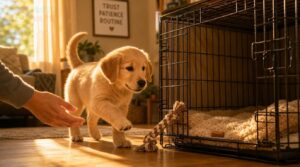
Once your pup is moving in and out confidently, it’s time to attach a word to that behavior.
Choose one short cue — "crate" or "kennel" works perfectly — and say it calmly just before your dog steps inside. Keep the door tied open and a treat waiting inside.
| Cue Element | What to Do |
|---|---|
| Cue word | One short, clear word only |
| Timing | Say it right before entry |
| Reinforcement | Treat immediately after entry |
| Consistency | Same word, every person, every time |
Repetition builds the habit. Soon the cue alone does the work.
Increase Door Time Gradually
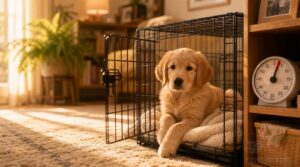
Your cue is working — now it’s time to build stamina.
Start with 1 to 2 minutes of door-closed time, then open calmly and praise. Every 2 to 3 days, add another minute. If your puppy whines or paces, that’s a stress signal — slow down. Keep a simple log of date, duration, and mood. Incremental door sessions make crate acclimation stick.
Reward Calm Quiet Behavior

Once your puppy settles in without fussing, reward timing becomes everything. Deliver a treat inside the crate within two seconds of quiet — not three, not five. That tight window is what makes positive reinforcement stick.
- Say your calm cue first
- Wait five seconds of silence
- Place the treat inside the crate
- Praise softly, never excitedly
Preventing Crate Potty Accidents
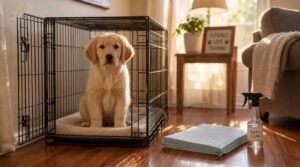
Accidents happen, but most of them are preventable with a little planning. Knowing what to do before, during, and after an accident makes the whole process a lot less stressful for both of you. Here’s what actually works.
Schedule Regular Potty Breaks
A solid potty training schedule is your single most powerful accident-prevention tool. Take your dog out every two to four hours during the day — and always within 15 minutes of waking or eating.
Use the same cue word each time, like "go potty," and stick to a consistent daily timetable, even on weekends. Routine builds reliability fast.
Clean Accidents Immediately
When an accident happens, act fast. Blot up excess liquid first, using paper towels — always press, never rub — then apply an enzyme cleaner within five minutes. This neutralizes uric acid before it sets.
Ventilate the room for at least 15 minutes after.
Keep a dedicated cleaning kit nearby: gloves, towels, and enzyme cleaner ready to grab instantly.
Use Washable Puppy Pads
Washable puppy pads are a smart addition to your crate training toolkit. A good reusable pad manages pad absorbency well, with multi-layer cores that wick moisture fast and waterproof backing that keeps floors dry.
- Soft top fabric is gentle on paws
- Machine washable — most handle 300+ wash cycles
- Available in sizes to match any crate floor
- Odor control treatments reduce smell between washes
- Compact travel pads work great on the go
Remove Lingering Urine Odors
Urine odor doesn’t just smell bad — it signals your puppy to eliminate in the same spot again. That’s why fast, thorough cleaning matters.
| Step | What to Do |
|---|---|
| Enzyme Cleaner | Apply first; let it sit per label instructions |
| Odor Neutralizer | Follow up to eliminate residual bacteria |
| Charcoal Sachet | Place nearby to absorb airborne odors within 24 hours |
Remove the removable tray, rinse it, then wipe crate surfaces with an odor neutralizer. Run washable puppy pads through a hot machine wash. For stubborn smells, an air purifier with a carbon filter clears the air fast. Stick to a weekly maintenance routine and reapply enzyme cleaner after every accident.
Never Use Crates Punitively
Think of the crate as your puppy’s bedroom — not a timeout corner. Never use it as punishment. Doing so teaches your puppy to fear it, which destroys all your potty training progress overnight.
The crate is your puppy’s bedroom, not a punishment — treat it that way or lose all your training progress
- Avoid sending your dog to the crate after scolding
- Never slam the door in frustration
- Keep crate time calm and reward-based
- Always pair crating with a treat or toy
- Let your puppy exit before stress builds
Frequently Asked Questions (FAQs)
How long should a puppy stay crated daily?
It depends on age. A 2-month-old puppy manages up to 3 hours; by 4 months, that stretches to 4 hours. Always build in regular potty breaks every 1–2 hours.
Can adult dogs be crate trained successfully?
Yes, adult dogs can absolutely be crate trained. Most settle into a routine within four to eight weeks. Short sessions, high-value treats, and gradual door closure make the process smooth and stress-free.
At what age should crate training begin?
Most puppies are ready to start crate training at 8 to 12 weeks. That’s the sweet spot — early enough to build good habits, but developed enough to handle short sessions comfortably.
Should dogs sleep in crates every night?
A crate is like a den — instinct drives dogs to seek one. Most dogs sleep better with nightly crate routine, and it helps potty training by encouraging bladder control through the night.
When can a dog be trusted uncrated alone?
Your dog is ready to go uncrated when it has gone 4 full weeks without accidents, stays calm alone for 30 minutes, and shows no destructive behavior during short unsupervised periods.
Conclusion
Choosing the wrong crate could set your housebreaking back by months—and cost you a small fortune in ruined rugs. The right dog crates for potty training do more than contain your pup; they teach your dog exactly where the bathroom isn’t.
Stick to proper sizing, keep the schedule consistent, and clean accidents fast.
Do those three things, and your puppy won’t just learn faster—you’ll both sleep through the night a whole lot sooner.
- https://www.petmd.com/dog/general-health/crate-training-puppies
- https://www.dash.hrecos.org/story/5AD/180/3Fo15L/puppy__crate-training-schedule
- https://ocdogtraining.com/housebreaking-potty-training-dogs-puppies/dog-training-crates-for-housebreaking-potty-training-behavior-management
- https://www.nylabone.com/dog101/managing-loneliness-and-destructive-chewing
- http://www.humanesociety.org/animals/dogs/tips/crate_training.html