
This site is supported by our readers. We may earn a commission, at no cost to you, if you purchase through links.

Most puppies eat the same bowl of kibble every day and do just fine—until they don’t. A fussy phase hits, their coat loses its shine, or their digestion suddenly seems off, and you’re left wondering what changed. Sometimes nothing changed, and that’s exactly the problem.
Dog food toppers for puppies can fill those nutritional gaps, add moisture to dry diets, and make mealtime appealing enough that your puppy actually finishes the bowl.
The catch is that not all toppers belong in a growing puppy’s dish—some add empty calories, while others carry ingredients that cause more harm than good.
Table Of Contents
- Key Takeaways
- 10 Best Puppy Food Toppers
- 1. Zesty Paws Wild Alaskan Salmon Oil
- 2. Stella Chewy Chicken Meal Mixer
- 3. Blue Buffalo Wilderness Beef Dog Food Toppers
- 4. Beaumont Basics Peanut Butter Dog Food Topper
- 5. Grizzly Wild Alaskan Salmon Oil Dog Supplement
- 6. Nutramax Welactin Omega 3 Dog Supplement
- 7. Purina Beyond Chicken Bone Broth Topping
- 8. Instinct RawBoost Gut Health Dog Topper
- 9. Shed X Liquid Dog Shedding Supplement
- 10. Zesty Paws Senior Allergy Immune Dog Chews
- Puppy Topper Types Compared
- How to Choose Puppy Toppers
- Puppy Topper Nutrition Benefits
- Safety and Feeding Guidelines
- Follow The 10% Daily Calorie Rule
- Introduce New Toppers Gradually
- Avoid Garlic, Onions, Grapes, and Raisins
- Watch for Chicken, Dairy, or Peanut Allergies
- Use Caution With Raw or Freeze-dried Toppers
- Read Labels for Calories and Adequacy Statements
- Adjust Kibble Portions When Adding Toppers
- Ask Your Veterinarian Before Daily Use
- Frequently Asked Questions (FAQs)
- Conclusion
Key Takeaways
- Not all puppy toppers are created equal — some add real nutrition like omega-3s, probiotics, and quality protein, while others just pile on empty calories or risky ingredients.
- Keep toppers to 10% of daily calories and adjust kibble portions accordingly, or you’ll unintentionally tip the diet out of balance.
- The format you choose — wet, freeze-dried, broth, liquid oil, or powder — should match what your puppy already eats and the specific gap you’re trying to fill, whether that’s hydration, digestion, or coat health.
- Always introduce one topper at a time over two to three weeks, watch for allergy signs like vomiting or itching, and check with your vet before making it a daily habit.
10 Best Puppy Food Toppers
Finding the right topper for your puppy doesn’t have to be complicated.
Start with a few favorites from this guide to dog food toppers for picky eaters and you’ll find what clicks faster.
These ten options cover a range of formats, from liquid oils to freeze-dried mixers, so there’s something here for every pup and every budget.
Here’s what made the cut for 2026.
1. Zesty Paws Wild Alaskan Salmon Oil
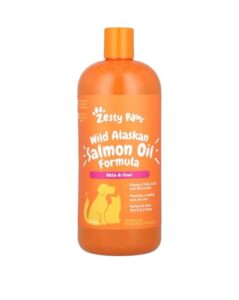
Zesty Paws Wild Alaskan Salmon Oil is a solid starting point if your puppy needs an omega-3 boost. It pulls EPA and DHA from wild-caught Alaskan salmon and pollock, supporting skin moisture, coat shine, and early immune development.
The precision pump simplifies dosing—about one pump per 10–20 lbs daily. It’s NASC-certified, confirming independent quality audits.
Start with a low dose and monitor for loose stools, as excessive intake may cause digestive upset.
| Best For | Pet owners who want an easy, no-fuss way to give their dog or cat a daily omega-3 boost for skin, coat, and joint health. |
|---|---|
| Product Form | Liquid oil |
| Primary Protein | Salmon & Pollock |
| Artificial Additives | None |
| Life Stage | All stages |
| Serving Format | Mix into food |
| Key Health Benefit | Skin & coat |
| Additional Features |
|
- Wild-caught Alaskan salmon and pollock mean you’re getting quality EPA and DHA, backed by NASC certification for peace of mind.
- The pump makes dosing dead simple—no pills, no measuring, just squeeze and mix into their food.
- Works across multiple pets and life stages, from puppies building immunity to older dogs with achy joints.
- The fish smell is strong—some owners (and picky pets) aren’t fans, and it can linger after feeding.
- Too much too fast can cause loose stools or vomiting, so you’ll need to ease into the right dose.
- Needs refrigeration after opening, and the pump tip can drip and dry out, which gets a little messy.
2. Stella Chewy Chicken Meal Mixer
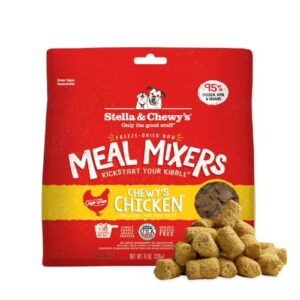
Stella & Chewy’s Chicken Meal Mixer enhances nutrition significantly for puppies needing more than omega-3s. Built around 95% cage-free chicken—including meat, organs, and ground bone—it delivers a minimum 48% crude protein and approximately 4,440 kcal/kg. This concentrated formula provides serious nutrition in a small scoop.
A blended probiotic culture supports digestion, while cranberries, spinach, and blueberries contribute antioxidant-rich benefits.
For preparation, sprinkle dry or rehydrate with warm water to cater to picky eaters.
Avoid it if your puppy has a known chicken sensitivity.
| Best For | Dog owners who want a high-protein, minimally processed meal topper—especially great for picky eaters, senior dogs, or puppies who need a nutritional boost alongside their regular kibble. |
|---|---|
| Product Form | Freeze-dried powder |
| Primary Protein | Chicken |
| Artificial Additives | None |
| Life Stage | All stages |
| Serving Format | Sprinkle or rehydrate |
| Key Health Benefit | Digestive health |
| Additional Features |
|
- Nearly all chicken—meat, organs, and bone—so you’re getting real, whole-food nutrition without fillers or grains.
- Built-in probiotics help keep digestion on track, which is a nice bonus you don’t always see in toppers.
- Super flexible—sprinkle it dry or rehydrate it, depending on what your dog prefers.
- It’s pricey compared to most kibble toppers, so the cost can add up fast.
- Texture isn’t always consistent—some bags come out dusty instead of the nugget-style you’d expect.
- Not a great fit for dogs with chicken allergies or those on low-sodium diets due to added salt and sodium phosphate.
3. Blue Buffalo Wilderness Beef Dog Food Toppers
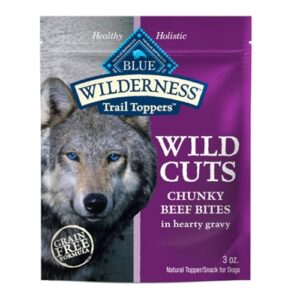
Blue Buffalo Wilderness Beef Toppers are worth considering for puppies that prefer beef or have chicken sensitivities. These toppers cater to specific dietary needs while offering a flavorful addition to meals.
Real beef is the first ingredient, ensuring a protein-rich base. Each 3-oz pouch is grain-free, containing no poultry by-products, artificial flavors, or preservatives, making it a wholesome choice for health-conscious pet owners.
The chicken broth base enhances moisture and palatability, encouraging even picky or reluctant eaters to finish their food. This feature is particularly beneficial for puppies needing extra hydration or meal encouragement.
Remember, this product is a supplement, not a complete diet. Always adjust kibble portions accordingly to maintain balanced nutrition for your pet.
| Best For | Dogs with chicken sensitivities or beef preferences who need a flavorful, protein-packed topper to make dry kibble more appealing. |
|---|---|
| Product Form | Wet pouch |
| Primary Protein | Beef |
| Artificial Additives | None |
| Life Stage | All stages |
| Serving Format | Mix into food |
| Key Health Benefit | Protein boost |
| Additional Features |
|
- Real beef is the first ingredient, so you’re getting actual meat protein without poultry by-products or fillers
- Grain-free and free of artificial flavors and preservatives, which is great for dogs with sensitive stomachs
- Individual 3-oz pouches make portioning easy and keep each serving fresh
- It’s a supplement, not a complete meal, so you still need to manage overall nutrition carefully
- Recent batches have been reported as more watery than usual, which can make it messier to use
- Contains added salt and sodium phosphate, so it’s not ideal for dogs on low-sodium diets
4. Beaumont Basics Peanut Butter Dog Food Topper
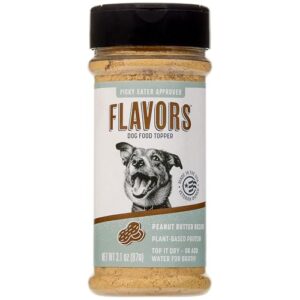
If your puppy doesn’t have a chicken sensitivity but still turns up their nose at plain kibble, the Beaumont Basics Peanut Butter Topper offers a different angle. This powdered topper dissolves in warm water to create a savory broth, combining roasted peanut butter with chicken bone broth for a smell that’s hard to ignore.
It’s grain-free, free from artificial flavors and added sugars, and made in an FDA-registered facility. Just confirm the label reads xylitol-free before serving.
| Best For | Dogs who are picky eaters or on grain-restricted diets and need a little extra incentive to finish their kibble. |
|---|---|
| Product Form | Powder |
| Primary Protein | Peanut Butter |
| Artificial Additives | None |
| Life Stage | All stages |
| Serving Format | Dissolve in water |
| Key Health Benefit | Hydration & flavor |
| Additional Features |
|
- Dissolves into a tasty broth that makes plain kibble way more appealing
- Grain-free and made entirely in the US, so you know what you’re getting
- Works for all life stages, from puppies to seniors
- Higher fat content from the peanut butter base isn’t great for dogs on low-fat diets
- Some dogs with sensitive stomachs may end up with loose stools
- No digestive upset warning on the packaging, so you’re going in a little blind
5. Grizzly Wild Alaskan Salmon Oil Dog Supplement
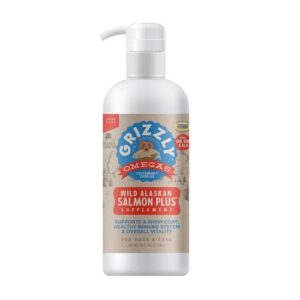
For puppies needing a skin and coat boost, Grizzly Wild Alaskan Salmon Oil is a top choice. It combines wild-caught Alaskan salmon oil with pollock and whitefish oils, ensuring a minimum of 24% omega-3s—including 13% EPA and 8% DHA.
The medical-grade pump enables clean, precise dosing, starting at half a pump for small breeds. This third-party tested and NASC-certified supplement is a reliable daily addition to your puppy’s routine.
Introduce it gradually if your puppy has a sensitive stomach to avoid digestive upset.
| Best For | Dog owners looking for a high-quality, wild-caught omega-3 supplement to support their pup’s coat, joints, and overall health—especially seniors or growing puppies. |
|---|---|
| Product Form | Liquid oil |
| Primary Protein | Salmon |
| Artificial Additives | None |
| Life Stage | All stages |
| Serving Format | Mix into food |
| Key Health Benefit | Skin & coat |
| Additional Features |
|
- Wild-caught Alaskan salmon oil packed with EPA and DHA for real, noticeable benefits to skin, coat, and joints
- The medical-grade pump makes dosing clean and easy—no measuring, no mess (most of the time)
- Third-party tested and NASC-certified, so you know what’s in the bottle is actually what’s on the label
- It’s got a strong fish smell that can linger on your hands, counters, or anything it touches
- Pricier than your average omega-3 tablet or budget oil, which adds up over time
- The pump can drip or spray, and some users have reported leakage issues with the packaging
6. Nutramax Welactin Omega 3 Dog Supplement
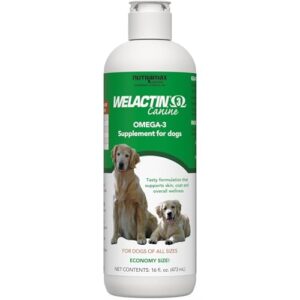
Nutramax Welactin stands out as a vet-recommended omega-3 supplement backed by real numbers. Each 6 mL scoop delivers at least 1,770 mg of total omega-3s, including 870 mg EPA and 570 mg DHA—meaningful amounts for a growing puppy’s skin, coat, brain, and immune health.
The liquid mixes easily into kibble, and the built-in measuring scoop ensures straightforward dosing.
One consideration: it has a noticeable fish smell, so start with a small amount to gauge your puppy’s reaction.
| Best For | Dogs of any size or life stage that need omega-3 support — especially seniors with joint issues, dogs with skin and coat problems, or picky eaters who do better with a liquid supplement mixed into their food. |
|---|---|
| Product Form | Liquid oil |
| Primary Protein | Fish |
| Artificial Additives | None |
| Life Stage | All stages |
| Serving Format | Mix into food |
| Key Health Benefit | Skin & coat |
| Additional Features |
|
- High, vet-recommended EPA and DHA levels with at least 1,770 mg of total omega-3s per serving — real amounts that actually make a difference.
- Liquid formula with a built-in measuring scoop makes dosing simple and mixing it into meals a breeze, even for fussy dogs.
- Supports a wide range of health areas — joints, skin, coat, heart, brain, kidneys, and immune system — all in one daily supplement.
- The fish smell is pretty strong, and not every dog (or owner) is going to love that.
- The redesigned dispensing cap can drip and make a mess, which means some product ends up wasted.
- Not safe for dogs with fish or oil allergies, and you need to stick to the weight-based dosing chart to avoid over-supplementation.
7. Purina Beyond Chicken Bone Broth Topping
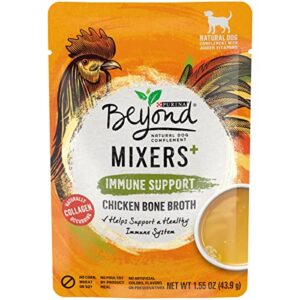
Purina Beyond Chicken Bone Broth Topping is a straightforward, fuss-free way to enhance your puppy’s meals. Designed to add moisture and flavor, it transforms ordinary kibble into an enticing dish.
Each single-serve pouch contains real chicken bone broth with naturally occurring collagen and added vitamins for immune support. The formula excludes corn, wheat, soy, and artificial preservatives, ensuring a wholesome addition to your puppy’s diet.
Simply pour it over kibble and mix—ideal for picky eaters who need encouragement. Remember, this product is a supplement, not a complete diet, so pair it with balanced puppy food for optimal nutrition.
| Best For | Dog owners with picky eaters or grain-sensitive adult dogs who want a simple, clean-ingredient way to make meals more appealing. |
|---|---|
| Product Form | Liquid broth |
| Primary Protein | Chicken |
| Artificial Additives | None |
| Life Stage | Adult |
| Serving Format | Mix into food |
| Key Health Benefit | Immune support |
| Additional Features |
|
- Real chicken bone broth with collagen and vitamins gives meals a nutritional bump without a lot of extra effort.
- Free from corn, wheat, soy, and artificial stuff—great for dogs with sensitive stomachs.
- Single-serve pouches make portioning easy and keep things fresh every time.
- It’s a topper, not a meal—you still need a solid, balanced dog food alongside it.
- Costs more per ounce than most everyday dog food options.
- Can be tricky to find in stores, and availability isn’t always reliable.
8. Instinct RawBoost Gut Health Dog Topper
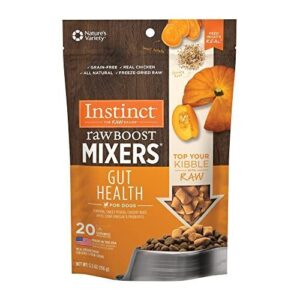
Instinct RawBoost Gut Health Topper is worth considering if your puppy’s digestion has been off. It combines freeze-dried chicken, liver, and heart with pumpkin, chicory root, and live Bacillus coagulans probiotics—a solid gut-support lineup.
The prebiotic fiber feeds beneficial bacteria, while salmon oil supports skin and coat health. At around $12.15 for 5.5 oz, it’s pricier than bulk options, but the ingredient quality justifies the cost.
Introduce the topper slowly over five to seven days. If your puppy has a chicken sensitivity, consult your vet before use.
| Best For | Dogs with sensitive stomachs or digestive issues who need a nutrient-dense, gut-friendly meal topper made from real whole-food ingredients. |
|---|---|
| Product Form | Freeze-dried pieces |
| Primary Protein | Chicken |
| Artificial Additives | None |
| Life Stage | Adult |
| Serving Format | Sprinkle or treat |
| Key Health Benefit | Gut & coat health |
| Additional Features |
|
- Freeze-dried raw chicken, liver, and heart pack in serious protein without needing refrigeration
- Gut-health blend with live probiotics and prebiotic fiber actually supports a balanced digestive system
- Doubles as a meal topper or training treat, so it’s genuinely versatile day to day
- Pricier per ounce than most standard kibble toppers, so it adds up fast
- Larger bags can get crumbly over time, leaving a dusty mess at the bottom
- Not a fit for dogs with chicken allergies or puppies who need age-specific nutrition
9. Shed X Liquid Dog Shedding Supplement
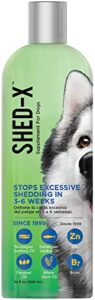
Shedding that seems out of control often points to a nutritional gap rather than breed traits. Shed X, a liquid supplement made with Norwegian anchovy and sardine oils, biotin, zinc, and vitamins A, D3, and E, addresses this in a chicken-flavored formula puppies can tolerate.
At $15.49 for 32 oz, it’s a reasonable daily add-in. Mix it into meals after shaking, and allow several weeks for results.
Watch for stomach upset in sensitive pups during initial use.
| Best For | Dog owners dealing with excessive or non-seasonal shedding who want an easy, no-fuss supplement they can just mix into meals. |
|---|---|
| Product Form | Liquid supplement |
| Primary Protein | Anchovy & Sardine |
| Artificial Additives | None |
| Life Stage | All stages |
| Serving Format | Mix into food |
| Key Health Benefit | Shedding reduction |
| Additional Features |
|
- Simple to use — just shake and pour into your dog’s food, no pills or powders to fuss with
- Packed with skin-supporting nutrients like Omega-3s, biotin, zinc, and vitamins A, D3, and E
- At $15.49 for 32 oz, it’s an affordable option you can keep up with long-term
- Results aren’t guaranteed — some dogs see little to no change in shedding
- Can cause stomach upset in sensitive dogs, especially at the start
- Takes weeks or even months of consistent use before you’ll notice a real difference
10. Zesty Paws Senior Allergy Immune Dog Chews
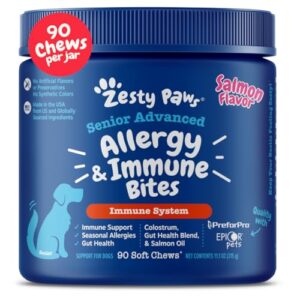
Technically formulated for senior dogs, this supplement is also suitable for older puppies or adolescent dogs struggling with seasonal allergies. Each salmon-flavored soft chew combines EpiCor fermentate, colostrum, quercetin, and five probiotic strains to support immune balance and gut health.
At $38.67 for 90 chews, it’s pricier than most toppers. Some dogs dislike the taste when given whole, so crumbling one into kibble works well.
Always consult your vet before adding this to a young dog’s routine.
| Best For | Senior dogs (and older adolescents) dealing with chronic seasonal allergies, itchy skin, or gut issues who need a non-prescription immune and digestive boost. |
|---|---|
| Product Form | Soft chew |
| Primary Protein | Salmon |
| Artificial Additives | None |
| Life Stage | Senior-focused |
| Serving Format | Chew or crumble |
| Key Health Benefit | Allergy & immune |
| Additional Features |
|
- Packs a solid combo of colostrum, quercetin, EpiCor fermentate, and five probiotic strains — a lot of immune and gut support in one chew
- Salmon flavor makes it easy to give daily, and crumbling it into kibble works great for picky eaters
- 90 chews for roughly a 90-day supply means you’re not reordering every few weeks
- At $38.67, it’s on the pricier end compared to similar supplements
- A small number of dogs have had serious reactions like tremors or lethargy, so a vet check before starting is a must
- Results aren’t guaranteed — some dogs still need prescription meds like Apoquel on top of it
Puppy Topper Types Compared
Not all toppers work the same way, and the type you choose matters more than most people realize. Each format — wet, freeze-dried, broth, liquid, or powder — brings something different to your puppy’s bowl.
Here’s how they compare so you can pick the right fit.
Wet Toppers for Adding Moisture and Flavor

Wet toppers are one of the easiest ways to make dry kibble more appealing, especially for picky eaters. Savory broth bases like chicken or beef create calorie-light sauces that coat kibble without disrupting your puppy’s daily calorie balance. Remember that toppers are meant to complement a complete diet. Texture enhancement also matters—smooth gravies soften hard pieces for younger pups.
- Use bone broth as a best liquid dog food topper.
- Choose pet-safe seasonings free of onion and garlic.
- Prioritize flavor enhancement for picky eaters with real meat bases.
- Follow refrigeration guidelines—use opened wet toppers within 3 days.
- Keep wet portions to 10% of daily calories.
Freeze-dried Toppers for High-protein Meals

Unlike freeze-dried options offer shelf-stable nutrition without refrigeration, unlike wet toppers. Products like Instinct Freeze-Dried Raw Boost Mixers and Essential Essentials Beef Freeze-Dried Raw Grain-Free Dog & Cat Food Topper deliver high-protein, freeze-dried raw meals with complete amino acid profiles and strong protein bioavailability.
Single-source meat formulas maintain ingredient simplicity. Rehydration techniques—just add warm water—restore the texture puppies love, enhancing palatability.
Bone Broth Toppers for Hydration Support

Bone broth toppers shift the focus from protein density to hydration support. Products like The Honest Kitchen Bone Broth, Brutus Bone Broth Beef Flavor, and Purina Beyond Grain-Free Bone Broth deliver gelatin hydration, electrolyte balance, and mineral absorption in every pour.
- Serve warm for better palatability and extra hydration uptake
- Monitor stool consistency for hydration monitoring cues
- Veterinary considerations for dog food toppers include checking sodium levels and serving temperature
Liquid Supplements for Skin and Coat Health
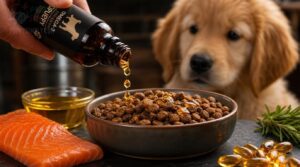
While bone broth focuses on hydration, liquid supplements take skin and coat health further. These formulas combine omega-3s, an Essential Fatty Acid Ratio of EPA, DHA, and ALA, plus a Carrier Oil Base of sunflower or fish oil.
A Vitamin E Boost, Zinc Copper Balance, and Palatability Enhancers like bacon flavor make them your best dog food topper for skin and coat health.
Always follow veterinary guidance on dog food toppers.
Powder Toppers for Easy Kibble Mixing
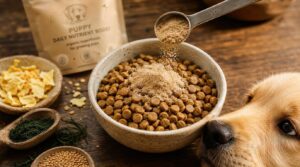
Powder toppers make meal enrichment genuinely simple—just sprinkle, stir, and serve. These high-protein powder supplements blend into kibble without altering texture, while resealable packaging ensures effective shelf-life preservation. Some formulas incorporate enzyme enhancement for improved digestion, and others rehydrate into a light gravy using basic techniques.
Portion precision is effortless, as each serving is pre-measured to align with canine nutrition standards. This design also enables easy flavor customization per meal, catering to individual preferences without compromising nutritional balance.
Meal Mixers Versus Nutritional Supplements
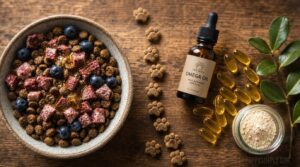
Mixers vs supplements aren’t interchangeable—they serve different purposes. A meal mixer like Instinct Freeze-Dried Raw Boost Mixers adds flavor, moisture, and protein directly to kibble, while a nutritional supplement targets specific gaps like omega-3s or joint support.
Caloric impact differs too: mixers contribute more calories per serving, so feeding frequency and allergen management both need careful tracking.
When in doubt, veterinary guidance makes the difference.
Best Topper Types for Picky Puppies

If your puppy sniffs the bowl and walks away, the right topper type changes everything. Picky eaters often respond to aroma and texture first—so rotating flavors and textures keeps meals interesting.
- Wet toppers add moisture and savory aroma picky puppies can’t resist
- Bone broth drizzled lightly over kibble boosts palatability without excess calories
- Freeze-dried protein crumbles add crunchy texture variety puppies enjoy
- Liquid omega supplements blend invisibly, supporting coat health alongside flavor rotation
- Small training portions of soft toppers reward good mealtime behavior
Veterinary guidance helps match topper types—liquid, wet, dry, raw, or powder—to your puppy’s breed preferences and dietary needs.
How to Choose Puppy Toppers

Picking the right topper isn’t complicated, but a few key details can make a real difference for your puppy’s health. Knowing what to look for saves you from guesswork at the pet store and keeps your pup’s diet balanced.
Here’s what to check before you buy.
Check Age-appropriate Feeding Recommendations
Age really does matter for toppers. A 6-week-old puppy lapping broth has different needs than a 5-month-old wolfing down kibble. Weaning age, meal frequency, and portion scaling all shape how toppers fit into a daily routine.
| Age Stage | Feeding Recommendations for Dog Food Toppers |
|---|---|
| 6–12 weeks | 4 meals/day; introduce toppers at ¼ serving |
| 3–6 months | 3 meals/day; divide topper across all meals |
| 6–12 months | 2 meals/day; apply calorie ceiling under 10% |
| Large breed schedule | Vet recommended portion sizes; watch calcium balance |
Veterinary guidance on dog food toppers stresses calorie control in a dog’s diet — dog nutrition guidelines exist for a reason.
Look for Complete Ingredient Transparency
A trustworthy topper shows you everything — no guesswork. Look for a full ingredient list with clear allergen declarations for dairy, soy, or fish. Brands with transparent ingredient sourcing, origin traceability, and batch analysis reports earn extra confidence.
Third-party certifications like Association of American Feed Control Officials statements confirm a complete and balanced diet.
Human-grade ingredients and third-party testing documentation seal the deal.
Compare Calories Per Serving
Calories per serving can be sneaky — two toppers that look identical may differ by 15 calories due to serving size differences. Calorie density differences also matter, as freeze-dried options concentrate calories per gram when moisture disappears.
For daily calorie budgeting, check caloric content per serving carefully, adjust your kibble accordingly, and keep total intake within your puppy’s growth needs.
Choose High-quality Animal Protein Sources
Once you’ve sorted calories, the next question is: what’s actually in that protein? Not all sources are equal. Wild-caught fish and grass-fed meats deliver better fatty acid profiles and higher bioavailability than generic meal blends.
Look for these highest-quality proteins:
- Single-ingredient protein options with named sources
- Leucine-rich animal proteins for muscle synthesis
- Heme iron from premium protein sources for dogs
Consider Puppy Size and Breed Needs
Your puppy’s size shapes everything. Small-breed calories need to be dense but controlled, since toy breed nutrition demands high metabolic support in tiny portions.
Large-breed joints are vulnerable to overfeeding during growth, so calorie control in their diet matters early.
Medium-breed protein needs stay balanced.
Dog breed-specific nutritional needs vary enough that veterinary guidance on dog food toppers helps you pick the right fit.
Balance Budget, Quality, and Serving Size
Once you know puppy’s size and breed needs, budget comes next. Value-driven selection means balancing the best budget and best premium dog food topper options smartly.
Compare cost per calorie rather than price per bag — a premium topper with clear protein source value often stretches further than a cheap, filler-heavy option. Bulk buying strategy cuts costs 10–40%, and portion scaling keeps monthly spending reasonable.
Match Topper Type to Your Puppy’s Diet
Budget sorted, now match the topper type to what your puppy already eats. This is where real Nutritional Considerations for Dog Food Toppers come in.
- Grain‑Free Pairings: freeze-dried or raw toppers complement grain-free kibble well
- Limited‑Ingredient Matching: single-protein toppers reduce allergen overlap
- Sensitive Stomach Solutions: pumpkin or probiotic powders ease digestion
- Hydration‑Boosted Diets: bone broth suits dry-food-only puppies
- Gut‑Health Alignment: probiotic liquid toppers support dogs with recurring digestive upset
Puppy Topper Nutrition Benefits

The right topper does more than make kibble smell better — it actually adds real nutritional value to your puppy’s diet. From fatty acids that support brain development to probiotics that keep digestion on track, each ingredient plays a specific role.
Here’s a closer look at the key benefits worth knowing.
Omega-3 and Omega-6 Fatty Acids
Think of omega-3 and omega-6 fatty acids as two teammates that need to stay in balance. Fatty acid ratios matter because metabolic competition between these two means omega-6s can crowd out omega-3s in eicosanoid production, tipping inflammatory balance the wrong way.
Omega-3 and omega-6 fatty acids must stay balanced, or omega-6s will crowd out omega-3s and tip the body toward inflammation
Essential fatty sources like wild salmon oil provide EPA and DHA directly, making omega-3 supplementation for dogs one of the simplest wins in dog food toppers.
Protein for Muscle Growth and Satiety
Muscle development in dogs relies on both the quality and quantity of protein intake. A proper Amino Balance from premium, animal-based protein sources is crucial, as it provides the leucine necessary to trigger muscle protein synthesis. This foundation ensures that protein density delivers tangible benefits, including:
- Rapid Digestion moves amino acids into circulation faster
- Leucine-rich meat toppers directly stimulate muscle repair
- Strategic Meal Timing spreads protein intake across feedings
- High protein animal sources cover complete essential amino acids
- Protein content analysis of dog toppers helps match dog-breed-specific nutritional needs
When paired with complete kibble, a targeted protein boost maximizes these advantages, supporting optimal muscle health and function in dogs.
Probiotics for Digestive Balance
Your puppy’s gut does more than just digest food — it shapes immunity, mood, and nutrient absorption. Probiotic-enriched toppers support dog digestive health by reinforcing gut barrier support and crowding out harmful bacteria before they settle in.
Strain specificity matters here: not all strains work the same way. Look for labels offering dose-response guidance and verified probiotic viability — your best assurance of real results.
Pumpkin and Fiber for Stool Support
Few ingredients pull double duty quite like pumpkin. As a dog food topper for gut health, pumpkin fiber for dogs delivers three practical wins:
- Stool Consistency – soluble fiber regulates loose or firm stools naturally
- Low-Calorie Bulk – roughly 3g fiber per cup, minimal fat
- Microbiome Support – prebiotic fiber action feeds beneficial bacteria
That hydration boost from moist pumpkin puree also helps during weaning transitions.
Antioxidants for Immune System Support
Your puppy’s immune system is still finding its footing, so antioxidant support matters more than many owners realize. Toppers rich in Vitamin C, Vitamin E, and Selenium help neutralize free radicals before they cause cellular damage. Zinc support strengthens the gut lining and immune signaling, while Polyphenol-richness from cranberries and superfoods adds an additional layer of defense.
These antioxidant benefits make choosing the Best Dog Food Toppers 2026 review-worthy options genuinely worthwhile.
Added Moisture for Hydration
Many puppies don’t drink enough water, and dry kibble won’t close that gap. Wet toppers and bone broth offer high moisture content with extra hydration that enhances kidney function and digestion. Hydration-focused formulations often include humectant boosters and water-binding additives that help cells retain fluid.
In dry climates, climate-specific moisture and moisture-locking emollients make a real difference. These solutions address environmental challenges while supporting overall fluid balance.
Always follow veterinary guidance on dog food toppers to ensure appropriate amounts and avoid over-supplementation. This tailored approach helps maintain optimal hydration safely.
Skin and Coat Support From Oils
Oil-based toppers do double duty — hydration bolsters the inside, while omega-3 supplementation for dogs works on the outside. Zesty Paws Wild Alaskan Salmon Oil and Grizzly All-Natural Salmon Oil Supplement deliver EPA and DHA that visibly improve coat shine enhancement within four to six weeks.
GLA-rich oils reinforce barrier lipid support, while Vitamin E antioxidants and oil stability preserve fatty acid integrity throughout digestion.
- Smoother, less flaky skin after consistent omega-3 use
- Reduced itching and dryness in puppies with sensitive coats
- Shinier fur that’s easier to brush and less tangled
- Stronger skin and coat health through ceramide-building linoleic acid
- Protected skin cells thanks to natural Vitamin E antioxidants
These combined benefits ensure stronger skin and coat health, addressing both immediate comfort and long-term vitality.
Appetite Support for Selective Eaters
A shiny coat signals good health inside and out—and so does a healthy appetite. If your pup turns up their nose at mealtime, toppers offer real solutions for picky eaters. Aroma enrichment from bone broth, texture modulation through freeze-dried morsels, and calorie-dense add-ins like salmon oil all support dog appetite.
Gradual flavor training over seven to fourteen days works best, but consult veterinary guidance on dog food toppers if selective eating persists.
Safety and Feeding Guidelines

Toppers can do a lot of good, but a few simple rules keep your puppy safe and well-fed. Getting the details right—portion size, ingredient checks, and how you introduce new foods—makes a real difference.
Here’s what you need to know before adding anything to your puppy’s bowl.
Follow The 10% Daily Calorie Rule
Think of toppers as a seasoning budget: veterinary guidance recommends keeping them to no more than 10% of your puppy’s daily calories. This approach ensures calorie control in your dog’s diet.
For practical implementation, follow this framework:
- Start with weekly intake tracking of your puppy’s total kibble calories.
- Apply portion scaling—cap toppers at roughly 40–50 kcal for a 400-kcal daily allowance.
- Use incremental adjustments as your puppy grows.
Calorie budgeting now prevents weight problems later.
Introduce New Toppers Gradually
Once your calorie intake is optimized, the next step is pacing. A stepwise approach to serving—starting at about 5% of daily calories for the first few days—gives your puppy’s gut time to adjust.
This timed introduction, spread over two to three weeks, facilitates flavor acclimation and digestive checks. It ensures gradual adaptation while monitoring for any adverse reactions.
Allergy isolation becomes easier, as introducing one topper at a time helps you catch reactions quickly. This method simplifies identifying potential allergens early on.
Avoid Garlic, Onions, Grapes, and Raisins
Some ingredients don’t belong anywhere near your puppy’s bowl. Allium toxicity from garlic and onions damages red blood cells, while grape kidney risk is real even in tiny amounts—and the exact toxin remains unidentified. These substances pose serious dangers, even in small quantities.
Label scrutiny is critical: check for hidden powders in broths and gravies, as these can contain harmful additives. Stick to toxin-free ingredients to ensure your puppy’s safety.
If accidental exposure occurs, monitoring symptoms and seeking immediate veterinary guidance are essential. Prompt action can prevent severe complications.
Watch for Chicken, Dairy, or Peanut Allergies
Chicken protein triggers, hidden dairy ingredients, and peanut cross‑contamination are worth watching closely when choosing the best dog food toppers in 2026. Allergen label reading matters here—"non-dairy" doesn’t mean milk-free.
Symptom onset timing can be fast, within minutes to hours, so note any hives, vomiting, or itching after introducing a new topper.
When in doubt, veterinary guidance on allergy-friendly dog food supplements keeps your puppy safe.
Use Caution With Raw or Freeze-dried Toppers
Freeze-dried raw and raw diet options for canines deserve a second look before they reach your puppy’s bowl. Bacterial contamination is a real risk, especially for immunocompromised puppies whose immune systems aren’t fully developed yet. Hydration activation—when you rehydrate freeze-dried raw with warm water—can wake dormant bacteria like Salmonella.
Keep these safety handling steps for raw pet foods in mind:
- Use cold water, never warm, when rehydrating freeze-dried raw toppers.
- Wash hands and bowls immediately after every meal prep.
- Avoid protein excess by following serving size guidelines closely.
- Monitor storage temperature—refrigerate opened toppers promptly.
- Seek veterinary guidance on dog food toppers if your puppy shows any sensitivity to potential allergens in dog food supplements.
Read Labels for Calories and Adequacy Statements
Labels aren’t just fine print — they’re your clearest tool for keeping calorie intake in check. Look for the statement of nutritional adequacy (often called an AAFCO adequacy claim) to confirm whether a topper supplements or replaces a meal.
Apply basic serving size math using Calorie Benchmarks per tablespoon or teaspoon. Regulatory statements like AAFCO life-stage approval provide critical context for a product’s intended use.
| Label Transparency Tips | What to Check |
|---|---|
| Adequacy Claim Types | "Supplement" vs. "complete and balanced" |
| Regulatory Statements | AAFCO life-stage approval |
Adjust Kibble Portions When Adding Toppers
Adding a topper isn’t just sprinkle and serve — your kibble portions need to adjust too.
A simple calorie ratio calculation keeps things balanced: if your topper adds 50 kcal, reduce kibble by that same amount.
Use portion tracking tools like a kitchen scale for accuracy, ensuring precise measurements.
Follow an adjustable feeding schedule that adapts weekly based on your puppy’s weight monitoring protocol.
Ask Your Veterinarian Before Daily Use
Even the safest topper deserves a second opinion. Allergy screening, dosage calibration, and interaction review aren’t just clinical checkboxes — they’re how you protect your puppy’s growth trajectory.
Before daily use, your vet can help with:
- Matching toppers to your puppy’s medical history
- Adjusting servings through proper dosage calibration
- Flagging allergy considerations and ingredient label reading concerns
- Reviewing growth monitoring data to fit your puppy’s stage
- Providing veterinary guidance on supplementing dog diets safely
Frequently Asked Questions (FAQs)
Can puppies have meal toppers?
Yes, puppies can have meal toppers — but portion sizing and veterinary approval matter.
Stick to the 10% calorie intake rule, choose a quality protein source, and always follow your vet’s feeding schedule guidance.
What toppers can I give my puppy?
You can give your puppy freeze-dried, wet, broth, or fruit-and-veggie toppers. Stick to safe, single-ingredient options like pumpkin or salmon, and always follow veterinary advice on portions.
Can puppies eat human food as toppers?
Technically, yes — but think of human food as a seasoning, not a meal.
Stick to plain lean meats, safe fruits, and cooked veggies.
Follow calorie accounting and veterinary guidance to avoid allergy risks.
How long do opened toppers stay fresh?
Once opened, most toppers stay fresh 3–7 days when refrigerated. Follow reseal practices and airtight packaging rules closely.
Never leave opened containers past two hours: that’s the temperature danger zone where bacteria multiply rapidly.
Should toppers replace meals during illness?
No, toppers aren’t a replacement for complete meals during illness.
They support palatability and hydration, but nutrient completeness requires veterinary oversight to guarantee proper illness feeding protocol.
This ensures adherence to calorie management and avoids disruption to digestive health.
Do toppers affect puppy stool consistency?
Yes, they can. Moisture increase, fat load, fiber modulation, and protein digestibility all influence stool consistency. Allergy reactions may also trigger changes, so introduce any new topper gradually.
At what age can puppies start toppers?
Most puppies can start toppers around four to six weeks, once weaning milestones are met and solid food chewing is comfortable. Keep portions tiny and stay within age-specific calorie limits.
Conclusion
A chain is only as strong as its weakest link—and the same holds true for your puppy’s diet. The right dog food toppers for puppies can quietly close nutritional gaps, support digestion, and turn a reluctant eater into an avid one.
But quality, portion control, and ingredient transparency matter. Start simple, introduce one topper at a time, and let your vet guide the bigger decisions.
Small additions, done right, build a stronger foundation.
- https://www.onlynaturalpet.com/blogs/holistic-healthcare-library/best-natural-food-toppers-for-dog-food?srsltid=AfmBOoqgvGPFmjWSIctKwvC7ScPhvFpY29yyLDFlQNOcqHTezVuSpV8S
- https://dogsauce.co/blogs/dog-nutrition/puppy-food-topper?srsltid=AfmBOor4TD8nMLPs9vlI29fAmCmmjwWMeiXwb_GtJt6y9ygGZITUJgj9
- https://www.thehonestkitchen.com/blogs/recipes/dog-food-toppers-for-picky-eaters?srsltid=AfmBOoraiCIDDzPyHmFa_HPGOyOzHwVsFfNnMczFi0-zLvqu4nckQO9u
- https://www.businessinsider.com/guides/pets/best-dog-food-toppers
- https://hardypaw.com/blogs/news/7-best-dog-food-toppers-for-a-happy-and-healthy-dog?srsltid=AfmBOorEd_lL0nctn-KZY1vPQO-aBL8mw3OAEDLFhH4_FRwwQwhRL--_