This site is supported by our readers. We may earn a commission, at no cost to you, if you purchase through links.
A sled dog running the Iditarod burns roughly 10,000 calories a day. While your working dog may not traverse 1,000 miles of Alaskan wilderness, the core principle remains: muscle, endurance, and recovery all trace back to what’s in the bowl. Proper nutrition is foundational for any dog with demanding physical roles.
Standard kibble often falls short for these high-performing animals. The gap between maintenance food and performance food isn’t marketing—it’s rooted in critical factors like protein percentages, fat density, and bioavailable ingredients. Working dogs require fuel designed for sustained energy and rapid recuperation, not just basic sustenance.
Choosing the right dry dog food translates directly to tangible benefits: fewer sore joints, faster recovery, and a dog ready to perform again the next morning. Prioritizing performance nutrition ensures your dog thrives under the strain of real work.
Table Of Contents
- Key Takeaways
- Top 9 Dry Dog Foods for Working Dogs
- 1. Best Breed High Calorie Dog Food
- 2. Blackwood Puppy Performance Chicken Meal Dog Food
- 3. Blue Buffalo Adult Chicken Brown Rice Dog Food
- 4. Purina Pro Plan Active Chicken Dog Food
- 5. Purina Pro Plan Sport Chicken Rice Dog Food
- 6. Diamond Maintenance Adult Dry Dog Food
- 7. Victor Hi Pro Plus Dog Food
- 8. Grandma Lucys Pureformance Rabbit Dog Food
- 9. Bully Max Chicken High Protein Dog Food
- Working Dog Nutrition Requirements
- Calories Needed for Working Dogs
- Best Ingredients for Performance Kibble
- Recovery and Joint Support Additives
- How to Compare Working Dog Foods
- Feeding Schedule for Active Dogs
- Frequently Asked Questions (FAQs)
- Conclusion
Key Takeaways
- Working dogs need 24–30%+ protein and 18–25% fat in their kibble — not just "high protein" marketing claims, but actual numbers that match their daily output.
- Fat is your dog’s best endurance fuel at 9 kcal per gram, but carbs matter too — feed them within 30–60 minutes after hard work to refill glycogen stores fast.
- Joint-support ingredients like glucosamine, chondroitin, and omega-3s (EPA/DHA) aren’t extras — they’re essentials for any dog doing real physical work day after day.
- Timing your dog’s meals around training sessions — feeding 2–3 hours before and within 2 hours after — makes a bigger difference in recovery and performance than most owners realize.
Top 9 Dry Dog Foods for Working Dogs
Not every kibble can keep up with a working dog’s demands, but the right one makes a real difference. These nine formulas were chosen with performance, recovery, and ingredient quality in mind.
If dental health is part of your working dog’s routine, pairing a performance kibble with a dog food formulated for dental health covers even more ground between vet visits.
Here’s what made the cut.
1. Best Breed High Calorie Dog Food
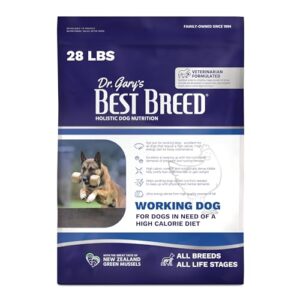
Best Breed High Calorie Dog Food is a smart pick for dogs with intense energy demands, like those burning calories faster than a Border Collie at a frisbee tournament. Each cup provides 580 kcal, offering serious fuel without oversized portions.
Slow-cooked in Ohio, the formula ensures nutrients remain intact while promoting smooth digestion. This gentle process preserves the integrity of ingredients, supporting overall health.
The recipe avoids corn, wheat, soy, and peas, focusing instead on chicken meal, eggs, and fish for clean protein and balanced omega-3s. This approach prioritizes quality nutrition and allergen-friendly composition.
Ideal for working dogs, pregnant females, or underweight athletes, this food delivers the calorie boost needed for sustained energy and optimal body condition.
| Best For | Working dogs, active breeds, and pregnant or nursing females that need serious calories without eating a mountain of food. |
|---|---|
| Protein Content | Moderate (chicken meal primary) |
| Fat Content | High fat formula |
| Made in USA | Yes – Ohio |
| Life Stage | All life stages |
| Artificial Additives | None |
| Joint Support | Omega-3/6 EPA/DHA |
| Additional Features |
|
- Packs 580 kcal per cup, so high-energy dogs get what they need without giant portions.
- Clean ingredient list — no corn, wheat, soy, or by-product meals, just real protein from chicken, eggs, and fish.
- Slow-cooked in Ohio for better digestion and nutrient absorption, which is a nice bonus for sensitive stomachs.
- The small kibble size can be a choking hazard for bigger dogs with large jaws.
- It’s pricey compared to standard kibble, so feeding it exclusively might stretch your budget.
- Not a great fit for low-activity dogs — that calorie density will pack on unwanted pounds fast.
2. Blackwood Puppy Performance Chicken Meal Dog Food
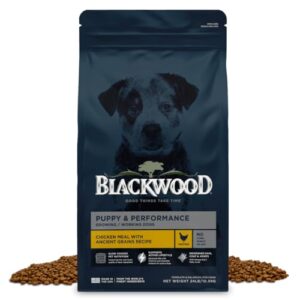
Blackwood Puppy Performance Chicken Meal fits that need well for growing, active puppies and young working dogs. Chicken meal leads the ingredient list, supported by ancient grains like brown rice, sorghum, and barley for steady energy.
Added DHA, EPA, and Zinpro ProPath minerals promote brain development, joint health, and coat condition. The slow, small-batch cooking process preserves nutrients effectively. At $68.59 for 24 lbs, it’s a solid everyday option for active puppies and young working dogs.
| Best For | Growing puppies, active young dogs, and working breeds that need high-energy nutrition with solid joint and brain support. |
|---|---|
| Protein Content | Moderate (chicken meal primary) |
| Fat Content | High fat formula |
| Made in USA | Yes – Ohio |
| Life Stage | All life stages |
| Artificial Additives | None |
| Joint Support | Omega-3/6 EPA/DHA |
| Additional Features |
|
- Chicken meal as the lead protein, backed by ancient grains that give steady, lasting energy without the corn or soy
- Zinpro ProPath minerals plus DHA and EPA cover joint health, brain development, and a healthy coat all in one bag
- Small-batch slow cooking keeps the nutrients intact, and the resealable 24-lb bag makes it practical for everyday feeding
- Higher calorie density means couch-potato dogs can pack on weight fast if you’re not watching portions
- Beet pulp and pea protein are in the mix, which some owners prefer to avoid due to sensitivities or filler concerns
- A handful of reviewers noticed the formula tasting different batch to batch, so picky dogs might not always take to it the same way
3. Blue Buffalo Adult Chicken Brown Rice Dog Food
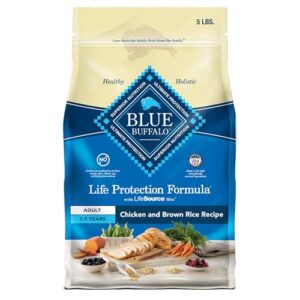
Blue Buffalo Adult Chicken Brown Rice is worth a look. Deboned chicken leads the ingredient list, with chicken meal close behind for solid amino acid support.
You get Omega-3 and Omega-6 fatty acids from flaxseed, plus glucosamine for joint health. The LifeSource Bits add antioxidants and immune support in every bite.
At $13.33 for 5 lbs, it’s a cleaner everyday option — no corn, wheat, or soy.
| Best For | Adult dogs who need a clean, protein-forward diet — especially those with sensitive stomachs or owners who want to avoid corn, wheat, and soy. |
|---|---|
| Protein Content | High (chicken meal primary) |
| Fat Content | Moderate fat |
| Made in USA | Yes – family-owned |
| Life Stage | All life stages |
| Artificial Additives | None |
| Joint Support | Zinpro minerals blend |
| Additional Features |
|
- Deboned chicken is the first ingredient, so you’re getting real, quality protein right off the bat.
- LifeSource Bits pack in antioxidants and immune-boosting nutrients with every meal.
- Omega-3 and Omega-6 fatty acids keep skin healthy and coats looking great.
- At $13.33 for just 5 lbs, the cost adds up fast — especially for bigger dogs.
- Contains grains and legumes like peas and barley, which can be a problem for dogs with certain sensitivities.
- The large kibble size isn’t ideal for small breeds or dogs that don’t chew well.
4. Purina Pro Plan Active Chicken Dog Food
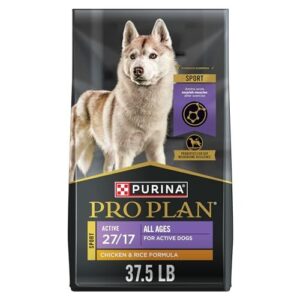
If you want something that punches above its weight on a budget, Purina Pro Plan Active is worth your attention. It prioritizes real chicken as the first ingredient, followed by probiotics, glucosamine, and omega-3s—covering muscle, gut, and joint health in one bag.
At 27% protein and 17% fat, it delivers solid nutrition for active adult dogs without excess. The formula also skips artificial colors and flavors, focusing on functional benefits.
For $74.98 per 37.5-lb bag, it’s a reliable everyday workhorse that balances quality and affordability.
| Best For | Active, working, or sporting adult dogs that need high protein and steady energy throughout the day. |
|---|---|
| Protein Content | High (deboned chicken primary) |
| Fat Content | Moderate fat |
| Made in USA | Yes |
| Life Stage | Adult only |
| Artificial Additives | None |
| Joint Support | Glucosamine added |
| Additional Features |
|
- Real chicken is the first ingredient, so you’re getting solid, quality protein right off the bat
- Covers a lot of ground in one bag—probiotics for digestion, glucosamine for joints, and omega-3s for coat health
- At $74.98 for 37.5 lbs, it holds its own against pricier premium brands without cutting corners
- Too calorie-dense for couch potato or overweight dogs—portion control is a must
- "Allergen-Free" label can be misleading if your dog has a chicken sensitivity, so always check the ingredient list
- The price tag might sting over time compared to bulk warehouse options
5. Purina Pro Plan Sport Chicken Rice Dog Food
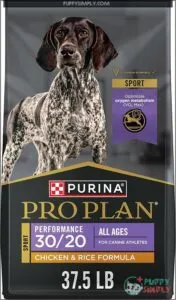
Step up from the Active formula, and you get the Sport version — built for dogs that go harder and longer. The 30% protein and 20% fat ratio hits the sweet spot for high-intensity work, with real chicken leading the ingredient list.
It includes EPA for joint support, glucosamine for cartilage, and antioxidants to support immune health.
A heads-up: it contains corn and poultry by-product meal, which may bother sensitive dogs. At $74.98 for 37.5 lbs, it’s competitively priced for a performance formula.
| Best For | Working, sporting, or highly active dogs that need serious fuel to perform and recover. |
|---|---|
| Protein Content | 27% crude protein |
| Fat Content | 17% crude fat |
| Made in USA | Yes |
| Life Stage | Adult only |
| Artificial Additives | None |
| Joint Support | Glucosamine + omega-3 |
| Additional Features |
|
- Real chicken is the first ingredient, with a 30% protein and 20% fat ratio built for high-output dogs
- EPA and glucosamine team up to keep joints healthy and moving well
- Antioxidant blend supports immune health and a solid skin and coat
- Contains corn and poultry by-product meal, which can be a problem for dogs with sensitivities
- High fat content isn’t a great fit for low-activity or weight-managed dogs
- Large 37.5 lb bag and $74.98 price tag may not work well for smaller households
6. Diamond Maintenance Adult Dry Dog Food
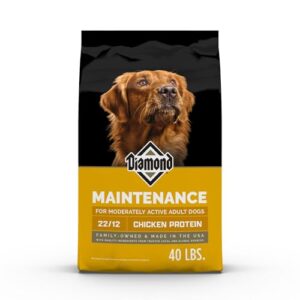
Diamond Maintenance is built for the moderately active dog — think farm dogs, patrol dogs on lighter duty, or hunting dogs in the off-season. At 22% protein and 12% fat, it won’t fuel elite performance but holds the line on muscle maintenance and coat health.
A multi-strain probiotic blend keeps digestion steady, and at roughly $0.95 per pound, your wallet gets a workout too.
| Best For | Moderately active adult dogs whose owners want solid everyday nutrition without breaking the bank. |
|---|---|
| Protein Content | 30% crude protein |
| Fat Content | 20% crude fat |
| Made in USA | Yes |
| Life Stage | Adult only |
| Artificial Additives | Not specified |
| Joint Support | EPA + glucosamine |
| Additional Features |
|
- Chicken is the first ingredient, so you’re getting real protein that actually supports muscle.
- The probiotic blend (four strains) keeps digestion on track — great for sensitive stomachs.
- At around $0.95 per pound for a 40 lb bag, it’s genuinely good value for multi-dog homes.
- Contains wheat, corn, and chicken by-product meal — not ideal if your dog needs grain-free or single-protein food.
- Large kibble size can be rough for small breeds or dogs with dental problems.
- The paper bag tears and absorbs moisture easily, so storage can be a hassle.
7. Victor Hi Pro Plus Dog Food
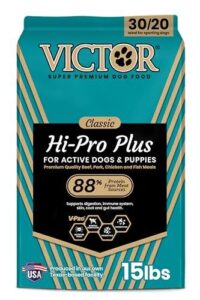
Victor Hi-Pro Plus means serious business. With 30% protein from a four-meat blend — beef, chicken, pork, and menhaden fish — it delivers the amino acid variety your working dog actually needs.
That high protein digestibility means less waste in your yard — something worth exploring if you’re researching dog foods that reduce stool volume.
Fat sits at 20%, so energy stays consistent through long shifts or training days.
The VPRO blend adds probiotics like Bacillus coagulans to keep digestion smooth.
At roughly $1.65 per pound, you’re getting solid performance nutrition without breaking the bank.
| Best For | Active, working, and sporting dogs — plus puppies, pregnant females, and seniors who need high protein to stay strong. |
|---|---|
| Protein Content | 22% crude protein |
| Fat Content | 12% crude fat |
| Made in USA | Yes – family-owned |
| Life Stage | Adult only |
| Artificial Additives | Not specified |
| Joint Support | Omega fatty acids |
| Additional Features |
|
- Four-meat blend (beef, chicken, pork, fish) covers a wide range of amino acids, so your dog gets well-rounded nutrition in every bowl.
- The VPRO probiotic blend keeps digestion running smoothly, which means better stools and less stomach drama.
- Works across all life stages — one bag covers puppies, adults, and nursing moms without needing to switch formulas.
- Not ideal for large-breed puppies (70 lb) — the nutrient density is too high for their growth phase and could cause issues down the line.
- The kibble has a strong smell that some dogs (and their owners) find pretty off-putting, especially once the bag’s been open a while.
- At $34.99 for 15 lbs, it’s pricier than everyday dry foods — that adds up fast if you’ve got more than one dog to feed.
8. Grandma Lucys Pureformance Rabbit Dog Food
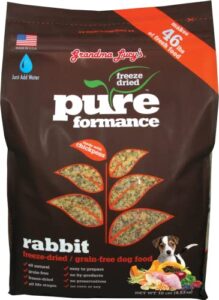
If your dog struggles with chicken or beef, rabbit might be the answer. Grandma Lucy’s PUREformance Rabbit is a freeze-dried, grain-free solution featuring USDA rabbit as the first ingredient, with no fillers, by-products, or GMOs.
Simply add warm water, wait a few minutes, and it’s ready. The limited-ingredient recipe—chickpeas, fruits, vegetables—keeps things simple for sensitive stomachs.
At around $9.79 per pound, it’s a premium pick, but the coat and digestion benefits are hard to argue with.
| Best For | Dogs with food allergies or sensitivities to common proteins like chicken or beef, especially those who benefit from a limited-ingredient, grain-free diet. |
|---|---|
| Protein Content | 30% crude protein |
| Fat Content | 20% crude fat |
| Made in USA | Yes – Texas |
| Life Stage | All life stages |
| Artificial Additives | None |
| Joint Support | Taurine + amino acids |
| Additional Features |
|
- Rabbit is a novel protein that works well for allergy-prone or sensitive dogs
- Clean, simple ingredients — no fillers, by-products, GMOs, or synthetic preservatives
- Easy to prep and shelf-stable, making it great for travel or emergency food supply
- Pricey at ~$9.79/lb, and a 10 lb bag only lasts about 20 days for a larger dog
- Needs rehydration before serving, and big meat chunks may need extra soaking time
- Some dogs with high protein needs may lose weight or have looser stools on this formula
9. Bully Max Chicken High Protein Dog Food
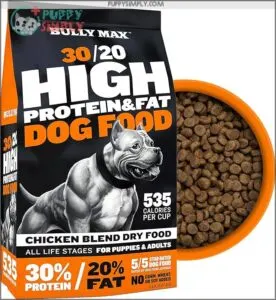
Bully Max Chicken High Protein packs 30% protein and 20% fat into every cup, delivering 535 kcal — serious fuel for serious dogs.
Real chicken leads the ingredient list, backed by whitefish meal, chicken fat, and omega fatty acids.
It contains no corn, wheat, soy, or artificial anything, and is made in the USA with a solid safety record.
At $64.95 for 15 lbs, it’s an investment — but your working dog earns every bite.
| Best For | Active, working, and large-breed dogs — plus pups recovering from illness or surgery — who need serious calories and high-quality protein to thrive. |
|---|---|
| Protein Content | Moderate (rabbit primary) |
| Fat Content | Moderate fat |
| Made in USA | Yes – California |
| Life Stage | Adult / all stages |
| Artificial Additives | None |
| Joint Support | Chickpea fiber blend |
| Additional Features |
|
- Packed with 30% protein and 20% fat, so working and high-energy dogs get real fuel without needing huge portions.
- Clean ingredient list — no corn, wheat, soy, or artificial additives, just meat-forward nutrition with omega fatty acids for coat and immune health.
- Made in the USA with a solid safety record and no recalls, so you know exactly what you’re feeding.
- At $64.95 for 15 lbs, it’s pricier than most dry dog foods — not ideal if you’re feeding multiple dogs on a budget.
- 535 kcal per cup adds up fast, so low-activity or overweight dogs can pack on pounds if portions aren’t watched carefully.
- Contains grains and egg product, which could be a problem for dogs with grain sensitivities or egg allergies.
Working Dog Nutrition Requirements
Working dogs burn through calories fast, and their diet has to keep up.
Getting the nutrition right means knowing which numbers actually matter for performance.
Here’s what to look for regarding fuel, recovery, and everything in between.
Ideal Protein Levels for Active Dogs
Protein isn’t just a foundation of your working dog’s recovery and strength — it’s essential for their performance. Most active dogs thrive with 24–28% crude protein for high-intensity work, while endurance activities often require 30% or more. Focus on protein bioavailability and amino acid profile, not just crude protein content, to ensure optimal nutrient utilization.
Stage-specific requirements matter too; match protein and fat levels to your dog’s actual workload. Working dogs should receive higher protein levels to sustain their activity and support long-term health.
Why High-fat Formulas Support Stamina
Fat does more than protein regarding stamina. At 9 kcal per gram, fat is your dog’s most energy-dense fuel — and a high-fat, energy-dense diet for working dogs facilitates fat oxidation and mitochondrial fueling during long activity windows.
This glycogen-sparing effect keeps reserves available for peak bursts.
A smart protein-to-fat ratio, plus extended satiety from high-calorie dog food, sustains fat metabolism across full workdays.
Carbohydrates for Glycogen Replenishment
While fat fuels the long haul, carbs handle the sprint recovery. Your dog’s glycogen stores need replenishing after hard work — and that’s where digestible carbohydrates earn their place in an energy-dense diet for working dogs.
- Glycogen Repletion Window: Feed carbs within 30–60 minutes post-exercise for fastest glycogen restoration.
- Carb Dose Rate: Target 1.2 g per kg per hour during early recovery.
- Fast-digesting Carbs: Rice and sweet potato restore blood glucose quickly after intense sessions.
- Carb-Protein Synergy: Pairing carbs with protein improves glycogen repletion at lower carb intakes.
- Carb Source Selection: Aim for 30–50% digestible carbohydrates in your working dog’s daily diet.
AAFCO Adult Maintenance Standards
AAFCO guidelines set the floor — not the ceiling for what counts as "complete and balanced." The Guaranteed Analysis on every bag reflects a Nutrient Profile your dog’s food must meet, covering crude protein, fat, Linoleic Acid, and Micronutrient Minimums like calcium and vitamins.
| AAFCO Standard | Adult Maintenance Minimum |
|---|---|
| Crude Protein | 18% dry matter |
| Crude Fat | 5% dry matter |
| Linoleic Acid | 1% dry matter |
| Calcium | 0.5% dry matter |
A Feeding Trial or formulation path confirms compliance with these standards.
Working dogs often need more — but this baseline matters for ensuring essential nutritional adequacy.
Protein-to-fat Ratios for Performance Dogs
Once you know the AAFCO floor, the next question is balance. For active dogs, a protein-to-fat ratio around 30–40% protein and 18–25% fat hits the sweet spot.
Ratio calculation methods matter here: divide crude fat by crude protein, then multiply by 100.
Activity-based ratios shift seasonally too. Lighter summer workloads may need less high fat, high protein performance dog food.
Nutrient Needs by Work Intensity
Not every working dog runs the same race. A search-and-rescue dog logging six-hour shifts needs more high protein, high fat fuel than a weekend agility pup. Match your dog’s AAFCO nutrient profiles to actual work intensity.
Higher output means greater antioxidant requirements, smarter hydration strategies, careful fiber modulation for gut tolerance, tighter electrolyte balance, and energy density and caloric needs scaled to match the protein-to-fat ratio.
Calories Needed for Working Dogs

Working dogs burn a lot more fuel than your average couch pup — sometimes two to three times more calories in a single day.
Working dogs can burn two to three times more calories daily than an average dog
Getting those numbers right makes a real difference in how your dog performs, recovers, and stays healthy over time. Here’s what you need to know about calorie needs for working dogs.
Maintenance Calories Versus Working Calories
Think of maintenance calories as your dog’s "idle mode" — just enough fuel to maintain a steady weight with no additional work. Adding a long training day creates an energy gap, as working dogs require 1.5–2× more daily calories to compensate.
Adaptive metabolism, the thermic effect of digestion, and activity partition all influence how a dog processes an energy-dense diet. These factors collectively determine the efficiency of calorie utilization during increased physical demands.
Daily Calories by Body Weight
Body weight serves as the foundation for all calorie calculations. A simple Weight Calorie Formula—approximately 30 kcal per pound at rest—establishes a baseline, while Activity Adjusted Multipliers elevate this range to 45–60 kcal per pound for working breeds.
Key factors shaping dog calorie requirements include:
- Body weight, which sets the foundational requirement
- Metabolic Rate Factors, such as age and breed size, to refine needs
- Seasonal Energy Needs, which rise during colder weather
- Work intensity, driving adjustments through Scale-Based Feeding
- Body condition score, confirming whether calorie-specific servings align with targets
High-calorie Kibble Benefits
High-calorie kibble is quite a workhorse for active dogs. Energy-dense kibble packs more fuel into fewer cups, offering appetite flexibility on days when your dog isn’t hungry. This ensures lean weight maintenance stays on track without forcing large meals.
A calorie-dense diet for working dogs also simplifies portable feeding convenience—reducing bulk to carry while delivering a consistent energy supply and maintaining results.
Calorie Density Per Cup
Not all cups are equal — kibble packing density, shape, and moisture variation impact how many calories actually land in your scoop. A calorie-dense kibble like Best Breed delivers 580 kcal per cup, while others hover around 450 kcal.
For an energy-dense diet for working dogs, use the weight conversion method — grams over guesswork — to ensure consistent scoop volume and hit caloric targets reliably.
Adjusting Portions for Activity Level
One hard training day isn’t the same as a rest day — and your dog’s portions shouldn’t be either. Weighing kibble by grams ensures far more reliable calorie-specific servings than scooping. Use activity-based ratios: increase total daily calories on high-output days, reduce them during downtime.
Factor treat allocation into your flexible portion planning to ensure incremental calorie shifts remain intentional, not accidental.
Using Body Condition Scoring
Numbers tell part of the story — your eyes and hands tell the rest. Body condition scoring provides a practical Visual Reference Guide for weight management without a scale.
Run your hands along your dog’s ribs using basic Palpation Techniques: you should feel them easily, not see them.
Score weekly for scoring frequency consistency, interpreting scores against a 1–9 scale to fine-tune caloric needs and calorie-dense kibble portions.
Best Ingredients for Performance Kibble
Not all kibble is created equal, and for working dogs, what’s inside the bag really matters. The right ingredients make the difference between a dog that fades mid-shift and one that finishes strong.
Here’s what to look for when you’re reading that label.
Named Animal Protein as First Ingredient
The label’s first ingredient tells you a lot. When you see "real chicken" or "salmon" at the top, that’s the largest contributor by weight — and it matters for allergen traceability and protein digestibility in kibble.
Following the label hierarchy and protein naming standards helps you make smarter choices. Look for:
- Named single source protein (not generic "meat")
- Meal vs whole form clearly stated
- High protein from traceable animal sources
- Consumer decision guidance through transparent labeling
Chicken, Beef, Salmon, and Rabbit Proteins
Not all proteins are created equal — and your working dog’s performance depends on which one fuels the body.
Real chicken delivers solid amino acid balance with reliable lysine content. Beef brings leucine richness that promotes muscle repair after hard sessions. Salmon adds a source-specific fat profile packed with omega-3s. USDA-certified rabbit offers a vitamin B12 boost and impressive protein cost efficiency for high-energy canine diets.
Digestible Fats for Sustained Energy
Fat matters just as much as protein in a high-energy canine diet. Digestible fats provide 9 kcal per gram — more than double what carbs offer. Look for energy-dense kibble with consistent fat sources like chicken fat or salmon oil.
Fresh fat preservation matters too, since fat oxidation stability directly affects how well your dog absorbs and uses those calories throughout the workday.
Omega-3 and Omega-6 Fatty Acids
Both omega-3 and omega-6 fatty acids play a crucial role in your working dog’s diet. EPA and DHA support brain function and aid in inflammation modulation after intense activity. Together, they maintain cell membrane integrity and promote skin and coat health.
The omega-3 to omega-6 balance is critical for regulating inflammatory pathways without causing imbalance. Proper ratio optimization ensures these fatty acids work harmoniously to support overall well-being.
Grain-inclusive Versus Grain-free Formulas
Choosing between grain-inclusive dog food and grain-free dog food isn’t as simple as it sounds. Each formula represents a real energy source shift that affects grain digestion, legume fiber intake, and even cardiac health.
- Grain-inclusive formulas use rice or oats for steady, familiar carbs.
- Grain-free formulas rely on legume fiber from peas or lentils.
- Taurine risk has been flagged by the FDA with some grain-free diets.
Talk to your vet before switching.
Avoiding Unnecessary Fillers and Additives
Think of your dog’s kibble like a grocery list — shorter is usually better. Simple ingredient lists, no artificial additives, no fillers, and clean preservative choices signal a formula built for performance, not shelf appeal.
Skip bags with synthetic colors, added sweeteners, or vague by-product terms. These indicate low-quality fillers or unclear sourcing, which can undermine nutritional value.
Ingredient transparency and sourcing in premium dog foods ensure you know exactly what’s fueling your working dog. Prioritize brands that clearly state origins and avoid ambiguous terminology.
Limited-ingredient Options for Sensitivities
Some working dogs have sensitive stomachs and big energy demands. That’s where limited-ingredient recipes shine. These diets simplify meals by using a single protein source—like salmon or rabbit—paired with novel carbs such as quinoa or millet, eliminating common allergens.
Look for hydrolyzed protein options or allergen-free labeling, and prebiotic fiber for gut support. These components ensure nutritional balance while minimizing digestive upset.
Limited ingredient diets makes identifying triggers much simpler, offering tailored solutions for high-energy dogs with dietary restrictions.
Recovery and Joint Support Additives

Hard work takes a toll on joints and muscles, and the right additives make a real difference in how well they bounce back.
Some ingredients go beyond basic nutrition to actively support recovery after tough training sessions or long days on the job. Here are the key additives to look for.
Glucosamine for Cartilage Support
Glucosamine is the quiet workhorse of joint health supplements in working dogs’ diets. It facilitates cartilage matrix building by helping your dog’s body synthesize proteoglycans — the compounds that keep joints cushioned and resilient.
- Bioavailability forms matter — glucosamine sulfate delivers higher, more consistent plasma levels than generic versions
- Inflammatory pathways — glucosamine helps reduce catabolic reactions that break cartilage down
- Dosage guidelines — gram-range daily amounts show the strongest clinical evidence for glucosamine for dog joints
Chondroitin for Joint Shock Absorption
Chondroitin is glucosamine’s best teammate for joint health supplements in working dog diets. As a key mechanism of action, it pulls water into cartilage, acting like a natural shock absorber under pressure.
Long-term efficacy studies show it slows cartilage loss over time. Dosage guidelines and bioavailability factors matter, so look for chondroitin sulfate specifically — it’s the form with the strongest joint support evidence.
EPA and DHA for Inflammation Balance
Beyond omega-3 fatty acids tackle inflammation through their structural and functional roles. EPA and DHA influence recovery by competing in eicosanoid pathways and integrating into cell membranes, modulating cytokine activity.
EPA specifically activates resolvin pathways, while DHA generates specialized mediators that suppress post-workout inflammation. These mechanisms collectively promote healing and reduce recovery times.
For working dogs, dry dog food enriched with omega-3 fatty acids enables faster turnaround between hard sessions, supporting sustained performance and resilience.
L-carnitine for Fat Metabolism
L-carnitine acts as a delivery driver for fat, powering the carnitine shuttle to transport long-chain fatty acids across the mitochondrial membrane. This process enables your dog’s muscles to burn fat efficiently. Without L-carnitine, fat remains unused, unable to fuel energy production.
For working dogs on high-calorie diets, this mechanism is critical. It ensures mitochondrial transport and acyl-CoA buffering, maintaining high muscle fuel efficiency. During prolonged, intense activity, this system delivers a significant fat oxidation boost, enhancing endurance and performance.
Probiotics for Digestive Efficiency
Just like L-carnitine keeps fat moving to muscles, the right probiotic ensures a dog’s gut functions smoothly. Strain specificity is critical, as not all probiotics operate identically. K9 Strain Probiotics and similar live cultures enhance gut colonization and digestive efficiency in dry dog food through microencapsulation technology, which safeguards viability and stability during heat exposure, storage, and digestion.
For working dogs, probiotic-enriched food delivers targeted digestive health advantages. Key benefits include:
- Gut health support through consistent colonization with strain-specific cultures
- Dosage timing aligned with daily feeding routines to maximize colonization consistency
- Microencapsulation technology protecting live cultures through heat, storage, and digestion
- Improved stool quality reducing digestive disruption during high-intensity training periods
Green-lipped Mussel for Active Dogs
Green-lipped sea mussels are one of the more interesting joint health supplements in working dog diets. The extract delivers omega-3 fatty acids and glycosaminoglycans that support cartilage and help manage inflammation.
Research outcomes show real benefits when extract standardization is consistent.
For safety considerations, skip it if your dog has shellfish sensitivities.
When part of combination therapies, ideal dosage guidance from your vet makes all the difference.
How to Compare Working Dog Foods
Not all working dog foods are created equal, and the label alone won’t tell the full story. A few key factors can quickly separate the good from the great.
Here’s what to look at before you buy.
Crude Protein and Fat Percentages
The numbers on the bag don’t tell the whole story. Crude protein and crude fat are calculated using nitrogen conversion and ether extraction — not direct measurement. That means a protein quality gap can hide behind similar-looking percentages. As-fed percentages also shift with moisture.
For working dogs, dig deeper:
- Compare protein-to-fat ratio alongside calorie density
- Check fat source profile for omega-rich oils
- Look beyond crude protein to named meat ingredients
- Factor metabolizable energy, not just fat content
- Target 25–30% protein content and 15–20% crude fat
Calories Per Cup and Serving Cost

Two bags with the same shelf price can have wildly different serving cost breakdowns. That’s where the calorie efficiency metric matters most. Check energy density first, then calculate cost per calorie — not just price per cup.
| Food | Calories/Cup | Cost per Feeding |
|---|---|---|
| Best Breed | 580 kcal | Low |
| Purina Pro Plan Sport | ~500 kcal | Moderate |
| Grandma Lucy’s | ~450 kcal | Higher |
Calorie-dense kibble means calorie-specific servings stay smaller, keeping economic portion sizing in your favor.
Ingredient Quality and Sourcing Transparency
When a bag lists country of origin for every major ingredient, that’s a brand earning your trust. Look for third-party audits, ingredient certification marks, and a traceability code linking each batch to its source.
Human-grade ingredients, single-source protein, and supplier sustainability reports all signal real transparency.
Locally sourced, limited ingredient recipes mean fewer unknowns — and a cleaner bowl for your working dog.
Digestibility and Stool Quality

Stool quality is basically your dog’s report card for the food you’re serving. High digestibility means fewer undigested residues reaching the colon — less fiber fermentation, fewer fermentation byproducts, and better moisture control. Digestible protein and no fillers keep stool firm and formed.
Watch for these signs of a well-matched kibble:
- Consistent stool scoring between 3–4 on a 5-point scale
- Low stool moisture and good shape retention
- Minimal fermentation byproducts like gas or loose texture
- Prebiotic and probiotic benefits supporting dietary fiber for digestion
Suitability for Allergies or Sensitivities

If your working dog scratches more than it sprints, food allergens might be the culprit. Allergen label clarity is your first tool — check for single-source formulas with limited-ingredient recipes that simplify elimination diet protocols.
Grain-free dog food and no artificial preservatives reduce non-protein triggers, while cross-contact mitigation statements like "may contain" help you spot hidden risks before they cause problems.
Value by Price Per Pound
Price per pound is your real comparison tool — not the bag size. To determine your true cost per calorie, divide the total cost by the weight. Bigger bags offer bulk pricing savings, and coupon adjustments can lower that number further.
Smart dog food cost comparison involves checking:
- Price per kilogram across brands
- Calories per pound—not just bag weight
- Shelf-life value of larger bags
- Budget-friendly versus premium options for active canine athletes
- Cost analysis of premium performance dog foods based on daily feeding amounts
Economic considerations in premium dog food selection matter more than the sticker price.
Brand Reputation and Feeding Trials

Brand reputation tells you a lot beyond cost. Look for companies with a clean recall history and ingredient traceability—you want to know exactly where that chicken or salmon comes from.
Trial transparency matters too, especially peer-reviewed validation from real working dog studies.
Pet parent reviews and handler feedback add practical proof that numbers alone can’t provide.
Feeding Schedule for Active Dogs

What your dog eats matters, but when you feed them matters just as much. Timing meals around work sessions can make a real difference in energy, digestion, and recovery.
Here’s what a smart feeding schedule looks like for an active dog.
Feeding Before Work or Training
Timing matters more than most people realize. Feed your dog a moderate meal about 2–3 hours before training, prioritizing digestible carbohydrates for quick-energy fuel. Fat moderation and fiber control both reduce GI distress during intense activity.
If time is limited, a small quick-energy snack 30–60 minutes prior is effective. Always offer water beforehand—hydration supports the energy density and caloric demands working breeds require.
Post-exercise Feeding Timing
After the session ends, your dog’s muscles are already asking for help. Aim for an immediate recovery meal within two hours — that’s your carb refuel window for restoring glycogen and delivering an early protein boost that promotes muscle recovery for dogs.
Hydration timing sync matters too, so offer water first, then food once your dog has cooled down for 30–60 minutes.
Splitting Meals to Support Digestion
Once hydration is sorted, think about how you split your dog’s daily food. Two meals a day isn’t just convenient — it supports digestive rhythm consistency and gut transit load management by giving the stomach smaller volumes to process at once. This approach enhances nutrient absorption efficiency and enzyme synchronization, ensuring smooth digestion even on demanding training days.
Reducing Bloat Risk in Active Dogs
Bloat is no small thing — for large-breed working dogs, it can become fatal quickly.
To mitigate risks, implement these key habits:
- Practice raised bowl avoidance — floor-level feeding reduces gulping
- Apply slow feeding mechanisms like puzzle bowls
- Use water intake control — no big gulps right after meals
- Respect the post-meal exercise delay of 30–60 minutes
- Monitor large-breed risk with regular body-condition checks
Transitioning to a New Dry Food
Switching dry foods too fast is one of the most common mistakes dog owners make. To avoid issues, transition gradually over 7–10 days using a mix ratio of old and new food, while closely monitoring stomach sensitivity.
| Day Range | Old Food | New Food |
|---|---|---|
| Days 1–2 | 75% | 25% |
| Days 3–4 | 50% | 50% |
| Days 5–7 | 25% | 75% |
| Days 8–10 | 0% | 100% |
Keep meal portion consistency throughout the transition—only the food ratio changes, not the total volume. Watch for adjustment success indicators like firm stools and steady energy. If digestive upset occurs, slow down the timeline to allow your dog’s stomach to adapt.
Adjusting Food During Rest Days
Rest days are your dog’s reset button — but that doesn’t mean hitting pause on good nutrition. A little calorie trimming and gradual carb cut goes a long way toward smart energy budgeting without disrupting recovery.
- Keep consistent protein to protect lean muscle
- Reduce carb-heavy portions for calorie-specific servings
- Hold fat levels steady to avoid digestive upset
Macro tweaking works best in small steps.
When to Consult a Veterinarian
Your vets aren’t just for emergencies — but some situations can’t wait. Breathing emergencies, severe bleeding, sudden collapse, persistent vomiting, or poison exposure all need immediate care. Don’t hesitate.
For ongoing performance, veterinary nutritionist recommendations for working dogs help fine-tune vet-recommended dog food choices, address allergen-free dog food considerations, and guarantee safety and regulation compliance in dog food manufacturing standards your service dog deserves.
Frequently Asked Questions (FAQs)
What is the best dry dog food for working dogs?
Like a well-tuned engine running on premium fuel, your working dog thrives on an energy-dense diet for working dogs —
High protein, optimized protein-to-fat ratio, and veterinary endorsements backing every bowl.
How does hydration affect a working dogs performance?
Dehydration hits working dogs hard and fast. It reduces sprint endurance, raises cardiovascular strain, and impairs detection accuracy.
Keep water flowing freely — it’s the cheapest performance booster you’ve got.
At what age should working dogs switch foods?
Most dogs switch around 12–18 months, but breed size matters. Small breeds mature at 9–12 months, while large breeds wait until 18–24 months. Always follow your vet’s guidance on Breed Size Timing.
Do working dogs need supplements beyond their kibble?
Most working dogs don’t need supplements if their kibble is complete and balanced.
Assess nutrient gaps first, add joint health supplements or probiotics only when needed, and always use veterinary oversight to avoid redundancy.
How does cold weather change a working dogs diet?
Cold weather kicks your dog’s Cold‑Induced Metabolism into overdrive. They burn extra calories just staying warm.
Boost calorie density, increase fat for Heat Retention, offer Warm Water, and adjust portions seasonally.
Conclusion
Strong muscles need strong fuel. Fast recovery needs the right ingredients. A working dog needs dry dog food for working dogs that are built for real demands—not just basic maintenance.
Every cup you pour is a choice: one that either bolsters what your dog does or slowly works against it.
Pick a formula with named proteins, quality fats, and joint support. Your dog shows up every day. Make sure what’s in the bowl does too.
- https://academy.royalcanin.com/en/veterinary/practical-nutrition-for-working-dogs
- https://www.alphafeeds.com/how-much-protein-working-dog/
- https://ultimatepetfoods.co.uk/blogs/dog-nutrition-health/best-dry-dog-food-for-working-dogs-8?srsltid=AfmBOoqehV7lddkfVK4q10XstylxW3Bbbqsh3c-pFO0J-Z9sO0Dnwbn4
- https://wholesomespetfood.com/how-much-protein-is-in-dog-food-a-complete-guide-for-pet-parents/
- https://www.akc.org/expert-advice/nutrition/pet-food-digestibility/