This site is supported by our readers. We may earn a commission, at no cost to you, if you purchase through links.

A mat isn’t just messy—it’s a slow-motion injury. What looks like a clump of tangled fur on your dog’s coat can be pulling tight against the skin with every step they take, trapping moisture, hiding parasites, and quietly causing pain that your dog can’t tell you about.
Most owners don’t realize how fast a surface tangle turns into something serious. The good news: caught at the right stage, most mats respond well to patient, deliberate work at home—no groomer appointment required.
The techniques ahead will walk you through the whole process safely.
Table Of Contents
- Key Takeaways
- Why Matted Dog Fur Matters
- Tools for Safe Home Detangling
- Check The Mat Before Starting
- Calm and Position Your Dog
- Soften Mats Before Combing
- Comb Out Mats Step by Step
- Handle Tight Mats Without Cutting
- Know When to Call a Pro
- Prevent Mats From Coming Back
- Frequently Asked Questions (FAQs)
- Conclusion
Key Takeaways
- Mats aren’t just an eyesore — they trap moisture, hide parasites, restrict movement, and cause real pain that your dog can’t tell you about.
- Always soften a mat with detangling spray and work from the outer edges inward, using short strokes and a base grip to protect your dog’s skin.
- Know when to stop: if your finger won’t slide under the mat, the skin looks red or smells off, or your dog is growling and trembling, it’s time to call a professional.
- The best way to avoid mats coming back is brushing on a schedule that matches your dog’s coat type, with extra attention to high-friction spots like ears, armpits, and the collar area.
Why Matted Dog Fur Matters
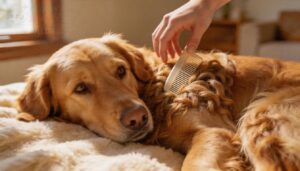
Matted fur isn’t just a cosmetic problem — it can genuinely hurt your dog. hiding underneath those tangles might surprise you.
What’s lurking beneath those mats — skin sores, trapped moisture, even parasites — is exactly why bathing and detangling a matted dog takes more care than a regular wash.
Here’s what every dog owner should understand before picking up a comb.
Pain, Pulling, and Restricted Movement
Mats don’t just look bad — they actively hurt your dog.
Every comb stroke transmits pulling force straight into the knot, triggering pain signals that cause muscle guarding and make your dog brace or freeze. Skin tenderness builds fast under pressure, and restricted mobility follows.
That’s why painfree detangling always starts with a good detangling spray — softening the mat first protects sensitive skin and keeps dog comfort during grooming is your top priority.
Hidden Moisture, Dirt, and Skin Infections
Pain isn’t the only concern — what hides inside a mat is just as serious.
Mats act as moisture traps, holding sweat and bath water against the skin for hours. That wet coat matting creates the perfect setup for bacterial overgrowth and yeast infection risk. Dirt accumulation makes it worse, blocking your dog’s shampoo from ever reaching the skin.
Here’s what builds up fast:
- Trapped sweat softens the skin barrier, making skin barrier damage almost inevitable.
- Damp warmth feeds bacterial and yeast growth.
- Sebum and dead skin cells pack into a greasy crust.
- Debris blocks natural oil treatment from doing its job.
- Skin infections can develop silently before you even notice a smell.
A good detangling spray helps — but prevention is always better.
Parasites and Sores Concealed Under Mats
Dense mats don’t just trap moisture — they shelter things you really don’t want near your dog’s skin.
flea infestation can stay hidden for weeks inside matted dog hair, with flea dirt and tick attachment going unnoticed until the damage is done.
Mite infestation, hot spot patches, and fly strike ulcers can all develop silently underneath, turning what looks like a grooming issue into a serious skin health risk.
Why Severe Mats Should Not Be Ignored
Ignoring severe mats doesn’t just mean a bad hair day for your dog — it snowballs fast. Circulation Impairment cuts blood flow to limbs, and Thermal Regulation Issues can cause dangerous overheating or frostbite.
These conditions are worsened because Mats trap moisture and debris which promotes bacterial growth.
Left unchecked, you’re looking at real consequences:
- Skin Ulcer Development from constant friction and trapped moisture
- Muscle Degeneration caused by restricted movement over time
- Behavioral Anxiety from chronic pain and hypersensitivity to touch
- Parasite infestations and skin infection hiding beneath the fur
Tools for Safe Home Detangling
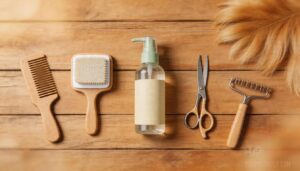
Before you touch a single mat, make sure you have the right tools on hand — the wrong ones can make things worse. You don’t need a grooming salon’s worth of equipment, just a few key items that work together.
Here’s what you’ll want to have ready before you start.
Wide-tooth Comb for Loose Tangles
Think of a wide-tooth comb as your first line of defense — gentle enough to work through loose tangles without snapping hair or startling your dog. Its Rounded Teeth Design glides over sensitive skin, while the wider spacing lets knots pass through gradually. Wet Hair Application works especially well after a detangling spray soaks in.
| Feature | Why It Matters |
|---|---|
| Material Selection | Cellulose acetate or polished plastic teeth reduce snagging |
| Ergonomic Grip | Keeps your strokes controlled and steady during home grooming |
| Breed Compatibility | Best for curly, wavy, or thick coats prone to tangling |
| Wet Hair Application | Moves easily through softened strands with less breakage |
Start here before reaching for anything else.
Slicker Brush for Surface Knots
Once the wide-tooth comb clears loose tangles, a slicker brush steps in to handle surface knots. Its angled wire bristles and cushioned base flexes slightly, so they lift debris and fine coat without scraping skin.
Choose your size wisely — a smaller head fits behind ears and into tight spots. An ergonomic handle keeps your strokes controlled, and a self-cleaning feature saves time mid-session.
De-matting Comb or Mat Splitter
When a wide-toothed comb just won’t cut it, reach for a dematting comb or mat splitter. These dematting tools use stainless steel blades — a smart Blade Material Choice — to slice through packed knots rather than rip them apart.
Look for an Ergonomic Handle Design, a Protective Blade Guard, and a Blade Replacement System for long-term value.
Always use on dry fur — Dry Fur Requirement matters.
Dog-safe Detangling Spray or Conditioner
A good detangling spray is like a peacemaker between tangled hairs — it lowers friction so your comb glides instead of dragging. Look for a pH Balanced Formula designed for dogs, since canine skin has different needs than ours. Detangling spray benefits go beyond slip alone.
Choose products that offer:
- Fragrance-Free Options for sensitive or allergy-prone dogs
- Humectant Benefits from glycerin or aloe to hold moisture in
- Natural detangling agents like jojoba or oatmeal for gentle conditioning
- Vegan Organic Labels if Ingredient Safety matters to your household
Oil-based conditioner formulas and safe home detangling sprays with hydrolyzed proteins add real slip without harsh chemicals. A quality natural detangling conditioner makes every session easier.
Towels, Treats, and a Non-slip Surface
Three simple extras make every session smoother: a microfiber towel, small treats, and a rubber mat.
Microfiber towel benefits show up fast — it absorbs moisture quickly and keeps the coat from clumping after you apply your detangling spray or detangling solution.
Rubber mat grip keeps your dog steady so you can hold fur at the base without them sliding.
Small treat selection and reward frequency timing together keep stress low throughout.
Check The Mat Before Starting
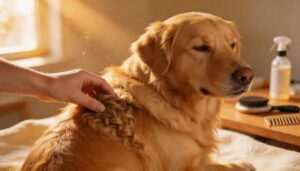
Before you reach for any tool, take a minute to really look at what you’re dealing with. Not all mats are the same, and knowing what you’re up against changes everything about how you approach it.
what to check before you begin.
How to Tell Surface Tangles From Tight Mats
Not all knots are created equal. A surface tangle still has movement — you can usually separate a few strands by hand, and the coat keeps some spring.
Tight matting feels like a solid clump, heavy with trapped dirt and shed hair. Check these visual and texture cues before grabbing your mat comb or dematting brushes:
- Texture Feel: Surface tangles feel rough but flexible; hair clumps from tight matting feel hard and dense.
- Visual Cue: Loose tangles look slightly ruffled; deep matting often hides under a smooth-looking topcoat.
- Pull Resistance: Run a detangler through — light resistance means a surface tangle; a comb that stops cold signals serious mat depth.
The Finger Test for Skin Clearance
Once you’ve confirmed the mat type, check what’s underneath. Slide one finger between the mat and skin — if you can’t get it in easily, stop there.
Press gently for about five seconds, then lift. Healthy skin shows a blanching indicator: it briefly turns pale, then color returns.
No color change, lingering redness, or a pain response means the skin is already stressed.
Dark pigment consideration matters here — on darker skin, feel for warmth or swelling instead.
High-risk Areas Like Ears and Armpits
Behind the ears and armpits are the sneakiest trouble spots on any dog. Ear cartilage care matters because the skin is thin and tight — mats press right against it with almost no give. Armpit skin folds trap heat and moisture constantly, making pressure relief techniques non‑negotiable.
Run your fingers slowly through these hidden pocket checks before reaching for a detangling brush or attempting any mat splitting technique.
Warning Signs of Redness, Odor, or Swelling
Once you’ve checked those high-friction zones, look closely at the skin underneath.
Watch for these skin health risks of matted fur:
- Redness Patterns that spread or deepen — not just mild pink, but angry, expanding color
- Odor Indicators like a sour or foul smell, which often signals trapped bacteria
- Swelling Symptoms paired with warmth — that Pain Heat Correlation is a classic infection signal
Fever Alert: If your dog feels hot overall, stop immediately.
When Home Detangling is Not Safe
Those warning signs aren’t just red flags — they’re your cue to stop entirely. Some mats have already crossed the line into Veterinary Assessment territory.
| Situation | Risk | Action |
|---|---|---|
| Severe Pain Signs / flinching | Skin irritation or tears | Stop; call a professional groomer |
| Blood Flow Compromise | Tissue damage | Immediate vet visit |
| Hidden Parasite Danger | Established infestation | Sedation Indications may apply |
Severe matting this serious isn’t a home job anymore.
Calm and Position Your Dog
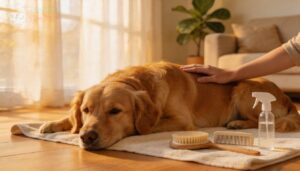
Before you touch a single mat, your dog needs to feel safe — and so do you. A calm dog makes the whole process smoother, faster, and far less stressful for both of you.
Here’s how to set things up the right way before you even pick up a comb.
Choose a Quiet Time and Short Session
Timing matters more than most people think. low-noise setup — away from a loud TV or busy hallway — helps your dog stay calm from the start.
short session timing of 10 to 15 minutes, ideally after a walk or rest.
Pre-grooming exercise burns off restless energy, making handling easier.
Building this into a regular grooming schedule turns it into something your dog actually expects.
Use Treats and Praise to Reduce Stress
Treats do more than bribe — they teach. The timing of rewards is everything: give a small, soft treat the second your dog holds still for a touch, not five seconds later.
High value treats like tiny bits of chicken work better than dry biscuits here.
Pair each reward with calm praise phrases like "good dog" to reinforce the moment.
A variable reward schedule keeps your dog engaged without depending on a treat every single time.
Watch for stress signal detection cues like refusing food — that’s your sign to pause.
Keep Your Dog Standing or Lying Comfortably
Position matters more than most people realize. A dog that feels wobbly or off-balance will resist every step.
- Stand your dog on an Anti‑Fatigue Mat or Non‑Slip Foot Pad for steady footing
- Use a Side‑Lying Cushion if standing is tiring or uncomfortable
- An Adjustable Grooming Table keeps everything at the right height
- A Stabilizing Support System adds gentle stability without restricting movement
- Side-lying bolsters safety during grooming and reduces stress for dogs during longer sessions
Hold Fur at The Base to Prevent Pulling
Your holding hand is your dog’s best protection. Place fingers flat at the mat’s base — right where fur meets skin — and grip firmly.
This Base Grip Technique with proper Finger Placement acts as Skin Buffering, absorbing comb tension into your hand instead of your dog’s skin.
Apply your detangling conditioner first, then maintain steady Hand Coordination and Pressure Management throughout every stroke.
Signs Your Dog Needs a Break
Your dog talks — you just have to listen.
Yawning Signals during a session, repeated Lip Licking, or Pacing Behavior nearby all mean stress is building. Trembling Indicator is your cue to stop immediately. Loss of Interest in treats signals the same.
Pause, let your dog settle, and restart later. Catching these early makes stress reduction for dogs easy.
Soften Mats Before Combing
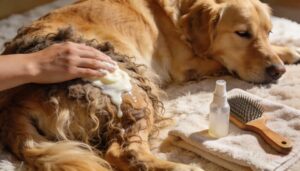
Before you even pick up a comb, your first job is to soften the mat — skipping this step makes everything harder and more painful for your dog. A little prep goes a long way here.
Here’s what to do before you start combing.
Apply Detangling Spray or Conditioner Generously
Think of detangling spray like sunscreen — a thin mist won’t do the job. You need full coat coverage on the matted area, not just the surface. Whether you’re using a detangling spray for pets, a detangler oil, or an oil-based conditioner with aloe vera or oat protein, apply enough to reach deep into the knot.
- directly onto the mat, not just around it
- targeted spot application on friction zones like ears and armpits
- Work in layers using a layered spray technique for thick or curly coats
- Avoid over-saturation — soaking the fur can make combing harder
- Distribute the product through the mat for even slip distribution so every strand gets coated
Let The Product Sit 5–10 Minutes
Once the detangler oil or detangling spray for pets is applied, step back and let it work.
Contact time importance here is real — the chemical activation period needs 5–10 minutes to penetrate the mat’s core. Wetness retention is key; if the coat looks dry before the timer ends, mist again.
That wait unlocks the penetration benefits that make combing actually possible.
Use Fingers to Separate Outer Hairs First
Once that conditioner has soaked in, your fingers become your first real tool — not the comb.
Start slowly with your fingers at the mat’s outer edge. Outer hair loosening happens here first because those strands are the least tightly bound. Use gentle finger pressure to tease small sections apart, not pull the whole knot at once.
Finger Separation Done Right:
- Assess the damage before touching — feel how dense and deep the mat sits.
- Apply the skin anchoring technique: one hand holds fur at the base while the other works the outer hairs.
- Use finger tension control to keep movements small and deliberate.
- Follow hand positioning tips by keeping your working fingers close to the mat’s edge, never the center.
- Split the mat gradually into two or three smaller sections before reaching for any tool.
Avoid Soaking The Mat With Plain Water
Plain water seems harmless, but soaking a mat can actually make things worse. Wet fur becomes heavier, harder to separate, and takes far longer to dry — which invites bacteria and odor.
Stick to the Spot Cleaning Method using an oil-based conditioner or detangler instead. Limited Moisture Application keeps you in control.
| Approach | Risk Level | Best Practice |
|---|---|---|
| Plain water soak | High | Avoid completely |
| Alternative Wetting Solutions (oil-based conditioner) | Low | Apply generously, targeted |
| Handheld air drying machine | Minimal | Use after detangling |
Material Damage Prevention starts here — closed-cell mat fibers weaken with repeated soaking. For air drying pet coat areas, Grip Retention Strategies matter too: a damp coat slips under your hands, making control harder.
Comb Out Mats Step by Step
Once the mat is softened and your fingers have done the first round of separating, it’s time to bring in the comb. The key is working methodically so you’re loosening the knot, not fighting it.
Here’s exactly how to move through each mat without causing your dog any pain.
Start at The Mat’s Outer Edge
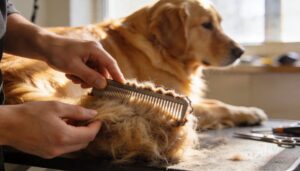
Never dive straight into the heart of a mat — that’s how you make it worse.
Use the Edge First Approach: your wide-toothed comb works on the Peripheral Loosening of the outer layer before touching tighter sections.
- Start where the mat feels loosest
- Use the Boundary Comb Method — short strokes only
- Practice Outer Layer Separation before going deeper
- Follow Edge-to-Center Progression, never center-first
- A mat splitter helps when outer fibers resist
Work in The Direction of Hair Growth
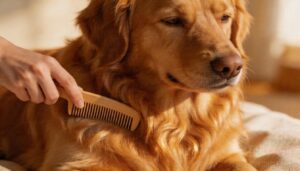
Hair grows in different directions depending on where you’re on your dog’s body — and your comb needs to respect that. Directional brushing follows the natural Coat Flow and Lay Alignment of each section, making Hair Orientation your guide.
Use your wide-toothed comb to detangle dog hair by matching the Growth Pattern, so every stroke glides with the fur, not against it.
Use Short, Gentle Strokes With The Comb
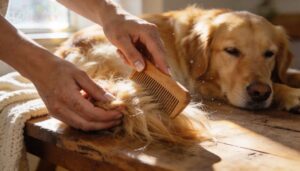
Think of each stroke as a small conversation with the mat — keep it short, about 1 to 2 inches. Stroke Length Control is everything here.
Use your wide-toothed comb at roughly a 30-degree angle for smart Comb Angle Adjustment, and apply Gentle Pressure Modulation with just your thumb and forefinger.
Base Grip Anchoring holds fur steady, while Hand Position Stability keeps your strokes precise and painless.
Move From Ends Toward The Base
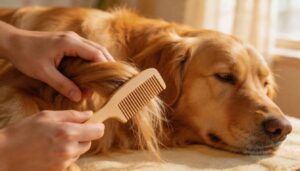
Start at the ends, not the base. This is the heart of Layered Detangling — your wide-toothed comb works through the loosest hairs first, practicing Progressive Tension Release as you gradually move deeper.
Each pass in this step-by-step dematting process opens a little more of the mat, reducing resistance naturally. Controlled Comb Angle and Gradual Pressure Reduction protect the skin while Sectional Mat Splitting keeps each section manageable.
Finish With a Slicker Brush Afterward
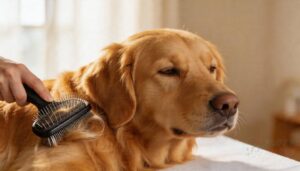
Once the comb moves freely, reach for your slicker brush — this is where coat smoothing happens. Using light directional pressure, make short passes following hair growth.
The fine wire pins lift the coat, handle loose hair removal, and leave a clean finish. Wipe the brush clean after every session; good brush maintenance keeps those pins effective.
That’s your postdematting care done right.
Handle Tight Mats Without Cutting
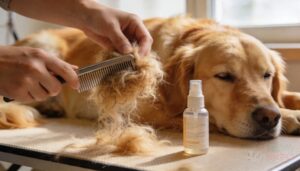
Some mats are just too dense to comb straight through — and that’s okay. Before you reach for scissors, there are smarter, safer moves that can save the fur and spare your dog the stress.
Here’s what to do when a mat won’t budge.
Split Dense Mats Into Smaller Sections
dense mat isn’t one big knot — it’s many smaller ones pressed together. Your sectioning strategy matters here. Instead of forcing a wide-toothed comb through the whole thing, use natural seam identification: find where the hair already wants to separate, then split along those lines.
- Divide the mat into vertical vs horizontal strips, whichever direction shows the least resistance.
- Aim for finger-sized segments — small enough to control, large enough to see progress.
- Work edge-to-center, checking each section before moving inward.
Progress monitoring keeps the step‑by‑step dematting process from becoming overwhelming — and your dog much calmer.
Use a Mat Splitter Away From Skin
A mat splitter is one of the most effective protective grooming tools you can reach for — but placement is everything. Keep the blade angle control flat and parallel to the skin, never tilted inward.
Mat isolation technique matters here: slide the splitter behind the knot first, then use short outward strokes. That ergonomic grip usage helps maintain safety guard alignment, so skin contact prevention stays consistent throughout.
Never Yank or Rip Through Knots
Once the splitter has done its work, resist the urge to rush. Yanking through a stubborn knot spikes your dog’s pain instantly — that’s how grooming sessions go sideways fast.
The Finger Separation Method and Gentle Pull Technique exist for a reason: slow, steady progress beats a quick rip every time.
Patience Over Speed is your real detangler here, preventing skin irritation from mats through a Layered Comb Approach.
Why Scissors Near The Skin Are Risky
Scissors feel like a quick fix, but they’re one of the riskiest tools near a tight mat. Dog skin is thin and loose — it can slide right up into the fur, creating a Skin Slip Hazard that leads to Blind Blade Contact before you realize it.
Scissors near a tight mat are a trap — dog skin is thin, loose, and one slip away from a serious cut
That Hidden Skin Exposure means Scissor Blade Pressure can cause Deep Cut Potential in a fraction of a second, turning safe grooming practices for sensitive skin into an emergency vet visit.
When Clippers Are a Last Resort
When electric clippers become your last option after combing and splitting have both failed. Use them carefully — not casually.
- Choose a wide, short blade for safe clearance between skin and mat.
- Hold the skin flat and taut to protect against accidental nicks.
- Run quiet clippers slowly to reduce noise and keep your dog calm.
Clipper use limits are real — if the mat sits flush against the skin, stop and call a groomer.
Know When to Call a Pro
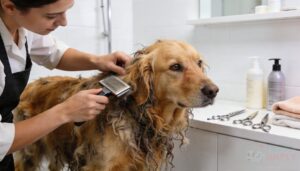
Home grooming has its limits, and that’s perfectly okay. Some mats are simply beyond what a comb, spray, and patience can fix safely.
Here’s when stepping back and calling a professional is the right move for your dog.
Mats Too Close to The Skin
When a mat sits flush against the skin, you’re dealing with more than a grooming challenge. skin tightness effects include restricted blood flow, inflammation, and real pain your dog can’t tell you about.
If your finger won’t slide under the knot, stop. That’s your signal — not a setback.
professional can detangle dog hair safely without risking a cut or skin tear.
Large, Hard, or Widespread Matting
Widespread matting isn’t just a grooming problem — it’s a health emergency. Dense, hardened mats across the body cause Fur Density Alteration, Thermal Regulation Issues, and Weight Distribution Imbalance that stress your dog’s frame and skin.
Aging Skin Vulnerability makes this worse fast.
Even a wide-toothed comb and natural detangler won’t touch it safely.
Hair clippers as a last-resort solution, used by a pro, are the only answer.
Pain, Panic, or Aggressive Behavior
When your dog starts growling, snapping, or trembling during detangling, stop immediately — that’s not stubbornness, that’s a pain response. Aggression signs like stiff posture and raised hackles mean the mat is hurting them.
Panic prevention and safe restraint matter here. Forcing through it won’t work.
A professional groomer trained in calming techniques and stress reduction for dogs can handle this without making future grooming harder.
Skin Wounds, Infections, or Parasites Underneath
What you find under a mat can stop you cold. Early infection detection matters here — if the skin looks red, wet, crusted, or smells off, that’s not a grooming problem anymore.
Flea bite management, dermatitis treatment options, and wound healing protocol all fall outside home detangling. Parasite infestations and skin irritations need medical care.
Pulling matted dog hair away from damaged skin only makes things worse.
When a Groomer or Vet is Safer
Some situations are simply beyond what home tools can fix. Here’s when handing things over is the smart call:
- Medical Skin Assessment — Red, infected, or smelly skin needs vet consultation, not a comb.
- Sedation Options — Reactive or panicking dogs need professional or vet‑supervised handling.
- Professional Mat Splitting — Breed risks like Shih Tzus or Poodles need certified groomer precision.
- Dog Grooming Safety — Safe techniques for cutting mat knots near skin require trained hands.
Prevent Mats From Coming Back
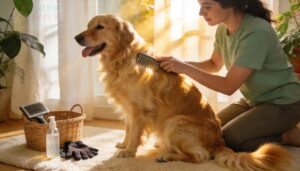
Getting rid of mats is a win, but keeping them gone is where the real work happens.
A few simple habits added to your routine can make a big difference for your dog’s coat long-term.
Here’s what to focus on going forward.
Brushing Frequency by Coat Type
Not every coat needs the same attention.
For long-haired dog breeds like Bearded Collies, a Long Coat Daily brush is non-negotiable.
Medium and Short Coat Weekly sessions keep most other dogs tangle-free.
Double-coated breeds benefit from a Double Coat Biweekly schedule, bumping up during shedding season.
A Curly Coat Routine for Poodle-type dogs often means brushing two to three times weekly.
Match your grooming frequency to your dog’s coat type.
Focus on Friction Zones Daily
Even if you’re brushing daily, skipping friction zones means mats are quietly winning.
Make each session count with a quick Ear Zone Sweep, Collar Area Scan, Armpit Grooming check, Tail Base Brush, and Sanitary Spot Wipe.
These five spots see the most movement and moisture.
A slow massage technique for dogs works best here — your fingers feel what a comb misses.
Brush Before Bathing and Dry Thoroughly
Pre-bath brushing benefits your dog more than most people realize. Water tightens existing knots fast, so brush all the way to the skin first — that’s basic hair mat removal done right.
After the bath, skip the rubbing. Use the towel press drying method instead: press and scrunch. Finish with low-heat airflow drying to lift the coat fully.
A quick post-dry skin check rounds it out.
Use Mild Shampoo and Detangling Conditioner
What you wash your dog with matters just as much as how often you brush. A pH balanced shampoo like Heppers Oatmeal Pet Shampoo protects the skin barrier without stripping natural oils.
Follow up with Heppers Oatmeal Pet Conditioner — a solid pet conditioner with real detangling slip.
Keep conditioner contact time to one to two minutes, use allergen free formula options for sensitive coats, and never dilute products beyond label directions to avoid contamination risks.
Seasonal De-shedding and Regular Grooming Routine
Good shampoo and conditioner set the coat up well, but keeping it mat-free long-term comes down to your Seasonal Grooming Schedule.
Spring and fall trigger the biggest shedding waves, so bump up brushing to three or four times a week.
Prioritize Undercoat Removal with a rake, stay consistent with your Bathing Frequency, and use Positive Reinforcement so your dog actually looks forward to it.
Frequently Asked Questions (FAQs)
How to remove matted dog hair naturally?
Natural options like a Coconut Oil Softener, Olive Oil Lubricant, Cornstarch Powder, or Aloe Vera Conditioner work well as natural remedies for dog coat matting — gently loosening knots without harsh chemicals.
Can diet affect how often mats form?
Yes, diet plays a real role.
Strong Protein Quality, Essential Fatty Acids, and Hydration Levels all support dog coat health and skin health in dogs — making fur less prone to tangling between grooming sessions.
At what age do puppies need regular brushing?
Start brushing your puppy as early as 8 to 12 weeks old.
early developmental comfort period shapes lifelong grooming habits, making daily brushing, coat maturity timing, and your regular grooming schedule far easier down the road.
How long does a full detangling session take?
It depends on mat severity and coat type. Light tangles clear in 10–30 minutes. Moderate mats take up to 2 hours. Severe matting can run 10+ hours across multiple sessions.
Can matting occur in short-haired dog breeds?
Short-haired breeds aren’t immune to matting.
Collar friction effects, undercoat considerations, and seasonal shedding impact all play a role. Coat texture influence and breed risk profile matter more than length alone.
Conclusion
Mats don’t form overnight—they can become serious faster than most owners expect. Now that you know how to detangle matted dog fur at home, you have the tools, the technique, and the confidence to step in early and handle it safely.
Every session you put in protects your dog from hidden pain and skin damage. Keep the brush moving, stay consistent with your routine, and your dog’s coat will thank you for it.
- https://pangovet.com/talk-to-a-vet-online-dog-preventative-wellness/?utm_source=hepper&utm_medium=article&utm_campaign=dog-preventative-wellness&utm_content=home-remedies-for-matted-dog-hair
- https://www.petfinder.com/dogs/lost-and-found-dogs/why-should-my-dog-wear-a-collar-and-tag/
- https://www.avidpup.com/best-dog-detangler-spray/
- https://www.petcoach.co/article/bathe-and-brush-pets-the-right-way/
- https://familypet.com/how-often-should-i-comb-my-dog/