
This site is supported by our readers. We may earn a commission, at no cost to you, if you purchase through links.
Grab a pair of scissors near a dog and something almost always goes wrong. A sudden head turn, a noise from outside, a tail wag at the worst moment—and now you’ve got a nick, a crooked cut, or a very offended Labrador.
Scissors weren’t built for moving targets covered in fur, and groomers learned that lesson a long time ago.
Electric clippers, deshedding tools, and the right blade attachments give you far more control with a lot less risk.
Learning how to trim dog hair without scissors isn’t just a workaround—it’s genuinely the safer, cleaner approach most dogs will actually tolerate.
Table Of Contents
- Key Takeaways
- Can You Trim Dog Hair Without Scissors?
- Essential Tools for Scissor-Free Dog Grooming
- Preparing Your Dog for Safe Grooming
- Step-by-Step Guide to Trimming Dog Hair Without Scissors
- Tips to Prevent Matting and Coat Damage
- When to Seek Professional Grooming Help
- Frequently Asked Questions (FAQs)
- Conclusion
Key Takeaways
- Scissors are genuinely risky for home grooming — clippers with the right blade attachments give you far more control and keep your dog safer.
- Prepping your dog before you even pick up a clipper (brushing out tangles, using calming techniques, setting up a proper space) makes the whole session go more smoothly.
- Blade choice matters more than most beginners expect — matching the right blade size and material to your dog’s coat type prevents uneven cuts, skin irritation, and overheating.
- Consistent brushing between sessions is what keeps matting at bay and your dog’s coat healthy long after the clippers go back in the drawer.
Can You Trim Dog Hair Without Scissors?
Yes, you absolutely can trim your dog’s hair without scissors — and honestly, for a lot of pet owners, it’s the smarter way to go.
Clippers are especially handy for the body, though if you do tackle the face, knowing how to safely trim dog hair around the eyes can save you a lot of stress.
Whether scissors make you nervous or your dog just won’t sit still for them, there are real alternatives worth knowing about. Here’s what you need to think about before you pick up any tool.
Reasons to Avoid Scissors for Dog Grooming
Scissors seem simple enough, but they’re one of the riskiest tools you can use on your dog at home. Here’s why:
- Skin injury risk is real — mats pull skin tight, putting blades millimeters from flesh
- Coat damage happens fast, especially on double-coated breeds prone to alopecia
- Anxiety triggers like snipping sounds make dogs jerk unpredictably
- Veterinary costs from lacerations can easily top $500
dog grooming shears are safer for handling dense fur and reducing injury risk.
Alternative Dog Hair Trimming Methods
Good news: there’s a whole toolkit beyond scissors.
Electric clippers are the go-to for most home groomers — rotary vs brushless motors both work well, though brushless models push through thick coats without bogging down.
Prefer DIY dog grooming without electric clippers? Deshedding tools and hand stripping basics handle shedding and wiry coats surprisingly well.
Each method has its sweet spot depending on your dog’s coat.
Consider using high-velocity dryers to efficiently remove undercoat hairs.
Pros and Cons of Scissor-Free Grooming
Every tool has trade-offs, and clippers are no different. Here’s what you’re working with:
- Time Efficiency — Clippers cut grooming time nearly in half for most breeds.
- Safety Features — Rounded teeth and blade guards reduce nicks considerably.
- Heat Management — Blades get hot fast; plan cooling breaks.
- Noise Levels — Some dogs struggle with the buzz.
- Cost Savings — Long-term, DIY dog grooming without electric clippers costs more in time.
Essential Tools for Scissor-Free Dog Grooming

Having the right tools makes all the difference between a smooth grooming session and a stressful one.
If you have a thick-coated pup, investing in dog grooming clippers built for thick coats can turn a tangled nightmare into a quick, calm routine.
Before you get started, it’s worth knowing exactly what you’ll need in your kit.
Here’s a breakdown of the essentials to set you up for success.
Types of Dog Clippers and Trimmers
Not all clippers are built the same — and picking the wrong one makes clippers work harder than it needs to be.
Corded clippers give you steady power for full dog grooming sessions, while cordless clippers let you move freely without tangles. Rotary motors run cooler and handle thick coats without stalling.
For detail work, finishing trimmers are your best friend. Variable speed options keep things gentle on fine fur.
Choosing The Right Blades and Attachments
Blade selection is where most beginners overthink things — but it’s simpler than it looks.
Start here for blade size selection:
- Size 10 blade — your go-to for sanitary trims at 1.6 mm
- 7F blade — a finish blade giving smooth 3.2 mm body clips
- Attachment comb length — snap a #8 comb over a 30 blade for up to 25 mm
- Ceramic vs. steel — ceramic runs 75 % cooler during long clipper work sessions
Tooth type matching matters too. Skip-tooth blades tackle matted coats; finish blades keep sensitive skin safe. For material durability, ceramic edges stay sharper longer. Use cooling spray often — blades should never exceed 40 °C. Smart grooming tool selection makes every trim easier.
Additional Grooming Supplies Needed
Beyond clippers and blades, a few key extras make all the difference.
Cooling sprays keep blades from overheating during long clipper work. Detangling sprays save your brush and comb from fighting stubborn knots.
Grooming restraints help keep wiggly dogs safely in place.
A high-velocity dryer speeds up drying time **.
And honestly, a good protective smock keeps you from going home covered in fur.
Preparing Your Dog for Safe Grooming
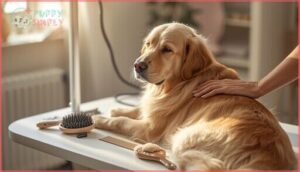
Before you even think about picking up a clipper, a little prep work goes a long way.
A calm dog and a tidy coat make the whole process smoother — for both of you.
Here’s what to take care of first.
Calming Techniques for Anxious Dogs
Some dogs treat grooming like a trip to the dentist — pure dread. That’s why calming techniques matter before you even pick up the clippers.
Try ThunderShirt pressure to ease tension, or spritz pheromone spray on your grooming area 15 minutes ahead.
Desensitization training, positive reinforcement, and reward-based training build trust over time. A few gentle massage strokes go a long way, too.
Brushing and Detangling The Coat
Before you ever turn on a trimmer, the coat needs to be clean and tangle-free — otherwise you’re asking for trouble.
Coat Type Strategies matter here: curly doodle coats need daily brushing, while short-coated breeds can go weekly.
Use Zone-by-Zone Brushing, working chest to tail.
Spritz Detangler Spray on stubborn knots, then comb through.
Always finish with Skin Health Checks, parting the fur to spot anything hiding underneath.
Setting Up a Comfortable Grooming Space
Think of your grooming space as your dog’s spa — the setup matters as much as the technique. A hydraulic grooming table adjusts from 22 to 39 inches, keeping your back happy and your dog steady.
Pair it with non-slip flooring, an ideal room temperature around 68°F, and bright task lighting overhead. A tool organization cart keeps everything within arm’s reach, so you’re not scrambling mid-trim.
Step-by-Step Guide to Trimming Dog Hair Without Scissors
Now comes the part where things actually get done. Grab your clippers and get your dog settled — it’s time to work through this coat zone by zone.
Here’s exactly how to do it safely and effectively.
Using Electric Clippers Safely
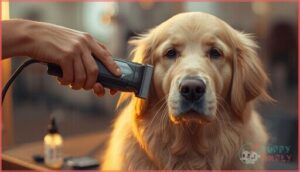
Electric clippers reward confidence — but only if you respect the basics.
- Blade Temperature: Check the blade against your wrist every 5 minutes. Warm metal means the clipper burns, so switch blades or hit it with coolant spray.
- Grip Technique & Skin Tension: Hold clippers like a pencil, stretch loose skin taut, and let the blade do the work.
- Blade Selection & Maintenance Routine: Match the blade to your dog’s coat density, oil it before every session, and you’re already ahead.
Techniques for Different Body Areas
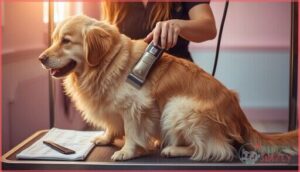
Once you’ve got your blade technique down, it’s time to work the body in zones.
Start with back clipping — base of skull to tail, smooth strokes, following the coat’s natural lie.
Side trimming goes shoulder to hip, blade flat, light pressure.
Belly clipping needs extra care near skin folds.
For rear leg grooming and tail base shaping, comb in between cuts to catch uneven spots fast.
Grooming Sensitive Spots (Face, Paws, Ears)
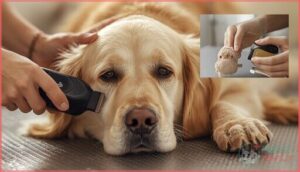
Sensitive spots need a slower hand. For the face, test clipper pressure on your forearm first — pressure testing keeps you honest. Use low‑vibration settings and keep blades cool and oiled; heat buildup prevention matters near skin.
When learning how to groom a dog around the eyes, go slow and reward every calm moment. Paws and ears follow the same rule: patience, blade cooling, anxiety reduction first.
Maintaining Even Length and Blending
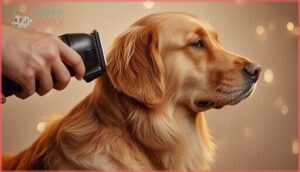
Once you’ve handled the tricky spots, keep that same steady hand for the body. Overlap each clipper stroke by a third to blend passes without ridges.
Follow your dog’s natural growth direction — especially along the ribs. A smooth scooping motion at changeover lines blends short areas into longer ones cleanly.
Consistent, light pressure throughout means no patchy spots, no harsh lines.
Tips to Prevent Matting and Coat Damage
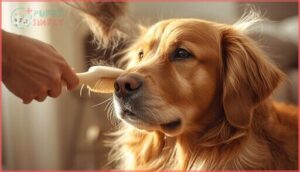
A clean trim is only half the battle — keeping that coat healthy between sessions is where the real work happens.
Matting and damage sneak up fast, especially if brushing falls off your routine.
Here’s what you can do to stay ahead of it.
Regular Brushing Routines
Brushing isn’t just about looks — it’s your first defense against matting.
Frequency Guidelines matter here: short-haired dogs need weekly sessions, while long-haired or curly coats need daily attention.
Brush Selection also plays a big role, since the wrong tool can drag and hurt.
Seasonal Adjustments during spring and fall shedding are non-negotiable.
Consistent Timing Strategies — like post-walk brushing — keep the importance of brushing and combing front and center, protecting your dog’s coat year-round.
Proper Handling of Knots and Tangles
Knots don’t have to mean disaster — if you catch them early. Start with a Knot Severity Assessment: small tangles brush out fast, but tight, pelted mats need shaving.
- Finger Isolation Method: Hold the mat base close to skin before brushing.
- Detangling Spray Technique: Saturate the knot, wait two minutes, then work inward.
- Edge Brushing Strategy: Always stroke from the outer tangle edge toward the center.
- Mat Shaving Safety: Use a #10 blade on low speed for stubborn, skin-level mats.
This approach helps rid the coat of mats or knots without unnecessary pain.
Post-Grooming Coat Care
Once the clippers are put away, your post-grooming coat care routine kicks in. Apply a thin layer of aloe vera gel or coconut oil spray as a skin soothing remedy, then follow a consistent brushing schedule — two to three times weekly keep things tidy.
For sunburn prevention on light-coated dogs, limit midday sun exposure. Regular skin health monitoring catches redness early, keeping your pup comfortable and healthy.
When to Seek Professional Grooming Help

Home grooming works well most of the time, but there are moments when a professional is simply the better call. Knowing when to hand things off can save your dog a lot of stress — and save you a few headaches too.
Here’s how to tell when it’s time to make that appointment.
Signs Your Dog Needs a Professional Groomer
Some grooming challenges are simply beyond a home setup. Matted fur patches that pull tight against skin, persistent odor that survives multiple baths, overgrown nails curving under the paw — these aren’t minor touch-ups.
When matted fur, stubborn odors, or curling nails appear, home grooming has met its limit
Add a dull greasy coat that won’t brush out or excessive scratching that never quits, and your dog is telling you something. That’s when to seek professional grooming services.
Dealing With Difficult Coats or Medical Issues
Some coats are a whole different beast. Matted coat management near the skin, allergy-sensitive grooming for reactive dogs, or double-coat handling on a Husky — these call for real expertise.
Skin irritation prevention and heat-sensitive clipping require precise blade control most home setups can’t guarantee it. If your dog’s coat has medical complications, a professional knows how to groom safely without making things worse.
Safety Considerations for At-Home Grooming
At-home grooming is manageable — if you respect the basics.
- Clip Guard Temperature: Touch blades every few minutes; hot metal burns skin fast.
- Slip Prevention + Noise Reduction: Use a rubber mat and quiet clippers to keep anxious dogs steady.
- First Aid Prep: Keep styptic powder nearby — accidents happen.
Reward patience with treats, and always prioritize your dog’s comfort over speed.
Frequently Asked Questions (FAQs)
How to groom a dog with hip dysplasia?
Take a dog like Bella, a 9-year-old Lab with hip dysplasia.
Use a side lying position, a support strap, and low table height. Keep micro-session timing short, then finish with a hip massage technique.
How can I trim my dog’s hair at home?
You can trim your dog’s hair at home using clippers, a comb, and a solid dog grooming checklist. With the right tools and safety precautions, it’s totally manageable.
How often should I bathe my dog?
It depends on dog’s breed and lifestyle.
Short-haired dogs need baths every four to six weeks, while long-haired breeds need washing every three to four weeks.
Active dogs may need bathing more frequently.
What age can I start grooming my puppy?
You could say puppies are “fur-st timers” — and that’s okay! Start handling and brushing around 8 weeks. Factor in vaccination milestones, coat development, and breed-specific timing before any real trimming begins.
Can grooming help detect skin conditions early?
Yes — grooming is one of the best ways to catch skin issues early. Regular brushing reveals flea dirt, dandruff, hot spots, and ear wax buildup before they become serious problems.
How do I groom a double-coated breed?
Picture layers of dense, woolly fur — that’s your double-coated breed. Use an Undercoat Rake during Seasonal Shedding, apply Coat Conditioning after bathing, and finish with Heat Drying to prevent matting.
Does diet affect my dogs coat health?
Absolutely — what your dog eats shows up in their coat fast. Omega‑3 benefits, protein levels, zinc supplementation, and biotin sources all directly shape dog coat health, shine, and texture.
Conclusion
The dog that once bolted at the sight of scissors might surprise you — with the right tools and a little patience, that same dog learns to stand calm while you work. Knowing how to trim dog hair without scissors puts you in control of both the outcome and the experience.
Each session builds trust, sharpens your technique, and makes the next one easier. Your dog’s best groom is still ahead of you.
- https://www.gingrapp.com/blog/pet-grooming-tools
- https://www.onlinezoo.eu/grooming-supplies/clippers
- https://www.revivalanimal.com/learning-center/pet-grooming-clipper-blade-chart-size-and-use-dog-grooming-clipper-blades
- http://petgroomingthegoodthebadthefurry.blogspot.com/2011/04/grooming-without-scissors.html
- https://petworshiper.com/dog-clipper-blade-size-chart/