This site is supported by our readers. We may earn a commission, at no cost to you, if you purchase through links.

Your dog freezes the second she spots the carrier, tail tucked, feet planted like she’s spotted a monster. Sound familiar? That reaction isn’t stubbornness, it’s fear built from carriers only showing up before scary trips to the vet.
Good news: dogs aren’t born hating carriers. They learn to dread them, which means they can just as easily learn to love them.
Knowing how to introduce a dog to a carrier the right way turns that dreaded box into a cozy den your dog chooses on her own. Get the early steps right, and everything from car rides to vet visits gets easier from here on out.
Table Of Contents
- Key Takeaways
- Choose a Safe, Comfortable Dog Carrier
- Introduce The Carrier Slowly and Positively
- Reward Voluntary Carrier Entry
- Build Closed-Door Time Gradually
- Practice Movement Before Real Travel
- Frequently Asked Questions (FAQs)
- What is the 3 3 3 rule for introducing dogs?
- How do you train a dog to get used to being in a carrier?
- How long can you leave a dog in a carrier?
- What is the 7 7 7 rule for dogs?
- How long does full carrier training usually take?
- What age should puppies start carrier training?
- Can older or anxious dogs still learn this?
- What if my dog refuses to eat inside?
- Is it normal for training progress to regress?
- Conclusion
Key Takeaways
- Pick a carrier that lets your dog stand, turn, and stretch out fully, then double-check it meets ventilation, latch, and airline size requirements before you buy.
- Let your dog explore the carrier at their own pace with the door open, familiar bedding inside, and a comfortable room temperature, since forcing it only builds fear.
- Build comfort in stages by rewarding treats near then inside the carrier, feeding meals inside it, and praising calm behavior, before ever closing the door.
- Once your dog enters willingly, practice closing the door, then lifting, carrying, and short car rides gradually, watching for stress signals like lip licking or freezing along the way.
Choose a Safe, Comfortable Dog Carrier
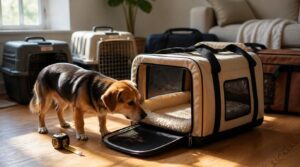
Before any training starts, you need the right carrier. The wrong size or style can make your dog anxious before you even open the door. Here’s what to check before you buy.
Start by measuring your dog while they’re calm and standing naturally, then use this guide to choosing the right size travel carrier to match those numbers to the correct fit.
Measure Your Dog Correctly
A tape measure beats guesswork every time. Measure your dog from the ground to the top of its shoulders for height, and from the tailbone to the tip of the nose for length. Don’t skip girth and neck measurements either, they matter for snug, safe-fitting doors. Add a quick weight verification before shopping, since sizing charts rely on it too. Proper measurement techniques help get accurate sizing for gear like carriers, which is essential for your dog’s comfort and safety. how to measure your dog correctly
Allow Room to Move
Once you’ve got your numbers, size up. Your dog needs room to stand tall, turn fully, and stretch out flat, no crouching allowed.
- Stand without ducking its head
- Turn around freely
- Lie down at full length
- Shift locations without hitting walls
- Breathe easy without feeling boxed in
Cramped space stresses joints. Extra room helps natural posture and smoother carrier acclimation.
Compare Soft and Hard Carriers
With the size sorted, the next question is style: soft or hard?
Soft carriers weigh less (1-3 kg) and fold flat for storage. Their mesh panels breathe well, and dogs prone to fidgeting find them forgiving.
Hard carriers run heavier (2-6 kg) but resist crushing and keep shape in tight spots, making travel handling sturdier when things get bumpy.
Check Ventilation and Closures
Whichever style you pick, don’t skip a Ventilation Panel Inspection. Mesh panels should stay open and unblocked, not stuffed behind bedding.
Run a quick Closure Mechanism Check too. Latches should click firmly, and try an Emergency Release Verification so backup straps work if hardware fails.
Confirm Safety Latch Alignment and give it an Airflow Clearance Test before deciding it’s carrier-ready.
Confirm Travel Size Requirements
A carrier that fits at home might still get rejected at the gate. Check the size and weight requirements for dog carriers before you buy, since most airlines cap dimensions around 22 x 14 x 9 inches.
- Airline size limits vary by carrier
- Weight restrictions matter, not just carrier dimensions
- Ventilation standards must meet approval
- Certification checks avoid gate-side surprises
Confirm TSA airline approved labeling to skip travel-day stress.
Beyond easing airport jitters, that steady presence taps into the same bond explored in why your dog loves sitting on you, a comfort worth understanding before any trip.
Introduce The Carrier Slowly and Positively
Once you’ve got the right carrier, don’t rush the next part. Dogs need time to decide a new object is safe, not scary, and that decision happens on their schedule, not yours. Here’s how to set the stage so your dog walks in on their own terms.
Dogs decide a new object is safe on their own schedule, not yours
Place It Near Familiar Spaces

Where you put the carrier matters as much as how you introduce it. Start by putting the carrier on the floor in a quiet corner of a familiar room, away from harsh smells like cleaners or air fresheners. Set it at your dog’s height, near stable furniture, so nothing wobbles or startles them during those first curious sniffs.
Keep The Door Open

Once the spot feels right, open or remove the door entirely and drop a few treats just inside. An open door removes any hint of a trap. Leave it be for a few days in that central spot, but end each session after 1 to 2 minutes. Gradual introduction stops fear before it starts.
Allow Unforced Exploration

Now comes the hard part: doing nothing. Let your dog sniff, circle, and peek inside on their own terms, no coaxing needed.
- Ears relaxed, not pinned back in worry
- Tail loose, swishing with curiosity, not tucked
- Body soft, leaning in in instead of pulling away
This stress-free approach builds real confidence, not just compliance.
Add Familiar Bedding
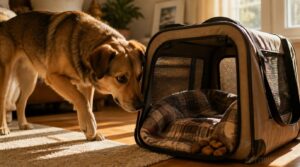
Nothing says "safe" to a dog like a smell they already trust. Grab a blanket from your dog’s bed and tuck it into the carrier, right in the living room.
Familiar scent introduction speeds up acceptance more than any treat can. For fabric, cotton percale breathes well; bamboo wicks moisture nicely too. Add treats inside for extra positive reinforcement.
Maintain a Comfortable Temperature

A stuffy carrier feels like a sauna to your dog, so keep the room comfortable—68 to 79°F works well. Keep airflow steady and avoid direct sun or heating vents, since radiant heat sneaks in fast. Good ventilation curbs humidity buildup too.
Your dog explores best when they’re not sweating or shivering, so comfort here builds trust in the carrier itself.
Reward Voluntary Carrier Entry
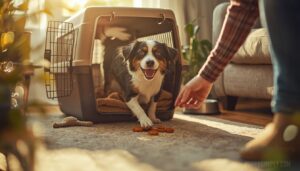
Once your dog isn’t afraid of the carrier, it’s time to make going inside feel like a win. You’ll use treats, meals, and toys to turn the carrier into your dog’s favorite spot in the house. Here’s how to build that habit step by step.
Toss Treats Near The Entrance
Once your dog notices the carrier without fear, it’s time for treat toss distance: aim 5-12 cm from the entrance. Timing matters—toss within 3 seconds of approach. Imagine this:
- Sniffing paws inching closer
- Ears perked with curiosity
- Nose dipping toward the opening
- Tail giving a hopeful wag
Rotate flavors weekly, stay consistent, and reinforcement builds fast.
Move Treats Farther Inside
Once your dog trusts the entrance, shift the game deeper. Place treats a few inches inside, then extend the reward zone by two to three inches each session. If your dog backs out, pause and return to the last successful depth.
This slow interior treat progression builds real confidence, not just curiosity, and turns the carrier into familiar ground.
Feed Meals Inside
Once your dog eats calmly a few inches inside, it’s time to raise the stakes. Feed one meal per day inside the carrier, door open, bowl at the back. Use a non-slip mat, fresh water, and clean bowls each time. Track how long they linger after eating. This routine builds real comfort, meal by meal.
Add Favorite Toys
Meals build routine, but a favorite toy adds heart. Pick a soft, washable plush with reinforced seams and no loose parts.
- Choose sensory-friendly textures with gentle crinkle sounds
- Keep one toy carrier-only for hygiene and familiarity
- Rotate toys occasionally to avoid boredom
- Inspect weekly for tears or loose threads
Pair it with treats for lasting positive reinforcement.
Praise Calm Carrier Behavior
When your dog wanders toward the carrier with a relaxed body posture and a wagging tail, that’s your cue to praise. Keep your voice soft and steady.
Watch for calm entry recognition: soft eyes, steady breathing, little to no whining. Reward that composure with gentle petting, not excitement. This reward-based learning cements calm as the default response.
Build Closed-Door Time Gradually
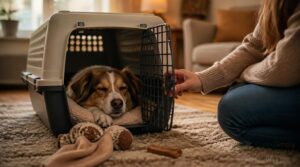
Once your dog will step inside on their own, it’s time to close the door, just for a moment. This part takes patience, since rushing it can undo all the trust you’ve built. Here’s how to stretch that closed-door time without pushing your dog past their comfort zone.
Start With Several Seconds
A closed door for just a few seconds is where real carrier confidence begins. Use a soft cue word, close the door, then reopen and reward immediately.
Watch for relaxed body language rather than stress signals like panting or freezing. This tiny window builds trust fast, one calm second at a time, through simple positive reinforcement.
Increase Time in Small Steps
Once those first seconds feel easy, it’s time for a stepwise time increase. Add just 15 seconds per session, never more, and jot each result in a simple duration log.
Watch closely for stress signals like lip licking or freezing. If your dog stays loose and calm, that’s your cue to reward and stretch time again.
Practice Brief Separation
Now for the real test: stepping away. Once your dog stays calm with the door closed, walk to another room for just 15 seconds, using a calm exit cue like "back soon."
This is gradual exposure therapy in action. Keep a safe environment setup, log each session, and return before whining starts, building confidence one short absence at a time.
Watch for Stress Signals
Your dog’s body talks louder than any bark. Learning to read it is canine body language interpretation 101.
Watch for:
- Panting with no physical exertion
- Repeated whining or high-pitched barking
- Whale eye or lip licking
- Stiff posture or tucked tail
- Trembling paired with rapid breathing
Catching these early cues means slowing down before fear sets in.
Handle Crying and Setbacks
Crying happens, and that’s okay. When it does, use a gentle, steady voice, avoid sudden movements, and offer a soft stroke on the chest.
Setbacks aren’t failure, they’re feedback. Return to the last easy step, stay calm and neutral, and note what triggered the stress so tomorrow’s session goes smoother.
Practice Movement Before Real Travel
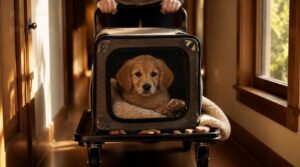
Sitting still in the carrier is one thing, moving around in it is another. Your dog needs time to get used to that swaying, shifting feeling before a real trip happens. Here’s how to build that comfort step by step.
Lift and Carry Indoors
Once your dog enters calmly, it’s time to lift off. Keep your back straight, bend your knees, and hold the carrier close using both grips.
- Support the base fully, never swing
- Use non-slip mats underfoot
- Keep floor clearance low
- Grip grips firmly, don’t pinch
Short lifts build confidence before real dog carrier training begins.
Introduce Short Car Rides
Once carrying feels easy, it’s time for the car. Start short, under five minutes, engine on, nowhere to go. Keep a few low-calorie training treats for car rides within reach so you can reward calm behavior the moment you notice it.
Talk calmly, offer a treat before and after. Keep the temperature comfortable and windows secure.
Watch for yawning or lip licking. If your dog stays relaxed, build gradually toward longer rides next time.
Secure The Carrier Safely
Before the engine even starts, run a quick latch security check. Test both closures with firm pressure, they shouldn’t budge.
Check door alignment, gaps invite escape attempts. Confirm ventilation stays open and unblocked, then secure the carrier safely with a seatbelt through the top handle so it can’t tip or slide.
Practice in Public Spaces
Once the seatbelt’s snug, it’s time for a real-world test run. Start at a quiet mall corridor, not the food court, and reward calm behavior near passing crowds.
Watch your dog’s ears and body language, not just barks, since freezing counts too. Let short breaks near a bench build confidence before longer public exposure sessions.
Prepare for Longer Trips
A weekend road trip is different than a quick mall visit. Once your dog controls public spaces, add weekly acclimation sessions, light meals 2-4 hours pre-departure, and short door-close cycles.
- Plan rest stops every 2-3 hours
- Pack an emergency kit (bags, treats, water dish)
- Check hygiene compliance rules
- Keep bedding familiar-scented
Good prep builds real travel confidence.
Frequently Asked Questions (FAQs)
What is the 3 3 3 rule for introducing dogs?
Funny how a rule meant to calm dogs down can stress owners out instead. The 3-3-3 rule breaks adjustment into three days decompressing, three weeks settling into routine, and three months building family bonds and confidence.
How do you train a dog to get used to being in a carrier?
Use positive reinforcement, treats placed just inside the door, and gradual exposure. Practice calm entry, extend closed-door time slowly, and watch for stress signals like panting or lip licking throughout desensitization.
How long can you leave a dog in a carrier?
Is longer always crueler? Not quite. Safe duration limits cap healthy adults at 6-8 hours, but puppies and seniors need breaks every 1-2 hours for hydration access and overheating prevention.
What is the 7 7 7 rule for dogs?
Think of the 7 7 7 rule as a Puppy Socialization checklist: seven surfaces, objects, locations, people, challenges, and food sources by seven weeks old, building early exposure, confidence, and fear reduction for lifelong adaptability.
How long does full carrier training usually take?
Roughly 85% of dogs reach full comfort within 2 to 6 weeks of daily practice. Anxious pups may need 8 weeks or more. Track calm entries and door-closed minutes weekly to pace reinforcement and adjust for setbacks.
What age should puppies start carrier training?
Eight weeks old is the safe starting point, once your puppy weighs at least 5 pounds. Some trainers suggest waiting until 10 weeks for better bladder control, but starting early helps carrier acclimation before the socialization window closes at 16 weeks.
Can older or anxious dogs still learn this?
Yes. Senior dog learning happens through calm repetition and comfort adjustments for arthritis or stiffness. Anxious dogs benefit from positive reinforcement training and desensitization, building trust gradually. Track progress by watching for calmer breathing and faster, voluntary entry over time.
What if my dog refuses to eat inside?
Check hunger triggers first: heat, noise, or missing bedding. Move feeding location closer gradually, add a broth scent boost, and time meals right.
Stick with positive reinforcement—treats and praise reward every bite, easing the desensitization to carriers.
Is it normal for training progress to regress?
Even champion show dogs hit training slumps. A short setback is normal, often from a loud noise or missed meal. Expect one to five days of hesitation, then recovery with high-value treats and patient, gradual exposure.
Conclusion
A carrier is just a room with wheels, small, safe, hers alone. Once you know how to introduce a dog to a carrier with patience instead of pressure, that box stops meaning "vet" and starts meaning "mine."
Build trust one treat, one nap, one quiet minute at a time. Skip steps and you’ll fight the door forever. Follow them, and your dog walks in on her own, tail loose, ready for whatever road comes next.