This site is supported by our readers. We may earn a commission, at no cost to you, if you purchase through links.

Walk into any French Bulldog meetup and you’ll see everything from pale champagne to deep slate-gray, from warm caramel to an almost ghostly lavender—and every owner convinced their dog has the most stunning coat.
That variety isn’t random.
French Bulldog colors follow specific genetic rules, with certain combinations recognized by the AKC and others considered rare, sometimes controversial, and often expensive.
Knowing the difference matters, whether you’re picking a puppy or just trying to understand why two "fawn" Frenchies can look nothing alike.
Here’s what the colors actually mean—and what they cost.
Table Of Contents
- Key Takeaways
- French Bulldog Color Types
- French Bulldog Coat Markings
- AKC Recognized Colors
- Rare French Bulldog Colors
- French Bulldog Color Prices
- Frequently Asked Questions (FAQs)
- What are the most popular French Bulldog colors?
- What are the rarest French Bulldog colors?
- What colors are approved for French Bulldogs competing in shows?
- What is the rarest color of French Bulldogs?
- What colors do French Bulldogs come in?
- What are the AKC colors for French Bulldogs?
- What is the most expensive Frenchie color?
- What is the difference between a standard and rare French Bulldog color?
- How likely is it to get a rare French Bulldog color?
- How do color genetics affect a French Bulldog’s coat?
- Conclusion
Key Takeaways
- French Bulldog colors follow strict genetic rules, with nine shades officially recognized by the AKC and several rare ones—like lilac, merle, and Isabella—sitting outside breed standards but commanding prices up to $18,000.
- Rare colors aren’t just expensive; they carry real health risks, including coat dilution alopecia in blue dogs and deafness in heavily white or merle coats, so understanding the genetics matters before you buy.
- Two Frenchies labeled the same color can look completely different because multiple genes—controlling dilution, masking, and patterning—all interact to shape the final coat.
- Beyond color, markings like brindle stripes, black masks, ticking, and piebald patches are genetically distinct traits that layer on top of the base coat, making each dog visually one of a kind.
French Bulldog Color Types
French Bulldogs come in a surprisingly wide range of colors, from the everyday to the truly rare. The AKC officially recognizes nine standard colors, but there’s a whole world beyond those.
For example, white French Bulldogs are fully AKC-recognized, making them one of the more accessible "rare-looking" colors that’s actually breed standard.
Here’s a look at the main color types you’ll come across.
Fawn Colors

Fawn is one of the most beloved shades in the French Bulldog world, and it’s easy to see why. The coat colors range from pale, almost creamy tan to deep reddish-gold, with shade variations driven by color genetics and the intensity dilution gene.
Most fawn Frenchies carry the Em gene, giving them that classic dark mask. As a standard AKC color, fawn remains a practical choice for both show standards and everyday families.
Responsible breeders often rely on artificial insemination methods to guarantee safe pregnancies.
Brindle Colors
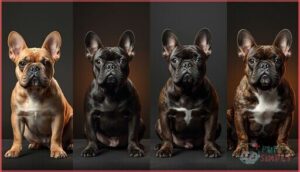
Brindle is where French Bulldog colors and genetics get genuinely interesting. The pattern comes from the dominant Kbr allele, layering dark stripes over a fawn base — nature’s own tiger print. Shade variations range from light brindle to near‑black seal brindle. Here’s what defines the coat patterns:
- Light Brindle – Sparse stripes with plenty of fawn showing through
- Dark Brindle – Thick black bands dominating the base
- Seal Brindle – Near‑black coat with faint fawn visible up close
- Tiger Brindle – Wide fawn areas with thin, dramatic black lines
Pied French Bulldog pattern features a white or eggshell‑colored coat with dark patches.
Cream Colors

Where brindle wears its genetics boldly, cream keeps things quiet and elegant. A cream French Bulldog carries the ee genotype, which gently masks underlying color genetics, giving the coat that signature pale ivory look.
AKC standards fully recognize this color, and pricing trends reflect its popularity — expect to pay $4,000–$5,000 from reputable breeders.
Soft, uniform, and unmistakably beautiful.
White Colors

Where cream fades softly into the background, white draws focus.
Pure white French Bulldogs carry distinct genetics that influence both their coat and their health — white coats are linked to higher deafness rates, so knowing what you’re getting into matters.
You’ll find variations like white and fawn or white and brindle, all AKC-recognized. Expect white color demand to push prices toward $3,000–$6,000.
Rare Colors

Rare colors like blue, lilac, merle, and Isabella are genuinely eye‑catching, but they bring real genetic health risks you should understand first.
Dilution alopecia, a skin condition tied to the blue dilution gene, affects many of these dogs.
Ethical breeding practices mean responsible breeders use color testing protocols before pairing.
Market demand trends push Isabella prices past $18,000, reflecting both rarity and complex canine genetics behind French Bulldog color variations.
French Bulldog Coat Markings

French Bulldog’s coat is more than just its base color — the markings on top are what really makes each dog look like its own. Some patterns are subtle, others are bold and hard to miss.
From brindle stripes to fawn and cream, French Bulldog coat colors and markings vary far more than most people expect.
Here are the main coat markings you’ll see on French Bulldogs.
Ticked Markings
Ticked markings are those small freckle-like spots scattered across white areas of your Frenchie’s coat — and the genetic basis behind them is surprisingly interesting. Newborns actually arrive with clear white markings, and the flecks only emerge around two weeks old, intensifying gradually.
You’ll notice them heaviest on the legs and muzzle first.
Every ticked French Bulldog ends up with a completely one-of-a-kind pattern.
Black Mask
The black mask is one of the most recognizable coat markings in French Bulldogs — dark pigment sweeping across the muzzle and around the eyes, creating a bold, expressive face.
Breed standards fully accept it on fawn and pied dogs. Genetically, it traces to the Em allele, and here’s what matters most:
- It doesn’t affect health
- It’s dominant, so it passes easily to puppies
- It’s invisible on cream dogs
- It complements fawn color combinations beautifully
Brindle Markings
Brindle markings work like nature’s own brushwork — dark stripes layered over a lighter base coat, each dog wearing the pattern a little differently. The Kbr allele drives stripe formation, making brindle a legitimate breed standard color, not a quirk.
You’ll commonly see three pattern variations:
- Classic brindle: evenly balanced dark and fawn stripes
- Reverse brindle: heavy dark striping with minimal fawn showing
- Seal brindle: stripes so dense the coat reads nearly solid black
Piebald Markings
Pied French Bulldogs are basically walking originals — each one carries a mostly white base coat with colored patches of fawn or brindle placed wherever genetics decides. That placement is never predictable.
Genetic inheritance at the S locus drives this pattern variability, and DNA testing helps breeders map outcomes before pairing dogs. No two pied Frenchies look alike, which is exactly the point.
White Markings
White markings on a French Bulldog aren’t random — they follow a clear genetic basis rooted in S-locus color genetics. These coat markings can frame the face beautifully or sweep across the chest and paws.
- Common pattern locations: chest, throat, paws, and facial blaze
- Show standards require patches to be solid white, not speckled
- Health risks increase with extensive white coverage, including deafness
- Breeding considerations matter — pairing two heavily white-marked dogs is discouraged
AKC Recognized Colors

The AKC officially recognizes nine French Bulldog colors, and each one meets a specific breed standard that matters if you’re showing your dog or buying from a reputable breeder.
Some of these colors combine two shades, giving Frenchies that signature pied or dual-toned look so many people fall in love with.
Here’s a closer look at the recognized color combinations you’ll want to know.
Fawn and White
Fawn and white is one of the most classic French Bulldog looks—warm tan tones broken up by crisp white patches. Understanding this canine coat color and pattern comes down to four things:
- Breed Standards: Fully AKC-recognized, with fawn dominant over white
- Genetic Basis: The S-locus controls white spotting placement
- Health Implications: Generally low-risk compared to merle or all-white coats
- Market Pricing: Usually $2,000–$4,000 from reputable breeders
Brindle and White
If you loved the warmth of fawn and white, the brindle and white French Bulldog takes things up a notch. This AKC‑recognized canine coat color and pattern pairs dark, tiger‑like brindle stripes over a fawn base with crisp white patches—a look that genuinely turns heads.
Genetic inheritance here is straightforward: brindle is dominant, so even one copy produces visible striping. Phenotype variations range from light streaking to near‑solid dark coats, yet breed standards and show standard rules remain clear—brindle must stay dominant. Health implications are minimal compared to merle coats.
White and Fawn
Switching from brindle, the white and fawn French Bulldog is just as eye-catching, but softer in feel. This AKC-recognized coat pairs a bright white base with fawn patches ranging from pale beige to rich caramel.
Show eligibility holds as long as breed standards are met—correct nose pigment, dark eye rims, proper structure. Genetic testing and smart breeding strategies keep these pups healthy and well-marked.
Brindle and Fawn
Brindle and fawn is one of those combinations that genuinely turns heads. Dark stripes layer over a warm fawn base — that’s the genetic interaction at work, where the Kbr allele overlays eumelanin striping across pheomelanin-based fawn.
The visual contrast is striking, especially in good light.
It meets AKC breed standards, faces healthy market demand, and responsible breeding strategies keep both canine coat colors and patterns consistent across litters.
Cream and White
Cream and white is one of the softer, more understated looks in the French Bulldog world — and it’s fully AKC-recognized. Genetic dilution of pheomelanin creates that pale ivory coat, while piebald patterning adds the white.
Coat texture stays smooth and glossy.
For show eligibility, the nose and eye rims must stay black.
Expect pricing premiums between $3,150 and $5,270, with rare markings pushing costs higher.
Rare French Bulldog Colors
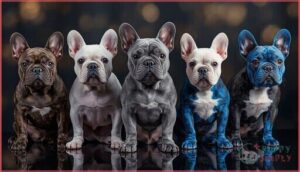
Beyond the AKC‑recognizedized, French Bulldogs also come in some genuinely striking colors that turn heads wherever they go.
These rare shades aren’t officially recognized by the AKC, but they’ve built a devoted following among Frenchie lovers who want something a little different.
Here are the rare French Bulldog colors worth knowing about.
Blue French Bulldogs
Blue French Bulldogs get their distinctive slate-gray coat from a recessive dilution gene — both parents must carry it, which is exactly why rarity and price go hand in hand here.
Steel blue shades indicate deeper pigment dilution, and while the color is stunning, it comes with a real concern: CDA symptoms like patchy hair loss and flaky skin.
Blue merle coats add another layer of complexity to color genetics.
Merle French Bulldogs
Merle French Bulldogs wear their genetics like a fingerprint — no two coats look alike. That marbled, mottled pattern comes from the SILV gene mutation, and while blue merle is especially sought after, the color genetics here carry real responsibility.
Double merle breeding raises serious health risks, including deafness and vision problems.
AKC doesn’t recognize merle as breed standard, so always prioritize genetic testing and breeding ethics over market demand.
Lilac French Bulldogs
Lilac French Bulldogs are one of the most visually striking results of dilution genetics — a pale grayish-purple coat that almost glimmers silver in the right light. Their eye color variations lean toward blue, green, or amber, and that distinctive pink nose pigment sets them apart from every other color.
They don’t meet breed standards for AKC recognition, and color dilution alopecia is a real health risk to know about.
Expect serious market premiums.
Chocolate French Bulldogs
Chocolate French Bulldogs carry their coat color through recessive genetic inheritance — both parents must pass the gene for that warm brown to show up. Color variations range from milky caramel to deep cocoa, always with a brown nose rather than black.
- Coat colors and patterns include solid chocolate, chocolate-and-tan, and white markings
- Breed standards don’t recognize chocolate for AKC conformation
- Breeding ethics and health implications matter — skip breeders who skip health testing
Market demand keeps prices high, often $4,000–$5,500.
Isabella French Bulldogs
Isabella sits at the top of rare French Bulldog colors and patterns — a pale lavender-gray coat born from two copies of the dilute gene acting on fawn pigment.
Color genetics this specific means breeding challenges are real; both parents must carry the recessive trait. Light eye pigment, sun sensitivity, and a price premium of $8,000–$18,000 reflect just how uncommon true Isabella is outside breed standards.
True Isabella French Bulldogs command up to $18,000 because both parents must carry the rare recessive gene
| Isabella Trait | Detail |
|---|---|
| Coat Color | Pale lilac-gray or lavender |
| Eye Color | Light blue or greenish-blue |
| Nose Color | Light brown, not black |
| Price Range | $8,000–$18,000+ USD |
| AKC Recognition | Not officially recognized |
French Bulldog Color Prices

French Bulldog prices vary quite a bit depending on coat color, and it’s one of the first things most buyers want to understand.
A few key factors drive those differences, from genetics to breeder demand.
Here’s a breakdown of what you can expect to pay across different colors.
Price Chart
French Bulldog color pricing follows a pretty clear tier system. Standard colors like fawn and cream usually run $2,000–$4,000, while brindle patterns sit closer to $3,000–$5,000.
Breed standards and recognition play a big role here — AKC-accepted colors stay more predictable.
Once you enter rare territory, rarity drives the price fast. Blue Frenchies start around $4,000–$8,000, and exotic patterns reflecting current market trends can easily surpass $10,000 depending on quality tiers and regional variations.
Factors Affecting Price
Color is just the starting point.
What really drives the price of a French Bulldog is a mix of breeder reputation, health testing, and pedigree lineage.
Reputable breeders who run full genetic panels and vet clearances charge more — and honestly, that’s worth it.
Puppy age and puppy gender matter too, since females usually cost 10–30% more.
Coat colors and patterns intersect with all of this, meaning animal rarity and price, breed standards and recognition, and dog breeding and health all shape your final number.
Rare Color Prices
Rare colors push French Bulldog prices into a completely different league. Market demand for exotic shades — driven by animal rarity and price, dog breeding and genetics, and the serious breeding costs involved — sends numbers climbing fast. Health risks tied to certain genes only add complexity. Here’s what you can expect to pay:
- Lilac Frenchies: $5,000–$12,000
- Merle Frenchies: $6,000–$15,000
- Blue Frenchies: $4,000–$8,500
- Isabella Frenchies: $8,000–$18,000
Common Color Prices
Common colors won’t drain your savings the way rare shades do. Fawn, brindle, and cream — all AKC Approved staples — usually run $2,000 to $5,000, with regional price trends pushing Northeast buyers toward $5,500.
Breeder reputation impact is real too; a well-known dog breeding program adds $500 or more overnight. Females usually cost $500 higher than males, so that gender price gap is worth factoring into your budget early.
Black French Bulldog Prices
Black French Bulldogs aren’t AKC‑recognizedized, but that doesn’t dampen the demand.‑‑quality pups generally run $2,500 to $8,000, with health‑tested dogs hitting $6,500. Breeder reputation shapes that range considerably — ethical dog breeding programs with genetic testing charge more, and rightly so.
- Gender Price Gap: Females run $500–$1,000 higher than males
- Age-Related Costs: Vaccinations and microchipping add $300–$500
- Extra Ownership Fees: Shipping across states costs $500–$1,200
Frequently Asked Questions (FAQs)
What are the most popular French Bulldog colors?
The French Bulldog ranks among the most in-demand small breeds today, and buyer preferences often start with coat color.
Cream, fawn, brindle, and brindle-and-white lead show ring popularity and drive strong resale value.
What are the rarest French Bulldog colors?
The rarest colors — lilac, Isabella, and merle — result from genetic dilution and specific recessive gene combinations, making them exceptionally hard to breed.
Expect higher prices and serious questions around breeding ethics with these striking variations.
What colors are approved for French Bulldogs competing in shows?
If you’re planning to show your Frenchie, AKC approved shades include fawn, cream, white, brindle, and their combinations.
Solid black, liver, or blue dilutes? Disqualifying solids — no exceptions on competition day.
What is the rarest color of French Bulldogs?
Among all dog coat colors and patterns, the Isabella French Bulldog stands alone.
Driven by rare color genetics, breeding scarcity, and intense market demand, this diluted chocolate-liver shade with gray tones is extraordinarily hard to find.
What colors do French Bulldogs come in?
Think of a painter’s palette — that’s basically what you’re working with. French Bulldogs come in fawn, cream, brindle, and white, plus rare hues like blue, lilac, and chocolate.
What are the AKC colors for French Bulldogs?
The AKC approves nine French Bulldog colors: cream, fawn, white, fawn & white, brindle, brindle & white, fawn brindle, fawn brindle & white, and white & brindle. These are your breed standard options.
What is the most expensive Frenchie color?
Isabella is the most expensive French Bulldog color, usually costing $7,000 to $10,000, with some puppies listed up to $100,000 due to exotic gene demand, breeder reputation impact, and health test premiums driving prices sky‑high.
What is the difference between a standard and rare French Bulldog color?
Standard colors follow stable genetics and meet Bulldog Breed Standards.
while rare ones carry uncommon dilution genes, driving Pricing Disparities and Genetic Health Risks that responsible breeding ethics can’t afford to ignore.
How likely is it to get a rare French Bulldog color?
Rare colors are genuinely hard to predict. Canine genetics stack the odds against you — lilac alone requires four recessive genes aligning perfectly, dropping chances to roughly 56% per puppy born.
How do color genetics affect a French Bulldog’s coat?
Think of a French Bulldog’s coat like a recipe — swap one ingredient, and the whole dish changes.
Dominant and recessive genes interact across multiple loci, shaping everything from rich fawn tones to rare diluted lilac through precise inheritance patterns.
Conclusion
Think of French Bulldog colors like a spectrum of light—what you see depends entirely on the genetics underneath. Standard fawn and brindle coats are beautiful, predictable, and breed‑approved.
Rare shades like lilac and merle carry higher price tags and, sometimes, higher health risks. Understanding French Bulldog colors helps you make a smarter, more informed choice—one that’s right for your lifestyle and your budget, not just the one that looks stunning in a photo.
- https://talktodogs.com/french-bulldog-colors/
- https://mypawesomefrenchie.com/french-bulldog-colors-standard-non-standard/
- https://www.northcalfrenchies.com/post/a-guide-to-french-bulldog-coats
- https://www.nwfrenchies.com/blog/coat-colors
- https://www.countryclubfrenchies.com/blog/french-bulldog-colors-genetics