This site is supported by our readers. We may earn a commission, at no cost to you, if you purchase through links.

Walk into any dog park with a pied French Bulldog and you’ll notice something: people stop mid-conversation to stare.
That bold patchwork of color splashed across a bright white coat isn’t subtle—it’s a walking piece of abstract art with a snoring problem.
But beyond the striking looks, the pied pattern has a fascinating genetic story behind it, one that determines everything from the size of those patches to whether two Frenchies can even produce pied puppies at all.
If you’re considering bringing one home—or just curious what separates pied from every other Frenchie coat—you’re in the right place.
Table Of Contents
- Key Takeaways
- What is a Pied French Bulldog?
- Pied French Bulldog Coat Genetics
- Pied Coat Types and Variations
- Pied French Bulldog Temperament
- Pied French Bulldog Health Needs
- Pied French Bulldog Care Costs
- Frequently Asked Questions (FAQs)
- How much do pied Frenchies cost?
- Are pied Frenchies rare?
- What is a Pied French Bulldog?
- Do French Bulldogs have pied coats?
- What color is a French Bulldog pied?
- Are pied French Bulldogs good pets?
- Why is my French Bulldog pied?
- What is an Irish pied French Bulldog?
- What does pied mean in a French Bulldog?
- Is a pied French Bulldog rare?
- Conclusion
Key Takeaways
- A pied French Bulldog’s signature white-and-patch coat only shows up when a pup inherits the recessive piebald gene from both parents—one copy just won’t cut it.
- Coat color and personality are completely separate things: pied or not, Frenchies are loyal, easygoing companions that fit apartment life surprisingly well.
- That pale white coat looks stunning, but comes with real tradeoffs—sunburn risk, breathing issues, and joint problems all need your active attention as an owner.
- Pied Frenchies aren’t cheap—standard pups run $3,000–$6,000, and exotic colors like blue pied can push well past $7,000, so budget carefully before you fall in love.
What is a Pied French Bulldog?

If you’ve ever spotted a French Bulldog with a bold splash of white and eye-catching patches, you were probably looking at a pied. The coat is instantly recognizable, but there’s more to it than just good looks. Here’s what defines the pied pattern and sets it apart from other Frenchie coats.
Digging into the full spectrum of French Bulldog coat colors and markings shows just how much variety hides beneath that signature pied pattern.
Pied Coat Meaning
The word pied simply means patches of two colors — usually a colored marking laid over a white base. It comes from the same root as "piebald," a term you’ll still hear breeders use interchangeably.
On a Pied French Bulldog, those patches scatter unpredictably across the coat, creating a high-contrast, irregular pattern that makes every dog look genuinely one-of-a-kind.
The term originally referred to black-and-white magpie plumage.
White Base Color
That white or eggshell-colored fur isn’t just a backdrop — it’s the defining feature of the pied pattern. High lightness value means the base reflects light evenly across the coat, making every colored patch pop with sharp contrast.
Think of it as a clean canvas: bright, near-neutral, and built to make those markings impossible to miss.
Common Patch Colors
Once that bright base catches your eye, it’s the patches that steal the show.
Black patch contrast is the boldest look — crisp dark spots against white that turn heads instantly. Fawn Pied French Bulldogs offer something warmer: soft tan tones sitting gently against the base.
Blue pied shades run slate to steel‑gray, while red patches bring vibrant energy.
Each combo — white and brindle, white and gray — tells a completely different story.
Pied Versus Solid Coats
Patches make a statement, but the base coat tells the whole story.
Pied coat pattern means one thing above all: white runs the show. Solid-colored coats, by contrast, carry a single uniform hue from nose to tail — no interruptions, no contrast.
| Feature | Pied French Bulldogs | Solid French Bulldogs |
|---|---|---|
| Color Contrast | High — white base meets bold patches | Low — uniform tone throughout |
| Patch Visibility | Distinct, sharp-edged spots | None |
| White Area Cleaning | Extra upkeep needed | Minimal |
Both can share the same litter thanks to dog coat color genetics.
AKC-recognized Pied Colors
The AKC recognizes four standard pied colors for French Bulldogs: cream, fawn, black, and brindle. These are the only pied patterns accepted for breed standard registration and show ring eligibility.
If you’re buying a pied Frenchie for competition, stick to this list — exotic colors like blue or lilac pied won’t qualify, no matter how stunning they look.
Pied French Bulldog Coat Genetics

That spotted coat doesn’t happen by accident — there’s some interesting science behind it. The pied pattern comes down to genetics, and understanding it helps you know exactly what to expect from breeding or buying. Here’s what’s actually going on under the hood.
Recessive Pied Gene
The pied coat comes down to one gene — and it plays by strict rules. Known as the piebald gene, it follows autosomal recessive heredity, meaning a French Bulldog must inherit the recessive allele from both parents to display pied markings. A single copy stays hidden.
Genetic carrier testing can reveal whether your dog quietly carries this allele without showing it.
Two-copy Inheritance
Think of genes like a lock that needs two matching keys. The pied pattern works the same way — your dog must inherit the recessive allele at the S locus from both parents to express it. One copy alone won’t do it.
| Genotype | Outcome |
|---|---|
| SS | Solid coat |
| Ss | Carrier, no pied markings |
| ss | Pied coat displayed |
| Two ss copies | Homozygous phenotype confirmed |
A simple genetic test can confirm which key your dog is holding.
Carrier French Bulldogs
Some French Bulldogs carry the Piebald gene without ever showing a pied coat. These carrier of the Pied gene dogs have one recessive coat gene copy (Ss), so their coats stay solid or show only small white spots on the chest or face. Carrier Detection through genetic testing is the only reliable way to confirm status — you can’t tell just by looking.
Here’s what a carrier commonly shows:
- A short, smooth coat in standard colors like fawn or brindle
- Small white patches on the chest, face, or legs
- No full pied pattern despite carrying the recessive allele
- A completely normal, affectionate French Bulldog temperament
Coat Inheritance planning matters here. Because carriers don’t advertise themselves visually, Genetic Counseling and Health Screening become essential tools for any responsible Breeding Planning conversation. Knowing your dog’s carrier status helps you make smarter pairing decisions — and avoid surprise litters down the road.
Breeding Outcome Chances
Every puppy from two carrier parents is basically a coin-flip — times two. When both parents carry one copy of the Piebald gene (Ss × Ss), breeding probability breaks down like this:
| Pairing Type | Pied Puppy Chance | Carrier Chance |
|---|---|---|
| Carrier × Carrier | 25% | 50% |
| Pied × Carrier | 50% | 50% |
| Pied × Pied | 100% | 0% |
DNA test influence matters because pair selection strategy shapes every litter outcome.
Pigment Distribution Patterns
No two Pied French Bulldogs look exactly alike — that’s the piebald gene doing its thing. Patch shape variation ranges from rounded blobs to jagged splotches, and the distribution balance between white and pigment shifts subtly as your dog ages.
Facial markings like pigmented ears against a white blaze make individual identification easy.
Pied Coat Types and Variations
Not all pied French Bulldogs look the same — and that’s part of what makes them so interesting. The pattern actually shows up in several distinct ways, from subtle markings to bold, eye-catching designs. Here are the main coat types you’ll come across.
Classic Pied Markings

Classic pied markings are like nature’s own abstract painting — no two dogs wear the same design.
White and black pairings are most common, though white and fawn combinations run a close second.
The piebald gene scatters colored patches across the ears, muzzle, shoulders, and back, creating a bold, high-contrast look that makes every Pied French Bulldog genuinely one-of-a-kind.
Extreme Pied Coats
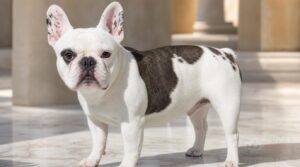
Take classic pied one step further, and you get something truly wild.
Extreme pied coats feature vast white expanses with only small, scattered pigment patches remaining. The coloring often concentrates along the spine in a saddle or blanket pattern, while the legs, chest, and face stay mostly white. No two extreme pieds look alike — their irregular pigment distribution makes each dog a walking one-of-a-kind.
Double-hood Pied Markings

While extreme pied dogs go almost fully white, double-hood pied markings take a different approach — two distinct colored patches frame both sides of the face, creating a symmetrical, almost painted look.
These hoods commonly sit above or around the eyes, with crisp or slightly blended edges depending on how pigment cells populate facial skin during development.
Blue Pied French Bulldogs

If double-hood pied dogs look painted by hand, Blue Pied French Bulldogs look like they were dipped in a winter sky. Their diluted blue-grey patches sit against a crisp white base, creating that high-contrast look that stops people mid-scroll.
| Feature | Detail | Notes |
|---|---|---|
| Coat base | White | Clean canvas for patches |
| Patch color | Blue-grey | Dilution gene effect |
| Price range | $1,500–$3,000 | Higher for rare variants |
Blue Pied popularity keeps climbing, making them one of the most sought-after pied variations you’ll find today.
Rare Exotic Pied Colors

Beyond blue, some pied variations feel almost otherworldly.
Platinum, Silver, and Isabella Pieds carry diluted, pastel tones — silvery whites, cool steels, and warm caramels — that don’t appear in any AKC standard.
Chocolate and Merle Pieds add rich browns and marbled patterns to the mix.
These nonstandard exotic colors can command anywhere from $5,500 to $7,000, reflecting just how rare coat color genetics can get.
Pied French Bulldog Temperament

Coat color is just the beginning — what really makes people fall in love with pied French Bulldogs is who they are on the inside. These dogs pack a lot of personality into a compact frame, and they tend to fit into daily life in ways that surprise new owners. Here’s what you can expect from a pied Frenchie’s temperament.
Family-friendly Personality
If you’re looking for a dog that truly feels like part of the family, the Pied French Bulldog delivers.
They’re loyal and affectionate by nature, greeting familiar faces with calm tail wags and soft, steady eye contact. They bond closely with their people, following you from room to room and happily curling up beside you at the end of the day.
Apartment Living Suitability
If you live in an apartment, a Pied French Bulldog fits naturally into that life.
Their low-energy temperament means two short daily walks — around 60 minutes total — keep them happy.
They rarely bark, which your neighbors will appreciate.
Just make sure your layout allows comfortable movement and that your building has a pet-friendly policy with a designated outdoor relief area.
Children and Other Pets
Pied French Bulldogs are loyal and loving with families, but good relationships don’t just happen — they’re built.
- Always supervise kid interactions early on
- Introduce new pets slowly in neutral spaces
- Keep play safety low-impact on soft surfaces
- Use training to reinforce calm, gentle behavior
Properly socialized, this friendly, intelligent breed genuinely gets along with other pets and children alike.
Training Stubbornness
French Bulldogs are intelligent and quick learners, but don’t be surprised when your Frenchie plants all four paws and refuses to budge mid-session. That stubborn streak is real.
Short, consistent sessions work best — long drills invite checkouts. Keep your cue words identical every time, because even a slight tone shift can confuse them and stall progress completely.
Positive Reinforcement Tips
Timing is everything. Reward your dog the instant they nail a behavior — even a second’s delay, and they’ll wonder what they actually did right.
Use a marker signal like "yes" or a clicker to pinpoint that exact moment.
Keep treat size small so training keeps moving, and mix treats with praise to hold their interest long-term.
Pied French Bulldog Health Needs

French Bulldogs are charming little dogs, but they do come with a few health quirks you’ll want to know about. Pieds are no different — their compact build and short muzzle mean certain conditions deserve your attention. Here’s what to keep an eye on.
Brachycephalic Breathing Issues
One of the most important things to understand about your Pied French Bulldog is that brachycephalic airway syndrome is incredibly common — affecting roughly half the breed. Their flat faces cause airway obstruction through stenotic nares, an elongated soft palate, and everted laryngeal saccules.
Brachycephalic airway syndrome affects roughly half of all French Bulldogs, making breathing difficulties a near-universal concern for the breed
- Noisy breathing and snoring are early warning signs
- Exercise intolerance shows up faster than you’d expect
- Heat stress can escalate to emergencies quickly
- Blue or pale gums signal oxygen deprivation — get to a vet immediately
Short daily walks help manage this safely.
Sunburn Risk
White and eggshell-colored fur offers almost no natural protection from UV rays — and your Pied Frenchie’s exposed pink skin burns faster than you’d think.
UV Index 3 or above is enough to cause damage, especially near water, sand, or concrete, which reflect UV back onto your dog.
Apply pet-safe sunscreen to exposed skin before heading out.
Obesity Prevention
Your Pied Frenchie’s low activity level makes weight gain a real risk. Unlike high-energy breeds, they don’t naturally burn through calories.
Control portion sizes carefully, measure meals, and skip table scraps. Two short daily walks help, but don’t overfeed to compensate for limited exercise.
Keeping your dog lean protects their joints and heart long-term.
Eye Health Concerns
Eyes are often the next thing to watch after weight. French Bulldogs are prone to several ocular disorders, and catching them early makes a real difference.
- Cataracts can cloud your dog’s vision gradually
- Cherry eye may need veterinary correction
- Dry eye and corneal ulcers require prompt attention
Regular dog health screening keeps small problems from becoming big ones.
Joint and Mobility Problems
Joints take a real beating in this breed. French Bulldogs are prone to patellar luxation, hip dysplasia, and intervertebral disc disease (IVDD) — all of which can quietly worsen over time. Extra weight speeds up osteoarthritis progression and puts more strain on already vulnerable joints.
| Condition | Key Sign |
|---|---|
| Hip Dysplasia | Bunny-hop gait |
| Cruciate Ligament Tear | Intermittent limping |
| Spinal Disc Disease | Reluctance to jump |
Pied French Bulldog Care Costs

Owning a pied French Bulldog comes with real costs beyond the purchase price. Between grooming, daily care, and finding the right breeder, knowing what to budget for makes the whole experience less stressful. Here’s what you’ll want to factor in.
Grooming and Brushing Needs
Grooming a Pied French Bulldog doesn’t demand much, but consistency matters. A weekly brushing session with a soft bristle brush keeps the coat smooth and promotes healthy oil distribution across the skin. This also makes shedding management easier — less dog shedding and dander floating around your home.
- Use grooming gloves for a gentle, massage-like finish
- Trim nails every two to four weeks
- Brush in the direction of hair growth for best results
Good dog grooming practices keep your Frenchie comfortable and clean.
Wrinkle and Ear Cleaning
Those adorable facial folds come with a daily responsibility. Skin folds should be dried thoroughly after every bath — trapped moisture is basically an open invitation for yeast and bacteria. Use a soft wipe or gauze pad, never a cotton swab pushed deep.
For ear cleaning, check weekly for redness or odor, and always use a dog-safe ear cleaner.
Exercise Requirements
French Bulldogs don’t need marathon sessions — but they do need consistent daily movement. Aim for a minimum of 60 minutes split across two short walks, keeping each one gentle and leash-controlled. Skip midday heat; early morning or evening walks protect their airways from overexertion.
Here’s what actually works for these dogs:
- Short, calm walks that let them sniff and explore freely
- Low-impact indoor play like gentle tug or slow fetch
- Food puzzles that tire their mind without taxing their breathing
- Gradual endurance building — never jumping straight into longer outings
- Cool, shaded routes to keep overheating risk low
Puppy Price Ranges
Pied French Bulldog prices in Germany usually run €1,800 to €3,500 for standard pied puppies, climbing to €6,000 or more for show-quality lines.
Exotic colors like blue pied can add €500 to €1,500 on top.
Registration, health certificates, and microchipping tack on another €300 to €500 — so budget carefully before falling in love.
Choosing Responsible Breeders
A responsible breeder isn’t just selling a puppy — they’re vouching for its future.
Look for health testing for puppies and both parents, Kennel Club registration, a written contract covering guarantees and returns, and a facility you’re welcome to visit.
Breeders who follow ethical dog breeding standards will ask you questions too — that’s actually a good sign.
Frequently Asked Questions (FAQs)
How much do pied Frenchies cost?
So, what’s the real price tag? Expect to pay $3,000 to $6,000 from reputable breeders, with rare markings or champion lines pushing costs toward $7,000 or higher.
Are pied Frenchies rare?
Yes, they’re fairly rare. Pieds need two copies of the recessive gene to show their coat, so not every litter produces them — which keeps demand high and prices up.
What is a Pied French Bulldog?

Ever seen a dog that looks like it got dressed in a hurry? That’s the charm — white or eggshell-colored fur dotted with colorful patches of black, fawn, or brindle.
Do French Bulldogs have pied coats?
French Bulldogs absolutely can have pied coats. The piebald gene is well-established in the breed, producing that signature white or eggshell-colored fur splashed with colored patches across the body.
What color is a French Bulldog pied?
Think of a patchwork quilt — that’s the idea. Pied dogs wear white or eggshell-colored fur as their base, with patches in cream, fawn, black, and brindle, or even rare blue tones scattered across.
Are pied French Bulldogs good pets?
Short on noise, big on love — they’re loyal, loving companions perfectly suited for apartment dwellers and families with children, adapting easily to calm routines and bonding deeply with everyone they meet.
Why is my French Bulldog pied?
Your dog is pied because it inherited two copies of the recessive pied allele — one from each parent. That’s autosomal recessive inheritance at the S locus doing its thing.
What is an Irish pied French Bulldog?
An Irish pied French Bulldog features a mostly white body with patches limited mainly to the head and tail base — a minimal piebald pattern created by the same recessive S locus gene.
What does pied mean in a French Bulldog?
Pied means a white base coat splashed with distinct darker patches. It’s driven by the piebald gene, and your dog needs two copies to wear that bold, two-toned look.
Is a pied French Bulldog rare?
Yes, they’re considered a minority within the breed. Since pied requires two recessive gene copies, it shows up less often than solid coats — making pied puppies genuinely harder to find.
Conclusion
Owning a pied French Bulldog basically rewires your entire social life—strangers will stop their cars just to compliment yours. That coat isn’t just pretty; it’s the result of precise genetics, intentional breeding, and a little recessive luck.
You now know what drives the pattern, what health needs come with it, and what responsible ownership actually costs. That knowledge doesn’t just help you choose wisely—it helps you give one unforgettable dog exactly the life it deserves.