
This site is supported by our readers. We may earn a commission, at no cost to you, if you purchase through links.

Scroll through any dog account on social media and you’ll spot them instantly—palm-sized fluffballs with Husky markings and Pomeranian energy, staring into cameras like they own the room. Teacup Pomskies clock in at under 8 pounds, fully grown, which sounds like a dream until you realize that tiny frame comes with some real responsibilities.
Breeders use "teacup" as a selling point, but the term isn’t standardized, and the size differences between teacup, micro, and toy Pomskies can genuinely confuse even experienced dog owners. Before you fall for those blue eyes and wolf-like markings, here’s what the price tag and the Instagram posts won’t tell you.
Table Of Contents
- Key Takeaways
- What is a Teacup Pomsky?
- Teacup Pomsky History and Origin
- Teacup Pomsky Size and Appearance
- Teacup Pomsky Temperament
- Teacup Pomsky Puppy Care
- Feeding a Teacup Pomsky
- Exercise and Apartment Living
- Grooming a Teacup Pomsky
- Teacup Pomsky Health Concerns
- Buying a Teacup Pomsky Responsibly
- Frequently Asked Questions (FAQs)
- How Long Does a Teacup Pomsky Live?
- What is the Ideal Living Environment for a Teacup Pomsky?
- How Often Does a Teacup Pomsky Need to Be Groomed?
- What Types of Health Issues Are Associated With Teacup Pomskies?
- What is the Best Way to Train a Teacup Pomsky?
- How big do teacup Pomsky get?
- How much is a teacup Pomsky?
- What is the lifespan of a teacup Pomsky?
- How much does a teacup husky cost?
- How long does a Teacup Pomsky live?
- Conclusion
Key Takeaways
- Teacup Pomskies top out at 4–8 pounds fully grown, but "teacup" is a marketing label with no official standard — so always ask your breeder for exact size projections, not just a cute name.
- That tiny frame comes with real health baggage: patellar luxation, collapsing trachea, dental crowding, and heart defects are all on the table, which makes vet screening and ethical breeding non‑negotiable.
- They’re smart, loyal, and surprisingly vocal — your neighbors will meet your Pomsky before they meet you — so early training and consistent routines aren’t optional, they’re survival skills.
- Expect to spend $2,000–$7,000 upfront, plus ongoing costs for grooming every 4–6 weeks, specialized small-breed food, and annual vet visits — the sticker price is just the opening act.
What is a Teacup Pomsky?

The teacup Pomsky is one of those dogs that stops people in their tracks — tiny enough to fit in a tote bag but full of Husky-level personality.
That big personality comes packed into a surprisingly long life — curious owners often look into the Pomsky’s typical lifespan and health journey before falling head over heels.
It’s a cross between a Pomeranian and a Siberian Husky, selectively bred down to a miniature size that most people can’t quite believe is real.
Before you fall head over heels, here’s what actually defines this breed and how it compares to similar size variations.
Pomeranian Husky Mix
A Pomeranian Husky mix combines two very different dogs — a small, spirited Pomeranian with a strong, independent Siberian Husky.
The result is a compact companion that can inherit the Husky’s striking coat patterns and eye colors alongside the Pomeranian’s charm.
That genetic diversity, often called hybrid vigor, can support overall health, though breed health issues from both parents may still appear.
They have a double coat shedding pattern that requires regular grooming.
Teacup Size Meaning
The word "teacup" isn’t an official breed category — it’s a marketing label that signals very small size. For a Pomsky, teacup commonly means an adult weight of 3 to 8 pounds and a height of 6 to 10 inches at the shoulder. No major kennel club has standardized this term, so what qualifies as "teacup" can vary depending on the breeder.
Micro Pomsky Comparison
You might also see the term micro Pomsky used online, and it’s worth knowing how that differs.
Micro Pomskies usually weigh 6 to 14 pounds at maturity and stand 8 to 12 inches tall — slightly larger than a teacup. The two terms overlap a lot, and breeders often use them interchangeably, so always ask for exact size projections.
Toy Pomsky Comparison
The toy Pomsky sits just a step above the teacup, commonly weighing 2 to 6 pounds and staying under 9 inches tall.
It’s a subtle difference, but toy varieties often carry slightly fewer size-related health risks.
That said, both share the same breed-specific concerns — joint issues, dental crowding, and a lifespan of 12 to 15 years with proper care.
Teacup Pomsky History and Origin

The Teacup Pomsky didn’t just happen by accident — it took deliberate effort, careful breeding choices, and a very specific vision of what a "tiny Husky" could look like. Understanding where this breed came from helps you make a smarter decision before you commit. Here’s what you need to know about its origins.
Early Pomsky Development
The Pomsky’s story starts smaller than you might expect — with tiny, eyes-closed newborns that spend their first two weeks doing little more than nursing and staying warm. By days 10 to 14, eyes open.
By week three, litter socialization begins, shaping how confident and friendly your dog will eventually become.
United States Origins
The Pomsky is a purely American creation. This breed didn’t evolve naturally — it was deliberately designed in the United States in the early 2000s, driven by demand for a small dog with Husky-style looks.
- Born in the US
- Early 2000s origin
- Pomeranian × Husky cross
- Breeder-driven development
- Growing owner community
Miniaturization Practices
Getting a Teacup Pomsky down to 3–8 pounds doesn’t happen by accident. Breeders carefully select the smallest individuals from each parent breed, then often rely on artificial insemination to make the pairing physically possible.
Some also introduce additional purebred Pomeranians into the line to push the size even smaller — a practice that increases cuteness but raises real health risks.
Breed Recognition Status
Here’s the honest truth: the Teacup Pomsky has no official recognition from the AKC, UKC, or FCI. As a hybrid dog breed, it doesn’t yet meet the documentation requirements.
The International Pomsky Association is working toward recognition through the Foundation Stock Service, but timelines can stretch years. For now, these designer dogs remain officially unregistered.
Teacup Pomsky Size and Appearance
One of the first things people notice about a teacup Pomsky is just how much dog is packed into such a tiny frame. Their appearance is striking — think Husky-beautiful, but small enough to fit in your lap. Here’s what you can expect regarding their size and looks.
Adult Height Range

Most fully grown Teacup Pomskies stand 8 to 10 inches tall at the shoulder — roughly the height of a standard water bottle. That compact size is no accident. Breeders carefully select the smallest parent dogs to hit this target.
Most reach their final adult height by 12 to 18 months, with growth slowing noticeably after six months.
Adult Weight Range

Weight is where things get a little tricky. A Teacup Pomsky usually lands between 4 and 8 pounds as an adult — but that’s not a guarantee.
Size label confusion is real, since "teacup" isn’t standardized. Genetics, diet, and growth rate all play a role. Monitor your dog’s body condition weekly, not just the number on the scale.
Coat Types

One of the first things people notice about a Teacup Pomsky is that the thick, double-layered fluffy coat — it’s a lot of fur packed into a very small dog.
Coat color genetics pull from both parent breeds, so you’ll see everything from solid white or black to sable, brindle, or parti-color patterns.
Daily brushing keeps that dense coat healthy and helps them shed minimally year-round.
Eye Colors

Eye color is where Teacup Pomskies really surprise people. They can have brown, blue, or heterochromatic eyes — meaning two different-colored irises — a trait inherited from their Husky lineage:
- Blue eyes result from low melanin and light scattering
- Brown eyes carry the highest melanin concentration
- Heterochromia creates that striking mismatched look Husky fans love
Husky Facial Markings

Those striking eyes lead naturally to another head-turning feature: the Husky facial mask. Most Teacup Pomskies inherit dark markings around the eyes and muzzle that contrast sharply against lighter cheek fur — ranging from deep black to charcoal gray.
Mask edges often taper toward the ears, and some dogs display a white wedge above the forehead for a layered, expressive look.
Teacup Pomsky Temperament

Teacup Pomskies are small in size but big in personality, and that combination is exactly what makes them so hard to resist. Before you bring one home, it helps to know what you’re actually signing up for on the personality front. Here’s what their temperament really looks like day to day.
Family Bonding
Few dogs match the teacup Pomsky when considering sheer devotion. This little companion animal weaves itself into your daily life fast.
- Morning routines feel warmer with a Pomsky by your side during breakfast and grooming
- Cuddle sessions of 10–20 minutes daily build real trust between dog and owner
- Training together as a family strengthens bonds through positive reinforcement training
Barking and Howling
If there’s one thing your teacup Pomsky will never be shy about, it’s using their voice. Alert barking kicks in fast — a stranger at the door, a passing car, even a squirrel two yards away. They inherited this from the Pomeranian side, and it runs deep.
| Vocalization Type | Common Trigger | Management Tip |
|---|---|---|
| Alert Barking | Unfamiliar sounds or visitors | Desensitization training |
| Separation Howling | Being left alone | Consistent calm routines |
| Noise-Induced Barking | Sirens, music, loud neighbors | Mental enrichment and exercise |
Positive reinforcement training works best here — reward quiet behavior, redirect with play, and stay consistent. Separation howling is real too; these dogs bond hard, so alone time needs gradual practice.
Cuddling Tendencies
Teacup Pomskies are natural lapdogs — they don’t just tolerate closeness, they seek it. Cuddle preferences run deep, with most dogs choosing one favorite person for daily snuggle sessions.
You’ll notice gentle lean-ins and slow blinks signaling they’re ready.
Cooler evenings tend to bring longer, cozier contact, while warm days keep sessions shorter.
Regular cuddling genuinely calms them down.
Stubborn Behavior
Smart as they are, Teacup Pomskies can be surprisingly headstrong. Their Pomeranian side brings a confident, independent streak that occasionally overrides even the best training efforts.
- Fear of losing control often stiffens their resistance mid-session
- Repetition without variety triggers boredom-based defiance
- Positive reinforcement consistently outperforms correction-based methods
Short, reward-driven sessions work best — patience isn’t optional here.
Social Personality
These little dogs are natural social butterflies. They mirror your energy, greet you enthusiastically at the door, and nudge their way into whatever you’re doing.
Play initiation usually comes with a wagging tail and an irresistible soft nudge.
Early socialization and puppy training shape how confident they become — start young, stay consistent, and you’ll have a genuinely well‑rounded companion.
Teacup Pomsky Puppy Care
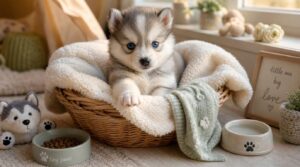
Bringing home a teacup Pomsky puppy is exciting, but these tiny dogs need more hands-on care than most people expect. Their small size makes everyday things — like feeding schedules and safe handling — matter a whole lot more. Here’s what you need to have in place from day one.
Safe Home Setup
Before your teacup Pomsky sets one tiny paw inside, your home needs to be ready for them.
Cover unused electrical outlets, secure loose cords behind furniture, and swap any frayed cables immediately.
Block stairways with child gates, lock away cleaning supplies, and keep trash cans lidded.
Aim to keep room temperature between 18 and 24°C to keep your pup comfortable and safe.
Small Dog Handling
Holding a dog this small is like cradling a snow globe — beautiful, but one wrong move matters. Always use a cradle hold, supporting both the chest and hindquarters, and never squeeze.
Indoors, non-slip mats prevent scary slips on hard floors. Use a soft no-pull vest for short leash walks, and keep your voice calm and steady throughout.
Puppy Feeding Schedule
Once handling is sorted, feeding becomes your next rhythm to nail.
From 8 to 12 weeks, offer four small meals daily — around 7 a.m., 11 a.m., 3 p.m., and 7 p.m. Drop to three meals between 3 and 6 months, then two by 6 to 12 months. Always use high-quality small-breed puppy food, adjusting portions as frequency decreases.
Hypoglycemia Prevention
Feeding your puppy on a consistent schedule does more than keep their belly full — it protects their blood sugar. Hypoglycemia in puppies is a real danger with teacup dogs.
If meals are skipped or delayed, blood sugar can crash fast. Stick to your schedule and keep fast-acting glucose nearby, just in case.
Early Vet Visits
Your teacup Pomsky’s first vet visit should happen within the first week home. The vet will record baseline weight, check essential signs, and examine joints and gait — catching early red flags like patellar luxation before they progress.
From there, your vet builds a vaccination timing and parasite prevention plan, and can walk you through microchip consultation, so your pup is protected from day one.
Feeding a Teacup Pomsky
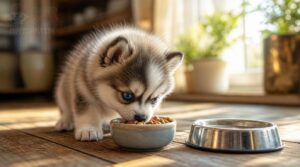
Feeding a teacup Pomsky isn’t complicated, but it does require a little more attention than feeding a standard-sized dog. Their tiny bodies have specific needs, and getting it right makes a real difference in their health and energy. Here’s what you need to know.
Small-Breed Dog Food
Not all dog food is created equal — and for a dog this small, that really matters.
Your teacup Pomsky needs high-quality small-breed food with real meat like chicken, turkey, or fish as the first ingredient.
Look for formulas hitting around 25 percent minimum protein for adults, with calorie-dense kibble between 350 and 450 kcal per cup to fuel their fast metabolism.
Portion Control
Even tiny overages add up fast with a dog this small. Use a kitchen scale in grams rather than a measuring cup — kibble density varies, making cups unreliable.
Track treat calories toward daily totals, and break treats into smaller pieces to stretch rewards without overshooting intake. Check your dog’s body condition score weekly to catch weight trends early.
Puppy Meal Frequency
How often you feed your teacup Pomsky puppy matters just as much as what goes in the bowl. Small and toy breeds are prone to hypoglycemia, so consistent meal timing keeps blood sugar stable throughout the day.
- Up to 12 weeks: 4 small meals daily, spaced 3–4 hours apart
- 3 to 6 months: 3 meals daily, spaced 5–6 hours apart
- 6 months and older: shift to 2 meals daily
Stick to a consistent feeding schedule — same times every day — using a high-quality small-breed puppy food that provides your puppy’s nutritional needs without overloading their tiny digestive system.
Healthy Weight Checks
Keeping your teacup Pomsky at a healthy weight takes more than eyeballing the bowl.
Weigh them weekly on a digital scale, log the results, and look for trends over time — a single high reading means fewer than three rising ones in a row.
Pair that with a quick body condition check: you should be able to feel their ribs easily without pressing hard.
Foods to Avoid
Some foods that seem harmless can send a teacup Pomsky straight to the emergency vet. Grapes and raisins can cause acute kidney failure, even in tiny amounts.
Xylitol, found in sugar-free gum and candies, triggers dangerous blood sugar crashes.
Keep chocolate, onions, garlic, and alcohol completely off the menu — no exceptions.
Exercise and Apartment Living

Don’t let the teacup size fool you — this little dog still needs real daily movement to stay happy and healthy.
The good news is that a Pomsky fits surprisingly well into apartment life, as long as you’re thoughtful about how you structure their day. Here’s what their exercise routine actually looks like.
Daily Walk Needs
A teacup Pomsky doesn’t need marathon sessions — short daily walks of 20–30 minutes are plenty. Aim for a gentle, moderate pace on a secure leash, and skip outings during extreme heat.
Their small frames can’t handle high‑impact activity, so consistency over intensity is the goal. Breaking walks into two shorter sessions works just as well.
Indoor Play Ideas
When walks aren’t on the agenda, your living room becomes the gym. A soft obstacle course using cushions and low foam steps keeps your teacup Pomsky moving safely indoors. Try these quick setups:
- Sensory bins filled with dry pasta for pawing and sniffing
- A pretend kitchen corner with toys to nudge and explore
- Simple puzzle corners with treat-hiding toys
Mental Enrichment Toys
Your obstacle course is great for burning energy, but your teacup Pomsky’s brain needs a workout too. Snuffle mats hide treats across fabric folds, triggering natural foraging instincts. Treat-dispensing puzzle toys reward problem-solving with kibble. For tech-savvy owners, smart interactive dispensers let you engage your dog remotely. Rotate toys weekly so the challenge stays fresh.
| Toy Type | Benefit | Best For |
|---|---|---|
| Snuffle Mat | Scent foraging | Calm focus |
| Puzzle Ball | Problem-solving | Solo play |
| Smart Dispenser | Remote engagement | Busy owners |
Apartment Suitability
A well-set-up apartment is genuinely one of the best homes for this compact package. Here’s what makes it work:
- Keep the environment calm — a quiet environment reduces stress-triggered barking.
- Maintain 20–22°C (68–72°F) for comfort year-round.
- Clear floor space promotes safe indoor play.
- Use rugs on hard floors to prevent slipping.
- Add window guards for safety.
Injury Prevention
Even the best apartment setup can’t protect your Pomsky if hidden hazards are still lurking.
Slippery floors, loose cords, and furniture gaps are common culprits.
Use non-slip mats, block small spaces, and always lift your dog with full body support — never by the legs.
For travel, a secured tether or crate prevents injury during sudden stops.
Grooming a Teacup Pomsky

That fluffy double coat is one of the first things people fall in love with on a Teacup Pomsky — and yes, it does come with some upkeep. The good news is that grooming doesn’t have to be overwhelming once you know what to expect. Here’s what keeping your Pomsky looking and feeling their best actually involves.
Double Coat Brushing
That thick double coat is one of the teacup Pomsky’s most striking features — but it comes with a real grooming commitment.
Start each session with an undercoat rake, which pulls loose, dense fur from the bottom layer before surface brushing. Follow up with a slicker brush to lift and smooth the topcoat. Finish with a wide-tooth comb to catch any remaining knots.
Shedding Expectations
Don’t let that gorgeous double-layered fluffy coat fool you — shedding comes with the territory.
Your teacup Pomsky sheds year‑round, with heavier blow‑out periods in spring and fall.
Regular brushing can reduce loose fur by up to 60 percent during peak seasons.
A diet rich in omega‑3 and omega‑6 fatty acids promotes skin health and keeps excessive shedding in check.
Bathing Schedule
Aim to bathe your teacup Pomsky every 4 to 6 weeks. Their dense double coat holds onto residue, so always use a hypoallergenic, pH-balanced shampoo — human products can disrupt their sensitive skin barrier.
Rinse thoroughly, then dry on a low-heat setting to prevent matting. In winter, add a light conditioner to protect against moisture loss.
Nail Trimming
Trimming your teacup Pomsky’s nails is a small task that makes a big difference.
Check nails weekly — if you hear clicking on the floor, they’re overdue. Aim for a trim every 3–4 weeks.
Use small-breed nail clippers for precision. Clip tiny amounts gradually to avoid the quick.
If bleeding occurs, styptic powder stops it fast.
Dental Care
Dental problems sneak up fast in teacup Pomskies — their tiny mouths mean teeth crowd together, making plaque buildup almost inevitable.
- Use a soft small-breed toothbrush with dog-safe toothpaste at the gumline
- Offer sized dental chews weekly to reduce tartar between brushings
- Watch for bad breath or loose teeth — both signal trouble
Schedule professional cleanings with your vet annually.
Teacup Pomsky Health Concerns

Teacup Pomskies are adorable, but their tiny bodies come with some real health trade-offs worth knowing upfront.
Being small isn’t just a size thing — it affects their joints, airways, teeth, and heart in ways that can catch owners off guard.
Here are the most common health concerns you’ll want to keep on your radar.
Patellar Luxation
Patellar luxation — where the kneecap slips out of its groove — is one of the most common teacup dog health risks you’ll encounter with this breed. Because the trochlear groove can be shallow or poorly formed, the patella loses stability and pops out of alignment, sometimes causing your dog to skip a step or hold a leg up mid-walk.
| Severity Grade | Clinical Signs | Treatment Needed |
|---|---|---|
| Grade 1–2 | Occasional skipping, mild lameness | Preventive care, monitoring |
| Grade 3 | Frequent limping, crouching stance | Surgery often recommended |
| Grade 4 | Persistent lameness, bone deformity | Surgical correction required |
Genetic health screening and breeder screening can flag inherited structural risks before you bring a puppy home. Reputable breeders who invest in genetic testing help reduce the odds greatly. For dogs already showing symptoms, surgical options like trochlear wedge recession or tibial tuberosity transposition realign the joint. Post-surgery, rehab protocols — including controlled walks and muscle-strengthening exercises — support recovery. Preventive care through weight management and low-impact exercise also slows progression in mild cases.
Dental Overcrowding
Small mouths mean big dental problems.
A teacup Pomsky’s tiny oral cavity leaves almost no room for proper tooth spacing, so crowded tooth spaces trap plaque and debris that brushing can’t easily reach. That buildup feeds bacteria, irritates gums, and accelerates decay — making consistent dental hygiene for toy dogs non‑negotiable from day one.
Collapsing Trachea
If the mouth causes trouble, the throat can too.
Collapsing trachea happens when the cartilage rings supporting the airway weaken and flatten, making your dog’s windpipe unable to stay open. The telltale sign is a "goose honk" cough that spikes during excitement or when you pick them up.
Your vet can confirm it through imaging or bronchoscopy.
Heart Defects
The trachea isn’t the only structural concern — the heart carries its own risks.
Congenital heart issues are documented in teacup Pomskies, including Patent Ductus Arteriosus, where a fetal blood vessel fails to close after birth. This forces the heart to overwork, potentially causing cyanotic heart conditions and poor weight gain.
- Septal wall defects allowing blood to mix between chambers
- Valve malformation risks, including stenosis and atresia
- Abnormal great artery positioning disrupting oxygen flow
- Breathing difficulty linked to impaired lung circulation
- Cyanosis as a warning sign of oxygen-poor circulation
Heart defect screening and a breeder-issued health guarantee are non-negotiable when buying.
Lifespan Expectations
Heart defects can shorten a Teacup Pomsky’s life before you even notice something’s wrong — and that’s exactly why lifespan expectations deserve an honest look. With proper care, most live between 12 and 15 years.
With proper care, a Teacup Pomsky can live 12 to 15 years — but unmanaged health risks can cut that short
But teacup sizing, genetic predisposition, and unmanaged conditions like tracheal collapse or cardiac disease can push that closer to between 5 and 12 years.
Buying a Teacup Pomsky Responsibly

Bringing home a teacup Pomsky is exciting, but how you find one matters just as much as the dog itself. The process involves more than picking the cutest puppy in a litter — it means doing your homework on breeders, prices, and alternatives. Here’s what to look for before you hand over a single dollar.
Ethical Breeding Concerns
Not every breeder who sells a teacup Pomsky is doing it the right way. Responsible breeding practices start with health — not looks.
Ethical breeders prioritize genetic screening for inherited conditions like patellar luxation and heart defects, avoid breeding runts repeatedly, and maintain genetic line diversity to prevent inbreeding.
They share full health histories, welcome facility visits, and stay reachable after your puppy goes home.
Puppy Price Range
Teacup Pomsky prices in Europe usually fall between 1,500 and 6,000 euros, with reputable breeders charging 2,500 to 5,000 euros for health-tested puppies. In Germany specifically, expect to pay 1,800 to 4,200 euros.
Beyond the sticker price, budget for transport fees, microchipping, and starter kits — hidden costs add up fast.
Adoption Options
Buying isn’t your only option. Rescues like National Mill Dog Rescue, Oregon Dog Rescue, and All 4 Paws Rescue occasionally place small designer breeds.
- Agency screening matches you with the right dog
- Foster to adopt lets you try before committing
- Kinship adoption keeps dogs in familiar networks
- Private adoption paths move faster with legal support
Breeder Red Flags
Not every breeder who posts adorable photos online has your dog’s best interests at heart. Watch for no health clearances on parent dogs, vague answers about lineage, and pressure to pay deposits before you’ve met the puppy.
Filthy kennels, no written contract, and pricing puppies by color over health are classic signs you’re dealing with the wrong breeder.
Frequently Asked Questions (FAQs)
How Long Does a Teacup Pomsky Live?
Most small dogs live 12 to 15 years with proper care. For teacup Pomskies, genetics and breeding quality matter most — good care and regular vet visits help them reach that upper range.
What is the Ideal Living Environment for a Teacup Pomsky?
Apartments work well — keep rooms between 64–75°F, limit loud disruptions, and offer a calm, predictable space. These compact dogs thrive indoors with minimal outdoor exposure and low noise.
How Often Does a Teacup Pomsky Need to Be Groomed?
Grooming a Teacup Pomsky takes consistent effort. Brush 2–3 times weekly, daily during shedding season. Bathe every 4–6 weeks, trim nails monthly, and schedule professional grooming every 3–4 months.
What Types of Health Issues Are Associated With Teacup Pomskies?
What health issues come with such a tiny body? Luxating patella, tracheal collapse, dental disease, and cardiac abnormalities top the list. Metabolic issues like hypoglycemia, plus hip dysplasia and cataracts, are real concerns too.
What is the Best Way to Train a Teacup Pomsky?
Train with positive reinforcement — reward the moment your dog gets it right. Keep sessions 10 to 15 minutes, twice daily, starting with sit, stay, and recall before advancing.
How big do teacup Pomsky get?
Picture a dog that fits snugly in your lap — that’s a Teacup Pomsky. These tiny dogs commonly stand 6 to 10 inches tall and weigh between 4 and 9 pounds fully grown.
How much is a teacup Pomsky?
Teacup Pomskies usually cost $2,000 to $7,000, depending on coat color, eye color, and breeder reputation. Rare traits like blue eyes push prices higher.
What is the lifespan of a teacup Pomsky?
Like most small crossbreeds, their clock runs long — 10 to 15 years with good care. Responsible breeding and regular vet visits make the biggest difference.
How much does a teacup husky cost?
Expect to pay $2,500 to $4,000 from a reputable breeder, with show-quality pups pushing past $5, Adoption runs just $100 to $400 — a wallet-friendly path worth considering.
How long does a Teacup Pomsky live?
With small dogs, lifespan varies widely — from 8 to 15 years. A Teacup Pomsky usually lives 12 to 15 years with proper care, routine vet visits, and good genetics backing them up.
Conclusion
The smallest dogs somehow carry the heaviest list of needs—that’s the quiet irony tucked inside every teacup Pomsky photo you’ve double‑tapped. Behind those wolf eyes and cotton‑ball fur is a living commitment: specialized food, careful handling, regular vet visits, and a home proofed against every sharp edge and high surfaces.
Teacup Pomskies reward that effort with loyalty that outweighs their tiny frames. Go in clear‑eyed, and you’ll both land exactly where you belong.