
This site is supported by our readers. We may earn a commission, at no cost to you, if you purchase through links.

Your four-year-old squeals with delight as a 150-pound Newfoundland gently accepts her tea party invitation, settling in with the patience of a saint. It’s a scene that surprises many first-time visitors, but experienced dog families know the truth: some of the biggest breeds make the most tender companions for children.
Size doesn’t predict temperament, and many large dogs possess an inherent gentleness around little ones that smaller, more nervous breeds simply can’t match. The key lies in understanding which specific traits—from stable temperaments to moderate energy levels—make certain big breeds exceptionally well-suited for family life.
Whether you’re drawn to the loyal Golden Retriever or curious about lesser-known gentle giants, finding the right match depends on recognizing how breed characteristics align with your household’s rhythm and your children’s ages.
Table Of Contents
- Key Takeaways
- Key Traits of Family-Friendly Large Dogs
- Top Large Dog Breeds for Families
- Gentle Giant Breeds for Kids
- Training and Socialization for Big Dogs
- Choosing The Best Large Dog for Your Family
- Frequently Asked Questions (FAQs)
- What are the grooming needs for large breeds?
- How to manage space with big dogs indoors?
- Do large dogs require special nutrition?
- Are large dogs good for apartment living?
- How much exercise do big dogs need?
- What are common health issues in large breeds?
- How much do large dogs typically cost annually?
- Are large dogs suitable for apartment living?
- What safety precautions prevent accidents with small children?
- How do you travel safely with big dogs?
- Conclusion
Key Takeaways
- Size doesn’t predict temperament in dogs—many large breeds like Golden Retrievers, Bernese Mountain Dogs, and Newfoundlands possess exceptional patience and gentleness around children that smaller, more nervous breeds often lack.
- The best family-friendly large dogs combine stable temperaments with high trainability and energy levels that match your household’s rhythm, requiring 60-120 minutes of daily exercise depending on the breed’s specific needs.
- Early socialization and consistent positive reinforcement training are non-negotiable for large breeds, as these foundations prevent behavioral problems and teach dogs proper boundaries around kids during their most receptive learning period.
- Choosing the right large dog means honestly assessing your space, children’s ages, grooming commitment, and long-term financial responsibility—with annual costs ranging from $1,500-$3,000 for veterinary care, nutrition, and preventive health monitoring.
Key Traits of Family-Friendly Large Dogs
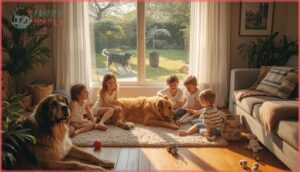
When you’re choosing a big dog for your family, certain traits matter more than others. You want a dog that’s patient with kids, easy to train, and fits your household’s energy level.
Let’s look at the key characteristics that make a large breed truly family-friendly.
Temperament and Patience
When you’re looking at family-friendly dog breeds, temperament matters more than size. Patient breeds like Golden Retrievers and Bernese Mountain Dogs show a gentle nature that helps them stay calm around unpredictable toddlers.
These loyal and gentle dog breeds offer emotional support naturally, tolerating ear tugs and sudden movements without reacting. Their social manners and calming techniques make big dog breeds for families surprisingly adaptable companions.
Effective communication is key, and using clear science information can help owners understand their pets better.
Intelligence and Trainability
Smart dogs make family life easier, and canine intelligence shows in how quickly your big breed picks up commands. Border Collies and Golden Retrievers consistently score high on trainability tests, mastering new cues in fewer sessions through positive reinforcement.
Their problem-solving skills and learning styles matter, too—some large breed dog characteristics include sustained focus during cognitive development, while others need shorter training blocks to maintain engagement with your family routine. Understanding scientific study methods can also help in training dogs effectively.
Energy Levels and Playfulness
Once you’ve gauged your dog’s smarts, you’ll quickly notice how energy levels shape daily routines with your family. Large breed dogs like Labrador Retrievers need 60 to 120 minutes of activity each day, channeling playful behavior into structured exercise routines that keep everyone happy.
Daily Exercise Needs for Family Friendly Dogs:
- High-energy breeds (Labs, Boxers) thrive with 1–2 hours of fetch, running, or training drills
- Moderate breeds (Bernese Mountain Dogs) stay balanced with 40–60 minutes of walking and gentle play
- Lower-energy giants (Saint Bernards) benefit from 20–40 minutes of easy-paced movement
- Age adjustments matter—puppies show peak energy for 6–12 months, while seniors need slower, joint-friendly activities
Smart energy management means mixing cardio with strength-building games, so your dog breeds for kids stay calm indoors. Activity levels directly impact dog temperament and behavior, turning boisterous pups into content companions when you match their exercise routines to breed-specific needs.
Loyalty and Protective Instincts
After a busy day of play, you’ll notice how Loyalty Traits and Protective Behavior set big dogs apart. Breed Temperament matters—Gentle Giants like Saint Bernards lean in for comfort, while Protective Breeds such as Great Pyrenees quietly monitor your home’s boundaries.
Family Friendly Dogs thrive on close bonds, blending Canine Instincts for safety with the warmth of Loyal Companions.
Top Large Dog Breeds for Families
Now that you know what makes a large dog great for family life, let’s look at some specific breeds that fit the bill. Each of these seven breeds brings something special to the table, whether it’s an easygoing temperament, natural patience with kids, or an instinct to protect the ones they love.
Here’s what you need to know about the top contenders.
Labrador Retriever
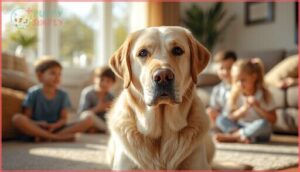
You’ll find the Labrador Retriever consistently topping family-friendly breed lists, and there’s solid behavioral evidence behind that reputation. Their even temperament and outstanding patience with children make them exceptional family companions, while their intelligence simplifies retriever training from puppyhood onward.
- Temperament stability: Labs maintain calm, predictable behavior around kids of all ages
- Trainability: Their eagerness to please makes obedience and socialization straightforward
- Energy compatibility: They match active family lifestyles with enthusiasm for play and exercise
- Gentle mouth: Bred for soft retrieval, they’re naturally careful with delicate interactions
- Adaptability: Labs adjust well to various living situations when their exercise needs are met
Proper Labrador care includes structured daily activity and quality dog nutrition to prevent obesity. With early socialization and consistent boundaries, these dogs become devoted family companions who genuinely enjoy being part of your household’s daily rhythm.
Golden Retriever
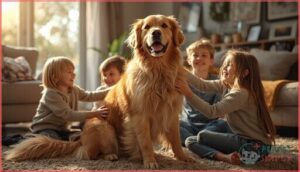
Golden Retrievers rank alongside Labs for their stable, patient demeanor and exceptional trainability with families. Their breed history as soft-mouthed hunting companions translates beautifully into gentle interactions with kids.
You’ll appreciate their affectionate nature and adaptability as family companions. Consistent retriever health monitoring and proper dog nutrition keep that signature golden coat lustrous while supporting their active lifestyle as family-friendly dog breeds suitable for kids.
Bernese Mountain Dog
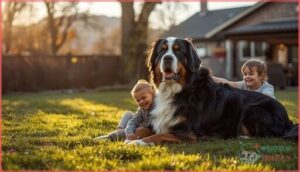
Bernese Mountain Dogs exhibit a calm, affectionate temperament and strong family bonding, making them standout family-friendly dog breeds suitable for kids. Their breed history as Swiss farm dogs shapes their patient nature around children, though you’ll need to prioritize Bernese health monitoring since giant dog breeds face specific joint concerns.
Regular mountain hiking satisfies their moderate energy needs, while proper dog nutrition and family pet considerations support their thick coats and overall family dynamics.
Saint Bernard
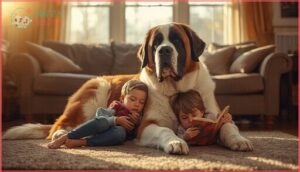
Saint Bernard stands as one of the most legendary gentle giants in the family-friendly dog breeds category, offering exceptional patience with children when properly socialized. You’ll appreciate their calm, tolerant nature, though Saint Bernard care demands attention to giant breed health concerns like hip dysplasia.
Their breed history as Alpine rescue dogs shaped their protective instincts, making them devoted family pets when you meet their large dog nutrition and exercise needs through:
- Regular veterinary monitoring for joint and heart conditions
- Moderate daily walks to prevent obesity in giant dog breeds
- High-quality protein sources supporting their 120-180 pound frame
- Consistent grooming to manage seasonal shedding
- Early socialization establishing comfort around active children
Large breed dog care requires understanding their lower energy levels compared to working breeds, while family pet considerations include adequate indoor space for their substantial size.
Boxer
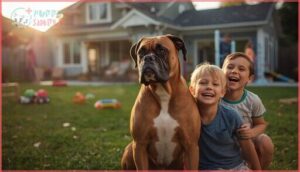
Boxers bring boundless energy and protective devotion to active families, though you’ll want to channel their playful intensity through structured exercise routines to prevent destructive behavior. These family-friendly dog breeds excel as family dogs when their behavior needs are addressed with early training.
| Care Aspect | Daily Requirement | Family Consideration |
|---|---|---|
| Boxer Exercise | 60-90 minutes activity | Prevents overexcitement around kids |
| Boxer Nutrition | High-quality protein diet | Maintains 50-80 pound muscular frame |
| Boxer Grooming | Weekly brushing | Minimal shedding maintenance |
| Boxer Health | Joint/heart monitoring | Common in large breed dog care |
| Boxer Behavior | Consistent boundaries | Essential for dog breeds for children |
Their intelligence makes them highly trainable companions for households seeking energetic, devoted protectors.
Rough Collie
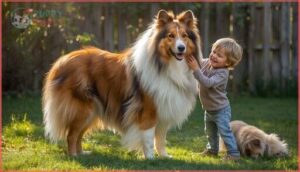
You’ll find Rough Collies among the most adaptable family-friendly dog breeds, combining herding instincts with exceptional patience around children. These intelligent dogs excel as loyal companions when you provide consistent mental stimulation and daily exercise.
Rough Collie care includes weekly brushing to maintain their signature coat, making them kid-friendly dog breeds that thrive in structured households seeking devoted, well-mannered large dog breeds for family pets.
Great Dane
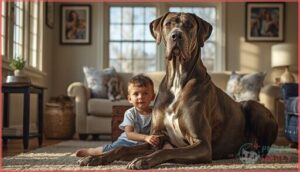
Great Danes stand out among giant care breeds, though their size can surprise you—males reach 175 pounds. These family-friendly dog breeds show striking gentleness with children despite their imposing stature. When choosing large dog breeds, you’ll need to contemplate their unique needs:
- Monitor health issues like bloat and heart conditions carefully
- Provide moderate exercise needs, avoiding joint strain during growth
- Follow diet requirements with elevated bowls and age-appropriate nutrition
- Keep grooming tips simple—weekly brushing maintains their short coat
- Guarantee proper dog care and maintenance with regular veterinary checkups
Gentle Giant Breeds for Kids

Some big dogs have a natural knack for being patient and calm around children, which makes them stand out as true gentle giants. These breeds tend to combine impressive size with a surprisingly soft temperament, creating companions that are both protective and tender with young family members.
Let’s look at five breeds that excel at balancing their stature with a gentle, kid-friendly nature.
Newfoundland
You’ll find few breeds more naturally tolerant of toddler antics than the Newfoundland, a true gentle giant with a docile, patient temperament.
These family-friendly dog breeds thrive on companionship and require consistent large dog grooming—their thick coats need regular brushing.
Proper giant breed nutrition and breed-specific health monitoring support their joint wellness, making Newfoundland care essential for family pet safety as large breed dogs as pets.
Great Pyrenees
While Newfoundlands excel in water, the Great Pyrenees brings mountain dog heritage and guardian traits that mesh beautifully with family life. You’ll appreciate their calm, people-oriented nature—perfect when you’ve got kids around.
Great Pyrenees care includes:
- Weekly brushing for their thick white coat
- Early socialization to balance herding instincts
- Moderate daily exercise despite their size
- Patient training using positive methods
- Regular vet visits for joint health monitoring
These gentle giants become devoted, protective companions.
Irish Wolfhound
If you’re drawn to gentle companion dogs with wolfhound history, the Irish Wolfhound stands out among giant dog breeds as family pets. Despite their towering height, they’re remarkably patient and affectionate with children.
Irish Wolfhound care emphasizes giant breed nutrition, moderate large breed exercise, and joint monitoring—making them one of the most family-friendly dog breeds in the large dogs category.
English Mastiff
Among family-friendly dog breeds, the English Mastiff stands out among giant dog breeds as family pets for their calm, protective nature. These large dogs bond deeply with children, though Mastiff care requires monitoring Mastiff health—especially joint and heart conditions common in this giant breed.
With proper dog care and training, family Mastiffs become devoted, patient companions in your large breed household.
Leonberger
You’ll find Leonbergers embody the calm, people-oriented temperament that makes giant breed family dynamics work beautifully. These family-friendly dog breeds thrive on companionship, showing exceptional patience with kids during play.
Proper Leonberger care includes attention to dog nutrition customized for large breed needs, plus early socialization. Among big dog breeds for family-friendly households, they’re gentle giants worth considering.
Training and Socialization for Big Dogs
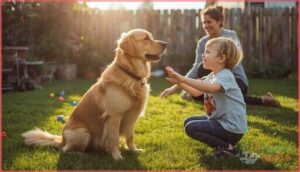
Training a big dog isn’t just about teaching commands—it’s about raising a confident, well-mannered companion who knows how to behave around your kids and other pets. Start early, stay consistent, and you’ll set your gentle giant up for success.
Here’s what you need to focus on to help your large breed thrive in a family setting.
Importance of Early Training
Think of puppy socialization as laying the foundation for your family’s future together. Starting early obedience training during those first few months utilizes your dog’s most receptive learning period, building behavioral development and canine communication skills that last a lifetime.
Training foundations established now prevent problems later, helping family-friendly dog breeds understand boundaries and interact safely with everyone in your home.
Socializing With Children and Pets
Introducing your large dog to kids requires calm, supervised sessions where you control the environment and teach child safety rules about gentle touching and respecting canine body language.
Your children should learn to avoid hugging around the neck or startling your dog—simple pet interaction tips that prevent stress signals.
These socialization techniques establish family pet dynamics that keep everyone safe while nurturing your family-friendly dog breeds’ naturally patient temperament in pet-friendly living spaces.
Positive Reinforcement Techniques
You’ll find that positive reinforcement transforms dog training and socialization into a bonding experience—reward systems work because your large breed thrives on immediate praise and treats within 2 seconds of the desired behavior.
Here’s how you shape family-friendly dog breeds effectively:
- Use clicker training to mark correct actions instantly, pairing the click with a small treat
- Vary your rewards between food, toys, and enthusiastic praise to maintain dog motivation
- Keep sessions short (2–5 minutes) so your big dog stays focused without frustration
Reinforcement timing matters most when teaching behavior—your consistency builds trust and accelerates learning in pet care routines.
Setting Boundaries and Structure
Your large dog needs to know exactly what’s expected—that’s where Clear Commands and Boundary Setting transform everyday chaos into calm. Establish Daily Routines with consistent feeding times and Exercise Plans that channel energy productively, reducing overexcitement around kids.
Define Space Rules early, like which rooms are off-limits, to prevent resource guarding. This structure in Dog Training builds Family-Friendly Dog Breeds that understand Dog Behavior expectations, making Pet Care and Dog Ownership and Responsibility smoother for everyone.
Choosing The Best Large Dog for Your Family
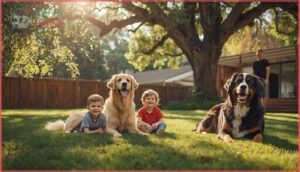
Finding the right large dog for your family isn’t just about falling in love with a breed—it’s about matching your lifestyle, space, and kids’ needs to a dog who’ll thrive in your home. You’ll want to think through practical things like your yard size, daily routine, grooming commitment, and whether your toddler or teenager will be the primary playmate.
Choosing the right large dog means matching the breed to your family’s lifestyle, space, and children’s ages—not just falling for a face
Let’s walk through the key factors that’ll help you make a choice everyone can feel good about.
Assessing Space and Activity Levels
Before you commit to a large dog, honestly evaluate your home’s space requirements and your family’s daily routines. Most family-friendly dog breeds need at least 60 minutes of structured exercise each day, plus room to roam. Yard size matters—athletic breeds demand more activity levels than laid-back giants.
Your dog ownership and responsibility starts with matching breed characteristics and traits to your lifestyle.
Considering Children’s Ages
Your child’s age shapes every aspect of dog selection and parental guidance. Toddlers under five need breeds with outstanding patience and constant supervision—one rough play moment can escalate quickly.
For family dynamics with school-age kids, consider:
- Energy matching: Active children thrive with playful family-friendly dog breeds like Labs
- Impulse control: Large dogs mature slowly, affecting child safety around younger kids
- Supervision capacity: Your schedule must support consistent monitoring during interactions
Kid-friendly dog breeds with proven gentleness reduce risk while building lasting bonds.
Grooming and Health Needs
Once you’ve matched your family’s rhythm with a breed’s temperament, turn your attention to Coat Maintenance and Shedding Control—think daily brushing for double coats and regular trims for curly fur.
Nutrition Planning matters, too; big dogs need customized diets to support joint health.
Routine Veterinary Care keeps Dog Health and Wellness on track, especially with family-friendly dog breeds prone to orthopedic issues.
Long-Term Commitment and Care
Beyond grooming sessions, your FamilyFriendly Dog Breeds journey stretches ten to twelve years. You’ll budget $1,500–$3,000 annually for Veterinary Costs and preventive screenings, plus daily exercise that demands at least an hour.
Housing Requirements mean sturdy fencing and indoor space for a 100-pound companion.
Lifespan Planning includes hip dysplasia monitoring and senior-dog adjustments—Pet Ownership Responsibilities that shape Dog Health and Wellness for the entire pack.
Frequently Asked Questions (FAQs)
What are the grooming needs for large breeds?
You don’t need a full-time groomer—just consistency.
Brush your large dog’s coat 2–3 times weekly to manage shedding control, trim nails monthly, and clean ears and teeth weekly for canine health and wellness.
How to manage space with big dogs indoors?
You can use baby gates to create indoor dog zones, provide a dedicated dog crate for rest, and increase vertical enrichment with platforms.
This furniture optimization aids space saving for big dogs indoors.
Do large dogs require special nutrition?
Big appetite, bigger responsibility—large dogs definitely need specialized nutrition planning. Their calorie management and feeding schedules must support orthopedic health during growth while preventing obesity, ensuring your gentle giant thrives alongside your family.
Are large dogs good for apartment living?
Large dogs can thrive in apartments with proper exercise, mental stimulation, and access to outdoor space. Breed-specific energy levels and noise tolerance matter more than size alone for apartment compatibility.
How much exercise do big dogs need?
Most family-friendly dog breeds need 60 to 120 minutes of daily exercise, depending on their energy expenditure rates. Physical activity levels support joint health considerations and mental stimulation requirements for overall well-being.
What are common health issues in large breeds?
Hip dysplasia, elbow issues, and cardiac problems affect many large dogs. Bloat prevention matters for deep-chested breeds, while orthopedic care manages joint strain. Early screening and proper weight management help your gentle giant stay healthier longer.
How much do large dogs typically cost annually?
Owning a gentle giant is like fueling a small car—you’ll spend $1,200 to $2,500 yearly on food expenses, veterinary bills, insurance options, and maintenance costs for your family-friendly pet’s care and training needs.
Are large dogs suitable for apartment living?
While big dogs can adapt to apartment living, they need 1–2 hours of daily exercise, mental stimulation, and access to outdoor space. Calm, adaptable breeds fare better in urban settings than high-energy giants.
What safety precautions prevent accidents with small children?
Supervise all interactions closely and teach children calm approaches from the side. Establish no-rough-play rules to ensure safety.
Use barriers during meals, maintain consistent routines, and educate kids on safe dog handling to prevent accidents.
How do you travel safely with big dogs?
Buckle up—safe travel with large dogs means securing them in crash-tested crates or harnesses during car safety adventures.
Planning air travel logistics early, scheduling veterinary care check-ups, and maintaining pet insurance are essential for road trips with family-friendly dog breeds.
Conclusion
A big dog’s paw resting gently on a child’s shoulder isn’t just affection—it’s trust, built through thoughtful selection and patient care. When you choose from these dog breeds for families with big dogs, you’re not simply adding a pet; you’re welcoming a devoted guardian who’ll grow alongside your children.
Match breed traits to your household’s rhythm, commit to early training, and you’ll discover what countless families already know: the biggest hearts often come in the largest packages.
- https://www.linkedin.com/posts/bohdanlukianets_tasks-study-research-activity-7373377539521667072-UTEi
- https://www.akc.org/dog-breeds/great-pyrenees/
- https://en.wikipedia.org/wiki/Dogue_de_Bordeaux
- https://www.hillspet.com/dog-care/dog-breeds/leonberger?msockid=22a3bb1daf0863082185af72ae5a62b7
- https://academichelpexpress.blog/2024/08/please-use-the-bulleted-points-and-the-rubric-below-to-guide-your-work-your-pa/