
This site is supported by our readers. We may earn a commission, at no cost to you, if you purchase through links.

The letter "B" pulls more than its weight in the dog world. Beagles alone rank among America’s top ten most popular breeds year after year—and that’s before you count Bulldogs, Boxers, Bernese Mountain Dogs, and a dozen others that share that same first letter.
Whether you’re drawn to a compact Bichon Frise curled up on your lap or a commanding Boerboel standing guard at your gate, the range is staggering.
Size, temperament, grooming needs, health quirks, price tags—every "B" breed tells a different story.
Here’s what you need to know before falling for one.
Table Of Contents
- Key Takeaways
- Popular Dog Breeds Starting With B
- Rare B Dog Breeds
- B Breeds by Size
- Temperament and Work Roles
- Care, Health, and Cost
- Frequently Asked Questions (FAQs)
- What dog breed starts with B?
- What are the different breeds of B?
- What type of dog starts with the letter B?
- What is a dog name that starts with B male?
- What is the most popular dog B?
- What shepherd dog starts with B?
- How do B-breed dogs adapt to climates?
- What health issues affect B-breed dogs?
- How do B-breed dogs perform in dog shows?
- What are the oldest B-breed dogs historically?
- Conclusion
Key Takeaways
- "B" breeds span an almost wild range — from the 7‑lb Bichon Frise to the 264‑lb Boerboel — so matching size to your actual living situation isn’t optional, it’s everything.
- Health surprises hit harder with flat‑faced breeds like Bulldogs and Boston Terriers, where breathing issues and skin‑fold care are daily realities, not occasional concerns.
- If allergies are a deal‑breaker in your home, the Bichon Frise, Basenji, and Bedlington Terrier are your best bets — their low‑shedding coats genuinely make a difference.
- Bigger doesn’t just mean more food and space — larger B breeds like the Bernese Mountain Dog, average only 7–10 years, so your commitment timeline looks very different than with a Beagle at 12–15.
Popular Dog Breeds Starting With B
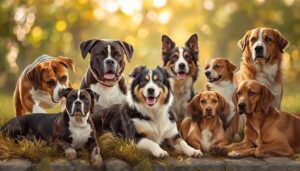
There’s a reason so many beloved dogs have names starting with B — this letter covers some of the most iconic breeds on the planet. Whether you’re drawn to a laid-back lap dog or a high-energy companion who keeps up with your morning runs, the "B" lineup has something for you.
Here are eight popular breeds worth knowing before you make your choice.
From fluffy Pomeranians to fearless Chihuahuas, this complete guide to toy dog breeds breaks down what makes each one unique so you can find your perfect match.
Beagle Breed Profile
The Beagle is one of those dogs that just wins you over — compact, curious, and full of personality. Weighing 20–25 lbs and living 12–15 years, they’re a solid long‑term companion. They possess roughly 220 million scent receptors, far surpassing humans.
- Temperament: Friendly, social, and stubbornly lovable
- Vocalization Tendencies: Expect baying — they’re vocal scent hounds
- Nutrition Portion Control: Watch portions; obesity sneaks up fast
- Socialization Strategies: Early exposure keeps them well‑rounded and calm
Boxer Breed Profile
If Beagles win you over quietly, Boxers walk in and own the room.
This dog breed’s health standout weighs 55–70 lbs with a ground-covering gait that’s pure athlete. Their muzzle head ratio sits at 1:3, balancing those signature Head Proportions perfectly.
The Coat Color Palette runs fawn to brindle.
Their Temperament? Loyal, playful, and endlessly entertaining — a Playful Interaction Style that never really grows up.
Bulldog Breed Profile
Where Boxers bring the energy, Bulldogs bring the soul.
This breed is the definition of low-key loyalty — a stout body build packed with affection. But don’t let that wrinkled face fool you; there’s real care involved:
- Facial wrinkle hygiene needs daily attention to prevent infection
- Brachycephalic issues mean heat sensitivity is a genuine health concern
- Lifespan runs 8–10 years, with prices from $2,000–$4,000
Bernese Mountain Dog Profile
From wrinkled and compact to big and breathtaking — meet the Bernese Mountain Dog. This large dog breed carries real Alpine Heritage: calm, loyal, and built for cooler climates.
Climate Adaptability matters here; Bernese don’t love summer heat.
Their dog coat types require regular brushing, and diet management keeps weight in check.
For dog temperament, think gentle giant — with Socialization Tips and Mental Stimulation, they truly shine.
Bichon Frise Breed Profile
Don’t let the size fool you — the Bichon Frise packs a whole lot of heart into a tiny frame. This cheerful companion dog breed tops the list for White Coat Maintenance needs, requiring daily brushing and grooming every four to six weeks.
Hypoallergenic and low‑shedding, it’s a smart pick if you’re allergy‑prone.
With Energy Management — just 30 minutes of daily activity — and strong Socialization Needs met through playtime, Longevity Factors favor this breed well, often reaching 14 to 15 years.
Basset Hound Breed Profile
The Basset Hound is a scent hound built low to the ground with a nose that’s practically legendary — roughly 2,000 times sharper than yours. Those Long Ears aren’t just adorable; they funnel scent straight to the nose.
Keep these dog breed health priorities in mind:
- Ear Infections — clean weekly
- Obesity Management — watch portions closely
- Low-Impact Exercise — daily gentle walks
- Gentle Training — patience wins every time
Basenji Breed Profile
Meet the Basenji — a compact body, a curled tail, and a personality that keeps you guessing. This breed doesn’t bark; instead, you’ll hear a signature baroo howl that’s impossible to forget.
With strong prey drive and natural scent signaling instincts, Basenjis need daily challenges. They’re low shedding, live 12–14 years, and reward patient, reward-based training with genuine loyalty.
Boston Terrier Breed Profile
Boston Terriers wear their tuxedo markings like they were born for a night out — and honestly, that confident charm matches their personality perfectly.
Developed right in Boston, this compact breed tops out at 25 pounds with a distinctive square head shape.
They’re smart, adaptable, and genuinely apartment-friendly.
Just watch for brachycephalic breathing issues — that adorable flat face comes with real health responsibilities worth knowing.
Rare B Dog Breeds

Not every great dog makes the top-ten lists, and honestly, that’s where things get interesting. If you’re the kind of person who likes going off the beaten path, these rare B breeds might be exactly what you’ve been looking for.
Here are six you probably haven’t heard of — but absolutely should know.
Bavarian Mountain Scent Hound
If you want a dog built for the mountains, the Bavarian Mountain Scent Hound delivers.
This rugged scent hound thrives in alpine terrain adaptation, using its excellent scent discrimination skills to track across uneven trails in tough conditions.
Calm, loyal, and great with kids, it bonds closely with family.
Expect strong rugged weather resilience and impressive longevity expectations — often reaching the mid-to-high teens.
Bouvier Des Flandres
The Bouvier des Flandres carries serious Working Dog Heritage — this is one of the most capable herding dog breeds you’ll find.
Loyal, confident, and sharp, it thrives with Mental Stimulation Games and daily exercise.
Eye Health Monitoring matters here, as glaucoma can appear in some lines.
For smooth Family Integration Advice: socialize early.
Expect 10–12 good years with consistent Seasonal Coat Care.
Bluetick Coonhound
If the Bouvier is all business, the Bluetick Coonhound is all heart — and all nose.
This scent hound sports a gorgeous Blue Tick Pattern coat and those signature Long Floppy Ears that practically drag the ground.
That Deep Bay Bark is basically your dog singing on the trail.
Expect High Stamina, some Independent Stubbornness, a 10–12 year lifespan, and consistent training from day one.
Boykin Spaniel
The Boykin Spaniel swaps the trail hound’s baying for something quieter — a wagging, chocolate-coated shadow that follows you everywhere.
This South Carolina breed origin story is pure hunting-camp charm, built compactly at 25–40 lbs.
- Coat Shade: Rich liver brown, glossy and medium-length
- Ear Structure: Long, pendulous, silky
- Tail Docking: Common in working lines
Genuinely one of the best family-friendly dogs you haven’t met yet.
Black Russian Terrier
If the Boykin won you over with charm, the Black Russian Terrier earns respect through sheer presence.
This breed’s history traces to Soviet military development — built for endurance, loyalty, and guard instincts that run deep. Males stand up to 30 inches and weigh 132 pounds.
| Characteristic | Details |
|---|---|
| Coat Color Genetics | Dense, solid black double coat |
| Breed Standard Weight | 88–132 lbs |
| Anesthesia Sensitivity | Pre-anesthetic testing advised |
| Weight Management | Critical for joint health |
A true large dog breed with serious dog breed characteristics and temperament.
Barbet Breed Overview
After the bold Black Russian Terrier, meet something altogether more joyful — the Barbet Dog, France’s beloved French Water Dog built for splashing through marshes with a wagging tail.
- That Curly Woolly Coat is genuinely Hypoallergenic
- Facial Beard charm that melts hearts instantly
- Intelligent Trainability that makes every session rewarding
Weighing up to 65 pounds with a 12–15 year lifespan, Water Retrieval is their superpower. Dog grooming needs and Dog health considerations stay manageable with routine care.
B Breeds by Size
Size matters more than you’d think when choosing a B breed — it shapes everything from how much space you need to how much energy you’ll be managing daily. Whether you’re in a cozy apartment or have a big backyard to offer, there’s a B breed built for your situation.
Here’s how they break down.
Small B Dog Breeds

Small dog breeds starting with B pack a lot of personality into a tiny frame. The Beagle (20–25 lbs), Bichon Frise (7–12 lbs), and Boston Terrier all make wonderful family friendly dogs and low shedding dogs.
Prioritize dental care, ear cleaning, and socialization tips early.
Consistent training methods and weight management keep these toy and small companion dog breeds thriving well into their mid-teens.
Medium B Dog Breeds
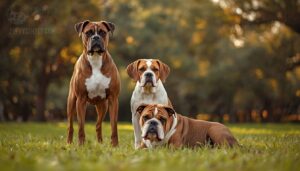
Medium B dog breeds — think Boxer, Beagle, and Bulldog — hit that sweet spot between compact and sturdy, usually weighing 25–60 lbs.
Their dog breed characteristics and temperament make them genuinely adaptable: solid space requirements are modest, and their dog breed temperament suits most families well.
Factor in age-specific care, nutrition balance, and early socialization strategies, and you’ve got a lifelong companion.
Large B Dog Breeds
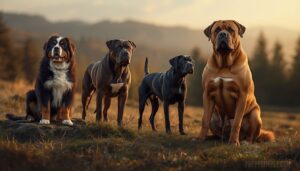
Regarding large dog breeds starting with B, size shapes everything — from Space Requirements to Joint Health and beyond. These dogs thrive with room to move and structured Training Methods.
- Bernese Mountain Dog – 70–115 lbs, loyal, cold-weather lover
- Bullmastiff – 110–130 lbs, calm guardian, low-energy indoors
- Black Russian Terrier – 80–130 lbs, protective, needs mental stimulation
- Boerboel – 154–264 lbs, powerful, demands consistent leadership
Giant B Dog Breeds

Giant B dog breeds are built like landmarks—impossible to miss. Their Late Maturity means you’re raising a puppy until nearly age two, while Longevity Factors like nutrition and joint care directly shape their 7–10‑year lifespan.
| Breed | Key Trait |
|---|---|
| Boerboel | 165+ lbs, powerful guardian |
| Black Russian Terrier | Protective, mentally demanding |
| Bullmastiff | Calm indoors, cardiac-prone |
| Bloodhound | Scent-driven, hip-sensitive |
| Borzoi | Lean giant, agile runner |
Hip Dysplasia Incidence and Heart Conditions are real concerns across these giant dog breeds—don’t skip annual vet screenings.
Apartment-friendly B Breeds

Not every dog needs a backyard to be happy. The Bichon Frise — a top pick among apartment-friendly dog breeds — thrives in compact spaces, hitting all the marks: low shedding, gentle noise sensitivity, and natural space optimization.
Beagles and Bulldogs adapt well too, especially with smart indoor enrichment routines.
Your companion dog breeds for apartments deserve good pet-friendly flooring and clean air quality above all.
Active-home B Breeds

Got an active household?
Some B breeds were practically built for it. The Belgian Malinois and Border Collie need at least two hours of daily movement — think indoor agility courses, puzzle challenges, and interactive toys woven into your family routines.
These high-energy B breeds for active owners thrive on mental stimulation. Match their dog breed energy level and temperament, and they’ll reward you endlessly.
Temperament and Work Roles
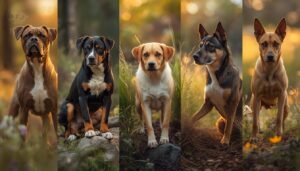
Every "B" breed brings something different to the table — some are born family dogs, others are wired to work. Whether you want a loyal guardian, a tireless hunter, or a calm couch companion, there’s a B breed that fits your life.
Here’s how they break down by temperament and role.
Family-friendly B Breeds
When you’re thinking about family bonding activities, the right dog makes all the difference. These breeds are genuinely great with kids:
- Beagle – gentle, playful, 12–15-year lifespan
- Boxer – protective yet loving, thrives with active families
- Bulldog – calm and patient, perfect home integration
- Bernese Mountain Dog – loyal giant, loves outdoor adventures
Dog breed compatibility with kids starts with temperament — and these four deliver.
Guard and Protection Breeds
Not every B breed is built for snuggles — some are wired to watch. Breeds like the Boerboel and Belgian Malinois carry deep territorial instincts, making them natural guard dog breeds when paired with proper alertness training and restraint techniques.
Vocal deterrence is their first line of defense. Just remember: strong guarding instincts mean real legal liability without consistent, structured handling.
Hunting and Scent Hounds
Where guard breeds hold the line, scent hounds chase it. Beagles and Basset Hounds are built for Scent Trail Mapping — their long ears literally funnel odors toward the nose. Bloodhounds take it further, sustaining Long-Distance Endurance across miles of terrain.
Baying Communication keeps handlers locked in during Pack Hunting Dynamics, even when Seasonal Weather Effects thin the trail.
Herding and Working Breeds
Scent hounds follow their noses — herding breeds use their whole bodies.
Herding Instincts run deep in dogs like the Belgian Malinois, whose Working Drive and Sensory Acuity make them natural at reading movement and guiding livestock.
Their Historical Roles shaped impressive Task Versatility, shifting easily from farm work to search-and-rescue.
These working dog breeds need daily structured activity of 60–90 minutes to truly thrive.
Calm Companion Breeds
Not every dog wants to run a marathon — and that’s perfectly fine.
Calm companion breeds like the Bulldog, Bichon Frise, and Bernese Mountain Dog bring Low‑Stress Bonding and Quiet Home Integration to family life naturally.
Their docile temperament traits make Gentle Play Sessions and a Consistent Feeding Schedule enough.
For family-friendly dog breeds, these companion dogs truly deliver.
High-energy Athletic Breeds
Some dogs don’t do "lazy Sundays" — and Boxers and Beagles are proof. These high-energy B breeds for active owners thrive on Agility Competition, daily runs, and Mental Stimulation that keeps their minds just as tired as their legs.
Boxer endurance conditioning demands 90+ minutes of activity. Beagles need scent challenges and brisk hikes.
Stamina Nutrition and Injury Prevention matter — working dog roles require a committed, active lifestyle.
Care, Health, and Cost

Choosing the right "B" breed isn’t just about personality — it’s also about knowing what you’re signing up for health-wise, coat-wise, and wallet-wise. Every breed comes with its own set of care needs, potential vet bills, and grooming demands that can make a real difference in your daily life.
Here’s what you need to know before you bring one home.
Lifespan Comparisons
Size vs longevity is the real story here — bigger B breeds like the Bernese Mountain Dog average just 7–10 years, while petite Beagles and Bichon Frises reach 12–15.
Bigger B breeds live shorter lives — Bernese Mountain Dogs average 7–10 years, while Beagles and Bichon Frises reach 12–15
Genetic lifespan factors matter too, but so do your choices. Obesity impact, activity level influence, and consistent veterinary preventive care can genuinely stretch a dog’s healthy years, whatever their dog breed lifespan naturally allows.
Common Health Concerns
Every B breed comes with its own health playbook. Bulldogs battle brachycephalic breathing issues, while Bernese Mountain Dogs face joint arthritis and orthopedic wear early in life — key health considerations for large B breeds.
Ear infections, dental disease, bloat risk, and parasite prevention all factor into dog breed lifespan.
Don’t skip vet visits; they’re your best defense for lifespan and health information for dog breeds.
Shedding and Coat Types
Your B breed’s coat isn’t just about looks — it shapes your whole grooming routine.
Here’s what you’re working with:
- Double Coat Structure means Seasonal Blowout Timing hits twice yearly — spring and fall shedding surges that bury your furniture.
- Curly Coat Matting sneaks up fast without regular trims.
- Wire Coat Grooming needs hand‑stripping, not just brushing.
Smooth coats? Much easier. Undercoat Insulation drives the heaviest dog grooming needs.
Hypoallergenic B Breeds
Not all B breeds will have you reaching for the antihistamines.
If Dander Control matters in your home, these hypoallergenic dog breeds are worth a serious look.
| Breed | Coat Type | Why It Helps |
|---|---|---|
| Bichon Frise | Curly, non-shedding | Low-shedding Play, less dander |
| Basenji | Short, fine | Minimal allergen spread |
| Bedlington Terrier | Curly, trapping | Better Indoor Air Quality |
Breed-specific Allergy responses vary, but these Allergy-friendly B breeds non-shedding coats make allergy-friendly housing genuinely possible.
Grooming and Maintenance Needs
Keeping a B breed looking its best isn’t complicated — but it does take consistency. Your Bathing Schedule, Ear Care Routine, and Nail Trimming Frequency all work together:
- Use the right Coat Brushing Tools for your breed’s texture
- Check Paw Pad Protection after muddy walks
- Clean floppy ears weekly to prevent buildup
- Trim nails before they affect your dog’s stride
Typical Price Ranges
Budget matters as much as grooming gear.
Puppy Purchase Costs for B breeds vary widely — Bulldogs run $2,000–$4,000, while Beagles average $800–$1,500. Adoption Fee Variations mean rescue dogs can cost as little as $100.
Regional Price Differences and Seasonal Price Fluctuations shift things too. Breeding Cost Factors like champion bloodlines push prices higher, so knowing the dog breed price range upfront saves surprises.
Exercise and Training Needs
Beyond the price tag, your real investment is time and energy. B breeds span the full spectrum — from the Bichon’s gentle daily strolls to the Boxer’s need for vigorous runs.
- Start Leash Training Techniques early with short, positive sessions
- Build Recall Conditioning on a long line before going off-leash
- Use Socialization Exercises in calm, low-distraction settings first
- Keep Obedience Consistency through daily, brief practice
Match Activity Level Progression to your lifestyle honestly.
Frequently Asked Questions (FAQs)
What dog breed starts with B?
There are dozens of dog breeds that start with B — Beagles, Boxers, Bulldogs, Bernese Mountain Dogs, and Bichon Frises, among the most loved.
Each brings its own personality, size, and story.
What are the different breeds of B?
From Beagles to Bernese Mountain Dogs, there’s a surprising range of B breeds out there — each with its own genetic lineage, regional popularity, and breed recognition standards shaped by centuries of history.
What type of dog starts with the letter B?
Variety is the spice of life — and dog breeds starting with B prove it.
tiny Bichons to mighty Bernese, you’ll find companions spanning every size, temperament, and historical development imaginable.
What is a dog name that starts with B male?
Some great male dog names starting with B include Buddy, Bruno, Baxter, Bear, and Blaze. Bruno means "brown" in German — solid for strong breeds. Buddy tops popularity rankings worldwide.
What is the most popular dog B?
Like a chart-topper that never leaves the playlist, the Beagle consistently dominates Search Volume Rankings, Breed Popularity Surveys, and Google Trends Data — making it the most popular B breed in the US.
What shepherd dog starts with B?
shepherd dogs start with B.
The Belgian Sheepdog, Belgian Malinois, Belgian Tervuren, Belgian Laekenois, Bouvier des Flandres, Bergamasco, and Bohemian Shepherd all bring strong herding instincts, loyalty, and working drive to the table.
How do B-breed dogs adapt to climates?
B-breed dogs adapt through coat insulation, panting efficiency, cold-weather energy boosts, microclimate creation, and ear heat release — each trait fine-tuned to their environment.
What health issues affect B-breed dogs?
Think of B-breed dogs like vintage cars — beautiful and beloved, but needing extra care.
Watch for Brachycephalic Breathing issues, Skin Fold Dermatitis, Ear Infections, Joint Dysplasia, and Dental Disease as key health considerations for B-breed dogs.
How do B-breed dogs perform in dog shows?
B breeds shine in dog shows when they nail breed standards — think smooth gait presentation, excellent coat care, and calm ring etiquette.
AKC dog show judges reward structure, expression, and show training above all.
What are the oldest B-breed dogs historically?
Some B breeds carry thousands of years of history.
Ancient Basenji Origins trace back to 4000 BCE in Central Africa — making the Basenji one of the oldest working dogs your family could welcome home.
Conclusion
The right dog finds you as much as you find it.
Among dog breeds that start with B, that truth holds especially well—whether a scent-driven Beagle keeps pulling you back or a gentle Bernese makes every room feel warmer.
You’ve now got the profiles, the health realities, and the honest cost of ownership.
Trust what you’ve learned here, honor what your lifestyle actually allows, and your B breed will reward you for a lifetime.