This site is supported by our readers. We may earn a commission, at no cost to you, if you purchase through links.

Your dog spots the chip before it hits the floor—and in one lightning move, it’s gone. Most pet owners have been there, and the first instinct is to wonder whether that salty little triangle just became a veterinary emergency.
Tortilla chips sit in a nutritional gray zone for dogs: not acutely toxic like grapes or chocolate, but not harmless either.
A single plain chip rarely causes trouble, yet the ingredients that make chips so satisfying for humans—the salt, the oil, the crunch—work against your dog’s health in ways that add up faster than you’d expect.
Understanding exactly what’s inside those chips, and how your dog’s body processes them, makes the difference between an informed choice and a costly mistake.
Table Of Contents
- Key Takeaways
- What’s Inside Tortilla Chips?
- Can Dogs Eat Tortilla Chips? Rarely
- Why Salt is Dangerous for Dogs
- How Fat Harms Dogs
- Which Chips Are Most Risky?
- How Many Chips Are Too Many?
- What if Your Dog Ate Them?
- Frequently Asked Questions (FAQs)
- Can dogs eat tortilla chips?
- Can dogs eat corn chips?
- Can dogs eat corn tortillas?
- Are tortillas bad for dogs?
- Is it okay to feed dogs tortilla chips?
- How many tortilla chips can I give my dog?
- Can I give my dog a little bit of chips?
- Is it safe to feed my dog tortilla chips?
- Are there any healthy versions of tortilla chips I can feed my dog?
- How often can I give my dog tortilla chips?
- Conclusion
Key Takeaways
- A chip or two won’t rush your dog to the vet, but tortilla chips are high in salt and fat, with almost no nutritional value, so they’re a snack best kept rare and small.
- Salt is the biggest hidden danger—even one ounce can push a small dog past its entire daily sodium limit, risking dehydration, kidney strain, and in serious cases, sodium poisoning.
- Flavored varieties like nacho cheese, spicy, or garlic-seasoned chips are genuinely toxic territory, since onion and garlic powders break down red blood cells even in small, repeated amounts.
- If your dog does sneak a chip, watch for excessive thirst, vomiting, lethargy, or dark urine—and call your vet if symptoms don’t settle quickly.
What’s Inside Tortilla Chips?

Before deciding if tortilla chips are okay for your dog, it helps to know exactly what’s in them. Most people grab a handful without thinking twice about the ingredients, but details matter when you’ve got a dog eyeing your snack bowl.
Ingredients like salt, onion powder, and certain oils can be surprisingly problematic, much like the hidden risks covered in this breakdown of what dogs can safely snack on versus chips to avoid.
Here’s a closer look at what makes up a typical tortilla chip.
Typical Ingredients: Corn, Oil, and Salt
Most tortilla chips share the simple foundation: corn, vegetable oil, and salt. The corn starch profile forms the crunchy base, while oil fatty acids add fat and calories. Salt crystal size affects how intensely salty each chip tastes.
- Corn provides starch but no essential canine nutrients.
- Vegetable oil makes chips high in fat.
- Salt makes chips high in salt content.
- Additive-free chips skip flavorings but still carry risks.
Calories, Carbs, Fat, and Sodium Per Serving
A single 28-gram serving packs roughly 140 calories, 19 grams of carbohydrates, 7 grams of fat, and 115 mg of sodium. That calorie density and fat saturation add up fast — one serving already approaches half your dog’s daily fat allowance.
With sodium nearing or exceeding a small dog’s daily sodium threshold, the energy balance tips into risky territory with almost zero nutritional value of treats.
Fried Vs Baked Tortilla Chips
Both fried and baked chips look similar in the bag, but oil absorption tells a different story. Fried chips soak in more fat during cooking, making them higher in fat and harder on your dog’s digestion. The original recipe uses a high smoke point oil for shallow frying, which contributes to the higher fat content.
Here’s what sets them apart:
- Oil Absorption – Fried chips retain considerably more oil than baked chips
- Crisp Texture – Frying creates a sharper snap; baking produces a lighter crunch
- Browning Flavor – Frying deepens flavor intensity through oil-assisted browning
- Labeling Cues – Check the bag; "baked" means oven heat, not deep-fried oil immersion
- Digestibility Differences – Baked chips are easier on a dog’s stomach, though still risky
Even baked versions stay high in salt, and sodium toxicity in dogs is a real concern regardless of cooking method.
Why Tortilla Chips Offer Little Canine Nutrition
Even baked chips sidestep the fat problem but can’t escape their biggest flaw — poor nutrition for dogs. Think of them as junk food in disguise: high starch, low protein, low fiber, limited vitamins, and sparse minerals.
Here’s a quick nutritional analysis of tortilla chips compared to what dogs actually need:
| Nutrient | Per 28g Serving | Dog’s Daily Need |
|---|---|---|
| Protein | 2g | 25–30g |
| Fiber | 1g | 3–5g |
| Fat | 7g | 14–17g |
| Sodium | 115mg | Under 100–200mg |
| Vitamins/Minerals | Minimal | Broad spectrum |
High in salt and loaded with empty calories, tortilla chips are simply human foods that offer dogs nothing worth the risk.
Can Dogs Eat Tortilla Chips? Rarely

Yes, dogs can technically eat tortilla chips, but "can" doesn’t mean "should."
There are a few things worth knowing before you toss one to your pup.
Here’s what the answer actually depends on.
The Short Answer: Only Tiny Amounts
Can dogs eat tortilla chips? Technically yes, but the tiny amount definition matters here — we’re talking one small piece, maybe once in a while.
That’s real moderation feeding. Even that snack carries calorie impact and salt toxicity risk, so veterinary guidance leans toward caution.
If you’re weighing the risks, understanding the full calorie and sodium impact of Funyuns on dogs helps put even a small handful in perspective.
Think of it as a rare exception, not a behavioral cue to repeat.
Why Tortilla Chips Should Not Be Regular Treats
Feeding tortilla chips regularly sets your dog up for real trouble. They’re energy dense, easy to overfeed, and high in salt and high‑fat content — a combination that drives obesity in dogs and raises pancreatitis risk.
There’s also acrylamide risk from high‑heat cooking, low fiber content, micronutrient deficiency, and additive concerns from processed seasonings.
Your dog’s kidneys weren’t built to handle that daily burden.
When a Plain Chip is Less Risky
If you’re wondering "can dogs eat tortilla chips" at all, plain unsalted tortilla chips are the safer choice — though still not ideal. Their simplified flavor profile means no onion, garlic, or spice blends hiding in the ingredients.
Plain chip benefits include:
- Lower additive load with fewer irritants
- Reduced choking hazard when broken small
- Easier digestibility without complex seasonings
- Simplified flavor profile with predictable ingredients
They’re still high in salt and fat, so vet advice on human food consistently points the same direction: keep it rare and tiny to avoid salt toxicity.
Dogs That Should Avoid Them Completely
some dogs shouldn’t have even one chip. If your dog has heart disease, kidney disease, or a history of pancreatitis, high salt and fat make tortilla chips genuinely risky — not just unhealthy.
obesity-prone and allergic dogs face similar concerns, since extra fat worsens weight gain and seasonings can trigger digestive upset in dogs. For these pups, salt toxicity isn’t hypothetical.
Why Salt is Dangerous for Dogs

Salt is one of the biggest reasons tortilla chips are a poor choice for dogs, even in small amounts. A single ounce can push your dog past their entire daily sodium limit before you’ve finished your snack.
Here’s what you need to know about how that salt affects them.
How Much Sodium Tortilla Chips Contain
Salt adds up faster than you’d think. A single ounce of tortilla chips already packs a serious sodium punch:
- Plain chips — ~170 mg sodium per oz
- Taco flavored — ~223 mg (Flavor Sodium Differences matter)
- Nacho cheese — ~174 mg per serving
- Homemade chips — ~235 mg (Homemade Sodium Levels aren’t safer)
- Sodium per 100g — ranges from 15 mg to over 1,000 mg
That label sodium variance means serving size impact is everything—one handful can exceed your dog’s entire daily limit.
Why Small Dogs Face Higher Risk
Tiny dogs carry a much bigger burden when sodium sneaks in. Because of their lower body mass ratio, even a few chips can push them past their daily sodium limit quickly. Dehydration speed accelerates quickly, stomach sensitivity flares, and choking susceptibility rises if a chip isn’t broken up first.
| Risk Factor | Why It Hits Small Dogs Harder |
|---|---|
| High sodium content | Less body mass to dilute it |
| Dehydration speed | Smaller fluid reserves deplete faster |
| Choking susceptibility | Narrower airway, quicker obstruction |
| Fast symptom escalation | Fewer buffers mean quicker decline |
Signs of Salt Overload and Dehydration
Once a small dog crosses that sodium threshold, symptoms can appear faster than you’d expect. Signs of salt toxicity and its effects on dogs include electrolyte imbalance that shows up physically pretty quickly.
Watch for:
- Excessive thirst and repeated water‑seeking
- Dry gums and skin tenting that doesn’t spring back
- Dark urine or reduced output
- Lethargy or sudden weakness
High sodium content drives a serious dehydration risk.
Long-term Strain on Kidneys and Heart
Those acute symptoms are just the opening act. Over time, high salt content keeps blood pressure elevated, triggering a hypertension cascade that strains both the kidneys and heart simultaneously.
Fluid overload worsens the cycle — kidneys struggle to filter waste, waste toxin accumulation follows, and vascular calcification stiffens blood vessels.
Vets call this cardiorenal syndrome.
For dogs with existing kidney damage or heart disease, even occasional salty snacks accelerate that decline.
How Fat Harms Dogs

Salt isn’t the only thing working against your dog when they sneak a chip — fat is quietly doing its own damage.
Tortilla chips are surprisingly greasy, and dog’s digestive system just isn’t built to handle that kind of load.
Here’s what the fat in those chips can actually do to your dog’s body.
Why Oily Snacks Upset Canine Digestion
Dogs process food much faster than we do, and their digestive systems aren’t built to handle greasy snacks like tortilla chips.
High fat content triggers a chain reaction inside your dog’s gut:
- Bile overproduction floods the intestine, irritating the lining
- Intestinal inflammation sets in quickly after fatty food
- Gut microbiota shift disrupts healthy bacterial balance
- Stool consistency changes appear, often as loose, greasy stools
- Delayed gastric emptying causes bloating and discomfort
That’s why even a small handful of oily chips can cause noticeable digestive upset.
Pancreatitis Risk From High-fat Chips
That greasy residue on your fingers after a chip? Your dog’s pancreas feels it too — just from the inside.
When the pancreas faces an acute fat load, it releases a flood of digestive enzymes. That enzyme overload can trigger pancreatic inflammation, sometimes called post‑meal pancreatitis.
| Warning Sign | What It Means |
|---|---|
| Hunched posture | Abdominal pain from pancreatic inflammation |
| Repeated vomiting | Digestive enzyme strain overwhelming the gut |
| Refusing food | The body signaling distress after fat intake |
| Lethargy | System-wide response to internal inflammation |
High‑fat snacks, especially fried chips, are among the most cited dietary hazards in veterinary advice. The safety of feeding tortilla chips to dogs really comes down to this: the fat content leading to pancreatitis in dogs isn’t theoretical — it’s a documented clinical risk.
Fat from fried chips doesn’t just upset a dog’s stomach — it triggers pancreatitis, and that risk is clinically proven
Empty Calories and Unhealthy Weight Gain
Tortilla chips don’t just add calories — they add the wrong kind. Their high fat content and high salt content deliver calorie density without real nutrition, leaving your dog’s body chasing satiety that never comes. That’s the empty calories trap: eating without nourishing.
Over time, this pattern drives:
- Snack overconsumption from poor satiety reduction
- Nutrient deficiency as chips crowd out balanced meals
- Gradual obesity from sustained calorie surplus
Weight management for dogs depends on what fills the bowl.
Why Fried Chips Are Worse Than Baked
If you’re choosing between fried and baked chips for your dog, fried ones are clearly harder on their system.
Oil absorption during frying drives up high fat content, risking digestive delay and pancreatitis.
Flavor overload, brittle texture, and acrylamide formation add extra concerns.
| Factor | Fried Chips | Baked Chips |
|---|---|---|
| Fat Content | High | Lower |
| High Salt Content | More intense | Milder |
| Digestive Risk | Greater | Reduced |
Which Chips Are Most Risky?
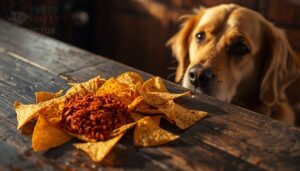
Not all tortilla chips carry the same risk for your dog — some varieties are far more dangerous than others. The specific ingredients in certain flavors can push a harmless snack into genuinely toxic territory.
Here’s what to watch out for most.
Flavored Chips With Onion or Garlic Powder
Flavored chips are where the real danger starts.
Onion and garlic powders — common seasoning additive risks hiding in plain sight — trigger garlic hemolysis, breaking down your dog’s red blood cells. powder residue levels on a chip’s surface count.
Onion toxicity is cumulative, so repeated flavoring chemical exposure adds up fast, making these varieties genuinely unsafe regardless of portion size.
Spicy Chips and Stomach Irritation
Spicy tortilla chips bring a whole new layer of risk. Capsaicin — the compound behind that "gut burning sensation" — irritates your dog’s stomach lining and can trigger digestive inflammation, nausea, and diarrhea.
Dogs don’t process spice the way we do, so even a few chips high in salt, fat, or spices can cause real digestive upset and gastrointestinal issues. When in doubt, ask your vet.
Nacho Cheese and Heavily Seasoned Varieties
Nacho cheese chips are basically a triple threat — high sodium, dairy allergens from cheese powder, and additive chemicals that create a palatability boost, strong enough to make your dog want more. That flavor intensity is the problem.
If you’re asking "can dogs eat tortilla chips" with heavy seasoning, the answer leans firmly toward no, given the real health risks of feeding dogs tortilla chips.
Why Doritos and Similar Chips Are Unsafe
Doritos hit dogs with a perfect storm — seasoning sodium overload, high temperature chemistry from frying that creates acrylamide risk, and artificial additive concerns that offer zero canine nutrition.
Can dogs eat Doritos? No.
The palatability overeating trap is real; dogs gulp multiple chips fast.
Combined with the health risks of feeding dogs tortilla chips — salt toxicity, high fat impact on canine health, and allergy and choking risks — it’s simply not worth it.
How Many Chips Are Too Many?

Even if tortilla chips aren’t toxic on their own, quantity still matters more than most people realize. A few crumbs here, and there’s a very different situation than your dog hoovering up a handful.
Here’s what you need to know about keeping portions safe.
Safe Portion Size for a Small Taste
If you’re wondering how many tortilla chips can dogs eat, keep it to one small chip — broken into quarters. chip piece size matters more than you’d think.
Even a tiny amount carries real sodium content, so staying under your dog’s sodium threshold is the goal. With owner supervision and weight monitoring, a single broken piece is the safest starting point for calorie counting.
Using The 10% Treat Rule
The 10% treat rule keeps calorie tracking simple. Treats — including chips — shouldn’t exceed 10% of your dog’s daily calories. For most dogs, that’s a very small allowance. Here’s looks like in practice:
- Treat portioning matters: one chip piece can eat up that 10% fast
- Training treat timing adds up — multiple sessions mean more calories
- Weight monitoring helps catch gradual gain early
- Veterinary guidance shapes your dog’s exact daily calorie target
- Health risks of feeding dogs tortilla chips grow when the 10% limit is ignored
So can dogs eat tortilla chips within this rule? Technically yes, but moderation feeding guidelines leave almost no room.
Why Daily Feeding is a Bad Idea
Even if your dog only gets one chip a day, that routine builds behavioral conditioning fast — they’ll expect it every time you open the bag.
Over time, daily sodium content adds up, quietly pushing toward kidney damage and canine obesity. Salt cravings, allergic sensitivities, and pancreatitis risk all grow with repetition.
Moderation is key: occasional is fine, daily isn’t.
Breaking Chips Into Small Pieces to Reduce Choking
Frequency matters, and so does size. Bite size really does matter here.
Chips are hard, with sharp edges that can catch in a dog’s throat — especially for smaller breeds. Always pre-break chips into pieces roughly half an inch or smaller before offering any. This simple texture modification gives your dog adequate chewing time and lowers choking risk.
What if Your Dog Ate Them?
It happens fast — you turn around and the chips are gone. What you do next depends on how many they ate and what kind of chips they were.
Here’s how to handle it, step by step.
When to Monitor at Home

If your dog grabbed a few plain chips, home monitoring is usually enough. Watch vomiting timing — did it happen right after, or hours later?
Track water intake, since salty snacks trigger unusual thirst. Check urine color for dark yellow, a sign of dehydration.
Note behavior changes like lethargy or lip-licking, and sniff for unusual breath odor.
Symptoms That Mean You Should Call a Vet

Some symptoms mean it’s time to stop watching and start calling.
Persistent vomiting, bloody diarrhea, or collapse and fainting all need immediate veterinary attention.
Wheezing and panting at rest can signal serious distress.
Urinary blockage, tremors, or extreme lethargy may indicate symptoms of sodium poisoning in dogs, pancreatitis, or early kidney damage.
Don’t wait to see if things improve on their own.
What to Tell Your Veterinarian

When you call your vet, come prepared. Share the exact brand and flavor of chips, your best chip count, and the ingestion time.
Mention observed symptoms like vomiting or excessive thirst, plus any existing conditions such as kidney or heart disease.
This gives your vet the full picture for sound veterinarian guidance on pet nutrition and the health risks of feeding dogs tortilla chips.
Safer Crunchy Alternatives to Offer Instead

If your pup craves that satisfying crunch, you’ve got plenty of safer swaps to reach for. Try Baked Veggie Sticks like dehydrated carrot slices or oven-crisped zucchini coins — low sodium alternatives that skip the salt and oil entirely.
Lean Protein Crunch options like freeze-dried plain chicken make great safe dog treats, too. These Portioned Veggie Snacks and Roasted Seed Bites are healthy dog snacks, your vet would actually approve.
Frequently Asked Questions (FAQs)
Can dogs eat tortilla chips?
Technically, yes — but barely.
A single plain chip won’t send your dog to the vet, but tortilla chips are salty, fatty, and nutritionally empty, making them a poor treat choice overall.
Can dogs eat corn chips?
Corn chips share the same core concerns as tortilla chips — high salt, added oil, and empty carbs.
They can disrupt electrolyte balance and shift gut microbiota, making them a poor choice for dogs.
Can dogs eat corn tortillas?
Plain corn tortillas are safer than chips — no frying, less salt — but they’re still mostly empty carbs. A tiny piece won’t hurt, though they offer dogs nothing nutritionally worthwhile.
Are tortillas bad for dogs?
Tortillas aren’t toxic, but they’re not great either.
The carbohydrate overload can cause blood sugar spikes, and regular feeding risks gut microbiome disruption — especially in dogs with wheat or corn sensitivities.
Is it okay to feed dogs tortilla chips?
Technically, one plain chip won’t send your dog to the ER — but salt, fat, and hidden seasonings add up fast, making tortilla chips a snack best left out of their bowl.
How many tortilla chips can I give my dog?
If you choose to share a chip, stick to one small piece — about 1 to 2 chips max. That’s it.
Portion scaling matters: your dog’s size, sodium intake, and feeding schedule all affect what’s safe.
Can I give my dog a little bit of chips?
Yes, a tiny piece once in a while is unlikely to cause harm — but keep it plain, unsalted, and unflavored.
Veterinary consultation is always smart before sharing any human snack with your dog.
Is it safe to feed my dog tortilla chips?
Technically, no — a single plain chip won’t poison your dog, but tortilla chips bring real risks: high sodium, excess fat, and allergy risk from hidden seasonings that can quietly harm gut health.
Are there any healthy versions of tortilla chips I can feed my dog?
Not really. Even organic tortilla chips and low-sodium corn varieties still carry too much salt and fat for dogs.
Homemade dehydrated carrot slices, baked sweet potato, or air-fried veggie chips are genuinely safer, healthier snack alternatives.
How often can I give my dog tortilla chips?
Stick to once or twice a month at most, and only one small piece per session.
Match the portion to your dog’s size — a tiny dog needs far less than a large breed.
Conclusion
Think of your dog’s diet as a savings account—every treat either builds health or quietly drains it.
Regarding whether dogs can eat tortilla chips, the answer is rarely, and never casually.
A stray plain chip won’t empty the account overnight, but salty, oily snacks chip away at it over time.
Keep the balance in your dog’s favor by reaching for a carrot stick instead, and saving the chips for yourself.