This site is supported by our readers. We may earn a commission, at no cost to you, if you purchase through links.

Your dog sniffs that papaya slice on your cutting board, tail wagging, and you pause with the knife mid-air. Good instinct. So, can dogs eat papaya? Yes, but the fruit hides a real split personality: the ripe flesh is packed with gut-friendly enzymes, while the skin and seeds can send your pup to the emergency vet.
That gap between "safe" and "dangerous" sits in just a few inches of peel. Get the prep right, and papaya becomes a low-calorie treat your dog’s digestion will thank you for. Get it wrong, and you’re looking at a blockage or worse.
Let’s break down exactly which parts to use, how much to serve, and how to cut it so nothing goes sideways.
Table Of Contents
- Key Takeaways
- Is Papaya Safe for Dogs?
- Nutritional Benefits of Papaya for Dogs
- How Much Papaya Can Dogs Eat?
- How to Safely Prepare Papaya for Dogs
- Can Puppies Eat Papaya Safely?
- Risks of Papaya Seeds and Skin
- What to Do if Your Dog Overeats Papaya
- Safe Fruit Alternatives to Papaya
- Top Papaya-Friendly Products for Dogs
- Frequently Asked Questions (FAQs)
- Is papaya good for dogs?
- Can dogs eat Papaya skin?
- What happens if a dog eats papaya?
- How much papaya should a dog eat?
- How often can I give my dog papaya?
- Is papaya safe for puppies?
- Are there any side effects of feeding papaya to dogs?
- Are there any alternatives to papaya if my dog is allergic?
- Is there a way to reduce the sugar content in papaya?
- How often can I give papaya treats to my dog?
- Conclusion
Key Takeaways
- ripe papaya flesh is safe for dogs, since the skin can cause blockages and the seeds contain cyanide compounds along with a choking hazard.
- Serve papaya in ½-inch cubes based on your dog’s weight, ranging from ½ teaspoon for toy breeds to ¼ cup for extra‑large dogs.
- Keep papaya and all treats under 10% of your dog’s daily calories, offering it just once or twice a week to avoid digestive upset.
- Introduce papaya slowly to puppies or first-time eaters, watching closely for 24 hours for signs of allergic reactions or an upset stomach.
Is Papaya Safe for Dogs?

So, is papaya safe for your dog? The short answer is yes, but only certain parts, and only when you prepare it the right way. Let’s break down exactly what’s safe, what’s not, and how to feed it to your pup without any worry.
Just remember that not every part of the fruit gets a green light — for instance, whether papaya seeds are toxic to dogs is worth knowing before you toss the whole thing in the bowl.
Toxic Vs Non-toxic Parts
Since not every part of a papaya is created equal, think of it like a rulebook: the edible flesh is safe, but skin and seeds aren’t.
Seeds carry cyanide compounds and a choking risk. Skin causes intestinal blockage hazards.
Unripe fruit brings latex sap that irritates your dog’s mouth.
Knowing this difference is the first step in canine fruit safety.
Ripe Fruit Vs Skin and Seeds
Ripe papaya pulp is soft and easy to chew, almost pudding-like once it’s ready to eat. Color is your best clue: look for golden-orange skin before cutting in.
Papaya seeds are firm, embedded in the center, and pose real choking risk. Papaya skin is tough and harder to digest.
That’s why safe preparation always means removing both before your dog takes a bite.
Studies have found that fruit scent predicts sugar, suggesting the sweet aroma of ripe papaya signals its high sugar content.
Vet-Approved Feeding Basics
Once you’ve got the skin and seeds off, feeding papaya safely comes down to three habits:
- Start with one small piece and watch your dog’s stool the next day
- Keep treats under 10% of daily calories
- Offer papaya only a few times weekly, not as a daily snack
Loose stool means cutting back. This simple routine keeps digestive health steady while letting your pooch enjoy the benefits.
Nutritional Benefits of Papaya for Dogs

Papaya isn’t just a sweet treat your dog will beg for. It’s actually packed with good stuff that can support your pup’s health in real ways. Here’s what makes this fruit worth adding to your dog’s bowl.
Vitamins A, C, and Potassium
Think of papaya as a tiny multivitamin your dog can actually enjoy. Vitamin A helps retina health, helping your dog see clearly, especially at night. Vitamin C fuels collagen synthesis for strong skin and joints.
| Nutrient | Benefit |
|---|---|
| Vitamin A | Vision, tissue repair |
| Vitamin C | Collagen, healing |
| Potassium | Muscle, nerve function |
Potassium keeps electrolyte balance steady, supporting muscle contraction and heart rhythm in canine nutrition.
Antioxidants and Immune Support
Free radicals build up when your dog’s immune cells work hard fighting off germs, and that’s where papaya’s antioxidants earn their keep. They support redox state balance, easing oxidative stress before it damages healthy cells.
Vitamins A and C team up here too, protecting immune signaling so your dog’s defenses respond the right way, not an overblown one, keeping canine immune support steady and reliable.
Papain Enzyme for Digestion
Ever wonder why papaya feels gentle on the stomach? The answer’s an enzyme called papain, a proteolytic enzyme that breaks proteins into smaller peptides your dog absorbs more easily.
Papain works best in mild pH conditions, similar to your dog’s gut. It helps with:
- Protein breakdown
- Easier absorption
- Less digestive strain
That said, whole papaya isn’t a substitute for measured canine digestive enzyme supplements with precise dosing.
Low-Calorie Treat Value
Here’s the good news: papaya is naturally low-calorie, at just 43 calories per 100 grams, with about 88% water content. That makes it a smart swap for fatty biscuits or jerky.
Its fiber adds bulk, so a few small cubes feel satisfying without piling on sugar or calories. Use it as a weight management snack, not a free-for-all—portion still matters most.
How Much Papaya Can Dogs Eat?

So how much papaya is actually safe? The right amount depends on your dog’s size, and a few simple rules keep treat time from turning into tummy trouble. Let’s break down exactly what that looks like.
Serving Sizes by Dog Weight
Size really does matter here. Toy dogs (3–6 lbs) get just ½ to 1 teaspoon, while small dogs (10–20 lbs) can handle up to 1 tablespoon.
Medium dogs (21–50 lbs) do fine with 1–2 tablespoons, and large breeds (51–90 lbs) can enjoy about 2 tablespoons.
For extra-large dogs (91+ lbs), cap it at ¼ cup—bigger bodies still need portion control to avoid tummy trouble.
Treats and The 10% Rule
Here’s the math that matters: papaya, like all treats, should stay under 10% of daily caloric intake. Everything else needs to come from a complete, balanced diet.
- Measure training treats instead of eyeballing them
- Coordinate with family members giving extras
- Track total daily treats, including chews and scraps
Skipping this invites calorie displacement and throws off nutrient ratios your pup needs.
Signs of Overfeeding
Your dog’s body will tell on you fast if the papaya portion was too big. Watch for vomiting or reflux, loose stools, and diarrhea within hours. Abdominal pain shows up as pacing or a tight, gurgly belly. Lethargy, low activity, and increased thirst round out the picture.
Any combination of these means it’s time for monitoring gastrointestinal upset closely and calling your vet if it lingers.
How to Safely Prepare Papaya for Dogs
Prepping papaya the right way makes all the difference between a healthy snack and a trip to the vet. It only takes a few simple steps, and none of them require any special skills in the kitchen. Here’s exactly how to get it ready for your dog, from picking the fruit to storing the leftovers.
Choosing Ripe Papaya
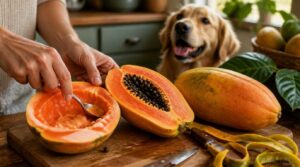
Before your dog gets a single bite, you need a good papaya. Look for skin that’s mostly yellow to orange, press gently for slight give, and sniff the stem end for a sweet smell.
- Skip anything green, hard, or bruised
- Avoid mushy, damaged spots
- Buy ripe fruit only if using it within 48 hours
Once ripe, always remove the skin and seeds before serving.
Removing Skin and Seeds
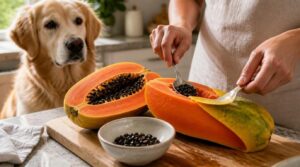
Peel off the skin first, scooping out only the orange flesh with a spoon. Then split the fruit and remove all seeds—they’re hard, choking hazards.
| Part | Action | Why |
|---|---|---|
| Skin | Discard | Fibrous, hard to digest |
| Seeds | Discard in closed bin | Choking, toxin risk |
| Flesh | Keep | Safe, gentle on tummies |
Rinse tools after to avoid cross-contamination.
Cutting Safe, Bite-Sized Pieces

Once the skin’s peeled and seeds are gone, grab a sharp knife and steady cutting board. Papaya flesh gets slippery fast, so cut slowly and keep fingers curled away from the blade.
Aim for ½-inch cubes, no bigger. Consistent sizing helps picky chewers and gulpers alike, giving your pooch bite-sized pieces they can actually chew instead of swallow whole.
Proper Storage After Cutting

Once cubed, tuck papaya into an airtight container right away. This limits air exposure, preventing oxidative browning and keeping pieces fresh longer.
Pat away extra moisture first—soggy fruit spoils faster. Store it in your main fridge (not the door), and toss any batch showing sliminess, mold, or off smells. Use within a few days for the safest, yummiest treat.
Can Puppies Eat Papaya Safely?

Puppies can enjoy papaya too, but their little tummies need a bit more care than an adult dog’s. Their digestive systems are still developing, so what’s fine for a grown dog might not sit as well with a young pup. Here’s what you should keep in mind before sharing this fruit with your puppy.
Introducing New Fruits Gradually
Puppies are curious eaters, but their tummies don’t handle surprises well.
Introduce one new fruit at a time—papaya today, nothing else new this week. Offer a tiny piece, then watch stool and energy for 24 hours before adding more.
Keep the same feeding schedule and prep style each try. This one-at-a-time rule makes reactions easy to trace, keeping your pup’s tummy calm.
Puppy Digestive Sensitivities
Sensitive puppy stomachs aren’t built like adult ones, so digestion works harder with each new food.
Watch for:
- Loose or poorly formed stool
- Excess gas or bloating
- Vomiting after treats
These signs point to food intolerance, not just an upset tummy. If symptoms linger, ease off papaya and call your vet before trying again.
Watching for Allergic Reactions
Since food allergies in dogs can pop up with any new fruit, papaya included, you’ll want to monitor your dog closely after that first bite.
| Symptom Type | What to Look For | Action |
|---|---|---|
| Skin | Hives, redness | Call vet if spreading |
| Breathing | Wheezing, coughing | Emergency vet visit |
| Swelling | Lips, mouth, throat | Immediate emergency care |
| Stomach | Vomiting, diarrhea | Monitor, withhold food |
Risks of Papaya Seeds and Skin

That sweet, ripe papaya flesh is only half the story. The skin and seeds hiding around it can turn a healthy snack into a trip to the vet. Let’s look at exactly why these parts are off-limits for your dog.
Choking and Blockage Hazards
Papaya skin is the real troublemaker here — it’s tough, fibrous, and hard for your dog’s gut to break down, raising real intestinal blockage risk.
Watch for:
- Gagging or pawing at the mouth
- Drooling more than usual
- Distress while breathing
- Vomiting after eating
- Reluctance to eat
Slow-feeding and cutting pieces small go a long way toward preventing choking hazards.
Cyanide Compounds in Seeds
Here’s the part that surprises most owners: papaya seeds contain cyanogenic glycosides, compounds that release actual cyanide when broken down. Chewing triggers enzymatic conversion, and once released, cyanide blocks your dog’s cells from using oxygen properly.
Papaya seeds contain cyanogenic glycosides that release actual cyanide when chewed, blocking your dog’s cells from using oxygen
It’s similar to how amygdalin works in other fruit pits. Bottom line: always remove all seeds before sharing this fruit.
Why Prep Matters Most
Here’s why the extra thirty seconds matter: skipping prep turns a healthy treat into an emergency vet visit. You must remove the skin and seeds every single time, no exceptions.
- Cut the fruit into small pieces (½ inch max)
- Check twice for stray seeds
- Toss tough, fibrous skin completely
- Serve slowly to prevent choking risk for pets
Good prep isn’t optional; it’s the whole safety plan.
What to Do if Your Dog Overeats Papaya

Even careful pet owners slip up sometimes, and your dog might sneak a bigger bite of papaya than planned. Don’t panic if this happens. Here’s what to watch for, how to handle it at home, and when it’s time to call your vet.
Common Symptoms to Watch
Once your dog eats too much papaya, watch for gastrointestinal distress: vomiting, diarrhea, or a tense, gurgly belly. Drooling and pawing at the mouth point to oral irritation. Lethargy or skipping meals often follows an upset stomach.
Hives, facial swelling, or itching signal allergic skin reactions. Any of these, paired with repeated vomiting, raises dehydration risks and warrants close attention.
Home Monitoring Steps
Once you spot those signs, a little tracking goes a long way. Write down the time and amount of papaya given, then check stool and energy over the next few hours.
- Watery stool instead of firm
- Repeated lip licking or drooling
- Dark urine or reduced drinking
Keep offering fresh water and note any changes before deciding your next move.
When to Call The Vet
Some signs mean it’s time to stop watching and start dialing. Breathing distress signs, pale gums, or collapse are true emergencies. So is severe pain, repeated vomiting, or suspected poisoning.
| Symptom | Watch At Home | Call Vet |
|---|---|---|
| Mild upset stomach | Yes | If it lingers |
| Vomiting twice+ | No | Yes, promptly |
| Urinary blockage signs | No | Immediately |
Trust your gut here.
Safe Fruit Alternatives to Papaya

Maybe papaya isn’t sitting right with your pup, or you just can’t find it fresh at the store. Either way, you’ve got plenty of other tasty, dog-safe fruits to choose from. Here are a few good ones worth keeping in your rotation.
Apples, Bananas, and Blueberries
Apples, bananas, and blueberries each bring something papaya doesn’t. Apple pectin aids digestion; ripe bananas offer potassium but more sugar; blueberries pack antioxidants with less sugar impact.
- Apples: fiber-rich skin, remove seeds/center
- Bananas: watch ripeness, sugar rises with sweetness
- Blueberries: low-sugar antioxidant boost
- All: 1-2 tsp starter portions
- Keep treats under 10% of daily calories
Mango, Cantaloupe, and Watermelon
Three summer favorites deserve a spot in your fruit rotation.
Mango is sweet and soft once cubed, but its sugar adds up fast, so stick to a few small pieces. Cantaloupe offers great hydration and beta-carotene with minimal calories. Watermelon is nearly fat-free and mostly water.
For all three: remove rinds and seeds, keep portions small, and watch stool quality after each new fruit treat.
Introducing New Fruits Safely
Whether you’re offering papaya or any new fruit, timing matters as much as the fruit itself. Give it earlier in the day, so you can watch for reactions in daylight rather than overnight.
Start small, skip other diet changes that week, and watch closely for digestive upset or signs of a fruit allergy. One new treat at a time keeps things clear and safe.
Top Papaya-Friendly Products for Dogs
If fresh papaya isn’t always convenient, a few products can bring similar benefits to your dog’s bowl. Some use papaya directly, while others support the same digestive and immune perks in different forms. Here are three worth knowing about.
1. Sherwood Papaya Digestive Support Tablets
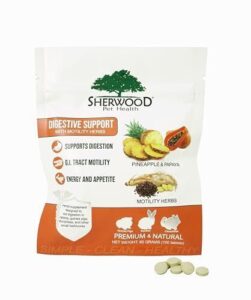
Sherwood Papaya Digestive Support Tablets pack organic, freeze-dried papaya (concentrated 4:1) with papain and bromelain to ease protein digestion. Ginger, panax ginseng, and Szechuan peppercorns support gut motility, while cellulose acts as a prebiotic for healthy bacteria.
Real banana-papaya flavor makes them tasty, though some dogs need a slow introduction to the strong herbal notes. Best for small pets with mild digestive sluggishness—always check with your vet first, especially if your dog has a chronic condition.
| Best For | Small pets, like rabbits and dogs, dealing with mild constipation or sluggish digestion who could use a gentle, natural boost. |
|---|---|
| Contains Papaya | Yes, freeze-dried concentrated |
| Digestive Support | Papain and bromelain enzymes |
| Format | Tablets |
| Vet Guidance Advised | Yes, especially chronic conditions |
| Gradual Introduction | Recommended for herbal flavors |
| Target Animal Size | Small pets only |
| Additional Features |
|
- Made with real fruit flavors and natural enzymes (papain and bromelain) to support digestion, with no artificial flavors, colors, or preservatives
- Combines herbal motility agents (ginger, panax ginseng, Szechuan peppercorns) with a B-vitamin complex for both digestive and energy support
- Offers added antioxidant and immune-supporting benefits from vitamin C, ginger, and ginseng
- Strong herbal flavors may be off-putting at first, so a gradual introduction is often needed
- Formulated for small animals only, not suitable for large-breed pets
- No dosing instructions included, so veterinary guidance is recommended, especially for pets with chronic digestive issues
2. Addiction Venison And Cranberry Dog Food
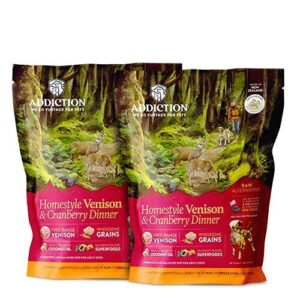
Ever wonder if a dog’s dinner could double as fruit therapy? This dehydrated flake formula uses New Zealand venison as its lead protein, then adds papaya, cranberry, blueberry, mango, and apple for real nutritional punch. Coconut oil and flaxseed round out the omega-3s.
It’s gluten-free, soy-free, and gentle on sensitive tummies. At $67.74 for 2 lb, it’s pricier than kibble, and the small bag won’t stretch far for bigger dogs. Still, it’s a solid pick for pups needing novel proteins.
| Best For | dogs with food sensitivities who need a novel protein source and can’t tolerate common allergens like chicken, beef, or lamb. |
|---|---|
| Contains Papaya | Yes, dehydrated flake blend |
| Digestive Support | Gentle on sensitive tummies |
| Format | Dehydrated flakes |
| Vet Guidance Advised | Not specified |
| Gradual Introduction | Not specified |
| Target Animal Size | All dogs |
| Additional Features |
|
- Novel New Zealand venison protein plus a blend of superfoods offers antioxidant and immune support
- Gluten-free and soy-free formula is gentle on sensitive stomachs
- Added coconut oil and flaxseed support healthy skin, coat, and Omega-3 intake
- Higher price point ($67.74) compared to standard kibble or canned food
- Requires rehydration with water before serving, adding an extra prep step
- Small 2 lb bag may not last long for larger dogs or multi-dog households
3. Waggedy Advanced Dog Probiotics Powder
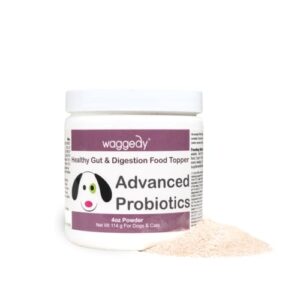
For dogs whose gut just can’t settle, this powder covers a lot of ground. It blends PB6 probiotics (Bacillus subtilis and Bacillus coagulans, 100 million CFU) with digestive enzymes and real papain from papaya to help break down proteins.
FOS prebiotics feed the good bacteria already living in your dog’s gut. Mix a quarter teaspoon per cup of food, it’s unscented and blends in easily, even for picky eaters. Great for seniors or dogs recovering from tummy trouble.
| Best For | Senior dogs, rescues, and picky or sensitive eaters who need a gentle, easy-to-mix daily digestive boost. |
|---|---|
| Contains Papaya | Yes, natural papaya |
| Digestive Support | PB6 probiotics and enzymes |
| Format | Powder |
| Vet Guidance Advised | Yes, not a treatment substitute |
| Gradual Introduction | Recommended to avoid stool changes |
| Target Animal Size | All dogs |
| Additional Features |
|
- Combines PB6 probiotic strains with digestive enzymes and natural papaya for well-rounded gut support
- Unscented powder format blends into any food, making it ideal for dogs that refuse chewables
- Made in a cGMP and NSF-certified facility, so quality and safety standards are high
- May cause temporary changes in stool consistency if not introduced gradually
- Powder can alter food texture, so some dogs may need time to accept it
- Not a substitute for veterinary care in dogs with serious digestive conditions
Frequently Asked Questions (FAQs)
Is papaya good for dogs?
Yes, ripe papaya is a nutritious treat for dogs when served in moderation. It’s packed with vitamins A and C, potassium, and fiber, offering real health perks without much fuss when prepared safely.
Can dogs eat Papaya skin?
Skip it. That tough, fibrous peel is hard to digest, can cause vomiting or blockage, and offers no real benefit. Peel papaya fully before serving, and toss the skin where your pup can’t sneak a bite from the trash.
What happens if a dog eats papaya?
Think of it like a rainbow after rain — mostly harmless, sometimes messy. A little ripe flesh usually causes no problems. But too much, or any skin and seeds, can trigger vomiting, diarrhea, or blockage, so watch closely afterward.
How much papaya should a dog eat?
A good rule of thumb: about half a gram per pound of body weight. Small dogs get a teaspoon or less; medium pups, 1-2 tablespoons; large breeds up to a quarter cup. Always cut smaller if your dog already snacks on other fruits.
How often can I give my dog papaya?
One to two times a week works well for most dogs, keeping sugar intake low. Sensitive stomachs do best with lower frequency and smaller portions—think of papaya as a treat, not a regular menu item.
Is papaya safe for puppies?
Yes, in tiny amounts. Give your puppy just one or two small cubes of ripe, peeled flesh first, then watch for diarrhea or vomiting. Their tummies are more sensitive, so go slow and skip seeds and skin entirely.
Are there any side effects of feeding papaya to dogs?
Too much of a good thing still stings, even for a sweet fruit like papaya. Common side effects include diarrhea, vomiting, and bloating from excess sugar and fiber, plus possible allergic reactions like hives or facial swelling in sensitive dogs.
Are there any alternatives to papaya if my dog is allergic?
Try apples (seeds and center removed), blueberries, seedless watermelon without rind, peeled mango, or prepped strawberries. Introduce one at a time in small pieces, and stop immediately if you notice itching, swelling, or tummy trouble.
Is there a way to reduce the sugar content in papaya?
Good news: you’re not stuck with whatever sugar papaya naturally has. Skip juicing (it strips fiber, speeding sugar absorption), stick to fresh fruit, keep portions modest, and pair small pieces with your dog’s regular protein to slow things down.
How often can I give papaya treats to my dog?
Once or twice weekly works well for most dogs, staying within the daily treat limit of 10% calories. If loose stools show up, cut back frequency until digestion normalizes—your pooch’s gut will thank you.
Conclusion
Papaya is like a peach with a hidden temper: sweet and gentle one moment, risky the next, if you skip the peel and seeds.
So, can dogs eat papaya? Yes, when you stick to ripe flesh in small, bite-sized pieces offered as an occasional treat. Skip the skin, skip the seeds, and skip the guesswork.
Your dog’s belly will feel the difference, and you’ll feel the peace of mind that comes from doing it right.
- https://www.countryvetmom.com/post/papaya-for-dogs-yes-or-no-country-vet-mom-explains-benefits-and-risks-of-papaya-for-dogs-dr-gaffud
- https://nowfresh.com/en-us/blog/can-dogs-eat-papaya
- https://www.adoptapet.com/blog/nutrition/can-dogs-have-papaya
- https://nativepet.com/blogs/health/can-dogs-eat-papaya
- https://www.petmd.com/dog/nutrition/can-dogs-eat-papaya