
This site is supported by our readers. We may earn a commission, at no cost to you, if you purchase through links.

Australian Shepherds burn calories like little furnaces. That herding drive doesn’t switch off just because there’s no flock in the backyard… it shows up as zoomies, pacing, and a metabolism built for work, not the couch.
That’s why generic kibble often falls short for this breed. Your Aussie needs real protein, joint support, and steady energy… not fillers that leave them hungry an hour later.
Finding the best dog food for australian shepherds means matching the bag to the dog in front of you. Here’s where to start.
Table Of Contents
- Key Takeaways
- 10 Best Dog Foods for Australian Shepherds
- 1. Honest Kitchen Chicken Oat Dehydrated Dog Food
- 2. Nutro Ultra High Protein Dog Food
- 3. JustFoodForDogs Beef Potato Dog Food
- 4. Open Farm Turkey and Chicken Dog Food
- 5. Blue Buffalo Chicken Brown Rice Dog Food
- 6. Open Farm Senior Chicken Turkey Kibble
- 7. Acana Lamb Pumpkin Dog Food
- 8. Blue Buffalo Digestive Care Chicken Dog Food
- 9. Portland Pet Food Fresh Dog Pouches
- 10. Natural Balance Low Calorie Dog Food
- Australian Shepherd Nutrition Needs
- Best Food by Life Stage
- Choosing Safe, Quality Ingredients
- Feeding and Switching Tips
- Frequently Asked Questions (FAQs)
- What is the best food for Australian Shepherds?
- What foods are Australian Shepherds allergic to?
- Is blue buffalo good for Aussies?
- What do you feed an Australian Shepherd?
- What dog food do vets recommend in Australia?
- How much should Australian Shepherds eat daily?
- What treats are safe for Australian Shepherds?
- Can Australian Shepherds eat raw food diets?
- How often should Australian Shepherds be fed?
- What foods are toxic to Australian Shepherds?
- Conclusion
Key Takeaways
- Your Aussie’s herding-bred metabolism needs real animal protein, joint support, and steady energy… not generic kibble full of fillers.
- Active adults typically need 25-35 calories per pound daily, and protein should lead the ingredient list to fuel muscle repair after exercise.
- Nutrition needs shift by life stage, so puppies need controlled calcium, seniors need joint support like glucosamine and chondroitin, and working dogs need 30%+ protein.
- Switch foods gradually over 7-14 days using increasing ratios of new to old food, and always check with your vet if digestive issues or weight changes last more than two weeks.
10 Best Dog Foods for Australian Shepherds
Australian Shepherds burn a lot of energy… and their food needs to keep up. You don’t need to guess what works, though. Here are ten options worth a closer look.
If you’re curious how long that boundless energy actually lasts, this guide on when Australian Shepherds naturally start to calm down can help set realistic expectations.
1. Honest Kitchen Chicken Oat Dehydrated Dog Food
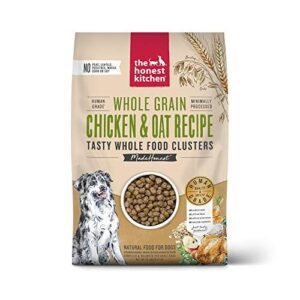
When your Aussie’s bowl needs something more than plain kibble… this one’s worth a look.
Honest Kitchen’s dehydrated clusters use cage-free chicken and oats as the base, rehydrating with warm water to about four times their dry weight.
That’s because whole-grain oats digest gently, while chicken supplies a complete amino acid profile. Added bone and mineral supplements support joint health… important for an active breed prone to hip strain.
It works as a full meal or a topper for existing food.
| Best For | Owners of active, joint-sensitive breeds (like Aussies) who want a human-grade, complete meal or kibble topper without artificial preservatives or fillers. |
|---|---|
| Form | Dehydrated kibble |
| Weight | 20 lb |
| Life Stage | All life stages |
| Primary Protein | Chicken |
| Artificial Preservatives | Free from |
| Grain Content | Contains oats |
| Additional Features |
|
- Made with cage-free chicken, oats, and other human-grade ingredients—no meat meals, GMOs, or artificial preservatives
- Supports joint, coat, and digestive health through omega-3s, fiber, and prebiotic/probiotic ingredients
- Suitable for all life stages, from puppies to gestating or lactating dogs
- Requires rehydrating with warm water, so it’s not as quick as pouring straight kibble
- Costs more per pound than standard dry dog food
- Not a fit for dogs needing low-protein or grain-restricted diets
2. Nutro Ultra High Protein Dog Food
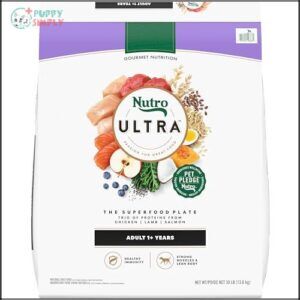
For dogs that need more muscle fuel than joint support, this one steps up.
Real chicken leads the ingredient list, joined by lamb and salmon… a trio that covers a full amino acid profile.
That’s because each protein source brings something different to the bowl. You’ll also find 14 superfoods packed in, plus glucosamine and chondroitin for cartilage health.
No corn or soy here. Just steady, clean energy for an active herding breed that burns through calories fast.
| Best For | Active adult dogs, especially high-energy herding breeds, that need extra muscle support along with balanced, gourmet nutrition. |
|---|---|
| Form | Dry kibble |
| Weight | 30 lb |
| Life Stage | Adult |
| Primary Protein | Chicken |
| Artificial Preservatives | N/A |
| Grain Content | Contains grains |
| Additional Features |
|
- Three animal proteins (chicken, lamb, and salmon) provide a complete amino acid profile for muscle maintenance
- Packed with 14 superfoods, Omega 3 & 6 fatty acids, and antioxidants for coat, immune, and overall health
- Non-GMO formula free from corn, wheat, and soy, with natural fiber for digestive support
- Contains grains like sorghum, barley, oatmeal, and brown rice, which may not suit dogs on grain-free diets
- Includes chicken by-product meal alternatives, which some owners prefer to avoid
- Not specified as suitable for puppies, limiting its use to adult dogs only
3. JustFoodForDogs Beef Potato Dog Food
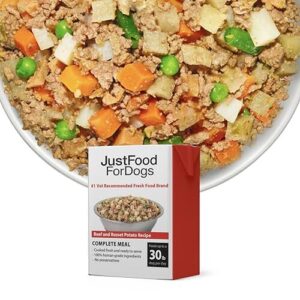
Want fewer additives and more freshness? This one delivers.
Ground beef and russet potatoes lead the recipe, cooked lightly to protect nutrient quality… no fillers, no artificial preservatives.
Added fish oil boosts omega fatty acids for coat health, while calcium and phosphorus stay balanced for bone maintenance. Taurine’s in there too, supporting heart function.
It’s high-calorie by design… good for active Aussies burning through energy. Just know it ships frozen, so you’ll need freezer space and a thawing routine.
| Best For | This food is best for dog owners who want a preservative-free, human-grade meal or topper that’s easy to store and travel with, including pets with sensitive stomachs or chicken allergies. |
|---|---|
| Form | Wet food (Tetra Pak) |
| Weight | 12.5 oz x12 |
| Life Stage | All life stages |
| Primary Protein | Beef |
| Artificial Preservatives | Free from |
| Grain Content | Grain-inclusive |
| Additional Features |
|
- Made with 100% human-grade ingredients like lean ground beef and beef heart, gently cooked to preserve nutrients
- Shelf-stable Tetra Pak packaging means no refrigeration needed until opened, and it stays good for up to 2 years
- Highly digestible (40% more than standard kibble) and great for skin, coat, and digestive health
- Costs more than typical dry kibble
- Texture is a smooth, homogenized paste rather than distinct chunks, which some dogs or owners may not love
- Packaging can be tricky to open without making a mess, and the high potato content isn’t ideal for every dog’s diet
4. Open Farm Turkey and Chicken Dog Food
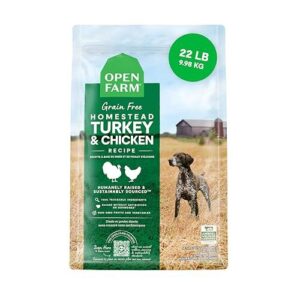
Prefer a kibble that skips the freezer entirely? This one’s built for that.
Turkey and chicken lead the ingredient list, backed by ocean whitefish meal for extra digestible protein. Russet potatoes and legumes like garbanzo beans add fiber without grain.
Coconut oil supplies medium chain triglycerides for coat health… a nice bonus for shedding-prone Aussies.
It’s grain-free and certified for all life stages. Just watch for seafood sensitivities, since whitefish meal is in the mix.
| Best For | Dog owners who want a convenient, freezer-free kibble packed with real turkey, chicken, and ocean whitefish for dogs of any life stage. |
|---|---|
| Form | Pellet kibble |
| Weight | 22 lb |
| Life Stage | All life stages |
| Primary Protein | Turkey/Chicken |
| Artificial Preservatives | Free from |
| Grain Content | Grain-free |
| Additional Features |
|
- Grain-free formula with real turkey and chicken as leading ingredients
- Ethically sourced with 100% ingredient traceability for full transparency
- Coconut oil and salmon oil support coat health and essential fatty acid intake
- Higher price point compared to standard dry dog foods
- Contains whitefish meal, which may not suit dogs with seafood allergies
- Grain-free recipe may not be ideal for dogs with specific grain needs
5. Blue Buffalo Chicken Brown Rice Dog Food
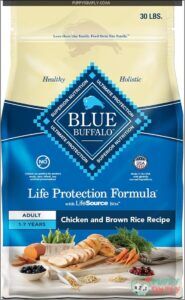
A familiar name on grocery shelves, and for good reason.
If you’re leaning toward simpler ingredient lists, this guide to grain-free holistic dog food options breaks down what actually sets these brands apart.
Deboned chicken leads the ingredient list, backed by chicken meal for extra protein. Brown rice, barley, and oatmeal supply steady energy… gentle on digestion for most Aussies.
LifeSource Bits add antioxidants and minerals for immune support. Flaxseed contributes omega fatty acids for skin and coat.
That’s because glucosamine is also included, supporting joints during long hikes or herding sessions. Skip it if you’re avoiding grains.
| Best For | Active adult dogs, especially Aussies and other working breeds, who need natural everyday nutrition and can tolerate grains. |
|---|---|
| Form | Dry kibble |
| Weight | 30.28 lb |
| Life Stage | Adult |
| Primary Protein | Chicken |
| Artificial Preservatives | Free from |
| Grain Content | Contains grains |
| Additional Features |
|
- Real deboned chicken supports lean muscle and steady energy for active dogs
- LifeSource Bits and Omega 3 & 6 fatty acids promote immune health plus healthy skin and coat
- Glucosamine included to support joint mobility during hikes or herding sessions
- Contains grains like brown rice, barley, and oatmeal, so it’s not suitable for grain-free diets
- Packaging may vary slightly from the product images shown online
- Needs proper storage to keep nutrients from breaking down over time
6. Open Farm Senior Chicken Turkey Kibble
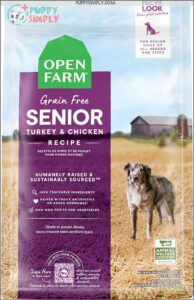
As your Aussie’s muzzle grays, protein needs shift… not less, just different.
This recipe leans on humanely raised turkey and chicken, paired with glucosamine and chondroitin sulfate for aging joints. Pumpkin and sweet potato keep digestion easy.
Coconut oil helps with skin and coat, too.
No corn, wheat, or soy here. That’s a plus if your senior Aussie has grain sensitivities… but check with your vet before switching foods this late in life.
| Best For | senior Aussies who need extra joint support and do well on a grain-free, protein-rich diet. |
|---|---|
| Form | Pellet kibble |
| Weight | 22 lb |
| Life Stage | Senior |
| Primary Protein | Chicken/Turkey |
| Artificial Preservatives | Free from |
| Grain Content | Grain-free |
| Additional Features |
|
- Glucosamine and chondroitin sulfate from turkey and chicken support hip and joint mobility
- Pumpkin, sweet potato, and coconut oil aid digestion and keep skin and coat healthy
- 100% traceable, ethically sourced ingredients with no corn, wheat, soy, or artificial preservatives
- Formulated specifically for senior dogs, so it’s not suitable for puppies or adults
- Grain-free recipe may not fit dogs that actually do better with grains in their diet
- Contains seafood ingredients like ocean whitefish and herring meal, which may not work for dogs with fish sensitivities
7. Acana Lamb Pumpkin Dog Food
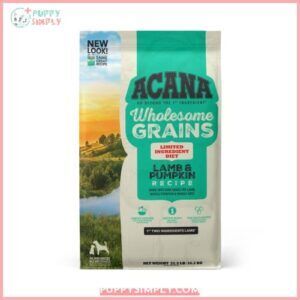
Lamb shines here… a single animal protein source that’s gentler on sensitive stomachs.
That’s because it skips chicken entirely, which helps if your Aussie reacts to poultry.
Pumpkin adds digestible fiber, while prebiotics and probiotics support gut health. Around 60% of the meat content comes from lamb, giving you real amino acid density, not fillers.
No corn, wheat, or artificial colors. Just don’t expect it labeled for large-breed puppy growth.
| Best For | dogs with chicken sensitivities or allergies who need a single-source protein diet with real digestive support. |
|---|---|
| Form | Dry kibble |
| Weight | 22.5 lb |
| Life Stage | All life stages/Adult |
| Primary Protein | Lamb |
| Artificial Preservatives | N/A |
| Grain Content | Contains grains |
| Additional Features |
|
- Single-source lamb protein makes it gentle on sensitive stomachs and easy to identify triggers for food allergies
- Prebiotics and probiotics work alongside pumpkin’s fiber to actively support gut health
- Free of corn, wheat, and artificial colors, keeping the ingredient list clean and simple
- Not labeled or formulated for large-breed puppy growth, so it’s not a fit for every life stage
- Higher price point than standard dog foods may stretch some budgets
- Requires a gradual transition period, so it’s not ideal if you need to switch foods quickly
8. Blue Buffalo Digestive Care Chicken Dog Food
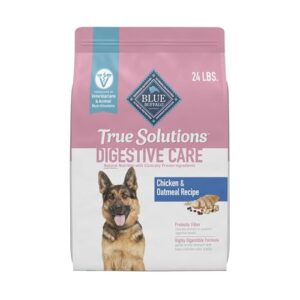
Sensitive stomach? This one’s built for it.
Deboned chicken leads the ingredient list, backed by prebiotic fiber for gut health.
That’s because beet pulp and tomato pomace work together to firm up stool quality… a real concern for Aussies prone to digestive upset.
No corn, wheat, or soy fillers. No poultry by-product meals either.
Flaxseed and canola oil round out the recipe, delivering omega-3s and omega-6s for coat health.
Formerly called Blissful Belly, same trusted formula either way.
| Best For | Adult dogs with sensitive stomachs who need extra digestive support and firmer stool quality. |
|---|---|
| Form | Dry kibble |
| Weight | 24.24 lb |
| Life Stage | Adult |
| Primary Protein | Chicken |
| Artificial Preservatives | Free from |
| Grain Content | Contains grains |
| Additional Features |
|
- Real deboned chicken is the first ingredient, backed by clinically proven prebiotic fiber for gut health
- Free from corn, wheat, soy, and poultry by-product meals, with flaxseed and canola oil adding omega-3s and omega-6s
- Formulated by veterinarians and animal nutritionists specifically for sensitive digestion
- Contains various supplements and mineral chelates, which some owners prefer to avoid
- Packaging may look different from the product photos shown online
- Recipe was rebranded from "Blissful Belly," which could confuse returning buyers looking for the old name
9. Portland Pet Food Fresh Dog Pouches
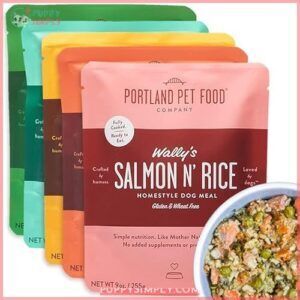
No fridge, no fuss… this one lives in your pantry.
Portland Pet Food’s pouches skip refrigeration entirely, with 11 or fewer ingredients per recipe. Real protein leads every formula… Salmon N’ Rice, Beef N’ Rice, Chicken & Yams.
That’s because whole foods, not fillers, do the heavy lifting here.
Microwave-safe packaging warms meals fast, which matters for picky Aussies who turn their noses up at cold food.
Human-grade, made in the USA… a solid grab-and-go option for busy households.
| Best For | Busy dog owners with picky eaters or dogs of any life stage who want a convenient, real-food meal without the hassle of refrigeration or thawing. |
|---|---|
| Form | Wet food (pouch) |
| Weight | 5 pouch pack |
| Life Stage | All life stages |
| Primary Protein | Salmon/Beef/Chicken/Turkey/Pork |
| Artificial Preservatives | N/A |
| Grain Content | Contains rice |
| Additional Features |
|
- Shelf-stable and microwave-safe, so meals are easy to store and warm up fast
- Made with human-grade, whole food ingredients and 11 or fewer components per recipe
- Versatile enough to serve as a full meal, mixer, or topper for dogs of any size or age
- Not suitable for cats, so multi-pet households need separate meals
- Owners of dogs with allergies need to check ingredient lists carefully
- Wet food format may cost more per serving than traditional dry kibble
10. Natural Balance Low Calorie Dog Food
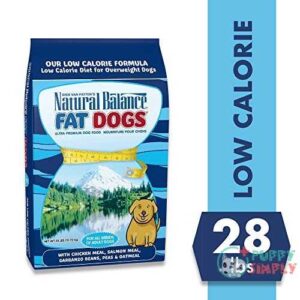
Weight creeping up on your Aussie? This formula takes it head-on.
Chicken meal and salmon meal supply lean protein, while 25% fewer calories than standard recipes keeps the scale in check. A fiber mix from oats and peas promotes satiety… your dog feels full, not deprived.
Added L-carnitine helps metabolize fat naturally.
That’s because weight control isn’t just about eating less. It’s about eating smart, with muscle-preserving protein doing the real work.
| Best For | Adult dogs of any size who need to shed extra pounds without losing muscle tone along the way. |
|---|---|
| Form | Dry kibble |
| Weight | 28 lb |
| Life Stage | Adult |
| Primary Protein | Chicken meal |
| Artificial Preservatives | N/A |
| Grain Content | Contains grains |
| Additional Features |
|
- Chicken meal and salmon meal deliver lean protein to help maintain muscle during weight loss
- 25% fewer calories plus a fiber-rich blend keeps dogs feeling full, not deprived
- Batch-tested through the Feed with Confidence program for added safety and transparency
- Not built for high-energy or performance dogs, since it’s formulated specifically for weight control
- Contains grains and legumes like garbanzo beans, peas, and barley, which may not work for dogs with grain sensitivities
- Packaging may look different than what’s pictured, so it’s worth double-checking before you buy
Australian Shepherd Nutrition Needs

Australian Shepherds aren’t your average couch companion… they’re bred to move. That means their bodies need the right fuel, not just any bag of kibble. Here’s what actually matters when you’re checking a label.
Protein and Fat Balance
Muscle doesn’t build itself… it needs raw material.
That’s why protein comes first for your Aussie, supplying amino acid profiles for muscle repair timing after herding or fetch sessions.
Fat matters too, but differently:
- Fuels energy density without huge food volume
- Aids fat digestion efficiency
- Triggers satiety hormone response
Aim for a fat-protein ratio favoring protein… it’s biologically appropriate, and it meets AAFCO protein requirements for active dogs.
Refer to this guide on optimal fat-to-protein ratio for detailed recommendations.
Calories for Active Aussies
Protein builds muscle… but calories fuel the miles.
Active Aussies need 25 to 35 calories per pound daily, so a 40-pound dog burns roughly 1,000 to 1,400 calories.
| Activity Level | Daily Calorie Range |
|---|---|
| Moderate | 1,300–1,750 |
| Highly Active | 2,000+ |
| Working/Herding | 35+ cal/lb |
| Senior | Reduced |
| Puppy | Growth-based |
Weigh weekly… adjust portions 5-10% as needed.
Omega-3 and DHA Benefits
Calories fuel the miles… but omega-3s build the dog running them.
Nearly half your Aussie’s brain is fat, and DHA makes up 15 percent of it. That’s why puppies need it early… they hit 80 percent adult brain size by six months.
DHA also helps with vision, joint health, immune response, and trainability… fewer inflammatory flare-ups, sharper focus, calmer training sessions.
Fiber and Digestion Support
A sharp brain needs a steady gut behind it.
Soluble fiber from oats or beet pulp slows digestion… insoluble fiber adds bulk for firmer stool.
Prebiotics feed good bacteria. Probiotics and digestive enzymes round out gut health.
Watch stool quality closely. Too soft? Add fiber sources like pumpkin. Always pair with hydration needs… water keeps things moving.
AAFCO Life Stage Profiles
Reading a dog food label can feel like decoding a secret language.
That’s where AAFCO nutrient profiles help. They define two categories: growth and reproduction and adult maintenance.
- Growth needs 22% protein minimum
- All Life Stages meets the higher growth standard
- Labels must state feeding trials or analysis
Check for the AAFCO statement… it tells you exactly which nutritional life stages your Aussie’s food covers.
Best Food by Life Stage

Your Aussie’s nutrition needs shift as they move through life… puppy, adult, and senior stages each call for something different. Activity level matters too, especially for working or herding dogs, and so does keeping weight in check. Here’s what to look for at every stage.
Australian Shepherd Puppies
Growing joints need careful fuel. Puppy development moves fast between 12 and 16 weeks, so calcium must stay controlled… too much raises hip dysplasia risk.
Wellness Complete Health Large Breed Puppy fits well here, with calibrated calcium and DHA for coordination.
Teething starts around 3-4 weeks. Offer safe chew toys during vaccination rounds and early socialization… crate training pairs nicely with mealtime routines.
Adult Australian Shepherds
By age two, your Aussie’s growth plate closes and priorities shift… from building bone to maintaining it.
Life stage nutrition now means steady protein without excess calcium. No breed-specific standard exists, so look for AAFCO "adult maintenance" labeling instead.
Daily exercise, joint support, and coat care matter more here. That’s why vet-recommended dog food for adult Aussies balances energy with restraint… not excess.
Senior Australian Shepherds
Seven or eight is when you’ll start noticing it… slower on stairs, stiffer after naps.
That’s why joint health support matters now. Look for glucosamine, chondroitin, and omega-3s in the food itself.
Calorie needs drop too. Choose higher-protein, lower-fat formulas for weight management, and keep vet checkups every 6-12 months to catch changes early.
Working and Herding Aussies
A working Aussie burns fuel like a herding drive burns instinct… fast and often.
Ranch dogs logging 60-120 active minutes daily need high protein dog food, often 30%+ on a dry matter basis, to fuel muscle recovery and sustained pressure work on cattle or sheep.
Support joint health support with omega-3s… terrain-adapted conditioning demands it for uneven ground and long mustering days.
Weight Management Needs
Some Aussies just aren’t built for the herding life… couch time adds up fast.
For weight loss, aim for 1-2 lbs weekly with 25-30% protein and 10-15% fat formulas. Measure portions carefully. Pair meals with daily walks, watch treats closely, and keep joint health in mind… extra weight stresses hips over time.
Choosing Safe, Quality Ingredients

Not every bag on the shelf is telling you the full story. Ingredients matter just as much as the numbers on the label… maybe more. Here’s what to look for before you buy.
Real Animal Protein Sources
Protein quality matters more than the percentage on the bag.
Look for real animal protein sources first on the label… chicken, beef, turkey, fish. Lean chicken delivers about 26g per 100g. Beef adds iron and zinc. Fish brings omega-3s for coat health. Eggs offer complete amino acids. Organ meats pack extra nutrients.
That’s ingredient quality assessment in action… it protects your Aussie’s biologically appropriate diet.
Grain-free Versus Grain-inclusive
Grain-free isn’t automatically better for your Aussie.
Grain-inclusive diets offer steady fiber from oats and rice, supporting digestion and glucose control. Grain-free formulas lean on legumes, which can affect mineral absorption in sensitive dogs.
Grain allergies are rare… true triggers are usually protein sources. Ask your vet about taurine balance before switching, especially for life stage feeding needs in your biologically appropriate diet plan.
Limited Ingredient Formulas
Some Aussies just can’t tolerate a long ingredient list.
That’s where a Limited Ingredient Diet helps. These formulas use one or two novel proteins… think venison or duck… paired with a single carb source. Fewer ingredients means easier allergy management.
Check the label for AAFCO Standards confirming complete nutrition. Digestive benefits often show up within two weeks of a gradual switch.
Avoiding Artificial Additives
A limited ingredient diet cuts down on triggers… but what’s still in that short list matters just as much.
Check for BHA and other synthetic preservatives. Real quality comes from natural preservation methods… vitamin E, rosemary extract… not lab-made chemicals.
- Clean label ingredients with recognizable names
- No artificial colors or dyes
- Additive-free flavor from real meat and broth
- Synthetic-free formulas using natural preservatives
- Non-artificial ingredients throughout the recipe
Human-grade Food Options
Human-grade" isn’t a marketing buzzword… it’s a legal standard.
Human-grade isn’t marketing spin—it’s a legal standard your dog’s food actually has to meet
That’s because every ingredient must meet food safety rules fit for your own kitchen.
Brands like The Honest Kitchen, The Farmer’s Dog, JustFoodForDogs, and Open Farm deliver whole food nutrition with minimal processing and transparent labeling. Many offer veterinary-approved meals… giving your Aussie real, recognizable food instead of rendered byproducts.
Feeding and Switching Tips
Picking the right food is only half the job. How you feed it matters just as much… calories, portions, and timing all play a role. Here’s what you need to know before you fill that bowl.
Daily Calorie Guidelines

How many calories does your Aussie actually need?
It depends on weight, age, and activity level… a moderately active adult usually needs 1,300–1,750 calories daily, highly active dogs closer to 2,000+.
Puppies burn more per pound for growth. Senior dogs need fewer calories, unless they’re still herding hard. Adjust when body condition changes.
Portion Control Basics

Eyeballing portions leads to weight creep.
Try the plate method: half non-starchy veggies, a quarter lean protein, a quarter carbs like rice or potatoes. Use measuring cups or a scale… 3-4 oz protein per serving is typical.
Split calories across two meals, smaller snacks. Track portions weekly and check body condition score… ribs should be easy to feel, not seen.
Safe Food Transition Steps

Switching foods too fast is a top cause of tummy trouble.
Use gradual mixing ratios: 25% new to 75% old for days 3-5, then 50/50, then 75/25. Finish within 7-14 days.
Track digestive symptom tracking daily… loose stool, vomiting, low energy. Keep water fresh for hydration. Puppies and seniors need slower pacing, matched to their life stage and AAFCO standards.
Wet, Dry, or Fresh

Wet, dry, or fresh… which wins for your Aussie?
It depends on Moisture Content and lifestyle. Dry dog food offers energy-dense Nutrient Density and easy Storage Requirements. Wet dog food boosts hydration, great for picky eaters. Fresh dog food delivers real texture dogs love.
All can meet AAFCO Standards. Mixing works too… just follow proper changing methods to avoid GI upset.
When to Ask Your Vet

Food isn’t a fix for everything.
If itching lasts more than 14 days, or you spot weight loss, appetite changes, or digestive issues… call your vet.
Joint problem signs matter too. A board-certified nutritionist can build a vet-formulated plan when your Australian Shepherd needs more than a veterinary-recommended food off the shelf… one that actually meets AAFCO Standards for their specific health picture.
Frequently Asked Questions (FAQs)
What is the best food for Australian Shepherds?
Your best bet is a formula with 25-30% protein and 15-25% fat, matched to your dog’s life stage and activity level. Look for real animal protein first on the label… quality ingredients matter more than trends.
What foods are Australian Shepherds allergic to?
It’s not one-size-fits-all… beef, dairy, wheat, chicken, and soy top the list. Symptoms hit skin and gut alike, so a novel protein or limited ingredient diet often helps you pinpoint the real culprit.
Is blue buffalo good for Aussies?
Yes, with caveats. Real chicken and LifeSource Bits support joint health and sensitive skin, but 20-25% protein and brown rice run lighter than ideal… check your Aussie’s activity level and grain tolerance before committing.
What do you feed an Australian Shepherd?
Think of it like fueling a working athlete… Aussies burn through energy fast.
Feed vet-recommended dog food matched to life stage… puppy, adult, or senior… with quality protein, balanced fat, and controlled portions split across two daily meals.
What dog food do vets recommend in Australia?
Australian veterinarians often lean on Royal Canin, Hills Science Diet, and Purina Pro Plan… trusted for life stage accuracy and AAFCO-aligned formulas.
For healthy adult Aussies, some also approve Advance or Ziwi Peak, provided the diet meets AS 5812:2017 standards.
How much should Australian Shepherds eat daily?
Most adults need 800–1,400 calories daily, scaled by weight and activity… a 40 lb dog often uses 900–1, Puppies eat more per pound, seniors less. Feed twice daily, and adjust portions as body condition changes.
What treats are safe for Australian Shepherds?
An apple a day works for dogs too… in moderation. Plain cooked chicken, blueberries, and carrot sticks make safe training rewards. Skip chocolate, grapes, and onions entirely… always toxic, no exceptions for your Aussie.
Can Australian Shepherds eat raw food diets?
Yes, but only with care. Raw diets carry bacterial contamination risks and parasite potential, plus nutritional balance concerns without proper AAFCO standards.
Bone safety hazards matter too… always get a veterinarian-approved plan and monitor your Australian Shepherd closely during the switch.
How often should Australian Shepherds be fed?
Puppies need 3 to 4 meals daily… adults shift to two, spaced 12 hours apart. Seniors often do best with one or two, portion-controlled and activity-adjusted. Skip free feeding… it invites weight gain and digestive upset.
What foods are toxic to Australian Shepherds?
Some kitchen staples are off-limits for good. Onions, garlic, and grapes can trigger organ damage… macadamia nuts cause tremors, xylitol crashes blood sugar fast, and excess salt strains kidneys. When in doubt, skip it.
Conclusion
Your Aussie could outrun a freight train on the right fuel… that’s not far off. But speed means nothing without the substance behind it.
The best dog food for australian shepherds isn’t the flashiest bag on the shelf. It’s the one matching real protein, joint support, and steady energy to your dog’s actual life.
Read labels. Ask your vet. Watch the coat, stool, and energy… they’ll tell you if it’s working.
- https://www.thehonestkitchen.com/blogs/pet-food-ingredients/best-dog-food-for-australian-shepherd
- https://www.prodograw.com/raw-feeding-guide/australian-shepherd-feeding-guide
- https://www.dogfoodadvisor.com/best-dog-foods/australian-shepherds
- https://www.petmd.com/dog/breeds/australian-shepherd
- https://autumncreekaussies.com/ideal-diet-for-quality-breed-aussies