This site is supported by our readers. We may earn a commission, at no cost to you, if you purchase through links.
Most dog owners touch their pet’s nose almost on instinct—a quick check that’s become as routine as filling the water bowl. The idea that a cold, wet nose signals a healthy dog runs so deep in popular belief that a warm or dry nose can send people straight to the internet in a panic.
Here’s the thing: nose temperature alone tells you surprisingly little about your dog’s health. A dog’s nose shifts between warm and cool, wet and dry, dozens of times throughout the day based on sleep, exercise, weather, and breed anatomy—none of which indicate illness.
Table Of Contents
- Key Takeaways
- Dog Nose Temperature Basics
- Should Dogs Noses Be Cold
- Factors Affecting Dog Nose Temperature
- Health Indicators and Nose Temperature
- Nose Moisture and Temperature Regulation
- What Affects Dog Nose Moisture
- Detecting Health Issues Through Nose
- Dog Nose Temperature and Health
- Maintaining Healthy Dog Nose Temperature
- Monitoring Dog Nose Temperature
- Frequently Asked Questions (FAQs)
- Is a cold nose normal in dogs?
- Is it normal for a dog’s nose to be warm?
- Does a cold & wet nose mean a dog is healthy?
- What temperature should a dog’s nose be?
- Can a dog have a cold nose?
- Should a dog’s nose be cold or warm?
- Is it normal for a dog’s nose to be cold and wet?
- Why does a dog’s nose need to be cold?
- Why is my dog’s nose wet and cold?
- Should a dog’s nose be warm or cold?
- Conclusion
Key Takeaways
- A dog’s nose naturally shifts between warm and cool throughout the day based on sleep, activity, hydration, and weather, so temperature alone tells you very little about their health.
- Persistent dryness, cracking, discoloration, or discharge lasting beyond 24 hours are the real warning signs worth watching, not a temporarily warm or dry nose.
- Breeds with flat faces run warmer noses due to restricted airflow, and well-hydrated dogs consistently show cooler, wetter noses because mucus production stays steady.
- When nose changes appear alongside lethargy, appetite loss, rapid breathing, or shivering, that combination is your cue to call the vet, not the nose change alone.
Dog Nose Temperature Basics
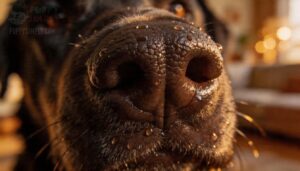
Your dog’s nose temperature isn’t as fixed as most people think — it shifts throughout the day for a handful of reasons. Before assuming something’s wrong, it helps to understand what’s actually driving those changes.
A good starting point is learning to tell apart normal fluctuations from signs of an unhealthy dog nose that actually warrant a closer look.
A few key factors shape nose temperature more than anything else.
Environmental Factors Affecting Nose Temperature
Your dog’s nose temperature shifts constantly based on the environment around it.
Cold dry air and wind chill pull heat from the nose quickly, while indoor heating reduces humidity levels, speeding up moisture loss. High humidity slows evaporation and keeps the nose cooler and wetter.
Direct sunlight exposure warms the surface fast. Seasonal conditions combining low temperatures, dry air, and strong airflow all act together, so weather conditions alone can explain many normal nose temperature changes.
Activity Levels and Nose Temperature
Physical activity sets off a clear chain reaction in your dog’s body. During exercise, increased heart rate drives warm blood to the face, causing a noticeable Exercise Warmth Spike at the nose.
Play Intensity Effects matter too — sprinting or agility work creates more warmth than a casual walk.
Once your dog rests, Blood Flow Dynamics shift, and Post-Exercise Recovery brings a natural Resting Cool Down, usually within 10–30 minutes, as thermoregulation and hydration levels stabilize.
If you notice a warm dry nose may indicate](https://www.dialavet.com/vet-answers/dog-nose-warm-dry-fever-398856), consider checking for fever.
Sleep Patterns and Nose Temperature
Sleep shifts your dog’s nose temperature in surprisingly predictable ways.
During quiet sleep, licking stops, which halts evaporative cooling — this Sleep Onset Warming means you’ll often feel post-sleep warmth right after a nap.
REM Nose Cooling then kicks in, with vasodilation dropping the rhinarium several degrees.
Nasal Cycle Sync keeps airflow balanced across nostrils throughout these stages.
Post-Sleep Cooling follows quickly once your dog wakes and resumes licking, resetting normal circadian rhythm temperature fluctuations.
Should Dogs Noses Be Cold
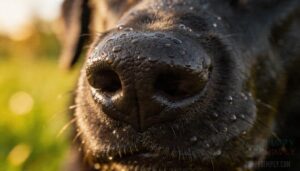
So, should your dog’s nose actually be cold? The honest answer is that it depends on a few things, and cold isn’t the only normal option.
Here’s what actually drives nose temperature and what falls within a healthy range.
Normal Nose Temperature Variations
Your dog’s nose temperature isn’t fixed — it follows a natural diurnal cycle, shifting between cool and warm throughout the day. Thermal imaging data shows healthy noses ranging anywhere from 16°C to 38.3°C, which means normal variations in dog nose temperature are wider than most people expect.
Age-related changes matter too, since senior dogs generally run cooler than puppies. Here’s what shapes those daily temperature fluctuations:
- Morning coolness following overnight rest
- Midday warmth from physical activity
- Evening settling as your dog relaxes
- Seasonal shifts tied to ambient conditions
Understanding these temperature baselines helps you spot genuine health indicators rather than panicking over everyday changes.
Factors Influencing Nose Temperature
Several factors shape your dog’s nose temperature at any given moment. Environmental factors like cold air pull heat away quickly through thermal conductivity, while dry indoor heating strips moisture and leaves the surface warmer.
Blood flow variation increases after exercise, making the nose noticeably warmer post-play. Hydration levels matter too — a thirsty dog often has a drier, warmer nose. Stress and anxiety can shift circulation patterns, affecting surface temperature.
Breed variations play a role as well, since flat-faced dogs face airflow resistance that alters moisture retention. Seasonal changes bring seasonal humidity shifts that cool or dry the nose depending on conditions.
Factors Affecting Dog Nose Temperature
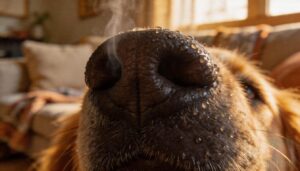
Your dog’s nose doesn’t stay the same temperature all day, and that’s completely normal. A few key factors explain why it shifts from cool and wet to warm and dry within just a few hours.
Here’s what actually drives those changes.
Breed-Specific Traits and Nose Temperature
Your dog’s breed plays a bigger role in nose temperature than most owners realize. Skull Morphology Airflow differs dramatically between breed types, and that shapes how warm or cool the nose runs.
Brachycephalic breeds like bulldogs and pugs show clear Brachycephalic Heat Retention — their restricted nasal passages limit airflow, pushing nose temperatures higher. Longer‑snouted breeds benefit from Dolichocephalic Cooling Efficiency, where greater Nasal Passage Length allows better ventilation across the rhinarium.
Here’s what drives breed‑specific differences in nasal temperature:
- Breed-specific Nose Vascularization — blood supply to the snout varies by skull structure, influencing surface warmth
- Skull shape and airflow — flat‑faced breeds struggle with heat dissipation during panting
- Olfactory surface area — some breeds carry up to 220 million scent receptors, supported by specialized nasal tissue
Understanding breed physiology helps you read your dog’s nose more accurately.
Hydration Levels and Nose Temperature
Water intake has a more direct impact on your dog’s nose temperature than you might think. When hydration status drops, nasal glands slow their Mucus Production Rate, and the surface of the nose loses its natural moisture quickly. That’s where Hydration-Driven Temperature changes become visible — a dry nose that feels warm to the touch is often your first reliable Thirst Cue Assessment signal.
A well-hydrated dog maintains a consistently wet nose because mucus production stays steady. Mild dehydration brings a slightly dry, warm nose alongside reduced energy. Moderate dehydration pushes that warmth further, often with excessive panting. Severe dehydration can leave the nose cracked and hot — a clear Heat Stress Hydration emergency.
Supporting your dog with a Water-Rich Diet, including wet food alongside fresh water, helps prevent dehydration before a dry nose ever becomes a concern.
Health Indicators and Nose Temperature
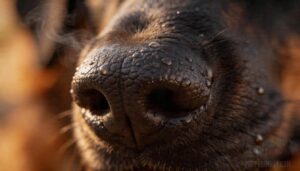
Your dog’s nose can actually tell you more than you’d expect about what’s going on inside their body.
A few key changes — in warmth, dryness, or texture — are worth knowing about before they turn into a bigger concern. Here’s what to watch for.
Signs of Underlying Health Issues
Your dog’s nose can act like an early warning system — and certain changes are worth taking seriously. Signs of an unhealthy canine nose include thick, yellow, green, or bloody discharge, which often points to infection or respiratory trouble. Loss of pigment, cracking, or unusual skin lesions on the nose surface may suggest autoimmune conditions or dermatitis.
Watch for these clinical signs alongside nasal changes:
- Sudden lethargy or dramatic drop in energy
- Appetite changes or unexplained weight loss
- Breathing difficulty that worsens over time
- Temperature fluctuations and health implications like fever
- Dehydration signs, including a consistently dry, warm nose
Any combination of these signals warrants prompt veterinary consultation.
Persistent Dryness or Warmth in Nose
A warm and dry nose that lingers for days isn’t just a quirk — it’s your dog’s way of flagging something worth investigating. Persistent changes like mucosal cracking or seasonal dryness often reflect humidity fluctuations, heat stress indicators, or dehydration.
Altered lick frequency patterns can also signal discomfort. Alongside a consistently dry nose, watch for lethargy or appetite shifts, as these are reliable health indicators warranting veterinary assessment.
Veterinary Consultation and Nose Temperature
If your dog’s nose stays persistently warm, dry, or shows unusual discharge beyond 24 hours, don’t wait — schedule a veterinary examination. Your vet can apply diagnostic imaging and run blood panels for thorough veterinary assessment of nasal symptoms.
Vet costs generally range from $75 to $800 depending on referral criteria and workup needed. Follow a clear follow-up protocol, monitor changes closely, and follow owner guidance to catch health indicators early.
Nose Moisture and Temperature Regulation
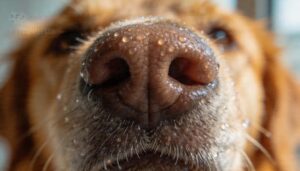
Your dog’s nose stays moist and cool for reasons that go deeper than you might think. Several built-in processes work together to keep that little snout functioning at its best.
Here’s what’s actually driving the moisture and temperature you feel when your dog nudges your hand.
Role of Mucus in Nose Moisture
Your dog’s nasal glands work around the clock, producing a thin protective mucus layer that keeps the snout moist and functional. This mucus gel structure does more than just look wet — it actively traps dust, bacteria, and pollen through mucus particle trapping before they reach the airway.
Mucociliary transport then sweeps debris toward the throat at a steady pace. Meanwhile, the mucus humidification role kicks in during every breath, and evaporative cooling from nasal mucus helps regulate your dog’s snout temperature naturally.
- Scent enhancement — moisture and olfactory function in dogs are directly linked; wet surfaces capture odor molecules far better
- Airway protection — mucus production filters harmful particles through the protective mucus layer before they cause irritation
- Humidity control — the mucus humidification role raises inhaled air humidity to 75% or more
- Natural cooling — role of mucus and evaporation in canine cooling keeps nose temperature stable through evaporative cooling
Licking and Nose Moisture
Every lick your dog takes fulfills a real purpose. Saliva travels up through the philtrum, a moisture transfer channel, to keep the wet nose surface refreshed continuously. This aids scent particle capture by giving airborne molecules something to stick to. Jacobson’s organ is activated when the tongue carries the scent-laden mucus to the roof of the mouth for deeper analysis.
| Licking Frequency Patterns | Purpose |
|---|---|
| Before meals | Pre-sniff moisture boost |
| After play | Refreshes dry nose surface |
| Post-sniffing | Transfers particles for Jacobson’s organ activation |
| During grooming | Nose moisture maintenance through licking |
| New environment exploration | Enhances moisture-driven olfaction |
Evaporation and Cooling
Licking keeps the surface wet, and that moisture does more than sharpen your dog’s sense of smell. Through latent heat transfer, evaporation pulls warmth away from the nose — the same physics behind sweating.
Airflow enhancement from panting accelerates this evaporative cooling, while high humidity slows it down.
That cold and wet nose isn’t random; it’s active thermoregulation working as designed.
A dog’s cold, wet nose is not coincidence — it is the body’s thermoregulation system working exactly as nature intended
What Affects Dog Nose Moisture
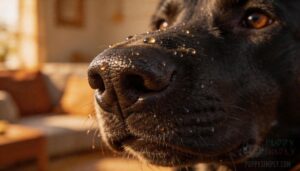
Your dog’s nose doesn’t stay the same all day — and that’s completely normal. Several things can shift how wet or dry it feels at any given moment.
Here’s what’s actually behind those changes.
Environmental Factors and Nose Moisture
Your home environment quietly shapes how moist your dog’s nose stays throughout the day. Indoor Humidity Levels drop sharply with Central Heating Effects in winter and Air Conditioning Impact in summer, pulling moisture from the nasal surface faster than licking can restore it. Outdoor Wind Exposure speeds evaporation too, especially during Seasonal Temperature Shifts.
Here’s what to watch:
- Low humidity levels accelerate drying indoors
- Airflow impact from wind strips moisture quickly outside
- Seasonal changes shift both temperature and humidity together
- Evaporation and cooling increase in dry, heated rooms
Nasal Discharge or Salivation
Not all nasal discharge is created equal. Clear Discharge Causes are usually minor — think Nasal Irritation Signs from dust or a passing cold.
But Thick Yellow Discharge tells a different story, pointing to infection where white blood cells and mucus mix together.
Excessive Drooling paired with purulent nasal mucus can signal upper airway trouble or swallowing difficulty.
Saliva and Digestion normally run smoothly, but sudden heavy drool with a wet nose turning dry deserves attention.
Dehydration, nausea, or deeper illness can all hide behind these changes.
Exploring The Environment and Nose Moisture
When your dog dips their nose into the grass or sniffs along a fence line, that wet surface is doing serious work. Moisture helps trap scent particles against roughly 220 million olfactory receptors, giving your dog a chemical snapshot of the world.
Seasonal humidity, indoor air quality, altitude influence, wind chill, and air conditioning all affect humidity levels enough to shift a wet nose toward a dry nose. Evaporative cooling keeps the surface primed, but environmental factors can tip that balance quickly.
Detecting Health Issues Through Nose
Your dog’s nose can tell you more than you might think — but only if you know what to look for. Beyond temperature and moisture, certain physical changes are worth paying close attention to.
Here are the key signs that something may be off.
Loss of Pigment and Texture
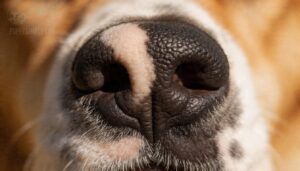
Your dog’s nose tells you more than you might think. pigment patch patterns and texture smoothness variation can reveal a lot about what’s happening beneath the surface. Vitiligo-like depigmentation — where pale or white patches spread across the nose — often points to autoimmune disorders like lupus or pemphigus.
Mucosal color changes and irregular edge definition around the nostrils are worth paying attention to, too. dry nose with loss of nose pigment or skin that feels rough rather than smooth can signal active skin conditions. A dry, cracked, or unusually warm nose alongside these changes deserves a prompt veterinary evaluation.
Discharge and Bleeding
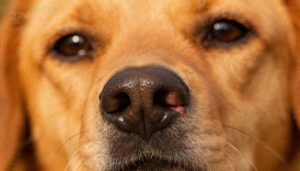
Discharge coloration tells you a lot at a glance. Clear discharge is normal, but pus, blood, and thick mucus point to something deeper — infection symptoms from bacteria, inflammation, tumors, or allergies.
Bleeding patterns that appear suddenly may indicate trauma indicators like a lodged object or a bleeding disorder.
Any persistent or colored nasal discharge warrants a veterinary assessment of nasal symptoms, including diagnostic tests to pinpoint the cause quickly.
Accompanying Clinical Signs of Fever or Underlying Illness
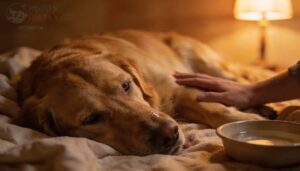
A nose change rarely tells the whole story.
Watch for these clinical signs alongside nasal discharge to spot fever in dogs early:
- Lethargy and Weakness — your dog moves slower, rests more, seems less alert
- Appetite and Thirst — loss of appetite or reduced drinking signals dehydration risk
- Rapid Breathing Rate and Abnormal Heart Rate — even at rest, in a cool room
- Shivering and Chills — trembling despite a warm body temperature
These combined symptoms warrant prompt veterinary attention.
Dog Nose Temperature and Health
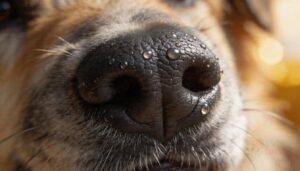
Your dog’s nose can tell you more than you might think. Temperature shifts don’t always mean something is wrong, but knowing what to watch for helps you catch real problems early.
Here’s what the nose can reveal about dog’s health.
Indicators of Fever or Infection
A warm snout alone doesn’t confirm fever in dogs, but paired with other clinical signs of fever, it becomes a meaningful signal worth taking seriously. Watch for these infection indicators alongside any nose changes:
- Lethargy and fatigue — your dog seems unusually tired, skips play, or sleeps far more than normal
- Loss of appetite — skipping meals or showing little interest in favorite foods
- Shivering or chills — subtle trembling even in a warm room, which can point to bacterial infection
- Rapid breathing or red gums — both signal circulatory stress linked to fever
Nasal discharge that’s thick, yellow, or green adds another layer of concern. Temperature fluctuations and health implications overlap here — so don’t rely on the nose alone.
When these signs cluster together, that’s your cue to call your vet.
Normal Fluctuations in Nose Temperature
Not every warm or dry nose signals trouble. Your dog’s nose follows a natural rhythm tied to the circadian rhythm, seasonal shifts, and metabolic rate variations throughout the day.
Stress‑induced changes and hormonal influences also play a role. Monitoring changes helps you distinguish normal variations in the dog’s nose temperature from genuine concerns.
| Condition | Expected Nose Feel |
|---|---|
| Just woken up | Warm and dry |
| Active play | Cool and moist |
| Relaxed resting | Slightly cool |
| Hot weather | Warmer, less moist |
| Post‑stress | Variable, often drier |
Other Signs of Illness to Observe
While nose temperature gives you a useful clue, it’s rarely the whole story. Watch for these signs alongside any nasal changes:
- Appetite Loss — skipping meals or refusing favorite treats for more than a day
- Lethargy Changes — sleeping more, moving more slowly, or losing interest in play
- Vomiting Episodes — especially when repeated or paired with behavioral signs like withdrawal
- Abnormal Gums, Urine Output — pale or sticky gums and dark urine are classic dehydration signs
Nasal discharge combined with lethargy or loss of appetite warrants a vet call.
Maintaining Healthy Dog Nose Temperature
Keeping your dog’s nose at a healthy temperature isn’t complicated, but it does involve a few things working together. Your dog’s body has built-in ways to stay balanced, and you can support that process with some simple habits.
Here’s what actually matters regarding maintaining a healthy nose temperature.
Regulation of Body Temperature
Your dog’s body runs a tight temperature ship, controlled by a hypothalamic setpoint that triggers peripheral vasodilation, shivering thermogenesis, or brown fat activation depending on conditions.
Since dogs can’t sweat well, evaporative cooling via the canine nose becomes essential.
Behavioral thermoregulation — like seeking shade — also helps.
Monitoring nose temperature and watching for dehydration signs gives you real insight into how well your dog’s body temperature control is working.
Panting and Nose Moisture
Panting is one of your dog’s primary heat dissipation mechanisms — and it works closely with nose moisture.
As air moves rapidly over the wet nasal surface, evaporation carries heat away from the body.
That’s effective thermoregulation, but it comes at a cost.
Heavy or prolonged panting can tip the respiratory moisture balance, leaving the nose noticeably drier.
Watch for these panting-related nose changes:
- A dry nose after intense exercise (exercise-related nose dryness is common and usually temporary)
- Excessive panting during stressful situations, which stress-linked panting effects can accelerate moisture loss
- Reduced licking frequency during or after panting episodes
- Increased nose warmth paired with visible fatigue
- Signs of panting-induced dehydration, like sunken eyes or thick saliva
Hydration and nasal moisture in dogs are directly connected, so always keep fresh water available.
Using Cooling Products in Warm Weather
Hot days put real pressure on your dog’s thermoregulation mechanisms, and the right cooling products make a meaningful difference. Evaporative vests activate in just 2–5 minutes, while phase-change pack prep requires 12–15 minutes of freezer time. Both support heat dissipation and help stabilize dog’s nose temperature.
| Product | Cooling Method Timing | Fit and Airflow |
|---|---|---|
| Evaporative Vest | 2–5 min activation | Full trunk coverage |
| Phase-Change Vest | 12–15 min prep | Cranial trunk only |
| Cooling Mat | Ready immediately | Ground contact only |
Proper fit and airflow matter — a poorly fitted vest loses effectiveness fast. Consider cost and accessibility when choosing, since evaporative vests are generally lighter and more affordable for everyday use in warm environmental temperatures.
Monitoring Dog Nose Temperature
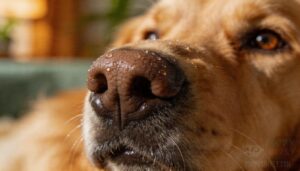
Keeping tabs on your dog’s nose is simpler than it sounds, and it doesn’t require any special tools. few small habits can tell you a lot about how your dog is doing day to day.
Here’s what to pay attention to.
Snuggling to Warm Up a Cold Nose
When your dog presses a cold nose against you, that’s not just affection — it’s smart heat-seeking. Here’s what dog owners should know about snuggling’s practical side:
- Cuddle position benefits come from reduced air exposure around the muzzle.
- Owner body heat transfers efficiently through direct skin contact.
- Blanket insulation effects slow heat loss after your dog settles in.
- Snuggle duration guidelines suggest brief sessions suffice, since the nose warms quickly.
Veterinary advice is clear: this is normal comfort behavior, not a health monitoring concern.
Observing Changes in Nose Temperature and Moisture
Consistent observation is your first line of defense. Track your dog’s nose temperature and moisture across Morning Evening Readings — patterns often reveal more than a single check ever could. Seasonal Humidity Shifts and Post-Exercise Recovery both alter the Temp Moisture Link, so context matters.
| Observation | Normal Sign | Concern |
|---|---|---|
| Morning moisture | Cool, wet | Dry and warm |
| Post-exercise | Temporarily dry | Stays dry after rest |
| Discharge color | Clear | Yellow, green, or bloody |
| Texture | Smooth | Cracked or pigment loss |
| Behavioral Indicators | Alert, active | Lethargic, appetite loss |
Dehydration and nose dryness often appear together — don’t overlook either. Monitor changes alongside dog nose temperature for clearer health implications of warm or cold canine noses.
Regular Veterinary Check-Ups and Nose Temperature
Regular veterinary checkups give you something no amount of home observation can — a professional baseline.
Your vet examines nose temperature, texture, discharge, and symmetry as part of broader Veterinary Screening Protocols during routine visits.
These Exam Frequency Guidelines usually mean annual checks for adult dogs, more often for seniors.
Consistent Nose Temperature Documentation and Baseline Temperature Tracking help your vet spot shifts early.
Think of it as your health monitoring routine — steady, simple, and genuinely protective.
Frequently Asked Questions (FAQs)
Is a cold nose normal in dogs?
Yes, a cold wet nose is completely normal.
Most healthy dogs naturally run cool and damp there, thanks to nasal secretions, and owner intuition often confirms this as a baseline sign of wellness.
Is it normal for a dog’s nose to be warm?
A warm nose is perfectly normal and happens throughout the day. Activity, warm rooms, and reduced licking during naps all raise dog nose temperature without any health implications.
Does a cold & wet nose mean a dog is healthy?
A cold and wet nose is common in healthy dogs, but it doesn’t guarantee good health.
A sick dog can still have a wet nose, so always watch behavioral indicators alongside nasal condition.
What temperature should a dog’s nose be?
There’s no single perfect number. Your dog’s nose surface temperature shifts constantly based on activity, sleep, hydration, and season.
Trust behavior and overall clinical signs over any core surface reading alone.
Can a dog have a cold nose?
Absolutely — a cold nose is completely normal for dogs. It reflects good hydration, active mucus production, and efficient scent detection.
Cold nose mythology aside, nose temperature alone tells you very little about your dog’s actual health.
Should a dog’s nose be cold or warm?
Your dog’s nose temperature shifts throughout the day depending on nasal blood flow, activity, and seasonal humidity effects.
A cold, wet nose usually signals good hydration, but a briefly warm nose doesn’t automatically mean trouble.
Is it normal for a dog’s nose to be cold and wet?
Yes, a cold and wet nose is completely normal for most dogs. Mucus chemical balance and nasal moisture support scent detection efficiency, helping your dog process the world through smell.
Why does a dog’s nose need to be cold?
A cold nose isn’t just a quirk — it fulfills real purposes.
Moisture-driven cooling, scent particle capture, and thermal radiation detection all work better when your dog’s nose stays cool and damp.
Why is my dog’s nose wet and cold?
Your dog’s nose stays wet and cold through a simple heat exchange mechanism — nasal blood flow near the surface cools as mucus composition and saliva contribution evaporate, while keeping scent detection sharp.
Should a dog’s nose be warm or cold?
Neither warm nor cold is the rule — dog’s nose temperature shifts naturally throughout the day based on activity, environment, and sleep, so normal variations in dog’s nose temperature are completely expected.
Conclusion
As the nose knows, a dog’s health is like a puzzle, with many pieces fitting together.
Should a dog’s nose be cold, you now understand that it’s not that simple. Considering your dog’s nose temperature, remember that a cold, wet nose is just one piece, and a healthy dog is a harmonious whole, with all signs pointing to overall wellness, including a normal, varying nose temperature.
- https://toegrips.com/dog-cold-nose/
- https://iheartdogs.com/ask-a-vet-what-does-it-mean-when-my-dogs-nose-is-warm/
- https://www.hudsonveterinaryhospital.com/my-dogs-nose-is-warm-and-dry-does-that-mean-he-is-sick/
- https://dogsacademy.org/dog-nose-warm/
- https://www.semanticscholar.org/paper/6184101248d3b94be9669d000dfe82e57d819293