
This site is supported by our readers. We may earn a commission, at no cost to you, if you purchase through links.

Imagine a dog so vividly colored that strangers stop mid-stride on the sidewalk to ask what breed it is. That’s the everyday reality for red goldendoodle owners—and honestly, it never gets old.
What makes this coat color so striking isn’t just luck. It comes down to a specific genetic combination that both parents must carry, which explains why true red puppies are harder to find than most breeders let on.
Whether you’re drawn to the warmth of that mahogany coat or the famously gentle temperament behind it, there’s a lot worth knowing before you fall completely head over heels.
Table Of Contents
- Key Takeaways
- What is a Red Goldendoodle?
- Red Goldendoodle Breed Origins
- Why Red Goldendoodles Are Rare
- Red Goldendoodle Sizes
- Red Goldendoodle Coat Types
- Red Coat Colors and Changes
- Red Goldendoodle Temperament
- Training and Exercise Needs
- Grooming a Red Goldendoodle
- Red Goldendoodle Health and Cost
- Frequently Asked Questions (FAQs)
- Is a red Goldendoodle rare?
- How do you discipline a Goldendoodle puppy?
- Are Goldendoodles couch potatoes?
- What is a funny name for a Goldendoodle?
- Are red Goldendoodles rare?
- Do red Goldendoodles stay red?
- What is the difference between a Goldendoodle apricot and red?
- What color Goldendoodle is most popular?
- How much does a Red Goldendoodle typically cost?
- Are Red Goldendoodles hypoallergenic?
- Conclusion
Key Takeaways
- Red Goldendoodles get their rare, vivid coat because both parents must carry a recessive red gene — without that specific genetic match, the color simply won’t appear.
- Their coats don’t stay the same forever; puppy-red gradually fades toward copper or apricot over the first year or two, driven more by genetics than sunlight alone.
- Beyond the looks, these dogs bring a genuinely warm, adaptable temperament that fits easily into families with kids, other pets, and even grandparents in the mix.
- Owning one is a real commitment — expect regular grooming every six to eight weeks, 45–60 minutes of daily exercise, and puppy prices ranging from $2,000 to $5,000 depending on the breeder and lineage.
What is a Red Goldendoodle?

If you’ve ever spotted a fluffy, auburn-coated dog trotting through the park and instantly wanted one, you’re not alone. The red Goldendoodle—a cross between a Golden Retriever and a Poodle—has captured attention.
Whether you’re drawn to auburn, cream, or the striking black Goldendoodle, every variation brings that same irresistible mix of Golden warmth and Poodle smarts.
Before bringing one home, however, there’s quite a bit to know. This hybrid breed’s unique traits and care requirements demand careful consideration, making it essential to understand what sets them apart.
Golden Retriever Poodle Mix
A Red Goldendoodle is exactly what it sounds like — a Golden Retriever and Poodle mix with a stunning red coat. What makes this cross so special:
- Inherits the Golden Retriever’s warmth
- Gets the Poodle’s hypoallergenic coat
- Coat color inheritance shapes that signature red
- Genetic testing confirms parent compatibility
- Breed popularity keeps growing for good reason
Their friendly, affectionate nature makes them excellent family companions.
Hybrid, Not Purebred
Here’s something worth knowing upfront: the Goldendoodle is a hybrid, not a purebred. No AKC registry, no single pedigree line — just a beautiful crossbreed lineage from two beloved breeds. That registry exclusion doesn’t make them lesser, though. Hybrid vigor means genetic diversity often works in their favor.
Goldendoodles skip the AKC registry but gain something better: hybrid vigor from two beloved breeds
| Feature | Purebred | Red Goldendoodle Hybrid |
|---|---|---|
| AKC Recognition | Yes | No |
| Genetic Diversity | Limited | High |
| Hybrid Vigor | Rare | Common |
| Parent Breed Disclosure | One line | Two distinct breeds |
| Crossbreed Lineage | Single breed | Golden + Poodle mix |
F1 Red Goldendoodles and F1B Red Goldendoodles each reflect different levels of breed hybridization — and honestly, that variety is part of the magic.
Red Coat Overview
That striking coat is what stops people in their tracks. The red Goldendoodle sports a deep reddish-apricot to bright red hue — dense, wavy to curly, and honestly gorgeous.
Color genetics mean your dog’s coat color fading can happen with UV exposure and seasonal shade shifts, so vibrancy maintenance matters.
Dietary influence and conditioning benefits keep that red coat looking its warmest, preserving its striking coat vibrancy.
Family Companion Appeal
Beyond the coat, what really sells people on this breed is the warm, patient, and genuinely people-obsessed personality. Red Goldendoodles’ canine temperament makes family pet integration feel seamless, whether you’ve got toddlers, teenagers, or grandparents under one roof. Multi-generational compatibility is practically baked in.
Add emotional support, kids’ interaction benefits, and low-shedding dog perks, and you’ve got a seriously lovable package.
Red Goldendoodle Breed Origins

The red Goldendoodle didn’t just appear out of nowhere — there’s a real backstory behind that gorgeous coat. Understanding where this breed comes from helps you appreciate exactly what you’re getting.
Here’s a look at the key pieces of history that shaped the red Goldendoodle we currently recognize today.
Goldendoodle Development
The Goldendoodle story starts in the late 1980s, when breeders began intentionally crossing Golden Retrievers with Standard Poodles. The goal? To create a family-friendly dog with a low-shedding coat.
Early litters produced F1 Red Goldendoodle and F1B Red Goldendoodle puppies. Each generation refined coat genetics, temperament, and size, laying the groundwork for the breed’s irresistible personality today.
Early Red Coats
Here’s a fun piece of history: red coats have a story stretching back centuries — and understanding this explains why your red puppy coats appear so vivid at birth. Early red dyes relied on Madder Dyeing techniques and cochineal insects, while Royal Warrant standards and Facing Colors ensured consistency. Dog coat genetics follow similar principles:
- Red coat may change as your puppy matures
- Coat fading in dogs begins around six months
- Coat construction influences how pigment holds
- Parade Visibility parallels how red dogs naturally stand out
- Genetics, not sun alone, drives early color shifts
Poodle Color Influence
Poodle parents carry 11 recognized coat colors — and their color genetics run surprisingly deep. Red stems from the recessive e locus, meaning both parents must carry those E locus recessives for red to appear.
Poodle color alleles also show linkage with curl type, so dog coat genetics influence more than just shade. Genetic Carrier Testing and Breeding Color Selection help breeders increase red puppy odds confidently.
Golden Retriever Genetics
Golden Retrievers bring more to the mix than just that warm, sunny personality. Their color genetics carry pheomelanin pigment through the recessive e locus — the same pathway that makes a red Goldendoodle possible. But their genetic story runs deeper:
- STR diversity markers reveal broad genetic variety
- SOD1 variants flag degenerative myelopathy risk
- Hyaluronidase genes influence tissue and disease susceptibility
- GNAI2 cancer risk regions vary across bloodlines
- Genetic testing panels screen parents before breeding
Why Red Goldendoodles Are Rare

That vivid red coat doesn’t happen by accident — it takes a very specific genetic hand to pull it off.
A few key factors work together to make red Goldendoodles genuinely hard to come by. Here’s what actually drives that rarity.
Breeding for that deep, coppery coat also intersects with traits that affect overall health, which is worth exploring if you’re researching red Goldendoodle genetics and care.
Recessive Red Genes
Here’s the short answer: Red is genuinely rare because it requires a very specific genetic setup. Both parents must carry the recessive E locus allele — that ee genotype triggers an MC1R mutation that swaps eumelanin for phaeomelanin pigment, painting the coat red.
This epistatic red effect overrides other color genes entirely.
Without carrier screening and understanding allele frequency, genetic modifiers, and inheritance patterns in hybrids, that fiery coat is basically a happy accident.
Parent Coat Genetics
Think of each parent as holding two "slots" for the red allele — both dogs need to carry at least one recessive E locus copy to have any shot at red puppies.
Allele inheritance patterns work like a lottery: dominant alleles quietly mask recessive red carriers, swapping phaeomelanin pigment for eumelanin pigment instead.
Pedigree genotype testing reveals hidden carriers, making genetic testing essential before breeding.
Multigenerational Breeding
Even with the right parent genetics, locking in red across litters requires deliberate, long-term planning. Reputable breeders rely on Pedigree Documentation, Genomic Evaluation, and Health Screening Protocols across at least three generations to achieve multigen red stability.
Here’s how this is implemented in practice:
- F1 Generation pairing establishes baseline color and coat data.
- Breeding Value Estimation guides which red-to-red matches repeat reliably.
- Line Isolation Strategy protects color stability across generations without sacrificing health.
Red Puppy Odds
So what are the actual odds of landing a red puppy? It depends on whether both parents carry the recessive red gene. Carrier DNA Testing removes the guesswork, while a Probability Matrix helps breeders map outcomes.
Key genetic factors are summarized below:
| Factor | Impact on Red Puppy Odds |
|---|---|
| Both parents carry red gene | Highest probability |
| One carrier parent only | Greatly reduced odds |
| Multigen red stability | Most consistent red outcomes |
Beyond these core genetic influences, Line Breeding Effects, Litter Size Influence, and Color Record Keeping also shape breeding outcomes.
Red Goldendoodle Sizes

One of the best things about red Goldendoodles is that they don’t come in a one-size-fits-all package. Whether you’re in a cozy apartment or a house with a big backyard, there’s likely a size that fits your life.
Here’s a look at the three main size options and what you can expect from each.
Toy Red Goldendoodles
A toy red Goldendoodle is basically a lap dog with a big personality packed into a tiny frame. These little ones top out at around 8 to 12 pounds and stand just 10 to 14 inches tall — perfect for apartment living arrangements or frequent travel logistics.
With the right breeder selection, dog healthcare routine, and dietary supplements, your toy red Goldendoodle puppy will thrive beautifully.
Mini Red Goldendoodles
Step up a size, and you have the red mini Goldendoodle—a sweet spot for families seeking more dog without the full commitment of a standard. Mini Goldendoodles typically stand 13 to 18 inches tall and weigh 15 to 40 pounds.
Their manageable space needs make them ideal for smaller homes. Travel compatibility is excellent; many fit comfortably in a carrier.
Standard Red Goldendoodles
The standard red Goldendoodle is the full package — big heart, bigger presence. These dogs generally stand 17 to 24 inches tall and weigh 50 to 90 pounds.
Here’s what sets them apart:
- Living Space Needs — a yard or spacious home works best
- Energy Level Management — daily walks plus active play
- Dietary Recommendations — quality protein nourishes their athletic build
- DNA Health Screening — genetic testing for coat color and joint conditions
- Longevity Factors — proper dog health screening extends a happy life
Weight and Height Ranges
Three sizes, three very different dogs. Toy types top out around 10–14 inches and under 15 pounds, while miniature size Goldendoodles range between 15–30 pounds with generational height usually reaching 22 inches. Standard size dogs stand at 21–24 inches and 40–70 pounds.
Weight variability is real — growth milestones shift with lineage, so tracking body condition and height measurement at the withers keeps everything on track.
Size and Lifespan
Size influences life expectancy more than just how much couch space your dog claims. Smaller red Goldendoodles tend to outlive their larger counterparts, with toys and minis often reaching 13–15 years. Standards usually land closer to 10–12.
Metabolic demands, size-specific health risks, and growth milestones all factor in. Understanding your dog’s size variations — mini, moyen, or standard — helps you plan proactively.
Red Goldendoodle Coat Types
Not all red Goldendoodle coats are created equal — and the type your dog ends up with matters more than you might think. It affects shedding, grooming needs, and even how well the dog fits your lifestyle.
Here’s a look at the three main coat types you’ll come across.
Curly Coats

A curly coat on a Red Goldendoodle is basically a superpower in disguise. That signature texture isn’t just cute — it delivers real curl resilience, moisture management, and allergen reduction that make this coat type genuinely functional. Here’s what makes curly coats stand out:
- Low shedding dog benefits — loose hairs stay trapped in curls instead of landing on your couch
- Hypoallergenic advantages — fewer airborne allergens mean easier living for sensitive family members
- Matting Prevention — curls naturally lift and separate, reducing clumping
- Seasonal Curl Changes — humidity can tighten curl definition, while dry winters may call for extra conditioning
- Easy Moisture Management — tight spirals shed water quickly after outdoor adventures
Brush your Red Goldendoodle’s curly coat two to three times weekly to keep things tangle-free and healthy.
Wavy Coats

If wavy coats are the easygoing middle child, they offer a balanced option for many families. Sitting between curly and straight textures, a red Goldendoodle’s wavy coat provides soft, silky waves with moderate allergy impact and mild seasonal shedding.
Nutrition plays a key role in maintaining wave quality, so ensure a well-balanced diet. Prioritize mat prevention through consistent grooming, particularly focusing on areas like behind the ears, with weekly brushing essential for coat health.
Straight Coats

Straight coats are the low-key option of red Goldendoodle coat types — sleek, flat, and refreshingly simple to manage. That said, shedding management becomes more of a priority here, since straight coats shed more than curly ones.
For dog coat care and maintenance, keep these essentials in mind:
- Use a pin brush or slicker for grooming tools
- Brush twice weekly to control loose hair
- Watch for skin sensitivity around the neck and chest
- Monitor seasonal coat change for increased shedding periods
Straight coat longevity improves with regular conditioning, which also helps preserve your red Goldendoodle’s coat color beautifully.
Low-Shedding Traits

No matter which coat type your red Goldendoodle ends up with, low-shedding traits are truly one of the breed’s biggest selling points. Genetics play a real role here — MC5R variants and RSPO2 influence both reduce excess fur during growth cycles. Higher Poodle percentage amplifies this.
Combined with omega coat health support and consistent dog coat maintenance, seasonal shedding remains surprisingly manageable for an allergy-friendly dog.
Hypoallergenic Expectations

No dog is truly 100% allergy-free. While Red Goldendoodles—especially curly-coated ones—produce less dander, they still release saliva proteins and skin flakes that may trigger sensitivities in some individuals.
Before adopting, prioritize real allergy testing through short visits to assess reactions. Regular grooming significantly aids dander control, reducing airborne allergens.
Managing environmental triggers—such as frequent cleaning and air filtration—makes a surprisingly big difference in creating an allergy-friendly pet household.
Red Coat Colors and Changes
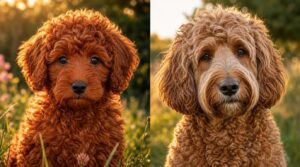
That vivid red coat is one of the first things people fall in love with — but it doesn’t stay exactly the same forever.
From puppyhood through adulthood, your dog’s color will shift in some pretty fascinating ways. Here’s what to expect at each stage.
Puppy Coat Fading
Here’s something that surprises almost every new owner: that vivid red coat your puppy came home with won’t stay that way. Red coat fading in Goldendoodles is driven by several overlapping factors:
- Sun exposure’s effects break down pigment in the hair shaft
- Seasonal shedding shifts that reveal lighter regrowth
- Dietary influence and chemical exposure from shampoos dull color depth
The fading timeline usually begins around six months.
Adult Coat Shades
Once fading settles, your red Goldendoodle’s adult coat tells its own story. Canine coat pigmentation stabilizes somewhere between deep copper and warm mahogany — rarely what you saw at pick-up.
Shade Stability Factors like Coat Density Influence, UV Oxidation Effects, and Indoor Lighting Impact all shape color intensity variations. These elements interact to refine the coat’s final hue over time.
Even a Seasonal Shade Shift can surprise you, with cooler months briefly deepening that adult color, enhancing its richness. This temporary darkening adds another layer to the coat’s evolving narrative.
Copper and Mahogany Tones
What makes a red Goldendoodle’s coat truly magnetic is the interplay between copper tones and a mahogany-colored coat beneath. Under natural light, pigment contrast accentuation becomes stunning—almost like photographic color dynamics on a living, breathing dog.
Think:
- Bright copper glowing on the ears and muzzle
- Deep light mahogany pooling along the back
- Seasonal shade evolution shifting the whole palette subtly
Warm-tone nutrition nourishes this richness from the inside out, while seasonal shifts subtly evolve the palette over time.
Ear Color Clues
Experienced breeders rely on a key trick: check the ears first. In a red Goldendoodle puppy, ear color signals melanin concentration, offering clues about the adult coat color. Darker ears indicate stronger melanin production, while lighter or pinkish patches suggest reduced pigment.
Asymmetrical ear color may arise from uneven pigment exposure or influences, and seasonal shedding or age-related shifts can subtly alter tones over time. These variations illustrate the interplay between genotype versus phenotype.
Such observations highlight how genetic potential (genotype) manifests in physical traits (phenotype), with environmental and developmental factors shaping the final outcome.
Sunlight and Fading
Sunlight is quietly relentless on a red coat. UV radiation triggers the fading gene, gradually shifting that vivid red toward cinnamon or copper—especially during the first two years.
Scheduling walks during early morning or evening reduces the effects of sun exposure. A fade-resistant diet rich in omega-3s and vitamin E helps preserve pigment.
UV-blocking accessories, such as doggy sun shirts and UV protective coatings on grooming sprays, noticeably slow fading patterns.
Red Goldendoodle Temperament

If you’ve ever met a Goldendoodle, you already know the vibe — tail wagging before you’ve even said hello. Red Goldendoodles carry all of that warmth and then some, with a personality that often wins people over fast.
Here’s what you can expect regarding their temperament.
Friendly Family Personality
Think of a red Goldendoodle as the friend who makes everyone feel at home. Their dog temperament is built around calm interaction and emotional sensitivity — they genuinely read the room. As a steady companion, they bring:
- Friendly guest reception without aggression
- Warm, consistent temperament traits, daily
- Natural family pet suitability across all ages
Their dog behavior simply fits family life.
Good With Children
Red Goldendoodles are natural with kids. Their gentle handling instincts and calm temperament traits make supervised play feel easy and safe. Provide a safe space for retreat when needed, and use reward interaction to reinforce good behavior. Calm signals—like a quick sit cue—help manage energy during family pet suitability moments.
| Situation | What Your Dog Does | What You Should Do |
|---|---|---|
| First meeting a child | Sniffs calmly, wags tail | Supervise closely, encourage gentle petting |
| Energetic play gets rowdy | May step back or lie down | Use a calm signal, redirect with a toy |
| Feeling overwhelmed | Lip licking, yawning | Guide child away, allow quiet retreat |
| Consistent dog socialization | Responds warmly and confidently | Reinforce with praise and training routines |
Other Pets and Strangers
Your red Goldendoodle’s warm temperament extends well beyond the family circle. With a solid Visitor Greeting Routine and early puppy socialization, they handle strangers and new animals with ease. A good Pet Introduction Protocol makes all the difference:
- Use Leash Greeting Techniques in public for calm, controlled hellos
- Apply Cross Species Socialization gradually with neutral-territory meetups
- Practice Stress Signal Recognition — tucked tail means slow down
Obedience training seals it all together.
Cuddling and Companionship
That friendly energy with strangers? It follows them home too. Your red Goldendoodle is basically an 80-pound lap sitter with teddy bear good looks and zero personal space boundaries — in the best way.
They practice genuine sleep synchrony, curling up wherever you settle. Their gentle affection and temperature preferences (cold night? Expect a furry blanket) make them natural therapy dog material.
Just set cuddle boundaries early.
Barking Tendencies
They’re not big barkers — but they’re not silent either. Their temperament leans quiet, with vocalizations that usually mean something specific:
- Territorial barking when guarding their space
- Alarm barking at unexpected sounds
- Greeting barking — short, excited bursts when you walk in
Anxiety barking and play barking occur as well. Early socialization, dog training, and mental stimulation keep all of it manageable.
Training and Exercise Needs

Red Goldendoodles are smart dogs, and smart dogs need a job — even if that job is just learning to sit before dinner. Keeping them happy means giving them the right mix of training, movement, and brain work every day.
Here’s what that actually looks like.
Positive Reinforcement Training
These dogs are practically made for positive reinforcement training. With marker timing — a quick click or "Yes!" paired instantly with a treat — your Red Goldendoodle learns exactly which moment earned the reward. Smart reward selection, consistent reinforcement, and shaping steps keep sessions fun and frustration-free.
This punishment-free approach builds confidence fast, making basic commands, socialization, and mental stimulation feel like a game they actually want to win.
Daily Exercise Time
Training clicks into place quickly—but none of it sticks without regular exercise backing it up. Your Red Goldendoodle’s daily exercise needs are real: aim for 45–60 minutes total, split however works for you.
- Morning walk – 20–30 minutes of moderate activity
- Midday play session – 10–15 minutes of fetch or free running
- Evening cooldown stroll – 15 minutes at an easy pace
These breakdown strategies keep canine exercise needs manageable without overwhelming your schedule.
Mental Stimulation
Physical exercise keeps your Red Goldendoodle’s body happy, but mental stimulation for dogs is what keeps them truly calm. Scent Work (like sniff-and-find games), Memory Games (with rotating hidden treats), and Leash Problem Solving drills all count as solid brain games. These activities provide essential cognitive engagement.
Canine enrichment activities—including Treat Mazes and Shape Challenges—give that clever mind real work to do between walks. Such exercises ensure your dog stays mentally sharp and calmly content.
Puzzle Toys
Puzzle toys are brain games in a box — and your Red Goldendoodle will love every second. They offer a range of material choices, from BPA-free plastic to natural rubber, and mechanism types, such as sliding blocks or hidden compartments, to keep engagement high.
Match the difficulty levels to your dog’s confidence:
- Beginners: simple peg-and-hole boards
- Intermediate: spin-and-reveal compartments
- Expert: multi-step treat puzzles
The cognitive benefits are significant: canine enrichment activities sharpen focus and ease restlessness. Always follow basic safety guidelines and inspect pieces regularly to ensure safe play.
Separation Anxiety Prevention
Red Goldendoodles bond deeply — which is wonderful until you walk out the door. Preventing separation anxiety starts with Calm Goodbyes: say goodbye clearly, then leave promptly without lingering drama. Gradual Departures build tolerance through short absences first, while Predictable Returns teach your dog you always come back.
Pair Routine Cues with Empathetic Comfort and consistent mental stimulation, and you’ll raise a confident, settled companion.
Grooming a Red Goldendoodle
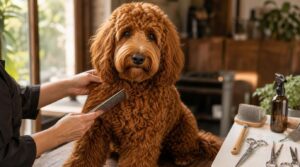
That gorgeous red coat doesn’t maintain itself — and honestly, grooming is where most new owners get caught off guard.
It’s not complicated, but it does require consistency. Here’s what your regular routine should actually look like.
Brushing Schedule
Think of your Red Goldendoodle’s brushing schedule as bookending the day — a quick Morning Routine session after breakfast and an Evening Session before bed. Twice daily for two minutes each keeps that gorgeous coat tangle-free.
Toothpaste Choice matters too: always go canine-specific. Timing After Meals is easy to forget, but wait 30 minutes after acidic foods to protect enamel.
A simple Reminder System on your phone makes daily brushing feel smooth, ensuring consistency without added stress.
Professional Grooming
Every six to eight weeks, your red Goldendoodle deserves a professional reset. A skilled groomer uses clipper guard sizes 7 to 10 for paws and sanitary areas, then switches to scissor over comb around the ears for that classic teddy bear cut.
Finish with a conditioning spray to seal in shine, and ask about UV protection products — sunlight genuinely fades that beautiful red coat.
Ear Cleaning
Those floppy ears are adorable — and a trap for moisture and debris. Ear care for dogs like your Goldendoodle deserves a consistent routine:
- Outer Ear Wipe — Use a soft, damp cloth to clear visible gunk
- Ear Drops Application — Warm oil-based drops loosen buildup gently
- Bulb Syringe Irrigation — Flush softly with warm water after softening
Watch for red flag indicators: bad odor, redness, or discharge means vet time, not DIY safe cleaning technique.
Nail Trimming
Dark nails make quick identification tricky — unlike light nails, black toenails hide the quick completely.
Trim small bits at a time, every one to two weeks, and prioritize tool hygiene and patience.
| Step | Dog Grooming Tip |
|---|---|
| Frequency | Every 1–2 weeks |
| Tool Care | Disinfect clippers between sessions |
| Pain Management | Stop if bleeding; apply gentle pressure |
Coat Color Care
Red coats need a little extra love. Use a Color‑Safe Shampoo every three to six weeks and follow up with a Hydrating Conditioner to keep that fur soft and vibrant.
UV Shielding matters too — peak-hour sun accelerates dog coat color fading.
An Omega‑Rich Diet aids color gene expression from the inside out.
Daily Stain Prevention wipes keep your red Goldendoodle looking their best.
Red Goldendoodle Health and Cost

Owning a red Goldendoodle is a joy — but it comes with real responsibilities, financial included. Before you fall head over paws for one, it helps to know what you’re actually signing up for.
Here’s what to expect regarding their health and what it’ll cost you.
Common Health Issues
Like most hybrid breeds, your Red Goldendoodle can inherit a handful of health conditions worth knowing about:
- Hip Dysplasia & Elbow Dysplasia — joint instability causing stiffness and reduced mobility
- Progressive Retinal Atrophy & Eye Disorders — gradual vision changes to watch for
- Patellar Luxation & GDV — kneecap slipping and dangerous bloat
- Skin Allergies, Ear Infections & Digestive Upset — recurring but manageable with proper care
Lifespan Expectations
The good news? Most red Goldendoodles live 10 to 15 years — and smaller sizes often push toward that upper end.
Senior Care becomes more important around age 7, when age-related diseases like arthritis or vision changes can creep in.
Longevity factors like Weight Management, Dental Health, and staying on top of genetic health issues — including hip dysplasia — genuinely shape your red Goldendoodle’s life expectancy.
Puppy Price Range
Prices for a red Goldendoodle puppy vary more than you’d expect. Here’s what shapes the final cost:
- Breeder reputation drives base costs from €1,800 to €4,200
- Health testing fees for hip, elbow, and DNA screening add €60–€200
- Seasonal pricing trends push spring litters higher due to market demand
- Regional price variance in eastern Germany runs 10–25% above average
- Import transport costs add €150–€500 for puppies from distant kennels
Veterinary Care Costs
Vet costs add up faster than you’d expect. Routine visits run €30–€80 for general exams, while diagnostic tests like blood work or X-rays cost €70–€180. Surgery expenses start around €200 and can exceed €2,500. Emergency surcharges add 50–100% to standard rates.
A preventive care subscription helps manage dog healthcare costs, and pet insurance significantly eases unexpected initial expenses.
Frequently Asked Questions (FAQs)
Is a red Goldendoodle rare?
Yes, the red coat is genuinely rare. Because red is a recessive gene, both parents must carry it — and finding breeders with that genetic pairing takes real effort.
How do you discipline a Goldendoodle puppy?
Discipline starts with reward timing — praise the moment good behavior happens. Use consistent cues, redirection techniques, and crate management to set clear boundaries.
Your Red Goldendoodle’s trainability makes positive dog training methods remarkably effective for puppy development.
Are Goldendoodles couch potatoes?
Not exactly — but they’re not maniacs either. After solid exercise, your red Goldendoodle will happily claim the couch.
Meet their daily activity needs, and peaceful post-play lounging becomes the natural, balanced reward.
What is a funny name for a Goldendoodle?
Try names like Sir Rustleton, Bark Twain, or Doodle McGee — color wordplay and breed mashup puns make pawrents smile. Alliteration and rhyme work great too, like Copper the Flopper.
Are red Goldendoodles rare?
Red Goldendoodles are genuinely rare — both parents must carry the recessive red gene, and without careful DNA testing and parent lineage tracking, that fiery coat simply won’t appear.
Do red Goldendoodles stay red?
Most don’t retain their vivid puppy red color. Genetic fading — often traced to Poodle lightening genes — gradually shifts that color toward copper or apricot. Sun exposure affects speed things up.
Coat maintenance can’t override what heritability of color traits has already decided.
What is the difference between a Goldendoodle apricot and red?
The main split comes down to depth of pigment. An Apricot Goldendoodle carries lighter, peachy tones, while a red Goldendoodle shows deeper mahogany warmth.
This distinction can be confirmed through breed club classification and DNA test results.
What color Goldendoodle is most popular?
Apricot dominance holds strong across most breeder listings, with cream market share running a close second. Both colors consistently top buyer color preference data.
Red Goldendoodles remain the bold, rarer standout, commanding a quiet red price premium.
How much does a Red Goldendoodle typically cost?
Think of it like buying a custom piece of art — you’re paying for rarity, skill, and love. A red Goldendoodle puppy price usually falls between $2,000 and $5,
Are Red Goldendoodles hypoallergenic?
Not quite — no dog is truly hypoallergenic. Red Goldendoodles shed less, especially with curly coats, but allergen proteins from dander exposure still trigger reactions in sensitive people.
Conclusion
Yes, the grooming takes time and the puppy price stings—but ask any red goldendoodle owner if they’d do it again. You already know the answer.
That unmistakable mahogany coat turns heads, but the warmth underneath keeps people hooked.
Once you understand the genetics, the sizing, the temperament, and the care routine, what looked like a complicated decision starts feeling surprisingly simple.
This dog doesn’t just fit into your life—it becomes the best part of it.