This site is supported by our readers. We may earn a commission, at no cost to you, if you purchase through links.

Your dog snatched a pretzel off the coffee table before you could stop it. Sound familiar?
It happens fast, and the moment after, most owners find themselves wondering whether to panic or shrug it off. The answer depends on a few things—mainly what kind of pretzel it was and how much disappeared.
Plain pretzels won’t send your dog to the emergency vet, but they’re far from harmless, and some flavored varieties carry ingredients that can cause serious harm within hours. Knowing the difference could matter more than you’d expect.
Table Of Contents
- Key Takeaways
- Dogs Should Not Eat Pretzels Regularly
- Are Pretzels Bad for Dogs?
- Salt Risks in Pretzels
- Dangerous Pretzel Ingredients
- Symptoms After Eating Pretzels
- How Many Pretzels Are Safe?
- What to Do After Ingestion
- Dogs That Should Avoid Pretzels
- Safer Alternatives to Pretzels
- Frequently Asked Questions (FAQs)
- Can dogs eat pretzels?
- Can dogs eat apples?
- Are salty pretzels bad for dogs?
- How many pretzel twists can a dog eat?
- What happens if my dog eats pretzels?
- Are pretzels a good snack for dogs?
- How much salt is in pretzels?
- Are any pretzels safe for dogs to eat?
- Are there any alternative snacks for dogs instead of pretzels?
- Is there a safe way to feed pretzels to dogs?
- Conclusion
Key Takeaways
- A plain pretzel snatched off the table probably won’t send your dog to the emergency vet, but flavored varieties with garlic, onion powder, or xylitol can cause serious harm within hours.
- Salt is the biggest everyday risk—small breeds can hit dangerous sodium levels from surprisingly little, so size and health status matter more than most owners realize.
- If your dog eats pretzels, check the ingredients, estimate how much was eaten, offer fresh water, and watch closely for vomiting, excessive thirst, weakness, or tremors over the next 6–12 hours.
- Dogs with kidney disease, heart disease, hypertension, or those already on low-sodium diets should avoid pretzels entirely—carrot sticks, apple slices, and purpose-made low-sodium treats are genuinely better options.
Dogs Should Not Eat Pretzels Regularly

If your dog snagged a pretzel off the coffee table, you can probably breathe easy. But that doesn’t mean pretzels belong in their regular snack rotation.
Here’s what you should know before it become a habit.
Plain Pretzels Are Usually Low Risk Accidentally
If your dog snatched a plain, salted unflavored pretzel off the floor, take a breath — pretzels aren’t toxic to dogs at that accidental bite size. Most healthy dogs handle a small wheat carbohydrate load without trouble.
Just like unsalted pretzels make a safer dog-friendly snack, keeping portions small is what really matters.
Watch for:
- Mild GI irritation like loose stool
- Increased thirst from high salt content
- Minor lethargy
- Signs of salt poisoning in tiny breeds
Hydration after snack access matters. Owner vigilance tips the outcome.
Pretzels Offer Little Nutritional Value
Even if your dog walks away unharmed from that pretzel, here’s the honest truth: pretzels offer minimal nutritional value for dogs. They’re high in carbohydrates, high in salt, and deliver empty calories without meaningful protein, fiber, or essential fats that your dog actually needs.
| Nutrient | What Pretzels Deliver |
|---|---|
| Carbohydrates | ~34g per serving — High Carb Ratio |
| Protein | ~4g — Low Protein |
| Fiber | ~1g — Minimal Fiber |
| Essential Fats | Nearly none — Low Essential Fats |
| Vitamins/Minerals | Trace amounts — Insufficient Vitamins |
That’s a poor trade-off when nutritional deficiencies of pretzels for pets add up over time.
Why Dog-Specific Treats Are Safer
That’s exactly where dog-specific treats pull ahead. They’re made with Controlled Ingredient Lists, so you’re not guessing what’s inside.
Vet recommended treats follow pet nutrition guidelines and offer Custom Nutritional Balance, your dog actually needs. Clear Allergen Labels make it easy to avoid triggers, and Consistent Serving Sizes help you stay on track.
Dog-friendly treats simply have Reduced Additive Risks — by design. Be mindful of avoid xylitol toxicity when choosing treats.
When Pretzels Become Dangerous
Plain pretzels cross into dangerous territory fast. Certain types put your dog at serious risk:
- Choking Hazard — hard pieces can lodge in the throat, especially for small breeds
- Sodium Overdose — salt toxicosis becomes a real concern with larger amounts
- Xylitol Poisoning — sugar-free varieties can trigger xylitol toxicity in dogs quickly
- Seasoning Toxicity — garlic or onion powder causes serious harm
Are Pretzels Bad for Dogs?

Yes, pretzels are bad for dogs — and not just because of the salt. Several things make them a poor snack choice, even in small amounts.
Here’s what you need to know.
High Sodium Content
Salt is the main reason pretzels don’t belong in your dog’s bowl. A single commercial pretzel twist packs around 12 mg of sodium — small for you, but meaningful for a dog.
High sodium effects on dogs include fluid retention effects that push the cardiovascular system harder, creating real cardiovascular strain over time.
| Pretzel Amount | Sodium Content | Risk Level |
|---|---|---|
| 1 pretzel twist | ~12 mg | Low (healthy adult dog) |
| 10 pretzel twists | ~120 mg | Moderate (small breeds) |
| Full bag (60g) | ~744 mg | High — kidney sodium load concern |
Breed salt sensitivity matters too. Small dogs hit the sodium toxicity threshold much faster, making salt toxicosis a genuine risk — not just a theoretical one.
Empty Calories and Weight Gain
Pretzels are basically carbohydrate overload in dogs with nothing useful attached. That calorie density adds up fast, yet the satiety deficit means your dog won’t feel full — so they’ll beg for more. Excess calorie intake leads straight to weight gain and obesity in your pet over time.
Watch for these risks:
- High calorific value with almost zero protein or fiber
- Nutrient dilution that crowds out better food choices
- Reward driven overeating triggered by salty, crunchy textures
- Metabolic overload when empty carbs replace balanced nutrition
- Gradual weight gain that raises diabetes and joint disease risk
Digestive Upset From Human Snacks
Your dog’s stomach isn’t built for human snack food. Lactose intolerance can trigger dog gastrointestinal upset — vomiting and diarrhea — within hours of eating dairy-based snacks.
Greasy food irritation inflames the pancreas, while spicy seasoning effects cause nausea and abdominal discomfort.
Sugar-free sweetener toxicity and spoiled food illness can worsen pet electrolyte imbalance fast. Even small amounts add up to real trouble.
Risks for Small Dogs
Small dogs face a steeper climb regarding pretzel risks. Their lower body weight means the toxic dose—roughly 2 grams per kilogram of body weight—arrives much faster. Salt toxicity in dogs hits smaller breeds harder, raising Dehydration Risk quickly.
Choking Hazard from hard pieces, Hypoglycemia Episodes from stomach upset, and Joint Stress from weight gain, and even a few pretzels aren’t worth it.
Salt Risks in Pretzels

Salt is really where pretzels go from harmless snack to a genuine concern for your dog. Even a modest amount can push their sodium intake higher than it should be.
Just a small handful of pretzels can quietly tip your dog into dangerous sodium territory—here’s why salty snacks like beef jerky pose real risks for dogs.
Here’s what you need to know about how salt affects dogs specifically.
How Sodium Affects Dogs
Think of sodium as a sponge inside your dog’s body — it pulls water into the bloodstream and holds it there. That process is called fluid retention, and when sodium tips too high, it throws off electrolyte balance completely.
Blood pressure elevation follows, straining the heart and forcing the kidneys to work overtime — that extra kidney load matters.
Neurological effects like tremors can signal hypernatremia in dogs is already underway.
Salt Poisoning Risk
Salt poisoning in dogs is rarer than most people realize — but it can happen fast. Understanding sodium toxicity thresholds helps here: toxic effects begin around 2 grams of sodium per kilogram of body weight.
Canine sodium toxicity from pretzels follows three clear stages:
- Vomiting and excessive thirst appear first
- Fluid imbalance effects worsen as hypernatremia symptoms develop
- Acute salt overdose triggers tremors or seizures
Renal stress indicators like labored breathing signals it’s become an emergency.
Increased Thirst and Urination
After a salty snack, your dog’s kidneys work overtime to flush out excess sodium — and that kicks off a cycle of salt-induced diuresis. They drink more, then urinate more.
It looks harmless, but it’s actually a sign of fluid balance disruption. Persistent excessive thirst paired with frequent urination can mirror diabetes insipidus signs or electrolyte imbalance symptoms, so don’t brush it off.
Why Small Breeds Are More Vulnerable
Body size matters more than most people realize.
A 7-pound Chihuahua has a Sensitive Sodium Threshold that’s far lower than a Labrador’s — and the toxic dose of 2 grams per kilogram body weight means even modest salt content adds up fast. Their Reduced Fluid Reserve and Higher Metabolic Rate make Increased Dehydration Risk hit quicker, with Fragile Bone Structure adding another layer of vulnerability for small breeds.
Dogs on Low-Sodium Diets
If your dog is already on a low-sodium diet — say, for heart or kidney disease — a salty pretzel isn’t just a bad snack. It can throw off its entire electrolyte balance overnight.
Vets use dietary sodium targets and urine sodium monitoring, including fractional clearance values, to keep things stable.
One salty bite disrupts that balance fast.
Stick to their plan.
Dangerous Pretzel Ingredients

Plain pretzels are one thing, but flavored and coated varieties bring a whole new set of problems. Some of the ingredients hiding in those snack bags are genuinely dangerous for dogs — not just unhealthy, but toxic.
Here’s what to watch out for.
Garlic and Onion Powder
Flavored pretzels often list garlic or onion powder in their ingredients — and both are alliums that pose a real hemolytic anemia risk for dogs. These seasonings carry sulfur compound toxicity that damages red blood cells, even in small amounts.
Always do ingredient label checks before sharing any snack.
Low-sodium flavoring and xylitol-free seasoning choices don’t make a pretzel safe if alliums are still on the list.
Chocolate-Coated Pretzels
Chocolate-coated pretzels are a double threat — combining salt with theobromine toxicity from the chocolate coating itself.
Here’s what makes them risky:
- Milk vs dark chocolate both harm dogs, with dark being more toxic
- Chocolate sugar levels and coating calories add unnecessary strain
- Soy lecithin emulsifier and cocoa compounds disrupt digestion
- These are simply toxic ingredients for dogs — no safe amount exists
Keep chocolate-covered pretzels completely out of reach.
Xylitol in Sugar-Free Pretzels
Sugar-free pretzels might seem like a harmless swap, but artificial sweeteners like xylitol make them genuinely dangerous for dogs.
Xylitol triggers a rapid insulin surge — sometimes six times stronger than glucose — causing rapid hypoglycemia within 30 to 60 minutes.
Xylitol can trigger an insulin surge six times stronger than glucose, plunging dogs into hypoglycemia within the hour
Liver necrosis can follow 8 to 12 hours later.
This is dose-dependent toxicity, so even small amounts matter.
Always do a sweetener label check first.
Peanut Butter Pretzel Label Checks
Peanut butter pretzels look harmless, but the label tells a different story. Check the Label Sodium Level first — both the pretzel shell and filling often contain salt.
Scan for Hidden Sugar Alcohols under "sugar-free" wording, and read the Allergen Statement for soy or wheat.
Note Filler Binders like enriched flour. Use Portion Estimation if your dog grabbed more than one.
Seasoned and Flavored Pretzels
Seasoned pretzels are a whole different problem. That seasoning blend coating every groove often includes garlic powder, onion powder, and heavy salt — all risky for dogs. The Spice Heat Impact, Crunch Texture, and Flavor Oil Content only add to the load.
- Garlic and onion seasonings cause red blood cell damage
- Extra salt worsens sodium toxicity fast
- Pepper-based spice blends irritate sensitive stomachs
- Layered coatings make Portion Control nearly impossible
- Some varieties hide xylitol under "flavored" labeling
Skip flavored pretzels entirely.
Symptoms After Eating Pretzels

If your dog got into the pretzels, knowing what to watch for can make all the difference. Symptoms can show up quickly or take a few hours, depending on what they ate and how much.
Here are the key warning signs to keep an eye on.
Vomiting and Diarrhea
vomiting and diarrhea are often the first signs your dog’s body is rejecting too much salt. These symptoms can show up within hours of pretzel ingestion.
When both hit together, dehydration signs develop fast — your dog loses fluids and electrolyte balance quickly. Fluid replacement becomes urgent.
If vomiting, diarrhea, tremors, and even seizures follow, skip the wait-and-see approach and get a veterinary evaluation right away.
Excessive Thirst
After too much salt, increased thirst kicks in fast — your dog’s kidneys are working overtime trying to flush out the excess sodium. This is polydipsia, and it signals a fluid balance problem worth watching closely.
Three things excessive thirst often means in this situation:
- Sodium poisoning in dogs is disrupting electrolyte balance
- Urination and dehydration are cycling together, worsening fluid loss
- Kidney function is under strain, similar to patterns seen in diabetes monitoring
Don’t ignore it.
Weakness or Lethargy
Right after that thirst spike, you might notice your dog seems “off” — slower, quieter, less interested in everything. That’s lethargy, and alongside weakness, it’s one of the clearest symptoms of both salt and xylitol poisoning.
| Sign | Possible Cause | What It Looks Like |
|---|---|---|
| Low energy | Sodium poisoning in dogs | Won’t get up or play |
| Muscle weakness | Toxic ingredients commonly found in pretzels disrupting cells | Struggles to stand or walk |
| Unusual stillness | infection fatigue or weight weakness | Avoids movement entirely |
| Slow responses | adrenal insufficiency or thyroid issues | Doesn’t react to sounds or touch |
| Exercise intolerance | pain lethargy from systemic stress | Tires after minimal activity |
Unlike a normal nap, this kind of tiredness doesn’t bounce back.
Tremors or Seizures
When lethargy deepens, tremors can follow. Sodium poisoning symptoms and symptoms of both salt and xylitol poisoning include vomiting, diarrhea, tremors, and even seizures — all tied to electrolyte imbalance disrupting your dog’s nervous system.
Xylitol is a major seizure trigger, acting fast. These aren’t simple shivers.
Muscle jerking or full seizure activity means your dog needs a vet immediately.
Pale Gums or Disorientation
Beyond tremors, watch your dog’s gums. Pale gums signal something serious — anemia signs, circulation issues, or severe dehydration signs can all drain color from that tissue fast. Disorientation points to neurological impairment, where the brain simply isn’t getting what it needs.
These aren’t subtle hints. They’re red flags:
- Gums look white, gray, or bluish instead of pink
- Your dog seems confused or unresponsive to your voice
- Eyes appear glassy or unfocused
- Stumbling or inability to walk straight
- Complete loss of coordination or collapse
How Many Pretzels Are Safe?

There’s no magic number regarding pretzels and dogs — it really depends on a few key factors. Some dogs can handle a small piece with no trouble, while others are better off skipping them entirely.
Here’s what actually shapes the risk.
Why There is No Ideal Serving
There’s no magic number here — no "two pretzels is fine" rule exists. Every dog’s salt tolerance shifts based on Metabolic Rate Differences, Seasonal Activity Changes, and Owner Feeding Habits.
AAFCO guidelines don’t account for salty human snacks. The toxic threshold sits near 2 grams/kilogram body weight, but health risks of pretzels for dogs stack up well before that point.
| Factor | Lower Risk | Higher Risk |
|---|---|---|
| Body Weight | Large breed | Small/toy breed |
| Activity Level | High (seasonal) | Low/sedentary |
| Health Status | Healthy adult | Kidney/heart condition |
Occasional Tiny Plain Pieces Only
If your dog snagged a small piece of pretzel off the floor, take a breath — pretzels aren’t toxic to dogs in tiny, one-off amounts. The key words there are tiny and plain. Here’s what vet advice on feeding human snacks to dogs actually looks like in practice:
- Portion sizing matters — one or two plain, unsalted pieces only
- Frequency limits apply — accidental, not intentional or repeated
- Salt content adds up — even plain pretzels carry sodium
- Risk assessment shifts — smaller dogs feel the health risks of pretzels for dogs more sharply
Calorie counting and training cues beat pretzel snacking every time.
Avoid Daily Pretzel Feeding
Even one pretzel a day adds up fast.
High salt and carbohydrate content might seem harmless in small doses, but habit formation works against you here — your dog learns to expect human snacks, portion control gets harder, and the daily sodium load quietly strains their kidneys.
Owner awareness matters: stick to guidelines for safe dog treats, use training commands like "leave it," and practice environmental management by keeping pretzels out of reach on a regular basis.
Risks of Eating a Full Bag
A whole bag is a real emergency waiting to happen. Acute Sodium Toxicity can set in fast, and carbohydrate overload in dogs adds another layer of stress on the body.
Watch for:
- Vomiting and diarrhea within hours
- Osmotic Diuresis — excessive urination as kidneys scramble
- Cardiovascular Stress from spiking sodium levels
- Neurological Manifestations like tremors or seizures
- Renal Failure Risk with repeated or large exposure
Salt and xylitol poisoning in canines both demand dog emergency care immediately.
Factors That Affect Risk Level
Not every dog faces the same risk. Your dog’s size, age, and health all shift the danger level considerably.
| Risk Factor | Why It Matters |
|---|---|
| Weight Dose | Small dogs hit toxic sodium levels faster |
| Seasoning Strength | Flavored varieties add garlic, onion risks |
| Hydration Level | Dehydrated dogs handle salt far worse |
| Age Metabolism | Seniors process sodium more slowly |
| Concurrent Medications | Some drugs worsen effects of high sodium on canine health |
Dogs with kidney failure, heart disease, or dog obesity risk should stay away entirely.
What to Do After Ingestion
So your dog got into the pretzels — it happens. The good news is that staying calm and taking a few simple steps right away can make a real difference.
Here’s what to do.
Check The Pretzel Ingredients

Before anything else, flip the bag over and read the full ingredient list — not just the front label. This is your first label reading tip: look for additive red flags like garlic powder, onion powder, and artificial sweeteners like xylitol.
Hidden sweeteners are common in sugar‑free varieties. Check salt content, allergen alerts, and any additives and carbs.
Toxic ingredients for dogs hide in plain sight.
Estimate How Much Was Eaten
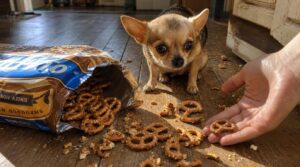
Next, do a quick Piece Count Estimation — count what’s left and subtract from the full bag. Bag Weight Calculation helps too: check the label’s net weight, then estimate how much is missing.
Size-Based Scaling matters here. A small piece of pretzel hits a 5 kg dog much harder than a large breed, given the 2 grams per kilogram body weight toxic threshold.
Chewing Duration Clues and Ingredient Risk Adjustment come last — longer snacking means more is eaten, and flavored varieties raise concern faster for small breeds and puppies.
Provide Fresh Water

Once you’ve figured out how much your dog ate, offering fresh water is your next simple step. Room Temperature Water is best — cold water can upset an already-queasy stomach.
- Practice a Bowl Cleaning Routine: rinse out any residue before refilling
- Use Small Sip Offerings if your dog seems nauseous
- Check the Hydration Skin Test and Monitor Urine Color — pale yellow means good hydration
Monitor for Symptoms

Now that your dog has fresh water, keep a close eye on them for the next 6–12 hours. Watch for vomiting, diarrhea, drooling, or increased thirst — these are the most common symptoms of pretzel ingestion in dogs.
Also check breathing rate, skin elasticity, eye appearance, and behavioral changes like hiding or restlessness.
A dip in activity level can be your first real clue that something’s off.
Call a Veterinarian or Poison Helpline

If symptoms show up — or you’re simply not sure what was in those pretzels — don’t wait. Call your vet or a poison helpline right away.
The ASPCA Animal Poison Control Center is available 24/7 at (888) 426-4435, and Pet Poison Helpline at 1-855-764-7661.
Have the product name, amount eaten, and your dog’s weight ready. Early emergency contact info saves critical time.
Dogs That Should Avoid Pretzels

Most dogs can handle the occasional plain pretzel without much trouble, but some dogs genuinely can’t afford even that small risk.
If your dog falls into any of the following categories, pretzels are best kept off the table entirely.
Here’s who needs to steer clear.
Dogs With Kidney Disease
If your dog has kidney disease, pretzels are off the table — full stop. Their kidneys already struggle with fluid balance, electrolyte regulation, and Urine Specific Gravity changes. Extra dietary sodium from pretzels makes that harder.
Veterinary management generally includes:
- Phosphorus Management through specialized diets
- Protein Restriction to ease kidney workload
- Fluid Therapy to maintain hydration
- Blood Pressure Monitoring for renal failure in dogs
Dietary sodium limits for dogs with kidney disease exist for good reason — pretzels blow right past them.
Dogs With Heart Disease
Heart disease — whether it’s Mitral Valve Disease, Dilated Cardiomyopathy, or damage from poor Heartworm Prevention — puts your dog in a different category entirely.
Cardiovascular disease in dogs means the heart already struggles with fluid balance, and managing sodium intake in your dog’s diet becomes critical. Extra salt from pretzels worsens that strain, interferes with Medication Monitoring, and can override Exercise Restrictions, your vet carefully set.
Dogs With Hypertension
High blood pressure already strains your dog’s blood vessels, kidneys, and eyes — and extra sodium makes that worse. Dogs managing hypertension through ACE Inhibitor Use or other medications depend on stable sodium levels to keep those drugs working properly.
Even a salty pretzel can spike pressure, raising Kidney Damage Risk and triggering Retinopathy Signs.
Consistent Blood Pressure Monitoring matters, so don’t undermine it with avoidable snacks.
Dogs on Salt-Restricted Diets
Some dogs are already on strict Veterinary Sodium Guidelines — and pretzels have no place in that plan. Whether it’s Heart Failure Nutrition or Renal Diet Adjustments, Fluid Balance Management depends on keeping dietary sodium limits for dogs tight.
Sodium Label Reading matters here: even small pretzel portions can quietly push sodium toxicity in dogs closer. Don’t let a snack undo the careful work your vet is doing.
Puppies, Seniors, and Small Breeds
Tiny bodies, young systems, and aging joints all share one thing: less room for error.
Puppies need steady blood sugar and careful Puppy Energy Monitoring — a salty snack can throw that off fast.
Senior dogs managing Senior Cognitive Health or relying on Senior Mobility Aids don’t need the added sodium burden either.
Small Breed Obesity sneaks up quickly, so no pretzel is truly a safe dog treat portion size here.
Safer Alternatives to Pretzels

The good news is your dog doesn’t have to miss out just because pretzels are off the table.
Plenty of whole, simple foods make great snacks without the salt or hidden risks.
Here are some easy, dog-friendly options worth keeping on hand.
Carrot Sticks
Carrot sticks are one of the best healthy alternative treats for dogs you can reach for. They’re low in calories, deliver a Vitamin A Boost, and the crunch gives your dog real Chewing Exercise.
Follow simple Portion Size Guidelines — a few slices based on size. The Fiber Benefits support digestion, and frozen pieces make a great Cooling Treat.
Solid dog snack safety, zero pretzel risk.
Seed-Free Apple Slices
Apples make an invigorating healthy alternative treat for dogs — but prep hygiene matters here. Always remove seeds and the core before offering slices.
Apple seeds contain compounds that release cyanide in your dog’s body.
Thin, seed-free slices deliver real Fiber Benefits, a Hydration Boost, and vitamins A and C.
Portion Control and watch for Skin Sensitivity in dogs prone to loose stools.
Plain Broccoli Pieces
Broccoli is another low-calorie win for dogs who want something crunchy. Chop it into tiny pieces for Choking Prevention, since larger stalks can get stuck. Plain, unseasoned florets offer real Fiber Benefits and solid Vitamin C Content.
Watch Portion Size — too much causes gas. Start small to check your dog’s Digestive Tolerance before making it a regular swap for pretzels.
Seed-Free Watermelon
Watermelon is a wonderful hydration boost on warm days — it’s over 90% water, so it cools dogs down nicely. Stick to seedless, rind-free flesh, cut into small pieces for choking prevention.
It’s also vitamin rich, offering A, B6, and C.
Practice portion control by keeping servings small. Try frozen treats using cubed watermelon flesh — dogs love them.
Low-Sodium Dog Treats
When watermelon runs out, reach for a purpose-made low-sodium dog treat instead of pretzels. Managing sodium intake in your dog’s diet is easier when labels do the work for you.
Look for:
- Sodium under 0.3% per treat
- Limited ingredients — no corn or artificial additives
- Calorie control around 27–35 kcal per treat
- Ingredient transparency with no hidden salt sources
Preventing Access to Pretzels
Even the best dog-friendly treats won’t matter if your dog raids the pantry first. Preventing pretzel access is just as important as choosing safer snacks.
Use secure storage containers with locking lids, install baby gate barriers near the kitchen, and keep trash can lids latched.
Practice the leave it command regularly, run a crumb cleanup routine after snacking, and supervise guests closely — because dangerous human foods for dogs often sneak in during parties.
| Prevention Area | Strategy | Why It Helps |
|---|---|---|
| Storage | Secure containers on high shelves | Stops curious noses from reaching bags |
| Kitchen Access | Baby gate barriers | Blocks unsupervised roaming during meals |
| Trash & Guests | Latched lids and guest snack supervision | Removes hidden pretzel access points |
Frequently Asked Questions (FAQs)
Can dogs eat pretzels?
Dogs can technically eat a plain pretzel accidentally without immediate danger, but pretzels aren’t safe for dogs as a regular treat.
Veterinary guidance is clear: the risks of feeding pretzels to dogs outweigh any reward.
Can dogs eat apples?
Yes — apples are one of the better snacks you can share.
Slice them up, skip the seeds and core, and your dog gets fiber, vitamins, and a satisfying crunch without the junk.
Are salty pretzels bad for dogs?
Salty pretzels aren’t great for dogs. The high salt and carbohydrate content offers nothing useful, and too much sodium can trigger electrolyte imbalance, kidney strain risk, and digestive upset fast.
How many pretzel twists can a dog eat?
There’s no clean number here. Weight-based limits, breed sensitivity, and sodium threshold all shift the answer.
A rough guide: 1 pretzel twist for small dogs, up to 5 for large breeds — occasionally, never daily.
What happens if my dog eats pretzels?
Most dogs will experience gastrointestinal irritation — think vomiting or diarrhea — after eating pretzels. Acute dehydration and electrolyte imbalance can follow, especially with larger amounts.
Watch for excessive thirst, weakness, or tremors.
Are pretzels a good snack for dogs?
No, pretzels aren’t a good snack for dogs. They’re packed with high salt and carbohydrate content and offer little nutritional balance.
Veterinary guidance on dog food choices points to dog-specific treats every time.
How much salt is in pretzels?
Sneaky salt stacks up fast in pretzels.
A single hard pretzel delivers around 12 mg sodium, but serving sodium from a full bag skyrockets — label guidelines reveal brand variance can push totals well past safe limits.
Are any pretzels safe for dogs to eat?
Plain, unsalted pretzels carry the least risk, but "safe" is a stretch. Always check for toxic ingredients, follow strict portion guidelines, and remember — a healthy dog treat beats any pretzel.
Are there any alternative snacks for dogs instead of pretzels?
Yes — and honestly, there are better options.
Carrot sticks, seed-free apple slices, plain broccoli, and watermelon make great dog-friendly treats.
Sweet Potato Chews, Blueberry Frozen Treats, Coconut Yogurt, Green Bean Bites, and Pumpkin Puree are excellent homemade dog treats worth trying.
Is there a safe way to feed pretzels to dogs?
Not really.
If you must share, break a plain, unsalted pretzel into a tiny piece, make sure fresh water is available, and skip it entirely if your dog has any health conditions.
Conclusion
Sure, one pretzel probably won’t hurt—but that’s not really the point.
The question of whether dogs can eat pretzels isn’t just about surviving a snack steal.
It’s about what you reach for next time.
high salt, hidden seasonings, and ingredients like xylitol make pretzels a risky habit, even when the first bite seems fine.
dog trusts you to choose what goes in the bowl.
Make it something worth that trust.
- https://www.petmd.com/dog/nutrition/can-dogs-eat-salt
- https://www.msdvetmanual.com/toxicology/food-hazards/chocolate-toxicosis-in-animals
- https://www.akc.org/expert-advice/nutrition/can-dogs-eat-carrots/
- https://blog.greatvet.com/about-alex/
- https://www.dogster.com/ask-the-vet/common-toxicoses-in-dogs-vet-answer