This site is supported by our readers. We may earn a commission, at no cost to you, if you purchase through links.

Your dog spots a piece of dried pineapple on the counter and snatches it before you can react. Now you’re wondering whether to panic or shrug it off. The good news—pineapple flesh contains no toxic compounds for dogs, so that stolen snack won’t send you rushing to the emergency vet.
But dried pineapple isn’t the same as fresh, and that difference matters more than most pet owners realize. Dehydration concentrates natural sugars, increases calorie density, and many store-bought varieties sneak in added sugars or sulfite preservatives that can irritate your dog’s stomach.
Knowing exactly what’s safe—and what to watch for—keeps treat time genuinely rewarding.
Table Of Contents
- Key Takeaways
- Yes, Dogs Can Eat Dried Pineapple
- Is Dried Pineapple Safe for Dogs?
- Why Dried Pineapple Needs Caution
- Benefits of Dried Pineapple for Dogs
- Risks of Dried Pineapple for Dogs
- How Much Dried Pineapple is Safe?
- How to Prepare Dried Pineapple
- Dogs That Should Avoid It
- Signs Your Dog Ate Too Much
- Better Pineapple Treat Alternatives
- Frequently Asked Questions (FAQs)
- Is it okay for dogs to eat dried pineapple?
- What dried fruit can dogs have?
- What happens if my dog accidentally eats pineapple?
- Is dried pineapple real pineapple?
- Which fruits are not good for dogs?
- Can dogs eat dried pineapple as a snack?
- Is it safe to give my dog canned pineapple?
- Are there any health risks associated with feeding my dog pineapple?
- What are the signs of pineapple overconsumption in dogs?
- Is there any evidence that pineapple can prevent a dog from eating poop?
- Conclusion
Key Takeaways
- Dried pineapple isn’t toxic to dogs, but its concentrated sugars and higher calorie density make it a small, occasional treat rather than a regular snack.
- Always choose unsweetened, preservative-free dried pineapple with pineapple as the sole ingredient, and cut into small pieces to avoid choking.
- Dogs with diabetes, obesity, pancreatitis, or sensitive stomachs should skip dried pineapple entirely, as the sugar load can cause real harm.
- Watch for vomiting, diarrhea, lethargy, or loss of appetite after feeding — these are signs your dog had too much and may need veterinary attention.
Yes, Dogs Can Eat Dried Pineapple

Yes, dogs can eat dried pineapple — but how you offer it matters a lot. It’s not toxic, so a small piece here and it’s generally fine for most healthy dogs.
Just skip the core and skin — pineapple core safety for dogs explains why those parts can be a choking or digestion hazard.
Here’s what you need to know before you share some with yours.
Safe Only in Small Amounts
Think of dried pineapple like a concentrated snack — a little goes a long way. Because dehydration removes most of the water, the sugar content shoots up fast, which means calorie monitoring and portion control matter more than you’d expect.
Stick to small portions, keep daily treat caps in check, and don’t offer it too often. Moderation feeding isn’t just a guideline here — it’s the whole game.
Pineapple is Non-toxic to Dogs
Good news: pineapple is safe for dogs — it’s not classified as toxic in any standard veterinary food-safety guidance. The real concern isn’t poison; it’s the sugar load and portion size.
Here’s what makes plain pineapple generally acceptable:
- No toxic compounds in the flesh
- Bromelain helps protein digestion naturally
- Vitamin C offers antioxidant benefits
- Low fat content keeps calorie impact minimal
Fresh Pineapple is Usually Better
Fresh pineapple wins on almost every front. It keeps bromelain’s enzyme potency higher, offers real hydration benefits, and delivers texture softness that’s gentle on your dog’s mouth.
Lower sugar content means easier portion accuracy too — no guessing. The table below shows why fresh often edges out dried.
| Factor | Fresh vs. Dried |
|---|---|
| Enzyme Potency | Higher in fresh pineapple |
| Hydration Benefits | Fresh provides natural moisture |
| Digestive Comfort | Easier on sensitive stomachs |
| Sugar Content | Lower and more predictable |
| Preservatives and Additives | None in fresh pineapple |
Avoid Daily Feeding
Even the best treats lose their charm when they become routine. Daily dried pineapple pushes treat frequency limits fast — sweetened pieces add up quickly, creating a real calorie accumulation risk.
Think of it like a sugar tax on your dog’s daily calorie intake.
Instead, use rotating snack options and practice portion control. Introduce it gradually, and keep monitoring weight changes along the way.
Is Dried Pineapple Safe for Dogs?

Not all dried pineapple is created equal, and that difference matters a lot for your dog’s safety. The type you choose — whether store-bought or homemade — can determine whether it’s a harmless treat or a hidden risk.
Here’s what you need to know about the most common options.
Unsweetened Dried Pineapple
Unsweetened dried pineapple is the safer pick when you want to share a tropical treat with your dog. Check the packaging materials carefully — the label should list pineapple as the only ingredient. This preservative-free variety keeps nutrient retention higher and avoids unnecessary high sugar content.
Texture variability is normal, so thicker pieces stay chewier. Cut them small to sidestep any choking hazards.
Preservative-free Options
Look for single-ingredient products — "pineapple" and nothing else. That ingredient transparency tells you exactly what your dog is getting.
Preservative-free dried pineapple relies on natural preservation through dehydration, so no sulfites or chemical additives interfere with your dog’s digestive health. This unsweetened preservative-free variety also delivers a natural anti-oxidant boost from vitamin C, supporting the nutritional benefits of pineapple for dogs without unnecessary preservative risks.
Store-bought Dried Pineapple Risks
Most store-bought dried pineapple comes with hidden concerns. Added sugars can double the sugar load, while preservative risks from sulfites cause digestive irritation in sensitive dogs.
Watch for these three red flags:
- Artificial flavorings that mask low-quality ingredients
- Packaging damage allowing moisture reabsorption and mold growth
- Label misinterpretation — "natural" doesn’t mean no sugar overload in dogs
Always read the full ingredient list.
Homemade Dried Pineapple Safety
Making it yourself puts you in full control.
Dry plain pineapple pieces at around 130°F for 8–12 hours, ensuring good airflow management so every piece dries evenly. Flip trays halfway through and cool completely before storing — trapped heat invites moisture, and moisture invites mold.
skip added sweeteners entirely.
Cut into bite-sized pieces, follow basic safety guidelines for feeding dogs dried pineapple, and you’ve got a clean, unsweetened preservative-free variety worth trusting.
Why Dried Pineapple Needs Caution

Dried pineapple isn’t harmful to dogs, but it does come with a few things worth knowing before you share a piece. The drying process changes the fruit in ways that can catch pet owners off guard.
Here’s what to watch out for.
Concentrated Natural Sugars
Think of dried pineapple as fresh pineapple with the water squeezed out — all the natural sugars stay behind, packed into every chewy bite. That’s caloric concentration at work, and it raises the glycemic load considerably.
Dried pineapple is just fresh pineapple with the water removed — and all that sugar left behind
Even without added sugars, the sugar density means your dog’s insulin response kicks in harder. Monitoring sugar intake in dogs matters here, since this metabolic impact adds up fast.
Added Sugar in Packaged Varieties
Here’s something worth knowing: nearly two-thirds of packaged foods contain added sugars, and dried pineapple is no exception. Many commercial varieties coat naturally sweet fruit with sucrose syrup, sometimes doubling the sugar content.
Label sugar terms like "syrup," "juice concentrate," or "cane sugar" often hide in plain sight.
When monitoring sugar intake in dogs, always check ingredient lists — syrup vs juice-packed options make a real difference.
Higher Calories Than Fresh Pineapple
Fresh pineapple is low in calories — around 50 kcal per 100g. Dried pineapple — closer to 300–360 kcal for the same weight.
That calorie density comparison matters because the energy content ratio is so dramatically different.
Natural sugars and added sugars concentrate as moisture leaves, so portion calorie impact adds up fast.
Even a few pieces can quietly chip away at your dog’s daily caloric budget.
Risk of Weight Gain
Those extra calories don’t just disappear. When treat frequency stays high and activity drops — an activity mismatch many owners overlook — a caloric surplus builds quietly.
Poor energy balance is one of the leading drivers of obesity in dogs.
Sugar content monitoring, portion control, and calorie limits for dog treats matter here.
Even a small daily piece can tip the scale over weeks.
Dental Health Concerns
Weight gain is just part of the picture. Dried pineapple rings are sticky, and that stickiness is a real problem for your dog’s teeth.
Sugar clings to enamel, feeds mouth bacteria, and speeds up plaque build-up. Over time, that leads to enamel erosion, gum inflammation, bad breath, and tooth decay in pets.
Dog treat safety includes watching what stays on their teeth, not just what goes down.
Benefits of Dried Pineapple for Dogs

Dried pineapple isn’t all bad news for dogs — it actually brings a few real nutritional wins to the table. When you pick the right kind and keep portions in check, your dog can get something genuinely useful from this chewy treat.
Here’s what dried pineapple actually offers.
Vitamin C Content
Dried pineapple still carries some vitamin C, though retention after drying varies — heat and oxidation loss can chip away at levels before it ever reaches your dog’s bowl. Fresh pineapple offers around 47 mg per 100 g, but dried delivers less.
Still, small servings provide antioxidants that contribute to immune system support for dogs, making it a modest but real benefit.
Manganese for Metabolism
Pineapple quietly delivers manganese, a mineral your dog’s body puts to work in surprising ways.
It acts as an enzyme cofactor, supporting glucose regulation, lipid metabolism, antioxidant defense, and protein utilization — basically, it helps keep several systems ticking.
For dog diet supplementation, this is a real nutritional benefit of pineapple for canines, making the safety of dried pineapple for dogs worth understanding.
Fiber for Digestion
A little fiber goes a long way for your dog’s gut. Pineapple contains both insoluble fiber bulk, which helps stool move through smoothly, and soluble fiber fermentation, which feeds beneficial gut bacteria and produces short chain acids that support intestinal health.
This prebiotic fiber benefits digestion by encouraging glycemic control fiber effects too.
- Promotes regular bowel movements
- Reduces constipation risk
- Feeds healthy gut microbes
- Helps steady blood sugar after meals
Bromelain and Protein Digestion
Bromelain is one of pineapple’s quiet overachievers. This natural enzyme works through protease activity — cutting peptide bonds in proteins into smaller fragments ready for peptide absorption. Think of it as a head-start on digestion.
Bromelain enzyme benefits for dogs include smoother protein breakdown and better digestive health.
Digestive timing matters too, so offering it with meals maximizes enzyme potency.
Low-fat Treat Option
Most dog treats are loaded with fat — dried pineapple isn’t. As a low‑fat canine snack, it delivers calories mostly from carbohydrates, not grease. That makes portion control much easier when you’re watching your dog’s weight.
- Fiber impact analysis shows fiber adds fullness without extra fat
- Preservative‑free snacks keep ingredients clean and simple
- Moderation keeps this treat genuinely light
Aim for small pieces and stay within your dog’s daily calorie budget.
Risks of Dried Pineapple for Dogs

Dried pineapple isn’t without its downsides, even for healthy dogs. A few real risks come with the territory, and it’s worth knowing them before you toss a piece to your pup.
Here’s what to watch out for.
Vomiting or Diarrhea
Too much dried pineapple can trigger gastrointestinal upset pretty quickly. The fiber overload and concentrated sugars cause stomach irritation that leads to vomiting or diarrhea, sometimes within hours.
Ongoing digestive upset isn’t just uncomfortable — it creates a real dehydration risk and potential electrolyte imbalance. If your dog has a sensitive stomach, even a small amount can cause digestive health problems.
Watch closely after the first taste.
Choking Hazards
Dried pineapple’s chewy, dense texture poses a real choking hazard — especially for small breeds. Rapid swallowing without proper chewing can quickly cause airway blockage.
To mitigate risks:
- Cut treats into small pieces before offering
- Supervision required during every snack session
- Hard texture increases risk for dogs under 10 kg
- Avoid large pieces that encourage gulping
- Portion control and moderation for dog treats keeps serving sizes safe
Other common choking hazards include small dog toys that can be swallowed whole.
Sulfite Preservatives
Choking isn’t the only thing to watch for.
Many store-bought dried pineapple products contain sulfite preservatives — added to prevent browning and extend shelf life. These can irritate your dog’s intestinal lining and trigger vomiting. Always check the label; sulfite labeling thresholds require disclosure above 10 ppm. Choosing an unsweetened, preservative-free variety is the safest call for your dog’s health.
Too Much Sugar
Sugar is sneaky. Dried pineapple’s concentrated sweetness can trigger blood glucose spikes and energy level fluctuations, leaving your dog restless or sluggish shortly after.
Over time, managing sugar intake becomes increasingly difficult—repeated treats with added sugars reduce insulin sensitivity, increasing the risk of diabetes.
Even "natural" sugar counts, so moderate sugar intake for pets isn’t just a suggestion.
Possible Intestinal Irritation
Beyond blood sugar swings, your dog’s gut can take a hit too. The dense fiber and bromelain in dried pineapple may overwhelm a sensitive digestive system, triggering digestive upset, abdominal cramping, or altered bowel movements.
Watch for stool mucus — a common gut inflammation sign. Irritation triggers like sulfites can worsen things fast, making careful portion control essential for dogs’ digestive health.
How Much Dried Pineapple is Safe?

Even the healthiest treat can cause problems if you give too much of it. With dried pineapple, portion size really does make all the difference.
Here’s how much is safe depending on your dog’s size.
Portion Size by Dog Weight
How much your dog can safely enjoy depends almost entirely on its size and daily calorie budget. A useful starting point is roughly 1 gram of dried pineapple per 10 kg of body weight per serving.
Here’s how portion sizes based on dog weight and breed generally break down:
- Calorie per pound matters — smaller dogs burn fewer calories daily, so their serving size shrinks accordingly.
- Breed size modifiers apply — a stocky, low‑energy dog needs less than a lean, active dog of the same weight.
- Activity level adjustment is key — a dog who runs daily can handle slightly more than a couch companion.
- Seasonal portion shift makes sense — cut back in winter when your dog moves less and needs fewer total calories.
- Growth phase guidance differs — adult feeding guidelines by dog size don’t apply directly to puppies, whose digestive systems are still developing.
Portion control and calorie limits for dog treats keep things safe across every size.
Small Dog Serving Limits
Small dogs have the tightest calorie budget of all, so portion control and calorie limits for dog treats matter most here. For a dog under 10 kg, one mini piece — think pea-sized — is plenty per serving.
Gradual introduction helps you catch any tummy trouble early. Based on dog size and breed, keep frequency to a few times weekly, never daily.
Medium Dog Serving Limits
Medium dogs — roughly 10 to 25 kg — have a bit more wiggle room, but portion control for dogs still matters. Here’s a simple framework for feeding guidelines by dog size:
- Start with 1–2 grams per serving
- Cap treats at 10% Daily Calorie Cap
- Limit Treat Frequency to a few times weekly
- Practice Portion Measurement by weight, not guesswork
- Use Health Monitoring and Size Adjustment if stools soften
Large Dog Serving Limits
Large dogs have more body mass, but that doesn’t mean unlimited treat access. Weight-Based Portioning still applies — aim for no more than 1–2 small pieces per serving.
For Calorie Cap Calculation, use your dog’s Daily Energy Budget: around 1,200 calories daily for a 70 lb dog means roughly 120 treat calories total.
Apply a Split Portion Strategy across the day, and follow consistent Treat Frequency Scheduling — a few times weekly keeps managing sugar intake in a canine diet on track.
The 10% Treat Rule
Think of the 10% rule as your dog’s treat budget — once it’s spent, it’s spent. Dried pineapple should make up no more than 10% of your dog’s overall diet in calories, not volume.
That means calorie budgeting matters. Subtract treat calories from meals, monitor weight regularly, and choose low-calorie treat options when possible.
Portion control and moderation for dog treats keeps managing sugar intake in a canine diet simple.
How to Prepare Dried Pineapple
Picking the right dried pineapple is only half the job — how you prep it matters just as much. A few simple steps can make it a safe, enjoyable treat instead of a risky one.
Here’s what to do before handing any piece to your dog.
Choose Unsweetened Pieces

Start with an ingredient list review before anything else. The label should say one thing: pineapple. No added sugar, no syrup, nothing extra. Choosing an unsweetened, preservative-free variety keeps bromelain and dietary fiber intact while managing sugar intake in your dog’s diet.
Look for a packaging seal check and go with a trusted brand selection that offers compact portion sizes right out of the bag.
Avoid Candied Pineapple

Candied pineapple is basically dessert — and dogs don’t need dessert. One serving can pack around 41 grams of added sugars, creating a real calorie overload risk for your dog.
syrup residue irritation it causes can trigger loose stool or vomiting, and that sticky texture choking hazard is genuine.
Artificial color warnings and preservative sensitivity concerns make it a clear skip.
Always reach for an unsweetened preservative-free variety instead.
Cut Into Bite-sized Pieces

Once you’ve picked an unsweetened, preservative-free variety, size matters more than you would think. Uniform size cuts reduce the choking hazard considerably — aim for rounded chunk shapes no wider than about 1 cm. Pre-cut portions before snack time to ensure accurate portioning. If a piece feels too firm, a quick water soak softening works well.
Always perform a chewing check before offering the next piece.
Remove Tough or Sharp Edges
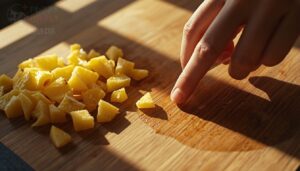
After cutting, run a quick Sharp Edge Detection check on each piece. Even small chips can scrape your dog’s gums. Use these Knife-safe Cutting Practices for safer treats:
- Trim jagged corners using an Edge Trimming Technique
- Remove the core, peel, and core the pineapple fully
- Cut small bite-sized pieces with Consistent Fragment Size
- Discard brittle, splintered bits — preventing choking hazards with dog treats starts here
- Press each piece with your thumb before serving
Soften Overly Hard Pieces

Even after trimming edges, some pieces may still feel tough. That’s when softening helps.
Try the Water Soak Method — submerge pieces in lukewarm water for 10 to 20 minutes. The Microwave Softening approach works too: short 5-second bursts with a splash of water. You can also Steam Briefly for 2 to 3 minutes.
Always confirm pieces mash easily before serving.
Dogs That Should Avoid It

Dried pineapple isn’t the right treat for every dog, even in small amounts. Some dogs have health conditions that make the extra sugar or fiber a real problem.
If your dog falls into any of these categories, it’s best to skip it altogether.
Overweight Dogs
If your dog is already carrying extra weight, dried pineapple isn’t the right treat. Obesity risk in dogs rises fast when sugary snacks sneak into daily routines. Dried pineapple’s calorie density makes portion control and moderation for dog treats especially important here.
Ask your vet about low-calorie dog treats, Body Condition Scoring, and Veterinary Weight Programs built around managing sugar intake in your dog’s diet.
Diabetic Dogs
For a diabetic dog, dried pineapple is simply off the table. Its concentrated sugar content can disrupt an insulin dosing schedule and make blood glucose monitoring much harder to track. Even a small piece can push levels in the wrong direction.
Watch for these hypoglycemia signs if your dog accidentally eats some:
- Weakness or wobbling
- Confusion or unusual behavior
- Seizures in severe cases
- Sudden lethargy
- Loss of appetite
Managing sugar intake in your dog’s diet means skipping high-sugar treats entirely. Stick to low-glycemic treats your vet approves.
Puppies With Sensitive Stomachs
Puppies with sensitive stomachs aren’t ready for dried pineapple. Their gut microbiota is still developing, so digestive upset can occur quickly — even from a small piece. The concentrated fiber intake for dogs this young can overwhelm their system.
Skip it entirely, avoid dairy, and prioritize gradual dietary transitions with probiotic supplementation instead.
Monitor their gut reactions closely when introducing any new treat.
Dogs Prone to Pancreatitis
If your dog has a history of pancreatitis, dried pineapple isn’t worth the risk.
Managing sugar intake in a canine diet is critical here, and the concentrated sugars can act as pancreatitis triggers fast.
High-risk breeds needing strict veterinary monitoring include:
- Miniature Schnauzers
- English Cocker Spaniels
- Cavalier King Charles Spaniels
- Obese dogs
- Diabetic dogs
A low-fat diet is non-negotiable for these dogs.
Dogs With Food Allergies
Food allergies in dogs are trickier than most people realize — many dogs react to more than one trigger at once. If your dog is already managing cross-reactive allergens or working through novel protein diets or hydrolyzed meals, adding dried pineapple complicates symptom tracking.
Fruit allergies in dogs are rare but possible. Skip it until allergy testing confirms pineapple is safe.
Signs Your Dog Ate Too Much

Even a small amount of extra dried pineapple can upset your dog’s stomach pretty quickly.
The sugar and fiber hit harder than you’d expect, especially in one sitting.
Watch for these signs that your dog had a bit too much.
Diarrhea
Too much sugar hits your dog’s gut fast, leading to digestive upset. Watch for loose stools—sometimes three or more times a day.
- Watery or frequent stools (stool frequency climbing fast)
- Signs of dehydration like dry gums or lethargy
- Fluid loss triggering electrolyte imbalance
These are medical red flags. Prioritize fluid replacement and reduce sugar intake in your dog’s diet immediately.
Vomiting
Vomiting is your dog’s gut waving a red flag.
After too much dried pineapple, digestive upset can trigger nausea signs like lip-licking or grass-eating before the real thing starts.
Watch for hematemesis indicators — blood or coffee-ground material in vomit — and green bile production, which signals something deeper.
Dehydration risks climb fast with repeated episodes. These are emergency vet signs. Don’t wait.
Gas or Bloating
Gas and bloating often follow vomiting when your dog has had too much dried pineapple. Swallowed air from fast eating combines with fermentation gas from unabsorbed fruit sugars — and that’s a rough combo for digestive health for dogs.
Acidic irritation and fiber overload worsen it, especially with poor feeding timing.
visibly swollen belly or constant gassy discomfort needs a vet check.
Loss of Appetite
After all that digestive upset, your dog may simply stop wanting to eat. Loss of appetite — medically called anorexia — is a real signal worth taking seriously. Gastrointestinal issues, an upset stomach, and even stress factors can all suppress hunger.
Watch for these signs:
- Sniffing the bowl but walking away
- Skipping a full meal without explanation
- Showing zero interest in favorite treats
Lethargy
Beyond appetite loss, lethargy is another sign worth watching.
If your dog suddenly seems sluggish, sleeps more than usual, or skips their favorite walk, too much sugar content in pet treats may be the trigger.
High sugar loads can stress metabolism, and in dogs with underlying canine diabetes risk or metabolic disorders, even a small overdose can leave them noticeably drained and withdrawn.
When to Call a Veterinarian
If lethargy lingers or gets worse, don’t wait it out. Call your vet right away if you notice rapid breathing, collapse episodes, severe dehydration, uncontrolled bleeding, or neurologic signs.
For urgent concerns, the ASPCA Animal Poison Control Center and Pet Poison Helpline are available around the clock.
Veterinary consultation for pet diet issues is always the safest next step when signs of pineapple overconsumption in dogs escalate fast.
Better Pineapple Treat Alternatives

If dried pineapple feels like too much of a gamble, there are gentler ways to share this fruit with your dog. Some options are just as tasty but easier on their digestion and blood sugar.
Here are five pineapple treat ideas worth trying instead.
Fresh Pineapple Chunks
Fresh pineapple is the top choice for dog treats, as it retains bromelain benefits and vitamin C without the sugar overload of dried versions.
Your chopping method matters—cut pieces under 1 cm to match your dog’s size. Store leftovers in an airtight container, refrigerated, and use within 3–5 days.
Watch for any digestive enzymes sensitivity or signs of allergy monitoring needs after the first taste.
Frozen Pineapple Pieces
Frozen pineapple bites make an invigorating alternative that’s easy to control and prep at home. Because they’re IQF-style — individually quick frozen — you get that satisfying quick freeze texture without clumping or waste.
Follow these IQF storage tips and safety guidelines for feeding pineapple to dogs:
- Squeeze air from freezer bags to prevent freezer burn prevention issues
- Serve pieces straight from frozen in tiny portions
- Consider bromelain retention a bonus — freezing preserves it
- Thaw before feeding only if your dog struggles with hard pieces
- Managing sugar intake in dog treats means keeping servings small
Watch the carb load — frozen pineapple isn’t low-sugar, and potential health risks of excessive pineapple consumption in dogs include loose stools and weight gain.
Unsweetened Freeze-dried Pineapple
If you want the cleanest option, unsweetened freeze-dried pineapple is worth keeping on your radar. Low moisture content means a longer shelf life, and careful packaging materials help preserve enzyme retention — including bromelain benefits for dogs, like easier protein digestion.
Just watch portion size; the rehydration potential makes each piece denser than it looks. Always choose an unsweetened preservative-free variety, and feed in moderation to avoid any choking hazard.
Dog-safe Pineapple Chews
Dog-safe pineapple chews are a smart pick when you want a training reward that feels a little special. Look for products with clear allergy screening labels, solid shelf life monitoring dates, and no added sugar. The best ones also deliver a digestive enzyme boost from bromelain.
- Choose single-ingredient chews
- Confirm no sulfites or sweeteners
- Keep pieces small for portion control
Pineapple Mixed With Regular Food
Mixing pineapple into your dog’s regular meal is one of the gentler ways to introduce it. Meal timing matters — add a few small, unsweetened pieces occasionally, not daily. Texture compatibility is key, so dice it finely for even mixing.
enzyme bromelain aids protein digestion, creating real enzyme synergy with meat-based kibble. portion frequency and keep sugar intake minimal.
Frequently Asked Questions (FAQs)
Is it okay for dogs to eat dried pineapple?
Yes, but with real caution. Dried pineapple isn’t toxic, yet its concentrated sugars and allergy potential make it a "small and occasional" treat — not a daily habit for your dog.
What dried fruit can dogs have?
A few other dried fruits can work as occasional treats. Think unsweetened apple slices, freeze-dried blueberries, no-sugar banana chips, or sulfite-free dried mango — always single-ingredient fruit treats, plain and pit-free.
What happens if my dog accidentally eats pineapple?
Most dogs walk away fine after a small nibble.
But too much can trigger an upset stomach, diarrhea, or a blood sugar spike — so watch closely and call your vet if symptoms escalate.
Is dried pineapple real pineapple?
Absolutely — it’s real pineapple, just with the water removed. Ingredient labeling on unsweetened, preservative-free varieties usually lists only ‘pineapple,’ confirming fruit purity.
The freeze-drying process and standard dehydration both preserve the original flesh, just with different nutrient retention outcomes.
Which fruits are not good for dogs?
Some fruits can seriously hurt your dog.
Grape toxicity and raisin kidney risk are real emergencies. Cherry pit hazard, avocado persin toxicity, and citrus acid upset are also genuine concerns worth keeping top of mind.
Can dogs eat dried pineapple as a snack?
Yes, your dog can snack on dried pineapple occasionally — but keep it small. It’s non-toxic, yet the concentrated sugar means one tiny piece goes a long way.
Is it safe to give my dog canned pineapple?
Canned pineapple can be safe in tiny amounts — but the syrup vs juice distinction matters.
drain and rinse, check the ingredient checklist for xylitol, and keep the calorie count low.
Are there any health risks associated with feeding my dog pineapple?
Pineapple does carry real risks. Too much can cause blood sugar spikes, digestive upset, or dental enamel erosion.
Watch for allergic reaction potential, choking hazards, and signs of pineapple overconsumption, like vomiting or lethargy.
What are the signs of pineapple overconsumption in dogs?
Too much pineapple can cause upset stomach, loose stools, vomiting, excessive drooling, and increased thirst.
Your dog may also show restlessness, pacing, abdominal discomfort, skin itching, or lethargy — all signs of pineapple overconsumption in dogs.
Is there any evidence that pineapple can prevent a dog from eating poop?
Think of it like a folk remedy passed down through generations — comforting, but not clinically proven.
Anecdotal evidence suggests bromelain effect may alter stool taste, discouraging poop eating behavior in dogs, but controlled trials don’t confirm it.
Vet guidance recommends addressing behavioral factors first.
Conclusion
Regarding treats, a little goes a long way—and dried pineapple is no exception.
Can dogs eat dried pineapple? Yes, but only as an occasional, unsweetened snack in small portions.
The natural sugars and concentrated calories make it a sometimes food, not a staple.
Choose preservative-free options, cut pieces small, and skip it entirely for dogs with diabetes or weight issues.
Keep those boundaries, and treat time stays safe and genuinely enjoyable for your dog.