
This site is supported by our readers. We may earn a commission, at no cost to you, if you purchase through links.
Most people don’t realize dog grooming is a skilled trade—one you can enter without a college degree, often in under six months.
A good groomer reads a dog’s body language, knows a Poodle clip from a Schnauzer trim, and keeps anxious animals calm under clippers.
That combination of hands‑on skill and animal intuition takes real training to build.
The path from curious beginner to confident professional is more structured than most expect—with clear steps, recognized certifications, and solid earning potential waiting on the other side.
Table Of Contents
- Key Takeaways
- How to Become a Dog Groomer
- What Dog Groomers Do
- Best Dog Grooming Training Options
- Build Hands-on Grooming Experience
- Get Certified and Meet Requirements
- Find Jobs and Increase Earnings
- Frequently Asked Questions (FAQs)
- How hard is it to be a dog groomer?
- What should I expect for my daily duties as a dog groomer?
- How long does it take to become a certified dog groomer?
- What are the benefits of being a dog groomer?
- What kind of equipment is required to be a dog groomer?
- How can I find job opportunities as a dog groomer?
- How much do dog groomers earn in tips?
- What insurance do mobile groomers typically need?
- Can groomers work part-time or seasonal schedules?
- Do groomers need physical strength or stamina?
- Conclusion
Key Takeaways
- You don’t need a college degree to become a dog groomer—most people go from total beginner to job-ready in under six months through schools, online programs, or apprenticeships.
- The real skill isn’t just cutting hair; it’s reading a dog’s body language, keeping anxious animals calm, and catching skin or health issues owners often miss.
- Certification isn’t required, but it opens doors—employers use it as a trust signal, and certified groomers consistently earn more over time.
- Your earning potential grows fast with experience, specialization, and location, ranging from $25,000 as a newcomer to well over $60,000—or six figures if you open your own salon.
How to Become a Dog Groomer
Becoming a dog groomer is more straightforward than most people think. You don’t need a college degree or years of schooling to get started.
If you’re caring for an older pup, brushing up on dog grooming techniques for senior dogs can make a real difference in keeping them comfortable at home.
Here’s exactly what the path looks like, from day one to landing your first clients.
Step-by-step Path From Beginner to Professional
Think of it like building a house — you need a solid foundation before the walls go up. Your step-by-step guide to becoming a pet groomer starts with a beginner course, then moves into hands-on practice, apprenticeship, and finally certification.
Along the way, focus on portfolio building, mentor matching, and smart financial planning.
Career pathways within the pet grooming industry open up fast when you follow a clear certification timeline.
Following a skill development roadmap can help you structure your learning efficiently.
Skills You Need Before Starting
Before your first clip, a few personal skills go a long way. Patience and compassion aren’t optional — they’re your foundation.
You’ll also want basic breed knowledge, solid stress recognition, and scheduling efficiency from day one. Technical skills like precision cutting and equipment safety come with hands-on experience.
But the drive to care? That’s something you bring yourself.
How Long Grooming Training Usually Takes
Training timelines vary more than most people expect. Your path depends on how fast you want to move.
- Accelerated Course Timelines — In-person intensives wrap up in 4–8 weeks
- Certificate Completion Hours — Full programs run 2–6 months with 40–120 hands-on hours
- Online Hybrid Durations — Flexible schedules and self-paced learning finish in 3–9 months
- Program Length Variations — Part-time training curriculum stretches 6–12 months
- Apprenticeship Timeframes — Hands-on experience versus formal education spans 12–24 months
What Dog Groomers Do
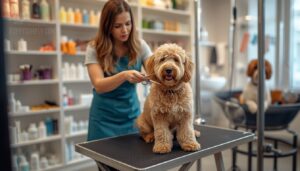
Dog grooming is more than just making a pup look cute — it’s a full set of hands-on tasks that keep dogs healthy and comfortable.
Every appointment covers several key responsibilities, from the basics to the stuff most people don’t think about. Here’s what a typical grooming session actually looks like.
Bathing, Drying, Brushing, and Trimming
Every great groom starts with a solid bath. Use lukewarm water and wet the coat thoroughly before applying shampoo. Rinse completely — leftover residue irritates skin.
Then dry using proper Blow Dryer Technique: keep it moving, never hovering. Once dry, brush in the direction of hair growth using the right Detangling Tools for the coat type. Finish with clean Trim Blending for smooth, even results.
| Step | Key Focus | Common Mistake |
|---|---|---|
| Dog Bathing | Lukewarm Water, full coat saturation | Skipping thorough rinsing |
| Drying | Low heat, constant movement | Holding dryer too long in one spot |
| Brushing | Brush Direction follows hair growth | Forcing through mats |
| Detangling | Right tools per coat type | Using one brush for everything |
| Trimming | Trim Blending for smooth transitions | Cutting over damp sections |
Nail Clipping, Ear Cleaning, and Teeth Brushing
Beyond the bath, three routines separate good groomers from great ones:
- Nail clipping — follow nail length guidelines and take small cuts to protect the quick. Keep styptic powder close for quick bleeding control.
- Ear cleaning — wipe only what’s visible, use a dog-safe solution, then apply ear drying techniques to prevent moisture buildup. Watch for ear odor detection as an infection flag.
- Teeth brushing — use dog-safe toothpaste and short sessions for dental plaque prevention.
Checking Coats for Skin Issues or Parasites
Each session is your chance to catch what owners might miss. Run your fingers through the coat slowly — you’re feeling for bumps, checking coat moisture levels, and watching for skin inflammation signs like redness or flakiness.
A tense tail or pinned ears during grooming can signal deeper issues — much like the warning signs seen when an older dog attacks a puppy and stress goes unaddressed.
Flea tick hotspots include behind the ears, between toes, and near the tail. Mange clues show up as patchy hair loss.
Always flag suspicious bumps for vet review.
Safe Handling and Restraint Techniques
Safe handling starts the moment a dog steps onto your table. Your stance matters — feet planted, body stable.
Use Head Positioning to keep airways clear and prevent neck strain. Paw Stabilization means supporting the joint, not just grabbing toes.
When tension rises, Stress Signal Recognition tells you to pause. For difficult cases, Two Person Restraint and smart Muzzle Selection keep everyone safe.
Talking With Pet Owners About Grooming Needs
Good client communication starts before you pick up a single tool. A quick conversation with the owner sets the tone for everything.
- Ask about owner preferences upfront — short trim, full scissoring, or somewhere in between.
- Share coat condition reports and skin health alerts honestly, so owners can act on them.
- Confirm service add-ons and offer practical home grooming tips to keep results lasting longer.
Best Dog Grooming Training Options

Finding the right training path is easier than you think. There are a few solid options out there, and the best one really depends on how you learn and what fits your life right now.
Here’s a look at the most common routes people take to get started.
Formal Grooming Schools and Programs
Formal grooming schools are your most structured path into this career. A solid pet grooming school generally covers 600 to 900 curriculum hours, blending classroom theory with real hands-on practice.
Most programs include tool kit packages, externship partnerships with local salons, and grooming education and certification programs that prepare you for national exams.
Financial aid and accreditation standards vary, so always ask before enrolling.
Online Courses and Flexible Learning Options
Not everyone can pack up and attend a school in person — and that’s okay. Online pet grooming training works surprisingly well for foundational skills.
With Self-Paced Modules, On-Demand Video Access, and Interactive Simulations, a Mobile-Friendly Platform lets you learn between shifts or after the kids are in bed.
Progress Tracking Tools keep you moving forward.
Many online pet grooming certificate programs even count toward pet grooming education and certification programs — making flexible learning a smart starting point.
Apprenticeships and Assistant Positions
Sometimes the best classroom has four legs and a wet nose. An apprenticeship or grooming assistant role gives you real on the job training that no screen can replicate.
You’ll sign a contract outlining your Contractual Wage, then get started:
- Mentor Pairing with a senior groomer
- Rotation Schedule across different breed types
- Performance Reviews tracking your growth
Eligibility Requirements are simple — show up ready to learn.
Choosing a Course That Fits Your Goals
Not every training program is built the same — and neither are you.
Think about your learning style first. Do you need flexible schedules, or does structure keep you on track?
Budget limits matter too, so compare costs honestly. Accreditation value and career alignment should drive your final pick.
An online pet grooming certificate program can work beautifully if you need flexibility without sacrificing certification quality.
What to Look for in Hands-on Coursework
Once you’ve chosen a program, look closely at what the hands-on practical coursework actually includes. Good training programs use real-world simulations — think full salon scenarios from intake to finish.
Check for assessment rubrics so you know exactly how skills are graded. Skill log tracking and a safety checklist each session signal serious instruction.
Strong instructor expertise makes all the difference.
Build Hands-on Grooming Experience
Training gives you the foundation, but real skill comes from doing the work with actual dogs. Every breed, coat type, and personality will teach you something a classroom can’t.
Real skill comes from the dogs themselves — every breed and coat type teaches what no classroom can
Here’s what you’ll need to practice to build true confidence behind the grooming table.
Practicing on Different Dog Breeds and Coat Types
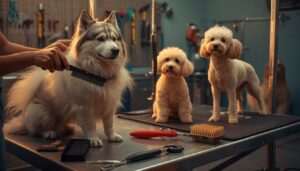
No two dogs groom the same way — and that’s exactly what makes this work interesting. Coat Type Challenges show up fast: double coats like a Husky’s need serious Undercoat Management, while curly breeds demand consistent Mat Prevention Techniques.
Hairless Skin Care is a different skill entirely.
Build your breed recognition early, and Breed-Specific Tools will start feeling like second nature.
Learning Breed-specific Cuts and Styles
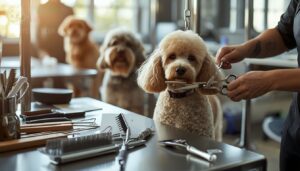
Mastering breed-specific cuts starts with understanding why each style exists. Every breed standard has a logic behind it — coat texture, body proportion, lifestyle.
That’s what Breed Standard Mapping teaches you to see.
Here’s what dog grooming training covers in this area:
- Coat Texture Techniques for curly, wavy, and double coats
- Head Shape Styling using rounded or squared outlines
- Tail Line Shaping and body flow blending
- Breed Tool Selection matched to coat type
- Recognizing when to blend versus scissor clean lines
Style and cut decisions get easier once breed recognition clicks.
Working With Anxious, Large, or Senior Dogs
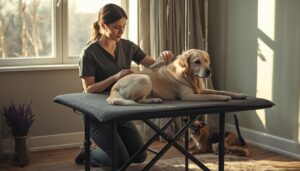
Handling anxious, large, or senior dogs takes patience and sharp awareness. Start with Trigger Identification — notice what sets a dog off, whether it’s the table, clippers, or running water. Use Low-Force Handling and Smart Restraint to keep everyone safe without adding stress.
Watch Body Language Cues constantly.
Senior dog grooming means shorter sessions, gentler pressure, and Calm Bathing techniques that respect aging joints.
Developing Speed, Confidence, and Consistency

Speed comes with repetition. Use Rapid Skill Drills and High Cadence Practice to sharpen your grooming techniques over time.
Confidence Building Routines — like tracking Consistent Performance Metrics — show you exactly how far you’ve come. Try these three steps:
- Set a small target each session
- Record your times and accuracy
- Review and adjust weekly
Mental Focus Techniques make the difference.
Sanitizing Tools and Maintaining a Safe Workspace

A clean station isn’t just professional — it protects every dog that walks through your door. Your Tool Disinfection Protocol starts with removing hair and debris before applying any EPA-registered disinfectant. Let it stay wet for the full contact time.
Use Separate Zones — one tray for dirty tools, one for clean tools. Practice Glove Change Practices between clients, and follow a Surface Sanitization Schedule for tables, drains, and high‑touch points. UV Storage Cabinets add a helpful final layer, but they don’t replace proper cleaning.
| Step | Action | Why It Matters |
|---|---|---|
| Pre-clean | Remove hair and residue | Disinfectant works on clean surfaces |
| Disinfect | Apply EPA product, full contact time | Kills bacteria and viruses effectively |
| Store | Use UV cabinet or covered container | Prevents recontamination before next use |
Following grooming salon safety protocols and sanitation protocols isn’t optional — it’s how you build trust, protect animals, and meet grooming safety standards every single day.
Get Certified and Meet Requirements
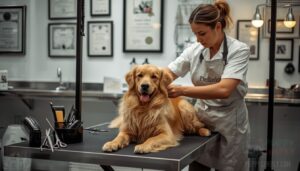
Certification isn’t required to groom dogs, but it can open doors that experience alone won’t. It signals to clients and employers that you know what you’re doing — and that matters.
Here’s what you need to know about getting certified and meeting the requirements.
Whether Certification is Worth Pursuing
Certification isn’t required — but it creates opportunities. Becoming a certified groomer signals Skill Validation to salons, clinics, and clients who don’t know you yet. That’s where Client Trust and Job Access come in.
Many employers use certification as a quick filter when hiring. It also reinforces Industry Credibility and Higher Pay over time — making certification and training options for pet groomers a smart long-term investment in your career.
Common Grooming Certification Organizations
Several organizations can put real credentials behind your name. The NDGAA Credential Structure leads to the National Certified Master Groomer Association designation — highly respected in salons.
IPG Global Standards support the International Professional Groomers network across 35+ countries. The AKC SAFE Dog Grooming Program focuses on ethics and safety. ISCC Technical Requirements cover bathing, trimming, and sanitation.
Each path builds legitimate, recognized standing in this field.
Written and Practical Exam Expectations
Once you’ve chosen your certification path, expect two parts: a written test and a live practical exam.
Written sections cover coat types, tool vocabulary, and client ethics.
Practical stations use Rubric Scoring Criteria across 8–12 tasks — technique, safety, restraint.
Timed Practice Sessions help reduce Exam Anxiety Management struggles.
Station Rotation Strategy keeps you organized.
Documentation Standards matter too.
Most programs require 70–85% to pass.
Continuing Education and Yearly Renewal
Passing your exam is just the start. Keeping your certification means staying current through continuing education — and that’s actually a good thing for your career advancement.
Most organizations require annual renewal. Here’s what that looks like:
- Complete Credit Requirements through online courses or Ethics Modules
- Track Documentation Practices — save every certificate
- Renewal Timing deadlines to avoid lapsing
Online Platforms make professional development surprisingly easy to fit into your schedule.
State Licensing and Employer Preferences
State licensing rules vary — and that matters more than most beginners expect. Some states require passing State Board Exams, while others say a license‑not‑required stance applies.
Either way, Employer Screening often favors licensed groomers. Know your state and local requirements before job hunting.
Reciprocity Agreements can ease License Renewal if you move. Always check your state regulations for pet grooming early.
Find Jobs and Increase Earnings

Once you’re trained and certified, it’s time to put your skills to work. Where you work and how you position yourself will shape both your daily routine and your paycheck.
Here’s what you need to know about finding the right fit and growing your income.
Working in Salons, Clinics, Shelters, or Mobile Units
Every work setting shapes your day as a dog groomer differently. Salon client scheduling keeps things structured, while mobile grooming puts you on the road — with full responsibility for mobile setup logistics and facility licensing. Clinic hygiene standards and shelter safety protocols add another layer of accountability.
- Salons offer steady clients and team support
- Clinics demand strict cleanliness between every animal
- Shelters require calm handling and background checks
- Mobile units need secured tools and travel planning
Typical Salary Ranges for New and Experienced Groomers
Your earning potential depends a lot on where you start and how far you go.
Entry-level groomers usually see salary benchmarks for entry-level groomers around $25,000–$35,000 annually — though Geographic Wage Variation plays a real role. Washington state’s average salary hits $43,330.
The Experience Salary Gap is significant too: seasoned groomers reach $40,000–$60,000.
Industry Salary Benchmarks confirm that expertise pays off over time.
Factors That Affect Pay, Tips, and Commissions
Several factors quietly shape your paycheck. Geographic Wage Variation matters — Washington’s state average salary hits $43,330, far above the national average. Experience Premiums kick in as your reputation grows. Watch for Seasonal Demand Spikes around holidays, too.
- Urban salons often pay more and tip better
- Loyal clients fuel Reputation-Driven Tips consistently
- Service Upselling Commissions add real income fast
Your salary growth depends on all of these together.
Specializing in Show Grooming or Creative Styling
Want to stand out and earn more? Specializing in show dog grooming or creative grooming opens real doors.
Show Coat Sculpting and breed-specific cuts demand precision finishing sprays, Color Accessory Integration, and Show Grooming Safety at every step.
Creative Styling Trends let your artistry shine.
A grooming certification in these specializations within dog grooming signals serious skill — and clients pay for that.
Starting Your Own Grooming Business Later On
Running your own salon is the natural next step once you’ve built your skills and clientele. Business planning, licensing, and equipment investment are the heavy lifters early on. Start-up costs often exceed €30,000 for a storefront. Strong marketing strategies and smart financial management keep you profitable.
Staff hiring comes later. Done right, salon ownership can push your earnings well past €100,000 annually.
Frequently Asked Questions (FAQs)
How hard is it to be a dog groomer?
It’s harder than it looks. You’ll face physical strain, emotional fatigue, and real safety risks daily. But with the right personal skills and hands-on experience, it becomes deeply rewarding work.
What should I expect for my daily duties as a dog groomer?
Every day brings baths, nail clipping, brushing, and shaping the canine fur and nails.
You’ll also handle client note logging, appointment scheduling, tool sterilization, temperature monitoring, and inventory restocking — the real job duties and responsibilities of pet groomers.
How long does it take to become a certified dog groomer?
Like most trades, the timeline bends to fit your life.
Full-time programs wrap up in two to six months. Part-time stretches to a year. Apprenticeships run longer — but you’re earning while learning.
What are the benefits of being a dog groomer?
Dog grooming offers flexible hours, a strong human-animal bond, and real income potential.
With low entry barriers and creative freedom, it’s a career built on passion — and the salary and compensation for groomers keep growing.
What kind of equipment is required to be a dog groomer?
You’ll need a solid grooming kit to get started.
Think adjustable grooming table, restraint arm system, a professional clippers set, high-velocity dryer, sanitizing station, and basic tools for drying and nail clipping.
How can I find job opportunities as a dog groomer?
Start with Online Job Boards like Indeed or LinkedIn. Try Social Media Outreach on local Facebook groups.
Local Shelter Volunteering builds your resume fast. Industry Networking Events and Referral Programs often reveal hidden openings before they’re posted.
How much do dog groomers earn in tips?
Tips add up fast. Most clients tip 15–20% per service.
Mobile groomer tips run slightly higher. Urban salons see more generous percentages.
Add-ons like teeth brushing or deshedding bring extra dollars every visit.
What insurance do mobile groomers typically need?
Running a mobile pet grooming business means you need the right coverage.
General Liability, Bailee Coverage, Professional Liability, and Commercial Auto insurance protect you, your clients, and their pets every single visit.
Can groomers work part-time or seasonal schedules?
Yes, groomers can absolutely work part-time or seasonal schedules. Many salons hire part-time staff for weekends and peak seasons.
Flexible hours, hourly pay, and commission tips make it a practical option.
Do groomers need physical strength or stamina?
Grooming is physically demanding. You’ll lift dogs up to 80 pounds, stand for hours, and use repetitive hand motions all day. Good body mechanics and ergonomic tools make a real difference.
Conclusion
A million dogs are waiting for someone who actually knows what they’re doing—and that someone can be you.
Learning how to become a dog groomer isn’t just about mastering scissors or memorizing breed cuts. It’s about building a career where your hands calm nervous animals and your skills earn real trust.
Follow the steps, put in the practice, and stay consistent. This trade rewards people who show up ready to learn and never stop improving.
- http://www.dailypuppy.com/articles/how-to-choose-a-pet-grooming-school_1385.html
- https://www.pennfoster.edu/affiliate/m-veterinary?trackingcode=fef8440c-edf3-ed11-8848-6045bd029b76&utm_medium=affiliate&utm_source=bluewhaleholding&utm_campaign=petgroomingschool.org&ct_id=pet&aff=1&utm_content=main&utm_term=organic&cid=&vega_campaign_id=CAMP-8241f823
- http://www.ipgicmg.com/
- https://nationaldoggroomers.com/
- https://jooble.org/jobs-dog-groomer-apprentice