This site is supported by our readers. We may earn a commission, at no cost to you, if you purchase through links.
Most dog owners discover raw turkey necks the same way—their dog finds one at a family cookout and wolfs it down before anyone can intervene. Then comes the panic, the frantic Googling, the relief when nothing goes wrong.
Raw turkey necks can actually be a safe treat for dogs when handled correctly, but the gap between “generally fine” and “done right” matters more than most people realize. They pack serious protein, natural glucosamine, and minerals that support everything from muscle health to aging joints. Knowing where the real risks lie—and how to sidestep them—makes all the difference.
Table Of Contents
- Key Takeaways
- Can Dogs Eat Raw Turkey Necks?
- Nutritional Benefits of Raw Turkey Necks
- Dental Health Advantages for Dogs
- Potential Risks of Raw Turkey Necks
- Which Dogs Should Not Eat Raw Turkey Necks?
- Safe Preparation and Handling Tips
- How to Feed Raw Turkey Necks Safely
- Raw Vs. Cooked Turkey Necks for Dogs
- Healthy Alternatives to Raw Turkey Necks
- Where to Buy Raw Turkey Necks for Dogs
- Frequently Asked Questions (FAQs)
- Can I feed my dog raw turkey necks?
- What parts of a raw turkey can a dog eat?
- Can dogs get salmonella from raw turkey neck?
- Can dogs eat raw chicken neck?
- Can puppies eat raw turkey necks safely?
- How often should dogs eat turkey necks?
- Are turkey necks suitable for all dog breeds?
- What signs indicate a dog has issues with turkey necks?
- Do raw turkey necks affect digestion in dogs?
- Can turkey necks help with dog anxiety?
- Conclusion
Key Takeaways
- Raw turkey necks are safe for most healthy adult dogs, but size, chewing style, and supervision all shape whether they’re the right fit for your dog.
- They pack real nutritional value—protein, calcium, glucosamine, and minerals—that supports muscle health, joint mobility, and dental hygiene naturally.
- The biggest risks aren’t just myths: bacterial contamination, choking, and digestive blockages are real concerns that proper sourcing, handling, and supervision can prevent.
- Cooked turkey necks are never a safe swap—heat makes bones brittle and prone to splintering, which can cause serious internal injury.
Can Dogs Eat Raw Turkey Necks?
Yes, dogs can eat raw turkey necks, and many do just fine with them. But before you toss one to your pup, it helps to know what you’re working with.
If you want the full breakdown—size guidelines, chewing risks, and safe prep tips—feeding raw turkey necks to dogs is worth a solid read before you dive in.
Here’s what the experts say, what’s actually true, and what’s just myth.
Safety Overview
Raw turkey necks sit in a gray zone for dog owners. They can offer real benefits, but risk assessment matters here.
Bacterial contamination, choking hazards, and intestinal blockages are genuine concerns — not just scare tactics. Your dog’s size, chewing style, and health history all shape whether this treat is safe.
Smart feeding guidelines and basic food safety and handling practices go a long way. It’s important to remember that consuming bones can lead to serious health complications in some dogs.
Expert Veterinary Opinions
Veterinary opinions on raw feeding aren’t black and white. Most general practice vets flag raw turkey necks as high-risk — pointing to choking, bone injury, and bacterial contamination.
But some specialists who support carefully planned raw diets consider them acceptable for healthy dogs under strict supervision.
Across the board, veterinary guidance on canine health agrees: individualize the decision based on your dog’s size, history, and your household.
For further details on the importance of safe turkey feeding guidelines, consult veterinary resources.
Myths Vs. Facts
Debunking myths around raw feeding starts with fact checking what you’ve heard. Many pet owners assume raw turkey necks are completely germ-free — they’re not. Safe handling matters every time.
Others believe turkey necks fully replace dental care, but canine dental health needs more than chewing alone. Understanding real dog nutrition and health means separating turkey neck benefits for dogs from the half-truths.
Nutritional Benefits of Raw Turkey Necks
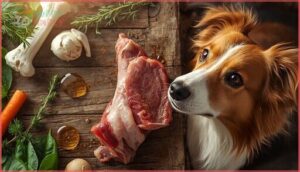
Raw turkey necks aren’t just a fun chew — they actually pack a solid nutritional punch for dogs.
Beyond the entertainment value, what’s inside matters just as much as the chewing itself.
Here’s a closer look at the key nutrients your dog gets from each bite.
Protein Content
Turkey necks punch above their weight as a protein source for dogs. A single raw neck delivers 26–30 g of protein — enough to cover a small dog’s daily needs in one piece.
That protein comes loaded with essential amino acids like lysine and leucine, which support muscle growth and digestive health. For canine nutrition, that’s genuinely impressive nutritional value in a natural, whole-food package.
Calcium and Minerals
Bone health starts with what’s in the bone — and turkey necks deliver. About 45% of each neck is edible bone, making them one of the better natural calcium sources you can offer. That calcium-to-phosphorus ratio of roughly 1.75:1 helps maintain mineral balance in your dog’s diet.
Key minerals in each neck include:
- Calcium — roughly 1.84g per 100g with bone
- Phosphorus — promotes bone density alongside calcium
- Zinc — promotes skin and immune health
- Selenium — provides antioxidant support
- Magnesium — helps muscles and enzymes function
Glucosamine and Chondroitin
One of the quieter perks of raw turkey necks is what hides in the cartilage. As your dog chews through the connective tissue, they’re getting natural glucosamine and chondroitin — two nutrients that support joint health and mobility by building and protecting cartilage.
For canine nutrition, that’s a real bonus. It won’t replace a dedicated joint support supplement, but as natural supplements go, it’s a solid addition.
Dental Health Advantages for Dogs
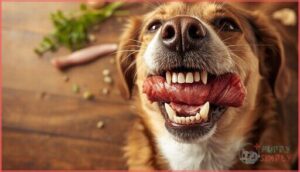
Raw turkey necks do more than just satisfy your dog’s chewing urge — they actually work like a natural toothbrush. The gnawing action targets areas that regular brushing often misses, and the benefits go beyond just clean teeth.
Here’s a closer look at what chewing on turkey necks can do for your dog’s dental health.
Chewing Action and Plaque Removal
Raw turkey necks work like natural chews your dog actually wants to use. As your dog gnaws through the bone and cartilage, that mechanical cleaning action physically scrapes plaque off tooth surfaces — especially the back molars where buildup loves to hide.
The chewing also triggers heavy saliva flow, rinsing the mouth while gum stimulation promotes healthy tissue. It’s canine dental care that happens naturally.
Preventing Tartar Buildup
Plaque doesn’t wait — and once it hardens into tartar, brushing alone won’t cut it.
That’s where raw bone benefits really shine. Chewing on natural chews like turkey necks keeps plaque control working between vet visits. The low-starch meat leaves little residue for bacteria to feed on, making this a simple form of natural oral care that aids long-term canine dental care without extra products.
Mental Stimulation
Chewing a turkey neck isn’t just good for your dog’s teeth — it’s a workout for their brain too. Working through bone, tendon, and cartilage requires constant problem solving and focus, which aids cognitive development and emotional balance.
- Sustained chewing promotes stress reduction and calm behavior
- Varied textures create natural canine enrichment and stimulation
- Long sessions satisfy mental stimulation needs, reducing destructive habits
- Mimics instinctive feeding behavior, fostering dog training and behavior goals
Potential Risks of Raw Turkey Necks
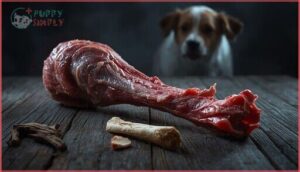
Raw turkey necks come with real benefits, but they’re not without risks. Before you toss one to your dog, it’s worth knowing what can go wrong.
Here are the three main concerns to keep in mind.
Choking Hazards
Turkey necks can become a choking hazard faster than you’d expect. Dogs that gulp food are especially at risk — a slippery, tube-shaped neck slides down easily without proper chewing, raising real asphyxiation risks.
Bone fragmentation can also trigger a blocked airway. Supervising your dog closely aids choking prevention and overall dog safety.
| Risk Factor | Why It Matters | Prevention Tip |
|---|---|---|
| Gulping behavior | Bypasses gag reflex | Feed partially frozen |
| Bone fragmentation | Airway obstruction risk | Choose correct size |
| Unsupervised chewing | No intervention possible | Always stay nearby |
Digestive Blockages
Choking isn’t the only danger to watch for. Digestive blockages are just as serious — sometimes more so. When your dog swallows large chunks of raw turkey necks without chewing properly, bowel obstruction becomes a real risk.
- Blockage symptoms include vomiting, lethargy, and constipation
- Intestinal damage and gut perforation can develop within 24–48 hours
- Untreated intestinal blockages can lead to sepsis
Always supervise closely.
Bacterial Contamination
Digestive blockages aren’t the only worry with raw feeding. Bacterial contamination is a real threat, especially since raw turkey necks often carry Salmonella, E coli, or Listeria.
Without proper pathogen testing or careful handling, contamination risks rise. Foodborne illness can affect both dogs and people, so focus on microbial safety, food safety, and strict dog health and hygiene routines.
Which Dogs Should Not Eat Raw Turkey Necks?

Raw turkey necks aren’t right for every dog, and some pups need extra caution before trying them.
Certain health issues or size concerns can make these chews risky. Here’s what you’ll want to take into account for your dog.
Small Breed and Puppy Considerations
Small breed dogs and young puppies have special needs in the context of raw turkey necks. Their jaws are weaker, airways narrower, and bodies still growing.
Because of this, choking risks rise and portion control matters for good puppy nutrition. Following feeding guidelines—opting for small, soft pieces—helps support safe raw feeding, growth monitoring, and long-term dog health and nutrition.
Dogs With Allergies or Health Conditions
You want your dog to thrive on a raw feeding plan, but food sensitivities or true food allergies can throw a wrench in the works.
For dogs on strict medical diets, managing weight, or receiving canine health supplements, a turkey neck—even a nibble—can trigger old symptoms.
Allergy testing and careful canine nutrition plans give peace of mind.
High-Risk Groups
In my practice, it’s surprisingly common to meet dogs who simply aren’t safe candidates for raw turkey necks.
Senior Dog Care often means softer diets to avoid cracked teeth and constipation.
Puppy Feeding and Small Breed Safety focus on the choking hazard.
Add in Brachycephalic Breeds, Immunocompromised Dogs, or homes facing bacterial contamination risk—these groups really need gentler, safer chew options.
Safe Preparation and Handling Tips
Making sure turkey necks are safe for your dog starts with how you choose and handle them. Simple steps in preparation and storage can make a big difference.
Here’s where to begin.
Sourcing Quality Turkey Necks
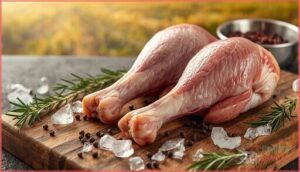
Not all turkey necks are created equal. For raw feeding, look for USDA-inspected sources with clear product labeling around farm practices and meat sourcing.
Suppliers following regulatory compliance standards, including Certified Humane or GAP certifications, offer stronger animal welfare guarantees. Verify that bones come from human-grade facilities, never rendered or 4D meats, so your dog gets safe, quality nutrition.
Cleaning and Trimming
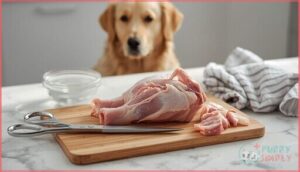
Proper raw meat handling starts before your dog even sees the neck. Rinse it under cool water, pat dry, then check for gray patches, sour smells, or sticky surfaces — all signs to toss it.
- Trim loose skin and thick fat with kitchen shears
- Cut away any fractured or splintered bone sections
- Sanitize your cutting board, sink, and hands after every session
Safe Storage and Thawing

Keep raw turkey necks frozen at 0°F or below — that’s your best defense against bacterial contamination. Once thawed, refrigerator limits apply fast: use them within 2 to 3 days at 40°F or below.
For thawing methods, stick to slow fridge defrosting to stay within safe storage guidelines. Avoid countertop thawing too long, and always prevent cross contamination by sealing necks in leakproof bags.
How to Feed Raw Turkey Necks Safely
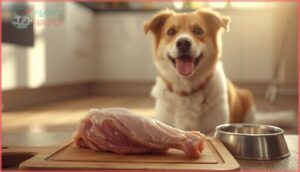
Knowing turkey necks are safe is one thing — feeding them the right way is another.
A few simple habits can make a real difference in keeping your dog safe and getting the most out of this treat.
Here’s what you need to know before you get started.
Portion Sizes and Frequency
How much is too much? Most raw feeders stick to 2–3% of their dog’s ideal body weight for daily feeding, and turkey necks count toward that total — not on top of it.
Because the bone ratio runs high at roughly 42%, good meal planning means balancing necks with boneless meat. For feeding frequency, once or twice a week works well for most dogs.
Supervising Your Dog
Stay within arm’s reach the entire time your dog chews — that’s the golden rule of raw bone safety. Dog monitoring isn’t optional here. Watch for gulping, coughing, or pawing at the mouth, which signal choking hazards in real time.
Take the neck away once it’s small enough to swallow whole. Chewing supervision keeps canine consumption safe and digestive blockages off your worry list.
Introducing to Your Dog’s Diet
Once supervision is handled, the next step is a gradual introduction. Start with one-third of a neck for a medium dog, given earlier in the day so you can watch for any stool changes before bedtime.
Treat it as a supplemental protein source, not a meal replacement — and cut regular food by about 15 percent on turkey neck days to keep nutrient balance in check.
Raw Vs. Cooked Turkey Necks for Dogs

The way you prepare a turkey neck makes a bigger difference than most people realize.
Raw and cooked versions aren’t interchangeable — they carry different nutritional profiles and very different safety considerations. Here’s what you need to know before deciding which one belongs in your dog’s bowl.
Nutritional Differences
Raw and cooked turkey necks don’t deliver the same nutritional value to your dog. Cooking changes the protein source, reduces moisture, and affects mineral profile and vitamin intake.
| Nutrient | Raw Turkey Neck | Cooked Turkey Neck |
|---|---|---|
| Protein Content | ~22–30g per 100g | Slightly concentrated |
| Calorie Content | ~225 cal/180g | ~179 cal/100g |
| Calcium & Dog Nutrition | Higher from intact bone | Lower after cooking |
Safety Concerns With Cooked Bones
Cooking changes more than nutrition — it makes bones dangerous. Cooked bone risks are serious: heat causes bone fragmentation, turning soft tissue into sharp splinters. These create choking hazards and digestive blockages that can require surgery.
Intestinal perforation is possible when jagged pieces tear through soft tissue, triggering life-threatening infection. Raw bones digest far more safely. Never give your dog cooked turkey necks.
Cooked turkey neck bones splinter into sharp shards that can perforate your dog’s intestines — never risk it
| Risk | Cooked Bones | Raw Bones |
|---|---|---|
| Bone Fragmentation | High — brittle, splinters easily | Low — flexible, digestible |
| Choking Hazards | Significant risk | Minimal with supervision |
| Digestive Blockage | Common concern | Rare with proper sizing |
| Intestinal Perforation | Possible from sharp shards | Unlikely |
| Bacterial Contamination / Food Safety | Lower risk | Requires safe handling |
When Cooking May Be Appropriate
There are real cases where cooked turkey makes more sense. Dogs with compromised immune systems, chronic digestive issues, or pancreatitis may do better with fully cooked, skin-off turkey neck meat — bones removed — than raw feeding. Cooking reduces bacterial load and lowers fat content, both important for sensitive dogs.
| Situation | Raw Turkey Necks | Cooked Turkey |
|---|---|---|
| Healthy adult dogs | Good choice | Acceptable |
| Immune-compromised dogs | Higher risk | Safer option |
| Pancreatitis history | Too fatty | Lean, trimmed preferred |
Healthy Alternatives to Raw Turkey Necks

Raw turkey necks aren’t the only way to keep your dog happily chewing.
There are plenty of other options that offer similar benefits without the same level of health risk.
Here are a few worth considering.
Freeze-Dried and Dehydrated Options
Not ready to handle raw feeding? Freeze-dried turkey necks and dehydrated turkey necks are solid natural treats that fit right into a raw feeding routine without the mess.
Freeze-dried benefits include better nutrient preservation and a longer shelf life, while dehydrated nutrition still delivers glucosamine and protein. Store both options sealed in a cool, dry spot for best results.
Other Safe Natural Chews
If turkey necks aren’t the right fit, you’ve got options. Natural tendons and collagen chews are lean, digestible, and great for raw feeding and natural diets.
Beef cheeks last surprisingly long for moderate chewers. Antler toys suit strong chewers but skip them for puppies. Rubber toys offer calorie-free enrichment.
All can be safe dog treats when matched to your dog’s size and chewing style.
Commercial Dental Treats
Dental chews are a practical option when raw bones don’t fit your dog’s needs. For better canine dental health and hygiene, look for the VOHC Seal — it means the product is proven to reduce plaque or tartar.
When choosing, consider:
- Match size to your dog’s weight
- Check for xylitol in ingredients
- Count calories toward daily intake
Veterinary guidance still recommends brushing alongside any dental care routine.
Where to Buy Raw Turkey Necks for Dogs
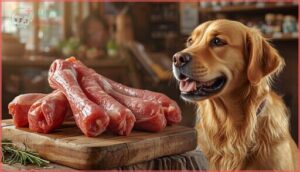
Once you’ve decided to add raw turkey necks to your dog’s diet, the next step is knowing where to actually find them.
Not all sources are equal, so it’s worth knowing your options before you buy. Here are the most reliable places to look.
Pet Stores and Butchers
Your best store locations for raw turkey necks are neighborhood pet shops and local butchers. Both support raw diets with quality options — pet stores often stock USDA-inspected, human-grade turkey necks frozen in labeled bags, while butchers offer them by weight at lower cost.
For raw feeding, either source works well for dog nutrition and health. Always ask staff about meat quality and handling practices.
Online Retailers
Online shopping opens up a lot of options for raw turkey necks. Specialty raw feeding retailers offer retailer variety — from small snack bags to bulk 5 lb boxes — with clear product reviews and sourcing details.
Most ship frozen with insulated packaging, so check their shipping policies before ordering. Good customer support and transparent labeling make it easier to feed your dog a safe, natural raw diet.
Frequently Asked Questions (FAQs)
Can I feed my dog raw turkey necks?
Yes, most healthy adult dogs can enjoy raw food diet — but size, supervision, and sourcing matter.
Think of it as a treat with homework attached.
What parts of a raw turkey can a dog eat?
Not every part is safe. For raw meaty bones, turkey necks work well.
Lean meat, heart, and gizzard fit most canine diets. Skip dense leg bones, fatty skin, and cooked anything — those cause real problems.
Can dogs get salmonella from raw turkey neck?
Raw turkey necks carry a real Salmonella risk — roughly 42% of neck skin samples test positive.
That’s a serious bacterial contamination concern for raw feeding and your dog’s overall health, especially for puppies or immune-compromised dogs.
Can dogs eat raw chicken neck?
Chicken necks aren’t quite the safe swap you might hope for. They offer real Chicken Neck Benefits for canine nutrition, but Raw Chicken Risks like Salmonella and choking make pet food safety a genuine dog health concern.
Can puppies eat raw turkey necks safely?
Most puppies aren’t ready for turkey necks until at least 5 to 6 months old. Their jaws need time to develop, and the choking risk is real. Always check with your vet first.
How often should dogs eat turkey necks?
Frequency finds a sweet spot around once a week for most healthy adult dogs. Adjust based on your dog’s size, diet, and how their stomach tolerates it.
Are turkey necks suitable for all dog breeds?
Not quite. Turkey necks work well for medium to large dogs, but smaller breeds struggle with the size.
Your dog’s breed-specific needs, jaw strength, age, and health restrictions all shape safe raw feeding choices.
What signs indicate a dog has issues with turkey necks?
When turkey necks spell trouble, your dog won’t hide it.
Watch for choking signs, gastro issues, allergy reactions, skin problems, or digestive distress — any of these mean it’s time to pause and check in with your vet.
Do raw turkey necks affect digestion in dogs?
Yes, raw turkey necks do affect your dog’s gut health. The dense bone and connective tissue slow gastric emptying, shift stomach pH, and can impact intestinal balance, nutrient absorption, and stool firmness — sometimes causing constipation.
Can turkey necks help with dog anxiety?
Chewing, calming, and canine comfort often go hand in hand.
Turkey necks offer mild anxiety relief through mental stimulation and endorphin release, supporting emotional wellbeing — though they won’t replace treatment for serious dog anxiety.
Conclusion
Take Maya, a 9-year-old Lab whose joints had started slowing her down—until her owner added raw turkey necks twice a week. Within months, her vet noted improved mobility and cleaner teeth.
That’s the quiet power here. When you ask can dogs eat raw turkey neck, the honest answer is yes—thoughtfully. Source carefully, supervise always, and match the treat to your dog’s size and health. Done right, it’s one of nature’s better gifts.
- https://www.rawfedandfurry.ca/raw-pet-food-turkey-necks-safe-for-dogs-raw-feeding-guide
- https://campfiretreats.com/blogs/campfire-tales/can-dogs-eat-turkey-necks
- https://www.naturalrawdogfoods.com/the-importance-of-aafco-guidelines-in-raw-feeding
- https://britishpoultry.org.uk/identity-cms/wp-content/uploads/2018/05/2016-ADAS-EU-US-comparison.pdf
- https://www.ncbi.nlm.nih.gov/pmc/articles/PMC6849757/