
This site is supported by our readers. We may earn a commission, at no cost to you, if you purchase through links.

never tell you something hurts—they’ll keep eating, playing, and wagging their tails while a diseased tooth quietly destroys the bone around it.
80% of dogs over three years old are already dealing with it by the time periodontal disease becomes visible.
tooth extraction sounds alarming, but in many cases it’s the most effective way to eliminate chronic pain your dog has been silently carrying.
Understanding what this procedure actually involves—from the pre‑surgical bloodwork to the first soft meal at home—makes the whole process far less intimidating than the diagnosis.
Table Of Contents
- Key Takeaways
- Reasons Dogs Need Tooth Extraction
- Preparing for Your Dog’s Tooth Extraction
- Dog Tooth Extraction: Step-by-Step Procedure
- Post-Extraction Care and Recovery
- Costs, Insurance, and Preventing Extractions
- Frequently Asked Questions (FAQs)
- How much would it cost to remove a dog’s tooth?
- Do dogs handle tooth extractions well?
- What happens if a dog has a tooth extraction?
- Why does my dog need a dental extraction?
- How do you extract a dog tooth?
- What should a dog do if he has a tooth extraction?
- How much does a dog tooth extraction cost?
- When should a dog get a tooth extracted?
- How long does it take for a dog to recover from tooth extractions?
- How much does a tooth extraction for a dog cost?
- Conclusion
Key Takeaways
- Most dogs silently endure dental pain — by the time periodontal disease becomes visible, 80% of dogs over three years old are already affected, making early detection critical.
- Tooth extraction isn’t a last resort; it’s often the most effective way to eliminate chronic pain your dog can’t tell you about.
- Recovery is manageable with the right approach — soft food for 7–14 days, consistent pain medication, and a follow-up vet visit within two weeks keeps healing on track.
- Daily brushing and routine professional checkups are your best tools for preventing extractions altogether, since plaque hardens into tartar within just 24–48 hours.
Reasons Dogs Need Tooth Extraction

Not every tooth extraction comes out of nowhere — there’s usually a clear reason your vet is recommending it. Some causes are gradual, like gum disease creeping in over years, while others happen suddenly, like a fractured tooth from chewing something hard.
Whatever the cause, understanding your options — from extractions to root canals — starts with knowing the basics of dog dental care and common treatments.
Here are the most common reasons dogs need a tooth removed.
Periodontal Disease
Periodontal disease is the leading reason dogs need a tooth extraction procedure. It starts quietly — plaque formation coats teeth within hours after eating, hardens into tartar buildup within days, and triggers early gingivitis signs like red, swollen gums.
Left untreated, bone loss stages progress until teeth can’t be saved. That’s why veterinary dentistry and oral surgery for dogs exist: to protect your dog’s systemic health before damage spreads.
In severe stages, over half of the jaw bone can be lost, leading to severe complications. severe bone loss stage.
Fractured or Broken Teeth
Broken teeth are just as serious as gum disease. The most common causes of fracture include chewing on hard bones, antlers, or nylon toys — and the upper canine and carnassial teeth take the hardest hits.
Fracture symptoms like one-sided chewing, drooling, or facial swelling signal pulp exposure. A veterinarian will use diagnostic imaging to confirm damage and discuss treatment options, including oral surgery for dogs.
regular dental check-ups can help prevent fractures.
Tooth Root Abscesses
A tooth abscess often starts quietly — a crack in the enamel, bacteria slipping into the root, infection spreading deep into the jaw.
Clinical signs include facial swelling, bad breath, and pawing at the mouth.
Radiographic diagnosis confirms damage before oral surgery begins.
- Antibiotic therapy controls infection spread
- Surgical drainage removes trapped bacteria
- PostOperative care speeds healing
- Long-term prevention stops oral disease from returning
Persistent Baby Teeth
Unlike abscesses, some extraction cases start before your dog even reaches adulthood.
Retained Deciduous Teeth — baby teeth that don’t fall out on their own — force permanent teeth into abnormal placements.
Yorkshire Terriers account for 41% of cases, reflecting a clear breed predisposition.
Owner monitoring between 3–7 months allows early detection before orthodontic impact sets in.
| Tooth Type | Risk Level | Common Breeds |
|---|---|---|
| Upper Canines | Highest | Yorkies, Pugs |
| Lower Canines | Moderate | Boxers, Bulldogs |
| Incisors | Lower | Small breeds generally |
Tooth Crowding or Malalignment
Crowding is often a breed story — Pugs, Yorkies, and other short‑nosed dogs carry a jaw size mismatch that forces 42 teeth into a space built for fewer.
That mismatch makes chewing habits especially important — the right chew toys for dogs with dental crowding can support jaw health without adding pressure to already cramped teeth.
Your veterinarian may recommend dog tooth extraction when crowding creates:
- Plaque traps between pressed‑together teeth
- Canine dental issues from abnormal chewing forces
- Soft tissue trauma from rotated teeth
- Accelerated periodontal breakdown
Early screening and dental orthodontics assessment can catch problems before tooth removal becomes unavoidable, protecting your dog’s long‑term dental health.
Preparing for Your Dog’s Tooth Extraction

Before the extraction happens, your vet will walk you through a few important steps to make sure your dog is safe and ready.
Knowing what to expect ahead of time makes the whole experience a lot less stressful for both of you. Here’s what the preparation process usually involves.
Pre-Surgical Exam and Diagnostics
Before your dog goes under anesthesia, a thorough pre-surgical exam lays the groundwork for a safe procedure.
Your vet will conduct a full physical exam, review organ function tests, and assess anesthesia risk through blood work. Dental radiographs reveal hidden problems below the gum line that visual inspection misses entirely.
| Diagnostic Step | What It Checks |
|---|---|
| Physical Exam | Heart, lungs, and overall health |
| Blood Work (CBC) | Anemia, infection, clotting ability |
| Serum Chemistry Panel | Liver and kidney organ function |
| Dental X-rays | Root abscesses, bone loss, fractures |
| Dental Radiographs | Hidden disease, retained root tips |
Fasting and Anesthesia Preparation
Proper anesthesia preparation starts the night before surgery. Following Preoperative Fasting Guidelines, most adult dogs fast 8 to 12 hours before their tooth extraction — this aspiration risk mitigation step prevents dangerous vomiting during unconsciousness.
Your veterinarian may adjust fasting for brachycephalic breeds or diabetic dogs.
A Fluid Management Protocol using IV fluids maintains blood pressure throughout.
Ask about Medication Timing Strategies for any chronic prescriptions your dog takes.
Discussing Risks and Consent With Your Vet
Before signing a Consent Form, your veterinarian will walk you through every detail — Risk Disclosure, anesthesia risks, possible complications, and what happens if additional extractions are needed mid‑procedure.
Radiograph Review helps identify jaw fracture risks, especially in small dogs.
Ask about the Pain Management Plan covering the first 48 hours.
Pet Parents who ask questions make better decisions for their dog’s recovery.
Dog Tooth Extraction: Step-by-Step Procedure
Once your dog is safely under anesthesia, the real work begins — and it’s more methodical than most people expect. Each step is carefully sequenced to protect your dog’s comfort and support clean healing afterward.
Here’s exactly what happens from start to finish.
Dental Cleaning and X-rays
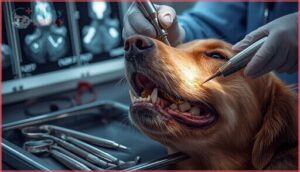
Before any tooth comes out, your vet gets a complete picture of what’s happening inside your dog’s mouth.
Supragingival Scaling clears visible tartar above the gumline, while Subgingival Scaling reaches hidden plaque below it.
Full Mouth Radiographs capture all 42 teeth roots, catching abscesses in roughly 20% of cases.
Probing and Charting records pocket depths, and Polishing Protocol smooths enamel to slow future buildup.
Anesthesia and Nerve Blocks

Once the X‑rays confirm which teeth need to be removed, your veterinarian shifts focus to keeping your dog completely comfortable throughout dental surgery.
Multimodal analgesia makes that possible — combining general anesthesia with targeted nerve blocks:
- Lidocaine dosing reaches up to 4 mg/kg, acting within 5 minutes
- Bupivacaine duration extends pain management 4–10 hours post‑procedure
- Infraorbital block technique numbs upper canines, incisors, and premolars
- Mental nerve block benefits include lower‑lip and chin analgesia
- General anesthesia depth stays safely reduced throughout animal pain management
Extraction Process for Different Teeth
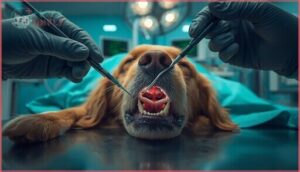
With anesthesia in place, the actual extraction begins — and the approach varies depending on which tooth needs to come out.
Incisor luxation uses steady torque rather than wiggling, protecting surrounding bone. Canine flap design opens access from diastema to second premolar. Premolar bone removal exposes 25–50% of the root surface, while molar sectioning breaks multi‑rooted teeth into manageable pieces — a standard technique in veterinary dentistry and surgery.
Suturing and Wound Care
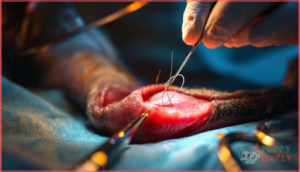
Once the tooth is out, closing the site carefully matters just as much as the extraction itself. Suture material choice — usually poliglecaprone or polyglactin 910 — determines how long stitches stay before dissolving.
Knot security techniques like five to six throws prevent early loosening. Flap tension management keeps tissue edges together without stress, supporting smooth tooth extraction recovery over 10 to 14 days.
Post-Extraction Care and Recovery

The hardest part is over — your dog is home, and now your job is to help them heal comfortably.
How you care for them in the next two weeks makes a real difference in how smoothly recovery goes.
Here’s what you need to know.
Pain Management and Medications
Managing your dog’s discomfort after a tooth extraction starts before it even wakes up from anesthesia. Nerve block techniques reduce pain signals during and after surgery.
Your vet will likely combine NSAID dosing — like carprofen or meloxicam — with gabapentin benefits for nerve pain, using multimodal protocols for better control.
Opioid selection may also factor in during peak discomfort hours.
Feeding and Diet Recommendations
Diet plays a quiet but powerful role in dog tooth extraction recovery. Soft food duration usually runs 7 to 14 days — enough time for gum tissue to seal properly.
Keep these wet food choices and feeding strategies in mind:
- Soak kibble 10–15 minutes until fully mashable for gentle kibble soaking
- Canned foods like Hill’s a/d for easy digestion
- Hand feeding tips: small meatballs placed near intact teeth
- Avoid foods — bones, chews, and hard treats that risk tearing sutures
Monitoring for Bleeding or Complications
Watching your dog closely after extraction is part of good veterinary care.
Mild oozing in the first few hours is normal — but bleeding lasting beyond 12 hours, pale gums, or blood pooling signals a problem requiring immediate attention.
For dog dental health and tooth extraction and recovery success, also watch for infection indicators like pus, worsening redness, or fever, pain alerts such as pawing at the face, and dry socket warning signs like severe pain starting 3–5 days post‑op.
Jaw stability check matters too, especially in small breeds.
Activity Restrictions and Healing Timeline
Recovery from tooth extraction and recovery moves in clear stages.
For the first 24–48 hours, strict rest is essential — short leash walks limited to bathroom trips only, no running or jumping.
Play restrictions continue through day 7–10.
Chewing guidelines ban hard toys for 14 days.
Key healing milestones: gum closure by day 10, full tissue healing by day 14.
Your veterinary care team confirms when normal activity resumes.
Costs, Insurance, and Preventing Extractions

Tooth extractions can feel like a surprise expense, especially when you’re already worried about your dog’s health.
The good news is that there are ways to manage the cost — and even better, ways to avoid getting to that point in the first place.
Here’s what you need to know about pricing, insurance, and keeping your dog’s teeth healthy long-term.
Factors Affecting Extraction Cost
Several factors shape dog’s tooth extraction cost. Tooth type matters most — a simple incisor runs $10–$35, while a carnassial with three roots can reach $1,500.
Breed size affects anesthesia dosage, and your facility type and geographic pricing influence the final bill too. Understanding these variables helps you plan ahead and have an honest conversation with your veterinarian.
Pet Insurance Coverage Options
Pet insurance can meaningfully offset dog tooth extraction cost — but coverage depends on your plan type. Accident vs illness policies differ substantially: accident‑only plans cover fractured teeth, while illness coverage covers periodontal disease.
Watch for waiting periods (usually 14 days) and preexisting exclusions, which disqualify prior gum disease. Wellness add‑ons reimburse routine cleanings up to $150 annually.
Reimbursement limits vary widely by provider, so review your policy carefully before your dog’s next veterinary dentistry visit.
Preventive Dental Care at Home
Daily brushing frequency matters more than most owners realize — soft plaque hardens into tartar within 24 to 48 hours.
Aim for once daily, or at minimum three times weekly.
Pair brushing with VOHC-approved dental chews selection, a consistent oral rinse routine, and water additives use.
Dental-friendly kibble adds another layer of protection.
Together, these habits form the foundation of effective dog dental care.
Importance of Regular Veterinary Dental Checkups
Home care builds the foundation, but your veterinarian completes the picture. Routine dental checkups catch early disease detection before bad breath or drooling ever appears — often years before extraction becomes necessary.
Your vet catches what you can’t — often years before pain or extraction becomes necessary
- Pain prevention: Hidden abscesses and fractured teeth cause silent discomfort only professional exams uncover.
- Systemic health benefits: Treating dental disease in dogs early protects the heart, kidneys, and liver.
- Customized exam frequency: Small breeds may need checkups every 6–9 months; your vet personalizes the schedule.
- Owner education: Each visit strengthens your understanding of pet dental care between appointments.
Frequently Asked Questions (FAQs)
How much would it cost to remove a dog’s tooth?
Tooth extraction costs generally range from $500 to $1,300 at standard clinics, with per-tooth fees varying by complexity.
Regional variances, extraction pricing differences, and insurance coverage options all influence your final bill considerably.
Do dogs handle tooth extractions well?
Most dogs handle extractions remarkably well.
With proper anesthesia tolerance protocols, recovery speed is quick — most pups bounce back within 48–72 hours, showing minimal pain indicators and returning to their happy, tail-wagging selves shortly after.
What happens if a dog has a tooth extraction?
When a dog has a tooth extraction, your pet goes under anesthesia, the tooth is carefully removed, and the site is sutured.
Expect sleepiness, soft food, and pain medication for several days during recovery.
Why does my dog need a dental extraction?
Your vet may recommend extraction when dental disease, gum disease, or tooth decay has progressed beyond repair.
Periodontal disease, fractures, and abscesses cause real pain — and without intervention, systemic health risks to the heart and kidneys follow.
How do you extract a dog tooth?
Like defusing something delicate, a dog tooth extraction demands precision at every step — from anesthesia monitoring and flap management to bone removal and instrument selection, your veterinarian carefully controls each phase to protect your dog’s dental health.
What should a dog do if he has a tooth extraction?
After a tooth extraction, your dog needs rest, a consistent medication schedule, and soft food. Pet parents should also plan a follow-up vet visit within 10 to 14 days to confirm healing.
How much does a dog tooth extraction cost?
Tooth extraction costs generally run $500 to $1,300 at standard clinics, but complex cases can reach $2,500 or more depending on anesthesia fees, per tooth pricing, and regional variation.
When should a dog get a tooth extracted?
Your dog should see a veterinarian when you notice persistent bad breath, visible swelling near the eye, pain signs while eating, or any tooth mobility — these signal a dental disease serious enough to warrant professional evaluation.
How long does it take for a dog to recover from tooth extractions?
Much like a minor cut that scabs over quickly but takes weeks to fully heal underneath, recovery from a dog tooth extraction follows two distinct phases — surface and deep.
How much does a tooth extraction for a dog cost?
Extraction costs generally range from $500 to $1,300 at most clinics, covering anesthesia fees, dental X-ray costs, and the procedure itself.
Pet insurance reimbursement rates vary, but many policies offset a significant portion.
Conclusion
Once upon a time, vets had little choice but to watch dental disease silently steal your dog’s comfort—today, a dog tooth extraction changes that story completely. You now understand every step, from pre-surgical bloodwork to that first soft meal at home.
That knowledge transforms a scary diagnosis into a manageable plan. Your dog can’t tell you where it hurts, but you can act before the pain compounds. That’s not just good care—that’s advocacy.
- https://hjcam.hcavs.gr/en/v4-i1-tooth-extractions
- https://www.hillspet.com/dog-care/healthcare/dog-tooth-extractions
- https://www.dvm360.com/view/surgical-tooth-extractions-proceedings
- https://www.cliniciansbrief.com/article/canine-teeth-extraction-periodontal-disease
- https://www.vetandtech.com/blogs/anesthetic-protocol-for-dog-dental-procedures