This site is supported by our readers. We may earn a commission, at no cost to you, if you purchase through links.
Your puppy sniffs the carpet, circles twice, and squats—three feet from the pad you set out that morning. Sound familiar? Most accidents don’t happen because puppies ignore training pads; they happen because pads sit in the wrong spot entirely.
Dogs build bathroom habits around scent, surface, and location consistency, not good intentions. A pad tucked behind a laundry hamper or placed too close to the food bowl works against your puppy’s natural instincts, no matter how absorbent the material.
Getting where to place puppy training pads in house right from the start saves weeks of frustration and cleanup. Below, you’ll find the exact spots that work with your puppy’s biology instead of against it.
Table Of Contents
- Key Takeaways
- Best Spots to Place Puppy Training Pads
- Areas to Avoid When Placing Pads
- How to Set Up The Pad Zone
- How to Choose The Right Training Pad
- Steps to Introduce Your Puppy to The Pad
- How Often to Replace and Clean Pads
- How to Move Pads Toward The Door
- Fixing Common Pad Placement Problems
- Adjusting Pad Placement by Puppy Age
- When to Ask a Vet About Training Setbacks
- Frequently Asked Questions (FAQs)
- Where to put puppy pads in the house?
- How long does it take to train a puppy to pee on pads?
- Which way do you put puppy training pads?
- Can I use puppy pads and outdoor training together?
- How many training pads does my puppy need?
- Should multiple puppies share the same pad zone?
- Can training pads work for senior or disabled dogs?
- Conclusion
Key Takeaways
- Place training pads in quiet, low-traffic spots like near exterior doors, laundry rooms, or hard-floored bathrooms, and keep them away from food, water, and sleeping areas to avoid confusing your puppy’s instincts.
- Secure pads with holders or adhesive strips, use an underlay on carpet, and replace them daily to keep the setup stable, clean, and appealing to your puppy.
- Build habits through timing and repetition by guiding your puppy to the pad after waking or eating, using a consistent verbal cue, and rewarding success within seconds.
- Once pad use is reliable, transition to outdoor potty training by shifting the pad’s location a few inches daily toward the door and pairing moves with actual outdoor trips.
Best Spots to Place Puppy Training Pads
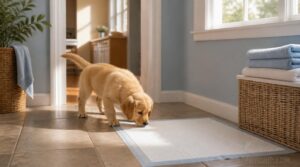
For potty training success, where you put that pad matters just as much as the pad itself. Your puppy needs a spot that feels safe, stays consistent, and makes sense within your home’s layout. Here are five locations worth considering.
Pairing the right pad placement with proven dog training techniques for potty training can speed up the process and reduce accidents along the way.
Near Exterior Doors
Why place a pad right next to your exit door? Because it sets up entryway transitions from day one, making outdoor potty breaks feel like the natural next step, not a whole new lesson.
- Mudrooms with hard flooring
- Areas away from drafts (weather stripping matters)
- Spots clear of threshold safety hazards
- Zones with doorway security in mind
- Consistent, designated potty area near exits
Laundry Rooms or Mudrooms
Once your entryway routine’s set, laundry rooms and mudrooms become the next logical stop for the best spot. Sealed concrete or tile floors handle spills easily, and built-in drainage near a utility sink keeps the designated potty area sanitary.
Vertical storage keeps cleaning supplies handy, while laundry room ventilation controls odor and humidity — a practical, low-traffic zone for strategic pad placement.
Bathrooms With Hard Flooring
Bathrooms offer another smart option, especially if yours has slip resistant tiles with a textured matte finish. Moisture resistant grout and waterproof vinyl handle spills without warping, and radiant floor warmth keeps paws comfortable.
These easy cleaning surfaces make finding the best spot simple for designated indoor relief areas—just set absorbent pads near the door for straightforward indoor potty training.
Inside Playpens or Crates
For young puppies, your puppy’s crate or playpen doubles as a den-like space that eases anxiety while teaching bladder control.
- Adjustable divider benefits grow with your pup
- Safety latching mechanisms prevent escape attempts
- Portability and travel keep setups flexible
Strategic pad placement in a corner, away from bedding, turns confinement into one of your best designated indoor relief areas.
Multiple Floors in Larger Homes
Ever tried rushing a puppy down two flights of stairs at midnight? A three-story home demands strategic pad placement on every level, not just the ground floor.
Staircase safety concerns matter here—young pups shouldn’t navigate steps solo yet. Keep a designated potty area near bedrooms upstairs and by living spaces below, ensuring accessibility without forcing risky vertical trips during urgent moments.
Areas to Avoid When Placing Pads
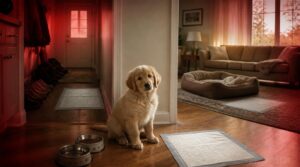
If you’re setting up a pad station, where you don’t put it matters just as much as where you do. A few common spots in most homes can confuse your puppy, slow down training, or make cleanup harder than it needs to be. Here are the main areas you’ll want to steer clear of.
Away From Food and Water
Would you eat lunch off your bathroom floor? Probably not, and your puppy feels the same instinct in reverse — pads too close to bowls create scent crossover risks and confusion.
For best placement:
- Keep pads 3+ meters from feeding stations
- Avoid heat sources like radiators
- Separate kitchen zones from your designated potty area
This protects preventing food contamination and keeps your potty training routine clean.
Away From Sleeping Areas
Rarely do puppies thrive when their bed and bathroom sit side by side — dogs carry a natural den instinct that treats sleeping space as sacred, separate from elimination. Mixing the two confuses that spatial instinct and disrupts rest.
Keep pads a clear stride away from crates or beds, maintaining physical boundaries that protect both hygiene and sleep quality throughout your indoor toilet training routine.
Avoid High-Traffic Zones
A busy hallway makes a lousy potty pad area — foot traffic spooks puppies mid-squat and teaches them nowhere feels safe.
Instead, pick a quiet, low-traffic corner, and if nighttime accidents are also an issue, this guide on locking a puppy’s crate at night can help build a steadier routine.
Choose quiet alcoves away from central walkways, kitchens, and entryways. Minimizing household disruption reduces puppy distraction, letting them focus on the job instead of scrambling feet nearby.
Consistent, predictable access matters more than convenience for you.
Avoid Blocked or Hard-to-Reach Spots
A pad squeezed behind a chair or under a table forces your puppy to squeeze through furniture obstruction risks just to reach it. Avoid narrow path obstacles, cramped corners, and blocked doorway clearance — these accessibility hazards discourage use entirely.
For the best spot, pick open, designated bathroom areas your puppy reaches easily. Pad relocation should never mean shoving it into a hidden corner.
How to Set Up The Pad Zone
Picking the right spot is only half the job; setting it up correctly is what actually makes it work. Your puppy needs a zone that feels stable, stays put, and doesn’t shift around during those important first few weeks. Here’s exactly how to build that setup, piece by piece.
Choose a Quiet, Low-Traffic Corner
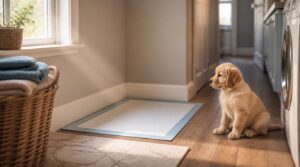
Your puppy’s target area needs peace, not foot traffic. Selecting low-noise areas away from doorways and hallways prevents startling, while creating secure corners, ideally with walls on two sides, builds confidence.
Identifying quiet zones like laundry room corners naturally minimizes puppy distractions and reduces household footfall, giving you a genuinely distraction-free environment for the best placement of designated bathroom areas.
Use Holders or Adhesive Strips
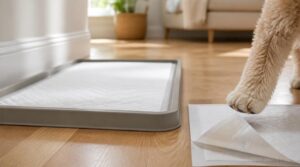
Once you’ve picked that quiet corner, keep the pad from sliding around. A pad holder with raised edges secures pad edges and resists curling, while adhesive strips offer tool-free installation on wood, tile, or laminate. Clean surfaces first to avoid adhesive residue.
For chewers, sturdier hardware beats flimsy plastic—better durability, less slippage, more reliable containment.
Add Overlapping Pads if Needed
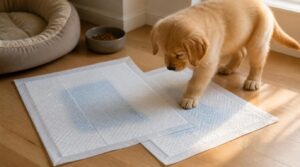
Some pups just won’t stay centered, no matter how well you’ve secured that holder. If yours keeps missing the mark and eliminating beside the edge, try increasing target area by overlapping a second pad against the first. This expands your absorbent surface, improving puppy accuracy and preventing side accidents—an easy fix for managing pad size without buying oversized, harder-to-replace options.
Much like technical errors involving oversized overlapping pads, managing surface area requires careful adjustment.
Place Mats Under Pads on Carpet
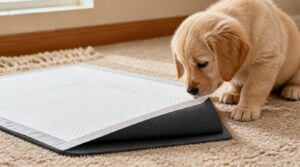
Carpet fibers take a beating when moisture seeps through, so a non-slip underlay solves two problems at once: grip and protection.
Match underlay size to your pad for full coverage:
- Rubber backing for grip
- Odor resistant materials underneath
- Full pad coverage
- Machine washable options
- Anti-curl edge support
This keeps your absorbent surface stable, simplifying pet hygiene management without sacrificing your carpet.
How to Choose The Right Training Pad
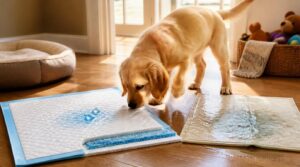
If you’re picking a training pad, not all of them perform the same way once your puppy steps on top. The right pad can mean the difference between a quick cleanup and a soggy mess that seeps into your floor. Here’s what to look for before you buy a single pack.
Absorbency and Leak-Proof Backing
Ever wonder why some pads leave floors bone-dry while others soak through by morning? The answer lies in SAP particle technology and moisture-locking layers that trap liquid fast.
| Feature | Function | Benefit |
|---|---|---|
| SAP center | Absorbs fluid volume | Prevents leaks |
| Wicking surface | Pulls liquid down | Keeps paws dry |
| Polyurethane backing | Blocks seepage | Protects flooring |
That leakproof backing means fewer ruined rugs.
Odor-Control Features
Nobody wants a house that smells like a kennel, which is why odor control technology matters as much as absorbency.
- Activated carbon filters trap smell molecules
- Zeolite beads lock in odors long-term
- Microbial growth inhibitors stop bacteria buildup
- Odor sensors flag saturation before it smells
- Micro-ventilation channels air away from pads
Together, these features and proper smart placement keep absorbent pet products working like true odorwicking allies against household stink.
Unscented Vs Scented Options
Unscented vs. scented comes down to your puppy’s nose and your household’s sensitivities. Scented pads mask odor but fade fast and can trigger fragrance allergy risks, irritating sensitive respiratory systems.
Unscented pads neutralize smell chemically, offering better odor masking effectiveness without confusing your puppy’s scent perception. For most homes, unscented wins—it keeps training pads reliable and reduces irritation risks entirely.
Size Matched to Puppy Breed
A Chihuahua and a Mastiff puppy shouldn’t use the same size pad, and that’s where weight-based pad selection matters. Small breed dimensions call for compact pads fitting corners or crates. Large breed requirements demand reinforced, bigger cores.
Since breed growth stages vary, plan pad upsize timing—toy breeds mature by 12 months, giants take up to 36, so puppy training pads need room to grow with them.
Steps to Introduce Your Puppy to The Pad
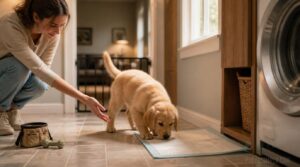
Once you’ve picked the right pad and the right spot, the next job is teaching your puppy what it’s actually for. This takes timing, consistency, and a bit of patience on your part, since puppies learn best through repetition and clear signals. Here’s how to walk your puppy through that process, one step at a time.
Guide Puppy After Waking or Eating
Timing is everything with a puppy’s bladder. The moments right after waking or finishing a meal are when accidents are most likely, so guide your puppy straight to the pad’s best spot during these windows.
Watch for restlessness or sniffing as backup signals. Building this into your daily potty training schedule turns guesswork into a predictable habit your puppy learns fast.
Use a Consistent Verbal Cue
"Go potty" beats a string of random words your puppy has to decode every time. Pick one short phrase and stick with it.
Effective cue timing matters: say it right as elimination starts. Match tone and pitch—calm, mid-volume—across every family member for consistency.
- Same phrase
- Same tone
- Same timing
- Same person’s face level
This builds positive associations and prevents command confusion.
Reward Immediately With Treats
Your puppy’s brain releases dopamine within seconds of a correct potty trip—waste that window and the lesson fades. Reward within 1-3 seconds, using soft, pea-sized treats for rapid reinforcement.
Reward your puppy within seconds of a successful potty trip, before that dopamine-driven window of learning fades
| Treat Timing | Result |
|---|---|
| Immediate | Strong association |
| Delayed | Confusion |
| None | Weak habit |
Pair treats with warm verbal praise, and track daily calories so training rewards don’t replace meals.
Supervise With The Umbilical Cord Method
Treats work best paired with constant caregiver presence, and that’s where the umbilical cord method comes in. Leash your puppy to you, keeping leash length short enough to prevent roaming toward off-limits corners.
This setup allows immediate behavioral correction the moment sniffing or circling starts, guiding them straight to the pad. Consistent, hands-on supervision keeps potty training momentum steady and accidents rare.
How Often to Replace and Clean Pads
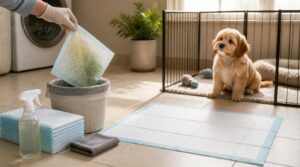
To keep your pad setup clean, timing matters just as much as placement does.
A fresh, dry pad keeps your puppy motivated to use it correctly, while a soiled one can undo your progress fast.
Here’s what you need to know about replacement schedules, cleanup methods, and the signs telling you it’s time for a swap.
Daily Replacement Guidelines
Daily replacement is the baseline rule: swap pads every 24 hours, even when they look clean, since dampness and odor build up fast.
Watch for visible wear signs — sagging, curling edges, or a musty smell — and replace sooner on high-use days to stop moisture tracking across your floors. This simple hygiene ritual keeps odor management consistent and reinforces predictable cues for your puppy.
Enzymatic Cleaners for Accidents
Accidents that miss the pad call for more than paper towels. Reach for an enzymatic cleaner, since these formulas use enzyme types like proteases and ureases for real protein breakdown and uric acid neutralization, not just masking smells. Saturate the spot, respect proper dwell time (5-30 minutes), then blot dry. Always run a quick surface test first, especially on carpet, for reliable pet odor removal.
Signs a Pad Needs Changing
A soggy pad tells you plenty before you even look closely. Watch for visible darkening across the surface, added bulkiness, or a stronger odor than usual.
- Uniform moisture or darkening
- Damp edges to the touch
- Leaks staining nearby flooring
- Clumped, soiled absorbent material
- Crumbling or torn backing
Catching these signs early protects your puppy’s skin and keeps pet hygiene on track.
How to Move Pads Toward The Door
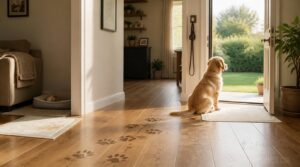
If you’re moving your puppy from pads to the great outdoors, patience and a clear plan make all the difference. Rushing the process can confuse your puppy and set training back weeks. Here’s how to guide that shift step by step.
Shift Pad Location Gradually
Think of the pad as a slow-moving target, not a fixture. Once your puppy reliably uses it, shift it a few inches daily toward the exit door, giving them time to adjust to each new spot.
This incremental path movement reduces indoor reliance without confusing your pup. Move too fast, and you’ll trigger accidents—so watch their comfort level closely before advancing another inch.
Sync With Outdoor Potty Breaks
Every pad relocation works best when paired with an actual trip outside, right after waking, eating, or playing. This routine synchrony builds scent cue consistency at your chosen outdoor spot, so your puppy links relief with going outside, not just the moving pad.
Keep leash supervision steady during these outdoor potty breaks, and reward immediately once they finish—timing matters more than treat size here.
Signs Your Puppy is Ready to Transition
How do you know your puppy’s ready for the outdoor switch? Look for digestive stability cues—consistent, well-formed stool for two straight days—paired with steady sleep pattern consistency and only one nighttime break. Strong behavioral focus levels and reliable socialization readiness signs matter too.
Once your family schedule commitment holds firm, gradually shift the potty training schedule outdoors, adjusting potty breaks for your puppy’s developmental stage.
Fixing Common Pad Placement Problems
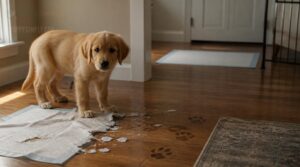
For pad training, even a solid setup can run into snags along the way. Some puppies miss the mark, tear the pad apart, or seem to forget it’s there altogether. Here’s how to troubleshoot the most common placement problems and get things back on track.
Puppy Eliminates Beside The Pad
A near-miss usually points to improper pad placement or territorial marking behaviors, not defiance. Fix it with:
- Pad Size Selection — upsize if your pup keeps landing off the edge.
- Add a second overlapping pad for target area expansion.
- Swap old pads daily — odor deterrence factors matter for accurate aim.
Puppy Chews or Shreds Pads
A shredded pad usually means teething relief or boredom-driven chewing, not rebellion. Offer a dedicated chew toy nearby to redirect the urge, and apply a vet-approved taste deterrent on pad edges.
Watch closely, though — ingestion hazards from absorbent fillers or plastic backing can cause real digestive trouble, so swap torn pads immediately during your puppy training pads routine.
Puppy Ignores The Pad Location
Total avoidance often comes down to scent memory cues — if the pad’s been replaced too often, your puppy can’t find it by smell anymore. Check for environmental noise distractions nearby, too.
Add a visual boundary cue like a small mat border, and stick to routine trigger timing after meals and naps. Consistency, plus a comfortable pad surface, usually solves placement problems fast.
Adjusting Pad Placement by Puppy Age
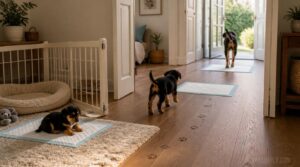
Regarding pad placement, your puppy’s age changes the plan more than almost anything else. A young pup’s bladder and a growing adolescent’s don’t run on the same clock, and your living space adds its own set of rules.
Here’s how to adjust your setup as your puppy grows and where they’ll need extra help along the way.
Bathroom Break Frequency Under 16 Weeks
Rarely does a young puppy make it more than a couple hours without needing a bathroom trip. Under 16 weeks, bladder capacity is limited, so expect visits every 1 to 3 hours, plus 1 to 2 nighttime wake-ups.
Feeding schedules matter too, since urgency spikes 30 to 60 minutes after meals. Watch for early signaling behaviors like sniffing or circling near your designated spot.
Bathroom Break Frequency 16 Weeks to 6 Months
Once your pup clears 16 weeks, bladder capacity starts stretching, so potty trips ease into a 4-to-6 daily range and settle near 3-to-5 by six months.
- Watch for growth spurts disrupting routines
- Track dietary shifts affecting stool frequency
- Keep hydration steady, not excessive
- Expect fewer nighttime wake-ups
Ideal placement should shrink accordingly—fewer pads, tied closer to feeding and play schedules.
Placement for Apartment Living
Apartment living means square footage is tight, so a compact corner setup near the door beats scattering pads everywhere.
| Space Type | Best Pad Spot | Watch For |
|---|---|---|
| Studio | Entryway corner | Odor proximity to bed |
| Balcony unit | Balcony potty solution | Weather exposure |
| Multi-level loft | Vertical space use | Stair access |
Managing smell matters most in small units—smart placement keeps puppy pads functional without overwhelming your living space.
When to Ask a Vet About Training Setbacks
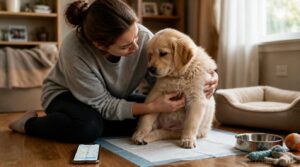
With potty training, a few accidents here and there are normal, but a sudden change in habits is worth paying attention to. Not every setback traces back to training itself, since your puppy’s body can send signals that something else is going on. Here’s what to watch for and when a vet visit makes sense.
Sudden Regression in Pad Use
A puppy who was reliably using the pad and suddenly isn’t often points to routine change impact — travel, new pets, shifted feeding times. Watch for stress signals: whining, avoidance, or excess sniffing. Check for environmental triggers too, like moved pads or competing smells.
If accidents persist despite consistency, it’s time to look into medical vs behavioral causes.
Ruling Out Medical Causes
How do you know it’s not just a training gap? Look for urinary infection signs like straining or blood-tinged urine, gastrointestinal distress, mobility pain, or metabolic clues such as excess thirst.
- Painful, frequent urination
- Diarrhea or vomiting
- Stiffness climbing to pads
- Increased drinking (possible diabetes)
- New medication side effects
Canine bladder management issues deserve preventative pet health checkups, not just retraining.
Frequently Asked Questions (FAQs)
Where to put puppy pads in the house?
Aim for quiet, low-traffic corners near exterior doors, laundry rooms, or hard-floored bathrooms. These indoor toilet solutions minimize distractions, prevent pad slippage with holders, and create a natural path for optimizing floor types while enhancing bathroom privacy during potty training.
How long does it take to train a puppy to pee on pads?
Wondering how soon your pup will get the hang of it? With consistent daily training, most puppies show reliable pad use within 2 to 4 weeks, though full mastery across routines can take up to 12 weeks depending on age and consistency.
Which way do you put puppy training pads?
Lay the pad flat with the plastic backing down to prevent sliding, and secure the edges with adhesive strips or a holder. Making sure the pad is centered keeps it away from walls, giving your puppy full access from any direction.
Can I use puppy pads and outdoor training together?
Yes—dual training works well, especially for apartment living or bad weather. Use potty pads indoors while reinforcing outdoor potty training consistently, keeping cues and rewards identical for both locations so your puppy learns two acceptable spots without confusion.
How many training pads does my puppy need?
Think of your puppy’s pad supply like stocking a pantry — too little and you’re caught short. Most homes need 4 to 6 pads daily early on, small breeds using 2 to 4, adjusting downward as growth and bladder control improve.
Should multiple puppies share the same pad zone?
Sharing works if the zone offers enough room to prevent littermate rivalry and helps with collective potty routines.
Watch for individual behavior variations and provide group supervision, since crowding or dominance issues can undermine consistent puppy behavior modification and lead to more accidents.
Can training pads work for senior or disabled dogs?
Absolutely — as a senior mobility aid, pads placed on non-slip flooring near resting spots help manage urinary incontinence, limited bladder control, and accessibility needs, while odor control keeps the space fresh for daily managing pet accidents.
Conclusion
A single misplaced pad can feel like the difference between a spotless home and a flood of endless cleanup.
Getting where to place puppy training pads in house setups right isn’t guesswork; it’s biology, repetition, and patience working together. Pick the spot, stay consistent, and watch accidents fade fast.
Your puppy isn’t stubborn—he’s still learning the map of his world. Give him clear signals, and he’ll give you a clean floor.
- https://www.petmd.com/dog/general-health/how-to-potty-train-a-puppy
- https://www.akc.org/expert-advice/training/the-ins-and-outs-of-potty-pad-training
- https://thedogstop.com/blog/should-you-use-puppy-pads-for-potty-training-your-dog-experts-answer
- https://m.joybuy.de/blog/puppy-pads-buyers-guide/xiCvYbfJ
- https://doggielawn.com/blogs/blog/step-by-step-guide-to-training-puppies-with-grass-pads-1