This site is supported by our readers. We may earn a commission, at no cost to you, if you purchase through links.
Your puppy just sniffed the rug, circled twice, and squatted three feet from the pad you set out that morning. Sound familiar? Most new owners assume pads work like magic mats: set it down, puppy figures out the rest. That’s not how it works.
Puppies learn placement through scent, timing, and repetition, not instinct alone. Get the pad size wrong, or place it near the food bowl, and you’re fighting your own setup.
Learning how to teach a puppy to use training pads comes down to a handful of habits done consistently: right pad, right spot, right schedule. Get those three pieces in place, and the accidents stop feeling random.
Table Of Contents
- Key Takeaways
- Choose The Right Training Pad
- Pick One Potty Pad Location
- Create a Puppy Pad Schedule
- Guide Your Puppy Step by Step
- Reward Successful Pad Use
- Spot Puppy Potty Signals Early
- Handle Accidents The Right Way
- Top 4 Puppy Training Pads
- Transition From Pads to Outside
- Frequently Asked Questions (FAQs)
- What is the 10 10 10 rule for potty training puppies?
- Do you change a puppy pad every time they pee on it?
- How do puppies know to pee on puppy pads?
- How long does it take to fully pad train a puppy?
- What causes a puppy to regress after being pad trained?
- Is it okay to use pads and outdoor training together?
- Conclusion
Key Takeaways
- Choose a properly sized, absorbent, leak-proof pad with attractant scent, and place it in a quiet, consistent, low-traffic spot away from food and water bowls.
- Take your puppy to the pad on a predictable schedule—after waking, eating, playing, and every 30 minutes—since young puppies can’t hold it much longer than that.
- Watch for early potty signals like circling, sniffing, whining, or wandering, and reward successful pad use immediately with praise, small treats, and playtime.
- Clean accidents with enzymatic cleaners to remove odor completely, avoid punishment, and gradually move the pad toward the door and outside once your puppy is ready to transition.
Choose The Right Training Pad
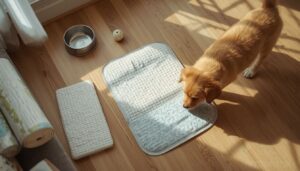
Not all training pads work the same way, and picking the wrong one can slow your puppy down. The right pad makes accidents easier to catch and cleanup much simpler. Here’s what to look for before you buy a single pack.
If you’re often on the road with your pup, this guide to choosing puppy training pads for travel breaks down absorbency and size for on-the-go messes.
Five-layer Absorbent Construction
Five layers do the real work here, not one magic sheet. The top layer wicks liquid away fast, keeping paws dry, while the center—pulp fibers plus SAP—locks it in. Distribution layers spread moisture evenly, preventing pooling.
This 5-layer construction gives disposable mats serious absorbent power, so accidents stay contained and your puppy training pads stay dry on top.
Leak-proof Lining and Edges
Under those five layers sits the real safeguard: a leakproof backing that keeps liquid from reaching your floors. Look for TPU lamination over PEVA—it resists cracking in cold rooms. Heat sealed seams and reinforced edges stop side leakage, with quality pads passing hydrostatic head testing to prove it.
Good edge protection means fewer surprises during indoor relief.
Built-in Attractant Scents
Scent matters as much as structure. Pads with a built-in attractant use pheromones and odor blends puppies naturally seek out, cutting down confused wandering.
Some scents activate on contact, growing stronger once your pup steps on the surface—guiding them straight to the center. This scent-based guidance works even in dim, quiet rooms, matching real puppy scent preferences without overwhelming their sensitive noses.
Proper Pad Size
Size matters more than pet parents realize. Pad length should run from paw base past the heel, preventing side leaks when your puppy shifts around. Just as humans select products based on menstrual flow intensity, you should choose puppy pads based on their liquid output.
Match sizing to breed and growth stage: small breeds need roughly 23-25 cm pads, medium breeds 25-28 cm, large breeds up to 34 cm. Check paw width monthly and size up every 2-4 weeks, keeping corners flat to prevent curling at your indoor potty station.
Eco-friendly Pad Options
Not every puppy owner wants disposable pads piling up in the trash. Organic cotton pads offer natural fiber benefits—bleach-free, gentle on skin. Biodegradable backings break down within 60-90 days.
Reusable cloth pads last 3-5 years, saving money long-term. Plant-based absorbents handle moisture without synthetics.
Choose compostable packaging meeting EN 13432 standards for a truly eco-friendly puppy pad training routine.
Pick One Potty Pad Location
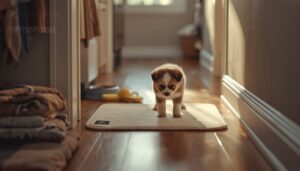
Where you put the pad matters just as much as which one you buy. Your puppy needs a spot that feels safe, stays consistent, and stays put. Here’s what to look for when picking that perfect spot.
Quiet Low-traffic Area
Peace and quiet matter more than you’d think when housetraining your puppy. Pick a spot away from foot traffic, doors, or loud appliances — busy corners create stress that delays potty progress.
Reduced household noise mimics the calm of tree-lined streets and quiet cul-de-sacs, where slower activity naturally lowers stress. A steady, low-traffic indoor doggy potty spot helps your pup relax and focus on the job at hand.
Easy Puppy Access
Make the pad an easy find, not a scavenger hunt. Set up the best pad placement on your puppy’s regular route, with clear floor space and no clutter blocking the way.
- Clear open floor around the pad
- Non-slip mat underneath for safe footing
- Soft lighting so puppy spots it fast
- Short, unobstructed path from bed to pad
- Low pad edge for easy stepping
Minimizing travel distance and reducing environmental distractions speeds up potty training success.
Away From Food Bowls
Would you want to eat lunch next to a bathroom? Your puppy feels the same way. Keeping feeding area distance from the pad protects hygiene zones and prevents cross-contamination.
| Zone | Purpose | Minimum Distance |
|---|---|---|
| Food bowl | Mealtime | 6+ feet |
| Water bowl | Hydration | 6+ feet |
| Pad | Housetraining routine | Separate room, if possible |
Sanitation boundaries matter in puppy pad training. This step-by-step guide keeps potty training clean and appetite intact.
Avoid Frequent Pad Moves
Picking a spot and sticking with it builds trust faster than you’d think. Every time you move the pad, your puppy has to relearn the location, which stalls habit formation and disrupts their routine.
Staying put also preserves scent cues that guide them back. Consistency here speeds up milestones and cuts down on confused accidents around the house.
Protect Nearby Flooring
Even the best pad won’t save wood or tile from moisture that sneaks past its edges. Lay down heavy-duty barriers like ram board under the training zone, and tuck a non-slip underlay beneath your dog pee pads for grip.
Add furniture leg protection nearby, since curious paws wander. Wipe spills with enzymatic stain removal, and keep a maintenance cleaning schedule to catch wear early.
Create a Puppy Pad Schedule
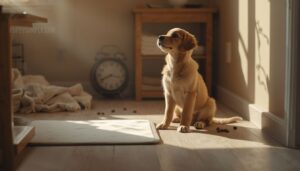
Puppies don’t potty on a whim, they follow their bodies on a clock. Building a simple schedule takes the guesswork out of training and keeps accidents to a minimum. Here’s when to bring your puppy to the pad every day.
After Waking and Naps
Rarely does a puppy wake up ready to wait. Waking bladder urges hit fast, so head straight to the pad, calm and steady. Post-nap disorientation fades in minutes, so:
- Use gentle petting
- Speak softly
- Skip bright lights
- Avoid loud noises
- Guide, don’t rush
This calm waking cue builds trust and success.
After Meals and Water
Food and water get things moving fast. Post-meal hydration helps digestion and nutrient absorption, so plan a pad visit 10-20 minutes after eating or drinking.
| Timing | Action |
|---|---|
| Right after meals | Lead to pad |
| After water bowl | Offer pad access |
| Managing puppy hunger | Stick to set feeding times |
Room-temperature water is gentler than cold, keeping tummies calm during potty training.
After Play Sessions
Play gets puppies wound up, and that excitement often triggers the urge to go. Guide your pup to the pad within a minute of stopping play, before post-play arousal fades.
- Cool down with calm walking
- Watch for circling or sniffing
- Use your potty cue softly
- Reward pad use immediately
Consistent timing here builds a reliable routine puppies trust.
Every Thirty Waking Minutes
Between the big triggers—waking, eating, playing—set a backup timer for every 30 minutes. Young puppies can’t hold it much longer than that, and this cadence catches accidents before they happen.
Guide your pup to the pad, use your cue, and reward success. This steady rhythm builds bladder control and predictable habits, cutting down indoor messes while your puppy pad training takes hold.
Consistent Feeding Times
Feed your puppy at the same times daily—morning, midday, and evening. This mealtime rhythm regulates digestion and stabilizes energy cycles, making potty timing predictable.
Consistent feeding helps weight management and easier appetite tracking. Skip free-feeding; scheduled meals mean scheduled bathroom breaks.
Log meal times for two weeks to confirm your consistent routine works, reinforcing puppy pad training success.
Guide Your Puppy Step by Step
Now it’s time to put your schedule into action. Every trip to the pad follows the same simple pattern, step by step. Here’s exactly how to walk your puppy through it.
Lead Puppy to Pad
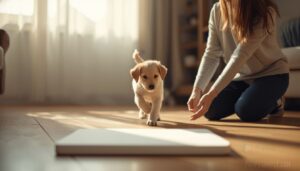
Walk your puppy toward the pad with calm, confident steps—your body language sets the tone. Puppies pick up on tension fast, so staying relaxed matters. Avoid rushing or scooping them up; guide them gently instead.
Keep the room quiet and distraction-free during this stepbystep guide. Patience during guidance pays off here, since a calm approach models the exact behavior you want during puppy pad training.
Use a Potty Cue
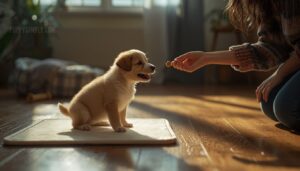
Say your potty cue the instant your puppy starts squatting on the pad. Pick one short word—like "potty" or "go here"—and stick with it.
- Select a clear cue word
- Time it during squatting
- Keep all owners consistent
- Pair cue with treats
- Avoid confusing other commands
Consistency across everyone in the house prevents mixed signals during potty training.
Stand Still and Quiet
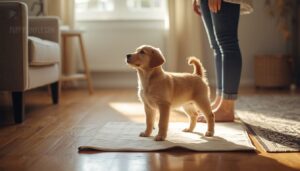
Your body language speaks louder than your voice right now. Once your puppy’s on the pad, freeze in a calm, upright stance and stay quiet—no chatter, no fidgeting.
This limits sensory distractions and helps your puppy focus on the pad, not you. Take a slow breath, hold eye contact briefly, and let stillness build their patience naturally.
Wait a Few Minutes
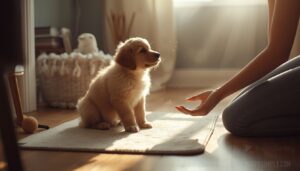
Patience is part of the process, not a delay in it. Give your puppy 2 to 5 minutes on the pad before guiding them again. This pause helps with mindful decision making and resets puppy focus without pressure.
Stay calm, keep your cue consistent, and resist rushing. A steady wait builds better potty training habits than constant hovering ever will.
Reward Immediately After Success

Timing makes or breaks potty training. The instant your puppy finishes, deliver praise, a small treat, and calm energy—all within seconds, in the same spot on the pad.
- Immediate treat sized for your pup
- Warm verbal praise (multi-modal signal)
- Brief cuddle instead of extra food
- Same spot, same trainer, every time
Keep treats small to prevent overfeeding, and stay consistent to build strong reinforcement habits.
Reward Successful Pad Use
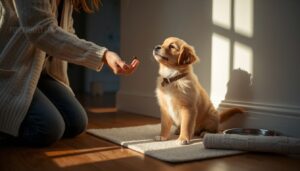
Timing matters just as much as the potty spot itself. The moment your puppy finishes on the pad, you’ve got a golden chance to lock in that good habit. Here’s exactly how to make every success count.
Praise Right Away
The moment your puppy finishes on the pad, jump in with praise. Verbal cue timing matters most here, so say "yes" or "good job" within seconds, keeping your tone upbeat and pitched slightly higher. Kneel down, make eye contact, and offer a gentle pat. This body language confirms approval and keeps positive reinforcement crystal clear.
Offer Small Treats
Praise sets the tone, but a treat seals the deal. Keep it tiny—smaller than a fingernail—so your puppy swallows fast and stays focused.
Stick to single-ingredient options like chicken or turkey; easier on the stomach, no mystery fillers. Skip anything with xylitol or artificial sweeteners, always toxic to dogs.
Rotate flavors weekly so treats stay exciting for successful puppy training pad use.
Add Supervised Playtime
Treats work fast, but play makes potty training stick. Set aside 8-15 minutes for supervised playtime right after pad success, using soft fetch or scent games.
Clear small objects first for safety, and start with a cue like "let’s play" to build impulse control and bond building through consistent, positive interaction.
| Activity | Duration | Purpose |
|---|---|---|
| Fetch | 10 min | Energy release |
| Scent games | 8 min | Mental focus |
| Obedience | 12 min | Impulse control |
Give Brief House Freedom
Once your pup nails the pad, open one extra room for supervised exploration. Keep sessions short and watch closely to prevent indoor accidents before they start.
This gradual house expansion builds confidence without overwhelming a young bladder. Puppies handling freedom well earn more space over time. Struggling? Return to crate training and tighten your potty training routine until pad use feels solid again.
Avoid Punishment Completely
Yelling at an accident teaches fear, not good habits. Scared puppies hide their next accident instead of learning where to go, which slows potty training down.
Yelling teaches fear, not good habits—scared puppies just hide their next accident instead of learning where to go
Skip scolding, rubbing noses in messes, or any physical correction. Instead:
- Stay calm and clean quietly
- Redirect gently to the pad
- Reward the next success generously
Building trust through positive reinforcement always beats fear-based training for lasting results.
Spot Puppy Potty Signals Early
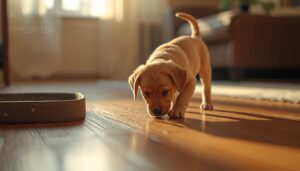
Your puppy can’t tell you when nature calls, but their body language will. Catching these cues early means you can guide them to the pad before an accident happens. Here are the signals every owner should watch for.
Circling Before Squatting
Ever watched a puppy spin like a tiny compass before it squats? That’s circling before squatting, one of the clearest potty signals in canine behavior.
The motion helps your puppy find balance stabilization and brace its body before eliminating. When you spot this cue during puppy pad training, act fast: guide them to the pad calmly and quietly, reinforcing good potty training habits every time.
Sniffing Floors Intensely
That nose knows something’s up. Intense sniffing means your puppy is reading scent-based motivation left by past bathroom trips, using olfactory drive to map the floor before choosing a spot.
This focused sniffing usually lasts seconds, not minutes. Guide them to the pad quickly, since environmental odor cues (like leftover moisture or spills) often trigger this exact behavior during potty training.
Whining or Pacing
Whining or pacing near the pad often signals nervous energy building up. Identifying stress triggers early—like noise or confinement—helps you respond before an accident happens.
Higher-pitched whines usually mean frustration; steady pacing offers a sensory outlet for relief. Reducing pacing distractions with a calm, consistent spot aids better potty training and smoother canine behavior modification over time.
Wandering Away Suddenly
A puppy that suddenly drifts off mid-play isn’t ignoring you—something pulled its focus elsewhere.
- Overstimulation triggers from too much noise or activity
- Fear responses to sudden sounds
- Boredom roaming in unfamiliar spaces
- Attention seeking behavior
- Excitement wandering after play
Guide them back to the pad calmly. Consistency is key for building lasting potty habits.
Toy Breed Timing Needs
Small dogs run on fast engines. That quick metabolism means more frequent bathroom needs, so don’t wait long between pad visits.
| Factor | Toy Breed | Larger Breed |
|---|---|---|
| Bladder size | Small | Larger |
| Break frequency | 30-60 min | Longer intervals |
| Metabolism | Faster | Slower |
Watch hydration and morning wake-ups closely—these moments demand quick access to potty training supplies.
Handle Accidents The Right Way
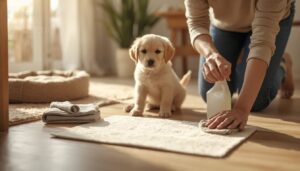
Accidents happen, even with the best routine. What you do next matters more than the mistake itself. Here’s how to clean up right and keep your puppy on track.
Use Enzymatic Cleaners
Grab an enzymatic cleaner the moment you spot a mess—regular soap just won’t cut it. These formulas use proteases and lipases to break down urine at the molecular level, targeting organic stains other cleaners miss.
Let it sit a few minutes (dwell time matters). Quick tips:
- Saturate the spot fully
- Skip bleach mixing
- Test small areas first
- Reapply on old stains
Remove Odor Completely
Enzymatic cleaner breaks down the mess, but true odor elimination goes deeper.
Wipe nearby surfaces with an odor-destroying cleaner, then let air circulate. A HEPA filter or activated carbon setup pulls lingering particles from the air, cutting odor fast.
For fabric nearby, extraction methods lift trapped scent from fibers—because puppies sniff out old spots and return to them.
Block Repeat Accident Areas
Once odor lifts, look at where accidents keep happening. Managing accident hotspots means blocking off those zones with furniture or a baby gate until pad use sticks. Watch pad edges, corners near walls, and slick floors—all common misfire spots. Porous flooring soaks up scent fast, pulling your puppy back. Keep the area off-limits until habits form, then reopen it slowly.
Recondition Potty Spots
Blocking a spot isn’t the whole fix—give it a new job. Feed your puppy or play there so the area earns a positive association, not a bathroom one. This redefines floor boundaries in your puppy’s mind.
Pair this with enzymatic cleaning benefits eliminating lingering scent, and you’re reclaiming accident zones for good, reinforcing your indoor toilet training and potty schedule.
Stay Calm After Mistakes
Sometimes a puddle on the floor tests your patience more than the puppy’s bladder. Take four counts in, four counts out—deep breathing works fast.
Reframe the mess as feedback, not failure. Managing puppy accidents calmly protects trust and keeps positive reinforcement working. Consistency is key, so reset, breathe, and guide your puppy back to the pad without scolding.
Top 4 Puppy Training Pads
Not all training pads are created equal, and picking the right one makes your job easier. You already know what to look for: thick layers, leak-proof edges, and a scent that draws your puppy in. Here are four options worth checking out.
1. Amazon Basics Leakproof Dog Training Pads
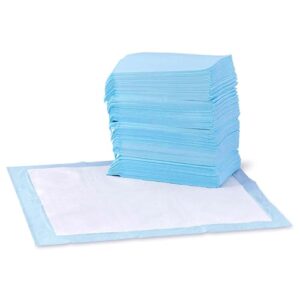
Amazon Basics Leakproof Dog Training Pads deliver solid value for beginners. The 5-layer construction turns liquid into gel fast, while the quick-dry top keeps paws from tracking moisture. A leakproof plastic lining and full plastic border stop leaks from reaching your floor.
Regular pads measure 22 by 22 inches, roomy enough for most puppies to turn around comfortably. Built-in attractant scent encourages proper use. They come in bulk packs, making them practical and affordable for extended potty training sessions.
| Best For | puppy owners and senior-dog parents who need a reliable, mess-free potty solution for indoor training, travel, or temporary housing situations. |
|---|---|
| Layer Construction | 5-layer |
| Core Type | Gel-forming polymer |
| Backing Material | Plastic lining |
| Pack Quantity | 100 pads |
| Leak Protection | Leak-proof with border |
| Primary Use | Puppy and senior dog training |
| Additional Features |
|
- Five-layer design with a gel-forming core locks in liquid fast and keeps paws dry
- Fully leak-proof thanks to the plastic lining and 4-sided border, protecting floors from accidents
- Sold in bulk packs of 100, making them a cost-effective option for extended training periods
- Plastic lining and border aren’t biodegradable, which isn’t ideal if you’re looking for an eco-friendly option
- Pads can slide around on hardwood or tile floors unless paired with a non-slip mat
- The built-in attractant scent doesn’t work for every dog and may fade with use
2. Cocoyo 22 Inch Super Dog Pads
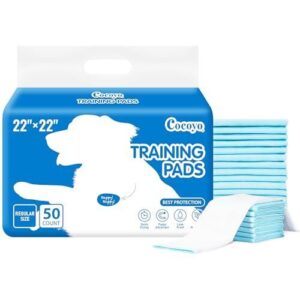
Cocoyo’s 22 by 22 inch pads give your puppy plenty of room to circle and squat without stepping off the edge. The five-layer design turns urine into gel fast, and sealed edges keep leaks off your floor. A slip-resistant top surface helps new pups plant their paws with confidence instead of sliding around mid-squat.
Built-in attractant scent draws them back to the same spot every time. For crate liners or small apartments, these pads hold up well against normal pawing and scratching.
| Best For | Pet owners who are potty training puppies, kittens, or small dogs and need a mess-free, easy-to-replace solution for crates, apartments, or travel. |
|---|---|
| Layer Construction | 5-layer |
| Core Type | Polymer gel |
| Backing Material | Polyethylene |
| Pack Quantity | 50 pads |
| Leak Protection | Leak-proof sealed border |
| Primary Use | Puppy training and cat use |
| Additional Features |
|
- Five-layer construction with a gel core that locks in odor and turns urine solid for quick, easy cleanup.
- Leak-proof polyethylene backing with sealed borders keeps floors protected from accidents.
- Versatile use as crate liners, travel pads, or a secondary barrier around litter boxes for cats.
- Thin material can tear if pets scratch or claw at the pads.
- No adhesive backing means pads may shift around on smooth or slick flooring.
- May struggle to contain large accidents from bigger breeds or multiple uses without leaking near the edges.
3. Disposable absorbent changing underpads
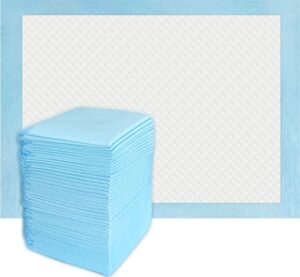
Not every pad needs a puppy logo to work well. Disposable underpads, built for babies and adults, use the same five-layer design that turns liquid into gel fast.
A waterproof backsheet stops leaks, while the quilted top layer stays comfortable for paws. At 17 x 13 inches, they’re better suited for crates or small spaces.
Buy them in bulk—50 per pack—for an affordable backup option when you’re stocking up on training supplies.
| Best For | These underpads are best for pet owners, parents, and caregivers who need a reliable, disposable way to protect floors, crates, and bedding during messy moments. |
|---|---|
| Layer Construction | 5-layer |
| Core Type | High polymer gel |
| Backing Material | Not specified |
| Pack Quantity | 50 pads |
| Leak Protection | Five-layer absorb and lock |
| Primary Use | Baby, puppy, and adult use |
| Additional Features |
|
- Five-layer design absorbs liquid quickly and locks it into a gel to prevent leaks
- Quilted top layer stays soft and comfortable against skin or paws
- Sold in bulk (50 per pack), making them a budget-friendly option for frequent use
- Disposable, single-use design means they need to be replaced regularly
- At 17 x 13 inches, they may not fully cover larger beds or open spaces
- Not a reusable or eco-friendly option for those seeking a long-term solution
4. Powools X Large Dog Training Pads
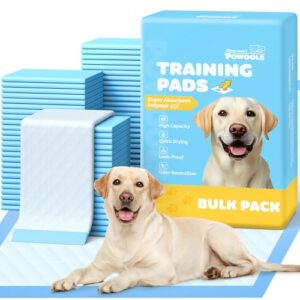
Big dogs make big messes, and that’s where these pads earn their keep. Powools X Large pads measure 34 x 28 inches with a six-layer polymer center that gels liquid on contact.
The leak-proof backing protects floors, while pheromone attractants pull puppies toward the center for better aim. Swap them out after one or two uses—don’t let liquid pool or stack pads, since that weakens absorption. At roughly 11 pounds per 100-pack, they’re built for busy, multi-pet households.
| Best For | Owners of large dogs, multi-pet households, and anyone house-training puppies or caring for senior pets who needs reliable, large-coverage protection for carpets, hardwood, or tile floors. |
|---|---|
| Layer Construction | 6-layer |
| Core Type | Polymer gel |
| Backing Material | Plastic backing |
| Pack Quantity | 100 pads |
| Leak Protection | Leak-proof plastic backing |
| Primary Use | Puppy and multi-pet training |
| Additional Features |
|
- Extra-large 34 x 28 inch size with a six-layer polymer core that quickly gels liquid and locks in odor
- Leak-proof plastic backing keeps floors safe, and the bulk 100-pack cuts down on reordering
- Quick-dry surface helps minimize lingering moisture and smell between changes
- Should be replaced after just 1–2 uses, especially for larger dogs, meaning frequent swaps
- Can’t handle large volumes of liquid at once or being stacked without risking leaks
- Plastic backing isn’t biodegradable, which may not sit well with eco-conscious buyers
Transition From Pads to Outside
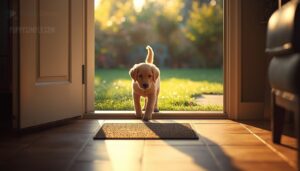
Pads work great early on, but most owners want their puppy going outside eventually. The good news is you don’t have to make that switch overnight. Here’s how to move from pads to the yard, one small step at a time.
Move Pads Gradually
Rushing this step causes more accidents, not fewer. Move pads in small weekly steps, shifting halfway toward the door for two days before advancing further. This gradual change eases stress and prevents puppy regression.
Keep a simple success log tracking location and results. If accidents increase, pause and return to the previous spot until your puppy adjusts confidently.
Shift Closer to Door
Doorway proximity cements exit route familiarity as your next goal. Once your puppy masters the halfway point, guide the pad within one step of the door.
This mirrors real outdoor trips, reducing wandering and reinforcing doorway cues. Keep cues consistent—same word, same spot—so your puppy links door, path, and potty into one smooth habit before heading outside.
Take Pad Outdoors
Set the pad outside now, choosing a shaded spot away from busy paths. Use a non-slip mat underneath to stop shifting, and check for:
- Sharp debris or stones
- Standing water or mud
- Wind exposure near the pad
Weatherproof pads resist tearing, protecting paws while building outdoor housetraining habits gradually.
Keep Outdoor Rewards Consistent
Once your puppy succeeds outside, reward timing matters as much as location. Praise or treat within seconds, every single time.
Consistent treat types and predictable reward sequences build trust faster than mixing things up. This reinforcement stability, paired with outdoor success tracking, cements the habit. Consistency is key — the same puppy training pads discipline that worked indoors now anchors outdoor wins, too.
Reduce Indoor Pad Access
Once outdoor trips stick, cut indoor pad time bit by bit. Pull the pad an hour earlier each day instead of removing it all at once.
This slow shift prevents backsliding and confusion. Limiting pad availability teaches your puppy that outside is now the only option, closing the gap between indoor habits and full outdoor independence for good.
Frequently Asked Questions (FAQs)
What is the 10 10 10 rule for potty training puppies?
This simple rule ties potty trips to post-nap windows, mealtime digestion links, and post-play bladder pressure—each triggers elimination within 10 minutes.
Consistent cues and reset intervals build reliable dog potty schedules, cutting down on accidents while housetraining their puppy through positive reinforcement.
Do you change a puppy pad every time they pee on it?
Not always. Watch for pad saturation signs like strong odor or dampness first.
Toy breeds and small puppies often need changes after each pee, while larger breeds may go multiple rounds if the pad stays dry—balancing hygiene vs convenience keeps your dog potty schedules on track.
How do puppies know to pee on puppy pads?
Scent cues, texture mimicry, and consistent placement teach the connection. Built-in attractant scents draw them in, while repeated visits create a mental map and habit loop—reinforced by positive reinforcement, matching their natural developmental instincts toward routine and denning behavior.
How long does it take to fully pad train a puppy?
Give it 1 to 3 months for full pad reliability, though small breeds often need longer. Consistency beats speed here—puppies on strict schedules build habits faster than those with irregular routines, setting up an easier move to outdoor training later.
What causes a puppy to regress after being pad trained?
Talk about a pee-riod of regression! Managing stressors, medical urgency, inconsistent rewards, dietary changes, and normal developmental shifts all disrupt house training. New routines, illness, or skipped praise can undo weeks of solid puppy pad progress fast.
Is it okay to use pads and outdoor training together?
Yes, hybrid training methods work well. Keep pads and outdoor spots consistent, using positive reinforcement for both. Managing dual locations helps during rainy days or busy schedules, while gradually favoring outdoor shift timing builds lasting habits without confusing your puppy.
Conclusion
Puppy training is a lot like planting a garden: results grow slowly, then all at once. Mastering how to teach a puppy to use training pads isn’t about one perfect day, it’s about stacking small wins until good habits take root.
Stay consistent with timing, keep your praise genuine, and clean accidents fast. Your puppy isn’t testing you, they’re learning your rhythm. Give them patience, and watch clumsy squats turn into confident, reliable trips to the pad.