This site is supported by our readers. We may earn a commission, at no cost to you, if you purchase through links.

Some dogs enter a room the way a storm rolls in—all energy, tail whipping, nose everywhere at once. Others slip in quietly, staying close to the wall, reading the space before they dare take up any of it. If your dog belongs to that second group, you already know that loud celebration can backfire fast.
The science behind this is straightforward: a shy dog’s nervous system treats sudden, high-energy praise the same way it treats a threat—cortisol spikes, muscles tighten, trust retreats. What actually builds confidence is something quieter and far more deliberate.
Enthusiastic praise for shy dogs doesn’t mean dialing down your warmth. It means learning to speak a language your dog can actually hear without flinching—and once you do, the results tend to surprise people.
Table Of Contents
Key Takeaways
- Shy dogs experience high-energy praise as a threat, so keeping your tone soft and calm is what actually builds trust over time.
- Timing your praise within one to two seconds of a brave moment is what connects the reward to the behavior in your dog’s memory.
- Simple, consistent phrases like "Yes!" or "Good dog!" become reliable signals your dog can count on, which reduces anxiety and builds confidence steadily.
- When your dog shows stress signals like a tucked tail or repeated lip licking, giving them space is just as important as any praise you offer.
Why Shy Dogs Need Gentle Praise

Shy dogs don’t need big performances or over-the-top reactions — they need you to meet them where they are. The way you use your voice and body can either open a door or shut one, and gentle praise is often the key. Here’s why that quiet encouragement matters more than you might think.
Learning how to build confidence in a fearful dog can give you a practical, step-by-step roadmap for turning small, quiet moments into lasting trust.
Builds Trust Slowly
Trust rarely arrives all at once — it builds through small, repeated moments that feel safe and predictable. When you praise your shy dog calmly after each tiny step forward, you’re keeping a quiet promise: *I’m safe, and good things happen here.
*
- Over time, those consistent positive experiences stack up, and your dog starts leaning in rather than pulling away.
Reduces Fearful Reactions
When your dog starts trusting you, fear doesn’t disappear overnight — but it does soften. Gentle praise at a safe distance signals that nothing threatening is coming, giving your dog room to breathe.
Keep your body angled sideways, avoid direct eye contact, and let them retreat if needed. That sense of control is what turns a fearful moment into a manageable one.
Encourages Safe Exploration
Praise builds confidence your shy dog didn’t know they could have. When you mark a small step — sniffing a new corner, approaching an unfamiliar toy — with a calm "Yes!", you create a positive association that sticks.
- Start with sensory warmups using familiar scents
- Keep sessions to 5–10 minutes
- Let your dog retreat freely
- Document brave moments to track growth
- Celebrate every small discovery
Strengthens Human Bond
Every small moment of praise does more than reward behavior — it quietly builds something deeper. When you offer a soft "Yes!" and gentle stroke, your dog’s brain releases oxytocin, the same bonding chemical you experience.
A soft Yes! and gentle stroke release oxytocin in both of you, quietly building a bond deeper than behavior
That shared chemistry creates mutual safety. Over time, your calm, consistent presence becomes the thing your shy dog moves toward, not away from.
How to Praise Shy Dogs
Praising a shy dog well is less about how loud you cheer and more about how thoughtfully you do it. Getting the timing, tone, and energy just right can make all the difference between a dog that opens up and one that retreats further into its shell. Here’s what actually works when you want your praise to land the right way.
Use Soft Excited Words

Your voice is one of your most powerful tools with a shy dog. Think of it like a dimmer switch — you don’t need to turn it all the way up. A gentle, rising tone at the end of a phrase, like a warm "yes," signals safety without overwhelming sensitive ears.
Pairing a calm, lifted tone with safe and dog-friendly treat choices helps reinforce trust without adding unnecessary stress for shy dogs.
Loud or sharp words can spike anxiety fast, so keep phrases short and calm.
Praise Within Seconds

Timing is everything. When your shy dog sniffs a stranger’s hand or steps into a new room, praise within seconds — not minutes. That instant connection is what links the brave action to the reward in their memory.
- Delays cause confusion about what earned the praise
- Short, rapid sequences prevent overwhelm
- One consistent word trains faster
Patient and consistent repetition builds lasting trust.
Keep Body Language Calm

Your body often speaks louder than your words. When praising a shy dog, soften your gaze and angle your body slightly to the side — facing straight on can feel like a challenge to a wary pup.
Keep your shoulders relaxed, your hands low and quiet, and breathe slowly. Controlled stillness does more than any dramatic gesture ever could.
Avoid Overwhelming Energy

Excitement is contagious — but for a shy dog, too much of it lands like a sudden clap in a quiet room. Keep praise brief and steady, using a low, even tone rather than a loud burst of cheer.
Slow your tempo down. Short, calm praise moments give a timid dog space to process what just happened without shutting down.
Reward Tiny Brave Moments
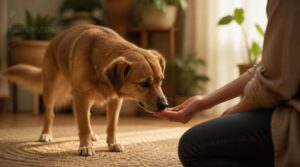
What counts as brave for a shy dog? Stepping toward a stranger, sniffing an unfamiliar object, or simply staying calm near a new sound.
Each tiny moment deserves a calm, proportional reward — a small treat delivered within one to two seconds keeps the connection clear. Track these moments over days, and you’ll start to see a pattern of growing courage. This approach mirrors the principle of kibble used to drive specific behaviors through small, high-value treats.
Best Praise Words for Confidence

The words you choose matter more than you might think, especially with a shy dog who’s still learning to trust. A few simple phrases, said in the right way, can become powerful signals that tell your dog they’re safe and doing great. Here are the best praise words to start using today.
“Yes!” as a Marker
"Yes!" works like a camera click — it captures the exact moment your dog did something right.
Here’s why it’s so effective:
- It’s short and crisp, cutting through noise with a hard consonant
- Timing precision matters — deliver it within one second
- It bridges behavior and reward, so your dog knows reinforcement is coming
- Consistent tone builds a generalizing marker across all environments
“Good Dog!” for Reassurance
Where "Yes!" captures the moment, "Good Dog!" settles it. Think of it as the exhale after the click — a steady, warm signal that says *you’re safe, you did well.
*
Speak it with a calm, upbeat cadence, not a high-pitched squeal. Shy dogs hear tone before words. Pair it with relaxed shoulders, and you’re reinforcing not just the action, but the feeling of being secure with you.
“Brave Pup!” for Courage
Good Dog!" steadies your pup — "Brave Pup!" pushes them forward. This phrase works as a consistent verbal cue tied specifically to courage, so your dog learns to associate those words with doing something hard and coming out safe.
Use it the moment a shy dog steps toward something new. Keep sessions short, track those small bravery milestones, and you’ll start seeing real patterns in their canine confidence building.
Happy Tone Matters
Words carry weight, but your vocal tone carries emotion. A shy dog reads how you feel before they understand what you’re saying.
Keep these auditory cues in mind:
- Soft, steady pitch lowers cortisol-linked stress signals
- High-pitched squeals can spike arousal and backfire
- Warm, calm delivery builds trust faster than loud excitement
- A relaxed tone signals safety, reinforcing canine confidence building naturally
Consistency Builds Meaning
Tone sets the stage, but consistency seals the lesson. When you use the same phrase — "Yes!" or "Good dog!" — every time your shy pup does something right, that phrase becomes a reliable signal they can count on.
Predictable feedback loops like this reduce uncertainty fast. Track whether your dog approaches more quickly over two weeks; that shrinking hesitation is trust, measurable and real.
Confidence Games With Enthusiastic Praise

Play is one of the best ways to help a shy dog start feeling more comfortable in their world. When you pair simple games with enthusiastic praise, you’re giving your dog a reason to be curious instead of cautious. Here are a few easy confidence-building games you can try at home.
Find The Treat
Find The Treat" turns sniffing out hidden treats into a real adventure, and shy dogs absolutely shine at it. Hide small pieces near safe spots, then watch your dog’s nose lead the way. Praise every discovery immediately — a warm "Yes!" right when they find it builds that trust fast.
The confidence that follows? It carries into everything else.
Find The Toy
Hide a scented toy under a blanket and let your dog nose it out at their own pace. That gentle nudge toward the hidden reward does more than entertain — it builds confidence quietly.
- Start with the softest, most familiar toy
- Use mild scent to spark curiosity
- Praise the sniff, not just the find
- Gradually hide it deeper each session
- Celebrate every small win warmly
Each discovery builds real trust.
Gentle Ball Rolling
Rolling a soft ball slowly toward your shy dog can open a door that big gestures can’t. Keep the ball small — 4 to 6 inches works well for beginners — and roll it gently along the floor.
Praise the moment your dog takes even one curious step toward it. That tiny brave move deserves your warmest "Yes!
Low-Pressure Tug Play
Tug doesn’t have to feel like a battle. Hold a soft, lightweight toy near your dog’s chest and move it gently side to side. Short sessions build trust without pressure.
- Start with 5–10 second rounds
- Use smooth, jerk-free movement
- Watch for yawning or a tucked tail
- Teach a drop cue before restarting
- Always end each session on a calm note
Praise Every Small Win
Every sniff of the treat, every cautious step forward — that’s worth celebrating. Praise within seconds of the small win so your dog clearly links the moment to your approval.
Keep your tone calm but warm. A quiet "yes" or "good dog" rewards hesitation just as genuinely as a bold move. Log each win, and you’ll see building your dog’s confidence happen gradually, beautifully.
When Praise Needs Extra Support

Praise is powerful, but sometimes a shy dog needs a little more than kind words to feel safe. Every dog has a tipping point where they’re telling you, in their own quiet way, that they need something different. Here’s how to recognize those moments and give your dog the extra support they’re asking for.
Watch Stress Signals
Your dog’s body speaks before they do. A tucked tail, repeated lip licking, or slow yawning tells you the moment is too much.
- Ears flattened back, mouth tightly closed
- Eyes darting away after brief contact
- Short, stiff steps instead of natural movement
Catching these signals early lets you adjust your praise before anxiety takes hold.
Respect Breaks and Boundaries
Once you’ve spotted those stress signals, the next step is simple: stop and step back.
Voluntary approach timing matters more than any scheduled session. Let your dog decide when to re-engage.
| Dog Signal | Your Response |
|---|---|
| Backs away | Stop all interaction immediately |
| Yawns or lip licks | Pause and give open space |
| Stiff posture | Drop eye contact, turn sideways |
| Approaches again | Resume calmly, praise softly |
Exit options aren’t optional — they’re the foundation of building your dog’s confidence.
Create Quiet Training Spaces
Once your dog feels safe enough to pause, the space around them starts to matter just as much as your words.
Pick a small, low-traffic room away from hallways or loud appliances. Warm lighting around 2700–3500 Kelvin feels calming, not clinical. Soft flooring helps muffle sound. A familiar blanket adds comfort. Keep sessions short, the environment predictable, and your shy dog will begin to settle in naturally.
Pair Praise With Rewards
A quiet space sets the stage, but praise lands harder when something good follows it. Pair every calm, brave moment with a small treat within one to three seconds — that window is where learning clicks.
Match the reward to the effort. A tiny sniff toward a stranger deserves a gentle treat, not a full biscuit. Track what motivates your dog most, then stay consistent.
Ask a Professional Trainer
Sometimes praise alone isn’t enough, and that’s okay. A certified American dog behaviorist can read stress signals you might miss and tailor a plan to your dog’s exact comfort level.
Look for someone who:
- Adjusts the setup when your dog shows repeated stress
- Coaches your timing and body posture in real time
- Explains why certain situations are too hard right now
Canine behavior modification takes patience — a professional helps you move forward without guessing.
Frequently Asked Questions (FAQs)
What words make dogs excited?
Words work like a secret code between you and your dog. "Walk," "treat," "find it," and "yes" spark instant excitement — your tone carries just as much weight as the word itself.
How do you praise a dog?
Praise your dog by saying "Yes!" or "Good dog!" in a soft, warm tone right after a calm behavior. A light chest pat and small treat seal the moment perfectly.
How does breed affect a dogs shyness levels?
Breed genetics shape a dog’s baseline temperament, with small breeds showing higher non-social fearfulness. Even so, individual variation within breeds is large, and socialization quality often matters just as much as genetic background.
Does a dogs past trauma influence praise effectiveness?
Yes, a dog’s past trauma can block how well praise lands. Fear-driven avoidance and trauma-induced learning barriers mean your words may feel unsafe before they ever feel rewarding.
How long does building confidence typically take?
Like a seed finding its footing, confidence grows slowly. Most shy dogs show small, measurable gains across weeks, not days. Individual pace varies, but consistent, low-pressure sessions usually produce noticeable progress within several weeks.
Conclusion
A seed doesn’t burst into bloom the moment it’s planted—it needs quiet, consistent care before it dares to open. Your shy dog is no different.
Enthusiastic praise for shy dogs isn’t about shrinking your joy; it’s about shaping it into something they can trust. Soft words. Calm hands. A timely "yes."
Every small brave moment you honor builds a foundation that grows stronger than you might expect. That’s not a small thing. That’s everything.
- https://www.3dogranchmt.com/post/positive-reinforcement-tips
- https://www.everydogaustin.org/post/positive-reinforcement-training-basics
- https://www.humaneworld.org/en/resources/positive-reinforcement-training
- https://www.petworks.com/articles/confidence-in-shy-or-anxious-dogs
- https://dogdynamics.org/training-tips/positive-dog-training-success