This site is supported by our readers. We may earn a commission, at no cost to you, if you purchase through links.
Most dog owners grab whatever’s labeled "dental" off the shelf and call it good. But there’s a real difference between dental chews and dental treats—one that affects how long the product stays in your dog’s mouth, how it physically contacts the teeth, and whether it does much cleaning at all.
More than 80% of dogs over three already show signs of dental disease, so the product you pick actually matters. Chews and treats work through different mechanisms, carry different safety profiles, and suit different dogs. Knowing which one fits your dog’s needs puts you ahead of most pet owners.
Table Of Contents
- Key Takeaways
- Dental Chews Vs. Dental Treats: Key Differences
- How Each Product Cleans Your Dog’s Teeth
- Why Dog Dental Health Cannot Be Ignored
- How to Read Dental Product Labels
- Greenies Original Dental Dog Treats Reviewed
- Milk-Bone Brushing Chews Dental Treats Reviewed
- Safety Guidelines for Dental Chews and Treats
- Can Dental Chews Replace Daily Brushing
- Which Product Do Vets Recommend More
- Choosing The Right Option for Your Dog
- Frequently Asked Questions (FAQs)
- Conclusion
Key Takeaways
- Dental chews outlast treats in your dog’s mouth by minutes, and that extra chew time is what actually scrubs plaque off teeth before it hardens into tartar.
- Over 80% of dogs older than three already have dental disease, so the product you pick isn’t a nice-to-have—it’s a real health decision.
- Look for the VOHC seal and ingredients like sodium hexametaphosphate; without them, you’re likely just buying a flavored snack with a dental label.
- No chew or treat replaces daily brushing—but combining both with a water additive or oral gel gives your dog the best shot at a clean, healthy mouth.
Dental Chews Vs. Dental Treats: Key Differences
Dental chews and dental treats might sound like the same thing, but they’re actually quite different in how they’re made and how they work. Knowing the difference helps you pick the right one for your dog. Here’s what sets them apart.
Some dogs are more sensitive than others, so it’s worth knowing how dental chews can affect your dog’s digestion before committing to one type.
Texture and Hardness Compared
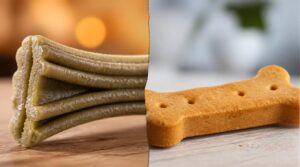
Dental chews and dental treats feel completely different in your dog’s mouth. Chews use flexible, dense textures that compress under pressure, while treats rely on a crunchy, baked structure that snaps quickly. Both help prevent plaque and tartar buildup.
| Feature | Dental Chews | Dental Treats |
|---|---|---|
| Texture | Flexible, rubbery | Crisp, brittle |
| Break Pattern | Slow tear | Quick snap |
| Moisture Retention | Higher | Lower |
| Surface Design | Ridges and grooves | Smoother, flatter |
That difference matters for mechanical cleaning action.
How Each is Consumed

How your dog consumes each product shapes its cleaning power. Chews demand extended gnawing — 5 to 30 minutes of continuous contact. Treats disappear in under a minute. That gap matters more than you’d think. Rapid consumption reduces mechanical cleaning because teeth don’t contact the surface long enough to scrub away plaque. Always actively supervise your dog during any chewing session.
| Consumption Factor | Dental Chew | Dental Treat |
|---|---|---|
| Average Duration | 5–30 minutes | Under 60 seconds |
| Supervision Needed | Active, ongoing | Brief but necessary |
| Digestibility | Slower breakdown | Rapid dissolution |
Shape and Size Variations
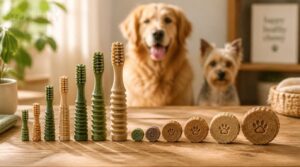
Shape matters as much as size. Dental chews come in stick, toothbrush, and bone profiles — built to reach between a dog’s teeth effectively. Dental treats tend to be smaller and simpler. Greenies uses a toothbrush-style shape; DentaLife uses a ribbed stick. Every product uses weight-based sizing, so a chew for a 5-pound dog looks nothing like one for a 50-pounder.
| Feature | Dental Chew | Dental Treat |
|---|---|---|
| Common Shapes | Stick, bone, toothbrush | Small flat or round |
| Size Tiers | Teenie, Petite, Regular, Large | Fewer named tiers |
| Breed Fit | Scaled by jaw and weight | Less size-specific |
Which Lasts Longer in The Mouth
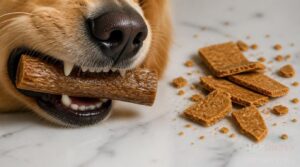
Size tells you what fits. Mouth duration tells you what works.
Dental chews outlast dental treats almost every time. Their dense, slow-softening texture resists saliva breakdown, keeping them in contact with molars longer. A dental treat’s crunchy texture fractures fast — often swallowed in seconds. More chew time means more plaque removal and better tartar control overall.
How Each Product Cleans Your Dog’s Teeth
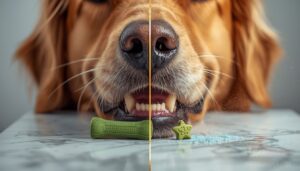
Not all dental products clean your dog’s teeth the same way. Some rely on physical scrubbing, while others use chemical ingredients to fight plaque and tartar. Here’s a closer look at how each method actually works.
Mechanical Scrubbing Vs. Chemical Action
Think of cleaning your dog’s teeth like washing a dish — you can scrub it or soak it in a cleaning solution.
Dental chews work through mechanical scrubbing: the chew’s material rubs against enamel with each bite, physically lifting soft plaque before it hardens. Chemical action, by contrast, uses polyphosphate coatings that bind calcium in saliva, slowing tartar formation without relying on abrasion.
Role of Ridges and Grooves
Ridges and grooves do more than add texture — they’re the engine behind mechanical plaque removal.
As your dog chews, narrow ridges create multiple contact points across the tooth surface, reaching closer to the gumline where plaque builds fastest.
Grooves also grip the tooth, reducing sliding so each bite delivers consistent abrasive contact rather than a glancing pressure.
How Polyphosphate Coatings Work
Some dental treats go beyond texture — they use chemistry to fight tartar before it hardens.
Certain chelating agents, for example, bind to minerals to slow tartar hardening — though it’s worth knowing which dental chew ingredients actually help versus harm.
Many chews carry a polyphosphate coating on their outer layer. When saliva hits the surface, the coating dissolves and releases compounds like sodium hexametaphosphate (SHMP). These bind free calcium ions through a process called chelation, blocking the mineralization that turns soft plaque into hard tartar.
Which Removes More Plaque
Regarding removing plaque, dental chews generally win. Their longer chew time means more friction against the tooth surface — especially on the back premolars and molars. Soft treats break apart quickly, cutting that contact short.
VOHC-accepted chews with textured surfaces back this up with verified plaque reduction data that basic dental treats often can’t match.
Why Dog Dental Health Cannot Be Ignored
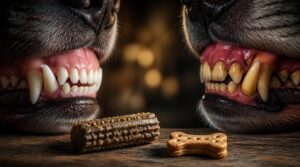
Most dogs show signs of dental disease before they even turn three — and many owners don’t notice until things get serious. The mouth is a window into your dog’s overall health, and what happens there doesn’t always stay there. Here’s what you need to know.
How Common is Canine Dental Disease
Canine dental disease is shockingly common — over 80% of dogs older than three already have it. By age seven, that number climbs to around 85%, often with no obvious symptoms. Small breeds face the highest risk, with Chihuahuas and Yorkshire Terriers showing rates between 78–81%. And since 2006, prevalence has risen more than 12%.
Over 80% of dogs older than three already have dental disease — and most show no obvious symptoms
Link Between Oral and Organ Health
Bad teeth don’t just hurt your dog’s mouth — they can damage their heart, kidneys, and liver.
When gums become inflamed, tiny ulcerated areas let oral bacteria enter the bloodstream. From there, bacteria can attach to heart valves, triggering infective endocarditis. They also reach the kidneys, stressing the microscopic filters, and overload the liver’s detox systems.
Good oral hygiene protects far more than just teeth.
Signs Your Dog Has Dental Problems
So what does dental trouble actually look like day to day?
Bad breath that lingers — not just after a smelly meal — is often the first clue. Red or swollen gums, dropping food, or chewing on one side all signal pain. Spot brown tartar buildup near the gumline, and act fast.
How to Read Dental Product Labels

Picking up a dental product at the store can feel like reading a foreign language. The label holds real clues about whether it’ll actually protect your dog’s teeth — or just taste good. Here’s what to look for.
What The VOHC Seal Means
That little seal on the package actually means something. The Veterinary Oral Health Council (VOHC) is an independent body that reviews scientific evidence before approving any product.
A product earns the VOHC Seal of Acceptance only when it proves a measurable reduction in plaque, tartar, or both. You can verify current approvals directly on the VOHC website.
Ingredients That Actually Fight Tartar
Knowing the VOHC seal matters is a great start — but the ingredients list tells the real story.
Sodium hexametaphosphate (SHMP) and sodium tripolyphosphate both bind calcium in saliva, leaving less available to harden plaque into tartar. Tetrasodium pyrophosphate (TSPP) slows crystal growth inside plaque. Zinc citrate targets bacteria and cuts bad breath. Look for these on labels.
Red Flags to Watch For
So you know what works — but spotting what doesn’t is just as important.
- Unsupported dental claims — "freshens breath" doesn’t mean it fights plaque or tartar.
- No VOHC seal — unverified products can’t prove cleaning efficacy.
- Hidden calories — one chew may blow your dog’s daily treat budget.
- Wrong size — a mismatched chew raises choking or blockage risk.
- Toxic ingredients — xylitol on any label means put it back immediately.
Greenies Original Dental Dog Treats Reviewed

Greenies are one of the most popular dental treats on the market, and for good reason. But popular doesn’t always mean perfect for every dog. Here’s what you actually need to know before tossing one to your pup.
Texture and Cleaning Effectiveness
Greenies have a crunchy, pliable texture that works like a light scrub on your dog’s teeth. As your dog chews, the surface creates real abrasion efficiency, physically scrubbing away soft plaque before it hardens.
The ridges improve surface interaction, reaching spots a smooth treat never could, making each chew session count toward genuine dental clean efficacy.
Calorie Count and Size Matching
Four size options make Greenies one of the easier products to match to your dog. TEENIE suits 5–15 lb dogs, Petite fits 15–25 lbs, Regular covers 25–50 lbs, and Large supports 50–100 lbs.
- Treat calorie budget should stay within 10% of daily intake
- Calorie per piece varies noticeably across weight classes
- Size chart accuracy matters — brands define sizes differently
- Weight class selection affects both safety and portion control
Is Daily Use Safe for Dogs
Daily use sounds convenient, but it’s worth pausing here. Ingredient toxicity risks are real — some chews contain xylitol, which causes serious liver damage in dogs. Chemical additives can also trigger digestive upset, including vomiting and diarrhea.
One Greenies daily fits most adults well, but check with your vet first. Veterinary approval before starting any routine matters more than the label claims.
What Dog Owners Are Saying
Real owners tend to judge Greenies by three things: breath, chew time, and value.
Most report noticeable breath improvement within a few days of daily use. Dogs usually finish one chew in minutes, which owners see as a sign of strong acceptance.
Repeat buyers stay loyal because their dogs willingly eat every chew — and that consistency matters most for long-term oral health.
Milk-Bone Brushing Chews Dental Treats Reviewed
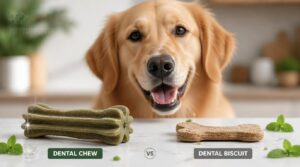
Milk-Bone Brushing Chews have been around long enough to build a real reputation among dog owners. But do they actually deliver on the dental side, or are they just another flavored snack your dog happens to like? Here’s what you need to know before adding them to your dog’s routine.
How Well Do They Clean Teeth
Milk-Bone Brushing Chews earn their VOHC seal honestly. Their ridged texture delivers solid abrasion effectiveness, scrubbing plaque off tooth crowns as your dog chews. That mechanical contact improves surface contact duration compared to treats that crumble fast.
Here’s what the cleaning actually targets:
- Removes soft dental plaque before it hardens
- Reduces tartar through polyphosphate coatings
- Helps dental plaque reduction on molars and premolars
- Boosts overall oral hygiene with each chewing session
Their polyphosphate coating slows new tartar formation by binding calcium in saliva. Gumline cleaning remains limited, though — no chew replaces professional care there.
Palatability and Dog Acceptance
Dogs vote with their nose first. Milk-Bone Brushing Chews use savory meat-based palatants that most dogs sniff and accept immediately.
Their medium-firm texture suits the majority of adult dogs, avoiding the refusal that overly hard chews trigger.
Dogs with flavor fatigue rarely show it here, since the beefy aroma stays consistent from bag to bag.
Best Dog Size and Frequency
Getting the size right matters more than most owners realize. Mini chews suit dogs from 5–24 lbs, Small/Medium fits 25–49 lbs, and Large covers 50 lbs and over. The right size means your dog actually chews it — not gulps it whole.
Give one chew daily. Plaque rebuilds within 24 hours, so consistency is everything.
Real Owner Results Over Time
Consistency does the heavy lifting here. Owners who gave Milk-Bone Brushing Chews daily — not occasionally — reported the clearest long-term oral health outcomes.
- Breath Freshness Duration improved steadily once chewing became a predictable routine
- Tartar Buildup Pace slowed noticeably, even when thick deposits didn’t disappear entirely
- Plaque Visibility Changes were modest but real on outer tooth surfaces
Watch Calorie Balance Impact — adjust meals accordingly.
Safety Guidelines for Dental Chews and Treats

Even the best dental chew can cause problems if it’s the wrong size or too many calories for your dog. A few simple checks before you hand one over can make all the difference. Here’s what to keep in mind.
Matching Product Size to Your Dog
Picking the right size isn’t guesswork — it’s the first safety step. Match by current body weight, not breed name. Greenies sorts into Teenie (5–15 lb), Petite (15–25 lb), Regular (25–50 lb), and Large (50–100 lb). Milk-Bone Brushing Chews follow Mini, Small/Medium, and Large bands similarly.
Short-faced breeds like Pugs handle wider, shorter shapes better. If your dog can’t grip it with their back teeth within the first few bites, it’s too big.
Daily Calorie Limits to Follow
Once size is sorted, calories come next. Vets recommend no more than 10% of your dog’s daily calories from treats — including dental chews and treats.
- A 250 kcal/day dog gets just 25 kcal for all treats
- A 500 kcal/day dog allows 50 kcal total
- A 300 kcal dog loses nearly its full allowance from one 28 kcal treat
- Always check the kcal per piece on the label
- Adjust main meals if a chew adds significant calories
Firmness Test Before Giving a Chew
Checking firmness before you offer a chew can prevent a painful tooth fracture. Press your thumbnail firmly into the thickest part. A safe chew dents. If it stays unchanged, toss it. Try bending both ends together — slight flex means safer. Hard, snap-rigid chews concentrate bite force dangerously.
Always recheck opened bags, since chews harden with air exposure.
Can Dental Chews Replace Daily Brushing
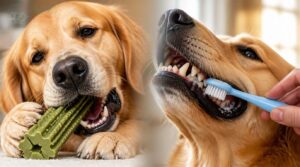
Dental chews do a solid job, but they can’t do everything a toothbrush can. Brushing still reaches places no chew ever will. Here’s what you need to know to keep your dog’s mouth truly clean.
Why Brushing is Still The Gold Standard
No dental chew or treat can do what a toothbrush does. Plaque begins hardening into tartar within 24 to 72 hours, so daily tooth brushing is the only home method that reliably breaks up the biofilm before it mineralizes. The American Veterinary Medical Association and VOHC both call it the single most effective step between professional cleanings.
Combining Chews With Other Oral Tools
Layering your tools is where real progress happens. Think of it as a stacked oral care approach — no single product covers every surface.
Here’s why multi-product routine matters:
- Chews scrub crown surfaces mechanically
- Water additives reach areas between chew sessions
- Oral gels target the gumline directly
- Wipes clean what chews miss near front teeth
Each VOHC-reviewed tool adds an independent layer of protection.
How Often Brushing Should Happen
Daily brushing is the ideal approach — plaque can start hardening into tartar within 24 to 48 hours. If daily isn’t realistic, three to four times weekly is a solid fallback. Small breeds and flat-faced dogs benefit most from a consistent daily routine.
Making Brushing Easier for Your Dog
Most dogs accept brushing once they associate it with something good.
Start with a fingertip smear of flavored dog toothpaste — let your dog lick it before any brush appears. Use short 30–60 second sessions, reward calm behavior immediately, and always brush on a non-slip surface.
Gradual introduction beats forcing it. Consistency builds trust faster than anything else.
Which Product Do Vets Recommend More

Vets don’t just pick a favorite — they look at the evidence and match the product to the dog. A few key factors shape what they actually recommend in practice. Here’s what the research shows, when cleanings become necessary, and how quickly you can expect to see a difference.
What Research Says About Each Type
Research consistently backs mechanical abrasion as the most effective cleaning action. Chews that stay in the mouth longer scrub canine and premolar teeth better than treats that dissolve quickly. Polyphosphate coatings slow tartar formation by binding calcium in saliva, but only during and shortly after chewing — making daily use essential.
Key findings worth knowing:
- Abrasion efficiency is strongest with flexible, size-matched chews
- Polyphosphate binding targets tartar, not soft plaque directly
- Longer chew duration means more tooth contact and better results
- VOHC-accepted products show at least 20% plaque or tartar reduction
- Calorie limits matter — treats shouldn’t exceed 10% of daily intake
When Vets Suggest Professional Cleanings
Even the best dental chews and VOHC-accepted treats can’t do everything. When hard brown tartar clings to the tooth surface, no chew removes it. That’s when your vet steps in.
| Warning Sign | What It Means |
|---|---|
| Yellow or brown tartar | Mineralized buildup needing scaling |
| Red or bleeding gums | Active gingivitis present |
| One-sided chewing | Likely dental pain |
| Bad breath persisting | Bacterial buildup below gumline |
| Loose or sensitive teeth | Severe periodontal disease |
Small and toy breeds, senior dogs, and short-nosed breeds often need professional cleanings earlier. If your dog avoids chew treats or drops kibble, that’s a red flag worth acting on quickly.
How Long Before You See Results
So when can you actually expect to see a difference? Breath may smell fresher within the first day, but real cleaning takes longer.
- Plaque reduction timeline: 2–4 weeks of daily use
- Tartar improvement duration: 4–8 weeks minimum
- Chew duration impact: longer chewing means faster results
- Dental treats swallowed quickly show slower visible changes
Choosing The Right Option for Your Dog

Every dog is a little different, so the best dental product really comes down to your dog’s habits, size, and preferences. There’s no single right answer, but a few clear signs can point you in the right direction. Here’s how to figure out which option fits your dog best.
Choose Greenies if Your Dog Needs This
Greenies shine when your dog needs structured daily oral care. The toothbrush shape, ridges, and grooves scrub teeth mechanically — exactly what plaque-prone mouths need. VOHC recognizes Greenies for both plaque and tartar control.
| Greenies Strength | Why It Matters |
|---|---|
| VOHC-accepted chew | Clinically proven dental efficacy |
| Weight-matched sizes | Safer fit for small dogs |
| Daily use design | Builds a consistent oral routine |
Choose Milk-Bone if Your Dog Prefers This
Milk-Bone Brushing Chews are worth considering if your dog resists chew-style dental products. The firm, ridged texture delivers mechanical scrubbing, while the chicken flavor makes acceptance easier.
Available in three weight-based sizes — mini, small/medium, and large — they fit most dogs. They also carry VOHC approval for tartar control, so you’re not just trusting the packaging.
Final Checklist Before You Buy
Before you buy, run through this quick checklist. Confirm the size matches your dog’s weight, check for a VOHC seal, and screen the ingredient list for xylitol or allergens. Verify the lot number and best-by date. Factor the calories into your dog’s daily budget.
That one small step protects your dog’s teeth and overall health.
Frequently Asked Questions (FAQs)
How do dental chews compare to dental treats?
Dental chews demand extended gnawing; dental treats dissolve fast. Chew duration shapes how much plaque gets scraped. Longer contact means better tartar reduction and real veterinary approval.
What is the 2 2 2 rule for teeth?
The 2 2 2 rule is simple: brush twice daily, brush for two minutes each session, and visit your vet or dentist twice a year for professional cleanings and checkups.
Can dental chews help dogs with sensitive gums?
Yes, soft dental chews can help dogs with sensitive gums. They boost saliva flow, reduce plaque gently, and offer soft chew comfort without pain. Always choose a pliable chew — firm enough to clean, gentle enough to soothe.
Are dental chews safe for senior dogs to use?
Senior dogs can use dental chews safely, but choose soft, VOHC-certified options and always supervise. Avoid hard chews that can crack worn teeth. Remove the last small piece to prevent swallowing risks.
How do dental treats affect dogs with food allergies?
For dogs with food allergies, dental treats can quietly trigger reactions. Many contain poultry, beef, or hidden "natural flavors" — all common allergens. Always check the ingredient list carefully before giving any pet treats daily.
Should puppies use dental chews or dental treats?
Puppies actually need oral care early—yet the very products designed for it can harm their developing teeth. Stick to soft, age-appropriate treats rather than firm chews until adult teeth fully come in.
Conclusion
Your dog can’t advocate for their own oral comfort—that responsibility falls entirely to you.
Understanding the difference between dental chews and dental treats is the first step toward making a smarter, more informed choice. One cleans through physical contact and time; the other through chemistry and coating.
Neither fully replaces brushing, but the right pick promotes healthier teeth and a longer, more comfortable life. Choose with intention, and your dog’s smile will show it.
- https://us.swedencare.com/pet-life/dental-chews-for-dogs
- https://wellnesscore.eu/en-uk/which-dental-chews-are-right-for-your-dog
- https://northwoodveterinary.com/essential-pet-dental-care-top-chews-and-toys-for-healthy-smiles
- https://vohc.org/accepted-products
- https://www.petmd.com/vet-verified/best-dental-chews-dogs