This site is supported by our readers. We may earn a commission, at no cost to you, if you purchase through links.
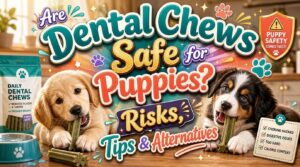
That bag of dental chews sitting on your shelf might be doing more harm than good—at least until your puppy hits a certain checkpoint. Puppy teeth look sturdy, but they carry thin enamel and open root tips that make them far more vulnerable to fracture than adult teeth. A chew that’s perfectly safe for a two-year-old Lab could crack a four-month-old’s tooth in one aggressive bite.
Timing and product choice make all the difference. Knowing when dental chews are safe for puppies, which ones pass a basic safety check, and what warning signs to watch for gives you real control over your puppy’s oral health—without the guesswork.
Table Of Contents
Key Takeaways
- Puppy teeth are far more fragile than they look, so hold off on dental chews until your pup hits six months and their adult teeth are mostly in.
- Always run the thumbnail test before handing over a chew — if it doesn’t dent under firm pressure, it’s too hard and can crack a developing tooth.
- Check the ingredient label every time: xylitol is toxic to dogs, and artificial preservatives like BHA are a common trigger for stomach upset in puppies.
- Dental chews are just one piece of the puzzle — daily brushing with dog‑safe toothpaste remains the single most effective way to protect your puppy’s long‑term oral health.
Puppy Teeth Develop Before Chew Safety

Before you hand your puppy a dental chew, it helps to understand what’s happening inside their mouth first. Puppy teeth go through some pretty significant changes in just the first six months of life. Here’s what that timeline actually looks like.
Knowing how many teeth dogs have at each stage makes it much easier to track whether your pup’s development is on schedule.
Baby Teeth by Eight Weeks
By eight weeks old, your puppy already has a full set of 30 baby teeth — 12 incisors, 12 premolars, and six canines. These deciduous teeth erupted quickly after birth, and while they look sturdy, they’re actually quite fragile.
Think of them as placeholders: built for soft food and gentle chewing, not the stress of hard dental chews.
The primary tooth eruption timeline shows that the first baby teeth usually emerge between six and twelve months.
Adult Teeth Start at Twelve Weeks
Around twelve weeks, something significant starts happening beneath the gumline — your puppy’s permanent teeth begin pushing through. Baby teeth are still present, but the teething phase period has already begun.
The jaw and surrounding tissues are actively shifting, making this a vulnerable window.
That’s why dental chew timing matters: introducing hard chews now can stress developing structures before they’re ready.
Full Adult Teeth Near Six Months
By six months, most puppies have a nearly complete set of 42 permanent teeth. This is the occlusion adjustment period — your puppy’s bite is settling, premolars are newly functional, and mixed dentition is finally resolving.
Gum sensitivity often lingers, so keep an eye on how your puppy chews. Most vets consider this the earliest reasonable point to introduce VOHC-approved dental chews.
Fragile Puppy Teeth Fracture Easily
Even after your puppy’s adult teeth start coming in, those early primary teeth stay surprisingly fragile. They have thin enamel, large pulp chambers, and open root tips — meaning a hard chew can cause a tooth fracture before you realize the damage is done.
A broken baby tooth isn’t just painful; it can harm the developing adult tooth waiting underneath.
A broken baby tooth doesn’t just hurt — it can silently damage the adult tooth forming beneath it
Yes, After Six Months With Precautions

Dental chews can be safe for your puppy, but timing and care matter more than most people realize. Once your pup hits six months and their adult teeth are mostly in, you can start introducing chews — with a few important guardrails in place. Here’s what to keep in mind before you hand one over.
Ask Your Veterinarian First
Before you hand your puppy a dental chew, your vet needs to weigh in. A quick exam tells you more than any product label can. Here’s what your veterinarian will actually cover:
They’ll also flag any harmful additives—like BHA or ethoxyquin—that could affect your pup, so brush up on puppy nutrition basics and safe feeding amounts before your appointment.
- Mouth and tooth health — checking for loose teeth, gum irritation, or early fractures
- Chew material suitability — matching firmness and shape to your puppy’s jaw size and chewing style
- Ingredient screening — flagging allergens, xylitol, or additives that don’t suit your puppy’s diet
That visit also sets a safe starting schedule and tells you exactly what symptoms to watch for afterward.
Avoid Hard Chews Early
Hard chews and young puppies don’t mix well. Before six months, primary teeth fracture easily because they’re thinner and more brittle than adult teeth — and a puppy’s developing bite force can’t handle the pressure a hard chew demands.
| Risk Factor | Why It Matters |
|---|---|
| Brittle baby teeth | Prone to chips and micro-cracks |
| Immature jaw loading | Stresses teeth and periodontal ligament |
| Sore teething gums | Hard pressure worsens inflammation |
| Early tooth damage | Can trigger a cycle of further breakdown |
| Enthusiastic chewing behavior | Puppies bite harder when excited |
Instead, prioritize soft chew alternatives like soft rubber teething toys, which offer teething gum protection without risking dental trauma. Always practice supervised chewing — a choking hazard can appear fast if a piece breaks off unexpectedly. Early dental safety starts simply: keep it soft until your vet clears harder options.
Match Chew to Jaw Strength
Not every chew labeled "puppy-safe" is actually right for your puppy’s jaw.
Chew hardness levels matter because a six-month-old Golden Retriever and a Chihuahua develop jaw strength very differently.
Size-appropriate dental chews — roughly 4–6 cm for puppies under20 lbs — reduce the bite force needed, protecting developing teeth from stress fractures.
Watch for Digestive Upset
Your puppy’s gut is still maturing at six months, so even a well-chosen chew can cause trouble. Watch for these warning signs after every session:
- Vomiting within an hour of chewing
- Loose or watery stool that persists beyond one day
- Straining or no bowel movement for over 24 hours
- Visible belly swelling or excessive gas
- Refusing food or water after chewing
If any of these appear, stop the chew and call your vet.
Choosing Safe Puppy Dental Chews
Not all dental chews are created equal, and picking the wrong one can do more harm than good. Once your puppy hits six months, a few simple checks will help you shop with confidence. Here’s what to look for before you buy.
Look for VOHC Approval

Not all dental chews marketed as "good for teeth" have actually been tested to prove it. Look specifically for the VOHC Seal of Acceptance — this means the product passed independent testing showing at least a 10% reduction in plaque or tartar.
It’s product-specific, so verify the seal appears on the exact chew you’re buying, not just somewhere on the brand’s website.
Pick The Correct Size

Size matters more than most people realize. Match the chew to your puppy’s current body weight — not their expected adult size. Guidelines suggest 4–6 cm for puppies under 20 lbs, 6–9 cm for 20–50 lbs.
The right fit encourages steady, controlled chewing instead of frantic gulping. If it disappears in seconds, it’s too small.
Use The Thumbnail Test

Once you’ve confirmed size matters and you’ve matched the chew to your puppy’s weight, check the hardness. Press your thumbnail firmly into the surface.
A safe chew dents under pressure. If it doesn’t give at all — rock solid — put it aside.
This simple home hardness screening takes seconds and can spare your puppy a fractured tooth.
Avoid Xylitol and Preservatives

Hardness isn’t the only thing worth checking. Flip the bag over and read the ingredient list. If you spot xylitol anywhere — even buried in a "natural flavoring" blend — put it back on the shelf. Xylitol triggers a dangerous blood sugar crash in dogs, and even small amounts cause harm.
Also watch for BHA, BHT, and artificial preservatives. Puppies have sensitive digestive systems, and chemical additives are a common source of stomach upset. A short, clean ingredient list is your best signal that a chew is genuinely safe.
Count Treat Calories Daily

Once you’ve checked the ingredients, turn your attention to calories. Dental chews count toward your puppy’s daily calorie budget — they’re not freebies. Soft chews should stay around 10% of daily intake.
A simple daily calorie log helps you spot overconsumption before it becomes a weight problem. Record each chew the moment you give it.
Dental Chew Risks for Puppies

Even the right chew can cause real harm if something goes wrong during a session. Puppies are enthusiastic chewers, and that enthusiasm is exactly what creates the risk. Here are the most important dangers to know before handing one over.
Choking on Small Pieces
Even a dental chew can become a choking hazard in seconds. When puppies gnaw enthusiastically, chews break into fragments — and a piece sized to fit the windpipe can block breathing before you react.
Supervised chewing isn’t optional. Stay close, and pull the chew the moment a piece gets small enough to swallow whole.
Tooth Fractures From Hardness
Puppy teeth are thinner than adult teeth, and bite force threshold matters more than you’d think. A chew that feels firm to your fingers can crack a baby tooth under the concentrated pressure of a puppy’s bite.
That crack doesn’t stop at the surface — enamel crack propagation means it spreads inward, reaching sensitive dentin and increasing fracture risk fast.
Blockages From Swallowed Chunks
When a puppy gnaws off a chunk that’s too large, that piece doesn’t always stop in the stomach. It can lodge anywhere from the esophagus down — causing serious trouble fast. Watch for these esophageal obstruction indicators:
- Gagging or difficulty swallowing
- Excessive drooling or regurgitation
- Chest discomfort and restlessness
Size-appropriate dental chews are your first line of defense against intestinal blockage.
Splintering Rawhide or Antlers
Rawhide and antlers might seem like natural, satisfying chews, but both carry a real splinter risk that’s easy to underestimate. Rawhide can dry unevenly, creating brittle patches that snap into sharp fragments under your puppy’s bite.
Antlers develop surface cracks over time — once a fracture starts, chewing force drives it further, breaking off jagged shards that can cut gum tissue or worse.
Allergies and Stomach Upset
Not all dental chews agree with every puppy’s stomach. Ingredients like artificial preservatives, soy, or dairy can trigger food allergy symptoms — vomiting, diarrhea, or abdominal cramping — sometimes within hours of the first chew.
That’s histamine gut impact at work: your puppy’s immune system releases histamine, which ramps up gut activity and disrupts normal digestion fast.
Safer Puppy Dental Care Options

Dental chews aren’t your only option for keeping your puppy’s mouth clean. Plenty of gentler approaches work just as well — sometimes better — especially during those early teething months. Here are five vet-approved alternatives worth adding to your puppy’s daily care routine.
Brush With Dog-safe Toothpaste
Brushing your puppy’s teeth is genuinely the most effective way to control plaque — nothing else comes close. Use a dog-safe toothpaste with a dog-specific toothbrush, never human toothpaste, which contains ingredients unsafe for swallowing. Start small:
- Let your puppy lick the toothpaste first
- Introduce gentle finger brushing next
- Progress to short brush strokes
- Build toward daily brushing gradually
Try Puppy Dental Wipes
If brushing isn’t always possible, puppy dental wipes are a practical backup. Wrap one around your finger and rub gently along the gum line and tooth surfaces.
Many contain chlorhexidine or sodium bicarbonate for real plaque removal — not just freshening. Flavored options help with acceptance.
Pre‑moistened and portable, they fit easily into any daily oral hygiene routine.
Offer Soft Rubber Toys
Wipes are great, but sometimes your puppy just needs something to sink their teeth into. That’s where soft rubber toys come in.
- Choose BPA-free elastomer materials
- Match toy size to your puppy’s mouth
- Check for rounded edges, no detachable parts
- Wash with warm water after each use
Supervised chewing on puppy-specific rubber toys massages gums and promotes healthy jaw development safely.
Use Frozen Wet Washcloths
Sometimes the simplest tools work best. A frozen wet washcloth gives your teething puppy immediate cold teething relief — the chill numbs sore gums, reduces inflammation, and the fabric texture provides gentle pressure that feels satisfying to chew. It’s a vet recommendation that costs almost nothing.
Dampen a clean cloth, seal it in a bag, and freeze until firm but flexible — not rock-hard.
Build a Daily Routine
Building on that frozen washcloth habit, the real secret to your puppy’s dental health is making oral care feel automatic. Tie your dental routine consistency to anchor times you already keep — like after breakfast. A short chew session fits naturally there, when your puppy is calm and supervised.
- Attach brushing to a morning anchor
- Schedule one supervised chew window daily
- Check gums after each session
- Log any vomiting or stool changes
- Keep the same routine across family members
Frequently Asked Questions (FAQs)
Can dental chews replace professional veterinary cleanings?
No, dental chews can’t replace professional veterinary cleanings. They help reduce plaque and tartar between visits, but only a vet can remove calculus below the gumline.
How do I store unused dental chews safely?
Store unused dental chews in an airtight container in a cool, dry spot. For long-term storage, use the freezer. Always label with the opened date and discard any chew showing odor, stickiness, or discoloration.
Do dental chews help with puppy anxiety or stress?
Yes, chewing gives puppies a healthy outlet for stress. The focused gnawing action calms anxious behavior, especially during crate training or teething. Always choose age-appropriate, supervised chews to keep that stress relief safe.
When should puppies get their first vet dental exam?
Aim for your puppy’s first vet dental exam between 6 and 12 months. That’s when adult teeth are fully in and your vet can establish a solid baseline assessment.
Conclusion
Think of your puppy’s mouth as a construction zone—still being built, not yet ready for heavy equipment. Whether dental chews are safe for puppies depends almost entirely on timing, product choice, and how closely you’re paying attention.
Wait until six months, verify VOHC approval, and keep brushing as your foundation. The chews you choose today shape the teeth your dog relies on for life. Get it right early, and you won’t have to fix it later.
- https://petcalmly.com/worst-dental-chews-for-dogs
- https://dinovite.com/blogs/learn/dental-chews-for-dogs-ultimate-guide
- https://www.greenies.com/blogs/what-were-barking-about-greenies/when-can-i-start-giving-my-puppy-dental-treats
- https://vcahospitals.com/pediatric/puppy/prep-supplies/puppy-dental-treats
- https://www.pacificsantacruzvet.com/site/blog/2023/01/30/dog-intestinal-blockage-surgery