This site is supported by our readers. We may earn a commission, at no cost to you, if you purchase through links.
Most puppies aren’t being stubborn—they’re bored, confused, or working with a trainer who hasn’t figured out what makes them tick yet.
A border collie might sprint across the yard for a tennis ball but ignore most expensive freeze-dried salmon you can find.
A beagle might do the opposite.
Motivational training for puppies starts with one honest question: what does your dog actually care about?
Once you know that answer, everything else—focus, timing, distractions, obedience—clicks into place faster than you’d expect.
Table Of Contents
Key Takeaways
- Your puppy isn’t being stubborn — they’re waiting for you to figure out what actually excites them, whether that’s cheese, a tug toy, or just your eyes on them.
- Timing is everything: mark the right behavior within a second or two, because your puppy’s brain connects actions to rewards almost instantly.
- Build focus before commands — a puppy that checks in with you naturally will learn "sit" and "stay" far faster than one who hasn’t learned to pay attention first.
- Keep sessions to three minutes, rotate your rewards, and train a little every day — that consistency beats any one long session every single time.
Find Your Puppy’s Best Motivators
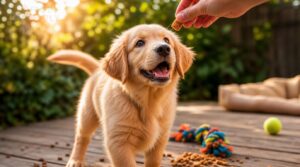
Every puppy has that one thing that makes their eyes light up — and finding it is the secret to training that actually works. Not all dogs care about the same rewards, so knowing your puppy’s personal currency saves you a lot of frustration. Here are the main motivator types worth exploring.
Once you’ve spotted what makes your pup tick, stocking up on the right options — like these puppy training treats for housebreaking and potty training — means you’re always ready to reinforce the good stuff.
Favorite Foods
Food is your secret weapon in puppy training. A high-value food treat — think freeze-dried chicken, real cheese, or fresh meat bits — grabs attention fast and holds it.
Keep pieces tiny so your pup can swallow quickly and stay focused.
Single-ingredient bits work best because the smell stays consistent, and freshness matters more than you’d think.
Favorite Toys
Not every puppy goes crazy for treats, and that’s totally fine. Toys can be just as powerful.
Durable rubber chew toys, plush toys with reinforced seams, tug toys with grips, and interactive puzzle toys all give you solid options for play-based motivation.
Match the toy type to what genuinely excites your pup — that’s where the real training magic starts.
Chase and Movement
Some puppies couldn’t care less about toys or treats — but the second something moves, they’re fully locked in. Chase and movement can be your most powerful training tool if your pup’s wired that way.
Try tossing a treat and releasing it at the moment of movement — puppies sprint faster when motion and reward happen together. Research shows that larger expected rewards increase movement vigor, leading to faster sprints.
Praise and Attention
Not every puppy lights up for treats or a good game of tug. Some just want you — your voice, your eyes on them, your enthusiasm. That’s where labeled praise becomes a real training tool.
Instead of a vague "good boy," try "yes, you sat!" That specificity tells your puppy exactly what earned your attention, so they repeat it.
5 ways to use praise effectively:
- Name the behavior — say "you stayed" or "you came" right after it happens
- Deliver praise immediately — within seconds, before the moment passes
- Stay consistent — use the same descriptive phrase each time for the same behavior
- Match your energy to the moment — calm praise for calm behavior, enthusiastic for big wins
- Make eye contact — your focused attention signals to your puppy that they did something worth noticing
Think of praise as an attention cue your puppy learns to chase. When your words reliably follow the right behavior, your pup starts offering that behavior more — just to hear you respond.
Reward Value Ranking
Variable reward ranking means your puppy’s top reward shifts constantly — hunger, energy, and distraction all change what they’ll work hardest for.
A high-value treat like cheese or a small crunchy, strong‑smelling bite often beats a larger plain one.
Test rewards in your actual training spot, and let your puppy’s fastest, most enthusiastic response tell you today’s winner.
Build Engagement Before Obedience

Most people want to jump straight to "sit" and "stay", but there’s one thing your puppy needs to learn first — how to actually pay attention to you. Engagement isn’t something puppies come wired with; it’s a skill you build together, and it makes every command that follows stick faster.
Mixing up your rewards keeps training sessions fresh — these treat training best practices for puppies can help you find the right rotation to hold their focus longer.
Before your puppy can learn to sit or stay, they must first learn to pay attention to you
Here’s how to start laying that foundation.
Teach Focus First
Before your puppy can learn anything reliably, they need to actually be with you mentally — not sniffing the floor or watching the neighbor’s cat.
That’s what teaching focus first does. It builds the habit of checking in with you before anything else gets their attention.
Start small:
- Pick a quiet, low-distraction spot indoors
- Keep sessions to 1–3 minutes only
- Reward the moment your puppy glances at you
- End while they’re still engaged, not after they’ve wandered off
Timing matters more than you’d think. The reward needs to land within a second or two of that eye contact — otherwise your puppy literally can’t connect the dots. Fast hands, high-value treat, done.
And here’s something most people skip: end on a win. Stop the session when your puppy is still interested and just got rewarded. That leaves them wanting more, which means next session they’ll show up ready to work.
Repeat this pattern a few times a day and focus becomes a habit — not something you have to wrestle out of them.
Add a Focus Cue
Once your puppy understands that checking in with you pays off, it’s time to give that behavior a name. Pick one simple cue — "Look" or "Are you ready?" both work well — and use it the same way every single time.
Say the cue before your puppy looks at you, not after. That’s what makes it meaningful.
Reward Eye Contact
The moment your puppy’s eyes meet yours, reward immediately — don’t wait. That split-second connection is exactly what you’re marking.
Hold the treat near your face so their gaze naturally drifts toward your eyes, not your hands.
Start by rewarding even a brief glance, then gradually expect a longer look as they understand the eye contact cue.
Keep Sessions Short
Three minutes. That’s genuinely all you need per repetition when building engagement with your puppy.
Short training bouts work because a puppy’s attention resets naturally between sessions. Push past that window and you’re not training focus — you’re practicing distraction.
Follow these session length guidelines to stay on track:
- Keep each session to 1–3 minutes per drill
- Allow a break before starting a second round
- Spread frequent mini sessions across the day instead of one long block
A quick warmup routine of a treat grab or simple known behavior helps your puppy "switch on" before the real work begins.
End With Success
Every session deserves a strong finish. End with success by choosing the easiest win your puppy can nail that day — a familiar cue, a short movement, a simple look — and reward it immediately with something they genuinely love.
That final reward is your session closure ritual. It tells your puppy: this was worth it.
Tomorrow, they’ll come back wanting more.
Use Markers and Rewards Correctly
Getting your timing and tools right makes a bigger difference than most people expect. A well-placed marker tells your puppy exactly what they did to earn the reward, so nothing gets lost in translation. Here’s what to get right from the start.
Choose “YES” or Clicker
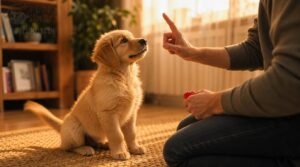
You’ve got two solid options here: a verbal "YES" or a clicker activation technique. Both work well, but they function slightly differently.
The "YES" marker is always with you; no equipment needed. A clicker delivers a consistent clicker training sound that your puppy won’t confuse with everyday conversation, which sharpens marker distinction fast.
Pick one and stick with it.
Pair Marker With Treats
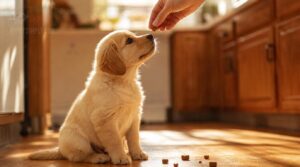
Once you’ve picked your marker, the next step is simple: pair it with treats so your puppy learns what it means. Grab a high-value treat — soft, small, easy to eat fast — and say "YES" or click, then immediately hand it over. Do this 10 to 20 times in a row. That’s it. Now your marker means something.
Reward Within Seconds
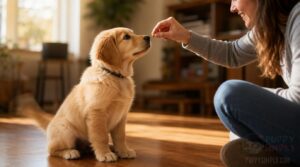
Pairing your marker with treats wires your puppy’s brain to expect a reward — but only if that reward arrives fast. Reward within seconds of the behavior, not minutes later. The puppy’s brain connects consequence to action almost instantly, so a slow handoff muddies the message.
Here’s what tight reward timing does for you:
- Instant reinforcement tells your puppy exactly which action earned the treat
- A quick payoff loop keeps attention locked on you between repetitions
- Micro reward frequency builds a rhythm your puppy starts to anticipate
- Speed to delivery prevents late behaviors from stealing credit for the right one
- Consistent immediate reward timing makes your marker feel honest and reliable
Think of it like pressing "save" right after finishing your work — wait too long and you lose progress.
Vary Reward Delivery
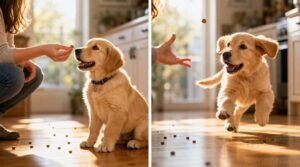
Once your marker timing is tight, the next piece is how you hand over that reward. Variety keeps your puppy genuinely curious about what’s coming next.
Try these three delivery modes and when to use them:
| Delivery Mode | How It Works | Best Used When |
|---|---|---|
| Hand-feed | Treat comes directly from your fingers | Teaching precision or close-contact behaviors |
| Hand Toss Switch | Toss the treat to the side or floor | Resetting position or adding movement between reps |
| Scatter Feeding Technique | Drop several small pieces to the ground | Lowering frustration or slowing a hyper session down |
Reward Position Shifts matter too. Consistently delivering from the same spot — say, near your hip — helps your puppy understand where reinforcement lives. Then, once the behavior is solid, shift the delivery angle slightly to generalize it.
Size Scaling Method is simple: one small treat for an easy sit, a small handful for a tough recall near another dog. Save your high-value treat for the moments that really count. That contrast keeps your positive reinforcement feeling earned, not automatic — and your puppy’s motivation stays sharp session after session.
Avoid Mixed Signals

Mixed signals are one of the sneakiest training killers. If your puppy hears "YES" sometimes and "good boy" other times, consistent reward cue breaks down fast.
Pick one marker and stick to it. Match your unified body language to your words — calm voice, steady hands, same posture every rep. Your puppy reads everything you do.
Train Around Puppy Distractions

Every puppy reaches a point where the squirrel across the street is way more interesting than you—and that’s completely normal. The goal isn’t to eliminate distractions but to make yourself worth paying attention to even when they’re around. Here’s how to build that kind of focus, one step at a time.
Start Indoors
Your home is actually the best training gym you’ve got. Before your puppy ever meets a squeaky stranger or a distracting dog on the sidewalk, start indoors where you control everything.
- Turn off the TV and keep the room quiet
- Use non-slip mats so your puppy moves confidently
- Block doorways and stairs for safety
- Pick one consistent spot and stay there every session
- Deliver your high-value food treat within seconds of the behavior
Short, calm, consistent — that’s your indoor formula.
Add Mild Distractions
Once your puppy is rocking it indoors, it’s time to slowly turn up the volume — figuratively speaking.
Start with one distraction at a time. A person walking slowly nearby, a quiet sound from another room, or a ceiling fan switching on. One new thing. That’s it.
| Distraction Type | Mild Example | When to Stop |
|---|---|---|
| Visual | Slow-moving person at a distance | Puppy stops orienting to you |
| Sound | Soft voices or gentle footsteps | Puppy startles or won’t refocus |
| Movement | Toy moved steadily across a limited arc | Puppy lunges or chases |
Keep distractions predictable. Erratic movement triggers a stronger chase response, and that’s not the training moment you want. If your puppy loses focus, use your attention cue once — just once — and reward even a brief recovery. That quick "bounce back" is exactly the engagement skill you’re building.
Reduce intensity immediately if recovery takes more than a few seconds. That’s your signal the distraction is too strong right now. Dial it back, let your puppy succeed, and try again tomorrow.
Use Higher-value Rewards
Think of distractions like a price hike — the harder the environment, the more your puppy needs to get paid.
When you step up the challenge, upgrade your reward value too. Here’s a simple escalation plan:
- Easy indoors → regular kibble
- Mild distraction → soft treats
- Moderate distraction → cheese or high-value treats
- Strong distraction → Instinct Freeze-Dried Raw Meals or similar premium reward
Keep pieces tiny. Big portions slow your sessions and fill your puppy up fast. Reward timing precision matters just as much as what you’re offering — deliver within one second of the correct behavior, every time.
Practice Recall Focus
Recall focus is where real trust gets built. Pick one spot indoors with no windows or doors in sight, and practice your recall training cue there first.
Say it once, then reward the moment your puppy’s eyes meet yours — eye contact is the win.
Keep each attempt brief, reset if attention drifts, and always finish on a successful rep.
Increase Difficulty Slowly
Slow down — that’s often the most powerful move you can make. Gradual difficulty increase means resisting the urge to jump ahead when your puppy is doing well indoors. Instead, move forward in tiny steps:
- Crack a window open first
- Then practice near a doorway
- Then step outside for one rep
If accuracy drops, lower the difficulty immediately and rebuild from there.
Keep Motivation Fun and Reliable
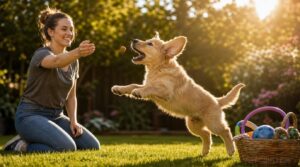
Keeping motivation alive is really just about keeping things fresh and consistent at the same time. Your puppy needs to feel like training is the best part of their day, every single day. Here’s how to make that happen.
Rotate Reward Types
Most puppies get bored fast when you use the same reward every time. That’s why reward rotation timing matters so much.
Swap between a high-value treat, a quick chase game, or praise across reps. This varied reward mix keeps your puppy guessing in the best way and your motivational strategies sharp and effective.
Use Safe Tug Rules
Tug is one of the best ways to channel your puppy’s natural drive into a real training tool. But it only works if you keep it structured.
- Use gentle pulling pressure so your puppy stays balanced
- Pick a safe toy sized right for their mouth
- End every game with a consistent release cue
- Keep sessions short before excitement tips over
- Redirect any mouthing straight back to the toy
Try Non-food Rewards
Not every puppy goes wild for treats, and that’s completely fine. Some dogs light up for toy rewards or a quick game of fetch play far more than a piece of chicken.
Try a tug toy, a squeaky, or even chasing a crinkly plastic bag on a string. Watch what makes your puppy zoom — that’s your real reward.
Practice Impulse Control
Once your puppy knows what motivates them, the next step is teaching them to pause before acting on that motivation. That’s impulse control — and it’s a real asset.
Start with a simple wait cue. Hold a treat in your closed fist and wait. The second your puppy backs off or looks up at you, mark it with "YES" and reward. They’re learning that patience earns the prize.
Train Daily in Minutes
Most trainers will tell you the same thing: short daily sessions beat one long weekly grind every time. Five minutes after breakfast, a quick drill before dinner — that’s your micro training routine right there.
Your puppy stays sharp, you stay consistent, and positive motivator momentum builds naturally. Small time blocks, practiced daily, create the habit that sticks.
Frequently Asked Questions (FAQs)
Can motivational training help with separation anxiety?
Yes, it genuinely can. Separation Focus Training and gradual desensitization work together to help your puppy stay calm when you’re apart — building confidence through small, rewarded steps instead of panic.
At what age should motivational training begin?
Start at 8 weeks old. That’s your early socialization window — when your new puppy is wide open to building habits. Keep sessions just 30 to 60 seconds of positive reinforcement and simple motivation.
How do you motivate a dog that shuts down?
The irony? A shut-down dog doesn’t need more training — it needs less pressure. Identify shutdown triggers, build trust slowly, and use a preferred high-value reward to restart engagement and motivation.
Should motivation strategies change as puppies mature?
Absolutely — motivation strategies must evolve as your puppy grows. What thrilled them at eight weeks may barely register at six months. Adjust rewards regularly to match their changing drives, energy, and environment.
Can two puppies be trained together motivationally?
You can, but it’s harder than it sounds. Train separately first, then combine sessions once each puppy reliably pays attention to you — not just to each other.
Conclusion
It’s no coincidence that the puppies who learn fastest aren’t the most naturally obedient—they’re the ones whose owners cracked the code on what makes them light up. That’s the whole game with motivational training for puppies.
Find the reward your dog can’t resist, mark the moment it earns it, and build from there. Stay consistent, stay curious, and trust the process. Your puppy isn’t holding out on you—they’re just waiting for the right reason to try.
- https://positively.com/dog-training/article/philosophy-positive-training
- https://leerburg.com/markers.htm
- https://newrattitude.org/your-new-dog/marker-training
- https://www.shadybrookvet.com/puppy-and-kitten-center/clicker-training-basics
- https://andreaarden.com/dog-training/clicker-training-secrets-every-dog-owner-needs-to-know