This site is supported by our readers. We may earn a commission, at no cost to you, if you purchase through links.
Most dogs will work for food—but not all treats are created equal, and neither is the timing of when you hand them over. A piece of kibble tossed three seconds after your dog sits teaches very little. A pea-sized chunk of freeze-dried liver delivered the instant four paws hit the floor? That’s a lesson that sticks.
Treat training best practices aren’t complicated, but the small details—size, scent, timing, calories—add up fast. Get them right, and your dog learns quicker, stays motivated longer, and doesn’t need a treat dangling in front of their nose forever.
Table Of Contents
- Key Takeaways
- Choose Fast, High-Value Treats
- Reward at The Right Moment
- Manage Calories During Training
- Keep Treats Motivating
- Fade Treats Without Losing Progress
- Frequently Asked Questions (FAQs)
- What is the 3-3-3 rule for dog training?
- What are the 5 D’s of dog training?
- Can treat training work for aggressive dogs?
- What age should puppies start treat training?
- How do allergies affect treat selection choices?
- Should treats differ for each family member?
- Can treats help dogs overcome fear responses?
- Conclusion
Key Takeaways
- Your treat has to land within one second of the right behavior — miss that window and you’re accidentally teaching the wrong thing.
- Size, scent, and calories all matter: go pea-sized, soft, and aromatic, and keep treats under 10% of your dog’s daily calorie intake.
- Keep rewards fresh by rotating flavors weekly and mixing low- and high-value treats, so your dog stays motivated instead of tuning you out.
- Once a command is solid, shift to rewarding every third to fifth repetition — that unpredictability actually builds stronger, longer-lasting behavior than treating every single time.
Choose Fast, High-Value Treats
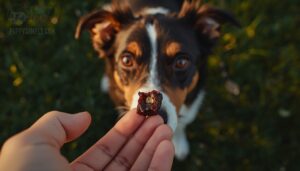
The treat you choose matters more than most people think. Dogs learn faster when the reward is worth working for — and when it disappears in one quick bite.
Picking the right reward matters even more for nervous dogs, and training treats for anxious or shy puppies can make the difference between a puppy that shuts down and one that starts to open up.
Here’s what to look for when picking treats that actually pull their weight in training.
Pea-Sized Training Pieces
Tiny treats make a real difference in training momentum. Pea-sized pieces support rapid consumption, so your dog swallows the reward in one or two seconds and refocuses on you immediately.
Bite consistency and shape uniformity matter more than most people realize — they make one-handed delivery smooth and keep pocket convenience real.
For small dog training treats especially, treat size impact is everything. Tiny treats simply keep training motivation high.
Refined detection methods like the channel attention module inspire similar precision in treat design.
Soft Aromatic Rewards
Soft and Smelly Dog Training Treats work because dogs lead with their nose. That velvet texture — smooth, pliable, no crumbling — means faster swallowing and cleaner pockets. Good scent layering, think boiled chicken or freeze-dried liver, ranks highly in the canine reward hierarchy. And with aroma longevity of up to 15 minutes post-opening, resealable packaging prevents scent fatigue mid-session.
Top aromatic picks for reward-based training and training motivation:
- Freeze-dried liver — intense scent, minimal calories
- Boiled chicken pieces — soft treats dogs go wild for
- Cheese cubes — strong aroma, immediate positive reinforcement response
- Fish-based bites — slow-release scent without overwhelming the dog
Low-Calorie Treat Choices
Those aromatic rewards pack a punch, but calories add up fast. Low-calorie treats help maintain control over caloric intake without sacrificing motivation.
Veggie-Based Rewards like cucumber rounds or green bean bites, Fruit Micro Treats such as single blueberries, and Lean Protein Bites like boiled chicken keep things light.
Commercial Light Options and DIY Low-Cal Treats work equally well for calorie control.
These strategies are particularly vital for dogs prone to obesity.
Portable Treat Options
Keeping treats on you matters more than most trainers admit. Pocket packaging makes this easy — slim, resealable pouches fit a dog treat pouch without bulk. Leak-proof wet treats stay mess-free on the go, while shelf-stable formulas handle any weather.
Color-coded flavors let you grab the right reward fast. No fumbling, no delays — just clean, Treats for On-the-Spot Training, ready when your dog is.
Match Treats to Distractions
Not every treat earns the same result — and that’s by design. Build a reward hierarchy before you start proofing commands in the real world. This ensures your dog always finds you more rewarding than whatever else is happening.
- Low-value treats for quiet, low-distraction practice
- Mid-value for moderate competing stimuli
- High-value treats for high-distraction environments
Distraction scaling keeps contextual value matched to progressive intensity, maintaining focus through escalating challenges.
Reward at The Right Moment
Timing is everything in dog training — get it right, and your dog learns fast; get it wrong, and they’re just confused.
The treat needs to land at the exact moment the right behavior happens, not a few seconds after. Here’s what good reward timing actually looks like in practice.
Treat Within One Second

Timing is everything in positive reinforcement. The moment your dog sits, lies down, or offers the right behavior, your treat must land within one second—that’s the Instantaneous Reinforcement Loop in action.
Reward your dog within one second of the right behavior, or risk reinforcing the wrong one
Miss that window, and you risk accidentally rewarding whatever behavior follows. Think of it as a Timed Reward Countdown: one second, no exceptions.
One-Second Consistency is the dividing line between clean learning and confusion.
Use Marker Words

A marker word is your voice-based bridge between behavior and reward—think of it as a split-second snapshot of the exact moment your dog gets it right.
Say "yes" once, clearly, in a neutral delivery style, and follow immediately with the treat.
Consistent marker tone matters more than enthusiasm. Stick to a single marker behavior per cue, and your dog learns precisely what earned the reward.
Clicker Timing Basics
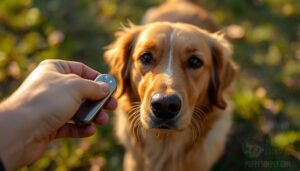
A clicker gives you a precision tool that a voice marker simply can’t match. In clicker training, timing is everything — one clean click lands faster than any word. Here’s how to lock it in:
- Click the instant the behavior happens, not after.
- Use Video Timing Review to catch timing errors in slow motion.
- Study Precursor Behavior Analysis to anticipate the exact moment.
- Apply Hand Placement Control so your treat hand doesn’t telegraph the reward.
- Practice Timing Error Correction drills until Marker Sound Consistency becomes automatic.
Avoid Delayed Rewards

A two-second gap doesn’t sound like much — but to your dog’s brain, it’s enough to break the connection entirely. Delayed rewards can accidentally teach the wrong behavior, reinforcing whatever your dog did closest to the treat delivery.
Minimize pauses, focus on fast treat hand-off, and keep instant marker sync tight. Prevent mistake reinforcement before it has a chance to take root.
Reward Clear Behaviors

Your dog can’t guess what earned the treat — you have to show it exactly. That’s the heart of positive reinforcement: reward one specific behavior, clearly defined, every time.
- Use a Specific Marker Cue paired with Single-Behavior Pairing — sit means sit, nothing else
- Keep a Consistent Delivery Location so reward timing stays predictable
- Avoid Partial Rewards; Clear Criterion Definition drives real behavior shaping
Manage Calories During Training

Training with treats adds up fast — more than most people realize. Keeping calories in check doesn’t mean giving fewer rewards; it means being smart about how you use them.
A few simple habits will help you stay on track.
Follow The 10% Rule
A simple rule keeps treat training from becoming a hidden calorie problem: treats should cover no more than 10% of your dog’s daily caloric intake. That’s the 10% Rationale behind calorie control for dogs.
Overrewarding adds up faster than you’d think, so use low-calorie treats and track totals with a Treat Budget Sheet. Owner Education on this one small habit prevents long-term weight creep.
Reduce Meal Portions
Kibble Portion Reduction is your best tool for Calorie Replacement Planning. On training days, subtract treat calories directly from your dog’s meal — that’s your Energy Balance Calculation in action.
A practical Meal Schedule Shifts approach: scoop out a portion of kibble before the session starts and use it as rewards. Portion Size Monitoring keeps everything balanced.
Count Daily Treats
Once you’ve adjusted meals, the next step is knowing exactly how many treats you’re handing out each day. Log Treat Numbers from every session — not just the long ones. A Daily Allotment System works well here: portion your treats into one container each morning.
Smartphone Tracking Apps simplify Calorie Label Matching, helping you stay within 10% of your dog’s daily caloric intake for solid caloric intake control.
Use Tiny Treat Pieces
Once you’ve counted your treats, the size of each piece matters just as much. Batch Pre-Portioning before sessions makes Rapid Dispensing easy and keeps Crumb Management clean. A pea-sized treat — think cheese cubes broken down, yogurt drops, or small biscuits torn up — let your dog swallow fast and stay focused.
- Break high-value treats into pea-sized pieces
- Use Consistent Texture for easy tearing
- Pre-portion into a treat pouch for Hygienic Storage
- Freeze-dried options split into many small rewards
- Soft treats reduce chewing time between repetitions
Watch Weight Changes
Even with low-calorie treats and sound caloric management, the scale can still surprise you. Water retention, glycogen fluctuations, and digestion timing all cause short-term swings that have nothing to do with fat.
That’s why consistent weigh-ins and trend averaging matter more than any single number. These practices help distinguish genuine progress from temporary fluctuations.
Stick to treats within 10% of your dog’s daily caloric intake, and those readings will reflect a genuinely balanced, low-calorie diet over time.
Keep Treats Motivating
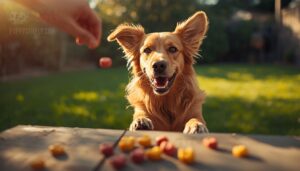
Even the best treat loses its magic if your dog gets bored with it. Keeping rewards fresh and exciting separates a dog who performs reliably from one who tunes you out halfway through a session.
Here’s how to keep motivation running high.
Rotate Weekly Flavors
Dogs get bored with the same treat just like you’d get tired of the same lunch every day. A simple Flavor Rotation Schedule — switching flavors weekly while keeping Consistent Treat Texture — keeps your dog genuinely curious.
- Alternate between nonperishable treats and perishable treats weekly
- Make Safe Ingredient Choices: single-ingredient options are easiest to track
- Use Preference Tracking to drop flavors your dog ignores
- Start each new flavor week with a Motivational Warm‑Up using easy reps
Rotating Treats, including high-value treats and low-calorie treats, sustains engagement without overcomplicating your routine.
Mix Reward Values
Not every repetition deserves a jackpot. A simple Value Tier System keeps your dog sharp without burning through your best rewards. Use a Predictable Mixing Strategy—low-calorie treats for easy wins, high-value treats for challenging moments.
This Energy Density Control, combined with a Texture Reward Mix, creates a dynamic approach. Incorporate Alternative Reinforcers like praise to diversify motivation. Together, these elements establish a variable reinforcement schedule that maintains the effectiveness of rewards across every session.
Prevent Treat Burnout
Think of treat burnout like a favorite song played on repeat — it loses its magic fast. Rotating flavors weekly and mixing skill sessions keeps rewards fresh.
Use Scheduled Rest Intervals and Arousal Level Monitoring to catch early signs of disengagement.
Weaving in Non-Food Reinforcers like praise reduces overreliance on treats before treat dependency quietly creeps in.
Use Jackpot Rewards
Jackpot rewards follow a simple structure: save them for standout moments. When your dog masters a tough command in a high-distraction setting—that’s your Trigger Threshold. Don’t hand them out freely; Eligibility Rules matter here.
To implement this effectively:
- Drop 3–5 high-value treats fast, one after another
- Pair with enthusiastic praise for stronger positive reinforcement
- Stay within your daily Payout Limits
- Follow a clear Redemption Process—reward, then proceed
Know Your Dog’s Favorites
Not every dog goes crazy for chicken — some get excited about a squeaky toy or a quick game of tug. Pay attention to engagement cues like forward body movement and eye contact to spot what truly drives your dog.
Track scent freshness, toy preferences, and play incentives alongside food motivators. This helps identify diverse motivators beyond just treats.
Reward rotation across different reward magnitudes keeps things unpredictable and effective, ensuring sustained interest and responsiveness.
Fade Treats Without Losing Progress

At some point, every dog gets the hang of a command — and that’s exactly when treat habits need to shift. Dropping food rewards too fast can undo progress, but holding on too long creates a dog that only works for a snack.
Here’s how to phase out treats the right way while keeping your training solid.
Shift to Variable Rewards
Once your dog responds reliably, shift to a variable ratio schedule—rewarding 1 in every 3–5 attempts. This approach replaces consistent rewards with unpredictable reinforcement, which strengthens habit persistence over time.
The variability in reward timing and magnitude fluctuation keeps your dog engaged through uncertainty motivation. This method builds a more durable reinforcement schedule than constant treat-based training, as dogs remain motivated by the unpredictability.
By adopting this strategy, you can phase out treats without losing ground. The intermittent rewards maintain behavior longevity, ensuring progress endures beyond the initial training phase.
Add Praise and Play
Treats don’t have to be the whole story. Verbal praise and play are powerful rewards — and they’re free. Specific praise phrases like "good sit" tell your dog exactly what worked. Consistent play timing and a balanced praise-play ratio keep motivation high without extra calories.
To maximize engagement, try these strategies:
- Keep a play toy preparation routine ready before sessions
- Use body language reinforcement — lean in, animate your voice
- Match affectionate gestures to your positive reinforcement reward schedule
Avoid Treat Bribery
Praise and play are great, but showing a treat before your dog acts is bribery, not training. It creates food dependency fast. True reward comes after the cue, never before.
Lure hand elimination means switching to an empty hand early. Invisible food cue and consistency without food prevent anticipatory staring — and stop you becoming a treat-reliant trainer.
Practice No-Treat Trials
Once bribery is off the table, the next step is treat fading through no-treat trials. Start at a low distraction level — neutral reward consistency is key here.
Swap food for praise or play, but keep your timing tight. Clear success criteria matter: your dog should hit the behavior reliably before you cut treats.
That’s your reinforcement history reset in action.
Reinforce Reliable Commands
Reliability doesn’t happen by accident — it’s built through repetition and structure. Training consistency is what turns "sometimes" into "always."
Keep these habits locked in:
- Use the same Consistent Command Tone and Unified Hand Signals every time
- Apply Clear Cue Timing so your dog builds a strong cue association
- Run Structured Practice Sessions with a steady reward schedule
- Practice Error-Free Reinforcement — only reward the correct response
Frequently Asked Questions (FAQs)
What is the 3-3-3 rule for dog training?
The 3-3-3 rule maps a dog’s adjustment in three stages: Decompression Days, a Learning Phase, and a Confidence Stage.
Each calls for patience, training consistency, and stage-based routines that build trust gradually.
What are the 5 D’s of dog training?
The 5 D’s are Distance Progression, Duration Holds, Distraction Levels, Difficulty Scaling, and Diversity Settings. Each one tests a different layer of your dog’s reliability — change only one at a time.
Can treat training work for aggressive dogs?
Positive reinforcement and high-value treats can shift aggressive behavior, but safety planning, trigger management, and professional supervision are not optional. They form the foundation everything else builds on.
What age should puppies start treat training?
Most puppies hit their Early Learning Window around 8 weeks old. That’s when Developmental Readiness Age aligns with food motivation, making positive reinforcement click fast and training progression feel almost smooth.
How do allergies affect treat selection choices?
When food allergies enter the picture, the devil is in the details.
Stick to single-ingredient treats, do allergen label review carefully, and prioritize protein source verification to keep reactions at bay.
Should treats differ for each family member?
Not really.
Every family member should use the same treats, follow shared allergy guidelines, and stick to a joint treat budget — consistent ingredient lists and unified calorie accounting keep your dog healthy and clear training.
Can treats help dogs overcome fear responses?
Treats can absolutely support emotional counterconditioning. When paired with gradual exposure sequencing and positive reinforcement,
a high-value, scent-based reward shifts your dog’s stress response toward calm — turning "scary thing" into "good thing incoming.
Conclusion
Think of treat training best practices as your dog’s old-school report card—every reward you give is a grade that tells them exactly what earned the mark.
Nail the timing, keep the pieces small, rotate the flavors, and fade the treats gradually. Doing these four things consistently ensures your dog’s success.
When you apply these methods, your dog stops working for the cookie and starts working for you. That’s not just good training—it’s a bond where your dog trusts that you know what you’re doing.
- https://www.luckypremiumtreats.com/blogs/news/the-ultimate-guide-to-training-treats-size-texture-and-timing-tips
- https://themobilebarkery.com/blogs/natural-dog-treats/best-dog-treats-for-training-expert-guide-to-high-value-rewards-that-work
- https://k9connoisseur.com/blogs/news/high-value-dog-training-treats
- https://leashandlearnnyc.com/a-comprehensive-guide-to-the-best-dog-training-treats-of-2024
- https://ducktownlodge.com/best-dog-treats-for-training-cumming-ga