This site is supported by our readers. We may earn a commission, at no cost to you, if you purchase through links.

Most dog owners spend weeks researching food ingredients for signs of chicken or grain sensitivity, never once glancing at the bowl sitting on the kitchen floor. That bowl, however, may be the actual culprit.
Plastic leaches BPA under heat. Scratched stainless steel releases nickel ions. Low‑grade ceramic glazes shed lead compounds with every meal.
If your dog develops a red muzzle, recurring ear infections, or patches of hair loss around the face, the trigger might not be what’s inside the bowl—it’s the bowl itself.
Understanding how dog bowls cause allergies in dogs can save you months of unnecessary dietary eliminations and guide you toward a straightforward fix.
Table Of Contents
Key Takeaways
- Your dog’s bowl material — plastic, scratched stainless steel, or low-quality ceramic — can directly cause skin reactions, ear infections, and facial irritation through repeated chemical contact at every meal.
- The location of your dog’s symptoms tells the story: redness, hives, or hair loss concentrated on muzzle and chin points to the bowl, not the food inside it.
- A simple bowl elimination trial — swapping to a new, non-plastic bowl for two weeks while keeping everything else the same — is often the fastest way to confirm whether the bowl is the trigger.
- Switching to lead‑free ceramic, glass, or food‑grade 304 stainless steel, combined with daily cleaning and replacement every 6–12 months, can resolve persistent reactions that months of dietary changes never will.
Yes, Dog Bowls Can Cause Allergies

Yes, your dog’s bowl can actually be the hidden culprit behind persistent skin issues. The material it’s made from matters more than most people realize, and not every bowl plays nice with every dog. Here’s what you need to know about why reactions happen and how to spot the pattern.
If your pup keeps scratching despite a bowl swap, their food itself might be the issue—exploring dog food options for dogs with itchy skin could be the next smart step.
Contact Dermatitis Triggers
Contact dermatitis happens when your dog’s skin reacts directly to something it touches. The bowl itself — its material, residue, or surface — acts as the trigger.
Chemical residues from detergents, hard water mineral deposits, and bacterial growth in microscopic surface cracks all create repeated daily exposure. That consistent contact is exactly what turns a minor irritant into a full skin reaction.
Around 80% of such reactions are classified as irritant contact dermatitis, as outlined in the discussion of irritant contact dermatitis cases.
Plastic and Metal Sensitivity
Both plastic and metal bowls can trigger allergic contact dermatitis in sensitive dogs.
Plastic bowls release BPA migration and plastic additives like phthalates into food.
Scratched stainless steel bowls leach nickel and chromium through metal ion release, especially when acidic residues sit overnight. Surface wear and residue film buildup along the rim increase your dog’s daily exposure considerably.
Allergies Versus Irritation
Not every reaction your dog has to a bowl is a true allergic contact dermatitis response. Some are simple irritation — a direct skin barrier injury with no immune system response involved.
Here’s how to tell them apart:
- Irritant symptom onset is fast — often minutes to hours.
- Allergic reactions develop hours or days after contact.
- Irritation stays within sharp contact area borders.
- A contact allergy spreads beyond the touched zone, with intense pruritus and swelling.
With a skin irritant, stopping exposure usually brings quick relief. A dose sensitivity threshold doesn’t apply the same way to allergies — even tiny amounts can trigger a full flare once your dog is sensitized. Allergic rash spread beyond the muzzle tip is often your clearest clue.
Bowl-related Exposure Patterns
Your dog’s muzzle contacts the bowl multiple times daily — and that repeated exposure adds up fast. The chin and lower jaw press against the rim with every meal, transferring saliva and moisture that can leach chemicals from plastic or scratched metal directly onto the skin.
Micro-scratches in bowls trap residue between meals, so the next feeding reactivates contact before the skin has a chance to recover.
Signs Your Dog’s Bowl is Triggering Allergies

Bowl allergies don’t always announce themselves dramatically — sometimes the signs are easy to miss or mistake for something else. Your dog’s body, though, often leaves clues right where contact happens most. Here’s what to watch for.
Red Muzzle or Chin
One of the earliest signs of a bowl-related reaction is redness around the mouth and muzzle.
This often overlaps with dog acne symptoms on the muzzle and chin, making it worth ruling out before assuming a bowl allergy.
Your dog’s chin presses directly against the rim during every meal, and that repeated contact — combined with saliva moisture and cleaning residue — can break down the skin barrier, leaving the area visibly irritated and inflamed.
Hives and Bald Patches
Hives can show up fast — red, raised skin welts that shift location between meals. Alongside these, you may notice patchy alopecia, where repeated skin inflammation damages hair follicles over time. Here’s what to watch for:
- Raised, blotchy muzzle hives after eating
- Welts that disappear and reappear elsewhere
- Irregular bald patches on the face or chin
- Redness concentrated on bowl-contact zones
- Chronic hair loss from ongoing allergic reaction
Paw Licking and Inflammation
Paw licking often looks like a nervous habit, but it can signal an active allergic response. When allergens from your dog’s bowl transfer to their paws during contact or grooming, a saliva irritation cycle begins — licking wets the skin, moisture softens the barrier, and bacteria find an easier entry point.
| Sign | What You See | What It Means |
|---|---|---|
| Paw biting | Chewing between toes | Localized itch response |
| Redness | Inflamed toe webs | Barrier damage risk |
| Swelling | Puffy pads or toes | Inflammatory feedback loop |
This paw moisture loop keeps the skin irritated long after the bowl contact ends, driving chronically inflamed feet that worsen with every lick.
Recurring Ear Infections
Recurring ear infections are easy to dismiss as bad luck — but your dog’s food bowl may be quietly fueling each flare-up. Allergens from the bowl transfer to the chin, then migrate toward the ear through scratching and head shaking.
- Ear canal moisture traps bacteria after repeated exposure
- Chronic inflammation narrows the canal, slowing natural drying
- Plastic bowls harbor residue that sustains the allergen cycle
- Each infection becomes harder to clear without removing the trigger
Swollen Lips or Tongue
Swollen lips or tongue after mealtime is one of the most urgent signs of a bowl-related allergic reaction. This response, called angioedema, involves deeper skin and mucosal swelling triggered by direct bowl contact. Plastic allergies and metal hypersensitivity — particularly to nickel or chromium — are common culprits. Prompt angioedema assessment and immediate bowl removal are your first response steps.
Swollen lips or tongue after mealtime signal angioedema—remove the bowl immediately
| Trigger | Swelling Type | Response |
|---|---|---|
| Nickel allergy | Lip and tongue edema | Switch bowl immediately |
| Plastic residue | Localized mouth swelling | Eliminate plastic bowls |
| Chemical irritant | Mucosal redness | Rinse bowls thoroughly |
| Chromium exposure | Oral tissue inflammation | Use ceramic or glass |
| Repeated contact | Progressive angioedema | Seek veterinary help |
Bowl Materials That May Cause Reactions

Not all dog bowls are created equal, and some materials are more likely to cause problems than others. Your dog’s reaction often comes down to what the bowl is actually made of. Here are the main materials worth knowing about.
Plastic Bowl Allergens
Plastic bowls are one of the most common culprits behind bowl-related reactions in dogs. Materials like polyethylene terephthalate and high-density polyethylene can release plastic additives directly into your dog’s food or water.
BPA leaching and phthalate migration are real concerns — especially when heat exposure speeds up chemical release. Microscopic cracks that develop over time make things worse, trapping bacteria and increasing chemical contact with your dog’s muzzle.
Scratched Stainless Steel
Stainless steel seems like the safe choice — and often it is. But a scratched or damaged stainless steel bowl tells a different story. Scratches break down the chromium oxide layer that protects the metal surface, exposing your dog to trace metals with every meal.
Nickel and Chromium Sensitivity
The two metals most likely to blame are nickel and chromium. Both can trigger allergic contact dermatitis — a reaction that shows up where your dog’s skin repeatedly touches the bowl.
Think muzzle, chin, and lips.
Reactions can appear within hours or stretch over days, which makes the bowl easy to overlook as the cause.
Low-quality Ceramic Glazes
Ceramic bowls seem like the safe middle ground — and high-quality ones often are. But low-quality ceramic glazes can hide real risks.
Defects like crazing, pinholes, and uneven thickness create microscopic cracks where moisture collects and metals leach out. Some cheaper glazes even contain lead-based compounds that migrate into food over time, causing skin irritation and, with chronic exposure, neurological damage.
Silicone Allergy Uncertainty
Silicone bowls are often marketed as nonreactive feeding bowls, but the reality is more complicated. Silicone isn’t one uniform material — different formulations exist, and additive impurities like dyes or stabilizers may trigger skin irritations rather than the silicone itself.
True material allergies to silicone in dogs remain poorly studied and unconfirmed.
How Vets Diagnose Bowl Allergies
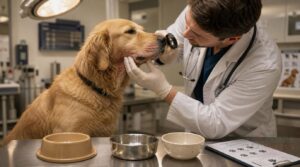
Figuring out whether your dog’s bowl is behind all that itching and redness isn’t something you can Google your way through — a vet needs to take a proper look. The good news is that vets have a clear, step-by-step process for tracking down contact allergies like these. Here’s how that diagnosis usually unfolds.
Skin Lesion Patterns
Vets look for a very specific pattern: lesions clustered on the muzzle, chin, and lips — exactly where your dog’s face meets the bowl.
You’ll often notice erythematous patches (flat red areas), raised papular eruptions, or urticaria — hives that shift shape within hours.
Vesicular lesions may rupture, leaving raw, crusted skin.
With chronic exposure, repeated rubbing causes lichenified, thickened skin over time.
Bowl Elimination Trial
Think of the bowl elimination trial as the clinical equivalent of an elimination diet — you remove the suspected trigger and watch what happens. The protocol is straightforward:
- Switch to a new, unused non-plastic bowl
- Keep food, schedule, and location identical
- Track clinical signs daily for at least two weeks
If symptoms improve, a return phase confirms the reaction by reintroducing the original bowl.
Patch or Allergy Testing
When the elimination trial doesn’t give you a clear answer, patch or allergy testing steps in.
A vet applies diluted allergens — nickel, chromium, or specific plastics — to your dog’s skin for roughly 48 hours, then reads reactions again at 96 hours, since a hypersensitivity reaction often takes days to fully surface.
Infection Rule-outs
Before calling something an allergy, your vet needs to rule out infection first — and that distinction matters more than you might expect. Skin cytology helps here: a quick swab can reveal bacteria or yeast under a microscope.
Bacterial biofilm on dirty bowls can drive recurring skin infections that closely mimic contact irritation, complicating the picture greatly.
Treatment and Medication Options
Once the diagnosis is confirmed, treatment moves quickly on several fronts. Your vet may start with antihistamine therapy to reduce itch, then add corticosteroid management using prednisone for faster inflammation relief.
Apoquel administration targets itch at a cellular level, while Cytopoint injections offer longer‑lasting control.
Topical skin care — medicated wipes, sprays, or shampoos — soothes irritated muzzle skin between doses.
Best Dog Bowls for Sensitive Dogs
Once you know your dog is reacting to their bowl, the fix is usually simpler than you’d expect. Choosing the right material makes a real difference, and there are a few solid options that vets consistently recommend for sensitive dogs. Here’s what to look for.
Lead-free Ceramic Bowls

Lead-free ceramic bowls are one of the most reliable choices for dogs with contact sensitivities. When the glaze barrier integrity stays intact, the surface resists chemical interaction with food and saliva. Here’s what makes a quality ceramic bowl stand out:
- Food safe certification from FDA or equivalent bodies confirms the glaze meets material safety standards for pets.
- Lead release testing ensures no measurable heavy metals migrate under normal use conditions.
- Ceramic surface wear matters — chips or cracks expose the underlying body, increasing irritant risk.
- Bowl hygiene practices like gentle hand-washing preserve glaze quality longer than abrasive scrubbers.
- Choosing lead-free ceramic bowls reduces your dog’s chemical exposure at every meal.
Glass Feeding Bowls

Glass feeding bowls are another strong option for dogs with canine allergic dermatitis. The surface is completely inert — no plastic polymers, no metal alloys.
Many pet glass bowls use tempered glass, which resists shattering into sharp pieces. They’re also dishwasher safe, non-porous, and won’t trap bacteria or odors the way scratched plastics do.
304 Stainless Steel Bowls

304 stainless steel (18/8 grade) is a safe, nontoxic option for most sensitive dogs — but it’s not perfect for every case. If your dog has a confirmed nickel or chromium sensitivity, even this food-grade alloy can trigger a reaction, especially if the surface gets scratched and worn over time.
Daily Cleaning Routine
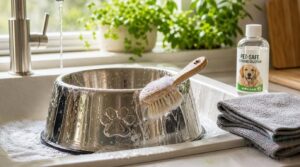
Even the safest bowl becomes a risk if it’s not cleaned properly. Rinse before wash — a quick warm-water rinse after each meal loosens fats and proteins before they dry on.
- Scrub with soap and warm water daily
- Air-dry completely before the next use
- Sanitize regularly with a pet-safe disinfectant
- Use dedicated cleaning tools — never shared sponges
When to Seek Veterinary Help

Keeping your dog’s bowl spotless is a solid first step — but sometimes it’s not enough. If your dog shows labored or noisy breathing after eating, that’s an Emergency Breathing Signs moment: get to a vet immediately. The same applies to swollen lips or tongue, collapse, or seizures — these aren’t "wait and see" situations.
| Symptom | Action |
|---|---|
| Wheezing or breathing difficulty | Emergency vet visit now |
| Seizures or collapse | Immediate emergency care |
| Suspected Toxic Ingestion Alert | Call vet without delay |
| Persistent skin lesions or infections | Consult your veterinarian |
For ongoing redness, paw inflammation, or recurring ear infections, schedule a veterinary dermatology appointment. A specialist can run elimination trials or patch testing to confirm veterinary diagnosis and recommend treatment options — including antihistamines or medical management with topical corticosteroids.
Frequently Asked Questions (FAQs)
Can bowl allergies affect a dogs digestion?
Yes, bowl allergies can upset your dog’s digestion. Bowl gut inflammation from allergens may trigger vomiting, diarrhea, or loose stool — symptoms once blamed solely on food but now increasingly linked to the vessel itself.
Are certain dog breeds more prone to bowl allergies?
Some breeds are more vulnerable. Dogs with atopic dermatitis — like Bulldogs, Retrievers, and West Highland Terriers — carry a genetic tendency toward hypersensitivity, making their immune response to bowl materials more reactive than average.
How often should dog bowls be replaced?
A bowl that looks clean can still be a hidden source of irritation. Replace every 6–12 months, or sooner if you notice scratches, odors, or staining that won’t wash out.
Can puppies develop bowl allergies faster than adults?
Puppies can show faster skin reactions than adults. Their developing skin barrier is thinner and more reactive, making early sensitization more likely when their immune response is still forming.
Do bowl allergies worsen with seasonal environmental allergies?
Yes — and this isn’t a new discovery. Seasonal flare interaction is real. When environmental allergen exposure peaks, your dog’s skin barrier weakens, making bowl-related skin reactions hit harder and faster.
Conclusion
Sometimes the answer has been hiding in plain sight—sitting on your kitchen floor twice a day.
If your dog shows recurring skin flare-ups, ear infections, or facial irritation, can dog bowls cause allergies in dogs?
Yes, and more often than most owners expect.
Swap plastic or low-grade materials for lead-free ceramic, glass, or 304 stainless steel.
Clean the bowl daily.
These two steps alone can resolve what months of dietary eliminations never will.
- https://www.dogsnaturallymagazine.com/best-dog-bowls-evaluated
- https://www.uahpet.com/blogs/post/dog-allergic-to-stainless-steel-bowl-causes-symptoms-and-solutions
- https://www.jeffreyspets.com/bowls-lick-mats/p/stainless-steel-dog-bowl
- https://www.roarpetfood.co.nz/the-bowl-is-just-as-important-as-what-you-put-in-it-an-assessment-of-different-types-of-dog-bowl
- https://www.seaportanimalhospital.com/blog/should-i-use-a-ceramic-plastic-or-stainless-steel-food-bowl-for-my-pet