This site is supported by our readers. We may earn a commission, at no cost to you, if you purchase through links.
Most dog owners using positive training aren’t failing because they don’t care—they’re failing because they’re off by half a second. That tiny gap between a dog sitting and the treat reaching their mouth can quietly teach the wrong behavior for weeks without you realizing it.
Timing, consistency, and body language shape what your dog actually learns, not just what you intended to teach.
Small habits repeated across hundreds of sessions become deeply wired patterns—good or bad. The positive dog training mistakes that trip people up most aren’t obvious; they hide inside everyday moments that feel like they’re going fine.
Table Of Contents
Key Takeaways
- Reward timing is everything — a half-second delay can quietly teach your dog the wrong behavior for weeks without you realizing it.
- Mixed cues, whether that’s swapping words, inconsistent hand signals, or different rules from different people, confuse your dog far more than any bad behavior ever could.
- Your tone and body language speak louder than your words, so if they don’t match, your dog will always trust what they see over what they hear.
- Harsh corrections and punishment don’t teach your dog what to do — they just teach your dog to fear getting it wrong, which kills confidence and slows real progress.
Reward Timing Mistakes
Timing is everything in dog training — get it wrong, and your dog learns the wrong lesson entirely. Even well-meaning owners make a handful of reward mistakes that quietly undermine their progress. Here are the most common ones to watch for.
If you want to sharpen your instincts before bad habits set in, brushing up on treat training best practices for dogs can help you reward at exactly the right moment.
Rewarding Too Late

Timing is everything in dog training — miss the window, and you’re not rewarding the behavior you think you are. Reward the dog immediately after the correct action, ideally within one to two seconds. Research highlights that immediate dopamine spikes reinforce the behavior more effectively than delayed treats. Wait too long, and your dog has already shifted into something else entirely.
Here’s what reward lag actually costs you:
- Behavior chain drift sneaks in fast — your dog starts stringing random actions together, hoping one finally pays off
- Late treats can accidentally reinforce jumping, spinning, or pawing instead of the behavior you wanted
- Cue-reward timing breaks down, so your dog stops connecting the command to the outcome
- Fast reward delivery lets you adjust your criteria in real time, keeping progress moving forward
Skipping Marker Words

Late rewards blur the picture — and so does skipping marker words. A marker, whether you use a clicker or a simple "yes," tells your dog exactly which moment earned the treat.
Without that clear signal, your dog starts guessing.
Did the sit earn it? The glance? The tail wag? Dog guessing slows learning fast and muddies your progress tracking considerably.
Rewarding Wrong Positions

Marker words help your dog zero in on the moment — but even with perfect timing, reward placement matters just as much.
Where the treat lands shapes what your dog thinks they earned.
- Incorrect location reinforcement teaches your dog that "close enough" counts.
- Hidden criteria let accidental patterns replace your actual goal.
- Rewarding through movement reinforces the journey, not the destination.
Using Low-Value Treats

Not every training moment calls for the good stuff.
Low-value treats — think kibble or plain biscuits — are perfectly suited for low‑distraction environments like your living room, where your dog is already focused. They keep calorie counts reasonable during longer sessions and prevent your dog from getting overstimulated mid‑practice.
Save the cheese for the hard work.
Fading Rewards Too Soon

Most trainers pull back on treats the moment their dog gets a few things right. That’s fading rewards too soon — and it quietly kills momentum.
Consistent reinforcement during early learning keeps your dog motivated and clear on what’s working.
Think of it like learning a new skill yourself: you need enough wins before the praise starts tapering off.
Inconsistent Cue Mistakes
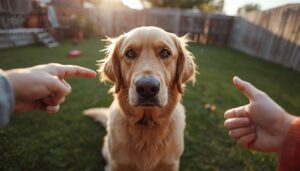
Your dog isn’t ignoring you on purpose — sometimes the signals you’re sending are just too mixed up to follow. Inconsistent cues are one of the most common training pitfalls, and they’re surprisingly easy to fall into. Here are the mistakes to watch for.
Even how often your dog barks can be a clue — dogs can go hoarse from overexcitement or stress, which is a sign worth paying attention to when you’re trying to read their behavior.
Repeating Commands Often
Here’s a familiar scene: you say "sit," your dog glances away, so you say it again — and again — until they finally comply. It feels harmless, but repeating commands is one of the sneakiest training mistakes you can make.
Over time, your dog doesn’t learn "sit means sit now." They learn "sit means wait until the third request.
Changing Cue Words
Switching cue words mid-training is like changing your dog’s name every few weeks — they stop trusting the sound.
When you swap "down" for "lie down," your dog doesn’t transfer the old understanding; they treat it as a brand-new unknown request.
That meaning shift slows progress and forces them to relearn what earns reinforcement all over again.
Mixed Household Signals
Your household might be working against you without anyone realizing it.
When different people give different cue words or hand signal variation for the same behavior, your dog isn’t being stubborn — they’re genuinely confused. Here’s what household signal conflict looks like in practice:
- One person says "come," another says "here" — your dog treats them as separate requests
- Mixed reinforcement signals happen when someone rewards movement while another requires stillness
- Allowing the dog to succeed with one person’s method but not another’s teaches an inconsistent standard
- Random attention during mistakes accidentally reinforces the wrong behavior
Cue consistency isn’t optional — it’s the foundation of clear communication. Sit down together, agree on exact words and motions, and stick to them. That small conversation can save weeks of retraining.
Unclear Hand Signals
Your hand is speaking a language your dog is constantly reading — but are you saying the same thing twice?
Hand signal clarity matters more than most owners realize. Dogs don’t hear "sit" the way you think they do. They watch you. When your cue changes shape, height, or speed from one rep to the next, your dog isn’t being slow — they’re trying to decode a moving target.
Think of it like this: imagine someone giving you directions, but every time they point, they use a different finger, a different arm, and stand in a different spot. You’d hesitate too.
Signal consistency is the fix. That means same hand, same starting position, same motion path — every single time. A cue thrown from chest height one moment and waist height the next can genuinely look like different hand signals to your dog.
| What You Do | What Your Dog Sees | What Happens |
|---|---|---|
| Raise hand at chest height | Clear, familiar cue | Dog responds quickly |
| Same cue at waist height | An unfamiliar gesture | Dog pauses or ignores |
| Add a shoulder shrug | Unintended cue component | Dog waits for the shrug |
Gesture timing plays a role too. Show the cue too late — after your dog has already shifted position — and you’ve just marked the wrong moment. The reward lands on the wrong behavior.
Keep your hand position stable and your motion uniform. Simple beats complex every time. Cue clarity isn’t about being robotic; it’s about being readable. Your dog is doing their best to understand you — make it easy for them.
Poisoning Reliable Cues
A cue your dog once knew cold can quietly fall apart — and you might not notice until it stops working entirely.
Cue poisoning happens when a command loses its clear meaning. Every time you repeat "sit, sit, sit" waiting for a response, your dog learns to tune out the first signal. The cue no longer predicts anything dependable.
Tone and Body Language Errors

Your dog reads you like a book — every shift in your tone, every tense muscle, every glance away. And if what you’re saying doesn’t match what your body is doing, you’ve already lost them before the treat even comes out. Here are the most common tone and body language mistakes that quietly sabotage your training sessions.
Monotone Training Voice
Ever wonder why your dog zones out mid-session even though you’re saying all the right things? Your voice might be the problem. A monotone training voice strips away the contrast dogs rely on to understand what matters.
Here’s what a flat voice quietly costs you:
- Pitch stays level — cues blend into background noise
- Volume never shifts — your "yes!" sounds identical to casual chat
- Praise loses punch — rewards feel emotionally hollow
Add small pitch lifts, crisp pauses, and energetic reward delivery to keep your dog locked in.
Angry Recall Cues
Your voice carries more than words — it carries your mood. If you’re calling your dog while frustrated, that tension bleeds into your tone, and dogs read it instantly. An angry recall cue doesn’t just fail once; it starts poisoning your cues over time, teaching your dog that coming to you feels unsafe.
Confusing Body Signals
Your words might say "come here," but if your body is leaning forward with arms crossed, your dog reads the posture — not the words. Matching body language to verbal cues is something most owners overlook entirely.
A stiff torso, tense legs, or direct eye contact can trigger freeze and avoidance signals, like sniffing the ground or stepping sideways, before you’ve even finished speaking.
Inconsistent Praise Tone
Praise tone is just as powerful as the command itself. When your tone shifts — excited one rep, flat the next — your dog isn’t reading your intention. They’re reading the sound.
- Emotional intensity drift confuses dogs during harder reps
- Volume swings change emotional meaning unexpectedly
- Distance variation alters how clearly your praise lands
Keep your high-pitched, upbeat tone consistent. Every rep.
Mismatched Verbal Cues
Think about what it’s like learning directions from someone who points left while saying "turn right." That’s verbal cue conflict — and your dog lives it every time your body and words disagree.
| Mistake | What Your Dog Hears |
|---|---|
| Saying "sit" while leaning forward | Two competing signals |
| Using hand motion mid-cue | voice cue mismatch |
Inconsistent commands quietly poison your cues over time.
Training Session Structure Mistakes

How you structure your training sessions matters just as much as what you teach. Even the best techniques fall flat when the timing, length, or energy of a session works against your dog. Here are five common session structure mistakes that could be quietly slowing your progress.
Sessions Too Long
Here’s a training mistake that sneaks up on even well-meaning owners: sessions running too long. Dogs have short mental stamina — most max out around 5–10 minutes before attention starts fading. Push past that, and you’re not training anymore. You’re gambling.
When a dog gets tired, mistakes multiply. Distraction builds. Cues start landing on ears that have already checked out.
Skipping Daily Practice
Skipping daily practice is one of the quietest mistakes you can make. Life gets busy — a day slips, then two, then a week. Before you know it, your dog’s "sit" looks more like a suggestion.
- Cue reliability drops fast when repetition disappears
- Behavior drift brings old habits creeping back
- Generalization slows without varied, consistent exposure
- Reinforcement gaps weaken the behavior-reward connection
Short daily sessions — even five minutes — keep that bond tight.
Ignoring Dog Fatigue
Your dog’s slow responses mid-session aren’t stubbornness — they’re often a quiet cry for rest. Fatigue detection signs like weight shifting, stepping away from tasks, or slower reactions tell you their brain and body are tapping out.
Pushing past those signals doesn’t build drive; it chips away at it. Keep sessions short, watch your dog’s energy, and stop before they’re done.
Ending on Frustration
Ending a session on a bad note is like finishing a meal with something bitter — it’s what lingers. When your dog walks away confused or frustrated, that feeling sticks.
End on a win, even a small one. Drop back to an easier behavior, get one clean success, reward it warmly, and stop there.
That’s the note they’ll remember.
Rushing Behavior Steps
Rushing through behavior steps is like skipping rungs on a ladder — it looks faster until you fall.
- Reward only correct responses, not just speed or movement
- Use a marker word the instant the behavior happens
- High-value treats keep your dog engaged and patient
- Short, distinct drills prevent urgency and chaos
- Reinforce incremental wins before raising criteria
Punishment-Based Training Mistakes

Even well-meaning owners sometimes fall into punishment-based habits without realizing the damage they cause. Fear might stop a behavior in the moment, but it quietly chips away at your dog’s confidence and your bond over time. Here are the most common punishment-based mistakes — and what to do instead.
Using Harsh Corrections
Harsh corrections — shock collars, choke chains, leash yanks — might feel like a fast fix, but they tend to backfire badly. Your dog doesn’t connect the pain to the behavior.
Instead, they connect it to you. Over time, that erodes trust and makes your dog hesitant to engage, try new things, or even take a treat.
Harsh corrections don’t teach your dog — they teach your dog to fear you
Scolding During Mistakes
Scolding feels instinctive in the moment — your dog just ignored a cue you’ve practiced a hundred times, and frustration spills out naturally. But here’s the problem: scolding during mistakes breaks the feedback loop your dog depends on. Instead of learning what to do next, they’re focused on avoiding your reaction.
When the "no" comes loud and sharp, it raises arousal without offering a clear alternative. Your dog doesn’t think, "I’ll try something different." They freeze, shut down, or start treating training like unsafe territory. Over time, training avoidance sets in — and that’s far harder to undo than the original mistake.
Ignoring Stress Signals
Your dog is always talking to you — you just have to learn the language.
Lip-licking between cues, yawning mid-session, whale eye glances, or a sudden freeze aren’t random quirks. They’re your dog saying, "I’m overwhelmed."
When you push through those signals instead of pausing, stress stacks fast and learning shuts down completely.
Damaging Dog Trust
Trust isn’t just broken in big moments — it erodes quietly, one uneasy interaction at a time.
Unwanted physical restraint, yanking during walks, or surprising your dog with sudden grabs can teach them that your hands mean pressure, not safety. Here are five trust-damaging habits to watch for:
- Forcing uncomfortable interactions before your dog is ready
- Repeatedly handling your dog through resistance during grooming or nail trims
- Unpredictable physical corrections that interrupt calm or curious moments
- Pushing your dog into overwhelming environments without letting them decompress
- Frequent routine changes that leave them unsure what comes next
When your dog can’t predict you, confidence fades fast.
Replacing Punishment With Rewards
Switching from punishment to positive reinforcement isn’t just kinder — it actually works better. When you replace corrections with rewards, your dog starts offering behaviors because they want to, not because they’re afraid of getting it wrong.
Use a reward hierarchy: save high-value rewards like cheese or chicken for the hardest tasks, and keep everyday treats for simple wins.
Frequently Asked Questions (FAQs)
Can positive training work for aggressive dogs?
Yes — positive training works for aggressive dogs. When rewards land immediately after calm behavior, dogs learn faster. Think of it as catching them doing something right, then making that moment count.
How do I train a dog with disabilities?
Training a dog with disabilities starts with meeting them where they are. Adapt cues, rewards, and pacing to fit their unique needs, and they’ll surprise you.
What age should puppy training begin?
Believe it or not, your puppy is already learning before you start teaching. Training begins at 8 weeks — the moment they come home. Short, simple lessons work best.
How do distractions affect positive training success?
Distractions pull your dog’s attention away from you, making even solid behaviors fall apart. Without proofing the behavior across different environments, generalization training never sticks — and your dog simply can’t focus when it matters most.
Is positive training effective for all breeds?
Positive training works for all breeds — but it’s not one-size-fits-all. A Beagle might work happily for cheese, while a Border Collie goes wild for a tennis ball. Match the reward to the dog.
Conclusion
Here’s a small coincidence worth sitting with: the moment you started noticing your dog’s confusion was probably the same moment your training quietly began to improve. Awareness is where change actually starts.
These positive dog training mistakes don’t mean you’ve failed your dog—they mean you’re paying close enough attention to fix what most owners never question.
Keep sessions short, your timing sharp, and your patience generous. Your dog is already watching you get better.
- https://beausk9academy.com/dog-training-mistakes-common-pitfalls
- https://kastensdogtraining.com/common-mistakes-to-avoid-when-training-your-dog
- https://www.fidobehaviour.com/blog/9-common-mistakes-to-beware-of-when-dog-training
- https://www.akc.org/expert-advice/training/common-dog-training-mistakes
- https://eileenanddogs.com/blog/2013/09/17/8-dog-training-errors