This site is supported by our readers. We may earn a commission, at no cost to you, if you purchase through links.

Somewhere between 10 and 20 percent of people with dog allergies still own a dog—and a good number of them own poodles. That’s not denial; that’s a calculated bet based on something real. The poodle’s hypoallergenic coat type does behave differently from most breeds, but not for the reasons pet store salespeople usually explain.
The word "hypoallergenic" itself was coined in the 1950s for a cosmetics campaign, never defined by any regulatory body, and certainly never designed with veterinary science in mind.
What actually separates a poodle from a golden retriever, allergy-wise, comes down to a single-layer coat, a genetic quirk in the KRT71 gene, and the way tight curls physically hold onto dander instead of releasing it into the air you breathe. Understanding the mechanism changes everything about managing life with these dogs.
Table Of Contents
- Key Takeaways
- What Hypoallergenic Actually Means for Dogs
- Poodle Coat Structure: What Makes It Unique
- How Much Do Poodles Actually Shed?
- The Role of Size: Does It Matter?
- Grooming Habits That Reduce Allergen Exposure
- Home Management Tips for Allergic Poodle Owners
- How Poodles Compare to Other Low-Shedding Breeds
- Frequently Asked Questions (FAQs)
- Is F1 or F1B better for allergies?
- How to discipline a Poodle?
- Can allergic owners build tolerance to poodle dander?
- Do poodle mixes inherit the hypoallergenic coat trait?
- How do allergen levels change as poodles age?
- Can diet affect a poodles allergen production?
- Should allergy sufferers get tested before adopting a poodle?
- Conclusion
Key Takeaways
- Poodles shed less because a mutation in the KRT71 gene creates tight curls that physically trap dander and loose hair before they go airborne — it’s biology, not branding.
- The term "hypoallergenic" was coined for a cosmetics campaign in the 1950s and has no regulatory definition, so no dog breed — poodles included — is truly allergen-free.
- Bathing your poodle every three to four weeks can cut dander levels by up to 85%, making consistent grooming your most powerful tool for keeping allergens in check.
- Labradoodles and other poodle mixes don’t reliably inherit the low-shedding coat, so if allergies are a concern, testing your specific reaction before adopting is the smartest move you can make.
What Hypoallergenic Actually Means for Dogs

The word "hypoallergenic" gets thrown around a lot in dog breeding circles, but most people don’t know it comes from the cosmetics industry — and was never designed with dogs in mind. Before trusting a breeder’s label or a website’s claim, it helps to understand what’s actually happening inside your body when pet allergies strike.
If you’re starting your search, browsing a complete list of hypoallergenic dog breeds can help you match the right low-shedding companion to your specific sensitivities.
Here’s what the science really says.
The 1950s Origin of The Term and Its Limits
The term "hypoallergenic" didn’t start with dogs — it began as a cosmetic branding launch in the 1950s, born from mid‑century marketing with no scientific standard behind it. Here’s what that regulatory vacuum actually means:
- "Hypo" means less, not none
- No agency defines it for dog breeds
- It signals risk‑reduction phrasing, not a cure
- Consumer perception shift made it feel safer than its
- Hypoallergenic dog breed myths grew from that gap
Keep that in mind as you explore hypoallergenic poodles.
Why No Dog Breed is Truly Allergen-Free
So here’s the thing — no dog produces zero dog allergen. Every breed has skin, and skin flakes. Individual allergen variation means two dogs of the same breed can trigger completely different reactions in you. Allergen surface buildup from saliva, urine, and sebaceous secretions clings to fabrics long after contact.
Environmental residue longevity makes sensitivity spectrum differences real and deeply personal.
The primary dog allergen Can f 1 is concentrated in saliva and dander, drives reactions regardless of breed.
How Can F 1 and Can F 2 Proteins Trigger Reactions
Can f 1 and Can f 2 are the allergenic proteins driving most dog allergy reactions. First contact triggers a sensitization pathway, training your immune system to recognize these proteins as threats.
Repeat exposure activates IgE binding on mast cells, triggering cytokine release — the chemical cascade behind sneezing, itching, and inflammation. Even a poodle coat carries enough dog allergen to cross your threshold exposure.
How Saliva Transfers Allergens to The Coat
Saliva is the hidden delivery system most people overlook. Every time your poodle grooms itself, licking intensity determines the saliva protein load deposited across the coat.
Canine saliva proteins — including Can f 1, f 2, and f 6 — bind to coat binding sites. Transfer kinetics and allergen spread patterns dictate how much eventually becomes airborne dander in your home.
Poodle Coat Structure: What Makes It Unique
Poodles don’t just happen to shed less — their coat is genuinely built differently from most dogs you’ll meet. The structure behind those signature curls plays a direct role in keeping allergens contained rather than floating around your home.
Here’s what makes their coat so distinct.
Single-Layer Hair Vs. Double-Coated Breeds

Most dogs carry two coat layers — a coarse outer layer acting as a moisture barrier and a dense undercoat providing thermal insulation. This inner layer sheds heavily each season, driving the transfer of airborne dander throughout your home.
Poodles differ with their single-layer coat, which results in lower hair density, dramatically reduced maintenance needs, and significantly less allergen dispersion. This structural advantage makes them a superior choice for allergy-sensitive households.
The KRT71 Gene Behind Those Tight Curls
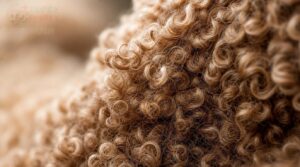
Those signature curls are not just adorable — they’re written into the poodle’s DNA.
Those curls also trap moisture and debris, so pairing a good grooming routine with tips from a complete home dog grooming guide keeps your poodle’s coat and ears healthy between professional appointments.
A variant in exon 2 of the KRT71 gene disrupts normal keratin function during follicle development, bending each hair shaft into tight curls. The genotype’s impact is determined by incomplete dominance, resulting in:
- One gene copy → wavy coat
- Two copies → tightly curled, hypoallergenic single-layer coat
- Curlier coats trap dander more effectively
- Tighter curls reduce allergen dispersion throughout your home
How The Curly Coat Traps Dander and Loose Hair
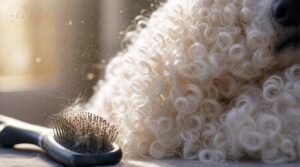
Think of your poodle’s coat as a natural filter. Each curl forms a Curl Pocket Mechanic — a tight loop that catches loose hairs and dander before they reach your air, furniture, or lungs. This Dander Diffusion Delay buys you time, keeping allergens trapped until grooming removes them through the Trap-and-Release Cycle.
| Coat Feature | Allergen Impact |
|---|---|
| Tight curl loops | Captures loose hairs inside the coat |
| Dense curl mass | Slows dander from becoming airborne |
| Brush Angle Effect | Releases trapped debris when combed root-to-tip |
| Mat Prevention | Stops debris from binding permanently in knots |
| Low-shedding texture | Reduces surface allergen buildup on furniture |
Regular brushing is what keeps this curly coat hypoallergenic system working — skip it, and trapped dander builds up instead of out.
The Puppy Cloud Coat and Adult Coat Development
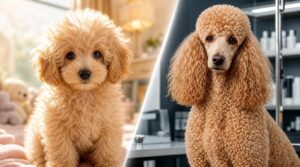
Your poodle’s signature curl pattern develops over time, beginning with a soft, wavy "cloud coat" at birth. This gradually transitions into a denser, coarser adult coat, typically between 3 and 18 months. This Coat Texture Timeline is critical for understanding allergen management.
The maturation process directly impacts allergen control through several mechanisms:
- Dander Capture Evolution increases as the tight curl pattern develops.
- Curl Maturation Stages transform the single-layer coat from low-shedding and wavy to dense.
- Seasonal Coat Shifts can temporarily alter how much dander remains trapped.
How Much Do Poodles Actually Shed?

Shedding is where poodles genuinely stand apart from most other breeds — and the numbers back that up. If you’ve ever wondered why you’re not pulling clumps of fur off your couch after a poodle visits, there’s a real biological reason for that.
Here’s what the data actually shows.
Poodle Shedding Rate on a 1–5 Scale
On a 1–5 shedding scale, poodles land at a solid 2 — low, but not invisible. Their single-layer coat doesn’t "blow out" like a double coat does, so seasonal shedding stays remarkably steady year-round.
Grooming influence matters here: consistent brushing keeps owner’s perception accurate, since trapped hair only appears during sessions.
That’s dander quantification you can actually feel in a cleaner home.
Airborne Can F 1 Levels Compared to High-Shedding Breeds
Here’s a reality check: airborne Can f 1 levels across dog-owning homes vary so widely that breed labels don’t reliably predict what’s floating in your air. Studies show homes with so-called hypoallergenic poodles show no consistent airborne allergen advantage over other breeds.
Breed labels cannot predict the allergens floating in your air — even poodles offer no consistent airborne advantage
Key factors shaping your actual exposure:
- Dust reservoir impact — carpets and rugs store and re-release Can f 1 over time
- Sampling methodology variance — single air samples miss fluctuating allergen patterns
- Environmental factors influence — ventilation, humidity, and room size shift airborne concentration variance dramatically
- Breed airborne parity — fur Can f 1 differences between breeds don’t mirror air measurements
Why Less Shedding Means Less Dander in Your Home
Less visible shedding directly shrinks your Household Allergen Reservoir — the accumulation of skin particles and proteins embedded in carpets, cushions, and bedding. A poodle coat’s curl structure holds loose hair close to the body, cutting Surface Dander Build-up before it spreads.
| Factor | Low-Shedding Poodle Impact |
|---|---|
| Airborne Particle Load | Considerably reduced |
| Indoor Air Quality | Easier to maintain |
| Cleaning Load Reduction | Less frequent deep-cleaning needed |
| Household Allergen Reservoir | Slower accumulation over time |
The Role of Size: Does It Matter?

Regarding poodles, size affects how well their coat controls dander — it isn’t just about how much counter space they steals. The difference between a Standard, Miniature, and Toy comes down to coat density and surface area, and those two things matter more than most people realize.
Here’s what each size brings to the table.
Standard Vs. Miniature Vs. Toy Poodle Coat Density
All three size varieties — Standard, Miniature, and Toy Poodle — share the same tightly curled coat structure, but coat surface area differs meaningfully.
- Standard Poodle: Larger body, more total surface, stronger thermal retention
- Miniature Poodle: Mid-range density metrics, moderate matting likelihood
- Toy Poodle: Smallest coat surface, similar curl tightness
- All sizes: Single-layer poodle coat structure drives comparable allergen dispersion and shedding rates
This structural consistency ensures uniform grooming needs and hypoallergenic properties across all breeds.
Why Standard Poodles Are Considered Most Hypoallergenic
Standard Poodle’s larger surface area works in your favor — its denser single-layer coat has a higher dander retention capacity, physically trapping allergens before they become airborne.
The RSPO2 gene effect reinforces tighter curl density across that broader coat.
That said, owner sensitivity variation is real, and seasonal allergen fluctuations mean no size guarantees a reaction-free home.
Grooming Habits That Reduce Allergen Exposure
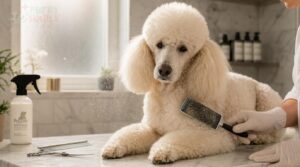
Good grooming isn’t just about keeping your poodle looking sharp — it’s one of the most direct ways to control how many allergens end up floating around your home. The right routine makes a real difference, and it doesn’t have to be complicated.
Here’s what actually works.
How Often to Clip a Poodle’s Coat
Your poodle’s grooming schedule isn’t one-size-fits-all — clip interval planning depends on the style you choose. Most adult coats need a professional clip every six to eight weeks for mat prevention strategies, but detailed clipping styles like the Teddy Bear cut tighten that to four to six weeks.
Adult coat timing matters too. Once that curly coat fully develops, consistency becomes your best friend.
Bathing Frequency and Allergen Reduction by Up to 85%
Bathing your poodle every three to four weeks is the sweet spot for allergen reduction through regular bathing — frequent enough to reset the allergen decay curve, yet gentle enough to protect skin health.
A thorough rinse matters more than most owners realize: the rinse’s thoroughness impacts Can f 1 protein levels significantly, with studies showing up to 85% reduction in dog dander when done consistently.
Drying techniques seal the process — towel-dry promptly to prevent self-grooming rebound.
Brushing Routine to Remove Trapped Hair and Dander
Regular brushing — two to three times weekly — is your frontline dander management tool. Consistency matters more than intensity here.
Follow this simple grooming schedule:
- Brush Material Choice: Use a slicker brush first, then a metal comb — your Dual‑Brush Strategy for lifting trapped debris deep within the hypoallergenic coat.
- Grooming Session Timing: Brush outdoors to contain Post‑Brush Dander Disposal.
- Seasonal Brushing Adjustments: Increase to daily during heavier shedding periods.
Ear Cleaning and Facial Wipes to Minimize Saliva Allergens
Saliva is one of the sneakiest allergen delivery systems — it coats your dog’s face during every lick cycle and dries into airborne particles.
Use gentle ear wipes weekly on the outer canal, and facial wipe timing matters most right after meals. Choose wipes with safe, fragrance-free ingredients, then follow with drying after wipes to prevent skin irritation.
This simple habit meaningfully aids overall allergen control.
Home Management Tips for Allergic Poodle Owners
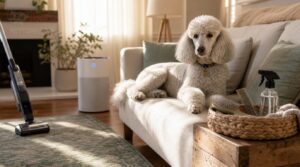
Grooming your poodle goes a long way, but what happens inside your home matters just as much.
A few smart habits can make a real difference in how much dander actually builds up around you. Here’s what to focus on.
HEPA Vacuums and Air Purifiers for Pet Dander
Even with a low-shedding poodle coat, microscopic Can f 1 proteins still settle into carpets and circulate through the air. A true HEPA air purifier — capturing 99.97% of particles at 0.3 microns — is your best defense. Smart choices make all the difference:
- HEPA filters & vacuum cleaning: Weekly HEPA vacuuming pulls settled pet dander from floors before it becomes airborne again
- Room size matching: Pair your purifier’s CADR rating to your actual square footage for real efficiency
- Pre-filter benefits: Pre-filters catch loose hair first, protecting the main filter and extending its lifespan
- Noise level considerations: Run purifiers on lower speeds overnight — quieter, yet still effective
- Multi-unit strategy: Large open spaces need multiple smaller units for even, consistent dander coverage
- Filter replacement schedule: Swap filters every 6–12 months; a clogged filter actively worsens air quality
Consistent maintenance ensures optimal performance. Replace filters as recommended to avoid reduced efficiency and potential air quality degradation.
Washing Dog Bedding to Remove Residual Allergens
Your poodle’s bed is a dander reservoir — Can f 1 proteins accumulate in fabric fibers long after each nap. Wash your poodle’s bedding weekly using a hot water wash with enzyme-based detergent, add an extra rinse cycle to flush loosened proteins, then finish with high-heat drying.
Building a consistent laundry schedule is one of the most effective allergen reduction techniques for managing pet allergen exposure and achieving real dander reduction at home.
Setting Up Pet-Free Zones in Your Home
Your bedroom should be a sanctuary — and that means keeping your poodle out. Designated pet-free zones dramatically reduce your allergen exposure overnight.
Focus on Gate Placement at doorways, not mid-room. Flooring Selection matters too; sealed tile or vinyl won’t trap dander like carpet does.
Implement Airflow Management with a HEPA air purifier, establish a consistent Entry Routine, and use Zone Signage so everyone follows the rules.
Keeping Dogs Off Furniture to Reduce Surface Buildup
Your couch is the next frontier. Even a low-shedding poodle coat deposits dander with every nap — and surface buildup compounds quickly. Washable Cover Solutions create a removable barrier; shake them outside, then launder weekly.
Gate Barriers and Crate Training limit unsupervised access entirely. Furniture Deterrents reinforce boundaries when you’re away.
Scheduled Cleaning — vacuuming the seams and armrests regularly — keeps environmental allergens and pet dander under control long-term.
How Poodles Compare to Other Low-Shedding Breeds

Poodles aren’t the only low-shedding dogs worth knowing about — a few other breeds share similar coat traits that make them easier on allergies. Before you decide, it helps to see how they actually stack up.
Here’s a closer look at the key players and one popular mix that might surprise you.
Bichon Frisé, Portuguese Water Dog, and Schnauzer Coat Traits
Three breeds often stand alongside poodles in the hypoallergenic conversation — and each breed earns that reputation differently.
- Bichon Frisé — Double-coated with a dense woolly undercoat; the curl density variation traps loose hair effectively.
- Portuguese Water Dog — No undercoat; coat thickness patterns and tight cylindrical curls minimize airborne dander.
- Schnauzer — Guard hair hardness depends on undercoat stripping, not shaving.
- Hair follicle distribution differs meaningfully among all three breeds.
- Curl density variation directly influences how much dander escapes into the air.
Why Labradoodles Are Not Consistently Hypoallergenic
Labradoodles muddy the water considerably. Unlike a poodle’s predictable coat structure, a Labradoodle’s coat type diversity means one puppy may have tight wool, while another has loose fleece. These variable shedding patterns translate directly into mixed allergen levels.
Breeding predictability issues make it impossible to guarantee low-shedding results litter to litter, so dust-borne allergen persistence remains a real concern for allergy sufferers.
Frequently Asked Questions (FAQs)
Is F1 or F1B better for allergies?
Think of F1B as a coin weighted toward poodle. A higher genetic proportion of poodle usually results in a curlier coat structure, lower shedding rates, and reduced Can f-1 dispersal.
These traits make F1B the stronger starting point for allergy sufferers.
How to discipline a Poodle?
Skip harsh corrections — poodles respond best to positive reinforcement, redirection techniques, and consistent cues. Reward calm attention, build impulse control early, and you’ll shape a well-mannered companion without ever needing punishment.
Can allergic owners build tolerance to poodle dander?
Some people assume daily exposure builds tolerance, but that’s mostly a desensitization myth.
Without medical immunotherapy and controlled allergen threshold monitoring, your immune response to allergens won’t reliably shift — symptoms often persist or worsen over time.
Do poodle mixes inherit the hypoallergenic coat trait?
Not always. Poodle mixes may inherit the low-shedding coat phenotype — but genetic variability means mixed-breed inheritance is unpredictable. Allergen testing before adoption remains your most reliable safeguard.
How do allergen levels change as poodles age?
As a poodle ages, skin dryness increases, saliva licking frequency rises, and coat thinning patterns emerge — gradually elevating allergen levels through higher dander output and broader surface contact.
Can diet affect a poodles allergen production?
Yes — diet shapes skin health directly. An omega balance or limited-ingredient approach reduces inflammation, lowering dander output.
What your poodle eats quietly determines how much allergen drifts through your home.
Should allergy sufferers get tested before adopting a poodle?
Think of it like test-driving a car before signing the lease. Getting allergy testing — skin prick testing or specific IgE bloodwork — before adopting tells you exactly what you’re working with.
Conclusion
Like a well-fitted filter, the poodle hypoallergenic coat type doesn’t eliminate allergens—it contains them. That distinction matters more than any marketing label ever could.
Your poodle’s KRT71-driven curls trap dander before it reaches the air you breathe, but only consistent grooming and smart home management keep that advantage working.
You’re not hoping for the best; you’re managing a real biological mechanism.
That’s not luck—that’s informed ownership doing exactly what it should.
- https://flpuppiesonline.com/blog/are-poodles-hypoallergenic/
- https://georgiapuppiesfromheaven.com/blog/do-poodles-shed/
- https://nativepet.com/blogs/health/do-poodles-shed?srsltid=AfmBOorWc3hvqYMlAU025pQkNZGM80kUe7F-4-VDidKy6ibyHGsDY7MC
- https://laurelrunpuppies.com/are-toy-poodles-hypoallergenic-key-insights-tips/
- https://www.woodlotcompanions.com/blog/the-periodic-coat-changes-of-the-miniature-poodle/