
This site is supported by our readers. We may earn a commission, at no cost to you, if you purchase through links.

Walk past a Golden Retriever shaking off after a swim, and you’ll notice something impressive—within minutes, the coat looks almost dry. That’s not luck or a good toweling job.
It’s the golden retriever double coat doing exactly what thousands of years of breeding designed it to do. Two distinct layers work together to repel moisture, regulate body temperature, and protect skin from sun, scratches, and cold.
Most owners see the shedding and the grooming bills, but miss the engineering underneath.
Once you understand how this coat actually functions, everything from bathing decisions to that one time someone suggested shaving your dog starts to make a lot more sense.
Table Of Contents
- Key Takeaways
- What is a Golden Retriever Double Coat?
- Why Golden Retrievers Have Double Coats
- Golden Retriever Coat Layers Explained
- Golden Retriever Shedding Cycles
- Grooming a Golden Retriever Double Coat
- Bathing and Coat Maintenance Tips
- Why You Shouldn’t Shave Goldens
- Puppy Coat to Adult Coat
- Frequently Asked Questions (FAQs)
- Do Golden Retrievers have a double coat?
- What is the silent killer in Golden Retrievers?
- Can diet improve a Golden Retrievers coat health?
- Do Golden Retrievers shed more indoors than outdoors?
- Are Golden Retrievers hypoallergenic despite their double coat?
- Do male and female Goldens differ in coat thickness?
- Conclusion
Key Takeaways
- Your Golden’s double coat is a two-layer system — a dense, soft undercoat for warmth and a coarser outer coat that repels water, blocks UV rays, and shields skin from scratches and insects.
- Never shave your Golden Retriever, because removing those layers doesn’t cool your dog down — it strips away the very protection that regulates temperature and guards against sunburn.
- Brushing weekly (and daily during shedding season) prevents mats from collapsing the air pockets that keep the coat working the way it should.
- Bathing every six to eight weeks with a pH-balanced dog shampoo preserves the natural oils your dog’s outer coat depends on to stay water-resistant.
What is a Golden Retriever Double Coat?
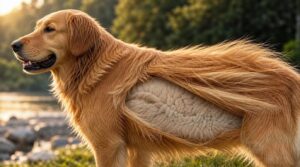
A Golden Retriever’s coat isn’t just one layer — it’s actually two working together, each with a specific job. Understanding that coat is built helps you care for it the right way.
Once you understand how those two layers work together, grooming a Golden Retriever properly becomes a lot less guesswork and a lot more intentional.
Here’s what makes up that double coat and why it matters.
Outer Guard Hairs and Undercoat Explained
Your Golden Retriever’s double coat has two very different layers doing two very different jobs. The outer guard coat features coarser guard hairs with a rougher texture that you’ll feel most on the back and sides.
Beneath that sits the undercoat — dense, soft, and woolly — with fibers that change in density each season.
- Guard hair texture sheds dirt and provides water repellency
- Undercoat fiber density shifts with seasonal fiber variation
- The soft undercoat delivers thermal insulation close to the skin
How The Two Coat Layers Work Together
Those two layers don’t just sit on top of each other — they work as a team. The insulating undercoat traps still air next to your dog’s skin, creating air pocket insulation that buffers against heat and cold. The guard coat sits on top, managing moisture repellent dynamics by slowing how fast water reaches the skin. Together, they create layered heat exchange that keeps your Golden comfortable across seasons.
A Golden Retriever’s two coat layers work as a team, trapping air for warmth while repelling moisture from the skin
| Coat Layer | Primary Role |
|---|---|
| Guard coat | Moisture and dirt resistance |
| Insulating undercoat | Thermal regulation via trapped air |
| Combined guard undercoat interaction | Balanced temperature buffering |
One thing worth knowing: mats disrupt layering by collapsing those air pockets, so a well-brushed double coat always performs better than a neglected one.
Why Golden Retrievers Are True Double-coated Dogs
Not every dog with a fluffy coat is truly double-coated — but your Golden Retriever genuinely is. Genetic double-coat traits produce two distinct, functional layers: a guard coat and a dense undercoat.
These Golden Retriever coat characteristics reflect real climate adaptation benefits shaped through evolutionary coat origins in retrieval work across wet, cold terrain. Comparative breed studies confirm it’s a complete, purpose-built system.
What Breed Standards Say About The Coat
Both the American Kennel Club and the Kennel Club of the United Kingdom have clear expectations for Golden Retriever coat characteristics.
Breed standards for Golden Retriever coats cover several specific areas:
- Color Uniformity — shades of cream to dark gold, without heavy patching
- Density Requirements and Undercoat Thickness — a full, plush feel throughout
- Feathering Length — natural fringe on ears, legs, chest, and tail
Prohibited trimming that alters structure is also flagged.
Why Golden Retrievers Have Double Coats

Golden Retrievers didn’t end up with two layers of fur by accident — there are real, practical reasons behind it. That coat does a lot of quiet work every single day, from keeping your dog warm in January to protecting their skin on a summer hike.
Here’s a closer look at what each function actually means for your dog.
Cold-weather Insulation From The Undercoat
Think of your Golden’s undercoat as a built-in thermal layer — dense, soft hairs packed close to the skin that specialize in Air Pocket Retention. Those tiny trapped air spaces slow heat loss dramatically, giving your dog reliable Body Core Warmth even on bitter days.
This Undercoat Loft Preservation also creates a Wind Barrier Effect, shielding skin from cold gusts, while feathering on the legs acts as a natural Paw Heat Shield.
Water Resistance From The Outer Coat
Your Golden’s water-resistant outer coat works through a smart Moisture Repellent Mechanism: natural Oil Distribution along each guard hair creates a smooth surface that encourages Droplet Shedding rather than soaking in. When Guard Hair Alignment stays consistent through regular brushing, the protective outer layer performs best.
Seasonal Oil Variation can reduce effectiveness, so over-bathing strips what those water-repellent fur and guard hairs depend on most.
Skin Protection From Scratches and Insects
Beyond water resistance, your Golden’s coat acts as a physical shield. The dense layers of scratch blocking fur cushion the skin against thorns, rough brush, and ground debris.
The undercoat also works as an insect barrier, making it harder for fleas and ticks to reach the skin quickly.
Keeping fur tangle-free promotes flea tick safety, reduces hotspot checks, and breaks the irritation loop before skin irritation prevention becomes a daily battle.
Sun Exposure and Natural Coat Coverage
Your Golden’s outer coat does more than repel rain — those guard hairs form a natural Guard UV Barrier between skin and direct sunlight. Shaving removes that protection entirely, increasing sunburn risk considerably.
- Guard hairs block harmful rays across flat, broad areas like the back
- Feathered Area Protection on ears and legs adds natural coverage where sun hits most
- Seasonal Coverage Density shifts during shedding, temporarily thinning that barrier
Practice Sunshade Behavior Tips — limit midday exposure and watch for Heat Stress Monitoring signs like panting or seeking shade, because even a water resistant outer coat won’t prevent heat stress in dogs during peak sun hours.
Removing the coat eliminates its natural thermoregulation protection.
Temperature Regulation in Different Seasons
Your Golden’s double coat works like a self-adjusting thermostat. In winter, the dense undercoat provides winter insulation by trapping warm air close to the skin, countering the wind chill effect on cold days.
In summer, the outer layer moderates heat load, supporting summer cooling through airflow.
During fall, fall heat retention kicks in as the undercoat rebuilds, while spring airflow improves once seasonal shedding clears loose fur.
Golden Retriever Coat Layers Explained
Your Golden’s coat isn’t just one thing—it’s actually two distinct layers, each doing its own job. Understanding what each layer does makes grooming decisions a lot easier. Here’s a closer look at how those layers break down.
The Outer Coat as a Weather Shield

Your Golden’s water-resistant outer coat works like a rain jacket — guard hairs cause rain beading on the surface, while wind diffusion slows heat loss on blustery days. This thermal barrier also provides UV shielding, blocking sunlight before it reaches the skin.
Debris repulsion keeps mud and grit from clinging too long, so your dog stays more comfortable across cold weather and changing conditions.
The Soft Undercoat as Natural Insulation
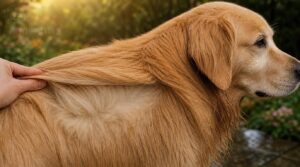
Right beneath those guard hairs sits the soft insulating undercoat — your Golden’s built-in thermal layer. It works through Air Pocket Retention, trapping still air close to the skin for steady warmth. Think of it like insulation in your walls.
Key things to know:
- Loft Preservation matters: matted fur collapses air pockets, reducing coat insulation
- Moisture Drying Effects weaken warmth temporarily after swimming or rain
- It acts as a Temperature Fluctuation Buffer, smoothing sudden weather swings
Flat, Wavy, and Longer Guard Hairs
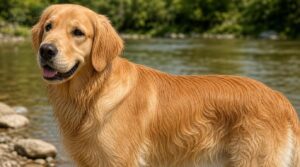
The guard hairs sitting over that soft undercoat aren’t all the same. On Golden’s shoulders, they tend to lie flatter and closer to the body.
Move toward the hips and sides, and you’ll notice a looser, wavy shape — almost an S-curve — giving the outer coat its springiness texture, and natural Guard Hair Shine.
That waviness isn’t just looks; it channels water and dirt away from the skin.
Feathering on Ears, Legs, Chest, and Tail
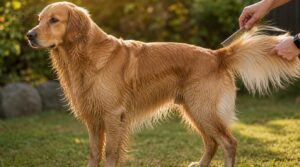
Where the guard hairs meet longer growth zones, feathering forms — those soft, fringed sections on your Golden Retriever’s ears, legs, chest, and tail.
- Ear debris control matters because feathering traps grass seeds near the canal
- Leg burr removal keeps the double coat free from painful snags
- Chest moisture management prevents slow-drying undercoat clumps after swims
- Tail plume styling starts with regular combing at the base
How Dirt and Moisture Shed From The Coat
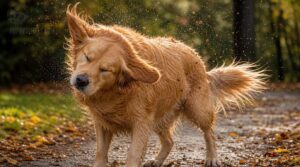
Feathering traps debris, but the coat’s real magic is how it moves that debris back out. Guard Hair Filtration keeps grime near the surface so it loosens during movement.
Undercoat Wicking pulls moisture inward, while Airflow Drying evaporates it outward. Natural Oil Transfer helps dirt release from each shaft, and consistent Brushing Mechanics with a slicker brush or deshedding tool clear what’s left.
Golden Retriever Shedding Cycles
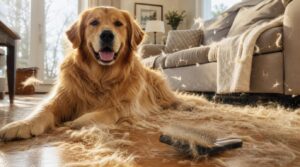
If you’ve ever found golden fur on every surface in your home, you already know shedding is part of the deal with this breed. Golden Retrievers don’t just shed a little here and there—they go through distinct cycles that can catch new owners off guard.
Here’s what those cycles look like and what to expect along the way.
Spring and Fall Blow Coat Periods
Twice a year, your Golden’s double coat goes into full reset mode. Spring shedding usually peaks March through May, driven by temperature shift triggers and daylight length effects signaling the body to ditch the winter undercoat.
Fall’s hair blowout season runs September through November.
Each lasts roughly two to four weeks, and regional climate variations can shift that window earlier or later for your dog.
Why Golden Retrievers Shed Heavily
Your Golden Retriever’s thick undercoat is the main reason seasonal shedding hits so hard. When daylight length shortens or temperatures shift, hormonal triggers tell that dense undercoat to release all at once. Undercoat thickness means there’s simply a lot of hair to lose.
Indoor climate impact from heating and air conditioning can extend this cycle, making regular grooming and consistent shedding maintenance essential year-round.
How Long Seasonal Shedding Usually Lasts
Most owners are surprised by just how long seasonal shedding actually runs. The Peak Shedding Weeks — that intense clump‑dropping phase — usually lasts 2 to 3 weeks.
But the Total Change Duration tells a fuller story:
- Spring shedding starts around March–April
- Fall shedding peaks September–October
- full seasonal coat change spans 4–6 weeks
- Indoor Environment Effect can blur timing
- Daylight Length Influence drives the whole cycle
Signs Your Dog is Blowing Coat
Your dog is practically telling you the seasonal coat change has begun — you just need to know what to look for.
Undercoat clumps pulling out during brushing, dull fur that looks flat or uneven, itchy skin causing extra scratching, hair on furniture in noticeable amounts, and ear matting behind the flap are all classic shedding patterns in Golden Retrievers signaling an active undercoat shedding cycle.
Managing Loose Undercoat Around The Home
Once shedding season hits, a little strategy goes a long way. Focus your vacuum on Targeted Vacuum Zones — your golden’s favorite resting spots and high-traffic paths.
Use an Entryway Mat Strategy to trap loose fur at the door.
Microfiber Surface Wipes grab what vacuums miss, while HEPA Air Management captures airborne dander.
Fabric Hair Barriers, like washable couch covers, make undercoat management genuinely manageable.
Grooming a Golden Retriever Double Coat
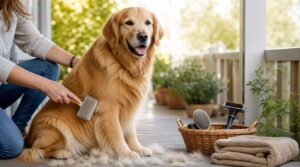
Grooming a Golden Retriever’s double coat doesn’t have to feel overwhelming once you know what you’re working with. The right tools and a simple routine make a real difference in keeping your dog comfortable and your home manageable.
Here’s what a solid grooming approach actually looks like.
Weekly Brushing for Regular Maintenance
A consistent brushing schedule is the backbone of undercoat management for your Golden. Once a week keeps loose hair from binding into mats before you even notice them.
- Aim for 10–20 minutes per session using a slicker brush
- Practice gentle brush pressure down to the skin, not just the surface
- Do quick tangle spot checks behind ears and along the collar
Positive reinforcement during regular grooming makes your double-coated dog genuinely look forward to it.
Daily Brushing During Heavy Shedding
When blow coat season hits, once a week simply won’t cut it. Daily brushing becomes your best defense.
Work through a Sectioned Brush Routine — back, sides, chest, each leg — using Light Pressure Guidance so you’re lifting loose undercoat, not scraping skin. Keep Short Session Timing in mind: a few calm minutes beat one long, stressful session.
| What to Do | When to Do It | Why It Matters |
|---|---|---|
| Section-by-section brushing | Every day during shedding | Catches undercoat before it drops |
| Clear the brush often | Every few strokes | Maintains Brush Cleaning Frequency so hair actually leaves the coat |
| Post-Brush Skin Check | End of each session | Spots redness or hot spots early |
Following these Grooming best practices for Golden Retrievers — especially Managing seasonal shedding in doublecoated dogs with a slicker brush and undercoat rake — keeps your home and your dog comfortable through the heaviest weeks.
Slicker Brushes, Pin Brushes, and Rakes
Each brush in your kit has a specific job. Slicker brushes lift loose undercoat and catch tangles, while a pin brush smooths the topcoat and distributes natural oils. Undercoat rakes, with their wider Rake Tooth Spacing and Pin Length Variations, reach deeper without scratching skin.
For grooming best practices for Golden Retrievers, prioritize Tool Material Choice and Ergonomic Handle Design — your hands will thank you.
Using De-shedding Tools Safely
Once you’ve matched your tools to the job, knowing how to use them matters just as much. For your Golden Retriever’s double coat, always work on a fully dry coat — wet undercoat clings and pulls.
Move undercoat rakes and slicker brushes in the direction of hair growth using light pressure. Check the skin after a few passes, and keep sessions short if your dog seems tense.
Preventing Mats in Feathered Areas
Feathered areas — ears, legs, chest, and tail — are where mats quietly start. Moisture control and drying after walks matter most here, since damp hair plus friction creates knots fast.
Focus on three habits:
- Feathering Detangling before every bath using Gentle Knot Removal — fingers first, then a comb
- Friction Zone Trimming behind elbows and inner legs where rubbing happens
- Daily checks after wet grass or muddy walks
An undercoat rake helps, but patience prevents mats and tangles in double‑coated breeds better than any grooming tool alone.
When Professional Grooming is Helpful
Even with a solid home routine, there are times a professional groomer just makes sense.
During spring blow coat, a groomer’s undercoat rake and line-by-line technique pulls loose fur far more efficiently than most owners can manage alone.
They’ll also handle ear feather trimming, paw pad hygiene, and fur odor control — and flag early skin concerns, heat stress monitoring, or groomer supplement advice worth discussing with your vet.
Bathing and Coat Maintenance Tips
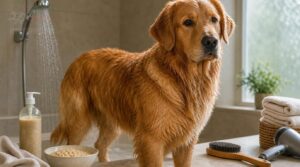
Brushing takes care of the surface, but bathing is what keeps your Golden’s coat and skin truly healthy underneath. Getting the routine right — from how often you bathe to what products you use — makes a bigger difference than most owners realize.
Here’s what you need to know to do it well.
How Often to Bathe a Golden Retriever
Most Goldens do well with a bath every six to eight weeks as a baseline coat maintenance routine. Your Seasonal Bath Schedule can shift, though — active outdoor dogs may need a bath every four to six weeks, while calmer indoor dogs can stretch to eight to twelve weeks.
Activity Level Influence matters here. Bathing Trigger Signs, like visible dirt or odor, should guide you more than the calendar.
If skin issues arise, Vet-Driven Frequency takes over. Preserving Skin Oil Preservation means resisting the urge to bathe my Golden Retriever too often.
Choosing Mild Dog-specific Shampoo
Picking the right dog shampoo makes a real difference for your Golden Retriever’s double coat.
Look for a pH Balanced formula — ideally between 6.5 and 7.5 — and choose Gentle Surfactants like decyl glucoside over harsh detergents.
A Hypoallergenic Formula with oatmeal or aloe works well for sensitive skin.
Always check Coat Compatibility and Safety Verification labels to protect long-term coat health.
Why Human Shampoo Can Irritate Skin
Human shampoo might seem harmless in a pinch, but it can quietly damage your Golden’s coat and skin. Harsh surfactants like SLS strip natural oils, while fragrance allergens trigger redness and itching. pH imbalance disrupts the skin’s protective barrier, and preservative sensitizers cause lingering irritation.
For genuine dog skin health and coat health maintenance tips for Golden Retrievers, always stick with dog shampoo.
Using Conditioner for Tangles and Feathering
A dog conditioner isn’t just a nice extra — it’s a real tool for preventing mats and tangles in double-coated breeds like Goldens. Apply it only to the feathering on ears, legs, chest, and tail, not the whole coat.
- Use slip layer application to soften knots before brushing
- Follow conditioner dilution ratios for feathered areas — stronger there, lighter elsewhere
- Work product into mid-lengths and ends first, where tangles start
- Practice skin safety measures by supporting the coat while detangling near the ear base
- Follow rinse thoroughness tips: rinse until water runs clear to prevent residue buildup
Preserving Natural Oils and Water Resistance
Your Golden’s coat works like a well-oiled raincoat — literally. Natural oils keep the water-resistant outer coat repelling moisture, but over-bathing strips them away.
Use a pH-Balanced Shampoo and the Gentle Rinse Method to protect that balance.
Oil Redistribution Brushing spreads dog coat oil distribution evenly, while Low‑Heat Blower Drying preserves it.
| Habit | Effect on Oils | Water-Beading Technique |
|---|---|---|
| Over-bathing | Strips natural oils | Poor beading after wash |
| pH-Balanced Shampoo | Maintains oil balance | Strong, consistent beading |
| Oil Redistribution Brushing | Spreads oils evenly | Faster water shedding |
Checking Skin During Grooming Sessions
Bath time doubles as a natural Skin Condition Scan. While rinsing and drying, your hands are already moving through the coat — so use them.
- Part the undercoat and run an Undercoat Health Check for damp clumps or flaking that signals dry, irritated skin.
- Press gently around the collar and armpits for Hot Spot Detection — redness hides under feathering.
- Finish with an Ear Paw Inspection and quick Parasite Spot Identification by checking for black specks or swelling.
Catching dog skin allergies and skin issues early keeps dog coat health and dog skin health strong long‑term.
Why You Shouldn’t Shave Goldens
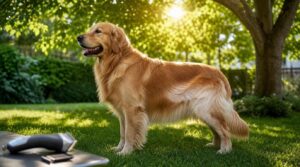
Shaving your Golden might seem like a good idea to help them cool down, but it can actually do more harm than good. Their double coat isn’t just about warmth — it’s a full protective system that keeps their skin safe year-round.
Here’s what you need to know before reaching for the clippers.
How Shaving Affects Coat Insulation
When you shave a double coat, you’re stripping away the very system that keeps your dog comfortable year‑round. Loft reduction means less trapped warm air, which causes heat transfer increase toward the skin in cold drafts.
Wind barrier loss makes every breeze feel sharper.
Moisture retention decrease leaves the coat damp longer.
Regrowth delay can stretch weeks, leaving your dog vulnerable through the next seasonal shift.
Increased Sunburn and Skin Exposure Risks
Shaving also removes dog’s natural sunscreen. Without that guard hair layer, UV peak hours (10 a.m. to 4 p.m.) hit skin directly—especially through feathering gaps where coverage is already uneven.
Repeated exposure causes real damage: sunburn, skin conditions in dogs like dermatitis, and long‑term skin health risks.
Shade management and sun protective gear become necessities, not extras.
Heat Regulation Myths About Double Coats
One myth worth clearing up: a double coat doesn’t act like an air conditioner. The undercoat insulation myth runs deep, but those layers trap air—they don’t create cooling.
Temperature regulation in dogs depends on evaporative cooling, shade importance, and airflow.
Misting effectiveness drops fast in humidity.
Exercise heat risk is real—heatstroke builds quickly when exertion meets heat, and no coat prevents that.
Why Trimming Differs From Shaving
Trimming and shaving aren’t the same thing — not even close.
When you trim your Golden Retriever’s coat, you shorten the outer guard hairs while keeping enough layers intact for insulation retention, water repellency preservation, and skin barrier integrity.
Shaving cuts through both layers, disrupting heat regulation balance and leaving regrowth uniformity uncertain.
It’s one of the most common misconceptions about shaving double-coated dogs.
Safer Alternatives for Summer Coat Care
Instead of reaching for clippers, try a cool water rinse after outdoor play to pull heat from the coat fast. A solid brush rotation plan keeps loose undercoat moving without trauma to the skin.
Non-shave de-matting, light-touch washes with gentle dog shampoo, and sun-safe handling during peak afternoon hours all reduce heat stress in double-coated dogs while keeping their natural protection fully intact.
When to Ask a Vet or Groomer
If your Golden shows persistent itching, ear odor, skin lumps, or severe mats you can’t safely loosen, stop and call your vet or groomer right away. Nail bleeding that won’t stop also needs veterinary attention.
Catching these health issues related to double coats early keeps professional grooming services affordable and avoids bigger veterinary cost considerations down the road — shedding control methods work best on healthy skin.
Puppy Coat to Adult Coat

A Golden Retriever’s coat doesn’t arrive fully formed — it goes through some real changes from puppyhood into adulthood. Knowing what to expect at each stage helps you groom your dog correctly and catch anything unusual early.
Here’s a closer look at how that transformation unfolds.
When Golden Retriever Puppies Develop Undercoat
Your puppy’s soft, airy fluff is actually just the beginning. The undercoat onset age generally falls between 3 and 6 months, when visible undercoat changes start appearing — often at the tail and lower body first.
Watch for these puppy coat development milestones:
- 3–4 months: Coat feels slightly denser
- 4–6 months: Undercoat thickness milestones become noticeable
- 6 months: Fuller, woolier texture replaces early puppy fluff
- 6–12 months: Established undercoat aids double coat function and seasonal shedding
Coat Changes From 4 to 12 Months
Between 4 and 12 months, your puppy’s coat goes through some of its biggest changes. Undercoat density increase happens gradually — the coat shifts from wispy fluff to something thicker and more cushiony.
You’ll notice color deepening as adult guard hairs replace the lighter puppy fur. Feathering starts showing on the tail and ears first.
Supporting this growth with omega-3-rich nutrition — nutritional coat support — helps the skin barrier development stay on track.
Full Coat Development by 12 to 18 Months
By 18 months, your Golden’s coat has largely settled into its adult form.
texture stabilization fills in patchy spots, undercoat fill-in makes the coat feel plush and warm, and texture stabilization means you’ll notice a consistent flat-to-wavy pattern across the body.
Color richness growth evens out too.
coat puffiness boost after brushing?
development stages are a sign the development stages of Golden Retriever coat are complete.
Feathering as The Adult Coat Matures
Once the adult coat settles, feathering starts showing up in a way that feels almost overnight. You’ll notice longer, silkier hair along the ears, chest, tail, and legs — this is seasonal feather growth responding to coat maturity.
Genetic feather patterns vary, so some dogs show heavier feathering than others.
diet rich in omega-3s promotes healthy, full feathering as it develops.
Differences Among American, English, and Canadian Goldens
Where your dog’s feathering lands on the spectrum often comes down to lineage. American Golden Retrievers tend toward lighter coats, leaner Body Build Proportions, and higher energy — meaning a lighter Grooming Load overall.
English Cream Golden Retrievers run stockier and calmer. Canadian Golden Retrievers sit comfortably between both.
Breed Standards from each kennel authority shape these Coat Color Range and Temperament Balance differences, so knowing your dog’s line genuinely helps you plan care.
Straight, Wavy, and Unusual Curly Coat Textures
Coat texture varies more than most people expect. Your Golden Retriever’s guard hairs may lie flat and straight, form soft S-shaped waves, or occasionally show tighter curl density in patches.
Texture Identification matters because wavy or curly sections — especially in Regional Feathering around ears and legs — tangle faster when damp. Moisture Effects after bathing make bends more pronounced, so proper Drying Techniques keep the double coat manageable.
Frequently Asked Questions (FAQs)
Do Golden Retrievers have a double coat?
Golden Retrievers are true double-coated breeds.
They carry two distinct coat layers — a soft, dense undercoat beneath weather-resistant guard hairs — built through genetic markers shaped by centuries of climate adaptation.
What is the silent killer in Golden Retrievers?
Hemangiosarcoma is the silent killer in Golden Retrievers.
This aggressive cancer grows quietly in the spleen or liver, showing almost no silent cancer signs until it ruptures, causing sudden internal bleeding and collapse.
Can diet improve a Golden Retrievers coat health?
Absolutely — what goes into the bowl shows up in the coat.
Omega‑3 fatty acids, biotin, Protein Quality, and Zinc and Biotin work together to support healthy skin and a shinier, fuller coat.
Do Golden Retrievers shed more indoors than outdoors?
Golden Retrievers don’t shed more indoors, but indoor air quality and stable temperatures blur seasonal shedding patterns, making fur feel constant.
Furniture hair accumulation is the real giveaway — your double coat dog is always shedding somewhere.
Are Golden Retrievers hypoallergenic despite their double coat?
No, Golden Retrievers aren’t hypoallergenic. Their double coat still spreads dander and allergen protein levels throughout your home, making the hypoallergenic myth a risky assumption for allergy-sensitive families.
Do male and female Goldens differ in coat thickness?
Male Goldens tend to develop a thicker mane and heavier double coat due to sexual dimorphism. Females often carry a lighter, more refined coat.
Individual genetics and season matter just as much as sex.
Conclusion
Think of your Golden’s golden retriever double coat as a finely tuned system—not a grooming inconvenience. Every layer has a job: protecting skin, managing heat, and shedding water before it ever reaches the body.
When you brush regularly, skip the shave, and bathe thoughtfully, you’re supporting a biological design that’s refined over generations. Understanding what that coat actually does changes how you care for it—and why getting it right matters so much.