This site is supported by our readers. We may earn a commission, at no cost to you, if you purchase through links.

Some dogs shed. Others seem to molt like a small, enthusiastic snake doing it weekly.
If you’ve ever worn black pants near a Husky or found fur in your coffee, you already know which category you’re dealing with.
Year-round shedding dog breeds don’t take breaks—they’re consistent, committed, and genuinely impressive in their output.
The culprit is usually a double coat: a dense undercoat doing the insulation work beneath a protective outer layer, both cycling through constantly. Twice a year, that undercoat releases all at once in what owners lovingly call a "blowout."
Knowing which breeds shed heaviest—and how to stay ahead of it—makes the difference between managing your home and losing it to fur.
Table Of Contents
Key Takeaways
- Double-coated breeds like Huskies, Malamutes, and German Shepherds shed year-round because their dense undercoats cycle continuously, with two intense blowouts each spring and fall.
- The right tools — an undercoat rake, slicker brush, and deshedding tool — can cut shedding by up to 90%, making consistency more powerful than occasional deep cleans.
- Low-shedding breeds like Poodles and Bichons trap loose hair in their curls, but no dog is truly allergen-free — dander management still matters regardless of coat type.
- Diet, stress levels, and indoor climate all quietly influence how much your dog sheds, so coat health is a whole-body issue, not just a grooming one.
Heavy Shedding Breeds That Shed Year-Round

Some dogs don’t just shed — they make it a lifestyle. If you share your home with one of these breeds, you already know what it means to find fur in your coffee.
Understanding why double-coated breeds shed so heavily can actually make the endless vacuuming feel a little less personal.
Here are the heavy shedders that keep your lint roller working overtime, year-round.
Siberian Husky Shedding Patterns
If you own a Siberian Husky, year-round shedding isn’t a surprise — it’s a lifestyle.
This double-coated breed sheds its undercoat continuously, not just during seasonal blowouts.
Climate adaptation plays a real role too: indoor warmth and home environment effects can push shedding into overdrive.
Expect two heavy waves annually, plus steady daily fur on everything you own.
During seasonal blowout periods, the dense undercoat is shed more heavily.
Alaskan Malamute Coat Loss
The Alaskan Malamute takes year-round shedding to another level. That dense double coat — built for Arctic survival — drops its undercoat constantly, with two heavy blowouts each spring and fall lasting several weeks.
Watch for coat funk symptoms like patchy fur loss near the collar, which can signal skin infections, allergy triggers, or nutrient deficiencies worth flagging for veterinary diagnosis. Consistent shedding management keeps it under control.
German Shepherd Year-round Shedding
German Shepherds practically invented year-round shedding. That double coat — dense undercoat plus a coarser guard layer — drops hair every single day, with heavier blowouts each spring and fall.
Stress-driven shedding, allergy-related shedding, and nutrient deficiencies can all push hair loss beyond normal levels. regular skin condition monitoring and veterinary hormone checks help catch what’s behind unusual increases before they spiral.
Labrador Retriever Shedding Cycle
Labrador Retrievers run a similar playbook but with their own twist. That double coat cycles through two major blowouts — spring and fall — while year-round shedding keeps things consistently furry in between.
Coat renewal happens whether you’re ready or not.
Regular dog grooming, a home vacuum on standby, and managing stress factors like diet and air quality all help keep the shedding cycle from taking over your home.
Bernese Mountain Dog Fur Loss
Bernese Mountain Dogs bring that gorgeous tri-color coat — and year-round shedding comes with the package. Their double coat drops fur constantly, with major blowouts each spring and fall.
Watch for these red flags beyond normal heavy shedding:
- Bald patches may signal flea infestation or allergic dermatitis.
- Dull coat or flaky skin can point to thyroid screening needs.
- Recurring skin issues warrant nutritional assessment and veterinary skin infection management.
Dog grooming stays non-negotiable with this breed.
Samoyed and Great Pyrenees Shedding
Both the Samoyed and Great Pyrenees carry thick double coats that shed year‑round — with intense spring and fall blowouts that leave fur absolutely everywhere. White Fur Visibility is a real issue here; their pale coats show up on everything dark.
Expect up to two pounds of hair weekly during peak periods.
Home Air Filtration, Nutritional Support, and a consistent grooming routine are your best tools for Allergy Management Tips and keeping your sanity intact.
Why These Breeds Shed So Much
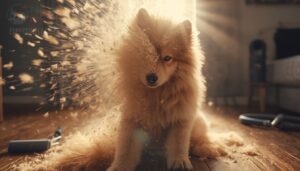
It’s not random — these breeds shed a lot because of how they’re built. Their coats are designed for survival, not your vacuum cleaner.
Here’s what’s actually going on under all that fur.
Double Coat Structure Explained
Think of your dog’s double coat like a two-layer jacket. The outer guard coat functions to block moisture, UV rays, and debris. Underneath, undercoat insulation traps warm air close to the skin — and allows layer ventilation mechanics that actually help cooling in summer.
A dog’s double coat works like a two-layer jacket — blocking the elements outside while trapping warmth within
Here’s what drives all that shedding:
- Hair growth cycle — undercoat hairs cycle faster than guard hairs
- Thermal regulation — the coat sheds to match seasonal temperatures
- Undercoat density — more fibers mean more year‑round shedding
- Seasonal coat blowout — triggered when daylight and temperature shifts
Undercoat Vs Topcoat Shedding
Not all shed hair is created equal. Your dog’s double coat loses undercoat and topcoat differently — and knowing the difference matters.
Soft, fluffy clouds of hair signal undercoat shedding, while fewer, coarser strands mean topcoat turnover.
Layer identification techniques are simple: run your fingers deep. That dense, fine layer near the skin drives most year-round shedding. Layer grooming strategies that target both keep things manageable.
Why Short-haired Dogs Still Shed
Short hair doesn’t mean light shedding — that’s a myth worth busting. A Labrador’s smooth coat still hides a dense undercoat, and Undercoat Presence is what drives year-round shedding regardless of fur length.
Genetic Coat Traits determine how the Hair Follicle Cycle runs, and Seasonal Light Shifts keep that cycle turning. Even Indoor Climate Effects can nudge shedding patterns in single-coated breeds unexpectedly.
Coat Density and Hair Clumps
Fur density is the hidden engine behind those frustrating hair clumps. Breeds with high Follicle Density Impact pack more hairs per square inch — especially around the neck and torso, where Regional Density Variation is greatest.
During year-round shedding, Undercoat Clump Formation kicks in fast: loose hairs tangle with guard hairs, then Oil Accumulation Role and Static Charge Effects keep them stuck together.
Better shedding control starts with understanding your double coat.
Temperature Changes and Coat Turnover
Temperature is basically your dog’s coat reset button. Seasonal Temperature Shifts and Thermal Trigger Timing tell the double coat when to drop old insulation and grow new layers — it’s temperature regulation through shedding in action.
Indoor Climate Impact matters too:
- Stable indoor heat spreads shedding year-round
- Humidity Influence dries skin, loosening more hair
- Heat Stress Shedding spikes during sudden warm snaps
Seasonal Blowouts in Double-Coated Dogs

Year-round shedding is one thing, but seasonal blowouts are a whole different level. Twice a year, your double-coated dog basically replaces its entire undercoat — and your vacuum will know about it.
Here’s what happens during those peak shedding periods and how to tell when one is coming.
Spring Shedding Surges
Spring shedding isn’t random — it’s a biology lesson happening on your floor.
The real trigger is a Daylight Hormone Trigger: longer days cause a Melatonin Level Shift that signals your dog’s double coat to begin Undercoat Release Timing.
Seasonal shedding can start weeks before warm weather arrives. Indoor Light Influence can blur the timeline slightly, and you may notice a Seasonal Itchiness Spike as loose fur works free.
Fall Undercoat Release
Fall works same way as spring — just in reverse.
Shorter days trigger a Melatonin Light Cue that tells your dog’s undercoat to release old insulation and prep for winter growth.
Combine that with an Indoor Humidity Shift from running the heat, and you’ve got the perfect blowout setup.
Expect a Post-Walk Fur Surge, clumps everywhere, and your undercoat rake earning its keep.
Continuous Shedding Between Blowouts
Blowouts get the headlines, but daily hair loss never really stops. Between those big shedding events, your double-coated dog is quietly releasing undercoat all the time — micro seasonal shedding driven by indoor humidity shifts, stress triggered shedding from routine changes, and grooming cycle influence from inconsistent brushing.
Here’s what that looks like day-to-day:
- Loose hairs collect on shoulders and hips from collar friction
- Dry indoor air loosens coat fibers between walks
- Skipped brushing sessions cause sudden fur dumps later
- Temperature swings trigger repeated small coat releases
- Stress quietly accelerates year-round shedding cycles
Signs Your Dog is Blowing Coat
When your dog starts blowing coat, the clues come fast. Loose hair spikes overnight — suddenly your couch looks like a fur factory.
You’ll notice dull fur texture, clumpy undercoat hanging in patches, and a coat that looks uneven or disheveled. Some dogs show excessive scratching from irritation.
A patchy coat without bare skin is normal during seasonal coat shedding in double-coated dogs.
Breeds With The Heaviest Blowouts
Some heavy shedding dog breeds hit harder than others when blowout season arrives. Genetic coat traits, coat density, and even geographic climate impact how intense the shed wave gets.
The biggest offenders:
- Siberian Husky — releases thick undercoat clumps twice yearly
- Alaskan Malamute — dense double coat drops heavily in spring and fall
- German Shepherd — hormonal influences can trigger blowouts up to four times annually
Solid grooming tips for heavy shedders make all the difference.
Grooming Tools and Shed Control
The right tools make a real difference when you’re living with a heavy shedder. Not every brush works for every coat, and using the wrong one is basically just moving fur around.
Here’s what actually helps keep the shedding under control.
Brushing Frequency for Heavy Shedders
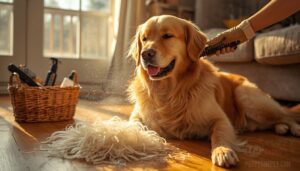
With year-round shedding dog breeds, brushing frequency isn’t set-it-and-forget-it. A Daily Brush Routine is your baseline — most heavy shedding dog breeds need brushing every day or every other day.
When Seasonal Brush Adjustments kick in during blowouts, go daily without question.
Do regular Coat Health Checks; clumped or puffy fur means you’re falling behind.
Smart Owner Time Management means short, consistent sessions beat long, occasional ones every time.
Undercoat Rakes for Dense Coats
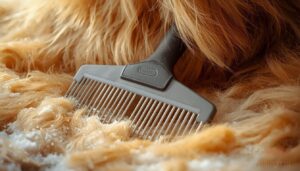
An undercoat rake is the unsung hero of grooming tips for double-coated dogs. Unlike a regular brush, its long stainless steel teeth — generally 12 to 20mm — reach deep into dense coats to pull out trapped undercoat during seasonal coat shedding in double-coated dogs.
Look for these key features:
- Pin Density that maximizes surface contact per stroke
- Ergonomic Grips with rubberized grip for fatigue‑free sessions
- Skin Protection through rounded tips that glide safely
Clean your deshedding tool after every use — tool maintenance keeps it sharp.
Slicker Brushes for Surface Fur
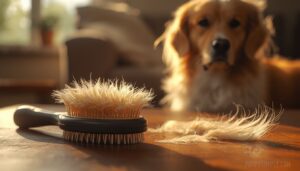
Think of a slicker brush as your first line of defense against year-round shedding. Its Pin Angle Design — generally around 135 degrees — lets the fine wire pins glide through topcoat fur without snagging. Cushion Flexibility helps the head follow your dog’s body curves naturally.
Use a light touch for Skin Safety, and stick to an Ergonomic Grip handle to keep your wrist comfortable.
A quick Cleaning Routine after each session keeps it working like new.
Deshedding Tools for Double Coats
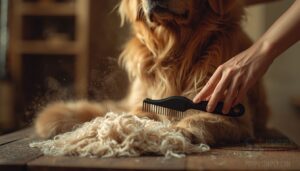
If a slicker brush manages surface fur, a deshedding tool goes deeper — way deeper.
Tools like the Furminator use Blade Angle Technology to reach through a double coat and pull out loose undercoat before it hits your couch.
Look for Stainless Steel Teeth, a Self-Cleaning Design, and Ergonomic Handles.
A Double-Row Rake or undercoat rake works well, too.
Regular use cuts shedding by up to 90%.
Bathing and Blow-drying Routines

Bathing works best every four to eight weeks using a lukewarm rinse and pH-balanced shampoo. Skip hot water — it dries the skin quickly.
After the bath, use the towel blotting technique instead of rubbing, then apply heat protectant application before the high-velocity dryer. Try sectioning for blowout results, working from underneath up.
Finish with a cool air finish to set everything smoothly.
Home Grooming Vs Professional Grooming
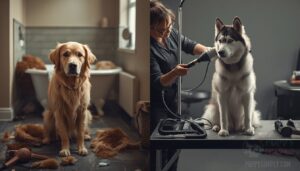
Once your blow-dry routine wraps up, the real question hits: can you handle all of this yourself? Home grooming vs professional grooming comes down to technique.
Groomers use the Coat Lift Technique and pressure consistency to pull dead undercoat from the root — not just the surface. They also nail moisture removal, plus Ear Health Checks and Nail Safety that most owners overlook.
- Missed undercoat means more fur on your couch tomorrow
- Damp coats left after home drying can cause skin irritation
- Early ear trouble spotted by a groomer can save your dog real discomfort
A monthly professional visit alongside your home grooming routine — using the right brush types for dogs and a good deshedding tool — keeps grooming frequency manageable year‑round.
Lower-Shedding Breeds to Consider

Not every dog owner wants to live under a cloud of fur. If you’re drawn to dogs but dreading the cleanup, there are breeds built for exactly that situation.
Here are some lower-shedding options worth a serious look.
Standard Poodle as a Low Shedder
If you’re tired of vacuuming daily, the Standard Poodle is worth a serious look. Its Curly Coat Advantage is real — that dense, single-layer curl traps loose hair instead of releasing it everywhere. Among low-shedding dog breeds, few match this level of year-round shedding control.
| Feature | Detail | Benefit |
|---|---|---|
| Coat Type | Single curly layer | Minimal loose hair |
| Allergy Friendly | Low dander release | Better for sensitive owners |
| Grooming Need | Regular Clip Sessions every 6–8 weeks | Coat stays manageable |
Keep up with dog grooming and brush frequency for shedding control — every 2–3 days works well. A Protein-rich Diet and Skin Moisture Management round out the routine nicely.
Bichon Frise Coat Benefits
The Bichon Frise takes low‑shedding dog alternatives a step further with its Velvety Softness and signature Fluffy Aesthetic. As a hypoallergenic dog, its Continuous Curl Growth traps loose hairs before they hit your couch.
Here’s what makes dog coat maintenance easier with this breed:
- Allergy‑Friendly Fur reduces airborne particles
- Curls trap loose hair internally
- Thermal Insulation stays comfortable year‑round
- Minimal seasonal blowouts
- Regular brushing distributes natural oils beautifully
Maltese Grooming Needs
The Maltese is one of the best low-shedding dog breed options out there — but don’t let that fool you into thinking it’s maintenance-free.
Daily brushing with a detangling spray prevents mats, while facial wipes handle tear stain management around the eyes.
Add mouth hygiene and nail trimming every few weeks, and you’ve got a solid dog grooming frequency routine for this hypoallergenic breed.
Portuguese Water Dog Shedding Levels
The Portuguese Water Dog barely registers on the shedding scale. Instead of a double coat that drops fur in waves, this breed has a single-layer coat with continuous growth — more like human hair than typical dog fur.
That means no dramatic blowouts. Skin health and a consistent grooming schedule still matter, since nutrient influence and coat texture affect how much loose hair you’ll actually find on your couch.
Shih Tzu for Allergy-sensitive Homes
The Shih Tzu is a solid pick for allergy-sensitive homes. Its hair-like coat does an impressive job of dander trapping — keeping loose particles clinging to the coat rather than floating through your air.
That’s not the same as hypoallergenic, though.
Allergy-friendly grooming, regular brushing, HEPA vacuuming, smart fabric selection, and room zoning all still matter to keep dog dander genuinely manageable.
Choosing Between Shedding and Dander
Shedding and dander aren’t the same problem — and mixing them up leads to the wrong dog choice. Less fur around the house doesn’t automatically mean fewer allergy symptoms.
Here’s what actually matters for allergen exposure assessment:
- Dander reduction strategies start with grooming, air purifier selection, and a protein-rich diet supporting skin health monitoring.
- All dogs produce dander — even hypoallergenic dog breeds.
- Year-round shedding accelerates how fast dog dander spreads, but low-shedding or hypoallergenic dog breeds still require consistent allergy management.
Frequently Asked Questions (FAQs)
Can diet reduce year-round shedding in dogs?
Diet won’t stop year-round shedding, but it helps.
Omega-3 supplementation, high-quality protein, balanced omega-6, Vitamin E antioxidant support, and adequate hydration all improve coat health — just don’t expect miracles from dog nutrition alone.
Do shedding dogs worsen indoor allergy symptoms?
Yes — shed hair carries dander and allergen proteins like Can f 1 deep into carpet reservoirs and upholstery. Year-round shedding raises airborne particles, strains indoor air quality, and worsens symptoms.
HEPA filtration and good ventilation impact exposure substantially.
How do air purifiers help manage dog fur?
A HEPA air purifier traps dog dander and fur fragments with 97% efficiency. Place it near your dog’s bed for best results.
Replace filters every 6–12 months to maintain clean indoor air quality.
Does stress or anxiety increase dog shedding?
Absolutely — stress and anxiety can trigger extra shedding.
When your dog feels anxious, stress hormones loosen hair follicles faster than normal, so fur appears in clumps well outside the usual seasonal cycle.
At what age do dogs shed most heavily?
Shedding peaks at three key stages: the puppy coat change around 4–6 months, adult hormonal shedding shifts, and senior hair loss as coats weaken with age.
Conclusion
No grooming routine eliminates shedding from year round shedding dog breeds—but that was never really the goal. The goal is staying ahead of it.
A consistent brush schedule, the right tools, and a realistic expectation of what double-coated dogs do naturally will keep fur from taking over your home.
You chose a dog, not a low-maintenance houseplant. With the right approach, the fur becomes manageable background noise rather than the loudest thing in the room.
- https://www.usatoday.com/story/life/animalkind/2023/12/14/best-dog-breed-survey/71921009007/
- https://www.forbes.com/advisor/pet-insurance/favorite-dog-breeds-by-state/
- https://www.akc.org/dog-breeds/old-english-sheepdog/
- https://commons.wikimedia.org/wiki/File:German_Shepherd_Dog_with_disc.jpg
- https://blog.tryfi.com/do-alaskan-malamutes-shed/