This site is supported by our readers. We may earn a commission, at no cost to you, if you purchase through links.
Most dogs don’t fear nail trimming—they fear losing control. The moment you reach for a paw, something shifts: the body stiffens, the head swings around, and what started as routine grooming turns into a wrestling match. That reaction isn’t stubbornness. It’s a dog communicating that the handling feels unpredictable or threatening.
The best way to restrain a dog for nail clipping isn’t about overpowering them—it’s about creating conditions where they don’t feel the need to resist. Matching your hold to the dog’s size, temperament, and stress level makes a measurable difference in how the session unfolds. From lap positioning for small breeds to two-person stabilization for larger, reactive dogs, the right technique keeps both of you safer.
Table Of Contents
- Key Takeaways
- Choose The Right Restraint Method
- Prepare Your Dog Before Clipping
- Set Up a Safe Trimming Space
- Use Hands-on Restraint Safely
- Restrain Small Dogs on Your Lap
- Secure Larger Dogs With Help
- Calm Anxious Dogs During Trims
- Clip Nails Without Hitting The Quick
- Handle Bleeding and Trimming Mistakes
- Know When to Stop or Outsource
- Frequently Asked Questions (FAQs)
- Conclusion
Key Takeaways
- matching your hold isn’t about overpowering your dog—it’s about matching your hold to their size, temperament, and stress level so they don’t feel the need to resist in the first place.
- daily paw handling, letting your dog sniff the tools, and burning off energy before a session all reduce resistance before clippers ever come out.
- Reading stress signals—panting, whale eye, lip licking, freezing—and stopping before they escalate protects your dog’s trust far more than pushing through to finish every nail.
- professional grooming or veterinary-supervised sedation isn’t a last resort—it’s the responsible choice for your dog’s safety and yours.
Choose The Right Restraint Method

Not every dog sits still for a nail trim, and that’s exactly why choosing the right restraint method matters before you ever pick up the clippers. The approach that works for a calm ten-pound terrier won’t hold up with a nervous seventy-pound Lab.
For anxious dogs especially, switching to a nail grinder designed for nervous dogs can make the whole process far less stressful than clippers ever could.
Here are the main methods to know, along with how to match each one to your dog’s size and temperament.
Compare Hands-on, Lap, Towel, and Helper Restraint
Each restraint method brings different strengths depending on your situation. Hands-on hold uses basic holding techniques to support the body and steady the paw without fabric. Lap restraint works well for small breeds, keeping hips and chest from twisting. Towel wrap restraint limits biting and movement simultaneously. Partner assistance splits roles cleanly—one stabilizes, one clips.
Matching method speed to your dog’s stress indicators shapes your training progression.
Match The Method to Dog Size and Temperament
Size-Based Holds matter more than most owners expect. A small dog sits comfortably across your lap, where light body leverage techniques keep movement minimal without overpowering.
Larger dogs need broader physical restraint—side-lying postures distribute pressure evenly.
Temperament-Driven Restraint means reading your dog’s energy level and fear sensitivity before choosing your approach. A calm dog tolerates more; a fearful one needs slower, gentler handling backed by positive reinforcement.
Incorporating early socialization with diverse people can reduce anxiety and improve temperament during restraint.
Decide When a Muzzle or Head Collar is Needed
Beyond size and temperament, bite risk assessment determines whether you need a muzzle or head collar before clippers ever touch a nail.
- Muzzle: use when bite history or behavioral triggers, like growling or snapping, make handler safety the priority.
- Head collar/halter: use for head movement control when the dog resists without aggression.
- Fit comfort checks: confirm the muzzle allows panting and treat acceptance; make sure the halter’s nose strap doesn’t pinch.
Training acceptance matters — introduce both tools gradually before trimming day.
Avoid Restraint That Increases Fear or Pain
Even the best muzzle fit won’t protect your dog if your hold hurts. Gentle pressure limits and stable toe positioning matter as much as the tool itself.
Avoid choking or pinching — tight grips on skin folds trigger panic fast. Prevent sudden lockups when your dog shifts; pause instead of forcing compliance.
Minimize restraint time, lean on positive reinforcement, and let desensitization do the heavy lifting.
Prepare Your Dog Before Clipping

Nail clipping goes a lot smoother when your dog isn’t already wound up before you even pick up the clippers. The work you do in the days and minutes leading up to a trim shapes how your dog responds once it’s time.
Here’s where to start.
Exercise Your Dog First to Reduce Restlessness
A pre-clip walk does more than tire your dog out — it resets their nervous system. Focused sniffing during the outing adds mental work that helps dog anxiety management better than speed alone.
Follow up with a short play session or puzzle feeder, then allow a calm-down period indoors.
A settled dog responds far better to positive reinforcement and calming treats once the clippers come out.
Handle Paws Daily Before Trimming Day
Daily paw handling is the foundation of successful desensitization and counterconditioning — and it works best when it’s routine, not reactive. A consistent Treat Pairing Routine during Gentle Hold Practice teaches your dog that toe-level contact predicts good things.
Incorporate Daily Paw Inspection to check for debris or dryness. Through gradual exposure and positive reinforcement, Paw Touch Desensitization becomes second nature before trimming day arrives.
Let Your Dog Sniff Clippers and Grinder
Before any sound or contact enters the picture, let your dog investigate the tools on their own terms. Place the nail clippers and nail grinder on the floor, turned off, and allow a brief Tool Sniffing Session — this Quiet Tool Introduction promotes desensitization and counterconditioning through Gradual Aroma Exposure.
Positive Scent Pairing through gradual exposure builds a calm, safe association before trimming begins.
Reward Calm Paw Handling With High-value Treats
The reward you give means nothing if the timing is off. The moment your dog holds still during paw handling, deliver a small, soft treat immediately — that’s Immediate Treat Timing working for you.
- Use Bite‑Sized Rewards for quick delivery without breaking position
- Choose Low‑Calorie Treats to reward frequently without overfeeding
- Rotate Flavor Profiles to sustain motivation across sessions
- Match your Treat Delivery Method to your dog’s arousal level
positive reinforcement during dog paw handling accelerates desensitization and counterconditioning, reinforcing a calm demeanor with high‑value treats.
Set Up a Safe Trimming Space

Where you trim matters just as much as how you trim. A well-prepared space keeps your dog calmer, gives you better control, and reduces the chance of a startled jump mid-cut.
Here’s what to set up before you even pick up the clippers.
Use a Quiet, Low-distraction Room
The room you choose matters more than most people think.
Dim lighting reduces glare on clippers and lowers startle responses, while a consistent layout and stable temperature keep your dog oriented and calm.
Close the door, clear the clutter-free zone of toys and distractions, and run calming music as an ambient soundscape.
Pair that environment with high-value treats and a calm demeanor, and you’ve already done half the work.
Add a Non-slip Mat or Grooming Table
nonslip mat turns any flat surface into reliable dog restraint equipment. Rubber and EVA options offer the best traction benefits, preventing sliding that spooks nervous dogs mid‑clip.
For size fit, a 24-by-36‑inch mat covers most grooming table setups, with a slight edge overhang to prevent curling.
Material choice also affects cleaning maintenance — wipe‑clean surfaces save time.
That support and stabilization keep your dog comfortable and still.
Keep Treats, Clippers, and Styptic Powder Nearby
Once your mat is in place, think of your supply station placement as a second layer of preparation. Arrange nail clippers, treats, and styptic powder within one-handed access before you ever bring your dog in.
A solid tool organization layout keeps treat-clipper proximity tight, your first-aid readiness immediate, and your positive reinforcement consistent — because fumbling mid-session breaks the dog’s trust faster than anything.
Use Soft Music or a Diffuser to Ease Stress
Soft background sound does more than fill silence — it softens how sharply clipper noise registers. Set your volume low enough that music stays in the background, not competing with you. A consistent playlist with no sudden vocals or instrument changes helps your dog predict what’s coming.
- Start music and pheromone diffusers during setup, before touching the dog
- Use playlist order for reliable timing and scheduling
- Place diffuser several feet away for safe diffuser placement
- Choose only pet-safe essential oils verified for dogs
- Keep volume control low — masking sound, not adding stimulation
Use Hands-on Restraint Safely
Hands-on restraint works best when your touch is steady, not forceful. How you hold your dog’s body — and where — directly affects how the session goes.
Keep these four principles in mind before you pick up the clippers.
Support The Body Without Squeezing The Paw

Your forearm does the heavy lifting here. Using a Shoulder Strap Hold, slide your forearm beneath the dog’s chest, letting Ribcage Alignment happen naturally — no squeezing, no compression. Even Pressure Distribution across the torso keeps your dog feeling supported rather than trapped. Think of it as cradling, not controlling.
| What to Do | Why It Matters |
|---|---|
| Support chest from below | Prevents panic from compression |
| Keep Neutral Leg Position | Reduces joint resistance |
| Distribute pressure evenly | Avoids pain signals that trigger aggression |
| Release grip if dog stiffens | Resets trust before continuing |
Gentle restraint like this makes paw handling feel predictable — and predictability is everything.
Hold The Toe Steady for Better Control
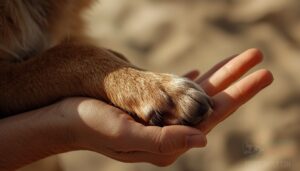
Once the body is settled, your hands shift to precision work. Use the Finger Grip Technique to grip each individual toe between your thumb and forefinger — firm enough for secure and stable restraint, loose enough to avoid triggering resistance.
Wrist Stabilization Method keeps your cutting hand anchored, while Toe Angle Consistency and a clear Visual Alignment Cue help Pressure-Free Holding feel natural throughout steady paw handling.
Keep The Dog Facing Away From The Clipper Hand

Orienting your dog away from the clipper hand creates a Visual Safety Zone that cuts down on startle responses before they start.
This Safer Leg Orientation — combined with Predictable Restraint Placement — keeps the Tool Path Timing controlled and the dog’s attention forward.
Whether you’re using a grooming table or your floor, Reduced Startle Footing and support and stabilization work together for secure and stable restraint.
Stop if The Dog Starts Struggling

When struggling begins, treat it as your Safety Stop Criteria — not a challenge to push through.
Growling, snapping, or sudden paw jerking are clear dog stress signals demanding an Immediate Pause.
Signal Detection matters here: tightening your grip or forcing through resistance only escalates fear.
Stop, do a quick Restraint Review, and apply Post-Stop Evaluation before attempting again.
Brief restraint and positive reinforcement always outperform physical force.
Restrain Small Dogs on Your Lap

Small dogs are actually easier to manage than most people expect — your lap does most of the work for you.
The key is getting your positioning right from the start so neither you nor your dog ends up uncomfortable mid-trim.
Here’s how to set yourself up properly before the clippers even come out.
Position The Dog Sideways Across Your Lap
Start with the sideways lap position — it’s the foundation of safe small-dog nail trimming. Settle your dog horizontally across your thighs with the spine parallel to your body.
- Sideways Lap Position keeps the dog’s weight fully supported
- Body Alignment Tips: spine parallel, not angled or curled
- Head Orientation Guidance: face pointing away from your clipper hand
- Paw Exposure Strategy: extend only the working paw beyond your knee
- Leg Support Technique: keep the leg low to avoid joint strain
Support Hips and Chest to Prevent Twisting
Once your dog is sideways across your lap, Hip Alignment and Chest Support become your control system. Keep the hips in line with the chest — a neutral spine means less wiggle, less torque. If the hips rotate away, pause and perform a Twist Reset before continuing. Torque-Free Grip keeps the trim safe and calm.
| Control Point | What to Do |
|---|---|
| Hip Alignment | Keep hips level with chest |
| Chest Support | Hold firmly, not forcefully |
| Neutral Spine | Avoid curved "C" positioning |
| Torque-Free Grip | Lift paw without rotating body |
| Twist Reset | Stop, realign, then continue |
Expose Only The Paw You Are Trimming
One paw at a time — that’s the rule that keeps everything under control. Single Paw Isolation means you expose only the nail you’re actively trimming, leaving the rest undisturbed. Sequential Paw Handling reduces startle reactions and facilitates dog paw desensitization over time.
- Rotate only the target paw into view using the Paw Rotation Technique
- Keep other paws resting naturally to minimize paw disturbance
- Use Focused Paw Exposure — clipper out only when that nail is ready
- Apply support and stabilization to the exposed toe, not the whole leg
- Finish completely before moving to the next paw
Keep Your Grip Firm but Gentle
Your grip is the difference between a dog that cooperates and one that panics. Even Pressure across your whole hand — not fingertip pinching — keeps the paw aligned without triggering a flinch response.
Proper Hand Positioning, Thumb Alignment, and Release Timing all work together for safe restraint techniques during dog nail trimming.
| Grip Element | What To Do |
|---|---|
| Finger Placement | Wrap limb, avoid pressing toe |
| Thumb Alignment | Keep clear of the blade path |
| Even Pressure | Use palm, not fingertips |
| Release Timing | Ease grip when dog relaxes |
Secure Larger Dogs With Help

Larger dogs need more than one set of hands to get through a nail trim safely. The good news is that with a clear division of roles, the whole process becomes much more manageable for everyone involved—including your dog.
Here’s how to make it work.
Assign One Person to Hold The Body and One to Clip
When two people work together, role assignment makes everything safer and more controlled.
Have one person focus entirely on body support strategy — keeping the dog’s torso and hips steady — while the other manages clip timing and hand positioning.
Use brief communication cues, like a nod or quiet "ready," before each cut.
This clear division of labor is one of the most effective safe restraint techniques for dog nail trimming.
Stabilize The Legs Before Each Nail Cut
Once roles are set, joint stabilization becomes your next priority. Have your helper use a counterbalance hold just above the knee or hock — this anchor point placement prevents the limb from bouncing mid-cut.
Apply controlled pressure to limit dog movement restriction without forcing the leg flat. Support and stabilization should feel steady, not rigid, so each nail on those dog paws gets a clean, accurate trim.
Use a Side-lying Position When Needed
Side-lying works especially well when a dog won’t stay still during leg stabilization. Lower your larger dog gently onto their side, using your knees as a Non-slip Knee Block to prevent rolling. Proper Spine Alignment Aid and Weight Distribution Balance keep the body calm.
- Tuck opposite legs against your body for Leg Tuck Control
- Turn the head away using Head Turn Position to reduce bite risk
- Apply support and stabilization without forcing limbs flat
- Use positive reinforcement immediately after each nail for dog grooming safety
Keep The Dog on a Non-slip Surface
Once your dog is settled on their side, the surface beneath them matters more than you’d think. A slick floor turns every small shift into a scramble, which undoes all that careful positioning.
| Factor | Recommendation |
|---|---|
| Mat Material Choice | Rubber or foam for firm grip |
| Surface Moisture Management | Keep area completely dry |
| Traction Verification Method | Press mat flat, check for slide |
| Edge Curl Prevention / Durability Replacement Schedule | Replace worn mats promptly |
Pair your non-slip mat with a grooming table and loop or raised platform for larger dogs. Dog grooming accessories, like a towel wrap underneath, add grip and cushioning, supporting dog grooming safety throughout the session.
Calm Anxious Dogs During Trims

An anxious dog doesn’t just make trimming harder—it makes it riskier for both of you. Reading your dog’s stress signals and responding quickly is what separates a session that builds trust from one that sets you back.
Here’s what to watch for and do when anxiety creeps in.
Watch for Panting, Yawning, Lip Licking, and Whale Eye
Your dog’s body language tells you everything—if you know what to watch for.
Stress signal identification starts with four early stress indicators: panting without heat, repeated yawning, lip licking, and whale eye. Signal cluster recognition matters most here.
When these behavioral cues in dogs appear together, dog anxiety is escalating. Calm response timing means stopping before growling starts.
Take Short Breaks Between Nails
Between each nail, take a micro break—just a few seconds to reset position, loosen your grip, and let your dog decompress. Incremental nail trimming works precisely because it breaks the experience into manageable moments.
Observe stress signals during these pauses; if tension isn’t dropping, extend the break.
Maintain consistency in your pacing, and adjust clip pace downward before anxiety compounds.
Grooming safety depends on reading those pauses correctly.
Use Calm Praise After Each Successful Cut
Praise timing matters more than most handlers realize. The moment a clean cut lands, say something specific—"good still paw"—in a calm voice, then immediately follow with a small treat. That sequence is what reward-based training actually looks like in practice.
- Use the same specific words every time so your dog learns the signal
- Keep your calm voice steady, not excited or escalating
- Deliver the immediate treat before repositioning for the next nail
Stress-free praise reinforces stillness, not just survival.
Stop The Session if Stress Keeps Rising
Knowing when to stop is just as important as knowing how to clip. When stress signals in dogs — panting, whale eye, freezing, lip licking — don’t ease after a short break, that’s your escalation threshold telling you the session is done.
Calm reset techniques only work before things spiral. Stop, let your dog decompress, and return tomorrow.
Progressive exposure limits protect trust long-term.
Clip Nails Without Hitting The Quick
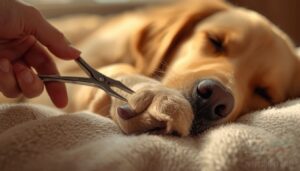
Hitting the quick is the part most dog owners dread, and honestly, it’s easier to avoid than you’d think once you understand what to look for.
The angle you cut, the size of each pass, and how you hold the paw all make a real difference.
Here’s how to stay safe with every nail.
Trim at a 45-degree Angle
Angle consistency is everything for safe dog nail trimming. Position your nail clippers so the blade meets the nail at a 45-degree angle — not flat across, not steep. Blade alignment matters because it determines how much nail you actually remove with each pass. Follow this sequence for proper restraint methods during dog nail trimming:
- Hold the toe firmly between thumb and forefinger
- Align the blade at 45 degrees before squeezing
- Use gradual slicing — small controlled cuts, not one big clip
- Check the nail edge between each cut for smoothness
- Pause and reassess before committing to the next slice
This approach keeps the nail tapered naturally and reduces sharp, snagging edges. For light nail visibility, the pink quick becomes your stopping cue. With dark nail incremental trimming, that same 45-degree angle helps you stay cautious cut by cut — safe techniques for clipping dog nails start with respecting the angle every single time.
Use Small Cuts on Dark Nails
Dark nails don’t reveal their quick at a glance — that’s what makes them tricky. Your safest approach is the Sliver Size Technique: remove roughly 1/16th of an inch per cut, then inspect the cross-section cues before continuing.
A darker center dot means stop. Use bright lighting strategies and sharp scissor-style clippers for precise tool control.
Gradual progression across sessions keeps you from cutting the quick entirely.
Watch for The Quick in Light Nails
Light-colored nails give you a real advantage: you can actually see the quick — that pink part running through the center. Unlike dark nails, nail translucency assessment is straightforward here.
Watch for these visual quick cues during incremental trimming:
- A soft pink core signals you’re close
- Translucency near the base shows quick length monitoring matters
- Stop before pink dominates the cross-section
- Keep styptic powder ready anyway
Hold The Paw So The Nail Stays Steady
Once you’ve spotted where the quick ends, keeping the nail still is what makes the cut clean. Press lightly on the paw pad using a thumb-forefinger grip to extend the toe — that’s your visual nail exposure working for you.
Soft pressure application on the joint prevents paw rotation from becoming a problem. Support from underneath, hold only the toe you’re trimming, and cut.
Handle Bleeding and Trimming Mistakes

Cutting the quick happens to almost every dog owner at some point, so don’t panic when it does. how quickly and calmly you respond in that moment.
what to do when things don’t go as planned.
Apply Styptic Powder Right Away
The moment you cut the quick, reach for your styptic powder immediately — that’s your first line of bleeding control.
Press the nail directly into the powder or apply it using a moistened swab with moderate pressure for Direct Powder Application.
Clean Contact matters, so wipe debris gently first.
Hold for 10–15 seconds.
If bleeding resumes, follow the Reapply Procedure once, then consult your Veterinary Threshold if it won’t stop.
Use Gauze Pressure if Bleeding Continues
If styptic powder doesn’t fully stop the bleeding, move straight to gauze pressure.
Place a sterile pad directly over the nail, then apply consistent pressure application without lifting to check — that restarts the clot.
Follow Gauze Layering Steps if blood soaks through: add a second pad on top.
Meanwhile, focus on paw support positioning to keep the toe still and the gauze aligned.
Substitute Cornstarch or Flour in a Pinch
If styptic powder isn’t within reach, your kitchen holds two solid Dry Powder Alternatives: cornstarch and plain flour. Both work through the same principle — absorbing surface moisture to improve Clotting Efficiency near the nail quick.
For Emergency Powder Use, apply with steady Application Pressure:
- Press a pinch of dry cornstarch or flour directly onto the bleeding nail tip
- Hold firm for 60–90 seconds without lifting to check
- Reapply once if bleeding resumes, keeping the paw still throughout
Starch vs Flour comes down to texture — cornstarch adheres more smoothly, while flour stays put a bit better on active dogs.
Seek Veterinary Help if Bleeding Does Not Stop
If cornstarch buys you a few minutes but bleeding still won’t stop, that’s your cue to call. Persistent bleeding after repeated pressure suggests the nail quick was cut deeper than expected — or that clotting isn’t happening normally.
| Warning Sign | What It May Mean | Action |
|---|---|---|
| Pale gums, weakness | Signs of Shock | Emergency Vet Contact immediately |
| Bleeding beyond 5 minutes | Clotting Disorders or Medication Interactions | Call your vet now |
| Soaked gauze, no clot | Deep nail quick injury | Veterinary advice required |
Know When to Stop or Outsource

Not every nail trim session goes according to plan, and that’s not a failure on your part. Some dogs reach a limit that no amount of treats or patience can move past that day.
Knowing when to stop—or hand things off to a professional—is one of the most responsible calls you can make.
Stop if Your Dog Growls, Snaps, or Bites
Growling, snapping, or biting aren’t bad behavior — they’re signal recognition in action. Your dog is telling you something important.
When those warnings appear, your de-escalation steps are simple: stop immediately, create safety distance, and don’t make eye contact. Use a calm voice, avoid physical force, and let the tension drop.
Restraining the dog through warning signals only removes their ability to communicate safely next time.
Forcing a dog past its warning signals doesn’t build tolerance — it silences the only communication tool it has
Choose a Groomer or Vet for Reactive Dogs
Some dogs genuinely need a professional in their corner. A reactive dog benefits most from a provider with real behavior assessment skills and a low‑stress environment built around their specific triggers.
Look for:
- Acclimation sessions before full nail trimming
- Positive reinforcement techniques throughout
- emergency plan if stress escalates
- Experience with mechanical restraint alternatives
A professional groomer or vet can trim nails safely when home handling isn’t working.
Ask About Sedatives Only Through a Veterinarian
Sedation isn’t a grooming shortcut — it’s a medical decision.
If your dog truly can’t be handled safely, pharmacological restraint may be appropriate, but only through a veterinary prescription.
A vet evaluates sedation contraindications, like heart or kidney conditions before recommending sedatives for dogs.
| Consideration | Why It Matters |
|---|---|
| Dosage accuracy | Wrong doses increase side effect risk |
| Human meds risk | OTC products can cause serious harm |
| Side effect monitoring | Breathing changes need immediate attention |
Never attempt this alone.
Build Tolerance With Frequent Practice Sessions
Tolerance isn’t built in a single session — it’s earned through predictable practice repeated over time. Brief frequent sessions, rather than one long ordeal, keep stress low and progress steady.
Use consistent cues each time so your dog learns the routine:
- Start with paw touches only
- Advance only when calm is maintained
- Apply positive reinforcement training for nail trims at each step
- Monitor stress signals before moving forward
Gradual desensitization to nail clipping works best when you end on a win.
Frequently Asked Questions (FAQs)
How to clip dog nails when dog is aggressive?
Stop the session immediately.
For aggressive dogs, use muzzle acclimation, protective hand gear, and behavioral desensitization before retrying.
If aggression persists, professional groomer referral or sedative consultation through your vet is the safest path.
Can two people safely trim nails alone?
Yes, two people can safely trim nails together through proper Helper Coordination, but only when the dog stays calm. One manages assistant restraint and body stability; the other clips.
Watch Stress Monitoring signals throughout.
How often should dog nails be trimmed?
Most dogs need nail trimming every 3 to 4 weeks, though growth rate variability means some need it sooner. Watch for clicking sounds on floors as your clearest sign.
What clippers work best for thick nails?
For thick nails, choose heavy-duty clippers with wide jaw opening, stainless steel durability, curved blade shape, and lever action torque. An ergonomic grip helps maintain control throughout each cut.
Are pheromone diffusers actually effective for dogs?
Pheromone diffusers offer modest, evidence-based calming support for dog anxiety, but response timeframe varies—expect two to four weeks.
Individual variability matters; pair with positive reinforcement and behavioral conditioning for real training synergy.
When should puppies have their first nail trim?
Most puppies are ready for their first nail trim at around 8 weeks old. Starting early builds puppy comfort and makes restraining the dog far easier as they grow.
Conclusion
Picture a dog resting calmly while you work through each nail with quiet confidence—that’s not luck, it’s the result of the right preparation and technique. Mastering the best way to restrain a dog for nail clipping means reading your dog’s signals, matching your hold to their needs, and knowing when to stop.
Each session builds trust. Over time, what once felt like a standoff becomes something closer to routine.