This site is supported by our readers. We may earn a commission, at no cost to you, if you purchase through links.

The first time you try to groom your dog at home often starts with good intentions and a wet towel on the floor. Maybe your pup hates the sound of clippers, or the shampoo turns into a wrestling match halfway through the rinse.
Yet with a calm space, the right brushes, and a few professional habits, that chaos can turn into connection. Grooming stops feeling like a chore and becomes a routine that keeps your dog healthy, comfortable, and easier to maintain between groomer visits.
Here’s how to groom a dog at home with confidence and care from the very first step.
Table Of Contents
Key Takeaways
- A calm, well-prepared space with proper tools and safety measures makes home dog grooming easier and less stressful.
- Matching brushes, combs, and grooming methods to your dog’s coat type prevents mats, shedding, and discomfort.
- Regular bathing, nail trimming, and cleaning of ears, eyes, and teeth maintain overall health and early problem detection.
- Grooming frequency should adapt to coat type, season, and lifestyle, turning the routine into a way to bond and protect your dog’s wellbeing.
Preparing Your Dog and Grooming Space
Before you start grooming, take a few minutes to set up your space and get your dog ready. The right setup makes the process smoother, safer, and less stressful for both of you.
For tips on organizing your grooming area and essentials, check out this guide on creating a stress-free dog bathing setup.
Here’s what you’ll need to have in place first.
Gathering Essential Grooming Tools
Before you start, put together a simple Grooming Kit Essentials setup that actually fits your dog. Because different breeds and coat types need specific tools and techniques, take a moment to review essential dog grooming tools before assembling your setup.
Choose dog grooming tools and supplies like a slicker brush, metal comb, nail clippers with guards for Clipper Safety, dog-safe shampoo, absorbent towels, and a pet dryer. Add a non-slip surface or Grooming Table, then keep all pet grooming tools and dog grooming equipment clean, oiled, and sharp for basic Tool Maintenance so every session feels controlled and predictable.
Creating a Calm Environment
Once your tools are set, focus on creating a calming environment. Quiet Spaces with Calm Lighting help your dog relax, especially with familiar scents from their bedding nearby. Use white noise machines or low calming music to mask sharp sounds, and keep your voice soft. Pheromone diffusers and a Gentle Touch complete the Soothing Sounds of trust.
You can also use calming techniques for nervous pets, such as starting with short sessions and rewarding calm behavior with treats and praise.
Safety Tips for Home Grooming
Calm surroundings go hand in hand with Pet Grooming Safety and Precautions. Keep electrical tools dry, cords intact, and floors non-slip to avoid Grooming Hazards.
Have Pet First Aid basics—like styptic powder—ready for Grooming Emergencies.
DIY dog grooming works best when Home Safety comes first, supporting Canine Welfare and long-term dog health through mindful, consistent pet care.
DIY dog grooming starts with home safety, protecting your dog’s welfare and long-term health through calm, consistent care
Choosing The Right Brushes and Combs
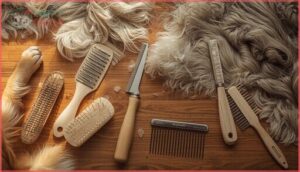
Choosing the right brush or comb can make all the difference in how your dog’s coat looks and feels. Each coat type has its own needs, from soft undercoats to wiry topcoats.
Here’s how to match the right tool to your dog’s fur and keep grooming simple.
Identifying Your Dog’s Coat Type
Think of your dog’s coat as their built-in outfit, and your job is to figure out what it’s made of before you start grooming. Look at Coat Length first, then feel the Fur Texture and Coat Density, and watch daily Shedding Patterns in your dog breeds. For quick ID, check:
- Short, smooth coat that hugs the body.
- Medium coat with light lift from the skin.
- Long coat with feathering on ears, legs, or tail.
- Fluffy “two-layer” feel, sign of a double coat.
- Curly, wiry, or silky coat that mats or cords easily, common in certain dog coat types and Dog Breed mixes, and key for safe canine coat care in home dog grooming.
Recommended Brushes for Each Coat
A good Brush Selection depends on coat texture and shedding habits. Use this quick Coat Type Guide for smoother dog grooming and better Dog Hair Care results:
For dogs that shed heavily, you can also check out this guide to the best de-shedding vacuums for dogs to keep your grooming routine cleaner and easier.
| Coat Type | Recommended Brush |
|---|---|
| Short coat | Rubber curry brush to lift loose hair |
| Double coat | Undercoat rake and slicker brush combo |
| Long or curly coat | Pin brush for daily brushing; slicker brush for volume |
Maintain brushes regularly for best Grooming Techniques and Tool Maintenance.
How to Prevent Matting and Shedding
Tangles begin small, so preventing matting starts with daily brushout techniques focused on high-friction areas like behind the ears and under collars. For shed control and smooth coat maintenance, brush long coats daily and short coats weekly.
Follow Mat Removal and Fur Care best practices with consistent Grooming Tips—regular dog grooming at home keeps shedding and tangles manageable.
Step-by-Step Bathing Techniques
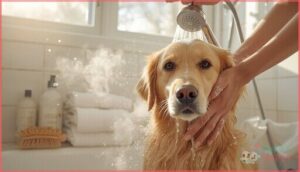
Bathing your dog the right way keeps their coat clean and their skin healthy. Each step matters, from brushing out tangles to getting a proper rinse. Here’s how to move through the process safely and effectively.
Pre-Bath Brushing and Detangling
Pre-bath brushing is your Coat Preparation step, clearing loose hair and dirt so water and shampoo can actually reach the skin and clean evenly. Use gentle Brush Techniques that focus on Mat Removal and Dog Comfort, not speed.
- Start with Detangling Tools: slicker or pin brush for longer coat, rubber curry brush for short coat.
- Work in small sections, brushing from the skin out, then check each area with a metal comb.
- Hold the fur near the skin while brushing to reduce pulling and keep sensitive spots comfortable.
- Stop and trim or shave tight, solid mats rather than yanking them out, then resume gentle brushing around them.
Using Dog-Safe Shampoos and Conditioners
Did you know a dog’s skin is more alkaline than yours? That’s why using a pH-balanced dog shampoo matters. Choose formulas with clean shampoo ingredients for gentle cleansing without irritation. Hypoallergenic shampoos suit sensitive dog skin care needs.
Follow basic shampooing and conditioning basics, using conditioner types made for dogs to restore moisture and keep their coat soft.
Drying Methods for Different Coats
Drying a dog’s coat takes more skill than most realize—each texture demands its own approach. Mastering Towel Drying and Blow Drying keeps your dog comfortable and prevents skin issues. Match your Drying Techniques to Coat Types for safe, efficient results. Use these dog grooming tips to maintain smooth, healthy fur and lasting dog health.
- Short coats: Pat dry with microfiber towels.
- Long coats: Blot in sections, then blow dry.
- Double coats: Use high velocity airflow to reach undercoats.
- Curly coats: Diffuser drying preserves curl shape.
- Sensitive dogs: Keep airflow cool and constant to prevent burns.
How to Trim Your Dog’s Nails Safely
Keeping your dog’s nails trimmed isn’t just about looks—it’s part of their overall comfort and health. Nails that grow too long can make walking painful or even cause injury.
Here’s how to tell when it’s time for a trim and how to do it safely at home.
Signs Your Dog’s Nails Need Trimming
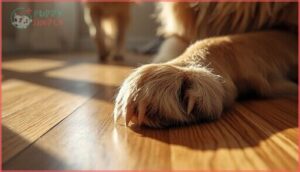
Ever hear an audible clicking as your dog walks across the floor? That’s an early cue for nail overgrowth. During visual inspection, nails pressing into the pads or curling sideways show trimming is due. Watch for subtle gait changes or paw irritation—your dog may lick, limp, or hesitate to move comfortably.
| Sign | What It Indicates |
|---|---|
| Clicking nails | Overgrown length hitting the floor |
| Curled nails | Nails pressing into paw pads |
| Limping or licking | Discomfort needing nail care essentials like safe nail clippers and proper canine nail trimming |
Step-by-Step Nail Trimming Instructions
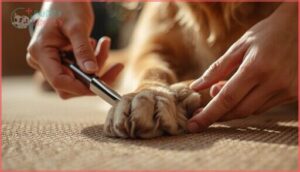
Those signs mean it’s time to use clear Paw Handling Techniques and slow, steady nail trimming. Start by placing your dog on a non-slip surface, then hold one paw securely and extend a single toe so you can see the nail quick.
Use dog nail clippers or a grinder, shorten tiny slices at a 45-degree angle, and let Nail Trimming Tips, Nail Grinder Methods, and other nail care essentials guide safe, low-stress canine nail trimming and Dog Nail Care with consistent Nail Clipper Safety.
Managing Accidental Nail Bleeds
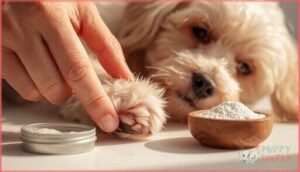
Even with careful nail trimming for dogs, you might nick the nail quick with nail clippers, so plan for Nail Bleed Control before you start. Keep Styptic Powder or a styptic pencil within reach, press a pinch onto the tip, and hold firm for a minute for Emergency Clotting.
If you don’t have it, use cornstarch as a backup, then keep your dog calm and resting so the clot holds. If bleeding won’t slow after 10–20 minutes, stop your Nail Care Tips session and call your vet; that’s your safety line for Bleeding Prevention when nail trimming techniques go wrong.
Cleaning Ears, Eyes, and Teeth at Home

Keeping your dog’s ears, eyes, and teeth clean keeps them comfortable and prevents common health issues. These areas often get overlooked but need regular attention just like brushing or bathing.
Here’s how to handle each one safely at home.
Safe Ear Cleaning Methods
With proper ear cleaning, you protect your dog’s comfort and Canine Ear Health while preventing infection. Use gentle Ear Cleaning Tools built for Dog Ear Anatomy. For safer dog hygiene practices:
- Inspect ears before cleaning
- Use pH-balanced cleaner, not peroxide
- Massage the base gently
- Wipe outer ear only
- Watch for Ear Infection Signs after Ear Wax Removal
Eye Cleaning for Dogs
After caring for the ears, turn your focus to the eyes—a sensitive part of Canine Eye Anatomy.
Daily Eye Care helps manage Dog Tear Stains and prevents irritation. Use a soft, damp pad to wipe away mild Eye Discharge Types from inner to outer corners.
Monitor for Eye Infection Signs like redness or swelling to protect overall canine health.
Basic Dog Dental Hygiene
Strong teeth and healthy gums start with consistent dog dental hygiene. Regular brushing promotes overall canine health and lowers the risk of Dental Disease and Canine Gum Disease.
Use dog-safe toothpaste and a soft brush for gentle tooth brushing. Daily Dog Tooth Care builds Pet Oral Health, prevents plaque, and promotes long-term oral hygiene and dog health tips that last.
How Often Should You Groom Your Dog?
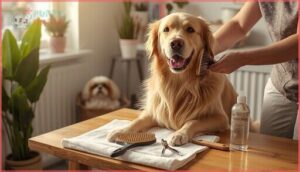
How often you groom your dog depends on their coat type, breed, and lifestyle. Some dogs need regular upkeep, while others do fine with an occasional brush and bath. Here’s how to tell what schedule works best for yours.
Grooming Frequency by Coat Type
Think of dog grooming frequency as your dog’s personal calendar, shaped by coat type, Shedding Patterns, and Hair Growth Rates. Short, smooth dog coat types and care usually follow lighter Grooming Schedules, while double coats demand more frequent brushing to manage undercoat shed. Curly, wavy, or wire coats, and hairless dog breeds and grooming, all need customized grooming techniques that respect Coat Type Variations, Dog Breed Considerations, and overall coat skin nails ears and hygiene.
- Short coats: weekly brushing, baths every 4–6 weeks, light dog grooming frequency with simple grooming techniques suited to easy dog coat types and care.
- Double coats: brush 3–4 times weekly, more in heavy shed, adjust Grooming Schedules to match Shedding Patterns and seasonal Hair Growth Rates.
- Curly or wavy coats: brush every day or two, full grooms every 4–6 weeks, ideal for higher‑maintenance dog breeds and grooming with careful coat skin nails ears and hygiene.
- Hairless or sparse coats: frequent gentle baths, daily moisturizing, and regular checkups, using Grooming Schedules tuned to sensitive skin and unique Coat Type Variations.
Seasonal and Breed-Specific Needs
As seasons shift, you need to adjust dog grooming frequency, products, and techniques to match Climate Effects and Breed Variations. In winter, focus on gentle Winter Grooming, moisturizing shampoos, and light Coat Adjustments instead of close clipping, especially for double-coated breeds. This approach relies on insulation and healthy canine hygiene. During warm months and Shedding Seasons, brush more often, use undercoat rakes on heavy shedders, and rinse paws or coats after exposure to salt, sand, or swimming to protect the skin.
Climate extremes add another layer: in hot, humid areas, thorough drying is essential to prevent hot spots, while dry, high-altitude regions require fewer baths and more hydrating products to protect natural oils and sensitive coat types. Across all these factors, dog grooming frequency isn’t “set and forget” but a flexible plan tied to weather, coat types, and your individual dog’s comfort.
| Season/Climate Focus | Key Coat Adjustments | Helpful Tools & Grooming Techniques |
|---|---|---|
| Winter Grooming (cold, salty streets) | Keep body slightly longer, trim paws/belly, moisturize skin | Slicker brush, leave-in conditioner, paw balm, lukewarm baths |
| Summer & Shedding Seasons | Increase brushing, never shave double coats, support undercoat release | Undercoat rake, de-shedding tool, dog-safe parasite shampoo |
| Humid vs. Dry Climate Effects | Humid: more drying to prevent hot spots; Dry: gentler baths, more moisture | High-velocity dryer on low, moisturizing shampoo, soft-bristle brush |
This seasonal, breed-aware approach keeps your routine practical while protecting skin, coat health, and overall canine hygiene year-round.
Signs Your Dog Needs Immediate Grooming
You know it’s time for grooming when your dog looks or feels off. Watch for these three red flags:
- Matted Fur or Dirty Paws pulling at the skin or hiding debris.
- Strong Odor that returns soon after a bath.
- Itchy Skin and Excess Coat Shedding signaling poor canine hygiene.
Quick attention keeps dog health steady and grooming stress-free.
Frequently Asked Questions (FAQs)
How can I make grooming fun for my dog?
Playful praise and positive reinforcement turn grooming into a treat-time tradition. Use calming techniques, reward systems, and fun activities like gentle brushing games.
Dog owners who blend patience with play create stress-free, enjoyable DIY pet grooming experiences.
What should I do if my dog fears clippers?
If your dog fears dog clippers, pause full grooming and focus on Clipper Desensitization first: pair the tool and sound with treats, use Calming Techniques, keep sessions short, and prioritize Gentle Grooming and Anxiety Management for dog owners practicing canine grooming.
How do I groom an elderly or disabled dog?
For Elderly Dog Care and Disabled Pet Grooming, think “comfort first.” Use Gentle Handling Tips, short sessions on non-slip mats, warm water, padded support, frequent nail and paw checks, and calm Senior Health Checks as loving Special Needs Assistance in everyday canine care.
What are signs my dog needs professional grooming?
When you notice Severe Matting you can’t brush out, Nail Issues like curling or painful clicking, Skin Problems or strong odor, signs of Ear Infections, or escalating Behavioral Signs, it’s time for professional dog grooming to protect overall dog health and compare professional vs home grooming limits in real-world canine grooming with a skilled groomer.
How can I keep my grooming tools clean and safe?
Keep your dog grooming tools clean and safe by brushing off hair after each grooming, washing brushes and combs in warm soapy water, then using pet-safe Disinfectant Options.
Prioritize Brush Cleaning, routine Clipper Maintenance, and dry Storage Solutions for all pet grooming supplies and Dog Grooming Tools to keep your dog’s grooming hygienic and comfortable.
Conclusion
You’ve learned how to groom a dog at home by breaking each task into calm, safe steps. Keep sessions short, end on a positive note, and adjust for your dog’s coat, age, and stress level.
Employ foreshadowing to surprise or challenge the audience’s expectations as you realize this routine will soon feel as natural as your daily walk.
With practice, grooming becomes quiet maintenance, early health protection, and a steady way to strengthen trust daily.
- https://www.rover.com/uk/blog/dog-grooming/
- https://gaugaupet.com/blogs/dog-grooming-bathing/dog-grooming-at-home-tools-and-schedule
- https://www.humaneworld.org/en/resources/how-groom-your-dog-home
- https://www.igroomhub.com.au/blog/how-to-groom-a-dog
- https://www.naylors.com/blogs/article/professional-standard-dog-grooming-at-home