This site is supported by our readers. We may earn a commission, at no cost to you, if you purchase through links.
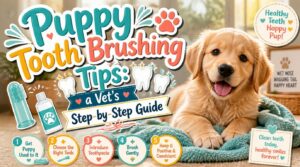
Plaque hardens into tartar in about 48 hours. That’s not much of a head start, especially when you’ve got a wiggly eight-week-old puppy who thinks your fingers are chew toys. By age three, roughly 80% of dogs already show signs of gum disease, and most of it traces back to those first few months.
Here’s the good news: you don’t need fancy tools or a dental degree to change that outcome. A few smart puppy tooth brushing tips, started early and repeated daily, build habits that protect your dog’s mouth for life. Grab a finger brush and let’s get those tiny teeth started right.
Table Of Contents
- Key Takeaways
- Why Puppy Tooth Brushing Matters
- When to Start Brushing Puppy Teeth
- Choose Safe Puppy Toothbrushing Supplies
- Prepare Your Puppy for Toothbrushing
- Brush Puppy Teeth Step by Step
- Fix Common Puppy Brushing Problems
- Maintain Healthy Puppy Teeth Long-Term
- Frequently Asked Questions (FAQs)
- At what age should you start brushing a puppy’s teeth?
- What is the 3-3-3 rule for brushing teeth?
- How to brush dogs’ teeth when they won’t let you?
- What can I brush my puppy’s teeth with?
- Can I use a washcloth instead of a toothbrush?
- How much toothpaste should I use per brushing?
- Is it normal for puppies to swallow toothpaste?
- Conclusion
Key Takeaways
- Start brushing your puppy’s teeth at 8-12 weeks old, since plaque hardens into tartar within just 48 hours and waiting too long lets gum disease take hold in 80% of dogs by age three.
- Use only dog-safe enzymatic toothpaste and a soft finger brush or puppy toothbrush, since human toothpaste contains toxic xylitol and the wrong bristles can hurt sensitive gums.
- Build trust gradually through lip touches, gum massages, and small circular brushing motions at a 45-degree angle, which removes about 30% more plaque than scrubbing back and forth.
- Aim for daily brushing but stick to at least 3-4 times a week, and back it up with dental wipes, water additives, or vet checkups when a full session isn’t possible.
Why Puppy Tooth Brushing Matters

Grabbing a toothbrush for your puppy might feel like a small step. But it’s one of the biggest favors you can do for their health down the road. Here’s why this simple habit matters so much.
Pairing regular brushing with other easy routines from this small breed grooming guide can help your pup build a lifetime of healthy habits.
Preventing Plaque and Gum Disease
Because plaque hardens into tartar within 48 hours, skipping brushing even briefly lets bacteria take hold. That’s why a daily brushing routine matters so much for young pups.
Circular strokes with a finger brush and enzymatic toothpaste break down plaque proteins fast. Pair that with VOHC-approved chews, and you’re tackling plaque removal from two angles—brushing and chewing working together against gum disease.
Protecting Your Puppy’s Overall Health
That daily brushing habit does more than fight bad breath—it guards your puppy’s whole body. Bacteria from the mouth can enter the bloodstream, tripling infective endocarditis risk. Clean gums support systemic infection prevention, steady digestion, immune strength, and healthy growth. Bonus: brushing sessions double as early health detection, letting you spot pale gums or swelling before bigger problems develop.
Avoiding Painful Dental Procedures
Think of brushing your puppy’s teeth as cheap insurance against a costly vet bill later. Left alone, plaque hardens into tartar, causing painful extractions and gum disease by age three in 80% of dogs.
Skip brushing now, and 80% of dogs face painful extractions and gum disease by age three
Consistent puppy oral care also means:
- Preventing tooth decay
- Managing gum inflammation
- Reducing tartar buildup
- Addressing bad breath
- Monitoring oral pain
Building Positive Early Habits
Prevention only sticks if your puppy actually enjoys the process. Start slow, stay consistent, reward calm behavior, and you’ll build trust gently from the get-go.
Start as early as 8-12 weeks old with a soft puppy toothbrush and puppy safe toothpaste. Keep sessions short, pair brushing with positive reinforcement training, and today’s wiggly pup becomes tomorrow’s cooperative patient.
When to Start Brushing Puppy Teeth
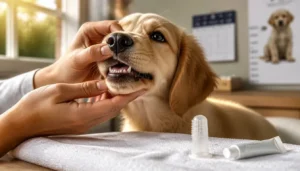
Timing matters more than most new puppy owners realize. Start too early or too late, and you can make brushing harder than it needs to be. Here’s what to know before you pick up that toothbrush.
Best Age to Begin
Eight weeks is your golden window. The American Veterinary Dental College backs this timing, and puppies who start then build stronger habits than late bloomers.
- Tiny pink gums
- A wiggling puppy toothbrush
- Poultry-flavored paste on your fingertip
- A calm lap session
- Wagging tail after a job well done
Giant breeds can wait slightly longer, but no puppy should skip brushing past 12 weeks.
Brushing During Puppy Teething
Around 3 to 6 months, your puppy hits the teething stage hard — loose teeth, sore gums, drool everywhere. Keep brushing your puppy’s teeth, just shrink sessions down. Try finger training first, dab on puppy-safe toothpaste, and let chewing for comfort ease gum soreness between rounds. Short brushing sessions build trust now, so teething doesn’t turn into puppy bad breath causes later.
Establishing early dental care habits helps prevent long-term oral issues in puppies. early dental care habits
Handling Tender Puppy Gums
Sore gums during puppy teething deserve extra gentleness, not extra force.
- Redness or slight swelling along the gumline
- Pulling away when you touch their mouth
- Excessive drooling beyond the usual puppy mess
- Reluctance to chew or eat normally
Use a finger brush with puppy safe toothpaste, keep water room-temperature, and try a soothing gum massage for 20 seconds. Stop if bleeding lasts past two minutes.
If you’re new to this routine, this step-by-step guide to brushing your dog’s teeth walks you through proper bristle angle and pressure for sensitive gums.
Retained Baby Teeth Concerns
Ever spot two canines where one should be? That’s a retained baby tooth blocking permanent tooth eruption, sometimes at a 45-degree angle.
Left alone, it raises malocclusion risk and dental disease susceptibility, since plaque loves those crowded gaps.
Watch for excessive drooling or lopsided chewing—key behavioral indicators.
During any puppy mouth examination, flag retained teeth early; your vet may pull them before permanent teeth go crooked.
Breed and Mouth Size Factors
A Chihuahua’s jaw runs about 3 cm; a German Shepherd’s stretches to 7.8 cm. One brush doesn’t fit all mouths.
- Toy breeds: ultra-narrow heads, soft bristles
- Bulldogs: wide, shallow arches limit molar space
- Cavaliers: 30% show crowded premolars by age one
- Great Danes: wider heads, firmer bristles work fine
Match the brush to your puppy’s jaw development, not the label.
Choose Safe Puppy Toothbrushing Supplies

The right supplies make brushing easier for you and safer for your puppy. Not every product on the shelf is a good fit for a small, growing mouth. Here’s what you’ll want to have on hand before you get started.
Dog-Safe Enzymatic Toothpaste
Toothpaste is where puppy toothbrushing succeeds or fails. Grab dog-safe enzymatic toothpaste with glucose oxidase and lactoperoxidase—never human paste, which contains toxic xylitol.
| Check | Look For | Skip |
|---|---|---|
| Ingredients | Enzymes, baking soda | Xylitol, fluoride |
| Flavor | Poultry, peanut butter | Harsh artificial taste |
| Storage | Cool, dry spot | Heat, humidity |
Start as early as 8-12 weeks old, using flavored toothpaste your puppy enjoys.
Puppy Toothbrush or Finger Brush
Good toothpaste needs a good delivery tool. A puppy toothbrush with soft bristles works well once your pup accepts handling, but a finger brush is often the better starting point.
The finger brush technique lets you control pressure directly, which builds brushing comfort fast.
- Silicone vs nylon: silicone rinses clean and feels gentler for oral introduction
- Reduces nipping since your finger stays protected
- Great for positive reinforcement during those first practice sessions
Choosing Soft, Comfortable Bristles
Once your puppy accepts a finger brush, look for extra soft bristles on their next dog toothbrush. Soft bristles cushion gums and cause less enamel wear than medium ones.
Tapered, rounded tips slide into tight spaces without soreness. Puppy-specific toothbrushes also feature smaller, compatible brush heads built for tiny mouths, with dense yet gentle nylon bristles that resist fraying.
Toothpaste Flavors Puppies Enjoy
Bristles matter, but flavor is what actually gets the brush into your puppy’s mouth.
Peanut butter appeal wins over picky pups fast, often with a caramelized peanut note that mimics chews they already love. Poultry beef flavors feel like snack time, not a chore. Malt vanilla mint suits sensitive pups. Any puppy-safe toothpaste—including hypoallergenic options or veterinary approved flavors—should skip xylitol entirely.
Treats for Positive Reinforcement
Even great-tasting toothpaste needs backup. Keep small, soft treats nearby, like cheese bits or salmon bites, as high value rewards for cooperation.
Give the treat within two seconds of good behavior, so your puppy connects brushing with something great. Rotate flavors to avoid boredom, and skip hard chews that could hurt developing teeth or worsen teething discomfort.
Prepare Your Puppy for Toothbrushing

Before any brushing happens, your puppy needs to feel safe and relaxed. Good prep work now means way less wiggling and drama later. Here’s how to set the stage for success.
Pick a Calm Moment
Timing makes or breaks the whole session. Evening after dinner works best, once your puppy’s stomach settles and energy dips. Wait 30 minutes past mealtime, and skip brushing right after wild play.
Do a quick puppy energy assessment—calm breathing means ready. Pick a quiet low-traffic room, then start your calm pre-brushing routine with petting, praise, and a treat before brushing your puppy’s teeth.
Choose a Comfortable Position
Position matters as much as timing. Small pups do best cradled on your lap, hindquarters resting on a folded towel. Medium and large breeds settle better standing or lying on a non-slip mat.
Match the setup to your breed’s size, and keep hands gentle, never gripping the neck. Proper puppy positioning builds trust before brushing puppy teeth even begins.
Practice Lip and Gum Touches
Before any brush touches teeth, teach your puppy that mouths are safe to handle. Gently lift the lips for a few seconds, rewarding calm behavior. Then touch the gumline softly with a clean finger.
Stop if your pup pulls away. This gentle desensitization builds trust, easing puppy teething discomfort and setting up real brushing success later.
Introduce Toothpaste Gradually
Think of toothpaste as a first date, not a first kiss — go slow. Day one, dab a pea-size bit of puppy-safe toothpaste on your finger for a ten-second taste, morning works best.
Then build up:
- Day two: half a pea, 20 seconds
- Day three: thin line on a finger brush
- Day four: toothpaste on the brush itself
- Day five: a quick, flavorful brush
Reward Calm Cooperation
Good behavior deserves a fast payoff. Reward within 5 seconds of 30 calm seconds, treat still in an open mouth.
| Cue | Behavior | Reward |
|---|---|---|
| "Let’s brush" | Stays still | Click + treat |
| Lip lift | No pulling away | Praise |
| Brush touches teeth | Calm breathing | 5g soft treat |
Consistent treat reward timing builds trust faster than any brush technique alone.
Brush Puppy Teeth Step by Step
Once your puppy accepts the brush, it’s time for the real technique. Good brushing follows a simple order, from lips to back molars. Here’s exactly how to do it, step by step.
Lift Lips Without Forcing
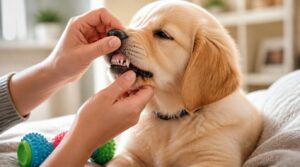
Ever wonder why your puppy squirms the moment you reach for their mouth? Gentle lip lifting fixes that. Thumb on one side, index finger below, lift smoothly for 2-3 seconds, max three times per session.
Try visual distraction cues, a toy in your other hand, to ease finger toothbrush introduction. Go slow, and lip desensitization steps make puppy toothbrushing feel natural, not forced.
Angle Brush Toward Gumline
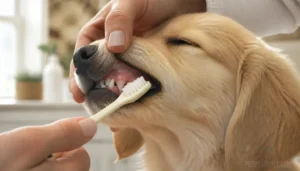
Once lips are lifted, angle your dog toothbrush toward the gumline at 45 degrees. This targets where plaque hides most.
Brushing technique basics:
- Point bristles up for top teeth
- Point down for bottom teeth
- Use light pressure only
- Keep bristles flexing gently
- Aim right at the gum margin
Dog toothpaste plus proper angling means real gumline plaque removal.
Use Gentle Circular Motions
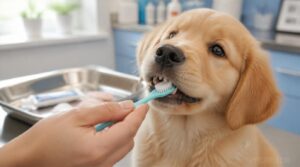
Now the fun part: small circles, not scrubbing. Gentle circular motions lift plaque 30% better than back-and-forth strokes.
Keep your wrist loose, letting it pivot the brush—not your fingers. Apply pressure like a quarter’s weight, no more.
| Motion | Pressure | Result |
|---|---|---|
| Circular | Light (quarter-weight) | 30% more plaque removed |
| Back-forth | Heavy | Gum irritation |
| Circular | Firm | Micro-trauma |
Ten seconds per tooth does wonders.
Focus on Outer Tooth Surfaces
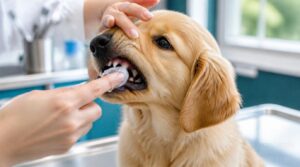
Those outer surfaces do most of the work collecting plaque — about 60% of it in puppies under six months. Keep your 45-degree brushing angle at the gumline, small circles, 5 seconds per tooth.
- Brush outer surfaces daily to stop tartar within 48 hours
- Use a finger brush for tricky small mouths
- Check for a glossy, clean shine after each session
Reach Canines and Back Molars
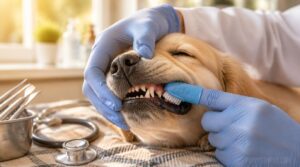
Outer surfaces are just the start. Your canine teeth need a 45-degree angle tipped toward the cheek, small circles, 10 seconds each.
| Tooth Area | Angle | Time |
|---|---|---|
| Canines | 45° | 10 sec |
| Back molars | 30° | 20 sec |
| Full sequence | — | 2 min |
A finger brush reaches back molars easily.
Fix Common Puppy Brushing Problems

Even with the best technique, brushing doesn’t always go smoothly. Your puppy might squirm, drool, or flat-out refuse the brush some days. Here’s how to handle the most common hiccups so you can keep going.
Fear or Refusal
Some puppies would rather bolt than open wide. Recognizing fear signals early makes all the difference: trembling, panting, or freezing mid-brush.
Don’t push through it. Back off, offer a treat, and try again tomorrow with shorter puppy oral introduction sessions.
Building trust slowly beats forcing compliance every time. A puppy who feels safe today learns to accept brushing tomorrow.
Biting or Aggressive Behavior
Why does a sweet puppy suddenly snap at the brush? Usually it’s fear, not defiance.
Watch for warning signs: stiffening, growling, or a hard stare. Stop immediately, don’t punish.
Give space, then restart with gentle lip touches tomorrow. Reward calm moments generously. If biting persists or breaks skin, call your vet before your next puppy oral introduction attempt.
Excessive Drooling and Mess
Since teething puppies can produce over a liter of saliva a day, brushing sessions can get messy fast.
Try these mess prevention tricks:
- Drape a bib or old towel over your pup’s chest
- Wipe the mouth with a damp cloth within 2 minutes
- Brush on a non-slip mat to catch drips
- Offer a chew toy after to redirect leftover drool
Bleeding or Tender Gums
A little blood on the brush isn’t always alarming. Teething gum relief often causes minor irritation.
Red swollen or bleeding gums that persist signal early gingivitis. Try a soft diet for gums, cold washcloth compresses, and gentle finger-brushing. If bleeding lasts over ten minutes or gums stay inflamed, get a veterinary gum assessment for proper home dental care.
Common Toothbrushing Mistakes
Good technique matters as much as showing up daily. Three slip-ups undo most of your effort:
- Brushing too hard, wearing enamel and irritating gums
- Brushing too short, skipping proper coverage
- Missing mouth areas like molars and inner surfaces
Use small circles at a 45-degree angle, not scrubbing. Swap brushes every three months—worn bristles clean poorly.
Maintain Healthy Puppy Teeth Long-Term
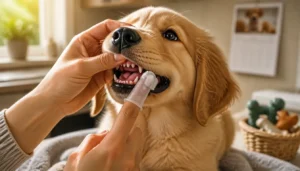
Brushing your puppy’s teeth once is a great start, but the real payoff comes with consistency. Good habits now save you money and heartache down the road. Here’s how to keep your puppy’s smile healthy for years to come.
Ideal Puppy Brushing Frequency
How often should you really be brushing? Daily brushing is best, hands down, but don’t panic if that’s not realistic yet.
Aim for at least 3–4 times per week as your baseline. Puppies started as early as 8–12 weeks old adjust fastest.
During teething, ease up gently. Consistency beats perfect every time.
Making Brushing a Daily Habit
Turning brushing into a habit is easier than it sounds. Tie it to something you already do daily, like right after breakfast.
Try this:
- Keep supplies in one visible spot
- Brush at the same time daily
- Use flavored toothpaste your puppy enjoys
- Reward and praise every session
Brush in small circles at a 45-degree angle. Consistency builds the habit fast.
Safe Brushing Alternatives
Some days brushing just won’t happen, and that’s fine. Dental wipes work in a pinch, wiped along outer teeth for 20 seconds a side.
Water additives fight bacteria between brushings, mixed right into the bowl. VOHC-approved chew toys and enzymatic gels help too.
None replace brushing, but together they cover the gaps nicely.
Dental Disease Warning Signs
Even with wipes and chews filling the gaps, keep an eye out for trouble.
Swollen, bleeding gums and bad breath signal early gingivitis. Watch for yellow or brown discoloration, dark spots, or loose teeth.
Excessive drooling, dropped food, or chewing on one side all point to pain. Any of these? Time to call your vet.
When Veterinary Cleaning is Needed
Home care only goes so far. Your puppy needs a veterinary dental exam by six months, then yearly checkups.
Vets watch for probing depths over 5mm, heavy calculus, or yellow or brown discoloration — signs pointing to a dental emergency. Radiographs catch hidden bone loss before periodontal disease takes hold.
Professional cleaning cuts inflammation fast. Afterward, resume brushing within 48 hours and schedule a six-week follow-up.
Frequently Asked Questions (FAQs)
At what age should you start brushing a puppy’s teeth?
Funny enough, those tiny teeth that seem too small to bother with need care sooner than you’d think. Your Puppy Dental Timeline starts as early as 8–12 weeks, right when the Teething Stage Routine begins with puppy-safe toothpaste.
What is the 3-3-3 rule for brushing teeth?
That’s a human dental guideline, not one for pups: brushing three times daily, roughly every eight-hour intervals (morning, midday, evening), for three-minute sessions each. For puppies, stick to a gentler dog dental routine instead.
How to brush dogs’ teeth when they won’t let you?
A clenched jaw isn’t defiance, it’s fear talking. Try gradual desensitization: finger touches, then a lick mat with paste, then a soft-bristled toothbrush or finger brush, rewarding calm moments with treats every step.
What can I brush my puppy’s teeth with?
Grab puppy-safe enzymatic toothpaste with a soft-bristled toothbrush or finger brush. Skip human paste entirely. Dental wipes and water additives work as backups when brushing feels impossible some days.
Can I use a washcloth instead of a toothbrush?
Think of it as training wheels: a washcloth works well for puppy dental home care, cutting plaque nearly 60% and offering gentle gum comfort. Best under eight weeks, but graduate to a dog toothbrush once molars arrive.
How much toothpaste should I use per brushing?
Stick to a pea-sized amount of puppysafe canine toothpaste per session — younger pups need less.
Too much causes gagging and foam control issues. Swallowing is safe with enzymatic formulas, but proper dosing keeps brushing frequency comfortable and effective long-term.
Is it normal for puppies to swallow toothpaste?
Yes, since dogs can’t spit like we do. That’s normal swallowing behavior, and puppysafe toothpaste is made to be safely swallowed. Just avoid human toothpaste, chewing on tubes, or large amounts, which raise swallowing toothpaste risks.
Conclusion
One client’s puppy, a wiggly Labrador named Biscuit, went from teeth-chattering terror to tail-wagging cooperation in two weeks flat. That’s the real power of consistent puppy tooth brushing tips: small daily moments, not flawlessness. Your puppy won’t master this overnight, and that’s okay. Keep sessions short, keep rewards handy, and keep showing up. Years from now, you’ll trade dental surgeries for routine checkups, and your dog’s grin will thank you. Healthy habits, brushed in early, last a lifetime.