
This site is supported by our readers. We may earn a commission, at no cost to you, if you purchase through links.
By age three, most dogs carry some form of gum disease, often hidden behind a wagging tail and a normal-looking smile. Bad breath isn’t just "dog breath." It’s often the first warning sign of plaque building along the gumline, where trouble starts.
The good news: you don’t need a vet visit to fight back. Learning how to brush dog teeth properly, with the right tools and a little patience, can cut plaque and tartar dramatically in just two weeks.
From picking a toothbrush your dog will actually tolerate to mastering the angle that reaches deep into the gumline, here’s exactly how to build a routine that protects your dog’s teeth for life.
Table Of Contents
- Key Takeaways
- Choose Safe Dog Dental Supplies
- Introduce Brushing With Positive Reinforcement
- How to Brush Your Dog’s Teeth
- Build an Effective Brushing Routine
- Know When Veterinary Care is Needed
- Frequently Asked Questions (FAQs)
- Is it too late to start brushing dogs’ teeth?
- What is the 3 3 3 rule for brushing teeth?
- Can I scrape plaque off my dog’s teeth?
- Is brushing dogs’ teeth necessary?
- What age is too old to start brushing?
- Can I use a washcloth instead of a brush?
- How much does professional dog teeth cleaning cost?
- Will my dogs breath ever smell completely normal?
- Is it normal for gums to bleed slightly?
- Conclusion
Key Takeaways
- Use only dog-safe toothpaste and brushes, since human toothpaste contains xylitol and other ingredients that can seriously harm your dog.
- Build up to brushing gradually with taste tests and short handling sessions, watching for stress signals like whale eye or tucked tails so you never push too fast.
- Brush daily for under two minutes using a 45-degree angle and gentle circular motions, focusing extra time on the outer molars where plaque builds fastest.
- Home care won’t catch everything, so watch for warning signs like bleeding gums or loose teeth and schedule professional cleanings instead of scraping tartar yourself.
Choose Safe Dog Dental Supplies

Before you brush a single tooth, you need the right tools in hand. The wrong brush or toothpaste can turn a helpful habit into a stressful one. Here’s what to look for when picking out your dog’s dental supplies.
If you’re just starting out, this guide to essential dog grooming tools for beginners breaks down which brushes and pastes actually make sense for your pup.
Soft Dog Toothbrush Options
Grab the right dog toothbrush, and you’re already halfway to winning this fight. Look for ultra-soft nylon bristles, a small head sized for your dog’s mouth, and a non-slip handle for control.
Dual-headed brushes clean front teeth and molars in one pass. Never reach for human toothpaste or a human toothbrush; dogs need gear built just for them.
Consider dental care kits for a complete brushing solution that includes both a toothbrush and toothpaste.
Finger Brush Safety
Some dogs do better with a finger brush that slips right over your fingertip, letting you feel exactly how much pressure you’re using along the gum line.
Just watch your bite risk: dogs can clamp down fast. Pick the correct size, use dog toothpaste only, and rinse and dry the brush after every session to keep it clean.
Dog-Safe Toothpaste Flavors
Whichever brush you choose, flavor decides whether your dog cooperates. Poultry, beef, and peanut butter flavors top the popularity list, though seafood or vanilla mint work for pickier noses. Do a quick taste test on your finger first. If they refuse one, rotate to another brand instead of forcing it. All dog toothpaste skips xylitol, so swallowing is safe.
Benefits of Enzymatic Toothpaste
Flavor gets your dog to open wide, but the paste itself does the real work.
Enzymatic toothpaste breaks down plaque within 30 seconds of contact, cutting plaque scores by 45% in two weeks. It limits new tartar buildup by 30% and freshens breath for up to 12 hours. Less scrubbing, better periodontal disease prevention.
Avoid Human Toothpaste
That tube of mint toothpaste in your bathroom? It’s off-limits for canine dental care.
Xylitol can trigger seizures, fluoride irritates their gut, and sodium lauryl sulfate burns sensitive gums.
Here’s the danger list:
- Xylitol drops blood sugar fast
- Fluoride causes GI upset
- Mint flavors cause spitting or aversion
- Swallowing hazards make ingestion risky
Always choose dog toothpaste instead.
Introduce Brushing With Positive Reinforcement
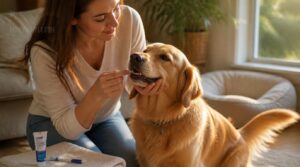
Rushing this step is the biggest mistake owners make, and it can set your dog against brushing for good. Good news: you can build trust in small, easy stages that feel natural to your dog. Here’s how to move from first taste to full brushing without any fuss.
Once your dog accepts a fingertip taste test, try these DIY dog grooming tips for poodles to fold gentle brushing into a broader at-home care routine.
Start With Toothpaste Tasting
Before brushing your dog’s teeth even touches a tooth, let your dog taste-test first. Try a flavor preference test: dab chicken or peanut-butter dog toothpaste on a spoon or your finger. Watch for lip licking or coughing, that’s a texture sensitivity check. Start with a mild flavor introduction, small dabs, then reward calmly. This utensil tasting method builds trust before toothbrushes for dogs or finger brushes enter the picture.
Practice Gentle Mouth Handling
Once your dog accepts the taste, move to hands-on work. Rub a finger gently along the gums and teeth for one to two minutes daily. Try gentle lip lifting, holding each lift for a few seconds. Watch for lip licking, tucked tails, or yawning, these stress signals mean pause. Keep the room calm and quiet, then reward relaxed behavior with a treat.
Introduce The Brush Gradually
Ready for a real brush? Let your dog lick chicken-flavored paste off it first, no bristles touching teeth yet.
Grab a silicone finger brush (bristles under 2mm) for day one. Keep sessions to just 10 seconds, adding 5 seconds daily.
If your dog pulls away, stop. Wait 30 seconds, then try again. This desensitization method builds trust without overwhelming them.
Reward Calm Behavior
Timing is everything here. The instant your dog holds still for the brush, deliver a reward, not two seconds later.
Pair it with specific labeled praise like "good stay" instead of generic "good dog." Follow with a treat or favorite toy they genuinely want.
Keep delivery consistent every session. That predictable pattern builds real trust, session after session.
Watch for Stress Signals
Your dog can’t say "stop," so their body does the talking. Watch for whale eye (whites showing), pinned-back ears, stiff or tucked tails, rapid panting past 60 breaths, or escape attempts.
Your dog can’t say stop, so watch their body: whale eye, pinned ears, a stiff tail, or panting past 60 breaths a minute
Four quick checks:
- Ears flattening back
- Tail gone stiff or tucked
- Panting spikes suddenly
- Body pulling away
Any of these? Pause. Slow desensitization beats pushing through dental anxiety.
How to Brush Your Dog’s Teeth
Now that your dog trusts the brush, it’s time to put it to work. Good technique makes all the difference between a quick, effective clean and a stressful tug-of-war. Here’s how to brush like you mean it, step by step.
Position Your Dog Comfortably

Before any brushing starts, comfort decides whether your dog cooperates. Small dogs do well on your lap; large breeds settle beside you on the floor. Try a non-slip mat under their paws, plus a rolled towel under the chest for gentle elevation.
Support the spine straight, tilt the head slightly upward, and keep a soft leash nearby for gentle restraint if needed.
Lift The Lips Gently
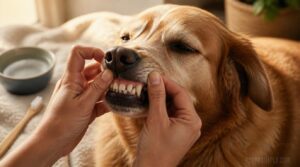
Once your dog settles in, it’s time for gentle mouth handling. Place your thumb on the left side of the upper lip, index finger on the right, lifting evenly with light, steady pressure. Watch for relaxed eyes and a soft mouth. If ears flatten, ease off immediately, reward calm behavior, and try again.
Use a 45-Degree Angle
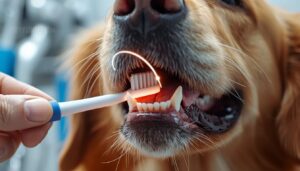
With lips lifted, angle matters most. Tilt your dog toothbrush so bristles meet the tooth at a 45-degree angle toward the gum line, bristle tips slipping into the sulcus where plaque hides.
Use light pressure, just the brush’s own weight. This angle reaches the crown and gum line together, covering canine and molar surfaces other angles miss.
Brush With Circular Motions
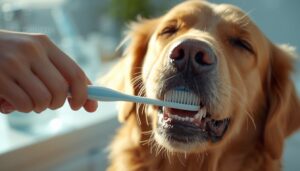
Once the angle’s set, add small circles instead of straight strokes. Circular motions lift up to 25% more plaque than back-and-forth brushing and feel gentler, almost like a massage.
Keep each stroke light and rhythmic, about two seconds per circle, pausing briefly every five. Move steadily along the gum line, whether using a dog toothbrush or finger brush.
Focus on Outer Molars
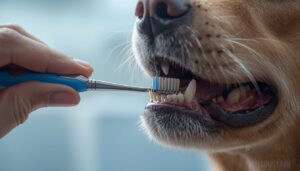
Because plaque forms fastest on the buccal surface, back molars deserve extra attention. This spot traps food in tiny grooves, becoming a real plaque hotspot within 24 hours.
Whether you’re using a toothbrush or finger brush, work along the gum line here.
- Angle bristles into the grooves
- Spend extra seconds per tooth
- Watch for early discoloration
Build an Effective Brushing Routine
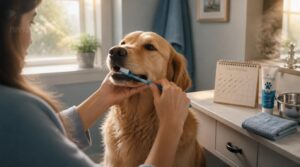
Learning the technique is only half the job. A routine turns brushing into a habit that actually protects your dog’s teeth long-term. Here’s how to build one that sticks.
Brush Daily When Possible
Once a day beats every other day, hands down. Daily brushing cuts plaque buildup by about 30%, and tartar can drop 40% in two weeks.
| Habit | Effect |
|---|---|
| Morning brushing | Clears overnight plaque |
| Daily consistency | Lower tartar, fresher breath |
| Playtime brushing | Builds cooperation |
| Weekly tracking | Confirms real progress |
Try pairing sessions with playtime for positive reinforcement your dog actually enjoys.
Keep Sessions Under Two Minutes
Most dogs lose focus after about 60 seconds, so keep total brushing under two minutes. Set a phone alarm for 1:45, or count 30 strokes per side. If your dog looks away early, pause, offer a treat, then finish the remaining time.
Short sessions cut cortisol by 25% and boost daily compliance to 80%.
Adjust for Life Stage
A puppy’s mouth isn’t a tiny adult mouth. Use a soft silicone finger brush on gums during teething, then switch to a standard brush by six months.
Adult dogs handle regular routines well. Senior dogs need extra soft bristles, a longer handle, and shorter sessions to ease jaw strain, while brachycephalic breeds like Frenchies need angled brushes for crowded teeth.
Track Plaque and Breath
A sniff test tells you more than you’d think. Persistent bad breath often signals plaque buildup, not just "dog breath."
Check the gum line weekly for redness or a fuzzy film, especially between teeth. Some owners use plaque-disclosing tablets to spot problem spots.
Track progress: less odor and cleaner gums after a few days of brushing means it’s working. If plaque or tartar persists, consult your veterinarian.
Overcome Brushing Resistance
Some pups just clamp down and refuse. Don’t force it — that builds more dog dental anxiety, not less.
Try gradual desensitization: 5-second sessions, adding 5 seconds daily until day 14. Reward with treats, watch for stress signals, keep things calm.
- Whale eye or lip licking
- Tail tucking
- Excessive drooling
- Stiff body posture
- Turning away repeatedly
Stop immediately if these appear.
Know When Veterinary Care is Needed
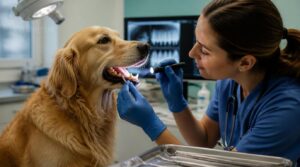
Brushing at home controls daily upkeep, but it can’t do everything your dog’s mouth needs. Some problems call for a trained eye and professional tools, not just good habits. Here’s what to watch for and when to bring in extra help.
Recognize Dental Disease Signs
How do you know brushing isn’t enough anymore? Watch for persistent bad breath, red swollen gums that bleed easily, discolored teeth, visible tartar, or loose teeth. Gum inflammation and plaque buildup often show up together.
Drooling changes or one-sided chewing can signal pain too. Catching these signs early means a quicker, easier fix at the vet.
Never Scrape Tartar Yourself
Once you spot those warning signs, resist the urge to grab a metal pick and start scraping at home. Never scrape tartar yourself — it’s hardened, and DIY tools easily slip, cutting gums or scratching enamel. Rough spots trap more plaque afterward.
Leave tartar control to your veterinarian. Professional dental cleaning uses proper instruments safely, protecting both gum line and enamel your dog needs for life.
Use Alternatives Between Brushings
Professional care matters, but daily gaps need backup too. Dental chews cut tartar buildup while your dog naturally chews.
Try water additives, dental wipes, or sprays on rushed days. A water flosser or oral irrigator flushes gumline debris gently.
Enzymatic toothpaste keeps breaking down plaque between sessions. Dog-safe mouth rinses work too — always check the label for veterinary approval first.
Schedule Professional Dental Cleanings
Home care only goes so far. Book veterinary dental cleanings yearly for most dogs, every six months for high-risk breeds.
At the visit, expect:
- A full oral exam
- Tartar scaling under anesthesia
- Dental X-rays for hidden problems
- Polishing to smooth enamel
- Home care instructions after cleaning
Never scrape tartar yourself between visits — leave that to the pros.
Consider Breed-Specific Dental Risks
Because your dog’s breed shapes its mouth, it also shapes its risks. Brachycephalic breeds like Bulldogs face crowding and plaque. Small dogs (Yorkshire Terriers, Dachshunds) get crowded teeth and periodontitis. Large breeds show gum recession and tooth wear.
| Breed Type | Main Risk | Watch For |
|---|---|---|
| Small | Crowding | Early calculus |
| Large | Recession | Root exposure |
| Brachycephalic | Plaque | Overcrowded teeth |
Frequently Asked Questions (FAQs)
Is it too late to start brushing dogs’ teeth?
Never, honestly. Even senior dogs show measurable plaque reduction within five days, and gingivitis often reverses in weeks. Regular pet dental hygiene lowers periodontal disease risk and helps longevity, so ask your vet before starting.
What is the 3 3 3 rule for brushing teeth?
That’s a human dental habit, not a dog one. For pups, stick with a 45-degree angle, gentle circular motions on outer surfaces, light pressure, and sessions under two minutes—paired with the 7-Day Desensitization Method for nervous dogs.
Can I scrape plaque off my dog’s teeth?
Skip the metal scaler; it can cause gum injury or infection. Instead, try a soft plastic scraper on outer teeth only, paired with tartar-control treats, regular brushing, and yearly professional cleanings for anything a scraper can’t reach.
Is brushing dogs’ teeth necessary?
Yes, truly. Left alone, plaque hardens into tartar within days, fueling gum disease, bad breath, and costly vet bills. Daily brushing cuts tooth loss risk by half and helps maintain lasting oral health.
What age is too old to start brushing?
It’s rarely too late. Vets set safe initiation up to age 10 without severe disease, and even dogs starting at 5 or later see roughly a 30% drop in tartar—proof that older dog adaptation still pays off.
Can I use a washcloth instead of a brush?
Washcloths work in a wipe, wrapped gently around your finger with dog-safe toothpaste. It’s a decent backup, but bristles reach between teeth better. Use gum line brushing motions, avoid human toothpaste, and switch to a brush when possible.
How much does professional dog teeth cleaning cost?
Standard cleanings run $100 to $300, with specialty or urban clinics reaching $ Add anesthesia, X-rays, or extractions, and totals climb further. Package deals, pet insurance, and financing can trim costs, so ask your vet about savings options.
Will my dogs breath ever smell completely normal?
Picture fresh, neutral breath as your new normal. With daily brushing and enzymatic paste, plaque odor drops fast, keeping volatile sulfur compounds low and your dog’s smile pleasantly clean, not just "less bad.
Is it normal for gums to bleed slightly?
A little bleeding can happen, especially if your dog’s gums are inflamed from plaque buildup. If it doesn’t stop quickly, or keeps happening, talk to your vet, since it could signal canine gingivitis or early gum disease.
Conclusion
Some owners believe dental disease is just cosmetic, a smell to tolerate rather than a threat to treat. That theory doesn’t hold up.
Left untreated, plaque becomes bone loss, infection, and pain your dog can’t voice.
Learning how to brush dog teeth changes that trajectory entirely. Two minutes a day, done consistently, builds a habit stronger than any dental chew.
Your dog won’t thank you in words. A healthy mouth, years of comfortable eating, and clean vet checkups will speak for themselves.
- https://vcahospitals.com/know-your-pet/dental-disease-in-dogs
- http://www.thepetlabco.com/?utm_source=akc&utm_medium=partnerships&utm_campaign=akc_ecom&utm_term=dental_articles&utm_content=akc.org
- https://my.clevelandclinic.org/health/diseases/10953-plaque
- https://tandartspraktijkduinzigt.nl/en/oral-hygiene/
- https://portalcris.lsmuni.lt/server/api/core/bitstreams/30336c43-339d-4105-860e-b2ca2bcf9ee3/content