
This site is supported by our readers. We may earn a commission, at no cost to you, if you purchase through links.

Most dog owners have grabbed whatever shampoo was nearby in a pinch — a quick bath after a muddy walk, a surprise skunk encounter, no dog shampoo in sight. It feels harmless.
But your dog’s skin operates on a completely different biological level than yours, and that single substitute can quietly set off a chain reaction beneath the fur. Dog skin sits at a pH between 6.5 and 7.5, while human shampoo is formulated for skin closer to 4.5 — acidic enough to strip the protective barrier dogs depend on. What follows covers everything you need to know to keep bath time safe.
Table Of Contents
- Key Takeaways
- Why Human Shampoo is Unsafe for Dogs
- Risks of Using Human Shampoo on Dogs
- Harmful Ingredients in Human Shampoo
- Potential Health Problems for Dogs
- Emergency Alternatives to Human Shampoo
- Choosing The Right Dog Shampoo
- Safe Bathing Practices for Dogs
- What to Do if You Used Human Shampoo
- Common Myths About Dog Shampoo
- Vet Recommendations for Dog Grooming
- Frequently Asked Questions (FAQs)
- What human shampoos are safe for dogs?
- Can I use Garnier Fructis on my dog?
- Is human shampoo bad for dogs?
- Does human shampoo cause dry skin in dogs?
- Is human shampoo good for dogs?
- What happens if a dog ingests human shampoo?
- What is the difference between human shampoo and dog shampoo?
- Why should dogs have their own shampoo?
- What can I use instead of dog shampoo?
- What can you use to wash a dog?
- Conclusion
Key Takeaways
- Your dog’s skin sits at a pH of 6.5–7.5, and human shampoo — formulated for our more acidic 4.5–5.5 range — strips the protective barrier dogs rely on, often triggering redness, dryness, and infection within 48 hours.
- With only 3–5 skin cell layers (compared to our 10–15), your dog’s skin loses moisture fast and can’t bounce back quickly from harsh ingredients like sulfates, parabens, synthetic fragrances, or formaldehyde releasers commonly found in human products.
- In a true emergency, diluted tear-free baby shampoo (1 part to 10 parts water, lukewarm) is the safest stopgap — but it’s a one-time fix, not a routine, and switching back to a pH-balanced dog shampoo right after is non-negotiable.
- Long-term use of the wrong shampoo doesn’t just cause surface irritation — it leads to chronic yeast overgrowth, follicle damage, and a 40% increase in shedding that can take months to reverse.
Why Human Shampoo is Unsafe for Dogs

Your dog’s skin works very differently from yours, and that gap matters more than most people realize. A few key factors explain why human shampoo can quietly cause real harm — even after just one wash.
Understanding why dogs need specially formulated shampoo starts with recognizing just how differently their skin is built to function.
Here’s what’s actually going on beneath the fur.
Differences in Skin PH
pH is the quiet force behind your dog’s skin health. Your scalp sits around 4.5–5.5, protected by an acid mantle. Your dog’s canine skin runs closer to 6.5–7.0 — nearly neutral.
Key differences that matter:
- Acid mantle contrast is significant between species
- Barrier enzyme activity shifts when pH drops
- Microbiome shift follows pH disruption
- Cell layer thickness is nearly half yours
- infection resistance affects infection resistance
Veterinary advice is clear: mismatched skin pH balance causes real damage.
dog epidermis pH range shows it generally sits between 7.0 and 7.5.
Sensitivity of Dog Skin
That thinner pH barrier makes a real difference — and here’s why. Your dog’s canine skin has just 3 to 5 epidermal layers, compared to human 10 to 15. That’s a paper-thin shield against the world.
| Skin Factor | Dogs vs. Humans |
|---|---|
| Epidermal layers | 3–5 vs. 10–15 |
| Environmental Irritants response | Rapid immune activation |
| Genetic Predisposition to allergies | Higher in many breeds |
| Age‑Related Sensitivity | Puppies most vulnerable |
Weaker Barrier Function means skin irritation hits faster. Microbiome Diversity drops quickly when pH balance shifts — and veterinary advice consistently links that disruption to skin allergies in canine skin. Flea allergy dermatitis is a common trigger for canine skin issues.
Impact on Natural Oils
That weakened barrier doesn’t stop there — it also puts your dog’s natural oil layer at risk.
Your dog’s skin produces sebum, a thin protective film that locks in moisture and keeps irritants out. Human shampoo strips it fast. Here’s what happens next:
- Sebum layer disruption leaves dog skin exposed to allergens
- Moisture loss accelerates, making fur feel rough and dry
- Barrier damage deepens with every wash using the wrong shampoo ingredients
- Microbiome shift lets odor-causing bacteria take over
- Compensatory oil production kicks in, creating a greasy rebound cycle that worsens skin irritation
Risks of Using Human Shampoo on Dogs

Using human shampoo on your dog isn’t just a minor misstep — it can trigger a chain of real skin problems that build up over time.
The risks go beyond a little dryness, touching everything from surface irritation to deeper health concerns. Here’s what you need to watch out for.
Skin Irritation and Redness
One wash with human shampoo can set off a chain reaction on your dog’s skin. Redness onset timing is fast — blotchy patches show up on the belly and inner thighs within hours. Here’s what barrier breakage signs look like as they progress:
| Symptom | Timeline |
|---|---|
| Skin irritation begins | 0–4 hours |
| Inflammation heat rise | 12–24 hours |
| Dandruff appearance | 24–48 hours |
| Barrier breakage signs | 2–4 days |
| Hyperpigmentation development | Weeks of repeated use |
Canine skin signals distress fast — don’t ignore it.
Increased Infection Risk
Once dog’s skin barrier is compromised, bacterial overgrowth moves in fast.
Picking the right formula matters more than most people realize, so it’s worth understanding what dog shampoo ingredients actually protect or harm your dog’s skin before that barrier breaks down.
Staphylococcus bacteria thrive in the pH-disrupted environment, and yeast proliferation — especially Malassezia — follows closely in warm, moist areas like paws and ears.
This microbial imbalance can trigger secondary infections within 48 hours.
Barrier compromise doesn’t just cause skin irritation; it opens the door to serious dog skin conditions that require veterinary advice to resolve.
Allergic Reactions
Some dogs react almost immediately — and the severity levels vary widely. Trigger ingredients like synthetic fragrances, sulfates, parabens, and artificial dyes drive most allergic reactions.
Breed susceptibility matters too: Golden Retrievers, Bulldogs, and Pugs tend to react harder.
Symptom timeline generally peaks one to two hours post-bath.
Treatment options range from cool-water rinsing to antihistamines, but persistent skin irritation warrants a veterinarian visit.
Shampoo alternatives formulated for dog skin prevent this entirely.
Harmful Ingredients in Human Shampoo

Not all shampoos are created equal — and your dog’s skin pays the price when the wrong ingredients show up at bath time.
Human shampoos often contain compounds that are perfectly fine for us but genuinely harmful to dogs.
Here are the key offenders you need to know about.
Sulfates and Parabens
Two ingredients worth knowing by name: sulfates and parabens.
Sulfate foaming agents like sodium lauryl sulfate strip your dog’s natural oils in a single wash, leaving skin dry and exposed.
Parabens — common preservatives — raise concern through paraben hormone mimicry and skin barrier penetration, especially when your dog licks residue off their coat.
Residue licking exposure makes this more than a skin issue.
Choose sulfatefree, parabenfree formulas instead.
Artificial Fragrances and Dyes
Fragrances and dyes do more damage than most pet owners realize. Synthetic dye risks include petroleum-derived colorants like Red 40 and Blue 1, which penetrate your dog’s thin skin through dermal absorption and trigger allergic reactions.
Fragrance-induced allergies from phthalate toxicity disrupt hormones — and olfactory overload stresses dogs whose sense of smell is 10,000 times stronger than yours.
Phthalates in fragranced shampoos disrupt your dog’s hormones and overwhelm a nose 10,000 times more sensitive than yours
Choose fragrance-free formulas with natural ingredients to protect your dog’s skin.
Toxic Chemicals for Dogs
Beyond sulfates and parabens, human shampoo hides a third wave of harmful agents.
Formaldehyde releasers like DMDM hydantoin burn and itch sensitive dog skin. Ethanolamine compounds form carcinogenic nitrosamines, while isothiazolinone preservatives — banned in several countries — trigger allergic dermatitis.
These endocrine disruptors quietly worsen dog skin conditions over time. Veterinary dermatologists link repeated exposure to serious, lasting pet health damage.
Potential Health Problems for Dogs
Using human shampoo once might seem harmless, but the effects on dog’s skin can build up faster than you’d expect.
From surface dryness to deeper skin damage, the problems tend to show up in a few specific ways.
Here’s what to watch for.
Dry, Flaky Skin
One bath with human shampoo can leave your dog’s skin looking like it’s dusted with chalk.
Dog skin has only 3 to 5 cell layers — far thinner than ours — so it loses moisture fast.
Without proper Barrier Repair and Moisturizing Treatments, Seasonal Dryness worsens quickly.
Gentle Rinses, Dietary Supplements like fish oil, and veterinary advice keep canine skin health on track.
Hot Spots and Dermatitis
Dry skin doesn’t always stay dry — it can quickly turn into something more painful. When your dog’s skin barrier breaks down, bacteria already living on dog skin, like Staphylococcus, can cause Bacterial Overgrowth quickly. Hot spots appear red, raw, and weeping within 24–48 hours.
Watch for these warning signs:
- Warm, moist patches with matted fur
- Yeast Infection odor — sour or foul‑smelling discharge
- Constant licking that signals real Pain Management needs
Veterinary advice and proper pet care tips help protect canine skin health before Environmental Triggers worsen things.
Long-Term Skin Damage
Hot spots are just the beginning. Repeated use of human shampoo causes Barrier Thinning that doesn’t fully reverse — your dog’s protective layers stay compromised for months. Sebum Imbalance follows, leaving the coat brittle and the skin 40% drier than normal. Chronic Yeast Overgrowth spreads across up to 15% of the body, while Follicle Atrophy increases shedding by 40%.
| Condition | Cause | Long-Term Risk |
|---|---|---|
| Sebum Imbalance | Oil stripping | Greasy buildup, brittle coat |
| Chronic Yeast Overgrowth | pH disruption | Persistent odor, scaly patches |
| Follicle Atrophy | Nutrient loss | Patchy hair loss, slow regrowth |
Persistent Dermatitis Risk grows with every bath. Veterinary advice and consistent pet grooming with proper dog shampoo are your best defense against lasting dog skin conditions.
Emergency Alternatives to Human Shampoo

Sometimes life happens and out of dog shampoo at the worst possible moment.
The good news is that few human products can in a pinch — as long as you know which ones are least likely to cause irritation**.
Here’s what’s actually worth reaching for when you’re in a bind.
Using Baby Shampoo Safely
When you’re caught without dog shampoo, baby shampoo is your best emergency skin relief option — but use it carefully. Dilute it at 1 part shampoo to 10 parts water for gentler contact with canine skin health.
Temperature control matters too: lukewarm water only. Before full application, allergy testing on a small patch helps catch reactions early.
Always switch back to proper dog shampoo quickly.
Fragrance-Free Human Shampoos
Fragrance-free human shampoo is a step up from scented options — it removes a common irritant — but it’s not a clean pass.
Surfactant strength is still too high for canine skin, and the additive load often includes AHAs or botanical extracts that can sting. Humectant benefits like glycerin add minor moisture, but veterinary guidance is clear: emergency use only, never routine.
Diluting Shampoo in Emergencies
When human shampoo is your only option, dilution ratios matter more than most owners realize. Mix one part baby shampoo with ten parts lukewarm water — water temperature affects absorption, so keep it warm, not hot. This mixing technique reduces harshness on canine skin health without eliminating cleaning power.
Stay within safety limits: once only. Post‑emergency care means switching to a veterinarian-recommended dog shampoo immediately to prevent skin problems.
Choosing The Right Dog Shampoo
Finding the right shampoo for your dog doesn’t have to feel overwhelming. The good news is that there are clear, practical options based on your dog’s skin type, age, and health needs.
what to look for when making your choice.
PH-Balanced Formulas

Your dog’s skin thrives in a narrow pH window — roughly 6.5 to 7.5. A pH-balanced shampoo keeps that balance intact.
Look for formulas built around:
- Coconut Cleanser Base — gentle, soap-free cleaning without stripping oils
- Citric Acid Tuning — adjusts formula pH to match canine skin health
- Glycerin Hydration Boost — locks in moisture after every wash
- Panthenol Conditioning Additive — leaves the coat soft without residue
- Alkalinity Control Agents — stabilize the formula for dog grooming safety
Veterinary advice consistently points to pH-balanced shampoos as the foundation of a healthy skin pH balance routine.
Medicated and Hypoallergenic Options

Some dogs need more than a basic wash. If your dog has a skin condition, medicated dog shampoos are the answer.
Antifungal Shampoos containing ketoconazole target yeast overgrowth. Antibacterial Formulas with chlorhexidine treat infections like pyoderma.
For itchy, sensitive canine skin, Hypoallergenic Oatmeal options — like Heppers Oatmeal Pet Shampoo — calm irritation gently.
Seborrhea Relief formulas use salicylic acid to clear flaky buildup.
Always follow Veterinary Application Tips: leave medicated shampoos on for 10 minutes before rinsing.
Age-Appropriate Choices

Your dog’s age matters more than most people realize regarding choosing the right shampoo.
Puppy shampoo gentleness isn’t just marketing — puppies under 12 weeks have thinner, more reactive canine skin.
Senior moisturization needs shift too, with oatmeal and glycerin becoming essential after age 7.
Adult change timing usually falls around 6 months.
Follow veterinary age recommendations and breed-specific age guidelines for the best pet care tips.
Safe Bathing Practices for Dogs
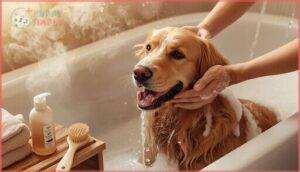
Bathing your dog the right way matters just as much as choosing the right shampoo. A few simple habits can protect their skin and keep their coat healthy long-term.
Here’s what you need to know before the next bath time.
Recommended Bathing Frequency
Bathing frequency isn’t one-size-fits-all — your dog’s coat type schedule, age-based frequency, and activity level timing all matter. Short-haired breeds need baths every 6–8 weeks, while curly or silky coats need every 3–4 weeks.
Seasonal adjustments apply too: summer calls for more frequent washing.
For dogs with skin conditions, veterinary advice shapes everything.
Good pet health starts with the right routine.
Overbathing Risks
Too much of a good thing? It applies to baths too. Washing your dog too often triggers three real problems:
- Microbiome Disruption — beneficial bacteria vanish, leaving room for Staphylococcus overgrowth
- pH Shift — canine skin health depends on a neutral range; frequent washing pushes it alkaline
- Coat Brittleness and Dry Itch — stripped oils cause dog skin conditions fast
Veterinary advice is clear: less is more.
Proper Rinsing Techniques
Rinsing matters just as much as the shampoo you choose. Use lukewarm water around 37–39°C — too hot worsens irritation, too cold and your dog tenses up, trapping residue.
Work back-to-front for proper rinsing direction, protect sensitive areas like eyes and ears, and always do a final residue check. Leftover dog shampoo causes skin problems fast.
What to Do if You Used Human Shampoo
It happens — you grabbed what was nearby and used your own shampoo on your dog.
The good news is that a single wash rarely causes lasting harm, but you’ll want to keep a close eye on how your dog’s skin responds.
Here’s what to watch for and how to help your pup feel comfortable again.
Signs of Skin Irritation
Watch your dog closely in the 24–48 hours after a bath. Redness patterns often appear first on the belly or armpits — pink, blotchy patches where fur is thinnest.
Itching behavior like nonstop scratching or paw‑chewing signals real discomfort. Check for flaking texture along the back, lesion appearance such as small red bumps, and coat odor that smells sour or musty.
Steps to Soothe Your Dog’s Skin
Once you spot those warning signs, act quickly — your dog’s skin needs help now.
- Cool Water Rinse — Flush the coat for 5–10 minutes to remove residue.
- Oatmeal Soak — Mix one cup ground oats per gallon of lukewarm water; soak 10–15 minutes.
- Gentle Drying — Pat dry; never rub irritated skin.
- Moisturizing Sprays — Apply a ceramide-based pet spray on dry skin. Add Humidifier Use (40–60% humidity) to support canine skin health overnight.
When to Contact a Veterinarian
Home remedies can only go so far.
If your dog shows persistent redness covering large areas, excessive scratching that won’t stop, facial swelling, or eye irritation after rinsing, call your vet right away.
Systemic symptoms — vomiting, lethargy, or difficulty breathing — mean you should skip the phone call and go directly to an emergency clinic.
These are signs of serious canine skin conditions that need professional care fast.
Common Myths About Dog Shampoo
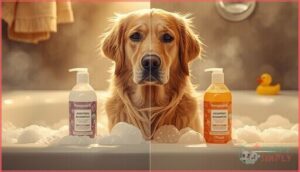
There’s a lot of misinformation floating around about what’s safe to use on your dog’s skin. Some of it sounds reasonable on the surface, but the reality is a bit more complicated.
Here are three common myths worth clearing up.
Is Baby Shampoo Always Safe?
Baby shampoo isn’t automatically safe for canine skin — pH Compatibility is the real issue. Dog skin sits at a neutral 6.5–7.5, while baby shampoo targets human pH around 5.5. That mismatch can quietly wear down your dog’s skin barrier.
Tear‑Free Myths aside, "gentle" doesn’t mean dog-safe. Watch for these Ingredient Sensitivity concerns:
- Fragrances containing limonene or linalool can trigger allergic reactions
- Preservatives like parabens may irritate delicate dog skin
- Mild surfactants can still cause dryness with repeated use
Veterinary Guidance is clear: baby shampoo suits only true emergencies, using careful Dilution Ratios — roughly one part shampoo to ten parts water. For dog grooming safety, always return to a dog-specific formula afterward. That’s the cornerstone of sound veterinary advice for dog owners.
Can I Use Dish Soap or Dove Soap?
Dish soap does have a Flea Killing Effect — it breaks down the waxy coating on fleas — but that protection disappears the moment your dog steps out of the tub.
Worse, repeated use causes serious Skin Barrier Damage, leaving canine skin dry and cracked.
Dove soap presents similar Rinsing Challenges, with moisturizing residue clinging to thick coats.
Veterinary medicine reserves both for Veterinary Emergency Use only.
Are Natural Human Shampoos Better?
Natural labels can be misleading. "Eco-friendly" and "botanical" packaging sounds safe, but essential oil toxicity is a real concern — tea tree, peppermint, and ylang ylang can all harm your dog through skin absorption. Consumer perception often outpaces dermatologic testing on canine skin.
Without proper skin pH balance, even oatmeal shampoo formulated for humans falls short.
Veterinary advice for dog owners is consistent: choose products designed specifically for canine skin health.
Vet Recommendations for Dog Grooming
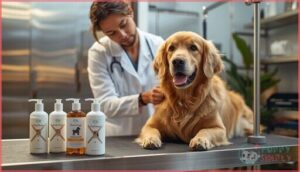
Vets have clear, practical guidance regarding keeping your dog’s skin and coat in good shape. Knowing what products to use — and what to skip — makes a real difference over time.
Here’s what professionals recommend.
Professional Advice on Shampoo Choice
Your vet’s advice on shampoo selection goes beyond just picking something gentle. Coat type matching matters — a double-coated breed needs a different formula than a silky-haired one.
Allergy screening helps identify triggers before they cause flare-ups.
Ask about veterinary prescription guidance if your dog has recurring skin conditions.
Ingredient transparency is key: know what’s in the bottle before it touches your dog’s skin.
Ingredients to Avoid
Some ingredients hiding in human shampoo can quietly wreck dog’s skin health.
Watch for sulfates, parabens, formaldehyde releasers like DMDM hydantoin, and synthetic dyes — all common triggers for allergic reactions.
Essential oil toxicity is real; tea tree and eucalyptus can harm dogs neurologically.
Propylene glycol and cocamidopropyl betaine may also irritate canine skin.
Always check the label before bathing your dog.
Maintaining Healthy Skin and Coat
A healthy coat doesn’t start and end at bath time. Canine skin health depends on consistent daily habits.
- Regular Brushing Benefits include distributing natural oils and catching early skin changes
- Omega Supplements and Nutrition for Skin directly support your dog’s skin pH balance
- Seasonal Coat Care and Environmental Moisture protection help prevent flare-ups year-round
Thoughtful grooming product selection makes all the difference.
Frequently Asked Questions (FAQs)
What human shampoos are safe for dogs?
Tear‑free baby shampoo is the closest thing to a veterinary‑approved alternative when you’re in a pinch.
Look for low‑sulfate formulas with gentle surfactants and a sensitive‑skin human label — and only use it once.
Can I use Garnier Fructis on my dog?
Garnier Fructis
Its sulfates, heavy fragrances, and acidic pH disrupt canine skin barrier, risking coat residue buildup, ingestion risks, and skin problems.
dog shampoo instead.
Is human shampoo bad for dogs?
Yes — human shampoo disrupts your dog’s skin pH balance and strips natural oils, weakening their skin barrier.
This invites allergic reactions and infections.
For canine skin health, always follow vet guidance and choose proper dog shampoo.
Does human shampoo cause dry skin in dogs?
After just one bath, your dog’s skin can feel tight, flaky, and itchy.
human shampoo disrupts canine skin health by stripping natural oils and throwing off the pH balance, leading to dryness.
Is human shampoo good for dogs?
No, it isn’t.
Human shampoo disrupts your dog’s natural pH balance, causes Skin Barrier Damage, strips essential oils, and raises the risk of infection. Veterinary Shampoo Guidance and choose proper dog shampoo instead.
What happens if a dog ingests human shampoo?
Swallowing even a small amount can cause gastrointestinal distress — vomiting, diarrhea, and lethargy signs may appear quickly.
Toxic ingredient absorption from sulfates or fragrances can escalate fast, making veterinary emergency care the right call.
What is the difference between human shampoo and dog shampoo?
The biggest gap comes down to pH balance and skin thickness.
Dog shampoo is formulated for canine skin health, using gentler surfactants and safer ingredients that preserve natural oils — something human shampoo simply wasn’t designed to do.
Why should dogs have their own shampoo?
Dogs have their own canine skin biology — unique pH, thinner barriers, and delicate natural oils.
Veterinary formulations exist precisely for this.
Proper Dog Grooming with the right Pet Shampoo Options means Allergy Prevention, Oil Preservation, and real Skin Barrier Support.
What can I use instead of dog shampoo?
In a pinch, try an oatmeal paste, baking soda paste, apple cider vinegar rinse, or cornstarch dry shampoo.
These natural ingredients support canine skin health without disrupting sensitive skin or coat balance.
What can you use to wash a dog?
The best option is always a pH-balanced dog shampoo.
In a pinch, try waterless spray, dry shampoo, cornstarch powder, or an oatmeal colloid bath to keep your dog clean and comfortable.
Conclusion
Is one unplanned bath really worth weeks of itching, flaking, and vet visits?
Using human shampoo on dogs disrupts the delicate pH balance that their skin depends on — and the damage often builds quietly before you notice it.
Your dog can’t tell you something’s wrong until the scratching starts.
Keeping a pH-balanced dog shampoo on hand isn’t just good grooming — it’s basic protection for the animal who trusts you completely.
- https://vermontruff.com/blogs/news/dog-skin-ph-vs-human-ph-importance-in-pet-care
- https://topdog.gr/en/the-ph-in-dog-shampoos-myths-and-truths/
- https://wagwonders.in/blogs/grooming-and-microbiome-tips-for-pets/the-hidden-dangers-of-using-human-shampoo-on-dogs
- https://midlandah.com/blog/how-often-should-i-bathe-my-dog-or-cat-and-can-i-use-human-shampoo/
- https://pupford.com/blogs/all/shampoo-for-dogs