This site is supported by our readers. We may earn a commission, at no cost to you, if you purchase through links.

Most dog owners spend more time picking their own shampoo than their dog’s—and that’s a problem. A dog’s skin sits at a pH of 6.2 to 7.4, noticeably more alkaline than human skin, which means your go-to two-in-one won’t just underperform—it can strip the natural oils that keep your pup’s coat healthy and their skin barrier intact.
The shampoo aisle doesn’t make things easier. Fragrance-free, hypoallergenic, medicated, natural—every bottle promises something, and few explain what’s actually inside. Knowing the difference between colloidal oatmeal that genuinely soothes inflamed skin and a "soothing mix" that’s mostly water and marketing can change bath time entirely.
The picks ahead cut through that noise, with options for every coat type, age, and skin concern.
Table Of Contents
- Key Takeaways
- Top 10 Best Dog Shampoos
- 1. Earthbath Oatmeal Aloe Dog Shampoo
- 2. Burt Bees Oatmeal Dog Shampoo
- 3. TropiClean Luxury Dog Shampoo
- 4. Vet Best Flea Tick Shampoo
- 5. Organic Lemongrass Dog Shampoo
- 6. Vermont Soap Organic Dog Shampoo
- 7. Arm Hammer Dog Deodorizing Shampoo
- 8. FURminator deShedding Dog Shampoo
- 9. Adams Plus Flea Tick Shampoo
- 10. Natural Lavender Puppy Shampoo
- How to Choose Dog Shampoo
- Ingredients That Help Dogs
- Ingredients to Avoid
- Medicated Shampoo Buying Tips
- Frequently Asked Questions (FAQs)
- Conclusion
Key Takeaways
- Your dog’s skin is more alkaline than yours (pH 6.2–7.4), so human shampoo can quietly strip the natural oils that keep their coat healthy and their skin barrier intact.
- Ingredients like colloidal oatmeal, aloe vera, and coconut-based surfactants genuinely soothe and protect, while artificial fragrances, sulfates, and parabens can trigger irritation, dryness, and even hormonal disruption over time.
- Matching shampoo to your dog’s coat type, age, and skin condition — not just grabbing the best‑smelling bottle — is what actually gets results, whether you’re dealing with shedding, fleas, yeast, or sensitive skin.
- For active issues like flea infestations or bacterial infections, shampoo is a first strike, not a complete fix — pairing it with longer‑term treatments (oral preventatives, dietary changes, vet guidance) is what keeps the problem from coming back.
Top 10 Best Dog Shampoos
Finding the right shampoo for your dog doesn’t have to feel like guessing in a crowded aisle. Each pick below was chosen with your dog’s skin health, coat type, and safety in mind. Here are the ten best dog shampoos worth your attention in 2026.
If you’re unsure where to start, this guide to choosing the best dog shampoo breaks down exactly what to look for based on your dog’s coat and skin needs.
1. Earthbath Oatmeal Aloe Dog Shampoo
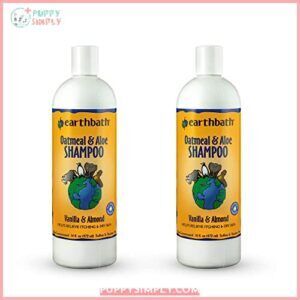
If your dog experiences dry, flaky skin or just needs a reliable everyday wash, Earthbath Oatmeal Aloe is worth a close look. Its soap-free, pH-balanced formula combines colloidal oatmeal and organic aloe vera to soothe irritation and lock in moisture without stripping natural oils.
You won’t find parabens, sulfates, or artificial fragrances here — just plant-derived cleansers and vitamins A, B, D, and E.
The mild vanilla‑almond scent won’t interfere with flea treatments either.
| Best For | Dog (and cat) owners dealing with dry, itchy, or sensitive skin who want a gentle, clean-ingredient shampoo safe for everyday use. |
|---|---|
| Volume | 32 fl oz |
| Scent | Vanilla-almond |
| Lather Level | Low |
| Skin Suitability | All breeds, sensitive |
| Key Ingredient | Colloidal oatmeal & aloe vera |
| Primary Benefit | Soothing & moisturizing |
| Additional Features |
|
- Soothes dry, flaky skin with colloidal oatmeal and aloe vera while keeping the coat soft and shiny
- Free of parabens, sulfates, artificial fragrances, and dyes — a solid pick for pets with sensitivities
- Won’t interfere with flea and tick spot-on treatments, so you can use it without worrying about reducing their effectiveness
- Very low-lather formula, which can feel like it’s not cleaning well — you may need to experiment with dilution
- The vanilla-almond scent is subtle enough that owners who like a strong post-bath fragrance will likely be disappointed
- Not a medicated shampoo, so it probably won’t be enough on its own for serious skin conditions or infections
2. Burt Bees Oatmeal Dog Shampoo
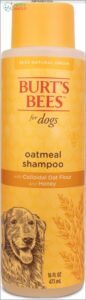
Burt’s Bees brings the same gentle philosophy from its human skincare line to your dog’s bath routine. The star ingredient here is colloidal oat flour, which penetrates the coat to calm itching and dryness rather than just sitting on the surface. Honey rounds that out with natural conditioning, leaving fur noticeably softer.
At $8.92 for 16 oz, it’s sulfate-free, paraben-free, and fragrance-free — a clean formulation that won’t aggravate sensitive skin during regular washes.
| Best For | Dogs with sensitive, dry, or itchy skin — especially puppies, adult dogs, and short-haired breeds that need a gentle, no-fuss shampoo for regular bathing. |
|---|---|
| Volume | 16 fl oz |
| Scent | Fragrance-free |
| Lather Level | Low |
| Skin Suitability | Sensitive, dry skin |
| Key Ingredient | Colloidal oat flour & honey |
| Primary Benefit | Itch relief & conditioning |
| Additional Features |
|
- Colloidal oat flour actively soothes irritation rather than just masking it, making it genuinely effective for sensitive skin
- Acts as a 2-in-1 shampoo and conditioner, so you skip the extra step and your dog’s coat stays soft and brushable
- Clean, fragrance-free formula with 95% naturally derived ingredients at a wallet-friendly $8.92 for 16 oz
- Low lather and thin consistency mean you may need to use more product per bath, especially on dirtier dogs
- Not well-suited for heavily soiled or long-haired breeds that need a deeper, more thorough clean
- Owners who like their dog to smell fresh after a bath won’t get that from the unscented formula
3. TropiClean Luxury Dog Shampoo
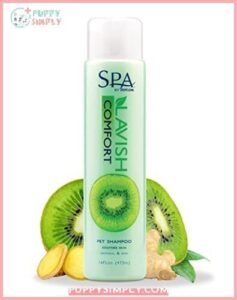
TropiClean’s Luxury Shampoo takes a 2-in-1 cleanse and condition approach, which means one less bottle cluttering your bathtub.
It blends vitamin E and aloe to hydrate and soften the coat during washing, while the papaya and coconut scent lingers well past bath time.
The formula lathers easily, rinses clean, and targets tangles before they become a brushing battle — a practical choice for dogs with longer or thicker coats.
| Best For | Dog owners with sensitive-skinned or allergy-prone pups who want a gentle, clean-rinsing shampoo with a light, lasting scent. |
|---|---|
| Volume | 16 fl oz |
| Scent | Coconut/plumeria |
| Lather Level | Moderate |
| Skin Suitability | Sensitive, all coat colors |
| Key Ingredient | Oatmeal & vitamin E |
| Primary Benefit | Softening & detangling |
| Additional Features |
|
- Tear-less, hypoallergenic formula is safe for sensitive skin and all coat colors, including dogs with tear stains
- Free of sulfates, parabens, dyes, and silicones — made in the USA with naturally derived ingredients
- Leaves fur silky soft with a fresh coconut/plumeria scent that can last up to a week
- Requires a full water bath — not a dry or waterless option
- Can feel drying on some coat types, so a separate conditioner may be needed
- Bottle has been known to leak during shipping, which can mean some product loss before you even open it
4. Vet Best Flea Tick Shampoo
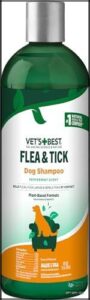
When fleas are already on your dog, you need something that works now — that’s where Vet’s Best steps in. Formulated with certified natural oils — rosemary, peppermint, and clove — it kills fleas, larvae, eggs, and ticks on contact during a single bath.
The catch: it only works while the lather sits on the coat, so that 5–10 minute contact window matters. Think of it as a first-strike tool, not a standalone prevention plan.
| Best For | Dogs with an active flea or tick problem who need fast, chemical-free relief — especially pups that spend a lot of time outdoors or whose owners prefer a natural approach alongside their regular prevention routine. |
|---|---|
| Volume | 12 fl oz |
| Scent | Peppermint |
| Lather Level | Moderate |
| Skin Suitability | All dogs, 12 weeks+ |
| Key Ingredient | Rosemary, peppermint & clove oils |
| Primary Benefit | Flea & tick killing |
| Additional Features |
|
- Kills fleas, larvae, eggs, and ticks on contact using certified natural oils — no harsh chemicals needed
- Leaves the coat soft, shiny, and fresh-smelling after just one bath
- Veterinarian-formulated and safe for dogs as young as 12 weeks
- Only works while the shampoo is on the coat, so consistent timing during the bath is essential
- The strong peppermint scent can be overwhelming in small spaces and may cause sneezing in sensitive dogs
- Doesn’t provide lasting protection — needs to be paired with a longer-term flea and tick prevention plan
5. Organic Lemongrass Dog Shampoo
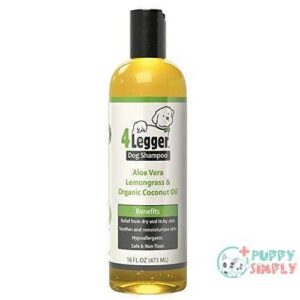
If you’re drawn to clean-label grooming, this USDA-certified organic shampoo is worth your attention. It blends lemongrass, aloe, coconut, olive, jojoba, and rosemary oils into a concentrated, plant-based formula — a little goes a long way. The lemongrass delivers natural antimicrobial and mild astringent action, lifting surface oils without stripping the coat dry.
As dogs age, their coat chemistry shifts noticeably, so pairing this formula with an understanding of how schnauzer wiry coat texture evolves over time helps you get the most from every wash.
It’s genuinely suitable for puppies and sensitive adult dogs, though the strong lemongrass scent won’t suit every nose.
| Best For | Pet owners who prioritize clean, toxin-free grooming and have dogs with dry, itchy, or sensitive skin. |
|---|---|
| Volume | 16 fl oz |
| Scent | Lemongrass & aloe |
| Lather Level | Rich |
| Skin Suitability | Sensitive, all sizes |
| Key Ingredient | Lemongrass & jojoba oil |
| Primary Benefit | Organic eco-grooming |
| Additional Features |
|
- USDA-certified organic and hypoallergenic — safe for puppies, sensitive adults, and even occasional human use
- Concentrated formula means a little goes a long way, offering solid value despite the higher price tag
- Leaves coats soft, shiny, and naturally brightened without relying on synthetic conditioners
- The lemongrass scent is strong and may overwhelm some dogs or their owners
- Pricier than conventional pet shampoos, which could be a barrier for budget-conscious shoppers
- Thin, watery consistency can feel slightly sticky on dense coats, especially when using clippers
6. Vermont Soap Organic Dog Shampoo
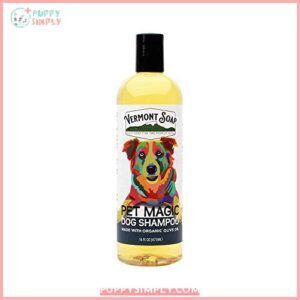
Vermont Soap’s organic dog shampoo takes a castile-based approach, using saponified coconut, olive, and jojoba oils as the cleansing foundation rather than synthetic detergents. Aloe vera and rosemary extract keep sensitive skin calm and hydrated, while lemongrass essential oil adds a light, natural scent that fades after rinsing.
The formula is sulfate-free, paraben-free, and petroleum-free — a clean profile that works well for dogs who react poorly to conventional shampoos.
At $15.19 for 16 oz, it’s solid value for an organic pick.
| Best For | Dogs with sensitive or allergy-prone skin whose owners want a clean, certified organic shampoo free from synthetic detergents and harsh chemicals. |
|---|---|
| Volume | 16 fl oz |
| Scent | Light citrus |
| Lather Level | Low |
| Skin Suitability | Sensitive skin |
| Key Ingredient | Olive & coconut oil |
| Primary Benefit | Sensitive skin care |
| Additional Features |
|
- USDA-certified organic formula built on real plant oils (coconut, olive, jojoba) instead of synthetic detergents — great for reactive skin
- Sulfate-, paraben-, and petroleum-free, with aloe and rosemary to soothe and moisturize while cleansing
- Light lemongrass scent that fades after rinsing, so your dog smells clean without a heavy chemical or perfume odor
- The initial essential oil smell straight from the bottle can be pretty strong and off-putting
- Very watery consistency makes it easy to accidentally over-pour or spill, and larger dogs may need a fair amount of product
- The oil content can leave a faint white residue on grass or standing water after an outdoor rinse
7. Arm Hammer Dog Deodorizing Shampoo
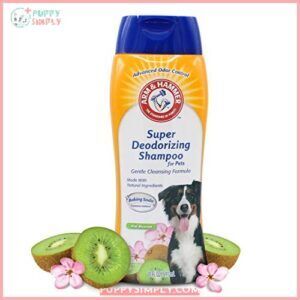
If your dog has a habit of rolling in things you’d rather not think about, Arm & Hammer’s Deodorizing Shampoo is practically made for them. Baking soda does the heavy lifting here, chemically neutralizing odors on contact rather than masking them with heavy fragrance.
Coconut-based surfactants and glycerin keep the cleanse gentle, while soybean protein conditions the coat.
The formula is sulfate‑free and paraben‑free, making it a safe routine pick for sensitive skin.
| Best For | Dogs that frequently get into smelly situations, as well as pups with sensitive skin or those just starting their grooming routine (8 weeks and up). |
|---|---|
| Volume | 20 fl oz |
| Scent | Kiwi blossom |
| Lather Level | Rich/thick |
| Skin Suitability | Sensitive, puppies 8 weeks+ |
| Key Ingredient | Baking soda |
| Primary Benefit | Odor neutralizing |
| Additional Features |
|
- Baking soda actively neutralizes odors rather than just covering them up, so your dog actually smells clean
- Gentle, tearless formula with moisturizing agents makes it safe for sensitive skin and puppies without drying out the coat
- Sulfate-free and paraben-free, so it’s a worry-free choice for regular use
- Some bottles arrive leaky, which can mean less product by the time it reaches you
- Very stubborn odors — think high-energy outdoor dogs — may need something stronger or multiple washes
- A few users notice a slightly rough coat texture with repeated use, so rotating with another shampoo occasionally is a good idea
8. FURminator deShedding Dog Shampoo
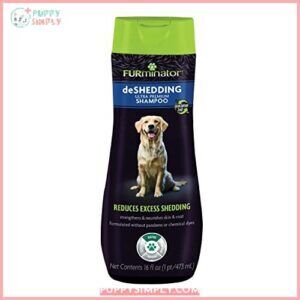
Shedding season can turn your sofa into a fur coat, and that’s exactly the problem FURminator’s deShedding Shampoo is built to solve. Omega 3 and 6 fatty acids nourish the skin and coat from the inside out, strengthening hair follicles so less fur ends up on your furniture.
The OdorCapture 360 technology neutralizes wet dog smell without leaning on heavy fragrances — a real win for sensitive skin. Paraben-free and dye-free, it’s gentle enough for regular use.
| Best For | Dog owners dealing with heavy seasonal shedding who want a gentle, chemical-free shampoo that also tackles that classic wet dog smell. |
|---|---|
| Volume | 16 fl oz |
| Scent | Fresh (OdorCapture) |
| Lather Level | Moderate |
| Skin Suitability | All coat types |
| Key Ingredient | Omega 3 & 6 fatty acids |
| Primary Benefit | De-shedding support |
| Additional Features |
|
- Omega 3 and 6 fatty acids deeply condition the coat, reducing shedding while improving shine and softness
- OdorCapture 360 neutralizes wet dog odor without harsh fragrances, making it safe for sensitive skin
- Paraben-free and dye-free formula is gentle enough for regular use
- Noticeable shedding reduction may take several washes rather than showing up after just one
- Most loose fur releases during post-bath brushing, not during the wash itself — so you still need to put in the brushing time
- Best results come from pairing it with the full FURminator grooming system, which adds to the overall cost
9. Adams Plus Flea Tick Shampoo
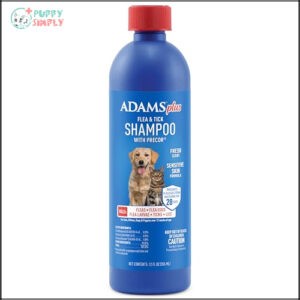
When fleas move in, you need something that hits back fast. Adams Plus Flea & Tick Shampoo does exactly that — killing adult fleas, ticks, lice, and eggs on contact. Its standout ingredient is Precor IGR (methoprene), an insect growth regulator that disrupts the flea life cycle for up to 28 days post-bath.
The formula also contains aloe and oatmeal, so it cleans without stripping. Safe for dogs and cats 12 weeks and older.
| Best For | Pet owners dealing with active flea, tick, or lice infestations who want fast-acting relief combined with up to 28 days of residual protection in a single bath. |
|---|---|
| Volume | 12 fl oz |
| Scent | Light fresh |
| Lather Level | Rich/creamy |
| Skin Suitability | Dogs & cats, 12 weeks+ |
| Key Ingredient | Pyrethrins & methoprene (IGR) |
| Primary Benefit | Flea & tick protection |
| Additional Features |
|
- Kills fleas, ticks, lice, and eggs on contact while the Precor IGR keeps newly hatched fleas from developing for up to 28 days
- Gentle, conditioning formula leaves coats soft and shiny — no harsh post-bath dryness
- Safe for both dogs and cats (puppies and kittens included) as young as 12 weeks
- Doesn’t replace a systemic preventative or environmental treatment, so heavy infestations may need a broader approach
- Protection only lasts 28 days, meaning regular repeat baths are needed to stay on top of ongoing flea problems
- Can irritate eyes and mucous membranes, so bath time requires careful application around the face
10. Natural Lavender Puppy Shampoo
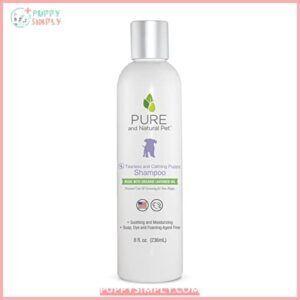
For a puppy’s very first bath, gentleness isn’t optional — it’s everything. This natural lavender puppy shampoo is tear-free and safe for pups 12 weeks and older, with organic lavender, calendula oil, and oatmeal extract doing the heavy lifting on soothing sensitive skin.
The pH sits close to 7, the surfactants are coconut-derived, and there are no harsh sulfates in sight.
The lather is light and the scent fades within days — but your pup’s coat stays soft.
| Best For | New puppy owners looking for a gentle, natural shampoo safe enough for a first bath with sensitive or easily irritated skin. |
|---|---|
| Volume | 8.47 oz (8-pack) |
| Scent | Lavender |
| Lather Level | Low |
| Skin Suitability | Puppies, sensitive skin |
| Key Ingredient | Lavender & calendula oil |
| Primary Benefit | Gentle puppy soothing |
| Additional Features |
|
- Tear-free and safe for puppies as young as 12 weeks, making bath time less stressful for both pup and owner
- Packed with organic ingredients — lavender oil, calendula, and oatmeal — that calm itchy, sensitive skin
- Made with eco-friendly, USA-sourced ingredients and no harsh sulfates
- Lathers lightly, which can feel like it’s not cleaning as thoroughly even when it is
- The lavender scent fades quickly, so don’t expect a lasting fragrance after the bath
- Pricier than most standard dog shampoos, especially when factoring in regular use
How to Choose Dog Shampoo
Picking the right shampoo isn’t just about what smells good — it’s about what actually works for your dog’s skin, coat, and lifestyle. A few key factors can narrow things down quickly and save you from a lot of trial and error. Here’s what to keep in mind before you grab a bottle.
Skin and Coat Type
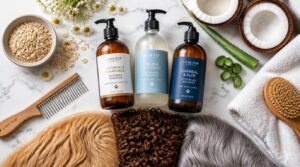
Not every dog has the same bathing needs — and that starts with the coat. Double-coated breeds blow their undercoat twice yearly, requiring shampoos that rinse clean without disrupting skin microbiome balance. Curly coats, shaped by keratin gene variants, trap debris and mat quickly. Consider your dog’s coat:
- Oily or dense coats — sulfate-free, residue-free formulas
- Dry or sensitive skin — oatmeal shampoo benefits shine here
- Curly or wiry textures — hypoallergenic dog shampoo reduces irritation risk
Knowing the hair vs fur distinction can guide you to the most suitable shampoo for your pup.
Puppy Versus Adult Dogs
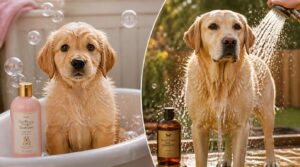
Age matters more than most owners realize. A tear-free puppy shampoo protects developing eyes and sensitive skin, since puppies under one year haven’t fully stabilized their skin barrier.
Adult dogs tolerate broader formulas, but always check pH balance. Your dog grooming routine should shift as your pup matures — what worked at eight weeks won’t serve a two-year-old.
Bathing Frequency Needs
How often your dog needs a bath depends on far more than a calendar reminder. Lifestyle, coat type, and age all shape the right schedule.
Most dogs do well with a bath every four to six weeks, but an active dog that swims or rolls in mud may need one every one to three weeks.
Odor and Shedding Concerns
If bathing frequency sets the schedule, odor and shedding often force you to adjust it.
- Brush regularly to remove loose fur carrying oils and bacteria
- Dry your dog thoroughly after every bath
- Clean grooming tools after each session
- Choose a baking soda formula for odor neutralization
- Address yeast smells with vet-recommended shampoos promptly
Allergies and Sensitivities
Some dogs are walking proof that "natural" doesn’t always mean safe — essential oils and botanical extracts can trigger contact dermatitis just as readily as synthetic chemicals. If you notice redness, hives, or frantic scratching within hours of a bath, the shampoo is likely the culprit.
Fragrance-free, hypoallergenic formulas with colloidal oatmeal and aloe vera are your safest starting point.
Ingredients That Help Dogs
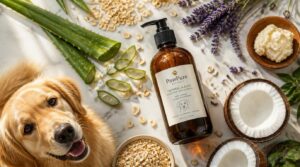
Not all shampoo ingredients are created equal, and the right ones can make a real difference for your dog’s skin and coat. Some work to soothe irritation, others lock in moisture or neutralize odors, and a few do all three at once. Here are the key ingredients worth looking for.
Colloidal Oatmeal Benefits
Colloidal oatmeal is quietly one of the hardest‑working ingredients in your dog’s shampoo. It contains avenanthramides, natural compounds that reduce inflammatory signals in the skin, delivering genuine itch relief for dogs with sensitive skin or dermatitis.
It also strengthens the skin barrier, locks in moisture, promotes a balanced skin microbiome, and provides antioxidant protection — all in one rinse.
Aloe Vera for Dryness
Aloe vera is roughly 99 percent water, which makes it a natural fit for dry, flaky dog skin. Its mucopolysaccharides bind moisture to the outer layers rather than letting it evaporate — reducing transepidermal water loss and keeping skin feeling softer between baths.
That’s why you’ll find it in most vet-recommended and hypoallergenic dog shampoos targeting dryness.
Coconut-based Cleansers
Think of coconut-based cleansers as the gentle workhorse of dog shampoos. Coconut-derived surfactants like coco betaine lift dirt and oil without stripping your dog’s natural skin barrier — a key advantage over harsher sulfates.
- Maintains skin’s neutral pH (6–7.5)
- Delivers emollient coat benefits for softer fur
- Provides gentle foaming action for full-body washes
- Helps maintain moisture barrier to prevent post-bath dryness
- Offers natural coconut scent that’s mild and vet-tolerated
Baking Soda Odor Control
Baking soda works by doing something most ingredients can’t: it neutralizes odor molecules rather than burying them under fragrance. Its porous crystal structure traps and absorbs volatile acidic compounds — the kind behind that classic wet-dog smell — reducing them at the source.
In a shampoo formula, that means genuinely fresher results, not just a scented cover-up.
PH-balanced Formulas
Your dog’s skin sits at a pH of 6–7.5, and most human shampoos fall well below that range, which is enough to disrupt the acid mantle — the skin’s first line of defense against bacteria and moisture loss.
A pH-balanced formula keeps that barrier stable, letting gentle, plant-derived surfactants clean without triggering dryness, redness, or itching.
Ingredients to Avoid
Not every ingredient on a shampoo label is there to help your dog — some can quietly cause more harm than good. Knowing what to watch out for makes it much easier to choose a product you can actually trust. Here are the key ingredients worth avoiding when you’re shopping for your pup.
Artificial Fragrances
Scent might seem harmless, but artificial fragrances are among the most common culprits behind skin flare-ups in dogs. Their canine olfactory sensitivity is roughly 10,000 times sharper than ours, so synthetic aroma compounds don’t just smell strong — they can actively irritate sensitive nasal passages and skin simultaneously.
Dogs’ noses are 10,000 times sharper than ours, making artificial fragrances a skin irritant, not a selling point
Four synthetic fragrance types to watch for on your dog’s shampoo ingredient list:
- Aldehydic blends — bright, soapy scents linked to skin sensitization
- Floral synthetic esters — rose and jasmine mimics that linger on fur
- Fruity aroma compounds — fully artificial, with no natural plant origin
- Woody ketone accords — long-lasting, but among the most irritating to dogs
Fragrance longevity sounds appealing to us, but the chemical persistence that keeps synthetic fragrances smelling fresh is exactly what prolongs exposure for your dog. That extended contact raises the risk of scent-induced irritation, redness, and compulsive scratching. When checking the label, "fragrance" or "parfum" listed as a single ingredient usually masks dozens of undisclosed synthetic compounds. Choosing fragrance-free pet products removes that guesswork entirely.
Harsh Sulfates
Artificial fragrances aren’t the only ingredient pulling double duty against your dog’s skin.
Harsh sulfates — specifically sodium lauryl sulfate — work as anionic surfactants that strip natural oils right alongside the dirt, leaving the lipid barrier compromised. That disruption can trigger compensatory oil overproduction, meaning your dog’s coat may actually get greasier faster.
Sulfate-free formulas protect those oils instead.
Parabens and Phthalates
Two more preservatives worth scrutinizing are parabens and phthalates — synthetic chemicals that function as shelf-life extenders and fragrance carriers. Both are classified as suspected endocrine disruptors, meaning they can mimic hormones and interfere with your dog’s natural signaling pathways.
Cumulative exposure from multiple grooming products compounds this concern.
Look for labels that specifically confirm paraben‑free and phthalate‑free formulations, or choose shampoos preserved with plant‑based alternatives instead.
Petroleum-based Ingredients
Parabens and phthalates aren’t the only synthetic ingredients worth watching on a dog shampoo ingredient list. Petroleum-based ingredients — including mineral oil, paraffin, and silicones — turn up frequently in mass-market formulas, and their effects on dog shampoo safety are worth understanding before you lather up.
Mineral oil feels lightweight and spreads easily, but it creates a non-volatile moisture barrier that can clog pores and slow normal skin respiration over time.
Irritating Preservatives
Preservatives are the silent troublemakers hiding in otherwise clean-looking formulas.
Isothiazolinones like MI and MCI — common in rinse-off products — are well-documented allergens that trigger contact dermatitis even at low concentrations.
Formaldehyde releasers such as imidazolidinyl urea slowly off-gas irritants that affect mucous membranes.
Phenoxyethanol, parabens, and propylene glycol round out the list of ingredients worth flagging before you buy.
Medicated Shampoo Buying Tips
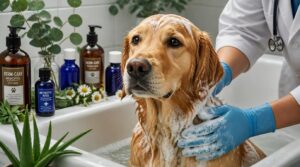
Medicated shampoos aren’t one-size-fits-all, and picking the wrong one can do more harm than good. Whether your dog is dealing with yeast, bacteria, or persistent fleas, there are a few key things to know before you grab a bottle. Here’s what to keep in mind when shopping for a medicated option.
When to Ask Vets
Sometimes a shampoo simply isn’t enough. If your dog’s itching, redness, or swelling hasn’t improved within a few days of washing, that’s your cue to call a vet. Persistent skin odor after bathing, discharge from skin folds, or recurring dandruff can all signal infection that no over-the-counter bottle will fix.
Yeast Infection Shampoos
Yeast infections in dogs — specifically malassezia dermatitis — respond well to shampoos combining 2% miconazole and 2% chlorhexidine, which target fungal overgrowth directly at the skin surface. Look for these active ingredients on any antifungal pet shampoo label before buying.
Here’s what an effective yeast infection shampoo should include:
- Ketoconazole or miconazole to disrupt fungal cell membranes
- Chlorhexidine to eliminate both yeast and secondary bacteria
- Salicylic acid to shed dead skin and reduce inflammation
- Aloe vera or colloidal oatmeal to soothe irritation during treatment
Leave the shampoo on for 5–10 minutes — rinsing too soon means the active ingredients barely touch the infection. Twice-weekly baths are standard until symptoms clear.
Diet plays a quieter but real role too. High-sugar, high-carb foods feed yeast populations from the inside, so pairing a vet-recommended shampoo with dietary adjustments gives topical treatment a real fighting chance. If you prefer a gentler route, organic tea tree formulas like 4-Legger offer natural antifungal action, though they work best for mild or preventative cases rather than active infections.
Bacterial Skin Issues
Staphylococcus pseudintermedius drives over 90% of canine pyoderma cases, and it doesn’t give up easily.
For active bacterial infections, 2–3% chlorhexidine shampoo is your most reliable topical option — it disrupts bacterial cell membranes directly.
Dogs with skin folds are especially vulnerable, since trapped moisture becomes a breeding ground.
Flea and Tick Formulas
Shampoo-based flea and tick treatment offers a useful first step, but it’s not a standalone solution.
Fipronil and dinotefuran work quickly on contact, while natural options like neem oil may disrupt flea reproduction without harsh chemicals.
For lasting protection, pair any medicated dog shampoo with a collar or oral chew — shampoo alone won’t cut it.
Safe Usage Guidelines
Before reaching for the bottle, do a patch test first — apply a small amount to one spot and wait 24 hours.
Use lukewarm water throughout and rinse longer than you think necessary; leftover residue causes more itching than the original problem.
Keep shampoo away from ears entirely and towel‑dry promptly to avoid skin dryness.
Frequently Asked Questions (FAQs)
Can I use human shampoo on my dog?
Not exactly. Your dog’s skin sits at a pH of 2–4, while human shampoo is formulated for our more acidic 5 range — close enough to seem harmless, but different enough to damage their skin barrier.
How often should I bathe my dog?
Most healthy dogs do well with a bath every four weeks, though your dog’s coat type, activity level, and skin condition ultimately determine the right rhythm for your pet.
What water temperature is best for dog baths?
Lukewarm water — 37 to 39°C (98–102°F) — works best for most dogs. Test it on your wrist first. Too hot irritates skin; too cool causes shivering and stress.
Can dog shampoo expire or go bad?
Yes, dog shampoo does expire. Most formulas stay effective 12–18 months after opening. Expired shampoo can irritate skin as pH shifts and preservatives break down. Discard it if you notice strange odors or discoloration.
Should I rinse my dog twice after shampooing?
In short: yes. A second rinse removes residual cleanser that can irritate skin, stiffen fur, and attract dirt. Dogs with thick or sensitive coats benefit most.
Conclusion
The right lather is the last line of defense between your dog’s skin and everything the world throws at it.
Finding the best dog shampoo isn’t about grabbing the prettiest bottle—it’s about matching real ingredients to your dog’s actual needs.
pH balance, coat type, skin sensitivities: these details matter more than clever marketing ever will.
You now have the knowledge to make that call confidently.
Your dog’s coat will thank you.
- https://tropiclean.com/blogs/dog-grooming/what-to-look-for-dog-shampoo
- https://nuestapets.com/products/unscented-fragrance-free-natural-shampoo-for-dogs-and-cats
- https://www.stucksoap.com/blogs/journal/ph-balanced-dog-shampoo-science
- https://www.houndtherapy.com/blog/best-natural-dog-shampoo-guide
- https://nontoxiclab.com/best-non-toxic-dog-shampoo