This site is supported by our readers. We may earn a commission, at no cost to you, if you purchase through links.
Imagine this: your dog clamps his jaw shut, backs into the corner, and gives you that look the second he spots a toothbrush. Sound familiar? You’re not alone, and here’s some good news. Brushing isn’t the only road to a healthy mouth.
Plaque starts hardening into tartar in as little as 36 hours, so skipping dental care altogether isn’t an option. But chews, water additives, dental toys, and even crunchy veggies can chip away at buildup without a fight.
Want to learn how to clean dog teeth without brushing and still keep that smile healthy? Let’s get into what actually works.
Table Of Contents
- Key Takeaways
- Clean Dog Teeth Without Brushing
- Use Dental Chews and Treats
- Add Dental Toys and Natural Chews
- Try Powders, Sprays, and Additives
- Support Teeth Through Diet and Vets
- Frequently Asked Questions (FAQs)
- What can I give my Dog to clean his teeth?
- How can I keep my dog’s teeth clean without a toothbrush?
- Can you brush your dog’s teeth without brushing?
- Should you brush your dog’s teeth every day?
- Do I need to brush my puppy’s teeth?
- Can you replace brushing your dog’s teeth with a dog toothbrush?
- How can I clean my dog’s teeth if he won’t let me brush them?
- How do I get my dog’s teeth clean without brushing?
- How do you clean a dog’s teeth naturally?
- What can I give my dog instead of brushing teeth?
- Conclusion
Key Takeaways
- No single tool—chews, water additives, wipes, or gels—fully replaces the physical scrubbing action of brushing, so combining methods works best for real plaque control.
- Look for the VOHC seal on dental chews and water additives, since it confirms independently tested effectiveness rather than just marketing claims.
- Avoid hard items like antlers, hooves, and nylon bones, since anything that doesn’t flex slightly under thumb pressure risks fracturing your dog’s teeth.
- Watch for signs of dental disease—persistent bad breath, swollen or bleeding gums, and visible tartar—and schedule routine vet checkups every six months to catch problems early.
Clean Dog Teeth Without Brushing

Not every dog will sit still for a toothbrush, and that’s okay. You’ve got real options that still get the job done. Let’s look at what actually works, starting with your best non-brushing picks.
For a full rundown of dental chews, wipes, and water additives that fit fussier pups, check out this guide to dog dental care at home.
Best Non-brushing Options
Let’s dig into what actually works besides a toothbrush.
Dental chews, water additives, and dental toys all offer real plaque control when chosen wisely. Interdental brushes and water flossers work well for tight spaces, while rubber picks and wooden sticks need gentle care to avoid gum harm. Oral irrigators and dental supplements round out a solid, brush-free routine. Using crunchy vegetables can also help mechanically remove food debris.
What Works at Home
Simple daily dental routines make the biggest difference. Try an effective water additive for daily mechanical plaque removal, add VOHC-approved dental chews, and sprinkle dental powders on food.
Dental wipes handle quick touch-ups. Natural dental snacks like carrots round things out. Small, consistent habits beat occasional deep cleans for managing tartar buildup long-term.
What Does Not Replace Brushing
Here’s the honest part: none of these tools scrub like bristles do. Water additives and mouthwash freshen breath but skip the physical plaque removal brushing gives.
No tool scrubs like bristles do—water additives and mouthwash freshen breath but skip real plaque removal
Dental wipes miss back teeth and gumlines. Interdental tools clean gaps, not surfaces. Even great chews only reach so far. Think of them as helpers, not stand-ins for the real scrubbing action.
When to Combine Methods
Since no single method covers everything, pairing a chew with a water additive often works best—one scrubs, the other fights plaque between sessions. Start with one method daily for a week before adding another.
Watch for irritation or stomach upset when combining. Keep chew types rotating, track treat calories, and escalate frequency only if plaque or bad breath persists. That’s a real dog dental care routine.
Use Dental Chews and Treats

Chews and treats are one of the easiest ways to fight plaque without lifting a toothbrush. Not all products work the same way, though, so picking the right ones matters. Here’s what to look for, how often to use them, and which ones to skip.
VOHC-approved Dental Chews
That little seal on the package? It’s basically a report card. The VOHC seal means a chew was tested and proven to cut plaque and tartar, not just marketed that way.
Check bags for it before buying. Verifying product efficacy this way beats guessing, and picking breed-sized chews matters too. Compare approved brands like Dentastix and Blue Buffalo, both trusted for real dental hygiene results.
Tartar-control Treat Options
Not every tartar-control treat works the same way. Some use enzyme-based approaches that target plaque before it hardens, while others rely on mineral binding technology to block calculus formation. You’ll also find antimicrobial treat ingredients for bacteria, plus low-abrasion textures that scrub gently.
If you’d rather go the natural route, chewing on lamb bones offers a similar scraping action that helps knock plaque loose between treats.
Check palatability and dosing — your dog needs to actually eat it, consistently, for dental chews and treats to fight tartar buildup.
Safe Chewing Frequency
Watch the clock, not just the bowl. A good session should last several minutes of steady jaw work, not seconds.
Monitoring chewing duration and avoiding rapid swallowing matters most. Three quick checks:
- Does chewing stay steady, or stop suddenly?
- Any gum irritation or bleeding?
- Is the dog gagging?
Adjust chew size if problems appear, and stick to package frequency guidance.
Calorie Limits for Treats
Dental chews still count as regular treats, calorie-wise. Keep your daily treat budget at 10% of total intake—everything combined, chews included.
Check labels for calories per piece, and factor training rewards too, since they add up fast. Calorie dense rewards mean fewer pieces matter more. Adjust food portions if needed to avoid weight gain while supporting dental health maintenance.
Chews to Avoid
Not every chew earns a spot in your dog’s bowl. Some do more harm than good, hiding real fracture risks behind a tough exterior.
- Antlers, hooves, and nylon bones (too hard)
- Compressed rawhide chunks (choking hazards)
- Plastic-like synthetic chews (digestibility concerns)
- Unlabeled products (hidden additives, unverified claims)
Skip anything that doesn’t flex slightly under thumb pressure—that’s your fracture warning sign.
Add Dental Toys and Natural Chews
Chews and treats are a great start, but toys and natural options take things up a notch. Your dog gets to chew, tug, and gnaw their way to cleaner teeth, all while having fun. Here are some solid picks worth adding to the rotation.
Textured Rubber Chew Toys
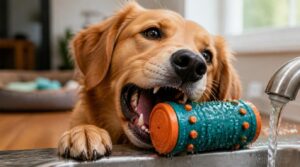
Rubber toys with raised nodules do double duty, scraping plaque while your dog just chews for fun.
Look for non-toxic TPR or natural rubber, free of BPA and phthalates. Ridges and studs hit different tooth angles, giving gentle abrasive action along the gumline and a nice gum massage too.
Rinse crevices under warm water after each use to keep bacteria from settling in.
Dental Ropes for Gums
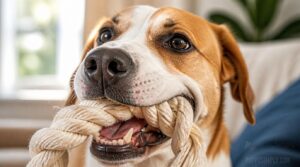
Ropes bring a different kind of action to the mix. As your dog tugs and gnaws, the fibers create gentle abrasive action against gum tissue, promoting blood flow and a nice gum massage. Braided strands hit the gumline from multiple angles.
Choose non-toxic, untreated cotton for safe chewing, and check fiber durability often—rinse with mild soap and let it air dry.
Raw Meaty Bone Safety

Bones bring real mechanical plaque removal, but only when picked right. Stick with raw meaty bones made for dogs—never cooked, never dense weight-bearing cuts.
Thaw in the fridge or a sealed bag in cool water. Wash your hands after handling, like you would raw meat.
Always supervise chewing, and stop if your dog struggles. That’s how you prevent tooth fractures safely.
Bully Sticks and Yak Chews

Bones do a great job scraping teeth, but chews bring their own style of mechanical plaque removal.
Yak chews run harder and last 40-60 minutes, great for tough chewers. Bully sticks stay softer, giving gentler scraping for 20-40 minutes.
- Check hardness
- Watch chew time
- Confirm digestibility
- Note odor level
- Supervise always
Both stay digestible, though bully sticks smell stronger and get sticky fast.
Avoid Hard Fracture Risks
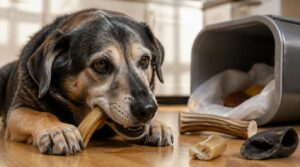
Antlers, nylon bones, and cow hooves might seem tough enough to handle anything, but that’s the problem. Safe chew textures give a little under pressure. Hard items don’t, and that’s how fractures happen.
Watch for pawing, drooling, or reluctance to chew. Older dogs or ones with weak teeth need extra caution. Toss anything brittle or cracked before it causes real damage.
Try Powders, Sprays, and Additives
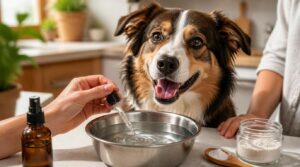
Not every dog will let you near their mouth with a toothbrush, and that’s okay. You’ve still got options that work with almost no effort on your part. Here are five easy add-ons that fight plaque without a fight.
Water Additives for Plaque
Water additives make dental care a breeze—just pour and done. Some carry VOHC approval for plaque prevention, using plant-based ingredients like green tea extract. Dosing accuracy matters, so follow label directions closely.
They won’t touch existing tartar, though—that needs a cleaning first. Watch for water taste acceptance too, since some dogs turn up their noses at treated water.
Dental Powders on Food
Sprinkle it, mix it, done. Dental powders work through mineral binding salts that grab onto calcium before it hardens into tartar, plus seaweed extracts and enzymes for extra backup.
- Watching plaque buildup slow down feels like winning a quiet battle
- Knowing you’re supporting your dog’s gum health daily brings real peace of mind
- Fresher breath means more face-to-face cuddles, guilt-free
Postbiotic support rounds things out, though powder abrasion alone won’t replace brushing.
Oral Gels for Gums
Rub a little gel right onto the gumline and let it get to work. Hyaluronic acid gels add moisture and support healing, while antimicrobial formulas cut bacteria fueling gingivitis.
Got a dog with sore, red gums? Anti-inflammatory gels calm swelling fast. Protective barrier gels shield tissue after dental work too. Just don’t skip the vet if redness lingers.
Dental Sprays for Breath
Doggy breath got you leaning away from kisses? A quick spray can fix that fast.
Look for antibacterial ingredients like chlorpyridinium chloride or chlorhexidine, plus xylitol for saliva support. Some sprays even use chlorine dioxide or fluoride for enamel protection.
Try this:
- Aim at the gumline
- Mist the tongue
- Skip rinsing—done in seconds
Great for fresher breath between brushings or bones.
Wipes for Quick Cleaning
No fancy gadgets needed—just grab a wipe and go. These give you hands-on control when you want to clean a dog’s teeth without brushing.
Look for textured fiber designs that boost scrubbing power. The waterless cleaning formula uses surfactants to lift grime fast—no rinsing needed. Some brands offer biobased wipe options too.
Wrap one around your finger for quick manual polishing, keeping dog dental hygiene simple and mess-free.
Support Teeth Through Diet and Vets

Chews and toys aren’t the whole picture. What your dog eats and who checks their mouth matter just as much. Here’s how diet and vet care round out your teeth-cleaning game plan.
Crunchy Dog-safe Vegetables
Crunch time can double as clean time. Carrots, green beans, and zucchini bits give your dog mechanical plaque scraping with every bite—no brushing needed.
- Peel cucumbers to ease digestion
- Skip onions, garlic, mushrooms, tomatoes entirely
- Cut pieces small to prevent choking
- Serve plain, no salt or seasoning
- Introduce slowly, watch for loose stool
Keep portions small; treats shouldn’t replace real meals or exceed your dog’s daily calorie needs.
Dental Diets and Kibble
Vegetables help, but if your dog eats kibble anyway, why not make that food work double duty? Dental diets use bigger, textured pieces so teeth sink deeper before crunching—more contact, more saliva, less plaque.
| Feature | What It Does | Why It Matters |
|---|---|---|
| Kibble shape | Scrubs tooth surface | Reduces buildup |
| Active ingredients | Fights tartar | Chemical backup |
| VOHC seal | Proves results | Trustworthy pick |
Signs of Dental Disease
All that chewing and scrubbing works best when you know what you’re watching for. Persistent halitosis is the big one—bad breath that lingers no matter what your dog just ate.
Check for swollen bleeding gums, visible tartar buildup near the gumline, and chewing pain indicators like dropping food or favoring one side. Watch for facial swelling risks too—that could mean an abscess brewing underneath.
Professional Cleaning Needs
Home care covers a lot, but some jobs need a vet’s touch. Scaling removes hardened tartar near the gumline, and polishing smooths enamel so plaque can’t grab hold again.
Cleanings under anesthesia keep your dog safe and pain-free while the vet charts each tooth’s condition.
Watch for these signs it’s time:
- Heavy tartar buildup
- Bleeding or red gums
- Persistent bad breath
Routine Dental Checkups
Getting anesthesia when it’s truly needed is only half the picture. Routine dental checkups, usually every six months, catch problems early through gum recession monitoring and simple risk scoring.
Vets check bite, tartar, and bleeding, then decide if radiographs are needed to spot trouble below the gumline. That’s preventative pet dentistry at its best—steady checkups, fewer surprises, healthier smile.
Frequently Asked Questions (FAQs)
What can I give my Dog to clean his teeth?
Plenty of practical picks work well: enzyme-based chews, seaweed-powder toppers for tartar, antimicrobial water additives, dental gels, and probiotics for microbiome balancing.
Mechanical scraping foods like raw meaty bones help too. Mix a few for best results.
How can I keep my dog’s teeth clean without a toothbrush?
Mix it up: VOHC-approved dental chews boost saliva flow and scrape plaque through texture, water additives fight bacteria daily, and dental wipes handle quick touch-ups.
Together, these dog dental hygiene alternatives keep teeth clean without ever picking up a brush.
Can you brush your dog’s teeth without brushing?
Like Aesop’s tortoise, slow and steady wins here too. You don’t need a toothbrush to fight plaque. No-brush alternatives—dental chews, water additives, and gels—offer real mechanical plaque removal and daily convenience for lasting dog dental hygiene.
Should you brush your dog’s teeth every day?
Yes, daily brushing is the best way to go—bacteria multiply fast, and plaque can mineralize into tartar within days. But if daily isn’t realistic, dental chews, wipes, and gels help fill the gap and still fight gingivitis and odor-causing bacteria.
Do I need to brush my puppy’s teeth?
Here’s the honest truth: early mouth handling shapes your puppy’s whole future. Yes, get your puppy comfortable with brushing now—daily habit formation prevents plaque buildup, stops gingivitis before it starts, and saves you from costly periodontal disease down the road.
Can you replace brushing your dog’s teeth with a dog toothbrush?
A dog toothbrush is your best tool, but it’s still just a tool. It reaches behind molars better than dental chews or water additives, though daily brushing consistency matters more than the brush itself for real gingivitis prevention.
How can I clean my dog’s teeth if he won’t let me brush them?
About 80% of dogs show dental issues by age three, so skipping brushing isn’t a dealbreaker. Try dental wipes on gums, an enzymatic spray, daily water additives, and VOHC-approved dental chews for real plaque control.
How do I get my dog’s teeth clean without brushing?
Mix it up: dental chews, water additives, wipes, and gels all work together. Crunchy veggies add mechanical scraping, too. Watch treat calories, and don’t skip vet checkups—professional cleaning catches what home care can’t.
How do you clean a dog’s teeth naturally?
Try natural enzymatic cleaners, seaweed powders for tartar control, and probiotic chews to balance mouth bacteria. Herbal mouthwash sprays freshen breath too.
Combine these with supervised raw bone chewing and textured dental toys for well-rounded, naturally clean teeth.
What can I give my dog instead of brushing teeth?
Reach for VOHC-approved dental chews, textured toys, or dental ropes for mechanical scraping. Add dental gels, sprays, or pet supplements to manage oral bacteria. Skip rock-hard chews to avoid fractures, and keep treats calorie-conscious.
Conclusion
Picture Bailey, a stubborn beagle who bolts at the sight of a toothbrush. His owner switched to a daily dental chew, a water additive, and crunchy carrots instead. Six months later, his vet noted barely any tartar.
That’s really the heart of how to clean dog teeth without brushing: consistency beats flawlessness. You don’t need a fight at the sink. Mix a few tools, stay steady, and watch your dog’s smile—and confidence—stay bright for years to come.
- https://animaldentalaz.com/clean-dogs-teeth-without-brushing
- https://www.petmd.com/dog/general-health/dog-dental-care-ways-keep-dogs-mouth-clean
- https://vcahospitals.com/resources/preventive-dog/dental/fast-ways-to-keep-pet-teeth-clean-for-the-busy-owner
- https://www.dogstrust.org.uk/dog-advice/health-wellbeing/at-home/dog-dental-hygiene
- https://www.cainhoyvet.com/how-to-dog-teeth-cleaning-without-anesthesia